Melissa has a happy marriage but her everyday life is a constant battle against pain. She discovers that her artwork can produce magic, prompting her to apply for an artist’s retreat to a mysterious country house. Her old schoolfriends Bettina and Zelda are also at the same retreat. But neither the house nor their friendship is what they think. A mystical library, rapacious shadows, and keys to otherworldly rooms are the links to saving the house from destruction.
A unique fantasy about people whose stories, with all their oddity and excitement, seldom make their way into novels.
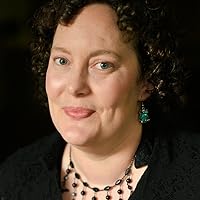
Gillian is a writer and historian, currently living in Canberra, Australia. She intends to count the books in her library soon, when they stop falling on her and otherwise intimidating her.
She was given the 2020 A Bertram Chandler Award for lifetime achievement in science fiction.
Meet Melissa. Melissa shares her life with both Hal, to whom she is happily married, and with chronic pain. Melissa has strategies for dealing with her pain, but those strategies do not always work. Especially when the cause of her pain is not obvious to others. Melissa discovers that her artwork can produce magic, and a new journey is about to begin.
‘That’s it, isn’t it? That’s what the magic does. It shows the inside on the outside.’
Once upon a time, Melissa, Zelda, and Bettina were schoolfriends. Each of them is artistic, and all three of them receive a two-week creative residency in a mysterious old house near Robertson in NSW. Friendships and life evolve, different experiences change perceptions. Is it necessary to believe in magic to experience it?
Melissa struggles with and through the constraints imposed by her unlabelled chronic painfilled illness. She is more attuned to the possibilities of this restless, sentient house than her friends. Portals to other places open to her. Portals that Zelda does not see, and Bettina is frequently afraid of. Each will pursue her own creative endeavour with occasional help (and hindrance).
‘The portals are not equal in where they lead.’
There is a marvellous mystical library, magic in water, and danger in shadows. And not everyone means well.
The story unfolds. The lives of each woman: Melissa and Bettina are clearer for me than Zelda is; some of the challenges and fears each face; and the possible opportunities ahead.
‘People weren’t listening to each other.’
I enjoyed this journey, especially the sentience of the house, the imagery of the library and the views through some of the portals. Perhaps I should have been afraid at times, but I felt sure that, like all my favourite childhood fairy tales, there would be a happy ending.
I discovered a new word, as well, which I hated on sight, and will try to avoid hereafter: ‘suckitude’.
Gillian Polack has established a sometimes mordant, sometimes harrowing, blend of high culture and accessible suburban life, lit by the glamour of a magic that runs very much by her own rules. I do hope she finds a wide audience for Borderlanders. The edge of things is a dangerous but rewarding place to dwell.
When I was a child, the moonlight from my bedroom window used to shine a pattern on the adjacent wall at night. I would fantasise that it was outlining a portal to another world. Depending on my mood, this portal would lead to a mad scientists' lair, or a witches castle. In later years I wished for a library.
Gillian Polack's Borderlanders evokes this sense of magic in the real world: lucid dreaming, Celtic magic, a mysterious library, and portals connected somehow to shadow and light. It's a curiously slippery tale about three women attending a creative residency—only the house is not as it seems and, perhaps, neither are the women.
Despite the magic, the novel is rooted in reality as we explore the house through the central protagonist who suffers from chronic pain. This is written carefully—the author explains in the acknowledgements that she spoke to many people with chronic illnesses, to make this story as accurate as possible—and we follow the narrator through the numerous conscious adjustment she has to make every day, just to live the semblance of a normal life: 'Melissa developed a plan so that she could see everything, do everything, and hurt the least possible.'
Melissa's cutting insights are what powers the story: 'Illness set up problems with verbal transactions... Once one can't talk about the everyday pain, it's hard to talk about other things…' The backdrop of a hard reality against otherworldly potential.
In general, it’s a pleasure to watch the way each woman tackles her creative endeavour, and to observe the slightly obsessive thought patterns that lace the creative mind, as when one character agonizes how best to stack her books in the unlikely event that they fall from her desk and are damaged in an earthquake.
Lovely yet powerful imagery is used: a certain key made of glass, keeping us in fairy-tale mode. The many rooms in the house remind me of my childhood with Polly Pocket: those dolls barely bigger than a fingernail that were swapped from house to house—some houses even hung on a chain around your neck—and you get a sense that such a thing could be possible here.
The first-person point-of-view is the strongest; in third-person, the three central characters bleed into each other, so it can be unclear who we're following. At times we feel excluded from a group who have been friends for years (as is actually the case here). Perhaps this bleeded scope is also what makes the characters take magic for granted—the marvel is treated casually, the strangeness left unquestioned, the wonder too often lost. Some of the slang can be jarring ("suckitude") and certain phrases are overused, which stands out in a vocabulary that's otherwise fluid and considered.
Borderlands is an enjoyable book that has you thinking beyond yourself, yet paradoxically that's exactly what you circle back to. It's the perfect book to read before bed, when your mind is entering that hazy, otherworldly zone; it's a companion you can slip into, as it slips through you; a compliment to any mind in search of a creative wander.
Disclaimer: I received a free copy of the book from the publisher; I thank Odyssey Books for introducing me to the world of Borderlanders.
What a joy to put aside some academic reading and peruse this novel from Gillian Polack. You can usually tell from the first page, the first sentence, even, if the book is for you. And this book has a killer first sentence, “Bettina had been dreaming of cold bodies in a dead Russian forest.”
Fantasy is my favourite genre and it’s wonderful to read a fantasy set in Australia with a familiar landscape and a strong Australian voice. The novel is set in Melbourne and has scenes in Robertson the hometown of Babe (the pig).
The plot centres around three old school friends: Melissa, Zelda and Bettina. They meet up at an artists’ retreat in Robertson.
It is interesting to read the different views on the magic that the characters encounter in their daily lives. Kind of magic realism although one can’t call it that if it’s set in Australia, I believe, but I won’t get into that argument here.
One of the main themes is chronic conditions. Melissa suffers from chronic pain and we see how her life is impacted by a supportive husband and friends who will not believe that she is suffering.
Some wonderful images pepper the story and I can recommend it to read although with another edit it would have been even more powerful.
(I was given a free copy of this book in order to give an honest review.)
** I received a free copy from the publisher in return for an honest review ** Borderlanders by Gillian Polack, a novel blending contemporary Fantasy and magical realism, introduces the theme early with reference to the Celtic belief in the liminal worlds, and the ability to pass between the past, present, future and other. It is on this premise that Borderlands, as the title suggests, builds its narrative between realities, time and perceptions. Partially narrated in first-person through the protagonist, Melissa, a happily married, middle-aged artist who’s life is consumed by disabling chronic pain with her artwork providing her only escape and a very real magic. Upon successfully receiving a scholarship to attend a creative retreat in the Southern Highlands of NSW, in a small misty town of Robertson, Melissa finds herself reunited with her old school friends, Bettina and Zelda, both also attending the retreat. The location of the retreat is a rambling estate, a country house that sprawls beyond the mere concept of walls and mortar and where shadows, past and future entwine the characters. Unlike Melissa, who is narrated in first-person, Bettina and Zelda are narrated through the third-person. This intentional shift from first-person to third-person has the desired effect to separate the reader from Zelda and Bettina, but the unintentional effect of blending their characters to the point of often being indistinguishable in personality (but not history), while Melissa remains isolated, removed and never feeling fully integrated into the story. This may be intentional as Zelda remarks early in the novel when she is lecturing on the Celtic belief in liminality, the concept of worlds and perceptions alongside our own, where the Celtic belief that people could slip into the Otherworld or mortals could be stolen by Fairies, very few ever being returned again. In this sense, Melissa feels like a character that has been stolen by Fairies, existing outside the reality that Bettina and Zelda occupy, but connected to it through a shared and often obsessive focus on small details. This obsession unites all characters, perhaps to indicate their creative personality, but feels far too repetitive, and distracts from the storyline and purpose, too often pulling attention away from the characters, their goals and actions. In general though, Borderlands was an interesting exploration of the concept of a liminal reality, where perceptions and magic, combine in unique ways that twist the fabrics of reality as we understand it.
Borderlanders is about three friends who are dealing with everyday life issues, but against a backdrop of magical realism. Melissa, the main protagonist, suffers from chronic pain. Bettina is dealing with a family secret and struggling to come to terms with her psychic dreams. Zelda is writing a book while going through a difficult divorce.
I enjoyed how the writer leaves Bettina’s dreams to the reader to decide whether there’s a supernatural element to them.
I also appreciated the way Melissa’s chronic pain was handled. It’s rare you come across a book that addresses the toll physical illness has on a person’s mental health. I particularly loved this passage,
“She won’t give me tablets for depression because she says it’ll get better as I get better. Then, next visit, she admits I may not get better for years. Or ever. Not until we know more about things. And she sends me for tests and forgets the depression.”
The author doesn’t shy away from the real struggles the chronically ill face when trying to seek recognition and validation for their pain. It’s clear a lot of research has gone into writing this book.
Some other quotes that beautifully illustrate the chronically ill experience are:
“I’m doing this because I’m wonderful and you’re an invalid. You shouldn’t really exist but I’m making it possible because look, I’m washing your dishes while I tell you how to live.”
“I need to pretend to have a different disability in order not to be yelled at.”
“What I’m not so impressed about was the way he shouldered in front of me for everything. He was so sick. And the family treated him as special. And I sat there at dinner thinking, “Maybe I’m not as sick as he is. Maybe I’m kidding myself.””
One aspect I found jarring at times was that the dialogue felt wooden. Everyone sounded the same. Although the characters are well drawn and I didn’t feel that the dialogue detracted too much from the storytelling.
Overall, if you’re looking for a book that accurately portrays chronic illness, I strongly recommend Borderlanders.
This is a great book for those who are a bit tired of stereotypes, especially the ones around people with disabilities who end up 'cured' or dead or side-lined. It is an exploration of living with pain and how you just get on with doing what needs to be done which, in this case, includes magic and a house protecting itself and those help. It's thoughtful and well written and highly recommended.
Definitely not your average read...which makes it special. Friends....strangers....the imaginary....all mixed in together....Pain, life...magic...Polack has carefully crafted an interesting read.