

What do you think?

The Bhagavad Gita For Millennials
A millennial guide to the Bhagat Gita, the foundational text on dharma. As Arjuna stands on the battlefield of the great War of Kurukshetra, he finds himself surrounded by men he has known for years. He must wound, maim or kill them to earn what the Pandavas deserve. But how can he kill those in whose laps his childhood was spent, those gurus who taught him to hold his bow. As Arjuna faces this dilemma, Krishna, an avatara of Lord Vishnu, appears before him in his universal form. And thus begins a dialogue between them on what is right and what is wrong, on dharma and on the cycle of cause and consequence. One of the core Hindu scriptures, the Bhagat Gita holds important lessons on how we can live our lives and fulfil our duties, but the millennial may consider it too ancient for their use or too complex for their understanding. In this book, bibek Debroy recasts the Bhagat Gita in a simple and cohesive form for millennia, so that its content and deeper meaning are not lost with the generations of our grandparents and parents.
210 pages, Hardcover
First published November 10, 2020
About the author
Bibek Debroy
169 books416 followersBibek Debroy was an Indian economist, who served as the chairman of the Economic Advisory Council to the Prime Minister of India. He was also the Chairman of the Finance Ministry's 'Expert Committee for Infrastructure Classification and Financing Framework for Amrit Kaal'. Debroy has made significant contributions to game theory, economic theory, income and social inequalities, poverty, law reforms, railway reforms and Indology among others. From its inception in January 2015 until June 2019, Mr. Debroy was a member of the NITI Aayog, the think tank of the Indian Government. He was awarded the Padma Shri (the fourth-highest civilian honour in India) in 2015.
Bibek Debroy's recent co-authored magnum opus, Inked in India, stands distinguished as the premier comprehensive documentation, capturing the entirety of recognized fountain pen, nib, and ink manufacturers in India.
In 2016, he was awarded the Lifetime Achievement Award by the US-India Business Summit. In 2022, he was conferred with the Lifetime Achievement Award by The Australia India Chamber of Commerce (AICC). In February 2024, Debroy was conferred Insolvency Law Academy Emeritus Fellowship, in recognition of his distinguished leadership, public service, work and contributions in the field of insolvency.
Bibek Debroy died on 1 November 2024, at the age of 69. He had been admitted to All India Institutes of Medical Sciences in New Delhi one month prior.
Bibek Debroy's recent co-authored magnum opus, Inked in India, stands distinguished as the premier comprehensive documentation, capturing the entirety of recognized fountain pen, nib, and ink manufacturers in India.
In 2016, he was awarded the Lifetime Achievement Award by the US-India Business Summit. In 2022, he was conferred with the Lifetime Achievement Award by The Australia India Chamber of Commerce (AICC). In February 2024, Debroy was conferred Insolvency Law Academy Emeritus Fellowship, in recognition of his distinguished leadership, public service, work and contributions in the field of insolvency.
Bibek Debroy died on 1 November 2024, at the age of 69. He had been admitted to All India Institutes of Medical Sciences in New Delhi one month prior.
Ratings & Reviews
Friends & Following
Create a free account to discover what your friends think of this book!
Community Reviews
Displaying 1 - 30 of 57 reviews

March 14, 2023
“ There is a famous quote by Francis Bacon, to the effect that some books are to be tasted, others to be swallowed and some to be chewed and digested. The Bhagvad Gita is not one of those books. It is a book to be lived. However, it is your life and what you make and what you want of it. That is your karma and dharma. It is your life, your progress and your regress.”
This book was truly a challenge to read, think upon, understand and bigger challenge according to me is to integrate into my life and thinking. But this challenge was something I absolutely loved and after reading, re- reading and going over some portions again, I dare to tell that I’ve read this book but I can’t vouch for how much have I absorbed and how much will I assimilate or how little will I be able to practice.
Elements I’ve loved about this book:
1. The author’s dissection of Bhagvad Gita across chapters and showing an integrated understanding. Truly it was a wonder on how he connected different verses across chapters.
2. Author’s priority over putting shloka and anvaya ( Subject- Object-Verb form). As someone who can read and understand Sanskrit, this was so crucial. This has even helped me in enhancing my Sanskrit vocabulary and usage of certain words across different contexts.
3. Bringing in other Texts to link to Bhagvad Gita - puranas or upanishads or vedas, this was a very important way of enhancing our understanding and seeing the core essence as one
What did not work for me:
1. The non- linear fashion of quoting verses is very difficult for someone new to Bhagvad Gita to make sense of. As someone who has read certain chapters, it was easy to navigate
2. This is a difficult read and can’t be touched upon with limited time. One must be ready to invest a good part of time to understand or decode for themselves ( At places I depended on my own translation of the anvaya over author’s translation)
One serious takeaway from this book is that I am ready to agree that I can’t take away everything from a book even after multiple reads and re-reads. I’m going to go back in and keep trying till I can. Also, I’ll take the advise of author to read the text in Sanskrit to ensure I minimise the lost essence due to Translation.
Leaving this review with one sentence that this book made me go over and over:
“Anything created is subject to principles of creation and therefore feels joy or misery. The sense of “mine” is root cause of misery. When there is no sense of mine, There is withdrawal from misery.”
This book was truly a challenge to read, think upon, understand and bigger challenge according to me is to integrate into my life and thinking. But this challenge was something I absolutely loved and after reading, re- reading and going over some portions again, I dare to tell that I’ve read this book but I can’t vouch for how much have I absorbed and how much will I assimilate or how little will I be able to practice.
Elements I’ve loved about this book:
1. The author’s dissection of Bhagvad Gita across chapters and showing an integrated understanding. Truly it was a wonder on how he connected different verses across chapters.
2. Author’s priority over putting shloka and anvaya ( Subject- Object-Verb form). As someone who can read and understand Sanskrit, this was so crucial. This has even helped me in enhancing my Sanskrit vocabulary and usage of certain words across different contexts.
3. Bringing in other Texts to link to Bhagvad Gita - puranas or upanishads or vedas, this was a very important way of enhancing our understanding and seeing the core essence as one
What did not work for me:
1. The non- linear fashion of quoting verses is very difficult for someone new to Bhagvad Gita to make sense of. As someone who has read certain chapters, it was easy to navigate
2. This is a difficult read and can’t be touched upon with limited time. One must be ready to invest a good part of time to understand or decode for themselves ( At places I depended on my own translation of the anvaya over author’s translation)
One serious takeaway from this book is that I am ready to agree that I can’t take away everything from a book even after multiple reads and re-reads. I’m going to go back in and keep trying till I can. Also, I’ll take the advise of author to read the text in Sanskrit to ensure I minimise the lost essence due to Translation.
Leaving this review with one sentence that this book made me go over and over:
“Anything created is subject to principles of creation and therefore feels joy or misery. The sense of “mine” is root cause of misery. When there is no sense of mine, There is withdrawal from misery.”

December 15, 2020
“All the Upanishads are like cows, Partha [Arjuna] is the calf and the learned drink, the milk that is the great ambrosia of the Gita.”
--Gita Dhayanam (9 verse long Sanskrit poem sung before the Gita)
“The Bhagvad Gita for millennials” is perhaps a very fresh and modernized approach to throw light upon the Gita. In a very holistic portrayal, Bibek Debroy captures the essence of the Bhagavad Gita in a personalized manner, giving us a new commentary on the scripture.
Most of the current generation’s idea of the Gita (and many of the older generations’ too) perhaps starts and culminates in 2 very well-known verses. One being verse 4.7: “Yada Yada Hi Dharmasya Glanirbhavati Bharata….” and the other being verse 2.47: “Karmanye Vadikaraste Ma Phaleshu Kadachana.…” Thus, a book that caters exclusively to the need of the millennials was quite necessary and very much anticipated, and Debroy with his mastery of the ancient Hindu Sanskrit texts, writes a book that can be both called as an introduction to the Gita, or perhaps even a shrunk, summarized gist of the essential concepts of the Gita.
This edition hasn’t been made into a complete and sequentially intact translation of the Gita (since there exists many already). What is different in this book is that the book is a very apt discussion of philosophy, and also spiritual discourses. The tone of the book is thereby referential, bridging gaps between the Gita and also other related scriptures. We get to see a limited quantity of the verses mentioned in the Gita, but they appear as citations. It is somewhat of a guide that is meant to open the eyes of the readers the giant pool of ideologies and allegories that is housed in the Gita—urging them to read upon it more, ponder over questions and delve deeper. I could metaphorically represent the thought behind the book as this: imagine the discussion and analysis made in the book as the pearls shining on the riverbed, but to get a glimpse of the whole ornament, you have to dig deeper. Such is the book. It entices us to read further, gives enough stimuli that will perhaps make us treat the book as the grand doorway that marks the entry to a more detailed understanding of such mature scriptures.
A question that can come to the mind is, how has the book adapted to be millenial-centric? As far my understanding goes, this book can work very well for someone who isn’t accustomed to the notion of the Gita (a beginner), or someone who feels lost in the vast expanse of Gita. Keeping in mind the level and the maturity of the audience, Bibek Debroy ensures not to make the book very prescriptive or normative. In a vague attempt to make the Gita more graspable, he writes a very open-minded discussion, infused with stories, references, translations, analysis that can familiarise us with how unanimous and massive the Gita is. With the difficulty level toned down, and the complexity somewhat simplified, reading this edition requires almost no prerequisite knowledge of the religious texts. In a minimised and condensed fashion, the book can become a guiding light leading the path to a more nuanced consumption of the scriptures. As one goes deeper into this book, its certain to make the reader perplexed at times, but as Debroy takes us through a camaraderie of Sanskrit syllables and modern alphabets, of the shrutis and the smritis, of puranas and itihas, of atman and brahman, of superiority and generality, additions versus dismissals—this book ultimately highlights a friendship between what is ancient and what is modern, carving a method of coexistence between familiarity and novelty.
Thanks Rupa Publications for the copy.
--Gita Dhayanam (9 verse long Sanskrit poem sung before the Gita)
“The Bhagvad Gita for millennials” is perhaps a very fresh and modernized approach to throw light upon the Gita. In a very holistic portrayal, Bibek Debroy captures the essence of the Bhagavad Gita in a personalized manner, giving us a new commentary on the scripture.
Most of the current generation’s idea of the Gita (and many of the older generations’ too) perhaps starts and culminates in 2 very well-known verses. One being verse 4.7: “Yada Yada Hi Dharmasya Glanirbhavati Bharata….” and the other being verse 2.47: “Karmanye Vadikaraste Ma Phaleshu Kadachana.…” Thus, a book that caters exclusively to the need of the millennials was quite necessary and very much anticipated, and Debroy with his mastery of the ancient Hindu Sanskrit texts, writes a book that can be both called as an introduction to the Gita, or perhaps even a shrunk, summarized gist of the essential concepts of the Gita.
This edition hasn’t been made into a complete and sequentially intact translation of the Gita (since there exists many already). What is different in this book is that the book is a very apt discussion of philosophy, and also spiritual discourses. The tone of the book is thereby referential, bridging gaps between the Gita and also other related scriptures. We get to see a limited quantity of the verses mentioned in the Gita, but they appear as citations. It is somewhat of a guide that is meant to open the eyes of the readers the giant pool of ideologies and allegories that is housed in the Gita—urging them to read upon it more, ponder over questions and delve deeper. I could metaphorically represent the thought behind the book as this: imagine the discussion and analysis made in the book as the pearls shining on the riverbed, but to get a glimpse of the whole ornament, you have to dig deeper. Such is the book. It entices us to read further, gives enough stimuli that will perhaps make us treat the book as the grand doorway that marks the entry to a more detailed understanding of such mature scriptures.
A question that can come to the mind is, how has the book adapted to be millenial-centric? As far my understanding goes, this book can work very well for someone who isn’t accustomed to the notion of the Gita (a beginner), or someone who feels lost in the vast expanse of Gita. Keeping in mind the level and the maturity of the audience, Bibek Debroy ensures not to make the book very prescriptive or normative. In a vague attempt to make the Gita more graspable, he writes a very open-minded discussion, infused with stories, references, translations, analysis that can familiarise us with how unanimous and massive the Gita is. With the difficulty level toned down, and the complexity somewhat simplified, reading this edition requires almost no prerequisite knowledge of the religious texts. In a minimised and condensed fashion, the book can become a guiding light leading the path to a more nuanced consumption of the scriptures. As one goes deeper into this book, its certain to make the reader perplexed at times, but as Debroy takes us through a camaraderie of Sanskrit syllables and modern alphabets, of the shrutis and the smritis, of puranas and itihas, of atman and brahman, of superiority and generality, additions versus dismissals—this book ultimately highlights a friendship between what is ancient and what is modern, carving a method of coexistence between familiarity and novelty.
Thanks Rupa Publications for the copy.

August 20, 2021
Great book to read before you embark on reading the Gita - https://www.anuradhagoyal.com/bhagava...
May 5, 2021
A Must-Read for All
Bhagavad Gita for the millennials by Bibek Deb Roy encapsulates the core idea of the ancient Hindu text in a comprehensive form for the young generation. He puts the ideas presented in this ancient text into the modern context.
Though the author specifies the book is for the millennials, which implies the generation who were born in the 1980s and the ’90s, it will be unfair to limit this book to any age.
The first three chapters set the pace of the book. It presents Gita in all its dimensions and tells us how and why we should read it. Though it is not a translation of the Gita in verbatim, it surely complements the Sanskrit translation done by the same author and other translations too. However, the author emphasizes that there is no substitute for reading the original Gita in Sanskrit and the Mahabharata to get a complete understanding of the sacred text. Edwin Arnold referred to the Bhagavad Gita as the ‘Song Celestial. This text is actually a poem set to the meter.
The first chapter mentions how the Hindu texts can be divided into the Shruti and the Smriti categories. ‘Shruti’ means what is heard or revealed and does not have a composer. It does not evolve. The Vedas, the Upanishads, Aranyakas are examples of Shruti texts. While ‘smriti’ text is something that is remembered and passed down through generations through word of mouth. Texts such as the Manu Samhita, the Panchatantra, the Ramayana, the Mahabharata, and the Puranas are smriti texts. These texts can be retold in the context of changing times. The Bhagavad Gita enjoys an exalted status amongst all the smriti texts.
Since Bhagavad Gita is an integral part of the Mahabharata a complete understanding of the epic is a must. Readers will never know why Lord Krishna and the Arjun were having a dialogue in the first place. They will also be unaware that charioteer Sanjaya was blessed with a divine vision to give a commentary of the war to the blind king Dhritarashtra, and the conversation between Lord Krishna and Arjuna was a part of it. The author recommends BORI’s (Bhandarkar Oriental Research Institute) critical edition close to the original text.
He touches upon the famous scholarly debate on the multiple authorship of the Bhagavad Gita. A few Indian and Western scholars believe that the Gita is composed of more than one author. While there are several theories to prove the multiple authorship of the Gita, such as the metrical pattern of the poem which differs in style from the beginning to end. Since the verses in the Gita addresses several points of view many scholars have used words like ‘philosophical inconsistencies’ or ‘abound in contradictions’ to prove the multiple authorship. Fortunately, with the theory of statistics and homogeneity tests applied to the metric pattern of the verses, it was proved that Bhagavad Gita was the work of a single author and not many.
He reiterates, “There was a single author of Bhagavad Gita and five different authors for the Mahabharata. Naturally, this is probabilistic, not deterministic. Nothing can be confidently asserted with certainty. But that’s the way science works.” He urges us to read the works by M.R. Yardi on the statistical study of the Bhagavad Gita and the Mahabharata.
The other controversy he talks about revolves around Lord Krishna’s historicity. Lord Krishna is pervasive in the Bhagavad Gita and the Mahabharata. But was he a real person is a question many ask? Many archaeological pieces of evidence have put the debate to rest.
Especially, BB Lal’s reports reveal the presence of painted grey ware pottery in those sites mentioned in the Mahabharata. The Dwarka excavations reported by R.S. Rao proving the presence of a city underwater and onshore further cleared doubts. Literature like the Chandogya Upanishad, grammarian Panini’s ‘Ashtadhayi’, and Greek traveler Megasthenes’ writings prove Lord Krishna was a real person who later acquired divine status.
He covers the basics of reading Sanskrit and poetry by giving several examples of joining the words or sandhi, breaking the words or padacched, and the anustubh verse structure in which most slokas or verses of the Bhagavad Gita is written. He also breaks down the Bhagavad Gita chapter-wise.
The author in a conversational style elucidates the difficult concepts such as ‘Jivatma’ (individual soul), ‘Paramatma’ (eternal soul), ‘karma (action) yoga’, ‘bhakti’ (faith) with the help of Puranic stories. Noteworthy is Raja Harishchandra’s and Madalasa, Alarka and Dattatreya, and King Vikramaditya to name a few. He has also used examples from daily life to make these concepts understandable for today’s audience.
Surprisingly, people base their understanding of Gita on an often repeated but incomplete quote. Which is-
"You have the right to action alone,
and not the fruit.'
The complete one being- "You have the right to action alone. You never have the right to the fruit. Do not be motivated to act because of the fruit. But don't be motivated to not acting either." The quote captures the idea of Karma (action) Yoga, but the text has a lot more to it. Contrary to belief, Gita transitions from jnana (knowledge), karma (action), and bhakti (faith) yoga actually all coexists. After all, how can one separate the mind from the body? Such observations proving the empirical nature of the text can be found throughout the book.
This book proves that Gita is eternal. Since humans will evolve and so will the meaning of the text. To summarise, Bhagavad Gita is all about evolution from a lower plane to a higher one. It is not just one time read, but an instrument to self-realization.
Bhagavad Gita for the millennials by Bibek Deb Roy encapsulates the core idea of the ancient Hindu text in a comprehensive form for the young generation. He puts the ideas presented in this ancient text into the modern context.
Though the author specifies the book is for the millennials, which implies the generation who were born in the 1980s and the ’90s, it will be unfair to limit this book to any age.
The first three chapters set the pace of the book. It presents Gita in all its dimensions and tells us how and why we should read it. Though it is not a translation of the Gita in verbatim, it surely complements the Sanskrit translation done by the same author and other translations too. However, the author emphasizes that there is no substitute for reading the original Gita in Sanskrit and the Mahabharata to get a complete understanding of the sacred text. Edwin Arnold referred to the Bhagavad Gita as the ‘Song Celestial. This text is actually a poem set to the meter.
The first chapter mentions how the Hindu texts can be divided into the Shruti and the Smriti categories. ‘Shruti’ means what is heard or revealed and does not have a composer. It does not evolve. The Vedas, the Upanishads, Aranyakas are examples of Shruti texts. While ‘smriti’ text is something that is remembered and passed down through generations through word of mouth. Texts such as the Manu Samhita, the Panchatantra, the Ramayana, the Mahabharata, and the Puranas are smriti texts. These texts can be retold in the context of changing times. The Bhagavad Gita enjoys an exalted status amongst all the smriti texts.
Since Bhagavad Gita is an integral part of the Mahabharata a complete understanding of the epic is a must. Readers will never know why Lord Krishna and the Arjun were having a dialogue in the first place. They will also be unaware that charioteer Sanjaya was blessed with a divine vision to give a commentary of the war to the blind king Dhritarashtra, and the conversation between Lord Krishna and Arjuna was a part of it. The author recommends BORI’s (Bhandarkar Oriental Research Institute) critical edition close to the original text.
He touches upon the famous scholarly debate on the multiple authorship of the Bhagavad Gita. A few Indian and Western scholars believe that the Gita is composed of more than one author. While there are several theories to prove the multiple authorship of the Gita, such as the metrical pattern of the poem which differs in style from the beginning to end. Since the verses in the Gita addresses several points of view many scholars have used words like ‘philosophical inconsistencies’ or ‘abound in contradictions’ to prove the multiple authorship. Fortunately, with the theory of statistics and homogeneity tests applied to the metric pattern of the verses, it was proved that Bhagavad Gita was the work of a single author and not many.
He reiterates, “There was a single author of Bhagavad Gita and five different authors for the Mahabharata. Naturally, this is probabilistic, not deterministic. Nothing can be confidently asserted with certainty. But that’s the way science works.” He urges us to read the works by M.R. Yardi on the statistical study of the Bhagavad Gita and the Mahabharata.
The other controversy he talks about revolves around Lord Krishna’s historicity. Lord Krishna is pervasive in the Bhagavad Gita and the Mahabharata. But was he a real person is a question many ask? Many archaeological pieces of evidence have put the debate to rest.
Especially, BB Lal’s reports reveal the presence of painted grey ware pottery in those sites mentioned in the Mahabharata. The Dwarka excavations reported by R.S. Rao proving the presence of a city underwater and onshore further cleared doubts. Literature like the Chandogya Upanishad, grammarian Panini’s ‘Ashtadhayi’, and Greek traveler Megasthenes’ writings prove Lord Krishna was a real person who later acquired divine status.
He covers the basics of reading Sanskrit and poetry by giving several examples of joining the words or sandhi, breaking the words or padacched, and the anustubh verse structure in which most slokas or verses of the Bhagavad Gita is written. He also breaks down the Bhagavad Gita chapter-wise.
The author in a conversational style elucidates the difficult concepts such as ‘Jivatma’ (individual soul), ‘Paramatma’ (eternal soul), ‘karma (action) yoga’, ‘bhakti’ (faith) with the help of Puranic stories. Noteworthy is Raja Harishchandra’s and Madalasa, Alarka and Dattatreya, and King Vikramaditya to name a few. He has also used examples from daily life to make these concepts understandable for today’s audience.
Surprisingly, people base their understanding of Gita on an often repeated but incomplete quote. Which is-
"You have the right to action alone,
and not the fruit.'
The complete one being- "You have the right to action alone. You never have the right to the fruit. Do not be motivated to act because of the fruit. But don't be motivated to not acting either." The quote captures the idea of Karma (action) Yoga, but the text has a lot more to it. Contrary to belief, Gita transitions from jnana (knowledge), karma (action), and bhakti (faith) yoga actually all coexists. After all, how can one separate the mind from the body? Such observations proving the empirical nature of the text can be found throughout the book.
This book proves that Gita is eternal. Since humans will evolve and so will the meaning of the text. To summarise, Bhagavad Gita is all about evolution from a lower plane to a higher one. It is not just one time read, but an instrument to self-realization.

August 1, 2026
I do not believe I have completely wrapped my mind around what I just read given how dense and rich this book was but I had a great time reading this.
July 29, 2023
Unlike the title suggests, the book is not a watered down translation of Bhagvad Geeta for generation Y.
Rather it's an attempt towards giving a perspective on Geeta and describing its various facets; the language, the historicity, the philosophy, the religion (dharma/karma) and the salvation. Themes in the book don't exactly run parallel to the original and so the references to the main text (shlokas) don't always move linearly. Given the nuance of the subject, and the accompanying allegorical tales, one needs to read back at times. Despite this, at no point does it feel heavy or burdened.
Debroy's scientist-like approach to Geeta is very different from the usual translations/commentaries. Definitely seems like a very good start-point for exploring this monumental text.
Rather it's an attempt towards giving a perspective on Geeta and describing its various facets; the language, the historicity, the philosophy, the religion (dharma/karma) and the salvation. Themes in the book don't exactly run parallel to the original and so the references to the main text (shlokas) don't always move linearly. Given the nuance of the subject, and the accompanying allegorical tales, one needs to read back at times. Despite this, at no point does it feel heavy or burdened.
Debroy's scientist-like approach to Geeta is very different from the usual translations/commentaries. Definitely seems like a very good start-point for exploring this monumental text.

February 12, 2021
“The Bhagavad Gita for Millennials” plays the role of motivator and catalyst for new generation readers. It prepares a platform for the reader so that they can dive into the Ocean of “Srimad Bhagavad Gita”. Before making any dish, we familiarise ourselves with all the ingredients and recipes, then plunge into preparing the dish. This is how we can appreciate the taste of food. In similar fashion, Bibek debroy, author, introduces concepts linked to Sanatan Darma and gives boost to readers for further exploration.
This book consists of 10 chapters. It discusses Mahabharata, the beauty of the Sanskrit language, historical evidence supporting the Bhagavan Krishna as a human being who lived on the earth long back, then Bhagavad Gita, and many other related things that are needed for better understanding and internalize the philosophies of Gita. In this brief review, I am not going to discuss this book chapter by chapter.
The author dwells in time to give an idea of the creation cycle, Manu, Chaturyuga, Vedavyasa, characters who played significant role and timeline of writing/compilation of Mahabharata, the timeline of Kurukshetra war, Krishna's period, and so on. During the discussion of Sanskrit language and poetry, he makes the case that to understand Gita, we must read its Sanskrit version as no translation can accurately capture the meaning behind these texts. They can be very close to the text but cannot be 100% the same. He goes through Shruti and smriti and available written text to verify the existence of Lord Krishna as a historical figure and not as a mythical man. He also tried to explain the identity crisis, a person can face, by giving examples from stories, film dialogues, and proverbs. He further discusses Yoga, Meditation, Atman, and Paramatman. One crucial point to consider is that to understand our scripture, we must not be rigid as the same word/line/stanza can have changing meanings with time and context and depending on the person who is reading it. In short, this book is a must-read and introductory in nature for anyone to appreciate the beauty of our scriptures and to understand the ethos behind them.
This book consists of 10 chapters. It discusses Mahabharata, the beauty of the Sanskrit language, historical evidence supporting the Bhagavan Krishna as a human being who lived on the earth long back, then Bhagavad Gita, and many other related things that are needed for better understanding and internalize the philosophies of Gita. In this brief review, I am not going to discuss this book chapter by chapter.
The author dwells in time to give an idea of the creation cycle, Manu, Chaturyuga, Vedavyasa, characters who played significant role and timeline of writing/compilation of Mahabharata, the timeline of Kurukshetra war, Krishna's period, and so on. During the discussion of Sanskrit language and poetry, he makes the case that to understand Gita, we must read its Sanskrit version as no translation can accurately capture the meaning behind these texts. They can be very close to the text but cannot be 100% the same. He goes through Shruti and smriti and available written text to verify the existence of Lord Krishna as a historical figure and not as a mythical man. He also tried to explain the identity crisis, a person can face, by giving examples from stories, film dialogues, and proverbs. He further discusses Yoga, Meditation, Atman, and Paramatman. One crucial point to consider is that to understand our scripture, we must not be rigid as the same word/line/stanza can have changing meanings with time and context and depending on the person who is reading it. In short, this book is a must-read and introductory in nature for anyone to appreciate the beauty of our scriptures and to understand the ethos behind them.

July 6, 2021
A very good precursor on Gita and gives logical accounts on various characters, traits of Gita. Definitely made me curious enough to explore more on Gita through original sanskrit. The best part is free-flowing narrative around darshan, niti, itihaas through stories not just from gita but other important texts. I enjoyed this aspect pretty much and made me curious. Thank you Bibek Debroy for such an introduction to historic text & beauty of sanskrit writing.

April 9, 2025
This is quite an interesting explanation of Bhagavad Gita that really stands to its title. When a scholar such as Bibek explains the scriptures, you listen carefully. I think that at the least one would be tempted or even empowered to pick up the Gita and give it a read after reading this book. The good thing about this book is that it explains the concepts in a layman fashion. But it also becomes a bit boring in some portions where there is explanations for shlokas after shlokas. Breaking them between the history and the meaning of shlokas would have made this book much more enjoyable.

December 10, 2020
Why should you read this?
It is one of the most simple and direct presentation, But this is not a substitute, more like a complementary translation.
First thing, I love the cover totally love it ♥️
If you love reading true mythology, you will find it worthy to read it, it is informative, and offers something more than what other translations hold.
There are already many translations available for one of the most important books, The Bhagvad Gita, but this is a more direct presentation, you will not find much opinion and thoughts of anyone when the shlokas are translated. There is the importance, why's and how's to read this book, and It is important too.
I was quite amazed that from Bibek Debroy We have this special edition Bhagvad Gita for millennials as there is already a translation by him, this made me curious in what aspects this book is different, also is it only for millennials?
I liked the style of Bibek Debroy, the introduction that is given about Bhagvad Gita, it is not mere praise for it, but more inclined towards what it is, and why should you care about that.
Unlike other translations the "Tatparya - meaning" for every shloka is not stressed but is focused on the translation and meaning of every shloka.
It is one of the most simple presentation and translation, but that's leaves one aspect, the less size and simple presentation trimmed the stories that are attached with every shlokas, something that is expected but it is not here with that depth.
The back story, something that everyone might not know. There is a need for you to know the basics of Mahabharata if you are reading this edition.
You cannot dive into reading it with a complete unawareness about the base story and plot.
It is one of the most simple and direct presentation, But this is not a substitute, more like a complementary translation.
First thing, I love the cover totally love it ♥️
If you love reading true mythology, you will find it worthy to read it, it is informative, and offers something more than what other translations hold.
There are already many translations available for one of the most important books, The Bhagvad Gita, but this is a more direct presentation, you will not find much opinion and thoughts of anyone when the shlokas are translated. There is the importance, why's and how's to read this book, and It is important too.
I was quite amazed that from Bibek Debroy We have this special edition Bhagvad Gita for millennials as there is already a translation by him, this made me curious in what aspects this book is different, also is it only for millennials?
I liked the style of Bibek Debroy, the introduction that is given about Bhagvad Gita, it is not mere praise for it, but more inclined towards what it is, and why should you care about that.
Unlike other translations the "Tatparya - meaning" for every shloka is not stressed but is focused on the translation and meaning of every shloka.
It is one of the most simple presentation and translation, but that's leaves one aspect, the less size and simple presentation trimmed the stories that are attached with every shlokas, something that is expected but it is not here with that depth.
The back story, something that everyone might not know. There is a need for you to know the basics of Mahabharata if you are reading this edition.
You cannot dive into reading it with a complete unawareness about the base story and plot.

September 4, 2022
This book is certainly a good one for millennials.
August 24, 2022
The book is an easy translation of all shlokas in English which makes an interesting and easy to understand read. There is further detailed explanations of many terms which are used contextually which enables better understanding. A good start if you want to understand the Gita text.
February 11, 2021
Degustation, a western concept is, of late, slowly gaining in popularity in India, at least in the metros. It is the careful, appreciative tasting of various food items, focusing on the senses, high culinary art and good company. Degustation generally involves sampling small portions of all of a chef's signature dishes in one sitting.
Bibek Debroy Ji’s book. “The Bhagavad Gita for Millennials,” is a similar such degustation of the wisdom in the Bhagavad Gita, especially for young people, with the author acting as a guide , and breaking down this wisdom in relatable and easy to digest language. This does not mean that it is a dumbed down version of the ‘ Bhagavad Gita for dummies’, nor is it a literal sequential verse-by-verse English translation of the Bhagavad Gita.
This book has a cleverly structured unravelling of the concepts in the Bhagavad Gita. The book is divided into 10 chapters, which can be bucketized into two section. The first section provides a background and the second section provides detailed critique of selected verses.
One of the biggest plus points of the book (indeed a pleasant surprise), is the reproduction of Shlokas as is from the original Sanskrit using the Devanagari script. The author has painstakingly provided ‘Pada chheda’ and the ‘anvay’ in a manner, as is taught in a Sanskrit class and he then explores the concept enunciated in the Shloka providing additional quotes & stories from the Puranas, Ayurvedic texts, ancient Indian literature, etc. , thereby fortifying the concept with additional information , thus providing a well-rounded view which builds up curiosity in the mind of the millennial reader and hopefully a yearning to know more. Staying true to the target audience, the author also cleverly mixes examples from today’s terminology like Body mass index (BMI), Hindi movie dialogues to drive home the point.
There is a separate chapter on appreciation of Sanskrit poetry with a detailed exposition on the Chhandas (meters). In the opening chapter, the connection between the Mahabharata and the Gita is explored and then the author provides enough food for thought in the next chapter when he explores the Gita as a historical person- something which is non-kosher to western Indologists.
There is peep given to the 6 philosophies or Darshanas in the Sanatan Dharma and also how all of these Darshanas come together in the Bhagavad Gita.
The second section has chapters like ‘ Who am I’, ‘What I am not’, - two of the most core philosophical queries for which, people read the Bhagavad Gita. The author has threaded together Shlokas from various different chapters of the Gita, in order to explain the central ideas of the Gita. The author’s success lies in the fact that the reader notices an incredible flow to the prose and the elucidation is smooth and logical and does not for a moment get pedantic. It is upwardly cascading in nature, in the sense that every successive idea/ notion is built upon the foundation of the ideas already built in earlier pages. There are some notions whose stereotypical definitions and understandings are successfully challenged & re-delivered, like ‘ Agnosticism, Devas, Asuras, Ashrama Vyavastha, Varna Vyavastha, etc. The author illustrates how newer more fanciful concepts like De-cluttering, Mindfulness are all mentioned in some manner or the other in the Bhagavad Gita.
It would be good if the author publisher, provides some visual indication of where the actual Sanskrit Shloka ends and where the padachheda starts, in , as otherwise it can get a bit confusing for a novice.
The cover showcasing a painting of ‘ Krishna Vishvarupa’ is eye catching and adds to the appeal of this book. All in all, this is a very good and a successful attempt to hand-hold young people and introduce them to the Bhagavad Gita, its background, concepts, takeaways in a crisp and clear manner which is relatable and easy to digest for the younger crowd. It is then up to the reader to then embark on a journey with more detailed readings and critiques of the Gita and other great ancient Indian knowledge treasures.
Bibek Debroy Ji’s book. “The Bhagavad Gita for Millennials,” is a similar such degustation of the wisdom in the Bhagavad Gita, especially for young people, with the author acting as a guide , and breaking down this wisdom in relatable and easy to digest language. This does not mean that it is a dumbed down version of the ‘ Bhagavad Gita for dummies’, nor is it a literal sequential verse-by-verse English translation of the Bhagavad Gita.
This book has a cleverly structured unravelling of the concepts in the Bhagavad Gita. The book is divided into 10 chapters, which can be bucketized into two section. The first section provides a background and the second section provides detailed critique of selected verses.
One of the biggest plus points of the book (indeed a pleasant surprise), is the reproduction of Shlokas as is from the original Sanskrit using the Devanagari script. The author has painstakingly provided ‘Pada chheda’ and the ‘anvay’ in a manner, as is taught in a Sanskrit class and he then explores the concept enunciated in the Shloka providing additional quotes & stories from the Puranas, Ayurvedic texts, ancient Indian literature, etc. , thereby fortifying the concept with additional information , thus providing a well-rounded view which builds up curiosity in the mind of the millennial reader and hopefully a yearning to know more. Staying true to the target audience, the author also cleverly mixes examples from today’s terminology like Body mass index (BMI), Hindi movie dialogues to drive home the point.
There is a separate chapter on appreciation of Sanskrit poetry with a detailed exposition on the Chhandas (meters). In the opening chapter, the connection between the Mahabharata and the Gita is explored and then the author provides enough food for thought in the next chapter when he explores the Gita as a historical person- something which is non-kosher to western Indologists.
There is peep given to the 6 philosophies or Darshanas in the Sanatan Dharma and also how all of these Darshanas come together in the Bhagavad Gita.
The second section has chapters like ‘ Who am I’, ‘What I am not’, - two of the most core philosophical queries for which, people read the Bhagavad Gita. The author has threaded together Shlokas from various different chapters of the Gita, in order to explain the central ideas of the Gita. The author’s success lies in the fact that the reader notices an incredible flow to the prose and the elucidation is smooth and logical and does not for a moment get pedantic. It is upwardly cascading in nature, in the sense that every successive idea/ notion is built upon the foundation of the ideas already built in earlier pages. There are some notions whose stereotypical definitions and understandings are successfully challenged & re-delivered, like ‘ Agnosticism, Devas, Asuras, Ashrama Vyavastha, Varna Vyavastha, etc. The author illustrates how newer more fanciful concepts like De-cluttering, Mindfulness are all mentioned in some manner or the other in the Bhagavad Gita.
It would be good if the author publisher, provides some visual indication of where the actual Sanskrit Shloka ends and where the padachheda starts, in , as otherwise it can get a bit confusing for a novice.
The cover showcasing a painting of ‘ Krishna Vishvarupa’ is eye catching and adds to the appeal of this book. All in all, this is a very good and a successful attempt to hand-hold young people and introduce them to the Bhagavad Gita, its background, concepts, takeaways in a crisp and clear manner which is relatable and easy to digest for the younger crowd. It is then up to the reader to then embark on a journey with more detailed readings and critiques of the Gita and other great ancient Indian knowledge treasures.

May 8, 2023
2.5. It was insightful and interesting, but as "non-fiction" books go, this was a slow read, not to mention the mother of all philosophical texts was bound to confound and overwhelm the reader!

January 16, 2021
Though it does not delve deep into the Bhagavad Gita, the book gives us a primer and might also work as a motivation to read the entire Gita.
December 28, 2020
Hinduism don't have a single scripture but so many which explains different aspects about life.
This book consists a total of 10 chapters from Mahabharata to the description of Krishna and all his morals to live a better life.
It includes translations of slokas from Sanskrit which are understandable including various other chapters.
The Bhagavad Gita for Millennials shouldn't be mistook as the original Gita but a balanced summarised portrayal of the actual context of the original one.
The narration throws light upon it and introduces the beginners with it in an easy manner.
The book is like a guide carrying certain summarised incidents and notions.
Over all it's really good book to understand the actual concept of book without actually deep diving into the complexity.
A must read for everyone to understand the basic morals and lessons related to the original.
My ratings 4.4 ⭐ / 5
This book consists a total of 10 chapters from Mahabharata to the description of Krishna and all his morals to live a better life.
It includes translations of slokas from Sanskrit which are understandable including various other chapters.
The Bhagavad Gita for Millennials shouldn't be mistook as the original Gita but a balanced summarised portrayal of the actual context of the original one.
The narration throws light upon it and introduces the beginners with it in an easy manner.
The book is like a guide carrying certain summarised incidents and notions.
Over all it's really good book to understand the actual concept of book without actually deep diving into the complexity.
A must read for everyone to understand the basic morals and lessons related to the original.
My ratings 4.4 ⭐ / 5
November 3, 2021
This book is not a substitute for reading The Bhagavad Gita as I initially thought. That said, I did learn a lot and it feels like I've read through the major highlights of The Gita. What is most interesting in this book are the facts, theories and stories surrounding the text itself which I admittedly had no intention of reading initially but ended up enjoying nevertheless. Would I have liked to read a translation of the entire Gita instead? That's what I had set out to do and this didn't turn out to be THAT book but like I said, enjoyable nonetheless.
March 16, 2025
Around a decade ago (2013-14), when I was in college, I decided to utilize the College library for its full worth. I borrowed a copy of [Bhagavad Gita, As It Is, By A. C. Bhaktivedanta Swami Prabhupad](https://www.amazon.in/Bhagavad-Gita-O...). I had seen a Gujarati language copy of it at my home and a couple of places, and the "art" within the book interested me. Of course, we've all heard great things about the Bhagavad Gita, and when I managed to get my hands on an English copy, I had to try it. When I took the book to the library checkout, the librarian asked me in a sneering tone in Marathi -- "Are you old already?" (Speakers of the language would know what I'm talking about). I got a bit stumped at that, and so I equally answered, "Why, only old people are supposed to read this book?". I don't exactly remember the librarian's reply, but I like to think he was as stumped as I was. For some reason, I didn't even read a single page of the book then, and so I returned it back after it spending a couple of months alone in my closet. So, I'll forgive you the original thought.
My last read - [Devi, for Millennials](https://darshit.dev/posts/review-devi...) wasn't very fruitful for me. But I did want to read the Gita. And boy, I am glad I did. This book satisfies most of the things the other was falling short on. In hindsight, I'd say it's better to read this book first, and then pick up the other one.
The book starts small - Bibek ji, in his characteristic professorial style provides an informative background of the book, the original Gita, who composed it, when, and how it evolved. He then explains why the Gita is a part of Mahabharata, and how a knowledge of Sanskrit is essential to getting the "essence" of Gita - because a lot of meaning and subtext is lost while translating it to English. He even goes to the extent of explaining how to read Sanskrit for the book, to make a novice reader make sense of how it should be read. However, this isn't enough for novice readers like me, but I appreciate Bibek ji for the attempt. He mentions the original Sanskrit shlokas, and then rewrites the Sanskrit to typical Devanagari form for making sense of the Sanskrit grammar, for the reader to help them understand better, besides the translation in English. Since this book is not a translation of the Bhagavad Gita, it is not a series of shlokas as found in the original. Instead, the book is grouped into ideas of Gita, and how different parts of Gita explain the ideas. To illustrate my point, it would be essential to provide an index of the book for perusal.
> 1. The Mahabharata
> 2. Sanskrit and Poetry
> 3. Krishna as a Historical Person
> 4. The Bhagavad Gita Synthesis
> 5. The Smriti Background
> 6. Who Am I?
> 7. Who Am I Not?
> 8. The Jivatman and the Paramatman
> 9. Birth, Death, Samsara and Karma
> 10. Ahamkara, and the Path of Bhakti
If you feel that the index is quite bare-bones, don't worry; it has a decent amount of ideas covered, and actually references other texts, authors, and even modern popular science when required!
Bibek ji, in his quintessential style, dissects each idea, and makes it as easy to understand as possible. The chapter on Krishna is very much intriguing. Bibek ji also explains how the Bhagavad Gita has ideas for all the ages of readers - the complication of reading and comprehension notwithstanding. There are more stories from different texts explained to illustrate the ideas of Gita. What is dharma, what is karma, how they are interlinked, and how it is very difficult to know what the correct dharma is. A lot of the ideas are ingrained into the Indian way of upbringing as Sanskar.
If you read this book, you'll get to know a lot about Indian culture and the accompanying texts with it. As a novice etymology student, this book is a goldmine on different types of words we use daily, for granted! Of course, the original Gita, is also a deeply philosophical book. The genius of the author is that it doesn't feel so. Each of the ideas has an addendum for references for further reading. There is a lot to unpack here, and not for nothing it took me quite some time to finish this book (around 3 months). However, a lot of it is also because I had made up my mind to read the shlokas, and not just jump to the translation as I inadvertently do, and delays in picking up the book to read.
Even though the Gita is considered as a Hindu text, and certainly the context is Hindu - the ideas are quite "secular". What most religious texts espouse is preachiness, but I never observed any such overt ideas. If only we read and understood what the shlokas mean, instead of reciting them by rote without understanding, we would all be better off. What are shlokas, if not what the modern people call affirmations. Shlokas are magic in the sense that they put ideas in you, and the world as a means of positive affirmation.
I would keep this in a must-read list for someone trying to learn more about Indian/Hindu culture, texts, and Philosophy. Speaking about Indian Philosophy, I always recommend the [History of Philosophy in India](https://historyofphilosophy.net/serie...) podcast. I always say, India has probably the richest culture in the world - and neither the Indians, not the world, fully appreciate it.
My last read - [Devi, for Millennials](https://darshit.dev/posts/review-devi...) wasn't very fruitful for me. But I did want to read the Gita. And boy, I am glad I did. This book satisfies most of the things the other was falling short on. In hindsight, I'd say it's better to read this book first, and then pick up the other one.
The book starts small - Bibek ji, in his characteristic professorial style provides an informative background of the book, the original Gita, who composed it, when, and how it evolved. He then explains why the Gita is a part of Mahabharata, and how a knowledge of Sanskrit is essential to getting the "essence" of Gita - because a lot of meaning and subtext is lost while translating it to English. He even goes to the extent of explaining how to read Sanskrit for the book, to make a novice reader make sense of how it should be read. However, this isn't enough for novice readers like me, but I appreciate Bibek ji for the attempt. He mentions the original Sanskrit shlokas, and then rewrites the Sanskrit to typical Devanagari form for making sense of the Sanskrit grammar, for the reader to help them understand better, besides the translation in English. Since this book is not a translation of the Bhagavad Gita, it is not a series of shlokas as found in the original. Instead, the book is grouped into ideas of Gita, and how different parts of Gita explain the ideas. To illustrate my point, it would be essential to provide an index of the book for perusal.
> 1. The Mahabharata
> 2. Sanskrit and Poetry
> 3. Krishna as a Historical Person
> 4. The Bhagavad Gita Synthesis
> 5. The Smriti Background
> 6. Who Am I?
> 7. Who Am I Not?
> 8. The Jivatman and the Paramatman
> 9. Birth, Death, Samsara and Karma
> 10. Ahamkara, and the Path of Bhakti
If you feel that the index is quite bare-bones, don't worry; it has a decent amount of ideas covered, and actually references other texts, authors, and even modern popular science when required!
Bibek ji, in his quintessential style, dissects each idea, and makes it as easy to understand as possible. The chapter on Krishna is very much intriguing. Bibek ji also explains how the Bhagavad Gita has ideas for all the ages of readers - the complication of reading and comprehension notwithstanding. There are more stories from different texts explained to illustrate the ideas of Gita. What is dharma, what is karma, how they are interlinked, and how it is very difficult to know what the correct dharma is. A lot of the ideas are ingrained into the Indian way of upbringing as Sanskar.
If you read this book, you'll get to know a lot about Indian culture and the accompanying texts with it. As a novice etymology student, this book is a goldmine on different types of words we use daily, for granted! Of course, the original Gita, is also a deeply philosophical book. The genius of the author is that it doesn't feel so. Each of the ideas has an addendum for references for further reading. There is a lot to unpack here, and not for nothing it took me quite some time to finish this book (around 3 months). However, a lot of it is also because I had made up my mind to read the shlokas, and not just jump to the translation as I inadvertently do, and delays in picking up the book to read.
Even though the Gita is considered as a Hindu text, and certainly the context is Hindu - the ideas are quite "secular". What most religious texts espouse is preachiness, but I never observed any such overt ideas. If only we read and understood what the shlokas mean, instead of reciting them by rote without understanding, we would all be better off. What are shlokas, if not what the modern people call affirmations. Shlokas are magic in the sense that they put ideas in you, and the world as a means of positive affirmation.
I would keep this in a must-read list for someone trying to learn more about Indian/Hindu culture, texts, and Philosophy. Speaking about Indian Philosophy, I always recommend the [History of Philosophy in India](https://historyofphilosophy.net/serie...) podcast. I always say, India has probably the richest culture in the world - and neither the Indians, not the world, fully appreciate it.

January 28, 2021
श्रीमान बिबेक डैबरोय( Bibek Debroy) द्वारा अंग्रेजी में लिखी The Bhagavad Gita for Millennials श्रीमद्भगवद्गीता पर अच्छी व पठनीय किताब है। खासकर यह किताब अंग्रेज़ी पाठकों के लिए महत्वपूर्ण है जो श्रीमद्भगवद्गीता को पढ़ने की इच्छा रखते है व पहली बार पढ़ रहे हैं। या श्रीमद् भगवद्गीता को गहराई से जानना चाहता है।
इसकी प्रस्तावना तो वैसे संक्षिप्त ही है लेकिन इसमें विभिन्न भगवद्गीता के बारे में विस्तार से दिया है साथ ही कितने प्रकार की श्रीमद् भगवद्गीता है उसपर भी एक लंबी सूची दी गई है। जो कि इस विषय में शोधपूर्ण है। यहां उस गीतापाठी के लिए भी जानना रोचक है कि श्रीमद् भगवद्गीता के इतने प्रकार भी होते हैं। दस भागों में लेखक ने यह किताब लिखी है। जिसमें मुख्यतः संस्कृत भाषा के महत्व से लेकर भगवद्गीता के अनेक श्लोकों के माध्यम से इस महान ग्रंथ जो की श्रीहरि के मुखारबिंद से कहें गए शब्दों के महत्व को रेखांकित किया है। श्रीमद् भगवद्गीता के सात सौ श्लोकों मे से करीब करीब दो सो श्लोकों को इस किताब में लेखक ने भगवद्गीता के दर्शन व विचारों को समझाने के लिए यहां साझा किए हैं।
लेखक ने प्रथम अध्याय में ही कह दिया है कि यदि भगवद्गीता को अच्छे से समझना व आत्मसात करना है तो मूलतः इसे संस्कृत में ही पढ़े। साथ ही हो सके तो महाभारत भी अच्छे से पढ़े। भगवतगीता के गुढ़ रहस्य को जानने के लिए हमें महाभारत का पाठ भी करना चाहिए ऐसा लेखक का मत है। दूसरे अध्याय में संस्कृत के महत्व पर चर्चा की है साथ ही संस्कृत भाषा को सिखने व पढ़ने के लिए कुछ अच्छे तरीकें भी लेखक ने अपनी इस किताब के माध्यम से बताये है।
अध्याय तीन में भगवान श्रीकृष्ण पर बातें की गई है। उनके व्यक्तित्व पर प्रकाश डाला गया है। साथ ही भगवान कृष्ण को जानने के लिए विभिन्न स्त्रोतों व ग्रंथों की लंबी सूची इस पाठ में दी गई है। सही भी है कि जो व्यक्ति श्रीमद् भगवद्गीता कह रहे हैं उन्हें भी हमे जानने व समझने का प्रयास करना चाहिए।
चौथे अध्याय में श्रीमद् भगवतगीता के अठारह अध्यायों पर संक्षिप्त मे बाते कही गई है। साथ ही किस अध्याय में किस विषय पर चर्चा की गई है यह भी इस पाठ मे लेखक ने अच्छे से बताया है। लेखक यही बता देते हैं कि भगवद्गीता मे मुख्यतः ज्ञानी होने व ज्ञान प्राप्त करने पर बल दिया गया है। जैसा कि श्रीमद् भगवतगीता के अध्याय चार के ४.३३ श्लोक में ज्ञान को ही श्रेष्ठ माना गया है।
वहीं अध्याय पाँच मे लेखक ने इस किताब में स्मृति व श्रुति के महत्व पर प्रकाश डाला है। साथ ही भगवद्गीता का हमारे व्यवहारिक जीवन में क्या महत्व है इसपर भी अच्छे से श्लोकों के माध्यम से समझाया है। अध्याय छः मे मानव की स्वंय की खोज की जिज्ञासा को शांत करने के लिए कुछ महत्वपूर्ण तथ्य यहां दिए हैं। कुछ रोचक कहानियां के माध्यम से भी श्रीमद् भगवद्गीता की सरल व्यख्या की गई है। व्यक्ति कौन है ? मैं कौन हूँ ? ऐसी ही बातों को स्पष्ट किया है।
आगे लेखक इसी किताब में लेखक माया से कैसे बचा जाये और किस तरह से मानव स्वंय पर नियत्रंण कर सकता है यह यहां श्रीमद् भगवद्गीता के श्लोकों के माध्यम से बताया है। आनंद की प्राप्ति सिर्फ़ धन नहीं ज्ञान व जागृति है ऐसे ही अन्य कहानियां व विभिन्न भगवद्गीता के श्लोकों के माध्यम से बताया है। वही जीवात्मा व परात्मा मे क्या संबंध है यह आगे के अध्याय में लेखक रोचक ढंग से बताते हैं। साधारण व्यक्ति भी गीताजी मे बताये मार्ग पर चलकर श्रेष्ठ बन सकता है। किताब अधिकांश जगह भगवद्गीता के महत्व को ही रेखांकित करती हैं। वहीं इस बात पर जोर दिया गया है कि श्रीमद् भगवद्गीता का पाठ संस्कृत में ही से करे तो उपयोगी व सही होगा।
नौवें अध्याय में जन्म, मृत्यु, संसार व कर्म पर श्रीमद् भगवद्गीता मे क्या कहाँ गया है उसको इस अध्याय में विभिन्न श्लोकों के माध्यम से बताया है। अध्याय २, ४,६ के कुछ श्लोकों से इन विषयों के महत्वपूर्ण रहस्यों को समझाने का अच्छा प्रयास है। वहीं अंतिम अध्याय में लेखक अंहकार व भक्ति पर बात करते हैं। भक्ति को स्वंय भगवान ने श्रेष्ठ माना है। किताब ज्ञान को ही कई जगह प्रधानता देती है जो कि पठनीय है।
अंततः यह किताब श्रीमद् भगवद्गीता पर पठनीय है। खासकर अंग्रेजी पाठकों के लिए। मेरे जैसे हिन्दी लेखक के लिए भी इसमें कुछ नया जरूर था। कुछ श्लोकों को रोचक कहानियों के माध्यम से समझा। अंग्रेजी पढ़ने व समझने वाले युवा पाठक इस किताब को जरूर पढ़े। कुछ जगह लेखक भगवद्गीता के बारे में बाते करते करते लंबे निकल जाते हैं। श्रीमद्भ भगवतगीता को प्रारंभिक तौर पर जानने के लिए यह किताब ठीक है। जैसा कि लेखक स्वंय इस किताब में कहते है कि श्रीमद्भगवद्गीता को पूर्ण रूप से जानने व समझने के लिए मूल संस्कृत भाषा में ही पढ़े व अन्य भाष्यों का भी सहारा ले।
किताब की कीमत कुछ ज्यादा है। भाषा सरल व आम पाठकों के लिए पठनीय है। बिबेक डैबरोय जी को इस महत्वपूर्ण किताब के लिए बधाई।
भूपेन्द्र भारतीय
इसकी प्रस्तावना तो वैसे संक्षिप्त ही है लेकिन इसमें विभिन्न भगवद्गीता के बारे में विस्तार से दिया है साथ ही कितने प्रकार की श्रीमद् भगवद्गीता है उसपर भी एक लंबी सूची दी गई है। जो कि इस विषय में शोधपूर्ण है। यहां उस गीतापाठी के लिए भी जानना रोचक है कि श्रीमद् भगवद्गीता के इतने प्रकार भी होते हैं। दस भागों में लेखक ने यह किताब लिखी है। जिसमें मुख्यतः संस्कृत भाषा के महत्व से लेकर भगवद्गीता के अनेक श्लोकों के माध्यम से इस महान ग्रंथ जो की श्रीहरि के मुखारबिंद से कहें गए शब्दों के महत्व को रेखांकित किया है। श्रीमद् भगवद्गीता के सात सौ श्लोकों मे से करीब करीब दो सो श्लोकों को इस किताब में लेखक ने भगवद्गीता के दर्शन व विचारों को समझाने के लिए यहां साझा किए हैं।
लेखक ने प्रथम अध्याय में ही कह दिया है कि यदि भगवद्गीता को अच्छे से समझना व आत्मसात करना है तो मूलतः इसे संस्कृत में ही पढ़े। साथ ही हो सके तो महाभारत भी अच्छे से पढ़े। भगवतगीता के गुढ़ रहस्य को जानने के लिए हमें महाभारत का पाठ भी करना चाहिए ऐसा लेखक का मत है। दूसरे अध्याय में संस्कृत के महत्व पर चर्चा की है साथ ही संस्कृत भाषा को सिखने व पढ़ने के लिए कुछ अच्छे तरीकें भी लेखक ने अपनी इस किताब के माध्यम से बताये है।
अध्याय तीन में भगवान श्रीकृष्ण पर बातें की गई है। उनके व्यक्तित्व पर प्रकाश डाला गया है। साथ ही भगवान कृष्ण को जानने के लिए विभिन्न स्त्रोतों व ग्रंथों की लंबी सूची इस पाठ में दी गई है। सही भी है कि जो व्यक्ति श्रीमद् भगवद्गीता कह रहे हैं उन्हें भी हमे जानने व समझने का प्रयास करना चाहिए।
चौथे अध्याय में श्रीमद् भगवतगीता के अठारह अध्यायों पर संक्षिप्त मे बाते कही गई है। साथ ही किस अध्याय में किस विषय पर चर्चा की गई है यह भी इस पाठ मे लेखक ने अच्छे से बताया है। लेखक यही बता देते हैं कि भगवद्गीता मे मुख्यतः ज्ञानी होने व ज्ञान प्राप्त करने पर बल दिया गया है। जैसा कि श्रीमद् भगवतगीता के अध्याय चार के ४.३३ श्लोक में ज्ञान को ही श्रेष्ठ माना गया है।
वहीं अध्याय पाँच मे लेखक ने इस किताब में स्मृति व श्रुति के महत्व पर प्रकाश डाला है। साथ ही भगवद्गीता का हमारे व्यवहारिक जीवन में क्या महत्व है इसपर भी अच्छे से श्लोकों के माध्यम से समझाया है। अध्याय छः मे मानव की स्वंय की खोज की जिज्ञासा को शांत करने के लिए कुछ महत्वपूर्ण तथ्य यहां दिए हैं। कुछ रोचक कहानियां के माध्यम से भी श्रीमद् भगवद्गीता की सरल व्यख्या की गई है। व्यक्ति कौन है ? मैं कौन हूँ ? ऐसी ही बातों को स्पष्ट किया है।
आगे लेखक इसी किताब में लेखक माया से कैसे बचा जाये और किस तरह से मानव स्वंय पर नियत्रंण कर सकता है यह यहां श्रीमद् भगवद्गीता के श्लोकों के माध्यम से बताया है। आनंद की प्राप्ति सिर्फ़ धन नहीं ज्ञान व जागृति है ऐसे ही अन्य कहानियां व विभिन्न भगवद्गीता के श्लोकों के माध्यम से बताया है। वही जीवात्मा व परात्मा मे क्या संबंध है यह आगे के अध्याय में लेखक रोचक ढंग से बताते हैं। साधारण व्यक्ति भी गीताजी मे बताये मार्ग पर चलकर श्रेष्ठ बन सकता है। किताब अधिकांश जगह भगवद्गीता के महत्व को ही रेखांकित करती हैं। वहीं इस बात पर जोर दिया गया है कि श्रीमद् भगवद्गीता का पाठ संस्कृत में ही से करे तो उपयोगी व सही होगा।
नौवें अध्याय में जन्म, मृत्यु, संसार व कर्म पर श्रीमद् भगवद्गीता मे क्या कहाँ गया है उसको इस अध्याय में विभिन्न श्लोकों के माध्यम से बताया है। अध्याय २, ४,६ के कुछ श्लोकों से इन विषयों के महत्वपूर्ण रहस्यों को समझाने का अच्छा प्रयास है। वहीं अंतिम अध्याय में लेखक अंहकार व भक्ति पर बात करते हैं। भक्ति को स्वंय भगवान ने श्रेष्ठ माना है। किताब ज्ञान को ही कई जगह प्रधानता देती है जो कि पठनीय है।
अंततः यह किताब श्रीमद् भगवद्गीता पर पठनीय है। खासकर अंग्रेजी पाठकों के लिए। मेरे जैसे हिन्दी लेखक के लिए भी इसमें कुछ नया जरूर था। कुछ श्लोकों को रोचक कहानियों के माध्यम से समझा। अंग्रेजी पढ़ने व समझने वाले युवा पाठक इस किताब को जरूर पढ़े। कुछ जगह लेखक भगवद्गीता के बारे में बाते करते करते लंबे निकल जाते हैं। श्रीमद्भ भगवतगीता को प्रारंभिक तौर पर जानने के लिए यह किताब ठीक है। जैसा कि लेखक स्वंय इस किताब में कहते है कि श्रीमद्भगवद्गीता को पूर्ण रूप से जानने व समझने के लिए मूल संस्कृत भाषा में ही पढ़े व अन्य भाष्यों का भी सहारा ले।
किताब की कीमत कुछ ज्यादा है। भाषा सरल व आम पाठकों के लिए पठनीय है। बिबेक डैबरोय जी को इस महत्वपूर्ण किताब के लिए बधाई।
भूपेन्द्र भारतीय
February 20, 2021
It is not rare to find young Indians who have some familiarity with Ramayana and Mahabharata. They are likely to have had an exposure to wonderful stories from these epics in their childhood through their parents. Same is not the case with the Bhagavad Gita. The Bhagavad Gita largely remains a reverential, but daunting, book best left in its alcove in the Pooja Room meant to be referred only by the grannies and other elders of the house. Interest in the Gita typically gets kindled only at a later part of life after the ups and downs of life make us amenable and, perhaps, wise.
It is sad. The Gita can be a wonderful companion even at a younger age. Ask Mahatma Gandhi who took to it as a youngster and it became his guiding light throughout. In our times, well known Metro Man E. Sridharan has acknowledged the influence the teachings of The Gita had on his work. Both had different triggers in early stage of life to study the Gita. That trigger may or may not be available to millions of youngsters growing up in India. So how to make the Gita less intimidating and “cool”?
Dr. Debroy’s book addresses this question. Dr.Debroy has a formidable reputation in multiple fields. Apart from being a well-known economist and currently the Chairman of Economic Advisory Council to PM of India. He also has deep scholarship in Sanskrit and has translated Ramayana, Mahabharata and The Gita among others to English from the original Sanskrit.
As he states, the book is not a chapter by chapter introduction to the Gita. Rather he uses the Gita as a means to introduce the vast gamut of Sanatana Dharma texts and concepts. After clarifying the position of the Gita in the overall context of Mahabharata, he also dwells on multiple versions of Mahabharata, its probable time frame and its historicity. This is followed by a brief introduction of Sanskrit language, its nuances and structure so as to equip the reader with basic tools to make sense of verses.
The synthesis of The Gita – the various aspects of it follows. He copiously quotes (~ 25% of total) the Gita verses, followed by the English meaning and his own commentary. In the course of it, he touches upon multiple concepts, branches and ideas of Sanatana Dharma – Shruti / Smriti, Yoga, Meditation, Vedanta, search for oneself, Jnana/ Bhakti/Karma etc.
But why call it “for millennials”? The language, the narration, the references etc., are all tailored to evoke interest of youngsters. The easy conversational style lends an image of an elderly uncle engaging with a somewhat sceptical young man. He cajoles, quizzes, teases, goads but does not sermonise. Usage of complicated words and phrases which are wont in such topics are judiciously avoided. Multiple references, along with web links as applicable, are provided for the eager reader to pursue. Lest the topic go out of focus, there are clearly drawn boundaries where he stops and invites the readers to explore beyond. To lighten the reading, there are occasional narration of stories which keep the interest going. But not everything is in brevity. The names of 55 Gitas and 18 Puranas are listed in full. A set four stories runs for several pages.
While the main course remains the Gita, which is covered substantially, other topics which are covered as appetisers, side dishes and dessert are equally enticing. Overall one gets a rather wholesome glimpse of Sanatana Dharma. Dr. Debroy has just opened a little bit one of the doors of the impressive treasure house of ancient Indic Knowledge. The light seeping through this crack, hopefully will make the readers crave for more and goad them to pursue their own path of discovery.
Do read the book. Not only millennials, even those who are removed by a few decades also have a lot to learn from this book. It is also ideal for gifting to young, and curious.
It is sad. The Gita can be a wonderful companion even at a younger age. Ask Mahatma Gandhi who took to it as a youngster and it became his guiding light throughout. In our times, well known Metro Man E. Sridharan has acknowledged the influence the teachings of The Gita had on his work. Both had different triggers in early stage of life to study the Gita. That trigger may or may not be available to millions of youngsters growing up in India. So how to make the Gita less intimidating and “cool”?
Dr. Debroy’s book addresses this question. Dr.Debroy has a formidable reputation in multiple fields. Apart from being a well-known economist and currently the Chairman of Economic Advisory Council to PM of India. He also has deep scholarship in Sanskrit and has translated Ramayana, Mahabharata and The Gita among others to English from the original Sanskrit.
As he states, the book is not a chapter by chapter introduction to the Gita. Rather he uses the Gita as a means to introduce the vast gamut of Sanatana Dharma texts and concepts. After clarifying the position of the Gita in the overall context of Mahabharata, he also dwells on multiple versions of Mahabharata, its probable time frame and its historicity. This is followed by a brief introduction of Sanskrit language, its nuances and structure so as to equip the reader with basic tools to make sense of verses.
The synthesis of The Gita – the various aspects of it follows. He copiously quotes (~ 25% of total) the Gita verses, followed by the English meaning and his own commentary. In the course of it, he touches upon multiple concepts, branches and ideas of Sanatana Dharma – Shruti / Smriti, Yoga, Meditation, Vedanta, search for oneself, Jnana/ Bhakti/Karma etc.
But why call it “for millennials”? The language, the narration, the references etc., are all tailored to evoke interest of youngsters. The easy conversational style lends an image of an elderly uncle engaging with a somewhat sceptical young man. He cajoles, quizzes, teases, goads but does not sermonise. Usage of complicated words and phrases which are wont in such topics are judiciously avoided. Multiple references, along with web links as applicable, are provided for the eager reader to pursue. Lest the topic go out of focus, there are clearly drawn boundaries where he stops and invites the readers to explore beyond. To lighten the reading, there are occasional narration of stories which keep the interest going. But not everything is in brevity. The names of 55 Gitas and 18 Puranas are listed in full. A set four stories runs for several pages.
While the main course remains the Gita, which is covered substantially, other topics which are covered as appetisers, side dishes and dessert are equally enticing. Overall one gets a rather wholesome glimpse of Sanatana Dharma. Dr. Debroy has just opened a little bit one of the doors of the impressive treasure house of ancient Indic Knowledge. The light seeping through this crack, hopefully will make the readers crave for more and goad them to pursue their own path of discovery.
Do read the book. Not only millennials, even those who are removed by a few decades also have a lot to learn from this book. It is also ideal for gifting to young, and curious.

September 4, 2022
I had been attempting to finish reading the Bhagwat Gita for years (started in 2018 and on still on chapter 10...), but it requires a certain amount of focus, afterthought and assimilation. As Bibek Debroy has rightly mentioned towards the end of the book:
I was expecting that this book would be a sequential translation of the Bhagwat Gita with more context given for the present context. However, my experience was really different, which was a hit or miss. The book starts by giving the context of the Mahabharata, the beauty of the Sanskrit language, proof if the Krishna was a man or a myth... and just like that half of the book is already completed.
The shlokas are explained as the discussion goes, in no particular order. That is deliberate, as the author mentions how he has covered about 25% of the shlokas from the book. It is not a translation, but a discussion, a pre-requisite to reading one of the translations, or better read in the Sanskrit itself. I did not know that there are so many texts that exist apart from the Mahabharat, the Ramayan, the Bhagwat Gita, the Upanishads, and the Vedas. Do you know that the Bhagwat Gita is just one of the 55 Gitas? Heck, do you know the difference between the 'Bhagvad' Gita and the 'Bhagvat' Gita??
So I think one may set a wrong expectation of what they are going to achieve from this book, as I did, and was annoyed when I realized it was not going the way I wanted it to. Once that blockage is cleared, we can enjoy ourselves with stories from several other Hindu texts, their writers, the difference between a Rishi and a Muni, everyday science & neuroscience, The Space Odyssey, Raja Harishcharndra, stories from Vikram-Vetal... I would certainly be a more knowledgeable person when I continue with the reading of the Bhagvadgita next time.
"There is a famous quote by Francis Bacon, to the effect that some books are to be tasted, others to be swallowed and some to be chewed and digested. The Bhagavat Gita is not one of those books. It is a book to be lived. However, it is your life and you make what you want of it. That is your dharma and your karma. It is your life, your progress and your regress."
I was expecting that this book would be a sequential translation of the Bhagwat Gita with more context given for the present context. However, my experience was really different, which was a hit or miss. The book starts by giving the context of the Mahabharata, the beauty of the Sanskrit language, proof if the Krishna was a man or a myth... and just like that half of the book is already completed.
The shlokas are explained as the discussion goes, in no particular order. That is deliberate, as the author mentions how he has covered about 25% of the shlokas from the book. It is not a translation, but a discussion, a pre-requisite to reading one of the translations, or better read in the Sanskrit itself. I did not know that there are so many texts that exist apart from the Mahabharat, the Ramayan, the Bhagwat Gita, the Upanishads, and the Vedas. Do you know that the Bhagwat Gita is just one of the 55 Gitas? Heck, do you know the difference between the 'Bhagvad' Gita and the 'Bhagvat' Gita??
So I think one may set a wrong expectation of what they are going to achieve from this book, as I did, and was annoyed when I realized it was not going the way I wanted it to. Once that blockage is cleared, we can enjoy ourselves with stories from several other Hindu texts, their writers, the difference between a Rishi and a Muni, everyday science & neuroscience, The Space Odyssey, Raja Harishcharndra, stories from Vikram-Vetal... I would certainly be a more knowledgeable person when I continue with the reading of the Bhagvadgita next time.

January 10, 2021
THE BHAGAVAD GITA FOR MILLENNIALS :A Monumental Trailer that drives to Savour the Magnum Opus.
संसारसागरं घोरं तर्तुमिच्छति यो जनः ।
गीतानावं समारुह्य पारं याति सुखेन सः ॥
(He who wishes to cross the fearful ocean of Samsara reaches its other shore easily by mounting on the boat of the Gita.)
Shri. Bibek Debroy is undoubtedly a modern day’s Vyasa when it comes to his vast intellectual spectrum on Vedic texts & philosophy. His deep understanding of these scriptures offers a ceaseless cognizance that will spellbind the scholar and a layman alike.
The First & best part of this work is, instead of going with IAST ( International Alphabet of Sanskrit Translation ) Debroy preferred quoting verses in Devanagari. Not only that, he encourages reading Sanskrit text by devoting a whole chapter which familiarizes & edifies us with the fundamentals like Padaccheda ( break up the words ), Anvaya (concordance), Chhanda shastra, etc. By the end of the day, the author successfully persuades us to relish the beauty of reading Gita in Sanskrit.
. Google says that The Bhagavad Gita has been translated into more than 75 languages worldwide & there have been over hundreds
of translations and tens of commentaries available. So, whats does this edition offer new?
In this work, Bibek Debroy reenvisions specific verses in Gita thus weaves a fine philosophical discourse.
The author aims to lure readers towards Bhagavad Gita with his commentary, citations, short story references, dialogue & analysis. In other words, this book serves as a grand trailer that stimulates everyone to savour the full-length magnum opus
संसारसागरं घोरं तर्तुमिच्छति यो जनः ।
गीतानावं समारुह्य पारं याति सुखेन सः ॥
(He who wishes to cross the fearful ocean of Samsara reaches its other shore easily by mounting on the boat of the Gita.)
Shri. Bibek Debroy is undoubtedly a modern day’s Vyasa when it comes to his vast intellectual spectrum on Vedic texts & philosophy. His deep understanding of these scriptures offers a ceaseless cognizance that will spellbind the scholar and a layman alike.
The First & best part of this work is, instead of going with IAST ( International Alphabet of Sanskrit Translation ) Debroy preferred quoting verses in Devanagari. Not only that, he encourages reading Sanskrit text by devoting a whole chapter which familiarizes & edifies us with the fundamentals like Padaccheda ( break up the words ), Anvaya (concordance), Chhanda shastra, etc. By the end of the day, the author successfully persuades us to relish the beauty of reading Gita in Sanskrit.
. Google says that The Bhagavad Gita has been translated into more than 75 languages worldwide & there have been over hundreds
of translations and tens of commentaries available. So, whats does this edition offer new?
In this work, Bibek Debroy reenvisions specific verses in Gita thus weaves a fine philosophical discourse.
The author aims to lure readers towards Bhagavad Gita with his commentary, citations, short story references, dialogue & analysis. In other words, this book serves as a grand trailer that stimulates everyone to savour the full-length magnum opus

January 27, 2024
The simplest way to review this MUCH NEEDED READ is to just write what Bibek Debroy wrote in the book-
"This is, of course, no substitute for reading the Bhagavad Gita in the original Sanskrit, aided by translations and commentaries. But like much else in life, it will give you what you choose to take from it.
It can be an aid in your personal आरोहण. You can choose to ignore it, criticize it, or vivisect it
The Bhagavad Gita doesn't suffer in the process, you do.
It can change your life, if you so choose, as it has changed the lives of others...
..
some books are to be tasted, others to be swallowed and some to be chewed and digested. The Bhagavad Gita is not one
of those books. It is a book to be lived.
However, it is your life and you make what you want of it. That is your dharma and your karma.
It is your life, your progress and your regress."
Although the intention behind writing this book was to make भगवद्गीता अध्ययन easier for beginners or millennials, I think it will also benefit anyone who wants to start delving into the structure of any Sanskrit shlok, an Anushtubh specifically.
The only criticism I had for this book was that there should have been a one-line gap or space between a shlok and its breakdown while editing it, since at times when there were a series of shlokas but without any space, it got confusing.
Even if that would've increased the number of pages, it would've been fine. May be they should do that with the reprints.
"This is, of course, no substitute for reading the Bhagavad Gita in the original Sanskrit, aided by translations and commentaries. But like much else in life, it will give you what you choose to take from it.
It can be an aid in your personal आरोहण. You can choose to ignore it, criticize it, or vivisect it
The Bhagavad Gita doesn't suffer in the process, you do.
It can change your life, if you so choose, as it has changed the lives of others...
..
some books are to be tasted, others to be swallowed and some to be chewed and digested. The Bhagavad Gita is not one
of those books. It is a book to be lived.
However, it is your life and you make what you want of it. That is your dharma and your karma.
It is your life, your progress and your regress."
Although the intention behind writing this book was to make भगवद्गीता अध्ययन easier for beginners or millennials, I think it will also benefit anyone who wants to start delving into the structure of any Sanskrit shlok, an Anushtubh specifically.
The only criticism I had for this book was that there should have been a one-line gap or space between a shlok and its breakdown while editing it, since at times when there were a series of shlokas but without any space, it got confusing.
Even if that would've increased the number of pages, it would've been fine. May be they should do that with the reprints.

January 10, 2021
सर्वोपनिषदो गावो , दोग्धा गोपाल नन्दन:|
पार्थो वत्स: सुधीर्भोक्ता , दुग्धं गीतामृतं महत् ||
All the Upanishads are the cows, the milker is Krsna the cowherd, Partha is the calf, those of pure intellect are the enjoyers and the supreme nectar, Gita, is the milk.
I really liked the way this book was written. Before heavy reading, Shri. Bibek Debroy discussed the history of Mahabharata and Krishna. He also used stories from various other texts in this book. I was really impressed with Debroy's spectrum of knowledge on Hindu religious texts and philosophy.
This book is simple and easily understandable. It takes examples from various texts and that shows us how closely Gita is related to other scriptures. I also liked that Bibek did not use International Alphabet of Sanskrit Transliteration, but Devanāgarī for Shlokas.
New readers will have to keep this in mind and author himself told this in the book that this is not a translation/crash course of BHAGAVADGITA. This book helps us in understanding BHAGAVADGITA better.
When we read Gita (with a modern view in mind), we get many doubts. We think that many of these things don't make sense in modern world. This book clarifies those doubts.
Definitely Recommended!
पार्थो वत्स: सुधीर्भोक्ता , दुग्धं गीतामृतं महत् ||
All the Upanishads are the cows, the milker is Krsna the cowherd, Partha is the calf, those of pure intellect are the enjoyers and the supreme nectar, Gita, is the milk.
I really liked the way this book was written. Before heavy reading, Shri. Bibek Debroy discussed the history of Mahabharata and Krishna. He also used stories from various other texts in this book. I was really impressed with Debroy's spectrum of knowledge on Hindu religious texts and philosophy.
This book is simple and easily understandable. It takes examples from various texts and that shows us how closely Gita is related to other scriptures. I also liked that Bibek did not use International Alphabet of Sanskrit Transliteration, but Devanāgarī for Shlokas.
New readers will have to keep this in mind and author himself told this in the book that this is not a translation/crash course of BHAGAVADGITA. This book helps us in understanding BHAGAVADGITA better.
When we read Gita (with a modern view in mind), we get many doubts. We think that many of these things don't make sense in modern world. This book clarifies those doubts.
Definitely Recommended!
Read
January 30, 2021As I am only seventeen, the title of this book asks me to wait for some years but as a great admirer of Indian Darsana and culture and highly interested in Puranas, Shastras, Vedas, epics and so on, this book was unavoidable. A great research, detailed analysis and devotion has gave birth to this book. सर्वोपनिशदो गावो... shloka proposes that the Upanishads are Cow, Krishna is the milker, and Bhagvad-Geeta is the milk. In my opinion, This book, "The Bhagavad-Gita For Millennials is the butter that is obtained from that milk through churning.
The Bhagvat Gita gives an insight of how to lead an ideal life. An ideal Brahmana, ideal Kshatriya, vaishya, shudra, and above all, an ideal Human. Arjuna is in dilemma. The brothers with whom he has played with in his childhood, the elders in whose laps he has slept, the Acharyas who have taught him, are his enemies. Similar kind of situations come in everyone's life. What is right, what is wrong, is not in the hands of Jivatman. It is only the Maya of Parameshwara that keeps human being webbed in worldly illusions.
Truly said in 18.66-
सर्वधर्मान् परित्यज्य मामेकं शरणं व्रज।
अहं त्वां सर्वपापेभ्यो मोक्षयिष्यामि मा शुचः॥
The Bhagvat Gita gives an insight of how to lead an ideal life. An ideal Brahmana, ideal Kshatriya, vaishya, shudra, and above all, an ideal Human. Arjuna is in dilemma. The brothers with whom he has played with in his childhood, the elders in whose laps he has slept, the Acharyas who have taught him, are his enemies. Similar kind of situations come in everyone's life. What is right, what is wrong, is not in the hands of Jivatman. It is only the Maya of Parameshwara that keeps human being webbed in worldly illusions.
Truly said in 18.66-
सर्वधर्मान् परित्यज्य मामेकं शरणं व्रज।
अहं त्वां सर्वपापेभ्यो मोक्षयिष्यामि मा शुचः॥

February 23, 2021
The Bhagavadgita for Millennials is an intense book that has given a fresh perspective culminating the current generation’s thought process. The author quoted 25 percent of the slokas from Gita to give us an outlook and says that it is up to us to decide to read the comprehensive Gita in Sanskrit and live the holy Gita making it as our life’s process.
Kudos to the author who kindled the desire to learn Sanskrit the ‘pada ched’ helped a lot in this direction. The references to other Gitas, especially the Astavakra Gita and stories of the king who resides in a body of nine gates as well as the four stories of Vikramaditya provide a lot of knowledge if only the seeker(consumer) is inclined to it.
In all, I thoroughly enjoyed reading the book and I am not a bit capable of writing a review of a book written by as eminent as Bibek Debroy. My only intention is to share what I learned and intend to learn with the help of his book “the Bhagavad Gita for Millennials”. Thank you Indic Academy for sending me this book.
Kudos to the author who kindled the desire to learn Sanskrit the ‘pada ched’ helped a lot in this direction. The references to other Gitas, especially the Astavakra Gita and stories of the king who resides in a body of nine gates as well as the four stories of Vikramaditya provide a lot of knowledge if only the seeker(consumer) is inclined to it.
In all, I thoroughly enjoyed reading the book and I am not a bit capable of writing a review of a book written by as eminent as Bibek Debroy. My only intention is to share what I learned and intend to learn with the help of his book “the Bhagavad Gita for Millennials”. Thank you Indic Academy for sending me this book.
December 3, 2022
I had only know bibek debroy for the railway committee and the limericks he write for "The mint" newspaper. I was struck by the breadth of his learning and interests. The effort to make the Gita relatable to the millennials is certainly a great one. Here are certain interesting things I picked up :
1) Margashisha was the first month perhaps during the time period when the bhagvat Gita was composed.
2) Meticulous research and sources have been mentioned especially : my link text
3) I have learnt some chapters of the Gita and was particularly surprised with the idea that the ending colophons were added only in the later years. So the differentiation of the bhakti yog and Samkhya yog was only later.
4) Bhagwat Gita is not the only Gita. About 57 Gitas have been mentioned in the text itself. Eg: Vibhishana Gita, Vamandeva Gita, Vanara Gita
5) Vaisvasvata is the name of the current manu who presides our current manavkala . We are in the 28/71 manavkala
Overall, i enjoyed the book and picked on a lot of interesting trivia
1) Margashisha was the first month perhaps during the time period when the bhagvat Gita was composed.
2) Meticulous research and sources have been mentioned especially : my link text
3) I have learnt some chapters of the Gita and was particularly surprised with the idea that the ending colophons were added only in the later years. So the differentiation of the bhakti yog and Samkhya yog was only later.
4) Bhagwat Gita is not the only Gita. About 57 Gitas have been mentioned in the text itself. Eg: Vibhishana Gita, Vamandeva Gita, Vanara Gita
5) Vaisvasvata is the name of the current manu who presides our current manavkala . We are in the 28/71 manavkala
Overall, i enjoyed the book and picked on a lot of interesting trivia
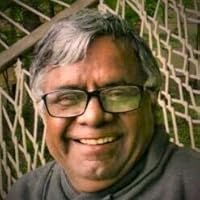
November 4, 2024
I renewed our Amazon Prime membership recently.This time I thought we should try to use the facility of free books and music. Accidentally I came across a interesting book Bhagavad Gita for millennials by Bibek Debroy. Ironically he passed away a few days ago.
I downloaded it on our tablet and went thro it.It is a good intro and the good part is that it is not too basic, it deals with a few concepts and clarifies some points - a good starting point.
The Bhagavad Gita (BG) can be a good text to explore and revisit our basic concepts on understanding how to live our life - the how's and the why's ...
Swami Parthasarathy, speaker on BG, used to lament during his talks that his audience are largely those on the wrong side of sixty, instead the younger lot should be attending!
I suppose The BG has not been packaged and marketed well enough to suit the younger generation.
This book is a welcome move.
BTW, BG by Bibek Debroy is available as a free download to those who have Amazon prime subscription.
I downloaded it on our tablet and went thro it.It is a good intro and the good part is that it is not too basic, it deals with a few concepts and clarifies some points - a good starting point.
The Bhagavad Gita (BG) can be a good text to explore and revisit our basic concepts on understanding how to live our life - the how's and the why's ...
Swami Parthasarathy, speaker on BG, used to lament during his talks that his audience are largely those on the wrong side of sixty, instead the younger lot should be attending!
I suppose The BG has not been packaged and marketed well enough to suit the younger generation.
This book is a welcome move.
BTW, BG by Bibek Debroy is available as a free download to those who have Amazon prime subscription.
July 6, 2021
It took me a little while to complete it, because I wanted to be thorough with it. And it was absolutely worth the time I spent. Sometimes I went off tangent to some other works referred to in the book, to understand a topic, each time coming back with new knowledge. One does not require a background in Sanskrit to read this book, of course having one will aid the discussions better. The book has a nice flow to it. As the book mentions, it is not a translation of the Bhagavad Gita, but it provides the knowledge that one requires. It does so in an efficient manner. Most of the book makes for an easy read, though some chapters leave you wondering and need to be read again to understand the deep philosophical underpinnings. Each person who reads this book might take something different, for it involves the reader and their interpretation as well. A must read.
April 6, 2021
This is an excellent book by the inimitable Bibek Debroy.
He covers about 25% of the shlokas of the Gita.
However, what sets this book apart is the 'asides', he keeps on serving. Lots of interesting information from Mahabharata, the Upanishads and Puranas, which compliment the Gita.
More than anything else, this book will whet your appetite to dive deeper into the subject.
His use of 'padchhed anvay' to simplify the Sanskrit translation, is also very good.
I have decided to read his prose translation of the Gita.
Hats off to his erudition and research and devotion.
He covers about 25% of the shlokas of the Gita.
However, what sets this book apart is the 'asides', he keeps on serving. Lots of interesting information from Mahabharata, the Upanishads and Puranas, which compliment the Gita.
More than anything else, this book will whet your appetite to dive deeper into the subject.
His use of 'padchhed anvay' to simplify the Sanskrit translation, is also very good.
I have decided to read his prose translation of the Gita.
Hats off to his erudition and research and devotion.
Displaying 1 - 30 of 57 reviews