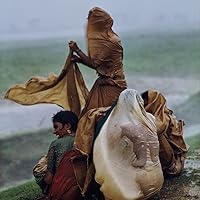
One of the meanings of the word ‘olio’ is ‘a miscellany’. The books in the Aleph Olio series contain a mélange of the best writing to be had on a variety of themes, and present aspects of India and Indian life in ways that have seldom been seen before.
Ways of Dying comprises stories and essays of deep insight into an inevitable part of life—death. The pieces in the book include Amitav Ghosh on the assassination of Indira Gandhi and its aftermath, Ruskin Bond on memories of his father’s funeral, Amitava Kumar on how it is necessary to find comfort and solace in the midst of profound grief, Mahasweta Devi on murder and revenge in rural India, and Atul Gawande on assisted suicide and what doctors fear the most when faced with the mortality of their patients.
Elsewhere in the anthology, the reader will find one of Munshi Premchand’s greatest stories, ‘The Shroud’, a peerless meditation on the hypocrisies and feigned grief of dysfunctional families on the death of a family member, balanced by Khushwant Singh’s poignant essay on the death of his beloved grandmother.
Rounding out the selection are George Orwell on the complex reasons that often lead to innocent blood being shed, David Davidar on the sadness and turmoil that whirls through a family upon the death of a patriarch, and Kolakaluri Enoch on the tragic death of a young girl.
Amitav Ghosh is an Indian writer. He won the 54th Jnanpith award in 2018, India's highest literary honour. Ghosh's ambitious novels use complex narrative strategies to probe the nature of national and personal identity, particularly of the people of India and South Asia. He has written historical fiction and non-fiction works discussing topics such as colonialism and climate change. Ghosh studied at The Doon School, Dehradun, and earned a doctorate in social anthropology at the University of Oxford. He worked at the Indian Express newspaper in New Delhi and several academic institutions. His first novel, The Circle of Reason, was published in 1986, which he followed with later fictional works, including The Shadow Lines and The Glass Palace. Between 2004 and 2015, he worked on the Ibis trilogy, which revolves around the build-up and implications of the First Opium War. His non-fiction work includes In an Antique Land (1992) and The Great Derangement: Climate Change and the Unthinkable (2016). Ghosh holds two Lifetime Achievement awards and four honorary doctorates. In 2007, he was awarded the Padma Shri, one of India's highest honours, by the President of India. In 2010, he was a joint winner, along with Margaret Atwood, of a Dan David prize, and in 2011, he was awarded the Grand Prix of the Blue Metropolis festival in Montreal. He was the first English-language writer to receive the award. In 2019, Foreign Policy magazine named him one of the most important global thinkers of the preceding decade.
This book is a collection of essays which revolve around a common theme which is loss or more appropriately death which is the inevitable aspect of life. Since it's a collection the greatest strength it has is its diversity. One can witness the aftermath of assasination of a political leader and also murder and revenge in rural India.
I must say that the Pyre essay by Amitava Kumar was really moving. The author correctly sums it all with one line " Grief makes you a stranger to yourself and for momentarily one is pierced with loss."
Another highlight of the book is an essay "Being Mortal" by Atul Gawande. I have heard a lot about the author and other works but this one truly stands out. Hopefully will be reading more by the same author soon.
Another timeless classic was the Shroud by Munshi Premchand or better known as Kafan. It lays out the multiple realities or hypocrisies of Indian society as a whole. Even death cannot escape those societal compulsions and a common man gets crushed by the weight of it.
As a whole it's a great collection to read for sure. Some of the other regional translations might have lost the true meaning but yet they are worth reading.
This book is a collection of 10 stories about death and its various dimensions. The aftermath of an assassination, a young boy's perspective of his father's funeral, an adult's loss of her mother and her death rites, bonded labour and violence, the euthanasia debate, mock grief of death in penury, a rich life in contrast to death's starkness, killing for ego, a natural death and its peace and how hunger chases death, these are some of the themes these stories are woven around.
The book is remarkable for putting up a collection of poignant and moving portrayal of death in various hues. Although a bit grim, it is a telling reminder of the fleeting thing life is and death as the ultimate truth without much meaning. Only sometimes, it may have a little beauty to it.
Book Title: Ways of Dying Author: Various Authors Format: Kindle
My Thoughts: The term 'Anthology' originates from the Greek word anthologia, meaning a collection of flowers. In the world of literature, an anthology is a collection or a compilation of essays or stories or poems or plays or narrations or any other work of literature. It can also be said; an anthology is an ala-carte of great works brought into one book. In the modern world, an anthology of feature films and movies is also a known craft.
As an anthology is a collection of works from different authors and writers, the readers get a chance to know and read works of many authors at once. Well, there are pros and cons to the art of anthology. It is unlikely that al the stories or essays or whichever works form gathered from many authors will allure and entertain the readers. There may be disappointments as well as surprises for the readers.
In this connection, talking about this book, ' Ways of dying ', it is an interesting anthology. The ten stories present in the book are about ten different ways of death. Suppose one chapter talks about the assassination of a famous person, others talk about a personal loss. Moreover, the mindset, the thought process and the psyche of a person who witnesses or hears the death of a person is very well captured and presented in the individual stories.
There are some chapters which happen to be the translated ones from their originals languages. This is one of the advantages that a reader will get to know about the book or the author, but there are also some complaints in general that the translation works usually lose their soul.
How entertaining is the book? The book is entertaining. As said, the book is a collection of 10 stories or excerpts from a book of well-known authors and their books. Books like this give a great glimpse of the author's work. It is also very much possible that a reader who might have missed reading a particular author's book or the author's work itself, can take the lead and pick up the original book. I found myself unaware about the author David Davidar and hence now I am ready with his works to read!
With interesting chapters that are picked up, this anthology by Aleph Publishers is undoubtedly an interesting book to read.
Final Verdict An exciting collection of famous and important stories and essays of famous people
What could be more life affirming than reading some of the best authors write about their most vulnerable experiences in an honest and sanguine way. Like disbursing hope by releasing a portion of themselves in the world for posterity. Though the title is blatantly obvious, the themes are recalibrated to widen a reader’s horizon while chiseling away taboos around the inevitable event of death.
DAVID DAVIDAR’s Death of a Patriarch was so good I read it twice. It demands a reread to get consumed completely. A village’s astronomic loss and their reverence on the death of an honoured resident. Also touching base on the pertinent questions centering around life and death through few lines from The Upanishads.
RUSKIN BOND’s The Funeral, where a nine year old son surreptitiously witnesses and tries to make sense of his father’s funeral. It corralled with ache.
AMITAVA KUMAR’s Pyre, a highly vivid account of the first couple days of his mother’s death, the rituals that followed, familial grief and how it textures their lives. My memories merged with his.
ATUL GAWANDE’s Being Mortal talks about assisted suicide or euphemistically death with dignity. The paragraph on ‘dying role’ that’s important to the dying as well as those around him was so well articulated.
KHUSHWANT SINGH’s The Portrait of a Lady was like being invited into the pages by the perpetually calm grandmother. She reminds the reader to navigate through the world with tenderness and nuance, a simple fact we often let slip.
Amitav Ghosh, Mahasweta Devi and Munshi Premchand write about boundless courage and unflappability, charting new territories, the dignity of holding on as well as letting go.
One of the pleasures for a reader is reading an author for the first time, loving their writing and realising they have a whole lineup waiting to be read. Cannot wait to read more of Kumar, Davidar and Gawande.
An absolute undiscovered gem of a book that deserves many more readers.
Death to me, is both of an underestimation and an overestimation. In the truest sense, reality is incomplete without death. Death isn't darkness, but it casts a shadow and only light can cast a shadow. Is death like light? Death here is like the heavy mist, that hangs atop the soil and wriggles between strands of grass blades. Here death swerves past and hits hard on the people too, bringing forth turbulence but a strange, residual emptiness. Is death emptiness? In here, Death takes the lead role, and he dances without a crew, but he does surely have orchestration. His orchestration is the ways of the people, who are also assisting and violating terms of reality. Is death a true performer?
'Ways of Dying' takes times to go through. It got presented to me quite minimally, but I was only seeing the tip of the iceberg. This collection catches Death quite abruptly, almost like a doe caught in a headlight. The prose is thick and viscous, and I needed through wade through it. There is some sort of music to the lines, a melancholy note of departure, and of restlessness. I had to listen to it carefully to hear it clearly, but even when close, it appeared distant and muffled. The exploration of death here is haunting and makes me pause. From a vantage point, I peer down on life cycles, on the teeming multitude doing their business, and as said before....Death hanging like a mist on a winter morning, touching cold surfaces and forming dew.
'Ways of Dying' has authors talking quite personally in a sentimental, diverse diction. Their characters are smitten by death, and in the essays, we see ourselves as humans greeting death. They have explored death over the horizons of deeper sympathy, resilience and raw tidings. There is a surprising truth accompanying the literary pieces, almost like a silent spectator allowing us to play in its yard.
Be it Amitav Ghosh in "The Ghost of Mrs. Gandhi", charting out trauma and disturbance that sprouts from communities and how it affects the masses in times of crisis. Or be it Premchand once again delivering fluently the gaping wounds of discrimination and universal agony, in "Shroud". In "The Funeral", Ruskin Bond strips death of all ceremonial gaudiness, and exposes grief and void in complete nakedness through the eyes of a child who has just lost his father. Khuswant Singh's "The Portrait of a young lady" paints death in colours from our personal reservoirs of half-used tubes of paint, as he talks about the aftermath of the death of his doting grandmother. Mahasweta Devi, George Orwell, Atul Gawande, and many more--I met them all here.
Death is very personalised here. It is for the people, within the people, and towards the people. But a lot thrives in those interpersonal gaps too, and in the slow whispers. The authors here take up a raw voice, unleashing their fiercest emotions and letting them pounce: making the impact profound. Death becomes omnipresent here, as we watch it go around, it watches over us too. I never knew Death so closely, never felt it rise up through so many voices and it was always distant to me. But now I feel it close and hidden, as the unwelcome but expected visitor in every scene of drama and turmoil: and it is up to him which role will he take, that of the saviour or that of the usurper.
The latest edition from the Aleph Olio series, Ways of Dying brings together essays and short stories on the theme of death. The anthology as a whole comes across as a collection of different portraits of death, each made from a different angle. The motif that runs throughout the collection is that death is the ultimate destination of all human endeavors- be they personal, social, political or communal.
The collection opens with Amitav Ghosh’s essay on the assassination of Prime Minister Indira Gandhi and communal violence ensued by the event. Ghosh’s essay comes across as a card picked up from the deck of communal violence, by which the country has been plagued since long. Featuring personal loss with the death of close ones are the entries by Ruskin Bond and Khushwant Singh.
Moving on the same lines of personal loss but at the same time presenting a close up of death and the rituals associated with it, is Amitava Kumar’s account of his mother’s death. The personal and the social get intertwined in the stories by Munshi Premchand and Mahashweta Devi, wherein the death of an individual becomes the occasion for larger critique of the society in which we live.
The last two stories figure something that looms larger than death itself- the dying person in David Davidar’s “Death of a Patriarch” and the cause of death in Kolakaluri Enoch’s “Hunger”. The two essays that stand out from the collection for me are George Orwells’s “Shooting an Elephant” and Atul Gowade’s “Being Mortal”. Whereas the former presents a complex dynamic between the white man and the native man, the latter contemplates the issue of euthnasia- assisted death.
The choice of stories and essays is indeed eclectic, and I enjoyed the whole collection thoroughly. If asked, I would say Orwell and Gawade’s essays, and the last story “Hunger” are my favourites from the collection. What I did not like about the collection is the appearance of certain stories that have already been featured in other anthologies by the Aleph Book Company. It would have been really great if more effort were put in selecting the stories and essays, and works were not repeated. Another thing that I found to be lacking in this edition is a nice Introduction to the anthology. Nevertheless, it makes for a delightful read. Definitely not to be missed.
My Rating: **** (4/5)
*I was kindly sent a copy by the publisher, in exchange for an honest review. Views expressed are entirely personal and unbiased.*
Ten moving tales of death written by ten accomplished authors. Tales talking about the death of loved ones, tales about mass deaths arising communal violence, and even tales about incomprehensible animal killings. All Indian stories, outside of Gawande's piece on assisted suicide which is global in nature.
The book is pensive and melancholic yet an easy read owing to the high quality of the thinking and writing. I found myself pausing to reflect multiple times, connecting the fiction to my reality, and came away from the book richer with thoughts to reflect upon.
Not exactly about ways of dying, but a book about death in general and its various dimensions. Amitav Kumar's essay that hit me the most. We all have to go through the passing of a parent someday. It kind of alerts you to what lies in store. I find myself at the cusp of launching into a next reading phase. This time I'll lay sights on books about death and grief. I think picking up this book was an unconscious step in that direction.
There are 10 stories/essays with ‘death’ as the core theme. Although nice in their own ways, none actually took my breath away. I dunno whether the fault lies with me or the authors or the selector(s). But the book has pretty looking cover so all is not lost.
An anthology of stories and essays that confronts death not as an end, but as a mirror to life’s ethical, emotional, and social complexities. Together they form a deeply human mosaic: minimalistic, unsparing, and profoun