

What do you think?
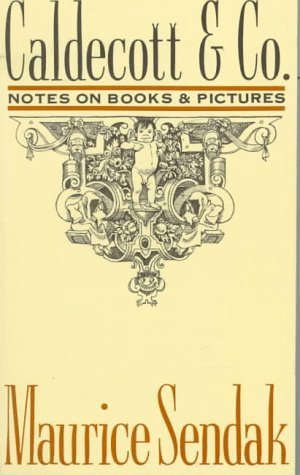
Caldecott & Co.: Notes on Books and Pictures
A collection of the author and illustrator's critical writings is devoted to writers and artists whose work he admires, including Randolph Caldecott, Beatrix Potter, and Walt Disney, and also features several interviews and autobiographical pieces
216 pages, Paperback
First published November 1, 1988
About the author
Maurice Sendak
411 books2,481 followersMaurice Sendak was a visionary American illustrator and writer best known for transforming the landscape of children's literature through his emotionally resonant stories and distinctive artistic style. He gained international acclaim with Where the Wild Things Are, a groundbreaking picture book that captured the emotional intensity of childhood through its honest portrayal of anger, imagination, and longing. Widely recognized for his ability to blend the whimsical with the profound, Sendak created works that resonated with both children and adults, challenging conventional notions of what children's books could be.
Born and raised in Brooklyn, Sendak was a sickly child who spent much of his early life indoors, nurturing a love for books, drawing, and storytelling. The son of Polish-Jewish immigrants, he was deeply affected by the losses of the Holocaust, which shaped the darker emotional undercurrents in his work. His art was influenced by a range of sources, from comic strips and Mickey Mouse to Mozart, Blake, and German Romanticism. Though he began his career illustrating other writers’ books, he soon transitioned to authoring his own, beginning with Kenny’s Window and then The Sign on Rosie’s Door.
It was Where the Wild Things Are, published in 1963, that solidified Sendak’s reputation as a master of children’s literature. The book, which won the Caldecott Medal, was initially controversial due to its depiction of unruly behavior and ambiguous emotional tone. However, it was later recognized as a revolutionary work that respected children’s inner lives and psychological complexity. This theme continued in his later works, including In the Night Kitchen and Outside Over There, which formed a loose trilogy exploring the emotional and imaginative experiences of childhood. These books, celebrated for their dreamlike narratives and lush illustrations, often tackled fears, fantasies, and the challenges of growing up.
Throughout his career, Sendak illustrated more than a hundred books, working with authors such as Ruth Krauss and Else Holmelund Minarik. His visual style—characterized by its intricate detail, dynamic line work, and expressive characters—evolved over the decades, but always retained an unmistakable emotional intensity. He also designed sets and costumes for operas and ballets, bringing his imaginative worlds to the stage. Notably, he created productions for works by Mozart and Prokofiev, combining his love of classical music with theatrical design.
Sendak was known for his sharp wit, fierce independence, and deep empathy for children. He openly criticized the sanitized and moralistic tone of much of children's publishing, insisting instead that young readers deserved stories that acknowledged their full emotional range, including fear, grief, anger, and wonder. He was also an openly gay man in a long-term relationship, though he only spoke publicly about his sexuality later in life.
Later in his career, Sendak continued to produce new work, collaborate with artists and institutions, and advocate for intellectual freedom. His final books, including Bumble-Ardy and My Brother’s Book, reflected both a return to his childhood memories and a meditation on aging, love, and mortality. Though his stories often ventured into the dark or surreal, they remained rooted in a deep respect for the emotional reality of children and a belief in the power of imagination to confront life's challenges.
Maurice Sendak’s legacy endures in the countless writers and illustrators he inspired, the cultural impact of his stories, and the enduring affection readers of all ages hold for his wild things, mischievous children, and tender monsters. Through his work, he redefined what children’s literature could be: rich, honest, haunting, and, above all, deeply human.
Born and raised in Brooklyn, Sendak was a sickly child who spent much of his early life indoors, nurturing a love for books, drawing, and storytelling. The son of Polish-Jewish immigrants, he was deeply affected by the losses of the Holocaust, which shaped the darker emotional undercurrents in his work. His art was influenced by a range of sources, from comic strips and Mickey Mouse to Mozart, Blake, and German Romanticism. Though he began his career illustrating other writers’ books, he soon transitioned to authoring his own, beginning with Kenny’s Window and then The Sign on Rosie’s Door.
It was Where the Wild Things Are, published in 1963, that solidified Sendak’s reputation as a master of children’s literature. The book, which won the Caldecott Medal, was initially controversial due to its depiction of unruly behavior and ambiguous emotional tone. However, it was later recognized as a revolutionary work that respected children’s inner lives and psychological complexity. This theme continued in his later works, including In the Night Kitchen and Outside Over There, which formed a loose trilogy exploring the emotional and imaginative experiences of childhood. These books, celebrated for their dreamlike narratives and lush illustrations, often tackled fears, fantasies, and the challenges of growing up.
Throughout his career, Sendak illustrated more than a hundred books, working with authors such as Ruth Krauss and Else Holmelund Minarik. His visual style—characterized by its intricate detail, dynamic line work, and expressive characters—evolved over the decades, but always retained an unmistakable emotional intensity. He also designed sets and costumes for operas and ballets, bringing his imaginative worlds to the stage. Notably, he created productions for works by Mozart and Prokofiev, combining his love of classical music with theatrical design.
Sendak was known for his sharp wit, fierce independence, and deep empathy for children. He openly criticized the sanitized and moralistic tone of much of children's publishing, insisting instead that young readers deserved stories that acknowledged their full emotional range, including fear, grief, anger, and wonder. He was also an openly gay man in a long-term relationship, though he only spoke publicly about his sexuality later in life.
Later in his career, Sendak continued to produce new work, collaborate with artists and institutions, and advocate for intellectual freedom. His final books, including Bumble-Ardy and My Brother’s Book, reflected both a return to his childhood memories and a meditation on aging, love, and mortality. Though his stories often ventured into the dark or surreal, they remained rooted in a deep respect for the emotional reality of children and a belief in the power of imagination to confront life's challenges.
Maurice Sendak’s legacy endures in the countless writers and illustrators he inspired, the cultural impact of his stories, and the enduring affection readers of all ages hold for his wild things, mischievous children, and tender monsters. Through his work, he redefined what children’s literature could be: rich, honest, haunting, and, above all, deeply human.
Ratings & Reviews
Friends & Following
Create a free account to discover what your friends think of this book!
Community Reviews
Displaying 1 - 17 of 17 reviews

March 16, 2009
In elementary school it is traditional to bring cards on Valentine's Day. Most people come in with thin wisps of paper cookie-cutter-ed with his or her favorite character. It is a cute tradition, if not especially inspired. Most years I purchased my flat sentiment at the drugstore with everybody else. One year my mom put her foot down and said, "No!"
She bustled me off to a craft store where we purchased paper-lace doilies, red tissue paper, and glue. We spent the weekend cutting the doilies into large heart-shapes, then gluing a red tissue-paper heart to the back creating a stained-glass Valentine of red and white.
When I brought my homemade Valentines in, I was a little unsure: mine looked so very different than the others. I was eight. It is very hard at eight to recognize that different can be better. I didn't recognize immediately that my homemade Valentines shone with glee amidst the flutter of white uniformed rectangles. I was very popular that day. My friends loved the bright, beautiful color and lacy texture. Even the boys liked them (Wayne and John both gave me chocolate heart candies). It is one of the few times in my life that being different offered immediate, positive gratification.
Caldecott & Co. is Maurice Sendak's Valentine. His opinions are straight from his heart based on the things that he loved as a child. He praises the vitality of music and motion, and speaks of the delights of Mother Goose. Not all of his remarks are flattering of other artists, but none of them are malicious; he speaks of what he loves. I love picture books. I love animation. I wouldn't touch the pages where the spiders in The Hobbit lived, and it took me a good year to willingly read The Lion, The Witch and The Wardrobe because the illustration of the creatures at the stone table was very scary. Reading Caldectt and Co. was like getting an hand-drawn envelope in the mail, or as if someone had made a big, bright red Valentine just for me.
She bustled me off to a craft store where we purchased paper-lace doilies, red tissue paper, and glue. We spent the weekend cutting the doilies into large heart-shapes, then gluing a red tissue-paper heart to the back creating a stained-glass Valentine of red and white.
When I brought my homemade Valentines in, I was a little unsure: mine looked so very different than the others. I was eight. It is very hard at eight to recognize that different can be better. I didn't recognize immediately that my homemade Valentines shone with glee amidst the flutter of white uniformed rectangles. I was very popular that day. My friends loved the bright, beautiful color and lacy texture. Even the boys liked them (Wayne and John both gave me chocolate heart candies). It is one of the few times in my life that being different offered immediate, positive gratification.
Caldecott & Co. is Maurice Sendak's Valentine. His opinions are straight from his heart based on the things that he loved as a child. He praises the vitality of music and motion, and speaks of the delights of Mother Goose. Not all of his remarks are flattering of other artists, but none of them are malicious; he speaks of what he loves. I love picture books. I love animation. I wouldn't touch the pages where the spiders in The Hobbit lived, and it took me a good year to willingly read The Lion, The Witch and The Wardrobe because the illustration of the creatures at the stone table was very scary. Reading Caldectt and Co. was like getting an hand-drawn envelope in the mail, or as if someone had made a big, bright red Valentine just for me.

August 4, 2007
Although this book sadly appears to be out of print, it is worth getting your hands on a copy if you appreciate the work of Maurice Sendak. The book is a collection of essays divided into two parts: the first includes essays about writers and illustrators Sendak admires and has been influenced by; the second part includes speeches, interviews, and miscellaneous writings about his own art. All of the essays give wonderful insight into Sendak’s intelligence and creative process, and will provide a reading list to anyone who is interested in the precedents of a master.

February 19, 2024
I can see why this is out of print but it's an incredible book--it's somewhere between a memoir, a collection of critical essays, and a glimpse into Sendak's process. I could absolutely re-read this book every year and get something new out of it. The man is an absolute genius.
A few quotes that stood out:
On the importance of quality bookmaking:
"My sister bought me my first real book, The Prince and the Pauper. A ritual began with that book. The first thing was to set it up on the table and stare at it for a long time...then came the smelling of it...I remember trying to bite into it...but the last thing I did with the book was to read it. It was all right... There's so much more to books than just the reading. I've seen children play with books, fondle books, smell books, and that's every reason why books should be lovingly produced."
On children and death:
All children...worry. Will mama and papa go away and never come back? Will I die? We don't like to think of kids worrying about such things, but of course they do. They have no choice if they're intelligent and sensitive and alive to what's happening in the world.''
On the role of music in his work:
"...music is the impulse that most stimulates my own work and I invariably sense a musical element in the work of the artists I admire, those artists who achieve the authentic loveliness that is the essence of the picture book, a movement that is never still, and that children, I am convinced, recognize and enjoy as something familiar to themselves."
A few quotes that stood out:
On the importance of quality bookmaking:
"My sister bought me my first real book, The Prince and the Pauper. A ritual began with that book. The first thing was to set it up on the table and stare at it for a long time...then came the smelling of it...I remember trying to bite into it...but the last thing I did with the book was to read it. It was all right... There's so much more to books than just the reading. I've seen children play with books, fondle books, smell books, and that's every reason why books should be lovingly produced."
On children and death:
All children...worry. Will mama and papa go away and never come back? Will I die? We don't like to think of kids worrying about such things, but of course they do. They have no choice if they're intelligent and sensitive and alive to what's happening in the world.''
On the role of music in his work:
"...music is the impulse that most stimulates my own work and I invariably sense a musical element in the work of the artists I admire, those artists who achieve the authentic loveliness that is the essence of the picture book, a movement that is never still, and that children, I am convinced, recognize and enjoy as something familiar to themselves."

Read
April 5, 2020Lovely essays by an artist who cherished the medium of the picture book and treated it with adoration and honour.

July 7, 2019
I loved this book so much! I was led to it from a footnote in
Dear Genius: The Letters of Ursula Nordsrom
which was published in 1998. Maurice Sendak dedicated Caldecott & Co: Notes on Books & Pictures to his beloved editor Ursula Nordstrom, who died in 1988, the year this book was published.
By 1971, Sendak had illustrated 70 books in twenty years. Most of his illustrations in the 1950s were for the works of other authors. In 1964, he wrote and illustrated Where the Wild Things Are which won the Caldecott Medal that year. His acceptance speech for that award, the Hans Christian Anderson Award, and the Laura Ingalls Wilder Award make up the last part of this book of essays.
Where the Wild Things Are was not universally embraced by librarians and the adult buyers of children's books, and In the Night Kitchen even less so. In one of Sendak's essays published in 1964, he quotes Nordstrom about the difficulties in publishing quality children's books:
It is always the adults we have to contend with -- most children under the age of ten will react creatively to the best work of a truly creative person. But too often adults sift their reactions to creative picture books through their own adult experiences. And as an editor who stands between the creative artist and the creative child I am constantly terrified that I will react as a dull adult. But at least I must try to remember it every minute!
In a separate essay from 1964 he talks about Nordstrom's support for Where the Wild Things Are despite her "squeamishness" on seeing the first pictures for the book.
This admission of misgivings and her realization that she was reacting in a stereotyped adult fashion was a confession of utmost truth, and only she could have made it. This is how she put it recently: "And so we remembered once again, as so many times in the past, that the children are new and we are not." Her support and unflagging enthusiasm helped bring the book to a happy conclusion.
These essays written by Sendak are from 1955 to 1987 and are not in chronological order, but rather arranged topically about the history of children's books and the artists who illustrated them.
One of the essays is the preface to Pictures by Sendak published in 1971. It's a selection of 19 illustrations from eight of the 70 books he illustrated - all of them after the 1950s. I went searching for the portfolio at my "go to" website for out-of-print books www.abebooks.com and they do indeed have sellers in their network who have the portfolio for sale from a low of $750 to a high of $16,000. I'm guessing it was a small print production.
One fact that emerged in these essays is his love for music and he refers to some of his drawings as "a kind of pen-and-ink ballet." He drew his illustrations to classical music and had a fondness for Mozart. In addition to picture books, he also designed sets for operas and ballets, including The Magic Flute. The Morgan Library in New York City has a special exhibit of his theatrical designs from June to October 2019, Drawing the Curtain: Maurice Sendak's Designs for Opera and Ballet, which I'm hoping to see this month.
Woven throughout the essays are stories of his childhood growing up in Brooklyn in the 1930s- the impact of Mickey Mouse, comics and the movies. From his acceptance speech for the Hans Christian Andersen Award in 1970:
Mine was a childhood colored with memories of village life in Poland, never actually experienced but passed on to me as persuasive reality by my immigrant parents. On the one hand, I lived snugly in their Old Country world, a world far from urban society, where the laws and customs of a small Jewish village were scrupulously and lovingly obeyed. And on the other hand, I was bombarded with the intoxicating gush of America in that convulsed decade, the thirties. Two emblems represent that era for me: a photograph of my severe, bearded grandfather (I never actually saw him), which haunts me to this day and which, as a child, I believed to be the exact image of God; and Mickey Mouse. These two lived side by side in a bizarre togetherness that I accepted as natural. For me, childhood was shtetl life transplanted, Brooklyn colored by Old World reverberations and Walt Disney and the occasional trip to the incredibly windowed "uptown" that was New York - America. All in all, what with loving parents and sister and brother, it was a satisfying childhood. Was it American? Everybody's America is different.
One of many interesting things about Ursula Nordstrom and Maurice Sendak is their choice of life partner. In her letters to writers over the decades, Nordstrom refers to her partner Mary Griffith - their homes, their travels, their parties. Nordstrom predeceased Mary Griffith, who is credited in Dear Genius with providing some of the letters that appear there.
Maurice Sendak's longtime partner, Eugene Glynn, predeceased him in 2007 and in Glynn's obituary Sendak was mentioned as his partner of 50 years. The following year, in an interview with the New York Times, he said never told his parents. "All I wanted was to be straight so my parents could be happy. They never, never, never knew."
I'm struck by how two such talented people impacted children's literature, had wonderfully rewarding lives and loving partners, and were part of an LGBTQ community that wasn't itself "out" in the workplace from the 1930s through the 1980s in New York City. When we talk about the need to teach LGBTQ History, we need to teach about the amazing accomplishments of people like Ursula Nordstrom and Maurice Sendak who persevered and gave so much to this country and to our culture. There are a number of well known authors long deceased who were less well known members of the LGBTQ community. Let's put these role models out there for students.
I've enjoyed the time I've spent with both Dear Genius and Caldecott & Co. and I'm awestruck by seeing how some of my favorite childhood books were made. I would highly recommend these books to anyone of any age who loves books.
By 1971, Sendak had illustrated 70 books in twenty years. Most of his illustrations in the 1950s were for the works of other authors. In 1964, he wrote and illustrated Where the Wild Things Are which won the Caldecott Medal that year. His acceptance speech for that award, the Hans Christian Anderson Award, and the Laura Ingalls Wilder Award make up the last part of this book of essays.
Where the Wild Things Are was not universally embraced by librarians and the adult buyers of children's books, and In the Night Kitchen even less so. In one of Sendak's essays published in 1964, he quotes Nordstrom about the difficulties in publishing quality children's books:
It is always the adults we have to contend with -- most children under the age of ten will react creatively to the best work of a truly creative person. But too often adults sift their reactions to creative picture books through their own adult experiences. And as an editor who stands between the creative artist and the creative child I am constantly terrified that I will react as a dull adult. But at least I must try to remember it every minute!
In a separate essay from 1964 he talks about Nordstrom's support for Where the Wild Things Are despite her "squeamishness" on seeing the first pictures for the book.
This admission of misgivings and her realization that she was reacting in a stereotyped adult fashion was a confession of utmost truth, and only she could have made it. This is how she put it recently: "And so we remembered once again, as so many times in the past, that the children are new and we are not." Her support and unflagging enthusiasm helped bring the book to a happy conclusion.
These essays written by Sendak are from 1955 to 1987 and are not in chronological order, but rather arranged topically about the history of children's books and the artists who illustrated them.
One of the essays is the preface to Pictures by Sendak published in 1971. It's a selection of 19 illustrations from eight of the 70 books he illustrated - all of them after the 1950s. I went searching for the portfolio at my "go to" website for out-of-print books www.abebooks.com and they do indeed have sellers in their network who have the portfolio for sale from a low of $750 to a high of $16,000. I'm guessing it was a small print production.
One fact that emerged in these essays is his love for music and he refers to some of his drawings as "a kind of pen-and-ink ballet." He drew his illustrations to classical music and had a fondness for Mozart. In addition to picture books, he also designed sets for operas and ballets, including The Magic Flute. The Morgan Library in New York City has a special exhibit of his theatrical designs from June to October 2019, Drawing the Curtain: Maurice Sendak's Designs for Opera and Ballet, which I'm hoping to see this month.
Woven throughout the essays are stories of his childhood growing up in Brooklyn in the 1930s- the impact of Mickey Mouse, comics and the movies. From his acceptance speech for the Hans Christian Andersen Award in 1970:
Mine was a childhood colored with memories of village life in Poland, never actually experienced but passed on to me as persuasive reality by my immigrant parents. On the one hand, I lived snugly in their Old Country world, a world far from urban society, where the laws and customs of a small Jewish village were scrupulously and lovingly obeyed. And on the other hand, I was bombarded with the intoxicating gush of America in that convulsed decade, the thirties. Two emblems represent that era for me: a photograph of my severe, bearded grandfather (I never actually saw him), which haunts me to this day and which, as a child, I believed to be the exact image of God; and Mickey Mouse. These two lived side by side in a bizarre togetherness that I accepted as natural. For me, childhood was shtetl life transplanted, Brooklyn colored by Old World reverberations and Walt Disney and the occasional trip to the incredibly windowed "uptown" that was New York - America. All in all, what with loving parents and sister and brother, it was a satisfying childhood. Was it American? Everybody's America is different.
One of many interesting things about Ursula Nordstrom and Maurice Sendak is their choice of life partner. In her letters to writers over the decades, Nordstrom refers to her partner Mary Griffith - their homes, their travels, their parties. Nordstrom predeceased Mary Griffith, who is credited in Dear Genius with providing some of the letters that appear there.
Maurice Sendak's longtime partner, Eugene Glynn, predeceased him in 2007 and in Glynn's obituary Sendak was mentioned as his partner of 50 years. The following year, in an interview with the New York Times, he said never told his parents. "All I wanted was to be straight so my parents could be happy. They never, never, never knew."
I'm struck by how two such talented people impacted children's literature, had wonderfully rewarding lives and loving partners, and were part of an LGBTQ community that wasn't itself "out" in the workplace from the 1930s through the 1980s in New York City. When we talk about the need to teach LGBTQ History, we need to teach about the amazing accomplishments of people like Ursula Nordstrom and Maurice Sendak who persevered and gave so much to this country and to our culture. There are a number of well known authors long deceased who were less well known members of the LGBTQ community. Let's put these role models out there for students.
I've enjoyed the time I've spent with both Dear Genius and Caldecott & Co. and I'm awestruck by seeing how some of my favorite childhood books were made. I would highly recommend these books to anyone of any age who loves books.

May 28, 2012
Music and illustration, Mother Goose, Hans Christian Anderson, Beatrix Potter, Walt Disney, Randolph Caldecott, his own work -- Maurice Sendak writes entertainingly and thoughtfully about illustration and children's literature in this wonderful collection of essays, interviews, speeches, and book reviews. As you would expect, he is especially good at identifying and celebrating emotional complexities in his own and others' work.
April 11, 2026
A delightful set of essays by Sendak - several of his award speeches, and several essays about other illustrators. They are interesting and lively, and his voice is charming.

September 13, 2025
Onestamente delusa.

July 27, 2013
I found this collection of Sendak's essays on the shelves at one of the libraries I visit regularly. It was so well hidden it wasn't even in the catalog anymore, so I definitely felt like I had uncovered a hidden treasure.
Included in this book are Sendak's Caldecott acceptance speech, his reflections on the work of various authors and illustrators, his thoughts on Walt Disney, and thoughts on his own illustrations and the art of making books. I have always thought Sendak was an interesting man, and this book only deepens my appreciation for his intellect and his devotion to his work. This book was published in 1988, but it's amazing how much of what he says about the degradation of the picture book is related to discussions we have in 2013 about e-books and generally, about the difference between what kids like and respond to and what is supposedly "good" for them.
I didn't know many of the works, authors, or illustrators Sendak references, but it didn't matter. The true appeal of this book for me was to have all these insights into the way Sendak viewed literature, and instead of seeing him as an angry old guy, I now see him as someone who understood the value of the past and who lamented its loss, not for selfish reasons, but because he felt bad for future generations who wouldn't have the same exposure to the same wonderful material that shaped his life. I also loved learning more about the inspirations for Where the Wild Things Are, In the Night Kitchen, and Really Rosie. )I am amazed that Rosie was a real child that he observed and sketched. I found her so intimidating as a kid, I can't imagine her as a real person!)
This book is a must-read for anyone who wishes to seriously evaluate and understand picture books, and of course, for those mourning Sendak and wishing to know more about his life and legacy. Also recommended: Dear Genius: The Letters of Ursula Nordstrom.
Included in this book are Sendak's Caldecott acceptance speech, his reflections on the work of various authors and illustrators, his thoughts on Walt Disney, and thoughts on his own illustrations and the art of making books. I have always thought Sendak was an interesting man, and this book only deepens my appreciation for his intellect and his devotion to his work. This book was published in 1988, but it's amazing how much of what he says about the degradation of the picture book is related to discussions we have in 2013 about e-books and generally, about the difference between what kids like and respond to and what is supposedly "good" for them.
I didn't know many of the works, authors, or illustrators Sendak references, but it didn't matter. The true appeal of this book for me was to have all these insights into the way Sendak viewed literature, and instead of seeing him as an angry old guy, I now see him as someone who understood the value of the past and who lamented its loss, not for selfish reasons, but because he felt bad for future generations who wouldn't have the same exposure to the same wonderful material that shaped his life. I also loved learning more about the inspirations for Where the Wild Things Are, In the Night Kitchen, and Really Rosie. )I am amazed that Rosie was a real child that he observed and sketched. I found her so intimidating as a kid, I can't imagine her as a real person!)
This book is a must-read for anyone who wishes to seriously evaluate and understand picture books, and of course, for those mourning Sendak and wishing to know more about his life and legacy. Also recommended: Dear Genius: The Letters of Ursula Nordstrom.

November 13, 2017
Gonna write a "real" review, for a change.
This is an anthology of his essays and musings on writing and illustrating for children. It reveals his formidable intelligence and his empathy with fellow toilers in what is too often regarded as a somewhat lesser field of endeavor. As if writing and drawing for children were a distinctly second-best fiction-writing.
Sendak shows the degree of imagination, craft and humanity that goes into the best of this work. He is noticeably appreciative of well-known artists like Randolph Caldecott, Beatrix Potter and Jean de Brunhoff, and sharp-eyed essays on Andersen, the ``Mother Goose'' tradition and the best and worst of Walt Disney.
There are also more ephemeral pieces like award acceptances, interviews and brief prefaces to books though almost none is without some worthwhile observation. What comes through above all is Sendak's open-hearted admiration for craft and respect for true, ageless imagination.
This is an anthology of his essays and musings on writing and illustrating for children. It reveals his formidable intelligence and his empathy with fellow toilers in what is too often regarded as a somewhat lesser field of endeavor. As if writing and drawing for children were a distinctly second-best fiction-writing.
Sendak shows the degree of imagination, craft and humanity that goes into the best of this work. He is noticeably appreciative of well-known artists like Randolph Caldecott, Beatrix Potter and Jean de Brunhoff, and sharp-eyed essays on Andersen, the ``Mother Goose'' tradition and the best and worst of Walt Disney.
There are also more ephemeral pieces like award acceptances, interviews and brief prefaces to books though almost none is without some worthwhile observation. What comes through above all is Sendak's open-hearted admiration for craft and respect for true, ageless imagination.

March 6, 2023
“Books don't go out of fashion with children. They just go out of fashion with adults and publishers.”
A beautiful compilation of Sendak's thoughts, comments, and speeches. Sendak is an artist through and through. In choosing complex themes that speak to children because they do not shy away from children, his vocabulary, the hierarchy of intelligence and cultural capitol...it is no question why Sendak is revered in the way that he is. His craftsmanship and attention to detail is what truly separates him from many of today's children's illustrators. He refuses the popular and instead wishes to grapple with what is true--though perhaps not always true for adults.
This provides insight into one of the greatest minds of the 20th century. If you're a fan, a connoisseur of children's literature, or a scholar, this is a piece of literature that you absolutely mustn't miss.
A beautiful compilation of Sendak's thoughts, comments, and speeches. Sendak is an artist through and through. In choosing complex themes that speak to children because they do not shy away from children, his vocabulary, the hierarchy of intelligence and cultural capitol...it is no question why Sendak is revered in the way that he is. His craftsmanship and attention to detail is what truly separates him from many of today's children's illustrators. He refuses the popular and instead wishes to grapple with what is true--though perhaps not always true for adults.
This provides insight into one of the greatest minds of the 20th century. If you're a fan, a connoisseur of children's literature, or a scholar, this is a piece of literature that you absolutely mustn't miss.

August 21, 2023
A fantastic book from a fantastic illustrator, I recommend it with all my heart.
It is hard to imagine such a book today. Sendak is so open, so brutally honest - about other illustrators, about publishers... but he shows so much love.... for books, for reading, and for children. With all the political correctness around us, and with our view of children as beings that need to be overprotected, we have forgotten what it means to speak one's mind frankly. To be honest, witty and clever. (Which brings me to the question: are we turning into a society of polite nerds, afraid of themselves and others?)
In 1977, he states that modern picturebooks are "overcolored, overtechniqued and overwritten".
I also liked his statement that "Books don't go out of fashion with children. They just go out of fashion with adults and publishers."
I especially liked his view on the materials that are "proper" for children - there are just works of art, and then there is junk, he says, and children already know everything, there is no need to shield them from life - and it is in vain, anyway. We need to get them good works of art that will strip away their anxieties, help them to understand themselves and the world better. Children have a habit of skipping easily from fantasy to reality, it is no problem for them - it is the same with "harsh" of difficult themes.
This book is hard to get - but it is a must-read for anyone interested in picture books, art, or in children/childhood.
It is hard to imagine such a book today. Sendak is so open, so brutally honest - about other illustrators, about publishers... but he shows so much love.... for books, for reading, and for children. With all the political correctness around us, and with our view of children as beings that need to be overprotected, we have forgotten what it means to speak one's mind frankly. To be honest, witty and clever. (Which brings me to the question: are we turning into a society of polite nerds, afraid of themselves and others?)
In 1977, he states that modern picturebooks are "overcolored, overtechniqued and overwritten".
I also liked his statement that "Books don't go out of fashion with children. They just go out of fashion with adults and publishers."
I especially liked his view on the materials that are "proper" for children - there are just works of art, and then there is junk, he says, and children already know everything, there is no need to shield them from life - and it is in vain, anyway. We need to get them good works of art that will strip away their anxieties, help them to understand themselves and the world better. Children have a habit of skipping easily from fantasy to reality, it is no problem for them - it is the same with "harsh" of difficult themes.
This book is hard to get - but it is a must-read for anyone interested in picture books, art, or in children/childhood.

April 5, 2022
Some nice essays, and I enjoy Sendak's thought, but it has some slow spots, some less interesting bits taken from introductions to various works.
I'd recommend it for anyone who's a children's book fanatic like I am.
I'd recommend it for anyone who's a children's book fanatic like I am.

December 12, 2013
Found this on the daughter's shelf when we visited and picked it up -- she gave it to me as she'd been toying with getting rid of it since she kept puttin off reading it for so long. Fascinating though a bit repetitve here and there given the topic is one which invites mentioning certain ideas at various times in various settings. Sendak's take on books and reading is quite in sync with my own in a good part so head nodding came naturally. Also interesting to learn a bit more about the author himself via of his speeches, writings and such -- beyond the books with which one is familiar in their own right. Maybe it is partially the education/teacher persona in me who found such delight in some parts of this. May not be for everyone but it's quite enjoyable.
February 28, 2009
Incredibly insightful on two levels: how picture books succeed or fail, and what makes Sendak himself tick. There are so many authors I want to check out because of these essays, and I just hope most of them are still in print. Sendak creates fascinating portraits of some of the better-known ones like Beatrix Potter and Jean De Brunhoff. I love his curmudgeonly attitude toward over-protective parents and wholesome reading for children. His essay on the superiority of Disney's Pinocchio to Collodi's story (and to most animated films that followed) was especially terrific.

May 16, 2012
A good collection of short pieces on great children's book writers/illustrators of the past, with some speeches/interviews about Sendak's own work. A little thin -- I was under the impression this was going to be a more in-depth look at the history of the genre, but it's more a collection of short introductions, often reprinted from other collections. The essays are charming and beautifully-written (with a fine critical eye) on their own, but I wish that Sendak had been able to make this into a grander critical overview, since he obviously had the skill and knowledge to have done it.

September 20, 2017
I took a class with Maurice Sendak at the Parsons School of Design - and I have to say this book is at least as good as taking a class was. Maurice was a heartful genius - a person who never lost sight of the basic human dimension of being a vulnerable small being in a harsh world.
The latter part of the book is especially awesome. It’s a shame it’s not in print anymore.
The latter part of the book is especially awesome. It’s a shame it’s not in print anymore.
Displaying 1 - 17 of 17 reviews