

What do you think?
mέta / Κέντρο Μετακαπιταλιστικού Πολιτισμού
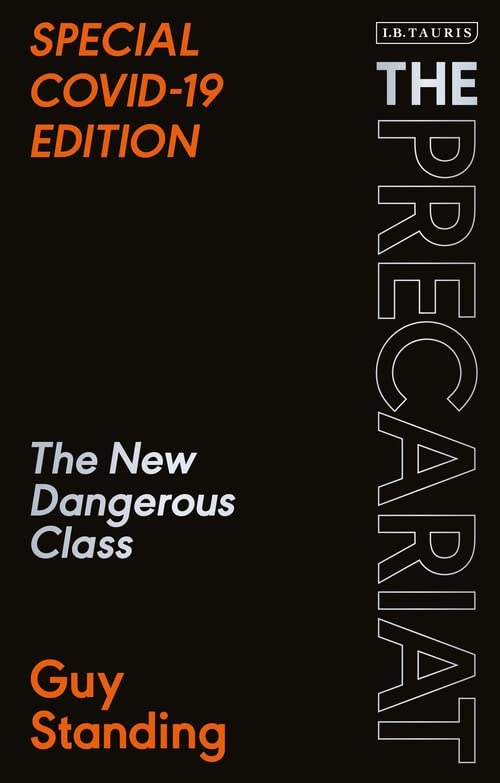
The Precariat: The New Dangerous Class SPECIAL COVID-19 EDITION
This book presents the new Precariat - the rapidly growing number of people facing lives of insecurity, on zero hours contracts, moving in and out of jobs that give little meaning to their lives. The delivery driver who brings your packages, the uber driver who gets you to work, the security guard at the mall, the carer looking after our elderly...these are The Precariat.
Guy Standing investigates this new and growing group, finding a frustrated and angry new underclass who are often ignored by politicians and economists. The rise of zero hours contracts, encouraged by fat cat corporations as risk-free employment, and by silicon valley as a way of outsourcing costs and responsibility, has been exacerbated by the COVID pandemic. At the same time, in its experience of lockdown, the western world is realizing the true value of these nurses, carers and key workers.
The answer? The return of income security and meaningful work - the principles 20th century capitalism was built on. By making the fears and desires of the Precariat central to economic thinking, Standing shows how concepts like Basic Income are not just desirable but inevitable, and plots the way to a better future.
Guy Standing investigates this new and growing group, finding a frustrated and angry new underclass who are often ignored by politicians and economists. The rise of zero hours contracts, encouraged by fat cat corporations as risk-free employment, and by silicon valley as a way of outsourcing costs and responsibility, has been exacerbated by the COVID pandemic. At the same time, in its experience of lockdown, the western world is realizing the true value of these nurses, carers and key workers.
The answer? The return of income security and meaningful work - the principles 20th century capitalism was built on. By making the fears and desires of the Precariat central to economic thinking, Standing shows how concepts like Basic Income are not just desirable but inevitable, and plots the way to a better future.
256 pages, Paperback
First published February 28, 2011
About the author
Guy Standing
57 books184 followersGuy Standing is a British professor of Development Studies at the School of Oriental and African Studies (SOAS), University of London, and co-founder of the Basic Income Earth Network (BIEN).
Standing has written widely in the areas of labour economics, labour market policy, unemployment, labour market flexibility, structural adjustment policies and social protection. His recent work has concerned the emerging precariat class and the need to move towards unconditional basic income and deliberative democracy.
Standing has written widely in the areas of labour economics, labour market policy, unemployment, labour market flexibility, structural adjustment policies and social protection. His recent work has concerned the emerging precariat class and the need to move towards unconditional basic income and deliberative democracy.
Ratings & Reviews
Friends & Following
Create a free account to discover what your friends think of this book!
Community Reviews
Displaying 1 - 30 of 89 reviews

January 31, 2012
Precariousness seems to be the analytical buzz word of the new millennium, and it has woven its way into critical political explorations of work and labour to the extent that has become almost a taken for granted. That said, it has lacked a serious English language investigation while at the same time having been a focus of widespread discussion in French and even more so Italian and Spanish (as far as I can determine, not being a more than very basic reader of any of those languages). As a result, this book is a significant contribution to contemporary English language analysis of the group that has become known as the precariat, if for no other reason that Standing has a made a serious effort at defining what it might be. He does so by distinguishing it from groups such as the ‘salariat’ – those of us in full-time stable employment, ‘proficians’ – a neologism linking professional and technician as a group of skilled and marketable workers, the ‘core’ working class – a shrinking group. His definition places the precariat alongside the unemployed and “a detached group of socially ill misfits living off the dregs of society” (p8) which is, I suspect, what we once called the lumpenproletariat, defining the precariat as a group with minimal trust relations with capital or the state and lacking the social contract relations that characterise the (old) proletariat to argue (again on p8) that “without a bargain of trust or security in exchange for subordination, the precariat is distinctive in class terms”. If nothing else, this shift in the debate beyond discussions of the intern craze is important and useful.
He then goes further to argue that it is not just a status group that does not map clearly onto the usual high to low continuum, but that it is a class in the making although not yet a class for itself, to adopt to conventional Marxist distinction. Membership of the precariat is fluid as people move in and out of this nascent class group as he identifies young skilled and semi skilled workers, the elderly, minority ethnic groups, people with disabilities and prisoners as various kinds and forms of members. To his credit, he then goes on to explore in detail the complex position of migrants as more likely to sit within the group while also likely to be blamed for the increasing precariousness of other sectors experiencing this marginal existence. He concludes with an attempt to assess and evaluate the political implications of the precariat suggesting that they may take us down the path of xenophobia, neo-fascism and the justification of increasing surveillance – it is an intimidating picture. On the other hand, he suggests that there may be a politics of paradise to be juxtaposed to this politics of inferno. This state of paradise (the utopian implications seem intentional) turns around such things as separating work from labour to celebrate work where labour is fully commodified and work something more than our jobs and our labour but part of a full and socially rewarded engaged life. He also turns the case around an assertion of citizenship or as he calls it denizenship where we all share social rights including those to work that encompass, for instance, ethical codes. He stresses, as part of this politics of paradise, a need to work for a decline in the increasing inequality we experience, a sharing of security and the commons as well as guaranteed leisure.
The book has prompted some significant debate, such as the exchange between Standing and Richard Seymour at the New Left Project (see Seymour’s critique http://www.newleftproject.org/index.p... and Standing’s reply at http://www.newleftproject.org/index.p...) which I take to be a sign of both the book’s worth and I suspect its sacrificial (an early clear statement of a social phenomenon that we then all get to critique but that also shapes the subsequent terms of the argument) status.
While I am not entirely convinced by Seymour’s critique, I do have several concerns about Standing’s argument. The first is that the power of capitalism has always relied on a sense of precariousness – the risk that we might always lose of jobs and the presence of the reserve army of labour (again, a Marxist notion) to keep us as workers in line. As a result, I often wonder if the contemporary focus on the precariat is a product its extension to aspirant members of the bourgeoisie – skilled university graduates and the like. The second is that I am not entirely convinced that the precariat is necessarily either a class in itself or a class for itself, but then I admit that I operate here with a fairly conventional Marxist/materialist sense of class as a relation of ownership to the means of production which is not to deny that the existence and extent of the group is real and on a global scale a significant quantitative change in the condition of working people, but not necessarily a qualitative change; we still have a lot of analysis to do. Third, I am not necessarily convinced that Standing’s members of the pecariat necessarily all exhibit the same social conditions even if the material conditions of life/relations to work and labour are similar.
All that said, however, this is a really good attempt to provide some English language substance to the debate that has, to date, tended to rely evidence drawn from France and Italy, where conditions of employment are very different. Well worth the read, and what is more, because it is published under a Creative Commons licence you can read it for free at the ‘Read’ tab at http://www.bloomsburyacademic.com/vie... (but you have to pay for a hard copy).
He then goes further to argue that it is not just a status group that does not map clearly onto the usual high to low continuum, but that it is a class in the making although not yet a class for itself, to adopt to conventional Marxist distinction. Membership of the precariat is fluid as people move in and out of this nascent class group as he identifies young skilled and semi skilled workers, the elderly, minority ethnic groups, people with disabilities and prisoners as various kinds and forms of members. To his credit, he then goes on to explore in detail the complex position of migrants as more likely to sit within the group while also likely to be blamed for the increasing precariousness of other sectors experiencing this marginal existence. He concludes with an attempt to assess and evaluate the political implications of the precariat suggesting that they may take us down the path of xenophobia, neo-fascism and the justification of increasing surveillance – it is an intimidating picture. On the other hand, he suggests that there may be a politics of paradise to be juxtaposed to this politics of inferno. This state of paradise (the utopian implications seem intentional) turns around such things as separating work from labour to celebrate work where labour is fully commodified and work something more than our jobs and our labour but part of a full and socially rewarded engaged life. He also turns the case around an assertion of citizenship or as he calls it denizenship where we all share social rights including those to work that encompass, for instance, ethical codes. He stresses, as part of this politics of paradise, a need to work for a decline in the increasing inequality we experience, a sharing of security and the commons as well as guaranteed leisure.
The book has prompted some significant debate, such as the exchange between Standing and Richard Seymour at the New Left Project (see Seymour’s critique http://www.newleftproject.org/index.p... and Standing’s reply at http://www.newleftproject.org/index.p...) which I take to be a sign of both the book’s worth and I suspect its sacrificial (an early clear statement of a social phenomenon that we then all get to critique but that also shapes the subsequent terms of the argument) status.
While I am not entirely convinced by Seymour’s critique, I do have several concerns about Standing’s argument. The first is that the power of capitalism has always relied on a sense of precariousness – the risk that we might always lose of jobs and the presence of the reserve army of labour (again, a Marxist notion) to keep us as workers in line. As a result, I often wonder if the contemporary focus on the precariat is a product its extension to aspirant members of the bourgeoisie – skilled university graduates and the like. The second is that I am not entirely convinced that the precariat is necessarily either a class in itself or a class for itself, but then I admit that I operate here with a fairly conventional Marxist/materialist sense of class as a relation of ownership to the means of production which is not to deny that the existence and extent of the group is real and on a global scale a significant quantitative change in the condition of working people, but not necessarily a qualitative change; we still have a lot of analysis to do. Third, I am not necessarily convinced that Standing’s members of the pecariat necessarily all exhibit the same social conditions even if the material conditions of life/relations to work and labour are similar.
All that said, however, this is a really good attempt to provide some English language substance to the debate that has, to date, tended to rely evidence drawn from France and Italy, where conditions of employment are very different. Well worth the read, and what is more, because it is published under a Creative Commons licence you can read it for free at the ‘Read’ tab at http://www.bloomsburyacademic.com/vie... (but you have to pay for a hard copy).

June 23, 2017
Fuck, yes, all of this. Especially the parts about education.

October 25, 2013
A good book to understand the effects of flexible labor markets in particular, and neoliberal structural adjustment reforms in general, on a rising "class" of what Standing calls the precariat. However, because the book targets a lay, rather than academic, audience, many sweeping claims are made without substantiating empirical evidence. In some places, Standing goes so far as to Orientalize certain populations and countries (e.g., "paternal family structures" in Japan, or the threat to European labor posed by cheap, exploited labor in China and India). Also, many facets of contemporary technological advances, or Foucault's notion of a disciplinary society, are broached without showing a clear link to his thesis about the relationship between labor market flexibility and the precariat class. The strong emphasis, if not bias, on the experiences of the "core countries"--advanced industrialized countries--also detracts from his ambition to "speak for" precariats outside the Global North. Finally,the book is largely descriptive and prescriptive, lacking significant engagement with theories of uneven development, neoliberalism, and other structural aspects of the contemporary political economy that are obviously important for understanding the causes, evolution, and consequences of flexiblization of labor markets on a worldwide scale.
February 9, 2023
3.5 Stars!
The Precariat is the name given in here to the many victims of what we largely refer to as Neo-Liberalism. The millions around the world who as a result of increasing harsh and greedy policies by governments and corporations find themselves without decent jobs, with fixed or reliable hours and with low to zero rights or benefits within those precarious positions.
Standing covers a lot of familiar ground here, taking in politics, sociology, philosophy and economics, showing just how pervasive and rooted this terrifying state of affairs is throughout the world as free market capitalism continues to extract more and more, giving back less and less to those who they profit from.
We see the many systems put in place which continue to heavily punish the poor, disabled, unemployed and immigrants the most, in order to free up more money and power to those who already have too much. He also explores the finer details of various Panopticon techniques, and the branding and commodification of politics, education and just about everything else.
Although a tad dated in places now, this book still holds up and Standing makes many valid points which many other writers and thinkers have made before and since this was written. And of course, almost every concern and situation he has discussed has gotten a lot worse too.
The Precariat is the name given in here to the many victims of what we largely refer to as Neo-Liberalism. The millions around the world who as a result of increasing harsh and greedy policies by governments and corporations find themselves without decent jobs, with fixed or reliable hours and with low to zero rights or benefits within those precarious positions.
Standing covers a lot of familiar ground here, taking in politics, sociology, philosophy and economics, showing just how pervasive and rooted this terrifying state of affairs is throughout the world as free market capitalism continues to extract more and more, giving back less and less to those who they profit from.
We see the many systems put in place which continue to heavily punish the poor, disabled, unemployed and immigrants the most, in order to free up more money and power to those who already have too much. He also explores the finer details of various Panopticon techniques, and the branding and commodification of politics, education and just about everything else.
Although a tad dated in places now, this book still holds up and Standing makes many valid points which many other writers and thinkers have made before and since this was written. And of course, almost every concern and situation he has discussed has gotten a lot worse too.

September 15, 2025
Everyone should read this. If my life ends up a fruitful one, I will be able to say reading this book changed my life

December 8, 2013
This book should be read by everyone working in the humanities and the social sciences. It offers a post-global financial crisis reading of neoliberalism and the social and economic costs of personal and professional instability.
The book explores a new class: the precariat. But a series of narratives feed into this discussion: about women, men, disability and migrants.
The most provocative theory and argument developed in this book that I hope to take further in my own research is the notion of 'tertiary time.' The radical transformation of time - post-industrial time - is incredibly powerful. While only filling a few pages of the book, there is a huge amount of research that can build from this foundation.
The only under-stated area that could have been enhanced is found in the subtitle: 'the new dangerous class.' While there is a peppering of the political 'risk' of this group, particularly with regard to neo-fascism, a more consolidated investigation of the link between political disconnection and political radicalism would have been valuable.
This is an outstanding book. It should transform how we think about justice, injustice, class, work and leisure.
The book explores a new class: the precariat. But a series of narratives feed into this discussion: about women, men, disability and migrants.
The most provocative theory and argument developed in this book that I hope to take further in my own research is the notion of 'tertiary time.' The radical transformation of time - post-industrial time - is incredibly powerful. While only filling a few pages of the book, there is a huge amount of research that can build from this foundation.
The only under-stated area that could have been enhanced is found in the subtitle: 'the new dangerous class.' While there is a peppering of the political 'risk' of this group, particularly with regard to neo-fascism, a more consolidated investigation of the link between political disconnection and political radicalism would have been valuable.
This is an outstanding book. It should transform how we think about justice, injustice, class, work and leisure.

February 13, 2015
Prekaryanın güvencesizlik etrafında kavramsallaştırılıp, ploretaryayı bu güvencesizliğe maruz kalmayan sınıf olarak farklılaştırması oldukça sorunlu. Bu Refah Devleti ve neoliberal dönem karşılaştırması anlamında doğru olabilir fakat kapitalizmin varoluşundan beri güvencesizlik bir yöntem olarak var ( Thompson İngiliz İşçi Sınıfı'nın Oluşumu kitabında geçiçi işlerde çalışmak zorunda olan insanları uzun uzun anlatır). Fakat güvencesizliğin kurumsallaşması ve küreselleşme ile yayılma hızının bu kadar artmış olmasının yeni bir durum olduğu aşikar. Bu yüzden prekarya diye bir kavram oluşturmak oldukça önemli ve açıklayıcı. Ama bunların bir sınıf mı yoksa mevcut sınıfları tanımlayan özelliklerinde bir değişmemi (özellikle orta sınıfa dahil olmanın avantajlarının gittikçe aşınması) olduğu bence tartışmalı. Kitabın son bölümünde yer alan, her ne kadar daha çok slogan düzeylerinde ve durumu tespit olarak kalsada, çözüm önerileri sınıf siyasetiyle ilgilenen herkes için oldukça çok faydalı olduğunu düşünüyorum.

January 2, 2014
This is possibly the most depressing book ever about the state of the world, and it doesn't even mention wars! I anxiously await his next book, 'A precariat charter', and am hopping for some practical things to do. He is no Shakespeare, but he writes clearly and logically and doesn't faff about. Everything there is needed. And he's open-minded and generous, usually, about other people's thinking and writing.
On top of 'Life at the Bottom' (Theodore Dalrymple), this one made me feel that we lefties are all working on the wrong things, really. What we have done and tried to do over the last 40 or so years has not really worked (though the world is better for it in many ways), and we are not looking around us properly now and thus do not see what has changed and where the dangers now lie.
Highly recommended, but make sure you are reading a fun piece of fiction (or a serious but good one) at the same time.
On top of 'Life at the Bottom' (Theodore Dalrymple), this one made me feel that we lefties are all working on the wrong things, really. What we have done and tried to do over the last 40 or so years has not really worked (though the world is better for it in many ways), and we are not looking around us properly now and thus do not see what has changed and where the dangers now lie.
Highly recommended, but make sure you are reading a fun piece of fiction (or a serious but good one) at the same time.

June 30, 2017
A interesting introduction to the concept of a the Precariat as a new socio-economic class. Published in 2011, the author's last chapters shows the author prescient reading of American politics, especially Trump's victory riding through by cultural and socio-economic angst and the shortcomings of the Obama Presidency.
However, the author is often too alarmists, finding cloaked daggers and schemes against the Precariat at every corner. This distracts from the author's main concept and generally weakens his arguments.
I feel the book would of been stronger as a long-form essay, rather than a book. It's still worth the read, however.
However, the author is often too alarmists, finding cloaked daggers and schemes against the Precariat at every corner. This distracts from the author's main concept and generally weakens his arguments.
I feel the book would of been stronger as a long-form essay, rather than a book. It's still worth the read, however.

December 26, 2018
Ne yazık ki, çok fazla ekonomik bir akılla yazılmış. İktidar kuramlarını ve kültürel çalışmaları büyük ölçüde yok saymış... Özellikle sunduğu çözüm önerileri ve insan mefhumunu alımlayış biçimi sorunlu geldi bana... Yine de prekarya kavramıyla tanışmak isteyenlere, konuyu tartışmak isteyenlere ve kendini prekarya gibi hissedenlere okunması şiddetle önerilir... Ama hemen ardından bir foucault ya da bourdeiu falan okuyup kendinize gelmeniz lazım...

July 11, 2019
This is a very important book. Guy standing shows how Neo-Liberal policies have helped to create a new class of global workers that does not fit into the traditional class category of "proletariat". This new class is called the Precariat and has different struggles than the traditional working class as well as a different view of what it wants. The author deals with issues of immigration, how means tested welfare punishes the poor and also how solutions like Universal Basic Income can help this new class. I feel that the most important thing I got from this book is a sense that I am not alone and also an actual understanding of how exactly the Neo-liberal agenda works to create a class of people who's labor situation and lifestyle is "precarious" (without security), how this has been designed and how many institutions both capitalist and governmental have been pushing this situation for decades.

January 7, 2016
There is some great theory underlying Standing's work. The increasing precariat is a rising concern that we need to make a key priority in addressing and he identifies some of the key policy areas affecting this. I held back on five stars as I feel the precariat is not necessarily new in the way he describes them as being. There has always been insecure work. What is different is that we had a period of 50-80 years of great stability and good jobs which is now ending and we are moving back to employment practices of the early 1900s. I also feel some of the policies he identifies as being a cause of the precariat e.g. elements of immigration policy can also strengthen security of work in other ways and are not purely negative. Otherwise a very solid piece of work.
June 5, 2012
This is one of the most important books I have picked up in the last year. I find it disturbing but if you want to understand our political and economic predicament you might want to check it out!

June 18, 2018
This was a straightforward and informative book. It is a weird mix of academic and popular, which is why I understand why people at both ends would find negative things to say about it. For a scholar, there are too many bold claims without proper references, for a popular reader the definitions and academic wrangling might be boring. Overall, I liked it a lot, although I'm not qualified to say how original Standing's thinking is. But I especially liked that he is not afraid to say what should be done (in addition to how we should understand things)--a much too rare characteristic in an academic--even when the future visions seem utopian.

June 19, 2022
this book was so convoluted i hate economics.

May 6, 2019
Edição. STANDING, Guy. O precariado - A nova classe perigosa. 1 ed, 3 reimpressão - Belo Horizonte, Autêntica editora , 2017.
Principais Trechos:
* Eles estão se tornando uma nova classe perigosa. São propensos a ouvir vozes desagradáveis e a usar seus votos e seu dinheiro para dar a essas vozes uma plataforma política de crescente influência. 15
* o precariado poderia ser descrito como um neologismo que combina o adjetivo "precário" e o substantivo relacionado "proletariado". Neste livro, o termo é frequentemente usado nesse sentido, embora tenha limitações. Podemos afirmar que o precariado é uma classe-em-formação, se não ainda uma classe-para-si, no sentido marxista do termo. 23
* quando uma pessoa aceita um emprego em um patamar mais baixo, a probabilidade de ascensão social ou de ganhar uma renda "decente" é permanentemente reduzida. Aceitar um emprego casual pode ser uma necessidade para muitos, mas é improvável que promova a mobilidade social. 35
* A companhia tornou-se uma família fictícia, de modo que a relação de emprego se tornou uma kintractship , na qual o empregador "adotava" o emprego e, em troca, esperava algo próxima de uma relação dadivosa de subserviência, dever filial e décadas de trabalho intenso. O resultado foi uma cultura de horas extras de serviço e o sacrifício máximo do karoshi, a morte por excesso de trabalho. 37
* Embora se deva tomar cuidado para não estender demais a definição, outra característica da "precarização" é o que poderia ser chamado de mobilidade ocupacional fictícia, simbolizada pelo fenômeno pós-moderno de uptitling elegantemente satirizado pelo The Economist (2010a). Uma pessoa que ocupa um emprego estático, que não leva a lugar nenhum, recebe um título pomposo para sua ocupação a fim de esconder as tendências do precariado. Pessoas são transformadas em "chefe"ou "executivo" ou "oficial" sem ter um exército para liderar ou uma equipe para modelar. 38
* O precariado é definido pelo curto prazismo, que pode evoluir para uma incapacidade da massa de pensar a longo prazo, induzida pela baixa probabilidade de progresso pessoal ou de construção de uma carreira. 39
* O precariado sofre do que, em inglês, chamamos de "quatro A" - raiva (anger, em inglês), anomia, ansiedade e alienação. A raiva decorre tanto da frustração diante das vias aparenemente blqoueadas para promover uma vida significa quanto de um sentimento de relativa privação...O precariado também não tem nenhum meio de mobilidade para ascender, o que deixa a pessoa em suspenso entre a profunda autoexploração e o desengajamento. 41
* A terceirização sintetiza uma combinação de formas de flexibilidade, em que as divisões do trabalho são fluidas, os locais de trabalho se misturam entre casa e espaços públicos, as horas de trabalho são flutuantes e as pessoas podem combinar várias condições de trabalho e ter vários contratos simultaneamente. 67
* A fábrica é o símbolo da sociedade industrial, na qual o trabalho era definido em blocos de tempo, com produção em massa e mecanismos de controle direto em locais de trabalho fixos. Isso é o contrário do sistema terciário de hoje. A flexibilidade envolve mais trabalho por tarefa; uma indefinição dos locais de trabalho, locais residenciais e locais públicos, e uma mudança do controle direto para diversas formas de controle indireto, em que cada vez mais mecanismos tecnológicos sofisticados são implantados. 67
* A armadilha da precariedade é intensificada pela erosão do apoio comunitário. apesar de o fato de entrar e sair de empregos temporários com baixos salários não fortalecer o direito aos benefícios do Estado ou da empresa, a pessoa esgota sua capacidade de apelar para benefícios proporcionados pela família e pelos amigos em momentos de necessidade. 82
* "Os baby boomers tiveram educação gratuita, casas a preços acessíveis, pensões gordas, aposentadoria precoce e segundas residências. Nós ficamos com as prestações do financiamento (dívida do aluno) e a propriedade de uma escada com degraus podres. 108
* A juventude tem uma combinação de desafios. Para muitos, a precariedade é uma armadilha que lhes acena. Para outros tantos, a exposição a um sistema de educação mercadorizado leva a um período de frustração de status. Enquanto para alguns um curto período de ação no precariado pode ser um interlúdio entre a educação e a entrada no mundo do assalariado rico ou mesmo na elite, para a maioria, o futuro promete um fluxo de empregos temporários, sem qualquer perspectiva de desenvolvimento de uma carreira profissional. 125
* O mercado global é uma máquina que funciona no esquema 24/7; nunca dorme ou relaxa; não tem nenhum respeito pela luz do dia ou escuridão, pela noite e pelo dia. Horários predeterminados são um estorvo, um rigor desnecessário, uma barreira ao comércio e ao totem da época - a competitividade - e são contrárias ao ditame da flexibilidade. 178
* Uma aceleração da obsolecência profissional afeta muitos que estão no precariado. Há um paradoxo: quanto mais qualificado o trabalho, maior a probabilidade de haver aperfeiçoamentos que exigem "reciclagem". Em outras palavras: quanto mais treinado você for, maior a probabilidade de que você se torne inábil na sua esfera de competência. 189
* O uso do tempo em aparente ociosidade é um reflexo do mercado de empregos flexível. Ele quer que o precariado esteja de prontidão. A estruturação do tempo é tirada deles. 196
* Vamos relembrar a visão de Bentham. Ele é conhecido como pai do utilitarismo, a visão de que o governo deveria promover "a maior felicidade para o maior número de pessoas". Convencionalmente, isso permite que a transformação da minoria em uma minoria miserável seja justificada em benefício da preservação da felicidade da maioria. Bentham levou essa ideia numa direção assustadora, em um projeto para uma prisão ideal. 202
* A menos que haja controles relativos à uma utilização, a filtragem comportamental só vai se fortalecer. O The Economist (2010e) entusiasmou-se pelo fato de que o uso dessas pesquisas transformaria a "ciência da administração em uma ciência real". Pelo contrário, é mais provável que leva à engenharia social. 208
* A vigilância está permeando todas as instituições da sociedade. Em cada ponto ela vai gerar a sousveillance ou uma contracultura, e isso, por sua vez, terá um efeito de resposta que induz uma vigilância mais firme. 231
* a classe perigosa está sendo desencaminhada por demagogos como Berlusconi, dissidentes como Sarah Palin e neofascistas em outros lugares. Enquanto a centro-direita está sendo arrastada mais para a direita a fim de manter seus constituintes, a centro-esquerda política está cedendo terreno e perdendo votos. Está em perigo de perder uma geração de credibilidade. por muito tempo, tem representado os interesses do "emprego" e defendido uma forma mortal de vida e uma maneira mortal de trabalhar. a nova classe é o precariado; a menos que os progressistas do mundo ofereçam uma política atraindo a sociedade para os rochedos. Os centristas vão se unir no apoio a um novo consenso progressista, porque eles não têm mais para onde ir. Quanto mais cedo eles se unirem, melhor. O precariado não é vítima , vilão ou herói - é apenas um monte de gente como nós. 271
Principais Trechos:
* Eles estão se tornando uma nova classe perigosa. São propensos a ouvir vozes desagradáveis e a usar seus votos e seu dinheiro para dar a essas vozes uma plataforma política de crescente influência. 15
* o precariado poderia ser descrito como um neologismo que combina o adjetivo "precário" e o substantivo relacionado "proletariado". Neste livro, o termo é frequentemente usado nesse sentido, embora tenha limitações. Podemos afirmar que o precariado é uma classe-em-formação, se não ainda uma classe-para-si, no sentido marxista do termo. 23
* quando uma pessoa aceita um emprego em um patamar mais baixo, a probabilidade de ascensão social ou de ganhar uma renda "decente" é permanentemente reduzida. Aceitar um emprego casual pode ser uma necessidade para muitos, mas é improvável que promova a mobilidade social. 35
* A companhia tornou-se uma família fictícia, de modo que a relação de emprego se tornou uma kintractship , na qual o empregador "adotava" o emprego e, em troca, esperava algo próxima de uma relação dadivosa de subserviência, dever filial e décadas de trabalho intenso. O resultado foi uma cultura de horas extras de serviço e o sacrifício máximo do karoshi, a morte por excesso de trabalho. 37
* Embora se deva tomar cuidado para não estender demais a definição, outra característica da "precarização" é o que poderia ser chamado de mobilidade ocupacional fictícia, simbolizada pelo fenômeno pós-moderno de uptitling elegantemente satirizado pelo The Economist (2010a). Uma pessoa que ocupa um emprego estático, que não leva a lugar nenhum, recebe um título pomposo para sua ocupação a fim de esconder as tendências do precariado. Pessoas são transformadas em "chefe"ou "executivo" ou "oficial" sem ter um exército para liderar ou uma equipe para modelar. 38
* O precariado é definido pelo curto prazismo, que pode evoluir para uma incapacidade da massa de pensar a longo prazo, induzida pela baixa probabilidade de progresso pessoal ou de construção de uma carreira. 39
* O precariado sofre do que, em inglês, chamamos de "quatro A" - raiva (anger, em inglês), anomia, ansiedade e alienação. A raiva decorre tanto da frustração diante das vias aparenemente blqoueadas para promover uma vida significa quanto de um sentimento de relativa privação...O precariado também não tem nenhum meio de mobilidade para ascender, o que deixa a pessoa em suspenso entre a profunda autoexploração e o desengajamento. 41
* A terceirização sintetiza uma combinação de formas de flexibilidade, em que as divisões do trabalho são fluidas, os locais de trabalho se misturam entre casa e espaços públicos, as horas de trabalho são flutuantes e as pessoas podem combinar várias condições de trabalho e ter vários contratos simultaneamente. 67
* A fábrica é o símbolo da sociedade industrial, na qual o trabalho era definido em blocos de tempo, com produção em massa e mecanismos de controle direto em locais de trabalho fixos. Isso é o contrário do sistema terciário de hoje. A flexibilidade envolve mais trabalho por tarefa; uma indefinição dos locais de trabalho, locais residenciais e locais públicos, e uma mudança do controle direto para diversas formas de controle indireto, em que cada vez mais mecanismos tecnológicos sofisticados são implantados. 67
* A armadilha da precariedade é intensificada pela erosão do apoio comunitário. apesar de o fato de entrar e sair de empregos temporários com baixos salários não fortalecer o direito aos benefícios do Estado ou da empresa, a pessoa esgota sua capacidade de apelar para benefícios proporcionados pela família e pelos amigos em momentos de necessidade. 82
* "Os baby boomers tiveram educação gratuita, casas a preços acessíveis, pensões gordas, aposentadoria precoce e segundas residências. Nós ficamos com as prestações do financiamento (dívida do aluno) e a propriedade de uma escada com degraus podres. 108
* A juventude tem uma combinação de desafios. Para muitos, a precariedade é uma armadilha que lhes acena. Para outros tantos, a exposição a um sistema de educação mercadorizado leva a um período de frustração de status. Enquanto para alguns um curto período de ação no precariado pode ser um interlúdio entre a educação e a entrada no mundo do assalariado rico ou mesmo na elite, para a maioria, o futuro promete um fluxo de empregos temporários, sem qualquer perspectiva de desenvolvimento de uma carreira profissional. 125
* O mercado global é uma máquina que funciona no esquema 24/7; nunca dorme ou relaxa; não tem nenhum respeito pela luz do dia ou escuridão, pela noite e pelo dia. Horários predeterminados são um estorvo, um rigor desnecessário, uma barreira ao comércio e ao totem da época - a competitividade - e são contrárias ao ditame da flexibilidade. 178
* Uma aceleração da obsolecência profissional afeta muitos que estão no precariado. Há um paradoxo: quanto mais qualificado o trabalho, maior a probabilidade de haver aperfeiçoamentos que exigem "reciclagem". Em outras palavras: quanto mais treinado você for, maior a probabilidade de que você se torne inábil na sua esfera de competência. 189
* O uso do tempo em aparente ociosidade é um reflexo do mercado de empregos flexível. Ele quer que o precariado esteja de prontidão. A estruturação do tempo é tirada deles. 196
* Vamos relembrar a visão de Bentham. Ele é conhecido como pai do utilitarismo, a visão de que o governo deveria promover "a maior felicidade para o maior número de pessoas". Convencionalmente, isso permite que a transformação da minoria em uma minoria miserável seja justificada em benefício da preservação da felicidade da maioria. Bentham levou essa ideia numa direção assustadora, em um projeto para uma prisão ideal. 202
* A menos que haja controles relativos à uma utilização, a filtragem comportamental só vai se fortalecer. O The Economist (2010e) entusiasmou-se pelo fato de que o uso dessas pesquisas transformaria a "ciência da administração em uma ciência real". Pelo contrário, é mais provável que leva à engenharia social. 208
* A vigilância está permeando todas as instituições da sociedade. Em cada ponto ela vai gerar a sousveillance ou uma contracultura, e isso, por sua vez, terá um efeito de resposta que induz uma vigilância mais firme. 231
* a classe perigosa está sendo desencaminhada por demagogos como Berlusconi, dissidentes como Sarah Palin e neofascistas em outros lugares. Enquanto a centro-direita está sendo arrastada mais para a direita a fim de manter seus constituintes, a centro-esquerda política está cedendo terreno e perdendo votos. Está em perigo de perder uma geração de credibilidade. por muito tempo, tem representado os interesses do "emprego" e defendido uma forma mortal de vida e uma maneira mortal de trabalhar. a nova classe é o precariado; a menos que os progressistas do mundo ofereçam uma política atraindo a sociedade para os rochedos. Os centristas vão se unir no apoio a um novo consenso progressista, porque eles não têm mais para onde ir. Quanto mais cedo eles se unirem, melhor. O precariado não é vítima , vilão ou herói - é apenas um monte de gente como nós. 271

October 9, 2015
Only two points as it appears to me this interesting book lacks clarity, and despite being relatively short cannot avoid repetitions and sense of direction. Worth reading though.
The precariat - a class of people with a precarious existence to make their living.
Standing introduces a revision of classical class system:
1) Elite - a tiny number of absurdly rich global citizens lording over the rest of us.
2) Salariat - in stable full-time employment, the majority enjoying the trappings of their pensions, holidays and enterprise benefits, often subsidised by the state. The salariat is concentrated in large corporations, government agencies and civil service.
3) Proficians - existing along salariat. This term combines the traditional ideas of 'professional' and 'technician', but covers those with bundles of skills that they can market. They live with the expectation and desire to move around, without an impulse for long-term employment in a single enterprise.
4) Old working class - a shrinking core of manual workers
5) Precariat - people who have no control over their labour or work. People who lack employment and job security, don't have income security, lack representation security and skill improvements security.
6) Unemployed and socially ill misfits living off the dregs of society.
Quotes:
A central aspect of globalisation can be summed up in one intimidating word, 'commodification'. This involves treating everything as a commodity, to be bought and sold, subject to market forces, with prices set by demand and supply, without effective 'agency' (a capacity to resist). Commodification has been extended to every aspect of life - the family, education system, firm, labour institutions, social protection policy, unemployment, disability, occupational communities and politics.
In a market society, winner-takes-all markets proliferate, which is why income differentials have grown way beyond what would be justifiable on productivity grounds.
The precariat - a class of people with a precarious existence to make their living.
Standing introduces a revision of classical class system:
1) Elite - a tiny number of absurdly rich global citizens lording over the rest of us.
2) Salariat - in stable full-time employment, the majority enjoying the trappings of their pensions, holidays and enterprise benefits, often subsidised by the state. The salariat is concentrated in large corporations, government agencies and civil service.
3) Proficians - existing along salariat. This term combines the traditional ideas of 'professional' and 'technician', but covers those with bundles of skills that they can market. They live with the expectation and desire to move around, without an impulse for long-term employment in a single enterprise.
4) Old working class - a shrinking core of manual workers
5) Precariat - people who have no control over their labour or work. People who lack employment and job security, don't have income security, lack representation security and skill improvements security.
6) Unemployed and socially ill misfits living off the dregs of society.
Quotes:
A central aspect of globalisation can be summed up in one intimidating word, 'commodification'. This involves treating everything as a commodity, to be bought and sold, subject to market forces, with prices set by demand and supply, without effective 'agency' (a capacity to resist). Commodification has been extended to every aspect of life - the family, education system, firm, labour institutions, social protection policy, unemployment, disability, occupational communities and politics.
In a market society, winner-takes-all markets proliferate, which is why income differentials have grown way beyond what would be justifiable on productivity grounds.

March 21, 2021
The author divided people into 7 classes:
- Elites: a tiny number of absurdly rich global citizens lording it over the universe
- Salariats: still in stable full-time employment, some hoping to move into the elite, the majority just enjoying the trappings of their kind, with their pensions, paid holidays and enterprise benefits, often subsidised by the state
- Proficians: the combination of the traditional ideas of ‘professional’ and ‘technician’ but covers those with bundles of skills that they can market, earning high incomes on contract, as consultants or independent own-account workers
- Core: the old "working class"
- Precariats
- The unemployed
- The detached, socially ill misfits living off the dregs of society
Of course, this book covers the precariat, in a globalized world. The coverage has a lot of depth and scope, historically and around the world, especially the origin, and evolving of their situations. I read it over some time, but I guess I know what the author means by "labourism", although more details would work better for me.
The book was written just over 10 years ago, his observations were very sharp, for example, Obama could have risked attacking the neo-liberal project. Instead he backed the International Monetary
Fund, which had been a primary culprit in its hubris, bailed out the banks.
Some other statements proved to be very prescient. One example here: the precariat hovers on the borderline, exposed to circumstances that could turn them from strugglers into deviants and loose cannons prone to listen to populist politicians and demagogues. However, the term "populist" might not be the right one to use, although it's being used the same way by most nowadays.
Another thing I don't quite agree with the author is the precariat in Chindia. The way they get in the current situation is quite different from those in the west countries. Their economic situation most likely were much worse 10, 20 or more years ago.
- Elites: a tiny number of absurdly rich global citizens lording it over the universe
- Salariats: still in stable full-time employment, some hoping to move into the elite, the majority just enjoying the trappings of their kind, with their pensions, paid holidays and enterprise benefits, often subsidised by the state
- Proficians: the combination of the traditional ideas of ‘professional’ and ‘technician’ but covers those with bundles of skills that they can market, earning high incomes on contract, as consultants or independent own-account workers
- Core: the old "working class"
- Precariats
- The unemployed
- The detached, socially ill misfits living off the dregs of society
Of course, this book covers the precariat, in a globalized world. The coverage has a lot of depth and scope, historically and around the world, especially the origin, and evolving of their situations. I read it over some time, but I guess I know what the author means by "labourism", although more details would work better for me.
The book was written just over 10 years ago, his observations were very sharp, for example, Obama could have risked attacking the neo-liberal project. Instead he backed the International Monetary
Fund, which had been a primary culprit in its hubris, bailed out the banks.
Some other statements proved to be very prescient. One example here: the precariat hovers on the borderline, exposed to circumstances that could turn them from strugglers into deviants and loose cannons prone to listen to populist politicians and demagogues. However, the term "populist" might not be the right one to use, although it's being used the same way by most nowadays.
Another thing I don't quite agree with the author is the precariat in Chindia. The way they get in the current situation is quite different from those in the west countries. Their economic situation most likely were much worse 10, 20 or more years ago.

April 17, 2012
I don't usually read much political philosophy, and I'm anything but an expert in it, so please take my opinions on this book as the uninformed thoughts of an amateur. That said, both my head and my heart tell me that this is an extremely important book. I'm told that it's controversial among people who know more about this stuff than I do, but so much in it rings true to me in a way that leaves me both worried (man, are things ever screwed up if this is all true) and excited (it's important to know exactly how things are screwed up if we ever have a chance at fixing anything, and a lot of very practical solutions are presented toward the end). It's got a sufficiently international outlook that those solutions (and the evidence used to argue for them) don't seem overly biased toward one country in particular, too, which is something I really appreciate.
There are bits here and there in this book that do strike me as bogus: pretty much anything Standing says about social media and its impact on society seems both ill-informed and underdeveloped, and his discussions of both disability and psychology leave something to be desired as well. But don't let those minor shortcomings stop you from reading this book. It might just have the same effect on you that it had on me: to make you view everything from the rightward drift of the world, to the fall of traditional labourism, to the rise of populism, with a lens that suddenly makes the late 20th and early 21st centuries make a lot more sense.
There are bits here and there in this book that do strike me as bogus: pretty much anything Standing says about social media and its impact on society seems both ill-informed and underdeveloped, and his discussions of both disability and psychology leave something to be desired as well. But don't let those minor shortcomings stop you from reading this book. It might just have the same effect on you that it had on me: to make you view everything from the rightward drift of the world, to the fall of traditional labourism, to the rise of populism, with a lens that suddenly makes the late 20th and early 21st centuries make a lot more sense.
May 21, 2014
This was a hard book to rate, as I had very mixed feelings towards it. I felt it was a worthwhile read but would have a lot of reservations about recommending it.
Standing definitely adopts a very specific lens (that of the increasing social and occupational insecurity of the world's workers) and relentlessly analyzes virtually every facet of modern living through it. The result is uncompromising and at times over-simplified; even if you are initially sympathetic to the author's claims (as I am), don't expect to agree with all of his points. I did not inherently take issue with this approach and have rather come to expect it from this genre of editorial nonfiction. In fact, I thought Standing made many interesting and profound observations. However, these observations are largely adrift in a sea of un-cited claims (though there are copious references to Standing's other works) and problematic generalizations.
I was initially leaning towards a 2-star rating, but actually found the final chapter (in which Standing outlines his proposed solutions) rather compelling and redeeming.
Standing definitely adopts a very specific lens (that of the increasing social and occupational insecurity of the world's workers) and relentlessly analyzes virtually every facet of modern living through it. The result is uncompromising and at times over-simplified; even if you are initially sympathetic to the author's claims (as I am), don't expect to agree with all of his points. I did not inherently take issue with this approach and have rather come to expect it from this genre of editorial nonfiction. In fact, I thought Standing made many interesting and profound observations. However, these observations are largely adrift in a sea of un-cited claims (though there are copious references to Standing's other works) and problematic generalizations.
I was initially leaning towards a 2-star rating, but actually found the final chapter (in which Standing outlines his proposed solutions) rather compelling and redeeming.
March 4, 2013
The precariat is to a service-industry economy as the proletariat is to a manufacturing-industry economy. That's pretty much the thesis of the book, the 'precariat' being the ever-growing flexibilized part of today's workforce. The author did convince me that the precariat is worth distinguishing from the classical proletariat, even though his proposed new class structure isn't the clearest, containing a rung of 'proficians' who seem to be a kind of high wage precariat, consultants and the like. The book is agnostic on how the precariat should consolidate its identity and seek its goals, on the grounds that these are steps in it becoming a 'class for itself'. One may guess, however, that they'll involve a more serious and more international use of the 'non-stop interactivity' which the author thinks is just 'the opium of the precariat'.

June 5, 2015
Słowo "prekariat" stało się ostatnio bardzo modne, nośne... I nadużywane. Nie zawsze w mediach pada ono we właściwym kontekście i, paradoksalnie, używane jest w odniesieniu do zbyt wąskiej grupy osób. Takie przynajmniej wielokrotnie miałem wrażenie. Książka Standinga odnosi się do początków ruchu "niezadowolonych", ale także nakreśla całą panoramę globalnych przemian, które doprowadziły nie tyle do powstania nowej klasy (Standing zaznacza, że prekariat jako klasa dopiero szuka swojej tożsamości), co do widocznej na całym świecie coraz większej dysproporcji w podziale wypracowanych zysków.
Warto przeczytać, bo historia est magistra vitae, jak rzec by mogli ludzie mądrzy (i do nich to verbum sapienti kierować należy). W każdym razie to dopiero początek interesującej, ale też niebezpiecznej podróży, do nowego świata, który będzie lepszy tylko dla niektórych.
Warto przeczytać, bo historia est magistra vitae, jak rzec by mogli ludzie mądrzy (i do nich to verbum sapienti kierować należy). W każdym razie to dopiero początek interesującej, ale też niebezpiecznej podróży, do nowego świata, który będzie lepszy tylko dla niektórych.

November 17, 2017
This was an interesting stance on categorizing the global socio-economic class of the precariat. The precariat is named as so as a portmanteau of precarious and proletariat and describes so many people who are trapped in this in ability to find stable work and who's qualifications vastly out weight their current job prospects due to the commodification of education. Guy Standing has a TED talk on this topic for those who are interested that I find to be much more concise and more captivating research that this novel. While his findings are a bit biased and definitely read as coming from his lense as a white, british economist, he still does make a lot of excellent points. Check out the TED talk before you decide if you want to read this one.

August 2, 2014
The book was ok to read. But I found his analysis not very consistent and simplistic. Standing is better describing facts than providing steps on what to do. The book abuses too much of biased or simplified data. It's focused in very few economies (although he proclaims that the precariat is a global phenomena).
Also the introduction to the Spanish edition fails a bit. It puts emphasis in things/events that are not really relevant to the analysis, forgetting at the same time others much more pertinent.
Maybe it's an important book as Chomsky has said,but we should wait for a more comprehensive analysis.
Also the introduction to the Spanish edition fails a bit. It puts emphasis in things/events that are not really relevant to the analysis, forgetting at the same time others much more pertinent.
Maybe it's an important book as Chomsky has said,but we should wait for a more comprehensive analysis.
October 10, 2012
The importance of the book does not lie in the class analysis that its offers.
I doubt whether all those groups that consist the Precariat. and have a multiple and different class positions , can defined as a class ( at any class schema), at all .
The importance of the book lies in the detailed account of the precarious human condition within the global labor market. And the vision of liberty and change that the book offers.
I doubt whether all those groups that consist the Precariat. and have a multiple and different class positions , can defined as a class ( at any class schema), at all .
The importance of the book lies in the detailed account of the precarious human condition within the global labor market. And the vision of liberty and change that the book offers.

August 18, 2019
Un gran ensayo sobre el crecimiento de una clase social que es heredera del proletariado, pero con características diferentes. Relevante y actual, lo tres primeros capítulos son los mejores, donde el autor responde a las preguntas de qué es el precariado, por qué está creciendo y quiénes hacen parte de él. El resto de capítulos expanden estas cuestiones. En general muy riguroso, salvo cuando se refiere a variables psicológicas, donde se nota cierto desconocimiento.

May 10, 2017
A clear and mindful analysis of current situation. Book was written at 2011 but all its predictions are right nowadays.
If you are receiving a stable income, you have to read this book to unveil the instability of society and how close you are to it.
A plea for basic income. A wake-up call for all of us, salaried or precariat.
If you are receiving a stable income, you have to read this book to unveil the instability of society and how close you are to it.
A plea for basic income. A wake-up call for all of us, salaried or precariat.

November 22, 2018
Słuchajcie, to jest dobra książka, ale mnie potwornie wymęczyła. Prekariat z przodu, z tyłu, z boku. Pre-prekariat, śród-prekariat, post-prekariat. Po prostu już nie mogę tej tematyki. Generalnie warto, ale z umiarem.

March 15, 2015
Mycket intressant bok där Guy Standing speglar aktuella samhällstendenser men teoretiskt ett enda mischmasch.

December 19, 2016
"It is chronic socio-economic insecurity that is fanning neo-fascism in rich countries as they confront the delayed downward adjustment of living standards brought about by globalisation." (P.175)
Displaying 1 - 30 of 89 reviews