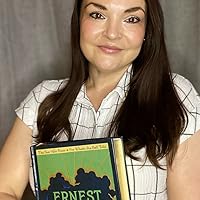
Arriving in New York City for an internship at an elite but fading magazine, Luca feels invisible: smart but not worldly, privileged but broke, and uncertain how to navigate a new era of social change. Among his peers is Zara, a young Black woman whose sharp wit and frank views on injustice create tension in the office, especially in the wake of a shock election that's irrevocably destabilized American life. In the months that follow, as the streets of New York fill with pink-hatted protesters and the magazine faces a changing of the guard, Luca is taken under the wing of an attractive and wealthy white couple--Paula, a prominent artist, and Jason, her filmmaker husband--whose lifestyle he finds both alien and alluring.
With the coming of summer, Luca is swept up in the fever dream of their marriage, accepting an invitation to join the couple and their children at their beach house, and nurturing an infatuation both frustrating and dangerous. Only after he learns of a spectacular tragedy in the city he has left behind does he begin to realize the moral consequences of his allegiances.
In language at once lyrical and incisive, Virtue offers a clear-eyed, unsettling story of the allure of privilege and the costs of complacency, from a writer of astonishing acuity and vision.
I have a confession….my guilty pleasure is rich-people-problem novels and this is a really enjoyable one. This NYC story has a modern-day Gatsby vibe, with the narrator being a cipher, an outsider, a passive presence to the unfolding events. Set in the worlds of publishing, art, glamor and privilege, intern Luca (nee Luke) finds himself in a city fraught with political anxiousness, impressed by his ‘woke but broke’ friends, at the time when Trump is first elected. As he becomes embroiled in a toxic triangle whilst ‘summering’ with a successful couple by the sea, naive Luca’s initial infatuation wanes, and he begins to question the moral ambiguity of these people and his situation and see beneath the glossy surface. Witty, sharp and full of the kind of people drama I love…. A great summer read.
The worst book I've read in a while, maybe the worst "literary" fiction I've ever read.
What makes it so bad? The writing and the main character.
The writing can be described as "good bad writing" or " bad good writing" (honestly, they might be the same thing). Almost every single sentence contains two or three SAT words and an overworked simile. It reads as if you got a college student to parody big brain capital-L Literature. There's a couple of good passages (like one about admiring people who mispronounce words because that means they're a reader), but's it's dialed up to 100% for the whole damn book.
The main character and narrator is a young Millennial/elder Zoomer who recounts his time in New York during the early days of the Trump administration. He's an intern at an old-timey literary quarterly staffed by an ancient blueblooded editor-in-chief, a famous artist who designs the covers, and a pack of co-interns (including a Jezebel feminist and a BLM activist). Halfway through the book the gig ends so he spends the summer in Maine with the artist, her filmmaker husband, and their children. The problem with this kid is that he's completely unbelievable. As someone on Netgalley said, he has the views and morals of a twitter leftist c. the 2020 election. But he also admits to being totally clueless about issues of race and gender and doesn't know what people mean when they talk about race, gender, and politics. Like, where does this person come from? How does he exist?
So why did I read this book? I read the PW review and thought "that sounds completely unbelievable and wholly predictable." I predicted . None of those things happened. What did happen was much more boring. I'm changing my rating from two stars ("it was ok") to one star ("did not like it").
Imagine "The Great Gatsby" without Gatsby, and "Brideshead Revisited" without Brideshead, and you get this book . . . "The Great Revisited."
Early in the Trump administration, a young man decides to leave New York to spend the summer with rich friends in Maine instead of protesting on the streets with one of his fellow former interns at a "New Yorker"-style magazine. That's it. That's the premise of this novel. A boring NPR feature gets stretched out over 300 pages. The filler, it must be said, is gorgeous and beautifully observed. But that's all it is, observed, not lived, which is kind of what you expect in a book about a passive wallflower of a character who attaches himself to wealthier, more charismatic people . . . but you at least expect them to be observing something, be it the downfall of an aspirational bootlegger or the decline of an aristocratic family. Luca, formerly Luke (that tells you everything you need to know about him), has no Sebastian or Julia, and his equivalent to Daisy and Gatsby are already married and have a home full of improbably well-behaved stepchildren. Meanwhile, bad things are going on in the world.
And that's the most annoying aspect of "Virtue," that it joins "Missing Children Archive" in the new but (I hope) small category of Empathetic Tragedies, books in which nothing happens to the privileged characters but they at least feel guilty that they aren't suffering as much as the people they read about in the news. Maybe Ms. Hoby is trying to satirize such people. They aren't worth the effort she puts into it.
By turns intimate and incisive, Virtue is a novel preoccupied with morality, desire, and memory in our present moment in which signaling one’s activism is believed to be a litmus test for goodness. Hoby interestingly seems to be eschewing any possibility of autofictional assumptions, as is common in recent contemporary texts - the narrator is Luca, a man in his thirties recounting the events of his early twenties following Trump’s inauguration and working as an intern for a prestigious literary magazine in New York. Here he meets an older, privileged white couple and spends the summer at their house in Maine, yearning for their affections and grappling with his identity. While in his bubble of desire, his friend and co-intern Zara, a Black woman reeling from her brother’s recent arrest, engages in activism back in New York with devastating consequences.
The characters at the forefront of Virtue are disaffected, resolved to make a change yet unable to do so, pursuing virtuosity through art despite general inaction. Luca’s reflections on the events of this summer as a now-married father express an internal battle between virtuosity and happiness and his determination of whether these ideals can be reconciled. The book questions the repercussions of nostalgia and choice, and the hollowness of liberalism when rooted in performance. Aside from my enjoyment of Hoby’s critical insight through her rendering of these characters, the novel is excellent in terms of its descriptions of art and power imbalances in relationships. I was surprised by many of the narrative decisions made here, and found it to be in conversation with some of my favorite reads this year, including Beautiful World, Where Are You by Sally Rooney, Second Place by Rachel Cusk, and Fake Accounts by Lauren Oyler. Highly recommend.
This is a beautifully written story about what it means to be good, to have virtue, in the face of political upheaval, mainly the election in 2016 of Donald Trump. He is described as "the overlord of a white male underbelly of underlings: the incels and school shooters and 4chan trolls."Hoby pits east coast elite liberals against those who actually get involved in political activism and fight for change.
Luca, 23, arrives in NYC after attending Dartmouth and Oxford. He takes a position as an intern for a highbrow literary magazine that seems very much like The New Yorker. The magazine is run by Bryon, an old white man with outdated ideas. Byron seems obsolete in 2016. The narrator, Luca, recognizes that Byron was probably a good man, "Except in 2016 there wasn’t really such a thing as a good man, as far as I could tell. This was our new doctrine, with, it must be said, a lot of evidence behind it. Masculinity was toxic and, masochists, we turned our gazes to our screens to watch the president confirm it daily." Byron rarely published work by women or people of color.
Luca meets a fellow intern, Zara. She is the only black intern, is super smart, and the only one who speaks up at the magazine's Monday idea meeting where, agitated, she says “Don’t do a roundtable on resistance writing,” she spat. “Do resistance.”Except for Zara, "We had zero experience or understanding of what practical politics meant. We didn’t know what we were doing. We felt bad and we wanted to feel good, and that was all." Zara was there to urge the group into action and complained about the "unpolitical politics of the culturati or whatever." "Zara was talking about how this wasn’t a time for sitting around thinking that poetry could change the world."
Around the same time, Luca meets 49-year old, wealthy Paula, an heiress and artist, and her husband Jason, a filmmaker. Paula invites Luca over for their weekly dinners, and ultimately to their summer house in Maine with the couple's five children. Rather than reading an essay Zara wanted Luca's opinion on, or spending the summer with her and the other interns, he drives to Maine in a borrowed car, turns off his phone for the summer, and ignores the political turmoil happening in the US. During a party of other elite white people with summer homes in Maine, he briefly switches his phone on to learn that a young woman was hit by a car in Charlottesville as white supremists marched across the city. He promptly turns his phone back off.
Only after a horrible tragedy does Luca realize that he messed up by aligning himself with elitists who ignore what's happening on the political front. Looking back in 2028, Luca realizes that the weeks with Paula and Jason were the happiest of his life, but he wants to sever it from what happens later in his life.
The novel asks us how we can be good and virtuous and lead a meaningful life without really answering the question.
This was very crushable, esp. as someone who shares some close-but-not-exact demographics with Luca (Boulder to his Broomfield, 24 to his 23 in 2016, Boston to his New York).
Some great writing here and some delightfully observed social details. Not much to sink one’s teeth into, politically, though, imo.
This absolutely doesn’t matter but I feel compelled to shout into the void: I got annoyed by two tech references that didn’t track, temporally. First, Luca’s mom selling stuff on Etsy when he was a kid (people did not use Etsy in the early aughts, at least not in Colorado). Second, him curating Spotify playlists in high school….mp3s, iPods, even mix CDs were the only games in town for normal ppl pre-2011. On the other hand, who cares.
What a lovely gem of a novel exploring the relationship between virtue and affected virtue (aka "virtue signalling") and the narcotic effects of beauty and material comfort impeding the effort and sacrifice of genuine virtue. Not only is the writing lyrical and well-observed, but there is great empathy. Even though Hoby is clearly more critical of certain characters and admires others, one sympathizes even with those who are not virtuous. I found the protagonist particularly resonant as someone who came from my own socio-economic background, is drawn to beauty and is desperately wanting to be accepted by those who represent a certain aesthetic vision.
A political novel in the same key as The Emperor’s Children, full of interesting questions about racism in the literary world. The prose is beautiful but the plot’s sometimes slow and repetitive, lampooning the same subjects/behaviors over and over again. I do wish that Zara had been given more depth as not only an advocate but also a character — would have been far more fascinating as a more fully fleshed out counterpoint to white liberalness.
Virtue was entertaining. Smart prose and a sharp read. I devoured it in three days after a long summer read of Moby Dick. I needed something to stare into, a palate cleanser. It was easy to read but important to remember that just because a book is easy to read it doesn't mean it's easy to write.
This book is so On The Nose it's silly. Influencers, a prestigious literary/news magazine, the art world, being broke in NYC, Instagram, Twitter, an indie filmmaker, a character who dresses as a painting for Halloween, the 2016 presidential election without ever really being named and everything that comes with it (also without being named, but also pussy hats, a march of women, etc.) filtered through our narrator: a white man named Luca. Hoby did this on purpose. There is a reason behind every choice in this book and if you don't understand that from the start I can see how it could rub you the wrong way.
Plot chugs along seamlessly, so much so it's almost uncanny. Of course Luca is a struggling, broke intern from nowhere Colorado. He befriends rich artists accidentally (which feels on accident but even though we know Luca is shy and awkward, he wants to be something he is not and only acts to please) and of course is invited to their Maine home for the entire summer. Luca slips into their family and routine effortlessly. Things unfold. Privilege is acknowledged, debated even. Actually, he overhears it. The debate happens behind closed doors, a personal fight between husband and wife, the kind of conversation no one is meant to hear and it is just what we need to hear. He also listens to them have sex. Luca and the situation that unfolds around him is weird and, somehow, feels so real it could be a story a friend you lost touch with from college would retell.
Eventually it starts to build. Luca eludes to something about halfway through the novel, as in 'I wish it ended this way instead of what actually happened.' I was gearing up. But not for violence, and for a disturbing sexual violent behavior that really came out of nowhere. But the more I think about it and what Hoby is doing with this book--as commentary, as satire--it makes sense. She needed a white male character, she needed him to be shy and voiceless, and she needed him to act out perversely. It is a conversation about now. Pandemics, plural, are mentioned. Hoby writes from the present. And I have to hand it to her. I can see this whole idea/structure/concept/satire going wrong and I am sure there are many books, novels and nonfiction, out there doing this already and more to come as the publishing machine continues to capitalize on human suffering, death, and the great American political crumble (or, at least, white America's realization of it). Hoby got to it ahead of the curve. Kudos.
This entire review has been hidden because of spoilers.
Narrated by Luca, this is a very mannered novel about the summer of 2016-2017. Luca changed his name from Luke and pretty much disavowed his life in Colorado when he went to college and subsequently moved to New York. Now 22, he's working as an intern at a literary magazine when he falls in thrall to Paula, an artist. He leaves Zara, his fellow intern behind, to follow Paula, her husband Jason, and their children to Maine. This is the male version of a trope that's become popular in recent years- the 20something who finds herself (or in this case himself) bound to an individual who doesn't really care about them while ignoring another. In this case, Hoby has used the protests of that summer as a catalyst. Thanks to edelweiss for the ARC. For fans of literary fiction.
Equivalent to a train wreck that I just couldn’t look away from - the only reason I finished the book.
The main character was horrendous. The amount of SAT vocab words was hilarious. The fact that these real world problems were produced in such a cringy story was deplorable.
I could write for an hour about all of the boring ridiculousness that was this book but I will not waste another moment on this book or review.
Virtue is simultaneously a novel and, more covertly, some smart social commentary on white urban liberals in the wake of the 2016 election. Hoby completely captures so many of the nuances of that particular moment in context, including election night, the inaugural Women's March, and the clumsy attempted pivots made by cultural institutions. Because of that, the first third was the highlight for me, and also felt most connected to the titular exploration of virtue, as in "virtue signaling." Once we change course to summer vacation outside the city, the book becomes much more insular, more of a psychological portrait than a socio-cultural one, though of course they overlap as we consider Paula, Jason, and Luca to be microcosms of something larger. Unfortunately, Zara gets a similar treatment but functions more as a token or a martyr than a fleshed-out character, and her dynamic with Luca in particular felt hard to buy into.
Lots of critiques seem to take issue with how unlikable the characters were, but I don't think you can make it to the climactic final scene without realizing that was very much the point. Plus, I imagine that, for some readers, they serve as an uncomfortable mirror more than they'd like to acknowledge. I credit Hoby for how dark she allowed this to ultimately veer; although it surprised me at first, it felt fitting too. This could've had a bit tighter pacing and isn't necessarily doing anything that exciting or new, but Hoby's wordy vocabulary and subtly biting writing elevated it to make for a thoroughly enjoyable read.
Arriving in New York City to work at a famous yet fading literary magazine, Luca feels invisible: smart but not rich like his college counterparts. Amongst his colleagues is a Black woman named Zara, whose sharp wit and frank views on injustice create tension in the office, in the wake of the 2016 election. Luca is taken under the wing of attractive and wealthy white couple Paula and Jason, whose lifestyle he envies. As tensions continue to rise at work, Luca will have to make a choice on where his morality lies. this was an interesting book, taking place from the perspective of someone 11 years into the future, looking back. It’s fascinating to see the pop culture and cultural movements as a whole being referenced. I thought this book had really interesting things to say about politics, about white supremacy and choosing to bury your head in the sand about both items, so you can choose a version of happiness instead.
This book read to me like a modern day Great Gatsby. Imagine, if Gatsby was a liberal woman in 2016 living in Cobble Hill and made her living as an eccentric artist. I enjoyed the limited first person perspective similar to that of Gatsby in Luca, a young 20-something from Colorado learning to live in NYC.
I think Hoby is an excellent, beautiful and thoughtful writer. She made these characters so tangible and dynamic. I was just as addicted to figuring out mysterious Paula as Luca was.
I do wonder how someone who isn’t “coastal elite” would like this book. Would they like it more because they haven’t been beaten over the head with such exhausting ideology? Or would they roll their eyes and think it just another reflection of the echo-chamber that is NYC?
Regardless, I did find this book thoughtful and provoking and very beautifully written.
I knew by the end of the first sentence that I was going to be obsessed with Hermione Hoby's Virtue. Virtue is that extraordinary caliber of masterpiece in which readers recognize themselves-with both pleasure and horror- and people who make up their community that they call life-again with both pleasure and horror. I don't think it's possible to do justice to both Hermione Hoby's magnificent, singular prose and her keen insight into the contemporary moment. If one is looking for a novel that grapples with the internal and external struggles of contemporary society, Virtue is an excellent read to consult.
this was so intriguing and well written and i learned a lot of new words reading it. i do, however, need to stop accidentally reading books set during 2016 but that’s on me i don’t know how i missed that in the synopsis.
a fantastic meditation on whiteness, richness, and indulgence that is pulpy but smart at points too. is there a third act vomit that makes zero sense and feels forced and unnecessary? yes. other than that, there is a lot to like here, despite the slow start. more like a 3.9.
idk this was like a cheap read and then it got very serious towards the end. felt like gossip and emptiness very vain veryyyy like story of class voyeurism a la Patricia highsmith or something (is that the book I’m thinking of?) for the most part and then the final turn was very sad and tragic but not in the way I expected. idk. I wouldn’t recommend this to anyone but I didn’t not … “enjoy” it.
Young Luca comes to New York City for an internship at a respected, but fading, literary magazine just as the 2016 election has unleashed confusion and protests across the city. Luca is at first drawn to a Black co-worker named Zara who becomes more engaged with the fight every day. Luca wants to do his part, but instead escapes to Maine for the summer to stay with a rich white family and their kids. Luca is so confused he doesn’t know if he wants to sleep with the husband or wife. He even turns his phone off to keep the outside world away, but the world never lets you escape completely. This is such a fun look at some of the hot button issues of today, told with great wit and insight.
“Summer’s end is around the bend just flyin’ The swimmin’ suits are on the line just dryin’ I’ll meet you there per our conversation I hope I didn’t ruin your whole vacation” - John Prine
Set during the 2016 presidential protests, 22-year-old Luca just moved to New York City to work as an intern at a magazine. He befriends a young black coworker named Zara who is very passionate about the protests since her brother was wrongly arrested. Luca wants to fight and help Zara’s cause but instead, he decides to follow a wealthy white couple, Paula and Jason to their beach house in Maine. Luca finds himself desiring the couple and struggling to figure out his identity.
I'm a huge fan of John Prine’s music so the introductory quote immediately grabbed my attention. Going into this one I did expect this book to be similar to Conversations With Friends by Sally Rooney but it ended up being very distinct.
Virtue was a very delightful story. I enjoyed the main character Luca but my favorite character was Zara. I admired her passion and I felt so much sympathy for her situation. Lucas's story is more a coming-of-age tale with an inner conflict of right and wrong.
Hermione Hoby’s character descriptions were fantastic. Her writing is very insightful into the character's thought process. I also had a certain expectation of how the story would end by Hermoine twisted the story and completely surprised me. I look forward to reading whatever she publishes next!
Virtue would be perfect for fans of contemporary fiction with social/political undertones.
Many thanks to Riverhead Books for the gifted copy of Virtue! Virtue is available now.
I was immediately hooked by the intelligent writing. I enjoyed the fact that the story was being woven in a contemporary motif of 'woke' society and the stark light in which that facet of our present world looked set to be explored. But after a strong beginning the story idled its way to a dissatisfying end.
I couldn't connect with the protagonist's fascination with the older couple. There wasn't enough time spent creating the allure that was needed to keep them interesting. As the bulk of the narrative is centred around them, this quickly became a rather dull read. We've seen these WASP-like characters many times before, which in itself would be fine if their appearance in this novel propelled the narrative or its themes, but I feel that it detracted from everything that made it interesting.
We leave the main world of the story, a world which considerable time had been invested in creating, to centre solely on the protagonist's relationship with this couple. A relationship which is never explored in enough depth to keep you entertained.
The ending itself felt as though it had been chosen to insert some drama into an otherwise sluggish narrative in order to achieve a sense of crescendo. It felt very disconnected from the story. There was no real buildup. The final trajectory of the protagonist's arc left me feeling as though we were missing several vital story elements.
There have been a lot of reviews that critique the novel as being overly 'word-y'. I saw this as an intentional storytelling device to immerse the reader in the 'woke' world in which the novel is set, where everyone is either educated or ignorant, inclusive or racist, etc.
I feel that the few things that 'Virtue' could have said well were lost in its fragmented story. This was my first reading of Hoby's work. I enjoyed her writing immensely. She is a gifted wordsmith. While I look forward to her other offerings, I must admit I was bored throughout the bulk of this read. All the things I liked about her writing were not enough to keep me interested in the story itself. She clearly had her finger on the pulse of American society in writing this, which is likely why this has been so lauded. But there's not enough coal in the engine of the narrative to keep most readers entertained.
When I get 'too busy' to finish reading a short novel it's often because I am not anxious to continue reading. I finished this novel. I'm sure there is an audience for Luca's twentysomething-ish adjustment to life in the big city, but it really isn't me. This is definitely a talented author with a pretty cynical eye. The Jason and Paula story was a lot and I think maybe the Zara story got short shrift by comparison -- but then again, that is part of what made Luca so angst-y. Anyway, it's over now.
I learned of this book in either the NYT Review of Books or the New Yorker, and got it from the library. I read all of it, however it did prove to be another in a long line of books I wanted to like but didn’t. Halfway through it I realized that nothing ultimately was going to happen, but I will say that the writing was fresh and crisp enough to keep me reading to the bitter end in the hope that I was wrong. Nope, I wasn’t wrong. It wasn’t a good read. It seems that the author hasn’t lived much and this was a boring heap of decent prose. I can’t believe I actually read it all.