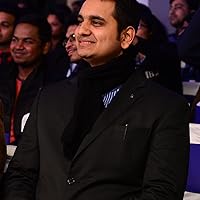
For over five decades, Azim Hasham Premji has been one of the trailblazers of India Inc. Taking over his family business of vegetable oils at the young age of twenty-one after the untimely demise of his father, he built one of India's most successful software companies along with a multi-billion-dollar conglomerate. As of 2019, he was the tenth richest person in India, with an estimated net worth of $7.2 billion. Yet, the one facet of the man which has overshadowed even his business achievements is his altruism. His commitment to the Azim Premji Foundation, a non-profit focused on education, totals around $21 billion, making him one of the world's top philanthropists.
Azim Premji: The Man Beyond the Billions, the first authoritative biography of the icon, shows how Premji is a philanthropist at heart and a businessman by choice - a man who wanted to give away his billions but realized early enough that he would first have to earn them. It peels the layers off Premji's life while chronicling his professional and charitable work in the context of his many strengths and shortcomings.
Based on interviews with hundreds of current and past Wipro executives, who have over the years worked closely with him, as well as with competitors, analysts, family friends and industry associates, this is a journalists' account of Premji the man, the businessman and the philanthropist.
I knew Premji for more than two decades, yet reading this book convinced me that I did not know him!
Here are some excerpts that made reading this book so enjoyable
Stress on values, his philanthrophy and frugal life
Page xiii Values, Character & Integrity" in the early 70s, before it was fashionable!
Page 36 Premji set out to pen the principles (Wipro values) Integrity, Respect for people & Customer centricity
Page 34 Premji's only rejoinder - Company would NOT pay any bribes; bribe something that was as repugnant to Premji in 1979 as it is now!
Private person, frugal life style, phenomenal success
Page 127 Premji was an intensely private person; On his mother's death he sent an e-mail to his leadership team saying that he would request them not to visit home at his house
Page 142 Premji would drive around in a Ford Escort telling a senior executive who would drive a Honda Accord that he could not afford one! In fact, on that day he could have bought Ford Motor Company from his personal wealth!
Sarjapur House has no servant quarters - domestic helpers stay in the house!
Page xv He likes to try street food in Singapore, New York Cty or Mumbai!
Page 53 Wipro listed on NYSE on 19 Oct 2000; on a revenue base of $ 527 Millin they raised $ 135 Million
Page 65 Wipro stock was on a roll and in Feb 2000 with 84% ownership Premji was the world's richest Indian worth $ 39.5 Billion
Page xix 450 companies, 600 entrepreneurs from ex-employees of Wipro!
Philantrophy
Page 7-8 Gift of Rs 52,750 Cr ($ 7.5 Billion) to Premji Foundation on 13 March 2019 that Forbes called the world's biggest gift of the year; yet, little drama surrounding the announcement; the world was informed in a Note that had less than 500 words in a single page, no Press briefing, no quote from family members!
Page 71 The ultimate act of kindness to give over $ 21 Billion to philanthropy by a person who had been labeled selfish for refusing to dilute his share below 80%
Othes on Premji
In the interviews with hundreds, there was no attempt to talk him up or window-dress his flaws
Som Mittal about Premji "What you see is what you get"
Vivek Paul "he is the most upright person"
Nandan Nilekani "Indian businesses are fortunate to have a man like him in their midst"
Anurag Behr on Premji and his life-long learning from Premji "I sleep well at night. How many in the private sector can?"
Other Tidbits
Page 20 Premji Sr was Chairman of Bombay Electricity Board, Board Member of RBI, LIC, and SBI!
Page 23 PS Pai, a Tamilian, who worked in Bhopal Union Carbide factory turned WIPRO (Vegetable oil product factory) around in 1979
Page 25 General advice in his home town "Buy 50 shares of Wipro when you have a baby girl; our God Premji will get the girl married"
Page 32 Premji after his father's passing away on 11 Aug 1976 "never again be dictated by shareholders - shore up shares thru dividend"
Premji is different Page 42 Ignore the advice from Prof CK Prahalad to focus only on IT; Santoor in 2019 had Rs 2000 Cr business that was higher than HUL!
Page 118 Wipro's total business from Y2K was less than 7% as against 40% for Infosys and more than 60% for TCS
Page 63 Starting 1994 - over the years - Wipro & Premji moved lock, stock, and barrel fro Bombay to Bangalore
Page 69 Premji was strongly influenced by his mother who as a trained pediatrician devoted her life to children's hospital
Page 74 9 March 2001 Azim Premji Foundation was born (based on a White Paper on philanthropy by Dileep Ranjekar)
There were mistakes Page 49 like Wipro Finance that had to be closed. Premji said in his Stanford Talk (Oct 2006) "It is impossible to generate a few good ideas without a lot of bad ideas"
Page 98 Wipro Co-CEO who was fired "We have to be born again to get another chance to re-build our reputation" Page 107 Both the Co-CEO's wrote separate mails to Premji detailing the unfair and cruel way in which they believed the company had treated them"
Page 121 Another misstep by Wipro was Premji's obsession with Infosys! "He always felt he would overtake Infosys"
>b>His focus on customers & quality
Page 129 Premji to his CEO "I picked up the Pen from the Press Kit. It did not write and it had Wipro name on it"
His tenacity
Page 133 He had the tenacity to complete his BS Degree in Electrical Engineering from Stanford University in 2010 thirty-four years after it had been cut short (Premji had to rush home and take ownership of his fathers business after his father passed away)
The fact that so little is known about the Indian business tycoon Mr. Azim Premji is the most important reason to pick this book "The Man Beyond Billions". Having worked at Wipro in the initial few years of my software engineering career, on one hand, I can completely relate to many of the facts mentioned in this book, and on the other hand, also be in awe of the great man who, undoubtedly, is the biggest philanthropist in India who greatly lives by his own values and does things by following his own values, thus making ethical practices and values the core principle of everything he does.
The book covers the beginning of the journey of Wipro when it was just a Vanaspati oil company, and then covers in great depths and details about the tremendous growth the company underwent when it diverged into different sectors to do business.
The book tells the story surrounding the personal and professional journey of Mr. Azim Premji covering in detail how he came back from the US to lead his company and how in later years, the family moved to Bangalore from Mumbai.
The book covers many startling facts which, by all means, tell the humbleness of the man and how he values effective and efficient utilization of resources despite being one of the richest persons in India.
Amalner, a small town in Maharashtra, holds a special place in Wipro's history. In 1947, Azim Premji's father, Muhammad Hashim Premji, set up the first plant of Western Indian Vegetable Products Limited (now Wipro) in Amalner to produce vanaspati ghee, laundry soap, and cooking oil. Many residents of Amalner were employed at the plant and were given shares in the company.
Over the years, as Wipro grew and transformed into a global IT giant, these early shareholders saw their investments grow significantly. It's estimated that residents of Amalner hold over 3% of Wipro's stock, which is worth around ₹3,000 crore today. This has turned many ordinary residents into millionaires.
The story of Amalner is a testament to the transformative power of long-term investment and visionary leadership. It's a unique example of how a small town played a crucial role in the journey of one of India's largest companies.
The book highlights the spawning of more than 600 entrepreneurs who are now leading over 450 companies, including the big names such as Happiest Minds and Mindtree.
We learn that Azim Premji has always emphasized that it's impossible to generate a few good ideas without a lot of bad ones, and that failure should be forgiven and forgotten quickly. It covers various aspects of Wipro's journey, including Wipro Finance, Santoor, and the market leadership of Wipro's diversified businesses. We also get to learn about Wipro Infotech, the exit of IBM as an opportunity, the departure of IBM and Coca-Cola from India in the 1970s, and their return in the 1990s under Finance Minister Dr. Manmohan Singh. Wipro's stance that it will never pay bribes to any Government official to get the work done has been clear from the very early years.
We learn how Wipro stormed the US market in 1990s and 2000s and it covers the taste of success enjoyed by many executives, who eventually set up their bases in Bangalore, after years of hard work at Wipro. We learn how some of these executives benefited from 5x price surge of Wipro shares in 2000, followed by tremendous growth under Vivek Paul, and Wipro's shift to writing code and applications for clients in the telecom and semiconductor sectors. It mentions the building of rugged computers for the Indian army with a deal from DRDO, the sale and services of computers through distributors, and the disruption in the computer technology market caused by Moore's law. We also get to learn about Azim Premji's bond with Jack Welch, Infosys choosing NASDAQ to list in the US market, and Wipro listing its American depository shares on NYSE on October 19, 2000.
The book also covers the philanthropic work by Azim Premji foundation in Teachers training program and the establishment of the Azim Premji Trust, and the choice of education for social service. One of the chapters highlights Ranjekar's work with Premji in philanthropy, Premji being the richest Indian in 1999 and 2000, and his advice to not display wealth in public to avoid resentment. It also mentions Premji's disapproval of executives from MNCs driving to work in Mercedes because of social and economic injustices in the soceity.
We also get to learn about the internal details and analysis of Wipro's underperformance in the subsequent years.
In the chapter "The Lost Decade," there is a mention about the discussion between Ramadorai and Azim Premji about industry issues and what could have been done differently at Wipro. They reflect on the mistake of hiring leaders from TCS, whose culture focused on empowering people, which did not align well with Wipro's approach. Despite having intellectual capabilities, Wipro failed to fully monetize its IT assets. The constant comparison with Infosys caused additional trouble for Wipro. The chapter also touches on how Azim Premji overestimated the economic and brand value of Wipro on a global scale.
Wipro was never known for being the best paymasters, even for senior leaders. Azim Premji believed he had the loyalty of his employees, but this loyalty was undermined by low salaries. The company missed an opportunity to buy American Express in 2002 and struggled to regain clients in the banking and financial sectors due to its absence from this business in the previous decade. In March 2001, a third of Wipro's IT exports, amounting to $114 million, came from clients in the telecom and semiconductor industries, which Wipro referred to as its R&D business. However, these industries faced disruptions, leading to a slowdown in business with Wipro, while other companies that leveraged the Y2K boom in banking and financial sectors were more profitable.
Wipro focused on product development for its customers, such as AT&T, Nortel, Intel, and Sun Microsystems, rather than just providing staffing services at lower costs. Under Azim Premji's leadership, there was a prioritization of profitability over revenue growth. The missteps taken during the first decade led to poor performance in the subsequent decade.
In the chapter "The Man at Work," the book covers various aspects of Premji's work ethic and management style. He is described as a sponge for information, with a voracious appetite for non-fiction biographies, business histories, and magazines such as The Economist, Bloomberg Businessweek, and Harvard Business Review. He often marks articles to send to key business leaders. Premji's organized approach and curiosity about different types of businesses are emphasized. The chapter also mentions his completion of a B.E. in Electrical Engineering from Stanford University in 2000.
Wipro and HCL competed in the computer hardware business in the 1980s and later in software services in the 1990s. An interesting dilemma is highlighted, similar to how AWS is used as a cloud platform by Netflix despite Amazon Prime being a competitor. Premji faced this when Wipro Epson's printer was used by competitors like HCL. He ensured that such clients received equal treatment and that the business was run independently. There is also a mention of ethical behavior discussions only happening in new hire meetings and an incident involving a Wipro pen that didn't write.
Premji's personal traits and lifestyle choices are highlighted in the book. Unlike other billionaires, he doesn't hold significant assets outside India, despite Wipro getting more than 93% of its business from outside the country. The book mentions that often times, he has been called a miser, yet he is undeterred in his stances and values. Premji's reluctance to buy expensive cars, his low-key private ceremonies, and his loyalty to Tata and Made in India products are also noted. Despite being a billionaire, he has no love for gold or jewelry and prefers flying in economy class.
Chapter 11, "The Jewel in the Crown," discusses Premji Invest, the investment arm of Premji's wealth management. It highlights that from October 2006 to December 2016, Premji Invest made 120 investments, with due diligence in both public and private companies. It did not lose capital in 111 of these investee companies. Parthasarthy co-headed the business during these 10 years. The chapter mentions the challenges Parthasarthy faced in building a team of professionals and convincing people to move from Mumbai to Bangalore. It also covers the transfer of ownership of Premji Invest to the Azim Premji Foundation in 2017 and the investment in companies like Moderna and Myntra.
In Chapter 12, "Beyond the Billions," the book discusses the philanthropic efforts of the Azim Premji Foundation. Premji committed 90% of his wealth to philanthropy, and the foundation's goal is to make a significant contribution to society by improving the quality of education. Despite Wipro's underperformance and the loss in the value of its shares, this loss is offset by the investments made by Premji Invest. The chapter highlights the unique scale of the foundation's operations, with its people on the ground across various regions. It also mentions about the tribute to the foundation's work when the Government of India incorporated its suggestions in the National Education Policy (NEP) in 2019.
In the final chapter, the book covers the current and future state of Wipro. It discusses the challenges of doing business in the current environment compared to when the IT service industry was new. The chapter mentions the appointment of Delaporte as CEO and the parallels drawn when co-CEOs were shown the exit door back in 2011. The chapter also highlights the appointment of Rishad Premji as the new chairman and how his tenure can be more effective in the transformation of the company, a key highlight being the state-of-the art new campus of Wipro. We also learn that Wipro Ventures has been making relatively low investments compared to its peer, Accenture in new businesses. Wipro Enterprises Limited (WEL), a privately owned entity, comprises Wipro Consumer Care, Wipro Infrastructure Engineering, and the Wipro-GE joint venture, with a combined revenue of $2 billion. The chapter mentions about the possible listing of WEL in near future and how the residents of Amalner, who hold the shares, are likely to enjoy great fortunes when this happens.
"If people are not laughing at your goals, your goals are too small."
Biographies of Indian business leaders are not so frequent in India, and are inevitably linked to the business institution that they would have created. However Azim Premji is literally a man who has gone beyond the billions with his fantastic endowments of his wealth to his philanthropic foundation to the tune of $21 billion dollars, and that is what let me to pick up this book to understand better this fascinating and unusual personage.
The authors’ largely paint a balanced portrait covering Azim Premji’s business ventures but also his personality and his motivations. What emerges is a man with an unique disposition, set in his own ways, but curious to learn and experiment with new things, very austere in his habits but not necessarily imposing on others, a person with a closed circle of friends but very open to care about the people who work with him. As we would all know, Wipro started as Western Indian Vegetables Products- producing and trading in vegetable oils, and from there to reach the dizzying success specially in the IT services has been an outstanding achievement for Azim Premji.
Along with this journey, we get to learn of many curious facets about Wipro and the struggles it faced in the nascent IT industry in India, before making a mark in IT services in 1990s along with its peers like Infosys, TCS. In this long voyage, Premji obviously played a starring role and it was his ability to reach out and hire the people with matching values is something which stands out and grabbing the opportunities for diversification to march onto to path of success (in most scenarios).
It is also fascinating to note that Premji’s commitment to philanthropy took time to build, while employee welfare always remained his priority. The authors cover the build-up well with the ideation (why they chose education), execution and future plans of Premji’s philanthropic mission.
The authors have done extensive research which is evident in the content and have done almost a 360 degree evaluation which helps to provide insights from different perspectives on Premji. Hence the authors also don’t shy away from calling out instances especially in the business context Premji’s failures and things which he could have handled out better.
The book’s narrative is quite easy-to read and breezy. Some minor quibbles- especially for some sharper edits when the descriptive get repetitive in some chapters. Additionally, some graphical inputs for the facts, figures and timelines might have been helpful.
A moving representation emerges from the book of a person bound by his ethical standards, and his commitment to his people, welfare and compassion and for others. Definitely a recommended read about an uncommon billionaire whose contribution to Indian society must inspire all of us to do our bit for our people as well.
Book Review : “Azim Premji :The Man Beyond the Billions” by Sundeep Khanna & Varun Sood
My interest in picking this book - Know more about the early days of WIPRO as a vegetable oil company - Understand the work done by Azim Premji Foundation (APF). I currently work in the Social Impact Space & hence my interest
The book written from interviews with people who knew him from close quarters, is a treasure trove for the anecdotes about Mr Premji whom the world deeply respects
Takeaways : -The work done by APF, the attempt at such sheer scale, its challenges -The founding of WIPRO (Western India Veg Products Ltd) in 1940s, the early days -How residents of Amalner, Maharastra benefitted from holding onto Wipro's shares when it was still a vanaspati co. -How Wipro won back the GE order it had lost to its competitor makes an inspiring read -The chapter on Premji Invest provides insights into why it’s a jewel in the crown -Trust your own gut. In one instance, he chose to ignore advice from a Strategy guru, who advised that they should only focus on infotech & exit other biz
Favorite Quote: - If people are not laughing at your goals, your goals are too small
A Must Read book for those interested to know Wipro’s early days, work of APF & more about Mr Premji
Azim Premji is an icon and an enigma hence there's a lot of interest in know more about him. This book is timely given that it had the opportunity to capture his entire career at Wipro till a couple of years after he stepped down from Executive Chairmanship.
The book thankfully doesn't indulge in hero worship, highlighting the man's many flaws and failures. Where it disappoints is in two areas: - there is just way too much repetition of facts across the book. It clearly shows that 2 different authors contributed and seems like they didn't compare their notes. - considering the kind of people the authors had access to (AHP was not one of them), the quality of anecdotes is lousy. I have heard better ones from mid to junior level executives who've worked at Wipro.
Read it if you don't know much about the man, Wipro, and the Premji Foundation/Premji Invest. It will provide a few insights. Overall, a lost opportunity.
The book chronicles the journey of Wipro from the time the Premjis put down roots in Mumbai. It throws light on the man’s spirit of entrepreneurship, as the company expanded from vegetable oils to engineering products, computer hardware, tech services and consumer care and lighting. The book does not shy away from some of Wipro’s missteps such as the investment in financial services, a business which withered away despite the group’s entry into the space after much thought and preparation. A story of a man who chose to give away $21 billion worth of wealth to his foundation.
It will be better to call title as 'Origins of Wipro". Book is more focused on evolution of Wipro. It does not has much insights from AHP as he did not interviewed much with authors. It is more from the perspectives of people surrounding AHP.
Good part is that the authors have discussed both sides of AHP's leadership.
Read it because How can one be an Indian and not get to know a person who's donated over 1.5 lakh crore rupees (~21.5 bn USD) of personal wealth towards philanthropy. 'Great' is a word which should be used sparingly, but if someone truly fits bill to be called a great person, here it is - Azim Hashim Premji
I would have recommended this book to others if the author had brought a balance between Azim's life and Wipro. But the book had more information about Wipro and it's business rather than the man himself. One thing that caught my eye in the book was the formation of the Azim Premji's foundation and its operating model. Other than this nugget, I did not find much value in the book.
Inspirational autobiography. Author have explained about AHP’s personality, motivations & his commitment to philanthropy. This book shares the journey of WIPRO from a vegetable oil company to a renowned giant conglomerate. Author have narrated both positive & negative aspects of AHP’s leadership. Formation & operating model of AHP’s philanthropic initiative is well explained. Good read!
This book throws light on the life of Azim Premji, his struggles and working capabilities to not only handling but growing multifold his family business, which was later named as Wipro.
This book have many business lessons, some are in positive way, and some are in negative way, that we should always take care of in business.
Inspirational story of Azim Premji. His simplicity and humble nature is very heart warming. Every person has mistakes but very few have ability to accept it. Loved the reading of his story and story of Wipro.
Always fascinating to read about the life of successful people. The anecdotes about Azim Premji make it worth the read. But the too much data to compare, probably to give an idea of the grandness of the business, initiative etc got too much for me.
Complete waste of time and money. Azim Premji didn't even give a single minute of his time as interview to these Authors. That tells me how little he thinks of this book himself.
Sorry but didn't enjoy. Seemed like it's written only to make money by selling book about a famous Billionaire.
All is fine about his organisation and philanthropic activities he did but where is life in person? Since this book is supposed to be an autobiography of the man himself. The writers claim that they have not met the person once and wrote the book how is called an autobiography then?
The philanthropic initiative was well set up to yield great returns. Nice ideas portrayed in this book. A good read to know the background of IT structure in India and the struggles faced by WIPRO.
We'll researched and well structured book. I enjoyed reading it. It is very easy to read and since I worked in the organisation before, i was able to relate to a lot of the events mentioned. The best part i liked about the writing is, this is not written from a fanboy perspective hurling praises all through. The authors have presented different aspects of the man under different circumstances. Overall, i would say this is a good read.