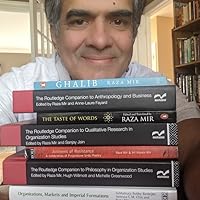
Mirza Asadullah Khan Ghalib was born in Agra in the closing years of the eighteenth century. A precocious child, he began composing verses at an early age and gained recognition while he was still very young. He wrote in both Urdu and Persian and was also a great prose stylist. He was a careful, even strict, editor of his work who took to publishing long before his peers. His predilection for writing difficult, obscure poetry peppered with complex metaphors produced a unique commentarial tradition that did not extend beyond his work. Commentaries on his current Urdu divan have produced a field of critical writing that eventually lead to the crafting of a critical lens with which to view the classical ghazal.
The nineteenth century was the height of European colonialism. British colonialism in India produced definitive changes in the ways literature was produced, circulated and consumed. Ghalib responded to the cultural challenge with a far-sightedness that was commendable. His imagination sought engagement with a wider community of readers. His deliberate switch to composing in Persian shows that he wanted his works to reach beyond political boundaries and linguistic barriers.
Ghalib's poetic trajectory begins from Urdu, then moves to composing almost entirely in Persian and finally swings back to Urdu. It is nearly as complex as his poetry. However, his poetic output in Persian is far more than what he wrote in Urdu. More important is that he gave precedence to Persian over Urdu. Ghalib's voice presents us with a double bind, a linguistic paradox. Exploring his life, works and philosophy, this authoritative critical biography of Ghalib opens a window to many shades of India and the subcontinent's cultural and literary tradition.
Though very well researched, the book talks more about the discovery of Ghalib's works (particularly Diwans) than the life he lived. Actual events of Ghalib's life hardly comprise about 1/3rd of the book.
Also, at times in the book, one gets mere english translation of a ghazal (Hindustani version isn't given alongside), rendering it tasteless.
It is not the book, it is me. This is an academic work. Wrong 'un to pick, for the first time I pick up a book about Ghalib to read! I recently bought "The Essential Ghalib" by Anisur Rahman. I should have gone with it first, but I got Mehr's book on audio and I felt it might be easier to do and it might whet my appetite before I tackled Anisur's volume!
This is not a regular biography and it spends a lot of time talking about how Ghalib played editor to his own work, picking and leaving out shers or what have you out of his "Dewan". There is some talk about the many editions and how the printing press played no small part in making Ghalib - but a lot of this is repetitive and there is not much by way of biography either - not any more than what I saw on Doordarshan as a kid in the series starring Naseeruddin Shah. Funny, how, for a poet-philosopher, Ghalib spends so much of his time and money (borrowed, in all probability or I don't know how he raised the money for the journey - that didn't register with me), chasing a pension!
There is very little poetry read through the book, and the little there is doesn't register because she reads it first and then gives you the translation - and that doesn't work very well on audio - you can't pause and rewind as easily on a phone (the "remote", as anyone who has used wired headphones on a mobile knows, doesn't work at all after that first week of use!) - So, if you are reading Ghalib's poetry / verse in Persian or Urdu, you want the internet close at hand and you want to mull over what you've just read and even perhaps feed some of it to an AI engine to get the full gist rather than just a cursory translation - otherwise what is even the point of the exercise!
Anyway, I did hear the entire audiobook - but it doesn't do me any good at this stage. I'd sooner read some of that poetry he wrote before I revisit this one again!
[ Anxiety fixed up the black spot in the heart, It became apparent that the wealth of the scar was smoke. Ghalib ]
Mehr Afshan Farooqi's "Ghalib: A Wilderness at My Doorstep" is a comprehensive and insightful exploration of the life and works of the renowned & iconic poet Ghalib. The book delves into Ghalib's personal life, his literary career & endless contributions to not only Urdu but persian literature aswell..
Astonishing revelation is within the finest interpretation & deeper look into Ghalib's personal accounts of tragidies which he went through in the madness & love for the rise of both persian & urdu languages.
This is an ecstatic & wonderful journey particularly for the fans of ustad Ghalib's life & Divan. This enhanced the horizon & widen the lens to study the critical & classical position of Ghalib. What a wonderful conclusion of this year.
"Ghalib: A Wilderness at My Doorstep" begins with a 14 page timeline of the great bard's life. If I may say so, that itself is worth the price of admission. Fortunately, there is more to come. Much more.
While the book is not a straight-up biography of Ghalib, by the time one finishes this magisterial work, his life has been fleshed out in granular detail.
I especially enjoyed the discussion of Ghalib's various Divans, including his rejected (mustarad) verses. Ghalib was fluent in two languages (Farsi and Urdu), and in Mehr Afshan Farooqi, we are lucky to have a biographer who is fluent in Ghalib!
Many books have been written on this great poet, and many more will be written (one hopes). But in that multitude, this book will always have an important place.