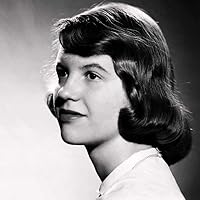
Sylvia Plath nació en Boston en 1932 y se suicidó en 1963, en uno de los más desgarradores inviernos de que se tengan memoria en Londres.
"La poesía de Plath es blanca y dura como el más hermoso diamante, y roja y vulnerable como una herida abierta o como los corazoncitos que le gustaba pintar en cualquier superficie". Con estas palabras, Paulina Vinderman, destacada poeta y traductora argentina, resume en su esplendor la poética de una de las más grandes y perturbadoras voces del siglo XX.
Sylvia Plath was an American poet, novelist, and short story writer, widely regarded as one of the most influential and emotionally powerful authors of the 20th century. Born in Boston, Massachusetts, she demonstrated literary talent from an early age, publishing her first poem at the age of eight. Her early life was shaped by the death of her father, Otto Plath, when she was eight years old, a trauma that would profoundly influence her later work. Plath attended Smith College, where she excelled academically but also struggled privately with depression. In 1953, she survived a suicide attempt, an experience she later fictionalized in her semi-autobiographical novel The Bell Jar. After recovering, she earned a Fulbright Scholarship to study at Newnham College, Cambridge, in England. While there, she met and married English poet Ted Hughes in 1956. Their relationship was passionate but tumultuous, with tensions exacerbated by personal differences and Hughes's infidelities. Throughout her life, Plath sought to balance her ambitions as a writer with the demands of marriage and motherhood. She had two children with Hughes, Frieda and Nicholas, and continued to write prolifically. In 1960, her first poetry collection, The Colossus and Other Poems, was published in the United Kingdom. Although it received modest critical attention at the time, it laid the foundation for her distinctive voice—intensely personal, often exploring themes of death, rebirth, and female identity. Plath's marriage unraveled in 1962, leading to a period of intense emotional turmoil but also extraordinary creative output. Living with her two children in London, she wrote many of the poems that would posthumously form Ariel, the collection that would cement her literary legacy. These works, filled with striking imagery and raw emotional force, displayed her ability to turn personal suffering into powerful art. Poems like "Daddy" and "Lady Lazarus" remain among her most famous, celebrated for their fierce honesty and technical brilliance. In early 1963, following a deepening depression, Plath died by suicide at the age of 30. Her death shocked the literary world and sparked a lasting fascination with her life and work. The posthumous publication of Ariel in 1965, edited by Hughes, introduced Plath's later poetry to a wide audience and established her as a major figure in modern literature. Her novel The Bell Jar was also published under her own name shortly after her death, having initially appeared under the pseudonym "Victoria Lucas." Plath’s work is often classified within the genre of confessional poetry, a style that emphasizes personal and psychological experiences. Her fearless exploration of themes like mental illness, female oppression, and death has resonated with generations of readers and scholars. Over time, Plath has become a feminist icon, though her legacy is complex and occasionally controversial, especially in light of debates over Hughes's role in managing her literary estate and personal history. Today, Sylvia Plath is remembered not only for her tragic personal story but also for her immense contributions to American and English literature. Her work continues to inspire writers, artists, and readers worldwide. Collections such as Ariel, Crossing the Water, and Winter Trees, as well as her journals and letters, offer deep insight into her creative mind. Sylvia Plath’s voice, marked by its intensity and emotional clarity, remains one of the most haunting and enduring in modern literature.
"The walls, also, seem to be warming themselves. The tulips should be behind bars like dangerous animals; They are opening like the mouth of some great African cat, And I am aware of my heart: it opens and closes Its bowl of red blooms out of sheer love of me. The water I taste is warm and salt, like the sea, And comes from a country far away as health."
“I didn’t want any flowers, I only wanted to lie with my hands turned up and be utterly empty. How free it is, you have no idea how free—— The peacefulness is so big it dazes you, And it asks nothing”
i am torn, Sylvia had a way with words that i’ll never be able to fully comprehend
Tulips 🌷 💐~3 stars~ (24th may - 24th may) The resemblances between this poem by Sylvia Plath and the bell jar is extremely strong. This almost felt like it was told from Esther’s perspective and could easily have been excerpted into the novel. It describes a women who is lying in hospital, who is confronted by blinding colour and vividness of some red tulips. It was a beautifully written poem, and the juxtaposition between the redness of the flowers and the blinding white of the hospital, depicts the narrators feelings of anguish and pain
Nobody watched me before, now I am watched. The tulips turn to me, and the window behind me Where once a day the light slowly widens and slowly thins, And I see myself, flat, ridiculous, a cut-paper shadow Between the eye of the sun and the eyes of the tulips, And I have no face, I have wanted to efface myself. The vivid tulips eat my oxygen.
Before they came the air was calm enough, Coming and going, breath by breath, without any fuss. Then the tulips filled it up like a loud noise. Now the air snags and eddies round them the way a river Snags and eddies round a sunken rust-red engine. They concentrate my attention, that was happy Playing and resting without committing itself.
3.5/4?
This entire review has been hidden because of spoilers.
4.5/5⭐️ ,,The tulips are too red in the first place, they hurt me. Even through the gift paper I could hear them breathe Lightly, through their white swaddlings, like an awful baby. Their redness talks to my wound, it corresponds. They are subtle : they seem to float, though they weigh me down, Upsetting me with their sudden tongues and their color, A dozen red lead sinkers round my neck.”
When I was eleven I was hospitalised for approaching perfection and I remember my best friend came to visit me and she took photos of me laughing and smiling but there was a feeding tube in my nose and an IV in my arm so I wasn’t really happy was I? This poem captures that moment so well and a million others too.
tulipanes es mi poema que les pasa, plath lo escribió para mí, no puede ser que justamente las dos estuvimos hospitalizadas por lo mismo y ella murió un 11 y yo nací un 11, es demasiado obvio 🙄
Beauty and sadness—that’s Plath. This poem explores confinement within women in society. The poem uses tulips, a flower most often seen in spring, a symbol of renewal, beginning, a revolution if you will, yet the speaker sees these tulips as the enemy, something restraining, something intrusive. It’s a very good poem, one of her best, and overlooked.
Tulipanes compone una fría y excelente antología de poemas en los que Sylvia Plath se desmiembra ante sus lectores y ante sus inspiraciones: la naturaleza, su hija y las vistas desde la ventana. Desde un inicio pensé que su poesía no era para mí. Sus descripciones a paisajes y vagas situaciones del día a día me dejaron con un poco de amargura, mas no decepcionada. Su frialdad era fulminante, de eso nunca me desdije. No obstante, al empezar y concluir el poema "Tulipanes" admito que Plath deja seco, cuadrado y desconcertado a cualquiera que se le atraviesen esos versos. Desde su estancia en el hospital, las ramas de tulipanes invaden su consciencia y la hacen crear estas sentencias tan duras sobre sí misma. Después del desgarrador "Papito" y con recuerdos de la Segunda Guerra llega "El Rival" con la actitud filosa de Plath; "Mujer sin hijos", "El coloso" y "Los maniquíes en Múnich" "La canción de María" llegan como una daga a los intestinos; "Canción matutina" y "Carta de noviembre" son inigualables. Estos poemas moldean su pensamiento firme pero desenfrenado, cruel pero maternal. Es una poeta vestida de un azul turquesa, de versos entintado de amapolas y agujas de plomo en búsqueda del verso preciso.
i love this poem. the more you read, the more you’re able to subtract from her wordplay. i’m currently in the process of annotating the stanzas so i may or may not update this 😋