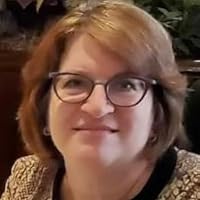
Growing up in the closed adoption system of Northern California, Patricia Moffat always felt a yawning gap at the beginning of her life, and a sense of loss and sadness. She yearned to know who her birthmother was, and why she had given her away. In her twenties, after an abortion and the births of her two children, which pulled her back emotionally to her beginnings, Patricia resolved to find her original family.
Her search was successful, bringing happiness and closure, together with some painful consequences. While the reunion with her birthmother and family was joyous, Patricia’s adoptive mother felt threatened by the sudden appearance of another mother in their lives.
Addressing questions of identity, and experiences of family and belonging, She Turned Her Head Away grapples with the intense emotions often experienced by adopted children and adult adoptees, and families uncovering long-buried secrets through genetic testing. Patricia’s inspiring story of hurt, search, reconciliation, and healing speaks powerfully to anyone struggling to find their family or themselves.
I thoroughly enjoyed reading Pat's story as I too was given up for adoption in 1958 in San Jose CA. It was a closed adoption, but I was able to find my birth mother and my birth father through searching on the internet. However both of them had passed away by the time I found who they were. I have felt a sense of abandonment all of my life and it is hard for me to trust people. Also, it was very important to me to find out about my ancestry. I feel I have a family history now.
This is the only adoption memoir I've read. The title got me in... what did it mean? It suggests rejection, fear, avoidance, self-protection. 'She' is Patricia's natural mother, whom she meets for the first time when she is in her early thirties, married with two young children. Patricia is lucky; her adoptive parents are loving, well educated, well off, and strong members of their community. They are also conservative, and although they had told Patricia and her brother when they were young that they were adopted, they had never considered that they would want to find their natural parents when they grew up. The adoptions took place in the mid- to late-1940s, when adoption records were sealed and there was a climate of secrecy and shame around the phenomenon. Patricia first resolves to find her mother in 1976, when there was still no openness. Her husband takes a sabbatical in California (they live in Canada), near where her adoptive parents live. He suggests that she look for her natural parents while they are there. So begins a search that occupies half the book. The intricacies of navigating the red tape with only shreds of information are narrated in great detail. For the most part, this journey held my interest, because it is told with nuances of Pat's conflicting emotions, her struggle to confess to her adoptive parents what she is doing, their veiled but negative reactions, her conflicts with her husband, who becomes critical of her search because he feels it is obsessing her and coming between them. She is driven by her desire to know her birth mother; throughout her childhood, she had fantasised about her and had visions of her. The book really comes to life for me when she finds Kay, her mother, who exceeds her expectations in many ways and surprises and delights her with her appearance, her lifestyle, her ways of thinking. Kay is very different from Pat's adoptive parents. She is artistic and sophisticated, believes in reincarnation and karma, wears and sells Indonesian batiks. When Pat meets Kay's father and his household, she finds that he lives in a comfortable subsistence lifestyle on Whidbey Island, an idyllic setting, with a mistress whose cancer is being treated by doctors who are departed, and whom she consults in seances. For Pat, who experimented with marijuana and hash when she was at university, the world of seances, automatic writing, psychedelic trips, and more, is a revelation. She does not fully embrace it, but is comfortable with the family because of her strong emotional rapport with Kay and her daughters, and 'Gramp', her grandfather. The great strength of this memoir is the author's honesty and emotional intelligence. She does not glamorise her birth mother and her lifestyle, nor does she reject the values of her adoptive parents. They are worlds apart, but somehow, she manages to keep her balance as she moves between the two. She remains loyal and loving to Kate, her adoptive mother, and when she is confronted by her anger and jealousy, she feels shock, anxiety, and fear, but she does not cave in, she feels 'grown up in the presence of my mother for the first time.' More self-reflection and the passage of time allow her to see that she had been brought up in a family where anger was forbidden and denied, and the love, though real, was moderated by possession and control on one side and dependency on the other. The resolution of the story arc traces the deaths of both Pat's birth mother and her adoptive parents, her career as a journalist, and a second, happy marriage. The demons of sadness and loss, when not denied or pushed away, are allowed to surface, and love and gratitude return. One remarkable thing about this memoir is that it has been written over forty years, so it is imbued with the author's experience and hard-won peace and wisdom. I highly recommend it.
I do not read many memoirs but I could not put this book down once I started it. This book deals with the “closed adoption” system that took place in the 1940’s and made me realize what a lifetime of work the children and parents involved in that system must deal with. The author was so generous with all she learned over the years. I highly recommend this book.
A fabulous book - giving a considered view from every angle. It certainly makes one think about how terrible those closed adoptions were in the 1940’s.
I read the whole of this book in one sitting (except 20 pages, which I finished the next day) during a flight from Perth to Brisbane. I was completely hooked by this story although I have no personal experience of adoption in my immediate family. Patricia Moffat was relentless in pulling back the veils of her interior world to reveal all the subtle nuances and complexity of her psychological journey to reconnect with her birth mother without disconnecting emotionally from her adoptive mother. It was not an easy journey, and yet she navigates it with great care, wisdom and insight, with one of the most compassionate perspectives I've seen in a memoir of this kind. Her empathy for and devotion to all the important characters in her story, including her own, does not preclude her from showing each one's flaws and failings, as well as their strengths. And by this means she utterly won the heart of this particular reader. I believe this would be a wonderful book to read for anyone contemplating adopting a child, or close to someone who's been adopted, or for an adoptee considering searching for his/her birth family. I laughed, I cried and my heart soared for these courageous human beings who found a way to pour gold into the cracks that separated them from each other.
Subtitled “An Adoption Memoir”, this book is in fact so much more than that. Sometimes it reads almost like an intelligent whodunit (as the author pursues the trail of her birth-mother), sometimes like an insightful psychological novel. And on every page, it provides what I primarily read for: a fully engrossing immersion in another person’s life. But adoption is, after all, this book’s raison d’etre, and I often thought as I read it, “This book should be provided as a case study in how to stay ‘on topic’.” I don’t think Moffat gives single detail that doesn’t pertain directly to her subject, which in her hands, is an absolutely fascinating one. I recommend it for anyone who's looking for an intelligent, well-written, absorbing book to read.
This is a heart-breakingly beautiful story which is really two stories.
One of the stories is how, in the closed adoption arena of the 1960's, a person wishing to find answers to who she was, who her forebears were, where she had come from, and other questions the rest of the world takes knowing as a birthright, had to navigate a system in which her questions were as unwelcome as her birth had been. She encounters yet another "turning away". So, story 1 is the story of how the author navigates this unwelcoming, systematic world to finally find the unknown mother.
The other, an even more compelling and heartbreaking story, is how the offhand remark of her playmate turned the 5-year-old Patricia's world upside down: "Your REAL mother didn't want you, you know. She gave you away." That moment, though she couldn't know it at the time, set the young child on a path that would eventually lead to a reuniting with her birth mother. This psychological journey, from being the adored child of her adoptive parents to the cast-off of her birth mother and to the eventual reuniting with her birth mother, reads, as a previous reviewer has noted, like a novel. Beautifully told, it is alive with mystery, suspense, drama, disappointment, irony, beginnings, middles and a poignant finale. In every way, it's a Good Read. A Very Good Read.
The author searched for her birth mother in the late '70s, a time before the availability of the Internet and DNA testing. What fascinated me was how her mother, threatened and jealous, reacted to her daughter’s desire to connect with her birth family, prioritizing her own insecurities over her daughter's needs. Such behavior isn’t what we expect from a mother. The author grappled with the fear that her mother would be hurt and withdraw her love. The book's conclusion was particularly difficult for me because my adoptive mother shared similar sentiments as the author's mother. I was only 23 when I embarked on my search.
It wasn’t until I read my mother's journals in my 60s, after her passing, that I realized she wouldn't have adopted me if she knew I'd seek my biological family. It wasn’t about my lack of loyalty or the author's; she was a dutiful daughter. In my opinion, her mother didn’t deserve her. The narrative was eloquent and deeply emotional.
This entire review has been hidden because of spoilers.
This was a touching account of one woman’s journey in searching for the mother that once gave her up for adoption in the 1940’s. Most of the story takes place in the 1970’s when there was no internet and no easy way to search for people, but she managed it through assistance of friends and writing lots of letters through snail mail. Her resilience and efforts through it all led her to the moment of discovery of her birth mother as well as other extended family. Although, joyous for her in a way of finally piecing together her own genetic history, it also created an impasse between her and her adoptive mother with so many mixed emotions. It was very moving to read and learn about her life story.
Here is a lovely, inspiring memoir of the author's challenging, creative exploration of family, lost and found. I thoroughly enjoyed this book.
I was spellbound by this memoir, and the adventure and challenges (and many years) that led to solving and sharing this long-ago, post-adoption story. What an achievement: success in finding family and in telling the tale so well. Bringing us along for the research and to share the results.
She Turned Her Head Away is an eye-opening, horizon-expanding book. It might be off most people’s daily trodden path, but I was in from the first paragraph. And then... it was so satisfying to read about this journey! I read it in one day. Wonderful!
I liked this book but thought it was too wordy. Many of the things Pat wrote about could have been said in fewer words. It often seemed like she was repeating herself.