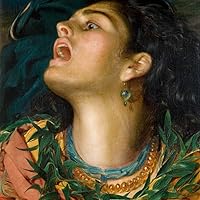
Two thousand years ago, the Roman poet Ovid gave voice to a group of inspirational women – queens, sorcerers, pioneers, poets and politicians – in a series of fictional letters called The Heroines. They were the women left in the wake of those swaggering heroes of classical Theseus, Hercules, Ulysses, Jason, Achilles…
Now, drawing inspiration from Ovid, fifteen leading female and non-binary British playwrights dramatise the lives of these fifteen heroines in a series of new monologues for the twenty-first century.
15 Heroines was commissioned by Jermyn Street Theatre, London, and first performed – online and in three parts – in November 2020, presented in partnership with Digital Theatre. This edition of all fifteen monologues is introduced by directors – Adjoa Andoh, Tom Littler and Cat Robey – and writer, broadcaster and classicist Natalie Haynes.
The War tells the untold stories of the Trojan Oenone, Hermione, Laodamia, Briseis and Penelope, written by Lettie Precious, Sabrina Mahfouz, Charlotte Jones, Abi Zakarian and Hannah Khalil.
The Desert is about women going their own Deianaria, Canace, Hypermestra, Dido and Sappho, written by April De Angelis, Isley Lynn, Chinonyerem Odimba, Stella Duffy and Lorna French.
The Labyrinth is about the women who encountered Jason and Ariadne, Phaedra, Phyllis, Hypsipyle and Medea, written by Bryony Lavery, Timberlake Wertenbaker, Samantha Ellis, Natalie Haynes and Juliet Gilkes Romero.
Various is the correct author for any book with multiple unknown authors, and is acceptable for books with multiple known authors, especially if not all are known or the list is very long (over 50).
If an editor is known, however, Various is not necessary. List the name of the editor as the primary author (with role "editor"). Contributing authors' names follow it.
Note: WorldCat is an excellent resource for finding author information and contents of anthologies.
I watched the shows before reading the scripts, and I’m glad I did! I think it’s beneficial to do both, if you can.
These monologues are meant to be modern takes on Ovid’s Heroines, putting the women into our space and time and refracting the bare bones of their stories into the now. For some, it really works. The pieces on Oenone, Phyllis, Hermione, Phaedra, Dido, Ariadne, Hypermestra, and Canace really take my breath away. Some of the other pieces are also beautiful, while a couple fall flat to me.
All in all, I think this is absolutely worth reading (and watching!) if you’re interested in classical reception. Each monologue is written and performed by a woman, and many discuss how intersections of race, religion, and ethnicity impact the stories.