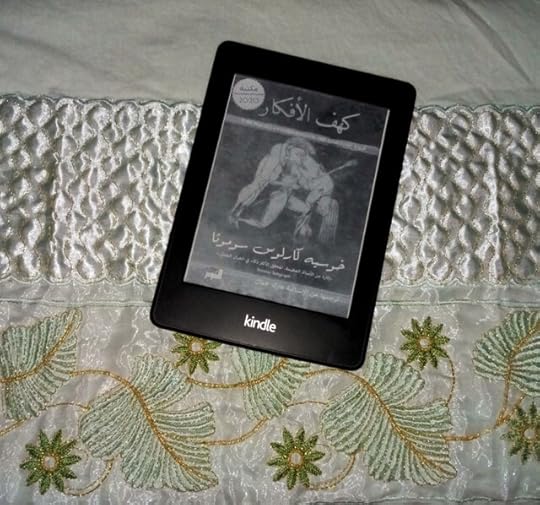
I was handed this book by a friend and started reading it without knowing anything about it, not even having read the backcover. I love it when that happens, because everything is a surprise and there can be no prejudice at all.
So I started, and immediately I thought, "eeek, a "period book". I generally tend to dislike writers who pretend that we know enough about an era to be able to write about its every-day life realistically. I had issues especially concerning the language, because I read it in translation. A Modern Greek translation of a Spanish novel set in Ancient Greece: something was bound to go wrong. And I really wish I could read the Spanish original, because I'm really curious exactly how pompous and flowery the language there was. It can't possibly have been that annoying.
Anyway, the plot seemed interesting enough and I felt like reading, so I read on. And, slowly, the ingeniousness of the book hit me. I'm trying hard not to write spoilers, so I'm just going to say that it has been a very long time since I read anything with that many levels, that many ideas and that much inspiration. Most of it works too, and the parts that don't are still exciting.
The ending was good, although not as brilliant as I expected it to be. That, and the writing (translating?) style might have cost it a star, but then I realized that a few days had passed and I was still thinking about this book. I am still excited about it, although I've finished it, and that's rare and priceless. So there you have it, five out of five, let me rant in Greek about the annoying translator now.
***on the Greek translation***
Είμαι 99% σίγουρη πως η μαντάμ, που πήρε λέει και πέρσι βραβείο ΕΚΕΜΕΛ ($@#$#^# αν και δεν έχω διαβάσει το βιβλίο για το οποίο το πήρε), έχει αλλάξει το ύφος γραφής. Η γλώσσα της μετάφρασης είναι σαν κακοβαμμένη τραβεστί: μιλάμε για νεοελληνική, βέβαια, αλλά διανθισμένη με αρχαιοπρεπείς ή σκέτο αρχαίες ή και καθαρευουσιάνικες λέξεις και εκφράσεις σε υπερενοχλητικό βαθμό. Άσε που χρησιμοποιεί ορισμένες αρχαίες λέξεις που χρησιμοποιούνται μεν ακόμα, αλλά με διαφορετική σημασία. Και εννοείται πως τις χρησιμοποιεί με την αρχαιοελληνική τους σημασία. ΟΚ, θα μου πεις, αυτό ήταν μια μεταφραστική επιλογή, μια άποψη που σίγουρα ικανοποίησε πολλούς (δε θα μιλήσω για το ποιόν όσων ικανοποιήθηκαν όμως) και τελικά τη συνήθισα. Επίσης ήταν άθλος της μεταφράστριας να μεταφράσει έτσι, σε αυτό δε διαφωνώ καθόλου.
Υπάρχουν σοβαρότερα προβλήματα όμως, εξόφθαλμα μεταφραστικά λάθη τα οποία δεν είναι οτι ψάχνω με μεγεθυντικό φακό(ΟΚ, έχω ψώνιο, το δεχόμαστε), αλλά όταν τα βρίσκω με κάνουν να μην πιστεύω πια πως διαβάζω μια μετάφραση που σέβεται το πρωτότυπο και το ακολουθεί όσο πιστά μπορεί. Τέτοια είχαμε πολλά. Αλλά μ'άρεσε τόσο που τα αγνοώ, γιατί βαθμολογώ το βιβλίο, όχι τη μετάφραση: ήταν τόσο καλό που δεν κατάφερε να το χαλάσει η μεταφράστρια.