Jump to ratings and reviews
Rate this book

Mémoires d'un médecin #1

Граф Калиостро, или Жозеф Бальзамо

Rate this book
Граф Калиостро — одна из самых загадочных личностей в истории. Объездив весь белый свет, побывав во всех столицах Европы, этот чародей смог околдовать самых влиятельных и благородных людей своего времени. О Калиостро говорили на каждом углу: о том, что он лично знаком с великими колдунами прошлого, что он способен вступать в общение с духами, обращать неблагородные металлы в золото и будто бы нет таких тайн, которые не были бы открыты этому удивительному человеку (который к тому же чертовски хорош собой).
Кем же на самом деле был граф Калиостро? Величайшим авантюристом или подлинным аристократом духа, обыкновенным мошенником и соблазнителем или адептом тайного ордена?
Блистательный роман Александра Дюма дает ответ на эти вопросы, не только рассказывая историю графа Калиостро, но и рисуя широкую панораму жизни высшего света Франции накануне Великой революции. «Граф Калиостро, или Жозеф Бальзамо» — это авантюрно-приключенческий роман, не уступающий лучшим произведениям Дюма, подлинное наслаждение для всех поклонников исторических произведений.
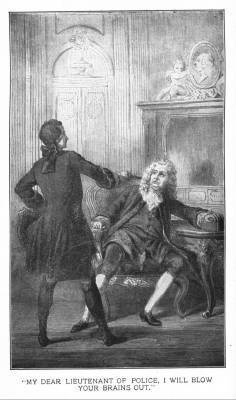
Впервые в России книга сопровождается многочисленными иллюстрациями замечательного чешского художника Франтишека Хорника.

1264 pages, Hardcover

First published January 1, 1848

Loading...
Loading...

About the author

Alexandre Dumas

7,022 books13.4k followers
This note refers to Alexandre Dumas, père, the father of Alexandre Dumas, fils (son). For his son, see Alexandre Dumas fils.

Alexandre Dumas père, born Alexandre Dumas Davy de la Pailleterie, was a towering figure of 19th-century French literature whose historical novels and adventure tales earned him worldwide renown. Best known for The Three Musketeers, The Count of Monte Cristo, and other swashbuckling epics, Dumas created stories filled with daring heroes, dramatic twists, and vivid historical settings. His works, many of which were originally published in serial form and enjoyed immense popularity, helped shape the modern adventure genre and remain enduring classics of world literature.

Dumas was the son of Thomas-Alexandre Dumas, a celebrated general in Revolutionary France and the highest-ranking man of African descent in a European army at the time. His father's early death left the family in financial difficulties, but Dumas's upbringing nevertheless fostered strong personal ambition and a deep admiration for his father's achievements. As a young man, he moved to Paris and began his literary career writing for the theatre. He quickly rose to prominence within the Romantic movement with successful plays such as Henri III et sa cour and Antony.

During the 1840s, Dumas increasingly turned to prose fiction, particularly serialized novels, which reached vast audiences through French newspapers. His collaboration with Auguste Maquet, a skilled plotter and historical researcher, proved particularly fruitful. While Maquet contributed outlines, research, and plot development, Dumas brought the narratives to life with his distinctive flair for dialogue, characterization, and dramatic storytelling. Together, they produced a series of literary triumphs, including The Three Musketeers and The Count of Monte Cristo, both published in 1844. These novels exemplified Dumas's talent for suspenseful pacing, memorable characters, and grand themes of justice, loyalty, and revenge.

The D'Artagnan Romances—The Three Musketeers, Twenty Years After, and The Vicomte of Bragelonne—cemented his literary fame. The novels follow the adventures of the titular Gascon hero and his companions Athos, Porthos, and Aramis, blending historical figures and events with imaginative fiction to create richly detailed narratives. The Count of Monte Cristo, meanwhile, offered a darker and more introspective tale of betrayal and retribution, distinguished by its intricate plotting and exploration of justice, vengeance, and human nature.

Beyond his novels, Dumas was active in journalism and theatre. He founded the Théâtre Historique in Paris, which staged adaptations of his own literary works. An extraordinarily prolific writer, he produced an enormous body of work encompassing novels, plays, memoirs, travel books, and essays. He also had a keen interest in gastronomy and compiled the monumental culinary encyclopedia Le Grand Dictionnaire de cuisine, which contains recipes, anecdotes, and reflections on food and cooking.

Despite his immense literary success, Dumas was frequently troubled by financial difficulties. He maintained an extravagant lifestyle, building the ornate Château de Monte-Cristo near Paris, employing a large household staff, and generously supporting friends and relatives. His generosity and appetite for luxury often exceeded his considerable earnings, resulting in mounting debts. Nevertheless, his enthusiasm for writing and creative work rarely diminished.

Dumas's mixed-race heritage was an important aspect of his identity and a source of both pride and discrimination throughout his life. He was outspoken about his ancestry and did not shy away from addressing racial prejudice and injustice. In his novel Georges, he explored themes of colonialism, racial discrimination, and identity through

Ratings & Reviews

What do you think?
Rate this book

Friends & Following

Create a free account to discover what your friends think of this book!

Community Reviews

5 stars
489 (37%)
4 stars
472 (36%)
3 stars
252 (19%)
2 stars
64 (4%)
1 star
30 (2%)
Displaying 1 - 30 of 84 reviews
Profile Image for Jesús De la Jara.
860 reviews109 followers
March 30, 2020
"¿Quién es? ¡Oh!, es, estoy segura, uno de esos malignos espíritus que combaten a los hombres y a quien Satanás ha dotado de un poder sobrehumano."

Joseph Bálsamo es un personaje histórico conocido también como el conde de Cagliostro, italiano, masón que estuvo involucrado en numerosos movimientos masónicos cuyo objetivo ha sido la creación de sectas secretas para alcanzar diversos fines, en su época, la de la libertad y derrumbe de las monarquías, de los reyes y del absolutismo.
La obra en sí bastante larga (más de 1 110 páginas) es como en Dumas bastante divertida aunque sentí que sobró bastante quizás más en otras que me gustan más del autor.
La acción se centra para efectos de la historia y sus posteriores continuaciones (pues le siguen otras obras dedicadas al mismo ciclo de la Revolución francesa) en Balsamo, que tiene numerosos nombres como el de Conde de Fénix o Acharat. Es un personaje muy oscuro que desea la caída en este caso del monarca reinante en Francia: Luis XV. Siempre está acompañado de su maestro Althotas, alquimista que ha sobrevivido varias centurias. Así como él mismo, Balsamo, quien presume haber vivido muchas vidas y haber conocido a personas desde antes del nacimiento de Cristo. Él es el que aporta la mayor cantidad de Sorpresas, que ya he reconocido como la firma o el objetivo mayor de Dumas en sus obras, el causar asombro con las más extraordinarias acciones, y en este caso, las habilidades místicas e incluso proféticas de Bálsamo son pues fuente de fantasías que a pesar de ello están bien conectadas con los sucesos históricos y como siempre son excusas dentro de una historia "real". Pero los personajes principales quizás son los de la familia Taverney, con el padre Barón de Taverney y sus hijos Andrea y Felipe. El último militar que tiene una gran devoción por su hermana. Entre la servidumbre está Nicolasa y Gilberto. Este último es otro de los personajes en los cuales se concentra la mayor parte de la acción. Al final el destino de todos esos personajes se mezclarán de alguna forma con los personajes históricos como Luis XV, representado aquí quizás muy fielmente como un desperdicio de rey, petulante, miedoso, ocioso, entregado a los placeres y con una aversión al trabajo; y otros personajes como Luis el delfín, María Antonieta, el Sr. de Sartines, Richelieu, madame du Barry y Aiguillon, todos ellos personajes reales de los cuales me interesará profundizar más en un tiempo. Eso sí nunca "crean" del todo a Dumas.
Debo decir que aunque no me encantó tanto lo que más me desagradó fueron los personajes de Balsamo y Gilberto. Pocas veces he sentido tanta repulsión a personajes de una novela como en este caso. Se supone por cómo escribe Dumas su historia que Bálsamo es un "héroe" no necesariamente bondadoso, pero altruista, recto, Etc. Pero para mí es intragable y más bien me ha parecido débil, antojadizo y sobre todo manipulador. Es un personaje que por momentos sí sorprende y quieres que las cosas vayan de su lado pero va mucho por encima del libre albedrío. Y en cuanto a Gilberto, aunque en este caso el autor creo más bien por todo el desarrollo le pone un 50 - 50 en cuanto a bondad y maldad, para mí es impasable. Empezando por su obsesión tan desagradable (entendería una devoción paulatina o decorosa) y por todo lo que pasó en la novela.
Debo decir que voy notando en Dumas muchas ideas "nuevas" con respecto a otros de sus libros que luego las he visto "más desarrolladas" por otros autores franceses como Stendhal o Flaubert. A veces me pregunto si entre esos autores ha habido una imitación subconsciente en algunas cosas. Gilberto claramente es un retrato de Julián Sorel del "Rojo y Negro", incluso ahora puedo entender aún más por qué Julián permanentemente citaba a Rousseau. En esta novela de Dumas Rousseau es un personaje que "da alas" a Gilberto e incluso a los revolucionarios, debido a las ideas que vertió en sus novelas y tratados. Gilberto es un pobre muy orgulloso tal cual Julián, un pobre que piensa tener el corazón más noble que aquellos. El retrato de Rousseau aunque caricaturizado seguro me pareció muy bueno y sus peleas con Teresa son muy graciosas.
El final en palabras de Rousseau, tan fatídico y oscuro, me dejó con muchas ganas de seguir leyendo este ciclo:
"Contempla bien esta noche, joven: ve cuántas nubes, cuántas tempestades encierra. Sin duda veré yo la aurora que va a suceder a esta noche, porque no soy tan viejo que no pueda ver el día de mañana; pero tal vez empiece un siglo que vos veréis hasta el fin, y que encierra misterios que yo no veré."
Profile Image for Laura.
7,176 reviews614 followers
January 31, 2010
Joseph Balsamo I

The original French text is available at La Bibliothèque électronique du Québec.

La série « Mémoires d’un médecin » comprend les romans suivants :
Joseph Balsamo (4 volumes)
Le collier de la reine (3 volumes)
Ange Pitou (2 volumes)
La comtesse de Charny (4 volumes)
Lhe Chevalier de Maison Rouge.

Publié de 1846 à 1848, elle traite des dernières années du règne de Louis XV et des prémices de la Révolution.
Édition de référence : Éditions Rencontre, 1964.

Opening lines:
Sur la rive gauche du Rhin, à quelques lieues de la ville impériale de Worms, vers l’endroit où prend sa source la petite rivière de Selz, commencent les premiers chaînons de plusieurs montagnes dont les croupes hérissées paraissent s’enfuir vers le nord, comme un troupeau de buffles effrayés qui disparaîtrait dans la brume.


From Dumas site:

roman/novel, pub:1846-1848, action:1770-1774

Marie Antoinette arrives in Paris, carrying in her wake "man of the people" Steven Gilbert and the aristocratic Andrée de Taverney (later Comtesse de Charney) and Philip de Taverney (later Chevalier de Maison Rouge). The magus Joseph Balsamo bends his efforts to the destruction of the monarchy. Features Jean Jacques Rousseau and briefly Jean Paul Marat as characters.

Joseph Balsamo II

The original French text is available at La Bibliothèque électronique du Québec.

Opening lines:
Il eût été de mauvais goût que Mme Du Barry partît de son appartement de Versailles pour se rendre à la grande salle des présentations.


This is the second volume of the series "Memoir d'un Medicin."

In this volume the famous character of the French philosophe Jean-Jacques Rousseau has an important role in the plot: Gilbert met him while he was preparing his manuscript "Reveries du Promeneur Solitaire."

Another historical character also shows up – Jean-Paul Marat:
"Un nom obscur, monsieur, le nom d’un homme modeste qui voue sa vie à l’étude, en attendant qu’il puisse, comme vous, la vouer au bonheur de l’humanité : je me nomme Jean-Paul Marat."

Some references to Voltaire are also made by the author.

The sequel of this book is Joseph Balsamo III.

Joseph Balsamo III
The original French text is available at La Bibliothèque électronique du Québec.

Opening lines;
Le lendemain, la rumeur était grande à Versailles. Les gens ne s’abordaient qu’avec des signes mystérieux et des poignées de main significatives, ou bien avec des croisements de bras et des regards au ciel, qui témoignaient de leur douleur et de leur surprise.


In this volume, the dangerous friendship between Balsamo and Jean-Paul Marat become more reckless:

"Les Parlements usent du seul droit qu’ils aient, l’inertie: les voilà qui cessent de fonctionner. Dans un corps bien organisé, comme doit être un État de premier ordre, la paralysie d’un organe essentiel est mortelle; or, le Parlement est au corps social ce que l’estomac est au corps humain ; les Parlements n’opérant plus, le peuple, ces entrailles de l’État, ne travaillera et, par conséquent, ne paiera plus ; et l’or, c’est-à- dire le sang, leur fera défaut."

Marat also likes to question some of points of views made by Jean-Jacques Rousseau:

"– Vos livres ! s’écria Marat, ils sont sublimes, d’accord ; mais ce sont des utopies ; vous êtes utile au même point de vue que Pythagore, que Solon et que Cicéron le sophiste. Vous indiquez le bien, mais un bien artificiel, insaisissable, inaccessible ; vous ressemblez à celui qui voudrait nourrir une foule affamée avec des bulles d’air plus ou moins irisées par le soleil."

Some points of view made by Marat:

"Renversons la garde, nous arriverons jusqu’à l’idole; frappons d’abord les sentinelles, nous frapperons ensuite le chef. Aux courtisans, aux nobles, aux aristocrates, la première attaque ; aux rois la dernière. Comptez les têtes privilégiées : deux cent mille à peine ; promenez-vous, une baguette tranchante à la main, dans ce beau jardin qu’on nomme la France et abattez ces deux cent mille têtes comme Tarquin faisait des pavots du Latium, et tout sera dit ; et vous n’aurez plus que deux puissances en face l’une de l’autre, peuple et royauté."

"Un jour, dit Marat, qui croyait prendre le maître en faiblesse, un jour quelque philanthrope s’occupera de la mort comme les autres s’occupent de la vie, trouvera une machine qui détachera ainsi la tête d’un seul coup, et qui rendra l’anéantissement instantané, ce que ne fait aucun des autres genres de mort; la roue, l’écartèlement et la pendaison sont des supplices appartenant à des peuples barbares et non à des peuples civilisés. Une nation éclairée comme la France doit punir, et non se venger ; car la société qui roue, qui pend ou qui écartèle, se venge du criminel par la souffrance avant de le punir par la mort ; ce qui est trop de moitié, à mon avis."

The sequel of this book is Joseph Balsamo IV.

Joseph Balsamo IV

In this final volume the destinies of Andree and her brother Philippe de Taverney takes a disgraceful development.

By the end of the book, Louis XV dies and the dauphins take their place in there French history. This event is close observed by the critics of the "ancient regime" - Jean-Jacques Rousseau and Jean-Paul Marat.

A movie was made based on this book: Joseph Balsamo (1973), directed by Andre Hubenelle, with Jean Marais acting as Balsamo.


The second book of this series is The Queen's Necklace.
Profile Image for Mostafa.
478 reviews53 followers
March 24, 2021
4 stars

ژوزف بالسامو، بیانگر شرایط و اوضاع سیاسی و اجتماعی دوران لوئی پانزدهم است. این کتاب به شرح وقایع سال های ۱۷۷۰ تا ۱۷۷۴ ( زمان مرگ لوئی پانزدهم و جانشینی نوه اش، لوئی شانزدهم) پرداخته است. وقایعی که پانزده سال بعد یعنی در سال ۱۷۸۹ طی یک سری حوادث تا سال ۱۷۹۹ منجر به انقلاب فرانسه و استقرار نظام جمهوری شد که اثرات بسیار زیادی در اوضاع سیاسی و اجتماعی اروپا داشت
روایت طرح شده در خصوص روابط بین درباریان و نحوه کسب و حفظ قدرت توسط آنها به گونه ای توسط نویسنده شهیر قرن نوزدهم، الکساندر دوما روایت شده که گویی شاهد یک روایت معاصر هستیم. صرف نظر از مواردی که مرحوم ذبیح الله منصوری به کتاب اضافه کرده، آنچه که بین درباریان، دوک ها ، کنت ها و ... برای کسب قدرت و نزدیک شدن به منبع قدرت ( شاه، معشوقه او، ولیعهد و عروس شاه)می گذرد بسیار با آنچه که امروزه در برخی جوامع پسا توتالیتره مشاهده می کنیم ، هم خوانی دارد
Profile Image for ᴅᴀʟᴜ.
209 reviews79 followers
August 8, 2023
4.5 ☆

With this book of two tomes (700 pages each), Dumas sets his foot well into the series of events that lead to the French Revolution!
What can I say about it? Secret societies, conspiracies everywhere, both funny and serious moments, magic, alchemy, gold transmutation, vendettas, tragedies and romances as good as Romeo and Juliet... this story has absolutely everything and it is SO UNDERRATED compared to the rest of the author's books!

There are amazing characters: the naive and young philosopher Gilbert, a really strong willed French young man who does things such as walking days and days to Paris from his further-away village in order to seek himself a future, luckily being taken care by Rousseau (...I still can't get over the fact Dumas made Rousseau a character in the book). Him, Gilbert, is deeply in love with Andree of Taverney, a noble 16-yo girl from the decaying barony of the Maison-Rouge, a house whose current baron is ashamed of.
There's also the Duke de Richelieu (descendant of the well-known Cardinal Richelieu, the major antagonist of The Three Musketeers, also from Dumas); he's such a witty man. He can always be seen to have fun with people, mostly from the royal palace, talking with a sharp tongue and sharing his ideas.
Another character, Nicole, is without doubt my favorite female character in the book: a strong 16 year old young woman that, despite her position both in the society and as a minor character in the story, manages to shine with her personality and have a pretty amazing arc! Additionally, the interaction between Nicole and Richelieu has some big and unexpected repercussions for the rest of the story.

And there's of course, the titular character:
-Joseph Balsamo-

Also known as Cagliostro, the Count of Fénix, Acharat... yes.

Guy has many names.

"Oh! duke, we sorcerers change our name in each generation. Now, in 1725 names ending in us, os or as, were the fashion; and I should not be surprised if, at that time, I had been seized with the whim of bartering my name for some Latin or Greek one.”

I like the funny words of this magic man.
I like the magic man.
Raised by his master and father figure Althotas, Balsamo is a cunning 30-something years old (or several-thousand years, if you believe him) man dedicated to the study of the occult, but most importantly, the using of deceivery.
Rightfully earning the title of protagonist, he’s probably the most interesting character in the book. Joseph Balsamo is someone who doesn’t care to use any method, manipulation or tricks he deems necessary to get what he wants:

To overthrow the monarchy and give happiness to the people.

He puts women and men to sleep, uses hypnosis and divination to get answers to all sort of questions, climbs to the top of a secret society, plays with both sides (the conspirators, and their targets), mingles with politics and the nobility to gain favors, and many, many more things that make him seem invincible... if it wasn’t for his Achilles' heel: the love of Lorenza.


“I have already told you, Balsamo,” exclaimed Lorenza, “that no prison can hold a captive forever, especially when the love of liberty is aided by hatred of the tyrant!”

Lorenza Feliciani is an Italian young woman from Rome, forever in captivity of the magician who’s desperate for her love. She’s most of the time asleep, as this lets Balsamo have her under his control and have the woman as an ally in his experiments. Otherwise, she’s superstitious, believes that science is a crime, and love a sin. She's also scared of the magician and is capable of running away, or even killing herself, to be free from the ruined house where she’s trapped.


Probably one of my favorite moments was the conversation between J. Balsamo and his old master Althotas, who seeks in a desperate frenzy for the elixir of life which, according to his theory, will make him live forever.
It was both amazing and so funny to read their clashing dialogue. Their views of the world and ideals are SO different from each other (again, Dumas dialogue writing skills is my absolute favorite thing from his stories and I always have a blast reading them!)


“Ah! the French will then be free?”
“All.” exclaimed Balsamo.
“There will then be in France thirty millions of free men?”
“Yes”
“And among those thirty millions of free men, has it never occurred to you that there might be one, with a little more brains than the rest, who, some fine morning, will seize on the liberty of the twenty-nine million nine hundred and ninety-nine thousand nine hundred and ninety-nine, in order that he might have a little more liberty himself?”


“Certainly men will be equal, equal before the law.” said Balsamo.
“And before death, fool? before death, that law of laws, will they be equal, when one shall die at three days old and another at one hundred years? Equal? Men equal as long as they are subject to death? Oh fool, tin-ice sodden fool!”


“Fool! No one has discovered the elixir of life; therefore no one will discover it! By that mode of reasoning we should never have made any discoveries. But do you think that all discoveries are new things, inventions? Far from it, they are forgotten things found again. Why should things, once found, be forgotten? Because life is too short for the discoverer to draw from his discovery all the deductions which belong to it.”

♡

The writing: as I said before each tome is over 700 pages long BUT is super, SUPER EASY to read! I think a good dialogue makes most of it, and Alexandre Dumas does this excellently. Everything is fast-paced, and the varied point of views make the reading really exciting as one doesn’t know what character could be coming next before flipping the page towards the following chapter, and at the same time making one wonder what the rest of them would be doing while reading it.

♡

Again, this book is extremely underrated, getting overshadowed by the equally good Count of Monte Cristo or The Three Musketeers and I wish more people read this one.
Next one is "The Queen's Necklace". I’m ready to see more about Louis XVI and Marie Antoinette, the two characters that imo had little time on the pages and are probably going to earn a more protagonic role in this next story.
Profile Image for Elizabeth (Alaska).
1,663 reviews569 followers
March 11, 2018
I can rely on Dumas to tell a good story in comfortable prose. In this case, the story is set about 20 years prior to the Revolution. There are multiple plot lines and it is full of court intrigue. The characterizations are adequate. I say "adequate" because it would be unfair to suggest we know any of the many characters well, though each is distinct and recognizable. A few, such as Louis XV, were more caricatures. There were a few instances of authorial intrusion. Trollope uses this literary device frequently, but I did not expect it with Dumas.
This woman, whom we have not before taken the trouble to sketch, because she was one of those characters whom the painter keeps in the background, so long as he has no occasion for them — this woman now advances in the moving picture of this history, and demands her place in the immense picture we have undertaken to enroll before the eyes of our readers ...
I think one of Dumas' strengths is to put the reader squarely in the setting.
A violet flame, changing to green and then to white, wrapped the horses — the hind ones reared, snuffing the sulphurous air — the leaders, as if the ground had given way beneath their feet, fell flat; but almost instantly the horse upon which the postilion was mounted regained his feet, and, finding his traces snapped by the shock, he carried off his rider, who disappeared in the darkness, while the carriage, after proceeding ten yards farther, was stopped by encountering the dead body of the lightning-stricken horse.
I started to read this as Joseph Balsamo until I noticed a huge discrepancy in the page count. I learned Dumas published this originally in serial form from 1846-1848 and then the entire novel was published in two volumes. These two volumes are often published separately in English as the above Joseph Balsamo and Andree de Taverney, or the Downfall of French Monarchy. I found this edition contains both volumes. As it happens, there are several chapters at the end that are summarized by the editor (translator?) and then the Epilogue is included in what I think is its entirety. I must admit that, while I was surprised at the summary of several ending chapters, I was beginning to feel some fatigue closing in on 1500 pages anyway. The first volume is definitely better than the second volume and taken as a whole sits toward the middle or lower half of my 4-star group.

Profile Image for Misfit.
1,638 reviews376 followers
August 20, 2008
Memoirs of a Physician begins where Joseph Balsamo left off as all Paris panics after a fireworks display goes awry and Andrée is almost crushed to death beneath the mob. Andrée's brother Phillip desperately searches for her and is feared dead - until she is returned unharmed to her family by the mysterious Balsamo. Lower born Gilbert is still madly in love with Andrée and he follows her (working as a gardener) when she is taken into service by Marie Antoinette. Madame DuBarry continues her schemes, as does the mysterious Balsamo working with the Freemasons to stir unrest against the monarchy and lustful Louis XV takes one look at the beauteous Andrée and he plots with her father to make her his latest conquest.

Actually, there's a whole lot more to the story than that but this is Dumas and it would take another novel to try to outline the story better. Suffice it to say that as in the first book in this series, the opulence and shenanigans of the French Court, the manipulations of the politicians, Balsamo's hypnotic control over his wife Lorenza and Andrée, secret rooms and hidden staircases, a mad desire by Balsamo's master to obtain the one horrific ingredient needed to complete his elixir of eternal life culminates in a thoroughly unputdownable tale that had me reading well into the wee hours of the morning. I especially loved Gilbert's antics (ROFL, Hollywood would have a field day with this) as he spied on Andrée and the way Dumas used her contempt of his lower status as a way to emphasize the growing disparity between the classes. Next up in the series, The Queen's Necklace (1902).

Side note on the first two books in this series - as I understand it they were originally published in one volume called Memoirs of a Physician and are now published separately as Joseph Balsamo and Memoirs of a Physician. I've noticed some complaints from other reviewers on the quality of editing and translation of some of these newly published editions and went searching for an older used copy and was quite happy with that.
Profile Image for Maryam Shahriari.
259 reviews973 followers
October 1, 2007
به طرز وحشتناكي از خوندن اين كتاب لذت بردم.
مترجمش نوشته بود كه خيلي از خوندنش خوشتون مياد و بعد از خوندن اين كتاب ديگه از بقيه كتاب هاي تاريخي خوشتون نمياد ها! فكر مي كردم الكي نوشته! ولي اين كتاب 3 جلدي كه نزديك 1350 صفحه بود به قدري براي من جالب بود كه توي حدود 5-6 روز تمومش كردم.

هنر نويسنده حرف نداشت! وقتي شروع به خوندن مي كردم نمي تونستم به راحتي از پاش بلند بشم.... خيلي عالي بود! خيلي!
Profile Image for Lavinia Fonzi.
Author 7 books53 followers
January 19, 2023
"Cagliostro" è il primo romanzo del ciclo che Dumas dedica a Maria Antonietta e alla Rivoluzione francese. Siamo nel 1770 in pieno Ancien Régime: il re di Francia è ancora Luigi XV e Maria Antonietta sta per giungere a Versailles per prendere il suo posto al fianco del Delfino. In questo contesto si svolgono le vicende della famiglia dei Taverney, nobili decaduti, e dei grandi protagonisti della società del tempo. All'ombra dei palazzi del potere e delle frivolezze di corte, si muove però un personaggio misterioso, che sembra avere sempre il controllo della situazione: è Giuseppe Balsamo, conte di Cagliostro, uomo dalle mille identità e dalle mille risorse. Dumas ce lo presenta come un visionario dotato di grandi poteri, capace di manipolare le persone quanto i metalli.
Cagliostro, tuttavia, non è l'unico protagonista del romanzo, che ha un impianto corale e un intreccio che vede mescolarsi le storie di vari personaggi appartenenti a tutti gli strati sociali.
Sono proprio loro, i personaggi, il punto forte dell'opera. In particolare ho empatizzato con il personaggio di Gilbert, giovane di umili origini che desidera elevarsi tramite lo studio e la cultura. Dumas ce lo presenta come una figura dalle molte sfaccettature, che unisce ai pregi dell'intelligenza e della vivacità intellettuale, una terribile superbia. Interessanti i suoi colloqui con il filosofo Rousseau, che gettano uno spaccato sulle idee dell'Illuminismo, che proprio allora si stavano affermando.
"Cagliostro" è quindi una finestra che si apre sul mondo dell'Ancien Régime, sul clima che caratterizzava la società francese alla vigilia della Rivoluzione. Nonostante la mole si legge in modo scorrevole e piacevole.
Consigliatissimo!
Profile Image for Terry .
465 reviews2,216 followers
July 11, 2008
I read this story in two volumes: the Collier editions of _Joseph Balsamo_ and _Memoirs of a Physician_ (which are great translations). I will admit first of all that the first time I attempted to read these I didn't get very far into the book before abandoning it. I think this was due mostly to my expectations, since this story is not really a swashbuckling adventure tale (though it has its share of intrigue) and I was expecting something more like _The Three Musketeers_. I'm glad that I gave the story a second chance though because, for all its differences from his better known tales, it's still classic Dumas.

We start with a suitably moody scene as a mysterious figure enters a secret chamber hidden in the mountains near the Rhine in the midst of a night time storm only to be confronted by the representatives of the secret order of the Illuminati who wish to overthrow the corrupt political regimes of the day. From here things move apace and we discover that the figure we have met is the elusive Joseph Balsamo (later know more famously as the adventurer and supposed immortal Count Cagliostro). Balsamo is entrusted with the leadership of his sect and given the commission to further the fall of the French monarchy.

The story then shifts to another locale: the estate of the impoverished aristoractic Tavernay family. The father, the Baron de Tavernay, is a crusty old man, barely living at a subsistence level despite his title and estate and when not railing at the circumstances of the present, he is living on his memories of the glorious past. Here we also meet one of Dumas' most interesting, and frustrating, characters: Gilbert, a servant boy raised by the Tavernays. Gilbert is a model figure of his times: a boy born to low estate, but with a quick mind and who has read just enough Rousseau and Voltaire to have a rather large chip on his shoulder. Gilbert constantly rails at the injustice of fate that has set foolish aristocrats above himself simply through the chance of birth, and hungers for the fall of this unjust regime. Warring with this inborn dislike of the people who raised him (albeit with little enough care for his welfare) is his nearly all-consuming passion for the apple of the Baron de Tavernay's eye, his daughter Andree.

Of course Andree barely knows that Gilbert exists and so his days are spent in a constant froth, sometimes railing against the injustice of his station, and at others at the injustice of his unrequited love. Into the midst of this little domestic purgatory comes Balsamo, a dashing figure to all who not only promptly informs the horrified Baron that he will soon be visited by the dauphin's fiance who is on her way to Paris (the ill-starred Marie Antoinette), but then mysteriously produces all that the impoverished family needs to impress this great personage apparently out of thin air.

From here a third major thread joins the tale as we begin to be told of the political intrigues of court and see the characters of Marie Antoinette, her somewhat feckless fiance (the future Louis XVI) who lives constantly under the thumb of his domineering grandfather, Louis XV. Added to this power family are the courtiers, most notably Louis XV's mistress Madame du Barry and the old and wily Duke de Richelieu, who are constantly manoeuvering for position at court and who draw into their schemes the hapless Gilbert and innocent Andree, and who in turn are drawn into the wider schemes of Balsamo.

This description barely scratches the surface of what is going on in the tale and doesn't even touch on other interesting elements such as Andree's heroic brother Philippe, the Tavernay's servant girl Nicole (the former lover of Gilbert who also happens to be the spitting image of Marie Antoinette), and a very amusing portrait of the hen-pecked philosopher Jean-Jacques Rousseau who befriends Gilbert as the latter journeys to Paris. Dumas uses his consummate skill to bring together the varied strands of his plot and show us how all of these characters will be brought together in order to further the plans of the master manipulator (and mesmeric magician) Balsamo.

The only real stumbling block I had, and the thing that put me off the most during my first attempt at the story, were the scenes involving Louis XV and his court. While some elements of this were interesting (namely the intrigues of Madame du Barry as she attempts to get an official presentation at court) others left me somewhat cold as we seemed to follow the foppish king and his meaningless diversions a bit too much. I see what Dumas was doing here: presenting us with a detailed picture of the inherent moral bankruptcy of the French monarchy at the time and priming us with the roots of its ultimate downfall, but one scene of kingly decadence is often much like another and began to get a bit tedious in the end. That said it's still a great story and I recommend it to any hard core fan of Dumas. The character of Gilbert is worth the price of admission and even though he is at times, as I mentioned, a very frustrating, even infuriating, character I think in many ways he is a fascinating one as well.
Profile Image for Freca - Narrazioni da Divano.
413 reviews25 followers
February 21, 2023
Dumas non delude mai, e qui si trova tutto quello che promette e quello che da lui ci si aspetta.
Questo titolo è il primo del ciclo di Maria Antonietta (il secondo, la collana della regina, è appena stato ripubblicato in questa edizione da @robertonicoluccieditore).
Ci ritroviamo nella Francia di Maria Antonietta, con molte vibes dei tre moschettieri e non mi capacito come questo non sia ugualmente famoso: azione, avventura, intrighi, alchimia, tutto è presente per una storia avvincente che si muove nella Storia, incontrando i reale, Rousseau e Voltaire. Un mattone che scorre come fosse un decimo delle pagine, adatto da leggere sotto l'ombrellone o davanti al caminetto per un momento di puro relax, di evasione e immersione nella Francia alla vigilia della rivoluzione, sulle ormai si un personaggio quasi leggendario che rimane nel cuore come Edmond Dantes (che rimane ad ogni modo il mio preferito perché la sua vendetta è ormai un archetipo). La capacità di Dumas di creare romanzi infiniti, scegliendo sempre il maggior numero di parole per pubblicare di più, e allo stesso tempo di non risultare ridondante ma anzi intrigante viene confermata. L'antesignano delle serie TV si difende ancora oggi, battendo la maggior parte dell'intrattenimento moderno con la sua abilità narrativa e di costruzione dell'intreccio.
Imperdibili per gli amanti dei classici di avventura, del romanzo storico, delle belle storie che ci accompagnano sera dopo sera: per chi vuole un appunto con un amico che non si stanca di raccontare mirabolanti avventure e non rinuncia a farci emozionare.
Profile Image for Misfit.
1,638 reviews376 followers
August 20, 2008
Book one in Dumas' tale of The French Revolution. Joseph Balsamo begins with a meeting in the dead of night high in the mountains as a group of robed and hooded freemasons from around the world meet to plot the fall of the French Monarchy (it's actually more complicated than that, but I'm not going to try to put it into words). The leader of this group, Joseph Balsamo, then takes shelter in a storm at the impoverished household of the Baron de Taverney and his daughter Andrée and things then become very mysterious indeed. How is it the younger Balsamo can recall incidents from Taverney's younger days as if he had been there himself? What mysterious hold does Balsamo have over the beauteous Andrée that he can command her actions with a wave of his hand? How is it that when the party of Marie Antoinette stops at Taverney Balsamo provides a sumptuous repast replete with gold plate out of thin air?

After this, the story switches to Paris and Versailles with the intrigues and shenanigans of Louis XV's mistress Madame DuBarry as she connives to have an elderly Baroness agree to present her at court, Balsamo's wife begging sanctuary at a nunnery (very creepy), the wedding procession of Marie Antoinette, Balsamo's mentor's efforts to find the secret to eternal life (the final ingredient needed being the most costly of all) and ending in one heck of a cliff hanger as a fireworks display goes awry and puts Andrée in harm's way with only one person to save her.

Suffice it to say that Dumas' tale of the lives and loves of the Court of Louis XV and the growing tension amongst the lower classes of Paris and beyond was quite entertaining, especially with the mysterious appearances and disappearances of Balsamo in and out of the story. I also very much enjoyed the way Dumas used the character of Gilbert and his rationales about his lack of bread and the methods he would use to obtain the bread an excellent way to support the early beginnings of socialism and resentment against the monarchy. Be advised, you won't find the swashbuckling page turning excitement of the Musketeer series. This is the first of a five volume series and Dumas is setting up much of the background for the later books in this one, so some readers might find this slow paced at times and I only recommend this for Dumas fans (I'm one) or for those looking for well written fictional tales of the times leading up to the French Revolution. Next book in the series, Memoirs of a Physician.

Note, I see some other reviewers complaining about a poorly published edition of this book. I obtained a nice aging copy from the library and was quite satisfied with that, and my review is for that book and not the Boomer Publishing edition.
Profile Image for Nicholas Martens.
115 reviews4 followers
February 4, 2020
Okay, first a rant and then a brief review:

The state of publishing with regard to Dumas' works in an absolute shambles, to such an extent that I can't say with any certainty what I'm actually being asked to review here. Joseph Balsamo is the first book in Dumas' Marie Antoinette romances. Or, does it refer to the first half of a book, sometimes divided into (1) Joseph Balsamo and (2) Memoirs of a Physician. Except that in the edition I have of Memoirs of a Physician apparently also includes the contents of (3) Andrée de Taverney.

Further confusing matters, Joseph Balsamo has been published under the name Memoirs of a Physician... as well as Cagliostro; Madame Dubarry; The Countess Dubarry; and The Elixir of Life. To the general public the entire matter is moot, because the only book out of the entire (~8 volume) Marie Antoinette romances that has even been published in my lifetime is The Knight of Maison-Rouge... THE FINAL BOOK IN THE SERIES!!!

Having gotten that off my chest... I began the series by reading The Knight of Maison-Rouge because it's the most readily available. Although it totally works as a stand-alone novel, it's fascinating to jump back to the start of a long sequence of events and find how everything started unfolding. Even having already read the dénouement I was completely unprepared for Joseph Balsamo, so unlike any of Dumas' other creations, and the opening scenes so unlike any settings he's depicted elsewhere. I'm ready to jump right back in and see what Balsamo's sorcery portends for for the elixir of life, for Lorenza, for Gilbert, for the Taverneys... for France!
Profile Image for Cassandra Dexter Colby.
379 reviews196 followers
February 5, 2018
'm reading Memorias de un médico: Al ser esto de la época que es, a veces es bastante pesado, sobre todo con los líos esotéricos de Balsamo, pero menudo culebrón, madre mía. Estoy leyendo esta serie de novelas para poder revisitar en VO la miniserie que se emitió un verano en TVE y que adaptaba cuatro de las cinco que la forman. Desde luego que en la producción se quitan en cuatro episodios este novelón, pero van a lo que interesa, jejeje. Los capítulos finales de la novela son de lo más interesantes. ¡A por "El collar de la reina"!
Profile Image for Peyman Rastgoo (پیمان راستگو ).
34 reviews7 followers
September 23, 2014
کتاب ژوزف بالسامو اثر الکساندر دوما یکی از بهترین رمان های تاریخی دنیاست و درست گفت ذبیح ال... منصوری که وقتی این رمان و رمان مکملش یعنی غرش طوفان رو میخونی دیگه هیچ رمانی به دل آدم نمی چسبه خلاصه ی این کتاب و غرش رو می توان در گفتگوی لوییز و لویی پانزدهم در جلد اول ژوزف بالسامو پیدا کرد اونجایی که لوییز بعد از تعریف وضع بد زندگی مردم میگه : تمام این اشخاص چه در شهر و چه در مزارع و قراء و قصبات تا دیروز ناله می کردند ولی امروز دیگر ناله نمی کنند بلکه از دهان آنها غرش بیرون می آید و مشت های خود را گره می کنند تا روزی به کار بی اندازند و بطور کل خلاصه کتاب در کلمه انقلاب خلاصه می شود .
در تعریف این کتاب می تونم بگم که حتی یک خط هم از این کتاب اضافه نیست
این کتاب خیلی سال بود که تو کتابخانه خونمون بود و همیشه میدیدمش ولی سمتش نمی رفتم تا این که یک روز یکی از دوستان عزیزم گفت بخون که خیلی خوبه و من تا حالا سه بار خوندمش
کسانی هم که این کتاب و کتاب های دوما رو میخونن بعد از مدتی متوجه می شن که کتاب های دوما یک سیر تاریخی هستن که باید به ترتیب خوانده بشن
یعنی به ترتیب میشه سه تفنگدار ,قبل از طوفان, ژوزف بالسامو و در تهایت غرش طوفان که البته هرکتابی از مجموعه چندین کتاب تشکیل شده که تو ایران این کتاب ها یکی شده و با این نام ها چاپ شده که البته من حدودا بیشتر اون تک کتاب ها رو گیر آوردم تا بخونم که البته چند وقت پیش کتاب سه تفگندار و قبل از طوفان رو قیمت کردم که برای جفتش باید نزدیک ششصد هزارتومن پول بدم
Profile Image for Sindy Castellanos.
1,017 reviews76 followers
February 16, 2021
Cagliostro es un resumen de varias novelas de Dumas. La serie está compuesta por Memorias de un médico (tomos 1 y 2), El collar de la reina, Ángel Pitou y La condesa de Charny (tomos 1 y 2). El relato es intrigante y muestra las acciones de los personajes, los motivos que las inspiraron y sus consecuencias.
_________
Cagliostro is a summary of several novels by Dumas. The series is composed of Memoirs of a doctor (volumes 1 and 2), The Queen's necklace, Angel Pitou and The Countess of Charny (volumes 1 and 2). The story is intriguing and shows the actions of the characters, the motives that inspired them and their consequences.
Profile Image for Natia Morbedadze.
973 reviews90 followers
March 9, 2024
რა თქმა უნდა, ვიცი, რომ დიუმა ცნობილი მატყუარაა, მაგრამ ცოდვა გამხელილი ჯობს - ხანდახან, როდესაც უბრალოდ მშვიდი (არა მოსაწყენი) საკითხავი მჭირდება, მასზე უკეთეს მეგზურს ვერსად ვიპოვი. ახლაც ასეა. ჟოზეფ ბალზამოს (იგივე გრაფი ფენიქსის ან კალიოსტროს) "ვიზიტი" საფრანგეთის სამეფო კარზე, სადაც მთავარი ხელისუფალი ჟანა დიუ ბარი გახლდათ და არა ლუდოვიკო მე-15, წიგნის გვერდით გადადების სურვილს არ იწვევს. აქ ყველაფერი უხვადაა - ჯადოქრობა, პოლიტიკური ინტრიგები, ცნობილი თუ უცნობი ადამიანების პირადი ცხოვრების ეპიზოდები, რევოლუციის ჯერ კიდევ შორეული ქარის ქროლვა...
Profile Image for Diana Hryniuk.
289 reviews22 followers
June 14, 2023
Dumas's books are the ones that ignited my love for reading. Since then, I haven't had the chance to read many of his works, but I've always yearned to. Although I must confess, I had some reservations about whether I would still adore them as much now as I did when I was a teenager.

While this novel may not be his best, it still encompasses most of the elements I cherish in his writing. The story predominantly unfolds through dialogue, which I appreciate because it not only informs me about the events but also provides insights into the characters' thoughts, allowing me to get to know them better.

Despite its substantial size, this book managed to hold my interest throughout the entire story (except for the last 40 pages or so, which weren't as captivating). What intrigued me was the absence of a favourite character in this novel. There were individuals towards whom I felt sympathy, but all the main characters were portrayed with both their virtuous and flawed sides, preventing me from fully embracing any of them.

Another aspect I enjoyed was the introduction of the renowned philosopher Jean-Jacques Rousseau as an actual character in the story. Prior to reading this book, I had limited knowledge of his ideas, but it sparked a desire within me to delve deeper and learn more.

So, it seems my love for Dumas remains unwavering, and I eagerly anticipate exploring more of his novels in the future.
Profile Image for Valentina Di Dio.
262 reviews5 followers
July 16, 2023
Il romanzo è molto lungo, voluminoso ma che si svolge in un periodo ristretto di tempo.
Siamo nella Francia di Luigi XV, verso la fine del suo regno, con il matrimonio e l'arrivo di Maria Antonietta a corte. È molto interessante vedere la storia e la fantasia dell'autore che si mischiano e si intrecciano insieme, in questo libro come in tutti gli altri suoi scritti. Strutturato in modo talmente dettagliato da farci conoscere appieno tutti gli intrighi di corte fatti dai nobili e manovrati nell'ombra da Giuseppe Balzamo detto Cagliostro. Di quest'ultimo posso solo aggiungere che non è molto approfondito, sì è molto presente nelle vicende e nel romanzo, ma il personaggio stesso agisce, non è studiato a fondo.
Il ritmo fatica a partire, ma una volta ingranata la marcia non ti fermi più, arrivi a leggere più di 100 pagine in una serata.
La cosa che mi ha un po' infastidito è che, nonostante la mole dei personaggi, non ne avrei salvato uno, o almeno, pochissimi. La maggior parte sono da prendere a schiaffi o allontanare immediatamente, però è anche comprensibile che in una corte immensa e ricca come quella del penultimo re francese, gli intrighi e le serpi siano stati numerosi.
Sono molto curiosa di vedere come la storia si svilupperà nei volumi a seguire e soprattutto come la Storia, con la maiuscola, si annoderà nella vicenda.
Profile Image for Czarny Pies.
2,975 reviews1 follower
May 25, 2014
As Umberto Eco stated in Foucault's Pendulum, Memoirs d'un Médecin is a true feast for any lunatic paranoid. It explains how the Templar-Jewish-Masonic conspiracy organized the French Revolution so as to institute a new world order.

Despite its obvious value as a means to understanding world history, this book serves up all the pleasures one expects from a Dumas novel. There is adventure and humour delivered at a break neck pace. I recommend this to any confirmed Dumas fan with time on his or her hands.

This novel is the first of four in the Joseph Balsamo cycle which falls apart badly in the second half. The second novel, Le Collier de la Reine, is as good as the first which is where one should stop.

Profile Image for Kate.
1 review
April 7, 2013
The book was amazing, frankly speaking. I daresay that it was even better than the better-known novels by Dumas, e.g. 'Count of Monte Cristo'. The plot was complex with unexpected twists in every chapter, and I love how Dumas builds his characters - my favourites were duc de Richelieu and Nicole - you really start to think with them, worry about them, care for them. Apart from the intrigues at court, I also liked the 'metaphysical' parts, described in an unusual and fascinating way. I definitely recommend the book to any fan of historical fiction and classic Dumas - it's a masterpiece.
Profile Image for Ann.
22 reviews
June 8, 2014
Exciting. Keeps moving. Lots of characters whose lives entertwine. Keeps you wanting to read non-stop.
144 reviews1 follower
March 16, 2025
great literature of course…but too, too long.
You get lost into the circonvolution of the story, not really seeing all the complot put into place.
Do I recommend for the continuation of Memoire d'un médecin?
Not really, too much a long work for the satisfaction you get, and not really important for the follow-up volumes.
For the beauty of the elegant prose, and philosophical and erudite insight in some parts, you can.
But plot-wise…nope.
4 stars anyway. because...I mean...you know...its fucking Alexandre Dumas ( and Antoine Maquet)!
Profile Image for Adi.
1,023 reviews
December 1, 2019
I cannot remember when I read something by Alexandre Dumas for the last time (it must have been years ago...), but I have forgotten how amazing as a writer he is. His characters are mesmerizing, and the conflicts in which he puts them really keep the readers at the edge of their seats.
Dumas recreates the beauty and splendor of the French court in vivid details, and paints a picture of courtesy, cunning and ambition. He skillfully shows his readers that many dark secrets and cruel intentions exist behind the magnificence of the royalty and wait for the right moment to creep out of the shadows.
The story moves rapidly from the secret preparations of a terrible conspiracy, to the sudden rise of the de Taverney family in the court of kind Louis XV of France, and finally to the dramatic downfall of the main personages. With the sudden and somehow unexpected help of Marie Antoinette, Philippe de Taverney Maison Rouge, the young heir of the de Taverney family, along with his sister Andrée de Taverney, receive special privileges from the king himself. They both find themselves introduced to a completely new society, and their struggles in their new lives begin. Philippe as a character was charming and sweet, one of the purest ones in the book. Surprisingly enough, I really liked Marie Antoinette, who was depicted as an intelligent, caring and strong young woman. The rest of the characters (both historic and fictional), were more or less interesting and were assisting in moving the plot forward.
This brings me to the two personages, who were the most controversial in my opinion (not necessary a good thing, especially in this case): Joseph Balsamo and Gilbert.
For the bigger part of the book, Joseph Balsamo was a fascinating man. It is not clear how old he is, and what the true extend of him magical skills was, but he was both powerful and mysterious. I really enjoyed reading about his quests and his abilities. What I was not crazy about was his treatment of Lorenza Feliciani. I still have too many questions about their dynamics.
While I could mostly enjoy reading about Joseph Balsamo, Gilbert was the one, who I despised almost from the very beginning. Pretty much all of his actions were creepy and revolting, and no matter how hard I tried, I couldn't find even one positive quality about him. I suppose he served his purpose, but I really did not enjoy his parts in the books.
Profile Image for Mick.
34 reviews
February 9, 2025
Cagliostro, uno dei nomi dell'uomo a cui Dumas attribuisce l'idea e la pianificazione del rovesciamento della monarchia francese.

Lilia Pedibus Destrue è infatti il motto dell'organizzazione da lui presieduta che cospira per raggiungere questo scopo e a cascata la conseguente libertà degli uomini di tutte le nazioni del mondo.

Un fine nobile, che però si scontra con la realtà, ossia che non si può raggiungere alla luce del (successore del re) sole.

Si origina una storia in cui la corte svolge un ruolo fondamentale, ma nella miscellanea si inseriscono le avventure di una famiglia nobile decaduta pronta a rientrare nelle grazie di sua maestà, filosofi e numerosi curiosi personaggi.

L'atmosfera del romanzo si differenzia da quella degli altri classici feuilleton Dumasiani evidenziando il periodo cupo in cui i fatti raccontati si collocano.

Una prospettiva sicuramente d'interesse sul periodo precedente ad un epoca enormemente analizzata.
Profile Image for Márta Péterffy.
274 reviews7 followers
February 23, 2025
Dumas és "munkacsoportja"-lehet így nevezni, bevallottan dolgozott többekkel is az író-két évig írta ezt a hosszú művet, amely nagyon érdekes történelmi korszakban játszódik. Joseph Balsamo címen is megjelent, én egy négy kötetes példányt olvastam. Dumas sajátos stílusa erősen érezhető-majdnem végig- rendkívül tetszett, ő megelőzte korát filmszerúen pergő jeleneteivel, úgy is olvasható, mintha csak egy mai, lebilincselős sorozatot néznénk. Ugyanakkor a történelmi korszak leírásai, az ismert nevek, filozófusok, művészek ábrázolásai is jól sikerültek.
Dumas először mint drámaíró lett ismert, regényeiben is a párbeszédeknél mintegy színpadon látjuk őket, egy -egy fejezet sokszor jelentekből áll, van előkészítés és csattanó.
Az első három kötettel gyorsan haladtam, majd átment minden valami gyenge melodrámába, elnyújtott részek következtek, fura befejezéssel.
Csak később tudtam meg, hogy van folytatás is, megpróbálkozom azokkal is.
Profile Image for Michael Finocchiaro.
Author 4 books6,430 followers
October 9, 2016
Dumas wrote about many historical periods in France. Joseph Balsamo was the first in his cycle about the French Revolution. I never got very attached to it. Sure, it was all the hooks and cliff-hangers that one comes to expect from Dumas, but the characters lack the depth and reality of his truly great protagonists and villains.
Profile Image for Philippe  Bogdanoff.
519 reviews8 followers
August 11, 2021
Я получил неописуемое удовольствие!!!!!
Я не знал, никогда не слышал и нигде не читал, что Дюма написал это чудеснейшее произведение. Я думал, что о Калиостро писал АН Толстой.

Книга объемистая, и читал я ее долго, но получил удовольствие от каждого прочитанного слова.

Умеет Дюма писать, писать так, что повествование захватывает, завораживает
Profile Image for Exina.
1,275 reviews420 followers
April 25, 2012
I read it as a child (at the age of 13), borrowing it from my parents’ bookshelves, and I was stunned by it. Still remember it vividly.

Dumas’s style is captivating, the story is exciting and engaging. One of the most memorable classics I’ve ever read.
Profile Image for Naghmeh.
8 reviews
September 15, 2007
balsamo marde royahaye mane kheili shakhsiatesho doost midaram... zende bad duma
Displaying 1 - 30 of 84 reviews