Jump to ratings and reviews
Rate this book
Rate this book
Indicado ao Eisner e ao Harvey Awards; vencedor de dois prêmios Excellence in Graphic Literature.

Fruto de mais de 20 anos de dedicação, Berlim, de Jason Lutes, é um épico sobre a ascensão do nazismo em uma das mais efervescentes e cosmopolitas cidades europeias do século 20. Considerado pela crítica internacional uma obra-prima e um marco na história dos quadrinhos, o livro é um retrato multifacetado da Berlim dos anos 1920: os cabarés, a vida operária, a vanguarda artística, a intelectualidade de esquerda, os comunistas enfrentando nazistas nas ruas e uma sociedade escorregando à vista de todos para a brutalidade fascista.

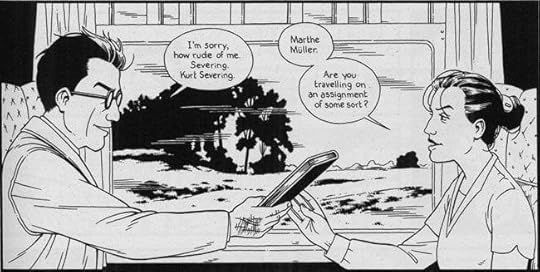
Usando recursos que só os quadrinhos proporcionam, Lutes faz, na forma de um romance emocionante, um retrato do trágico declínio da República de Weimar pelos olhos de seus cidadãos. Marthe Müller, uma jovem que troca a vida burguesa em Colônia pela libertária Berlim; Kurt Severing, um jornalista idealista que perde a convicção na palavra impressa à medida o extremismo e o fascismo avançam; os Brauns, uma família dilacerada pela pobreza e pela política. O livro acompanha a vida desses personagens conforme a cidade, onde a intelectualidade, a criatividade e a liberdade prosperaram, vai se despedaçando.

592 pages, Hardcover

First published January 1, 2018

330 people are currently reading
4472 people want to read

About the author

Jason Lutes

52 books227 followers
Jason Lutes was born in New Jersey in 1967 and grew up reading American superhero and western comics until a trip to France at age nine introduced him to the world of "bandes dessinées." In the late 1970s he discovered Heavy Metal magazine and the tabletop role-playing game Dungeons & Dragons, both of which proved major influences on his creative development.

Lutes graduated from the Rhode Island School of Design with a BFA in Illustration in 1991. While at RISD, among the many new comics he encountered were Art Spiegelman's RAW magazine and Chester Brown's Yummy Fur, which together inspired him to start publishing minicomics under the imprint "Penny Dreadful."

Upon graduation in 1991, he moved to Seattle, where he spent several years working as a dishwasher and assistant art director at Fantagraphics Books. His "big break" came in 1993, when he began drawing a weekly comics page called "Jar of Fools" for The Stranger, Seattle's alternative paper. By 1995 he had become the paper's art director, but upon collecting and self-publishing Jar of Fools in 1996, he left The Stranger and made the leap to becoming a full-time cartoonist.

In the handful of productive years following that decision, Lutes began the comic book series Berlin, set in the twilight years of the Weimar Republic.

Lutes currently lives in Vermont with his partner and two children, where he teaches comics at the Center for Cartoon Studies.

He still tries to play Dungeons & Dragons once a week with friends.

Ratings & Reviews

What do you think?
Rate this book

Friends & Following

Create a free account to discover what your friends think of this book!

Community Reviews

5 stars
2,193 (58%)
4 stars
1,143 (30%)
3 stars
333 (8%)
2 stars
56 (1%)
1 star
21 (<1%)
Displaying 1 - 30 of 487 reviews
Profile Image for Dave Schaafsma.
Author 6 books32.1k followers
April 28, 2025
4/27/25: I just saw the premiere of Mickle Maher's adaptation, Charles Newell directing, of this masterpiece graphic novel by Jason Lutes at Chicago's Court Theatre. The first review here is a rave (see link below), very much earned. The work focuses on the rise of Nazism/fascism/totalitarianism and repression/brutality in what was one of the great cultural cities in the world in the early part of the twentieth century, Berlin, seen from the perspective of writers and artists and some every day citizens who were at first dismissive of the buffoonish Hitler and his thugs, sure his racist views would not hold sway, then in growing horror, shock and dismay found they either must leave or capitulate (or die). Obviously timely. References to other works on this period are part of the work, such as Cabaret.

In 1979 I saw Bertolt Brecht's The Resistible Rise of Arturo Ui (which I reviewed on Goodreads). I was reminded of its dramatic, horrific conclusion--the ascendance, the dominance of Hitler before a stunned populace, symbolized by his standing and screaming at the top of a tall ladder--as a similar thing happens in the adaptation. Brecht would have approved that the character who plays the part of a mother murdered on the street arises to (while on stage) paint a moustache on her face, put on a leather longcoat, and then shift to play the part of Hitler. Powerful, powerful theater. Brecht despises the theater seen as "entertainment;" Maher and Newell agree with his tribute to Brecht, but Lutes also agrees that comics can be a tool for understanding--and not just escaping from--the world.

Original review 11/22/18: “I hope it will amount to more than a pile of stories.”

How many times in a lifetime can you say “masterpiece”? Not many, if you want any credibility. Okay, I’ll call it: Berlin, 23 years in the making, is an epic, 550-page masterpiece by Jason Lutes that focuses on the waning years of the German Weimar Republic, 1928-1933, from the time that Berlin was a worldwide cultural mecca--though also very much in economic crisis--to the time the country decided Hitler had the answers to this crisis. His first election had him gain 88% of the vote, so this was no coup. And yet as Lutes tells it, some factions in society--especially the liberal intelligentsias--were in shock as the country was transformed into something none of them had ever imagined.

We who have been taught the history may recall the basic political events from the textbooks--with an emphasis on Hitler vs. the Allies, of course--know best the wide angle, macro view, but Lutes has a different focus. The idea of the novel, named as it is, is to ask certain questions: What would it have been like for a range of individuals to be in Berlin, a city only culturally second in the world at the time to to Paris, in the twenties? Amazing theater, art, and an explosion of writing. What would it have been like to have such a magical mecca turn so quickly to evil? To suddenly have a view of art dominate the scene that would denounce all other forms of art as “decadent”?! And in an economic crisis, to have Jews and Communists seeking economic justice demonized. The first volume (or section, in the completed, one volume text I am now reviewing), is named City of Stones. To live in Berlin in the twenties is to have at one's fingertips literally thousands of new pages every day of books, criticism, theory, magazines, journals, and newspapers, but if Berlin might be seen as a flowing river, such words were like stones that sank to the bottom of that river, seemingly worthless, largely unheard (and increasingly censored, of course).

We see this cultural moment through the lens of historical fiction, a graphic novel, and specifically, largely through the experiences of two people who meet on a train on their way in to Berlin: Kurt Severing, a (politically left, but not too willing to take much of a stand) journalist, and Marthe Muller, an (apolitical) artist. Volume one, published in 2000, focuses on 1928-29; volume two, City of Smoke, focuses on 1929-31, and volume three, City of Light, focuses on 1932-33. We march steadily and patiently from month to month, mapping the landscape, as we get a close up fictional look (and see, and hear, in ways history books cannot help us do) at what it might have been like for a range of humane—and some less than humane--people to be living during this time in this great city. The events happen, but the focus is on a range of people. That good things happen to good people in the midst of emerging fascism and unimaginable cruelty also gets acknowledged here. But this is no fairy tale; it’s a novel, with imperfect characters, as we switch from the elites to the jazz age artists to the struggling poor, from the Communists to the Nazis.

City of Smoke tacks back and forth between two worlds seemingly oblivious to each other, the emerging jazz nightlife and the political strife between factions of the citizenry. Extremes in both worlds seem to abound as a kind of frenzy grips the city. Images recur: Houdini (a Jewish escape artist is the focus of an earlier book from Lutes but he is a character here); The American jazz band The Cocoa Kids makes its way into and through the story—it’s the jazz age!--but the central event in this middle section is the lethal May Day demonstration of 1929. Severing interviews survivors, and Marthe draws accompanying portraits as they tell of their experiences. Again, it is “people’s history,” and not textbook relations of events, it’s how ordinary citizens experienced pivotal events. Tension builds as the battles ensue between Communists and nationalists, Jews and Gentiles. A divided country! One such featured family throughout is the Braun family, with Sylvia joining the resistance, opposed by her Nazi brother.

City of Light, the third section, features the election of Hitler and the increase in representation of his party in the Bundestag. Conditions turn worse, especially for the poor, though things fall apart personally for several key people in the novel we have come to know. None of this should be a surprise; it's the rise of the crushing reign of Nazi power, and the lead-up to WWII. The art reflects the slow, steady, almost subdued march, unspectacular in narration—I was reminded of what Hannah Arendt refers to as “the banality of evil”--but begins to speak to a question we are desperately curious about: How could it have happened?! What are the root causes of a people's embrace of fascism and totalitarianism? We seek the answer to that question, and another: How could one nation embrace a dictator such as Hitler? One interestingly sad dimension of the story (that some of us may know) that gets highlighted in the third section is the fate of the glbtq community. Berlin was once seen as the gay capitol of the world, all but crushed by Nazi condemnation. One sad episode among many. [The play highlights the relationship between Kurt and Marthe that also increasingly involves another woman.]

In the last third of the third bookl, disillusioned writer Kurt and artist Marthe [who in the play draws what she sees throoughout--and at one point gives her drawing to an audience member int he front row] both seem at the point of despair. Multiple story lines make things seem disjointed, mirroring the political and social situation of the time. Increasingly, noir-influenced Lutes creates a somber tone to prepare us for the future we know all too well.

Another sad episode in Berlin writing history: A real life Berlin editor featured early on in this fictional tale is Carl Ossietzky who was later, in the early thirties, imprisoned twice for criticizing the Nazi Party in the press. In 1935 he was awarded the Nobel Peace Prize; the next year he was dead from TB, deprivation and abuse. This book is a loud and hopefully horrifying call to arms about the importance of a free press in a democracy. Silencing (and even murdering) journalists is of course a long embraced strategy of totalitarian regimes. Who owns the mainstream media in the US right now?

This is a complex, multi-layered comics work, but the old story of the role of the arts and journalism in resisting totalitarian rule is one foundation of this work. Some final, wordless images of post-war Berlin conclude the book, and are both insightful and moving. I don’t think those who read comics primarily for escapist action will love this work, but I think those that want to learn about the potential for comics in examining history, and for telling multi-layered stories that help us see the times in human terms, will love it.

Included are appendices that include a list of (pictured) characters, and lists of resources he used for his extensive research, for you to consult for further reading.

A link to the Comics Alternative interview with Jason Lutes:
http://comicsalternative.com/comics-a...

Sun Times April 28 review:
https://chicago.suntimes.com/theater/...
Profile Image for Chad.
10.3k reviews1,060 followers
September 8, 2019
Jason Lutes magnum opus, a story 24 years in the making. I started buying this in single issues in 1994 after reading Lutes's previous work, Jar of Flies, but dropped off a few years later, losing track of the book given its infrequent release schedule. I was ecstatic to come across this in the library the other day and very happy for Jason Lutes having finally finished it. It's a beast of a book, clocking in at 550 pages, but I enjoyed every minute of it.

Berlin is a look at the city during the Weimar Republic era from 1828-1933 through the eyes of its denizens. At the time Berlin was one of the capitols of European culture, rivaling Paris. It was also the gay mecca of Europe until Hitler eventually rounded up homosexuals, sending them to concentration camps. Throughout the years, we slowly see the rise of the Nazi party seeping through the backgrounds as Lutes focuses on his characters' lives. The book is maybe timelier than it ever has been with the rise of white nationalism in the U.S. over the last 3 years. But that is not the main focus of the book. It's about the characters within living their lives, rich or poor, Jewish or German, gay or hetero.

The book may not appeal to all graphic novel readers. The story is more staid and somber than your typical comic fare. It will definitely appeal to all history buffs, whether they typically read graphic novels or not. I love the panel structure of Jason Lutes's art, sticking with 9 panel pages for the most part. His crisp, clean pencils are a welcome sight to my eye.

Profile Image for Kamakana.
Author 2 books415 followers
November 14, 2021
if you like this review, i now have website: www.michaelkamakana.com

291018: reviews of previous volumes:

vol. 1, first review: the weimar republic in the roaring 20s- first volume in the best graphic series i have read.

i have just reread this, rare to do so with graphics, but worth it. my knowledge of history of that time is primarily through narrative works like this, other books, films of the times and since, not nonfiction, not studying, finding a sense of the times through historical fiction- movies, books, now graphics- that helps make something like sense of senseless horror in the rise of hitler, the horror of antisemitism then, the horror of its use as a political force, in the insidious extremism of fascism, in the hope and naïveté of the common people...

i believe that the best artistic projects are those that find expression in exactly the right medium. i am told the true media comparison or understanding is not between written books versus graphic books, but between movies versus graphics, and that certainly seems to be the case here. lutes uses cinematic grammar, telling the story in images that allow close-ups and panoramas, silence and implied movement, follows visual edits years apart, uses multiple identifiable characters, swinging from global to personal in a few cuts. and then dialogue here more abstract than films, not concerned with moving the plot along, conversations on everything, on art, on perspective, and then the silent musing of all these random characters. this is the best work in simple, correct, easily read images, only in total emotional effect/affect recalling german expressionist movies of this time...

this is only the first of three volumes. ends on a cliffhanger that i easily solve because i have book 2- but then i know he has not published 3 yet...

vol. 2, first review: best graphic work ever?

why do i say this, when do i say this, yes perhaps it is the political nature and society of Weimar Berlin, the interwoven narratives, complexity of the story, way it moves scene to scene through entire culture, from art school to cabarets, from how varied pov are, working class radicals and dupes, unheeding bourgeoisie, detestable wealthy. major characters still journalist of conscience, young woman art student, lover between him and her, workers and soldiers and survivors, including here a black jazz quartet from America...

and then again, as usual i look at the art, despite being primarily literary type. i like the representational artwork, the realism, the drama, the symbolic, and so it is the story told in images rather than stopping at this or that moment. more political, more thoughtful, there are some pages of conversation about politics- and then there are those who try to live in the moment, ignoring storm clouds, and nostalgia for the freedom and sincerity of beliefs re. communism, art, writing, in that era...

and now i wait for Berlin 3...

volume 3, first review, 30.10.18: best graphic work read/seen...

when i first met my friend comics illustrator riley rossmo i had read maybe ten graphics, adult graphics, serious graphics, and this was years after childhood for when my brother and i could read written books, our mother teacher and librarian would not let us read comics. we are young, trying to be, proud to be, reading like adults so this is no hardship. on the other this is the birth of artistic snobbery that prevents me from seeing no more than comics as disposable childhood entertainment. i have read over 500 graphics now, novels, collections, reproductions, theory, critiques, and really like the medium now. i might have bought vol. 1 before we met, but discovered or rediscovered my love of visual art, he went to art college, i wanted to but took art at u, so we talked much art history- that i had in fact hated at u. i have read much art and art theory and much of my ‘graphics’ shelf are actually visual art books. so i look at art, i talk about art, i give riley some ‘intellectual’ views on art, but it is this work that convinces me of the possibilities of graphics...

riley knew i loved this work, had the previous work, was of course impatient for 3. so he bought me this as trilogy for my birthday, thanks riley. i wanted to read it all in one go, i had to find somewhere to read it, support it (it is a big, heavy hardcover), so i eventually found a soft chair with high wide armrests, got some drinks, some food, some time, some solitude, and sat and read it all in i don’t know, three or four or five hours. this a great way to read it. i loved it. my previous reviews are accurate...

i had read Vols. 1 and 2, i see this has taken lutes 23 years, my friends might see little innovation or technical advances in the art, but i see it as excellent images telling the story. there seems to be, in art criticism of all sorts, forms, mediums, a sort of ‘literary prejudice:’: that is if the it cannot be appreciated in poetic terms, in literary terms, in politics or philosophy in words- it is not worthy of much critical respect. for me, this is too often the case in graphics. if the story can be told in words, tell it in words. it is how it is told in images that makes this work supremely visual, easy to follow, easy to look at, easy to understand, like a mental movie, and affecting in ways that are mature and reflective and heartbreaking: there is a passage of four pages that render the sadness and tragedy and reality of death that is best of any medium. in four pages. so there is great panorama and detailed intimacy, there are thoughts, discussions, encounters, politics, religion, philosophy, of the weimar era in subtle and dramatic images foreshadowing future war, with a few images of swastika, of hitler, more of brownshirts and reds, most of the people of that time. beautiful and wonderful and aching sad of this resonant past...
Profile Image for Fuchsia  Groan.
168 reviews238 followers
December 26, 2020
Por mucho que leamos sobre algunos hechos, sobre sus causas, sobre los acontecimientos concretos y sus protagonistas, las preguntas “¿cómo pudo ocurrir?, ¿es que nadie lo vio venir?” difícilmente nos abandonan. Es más, cuanto más se lee, cuanto más se sabe, más difícil de entender resulta... y a la vez, algunos días, nos paramos a observar y podemos ver ciertos paralelismos inquietantes, y entonces la repetición de esos hechos que tanta incredulidad nos provocan no parece tan imposible. El nazismo es sin duda uno de estos eventos. A Jason Lutes le ocurrió lo mismo, y por ello comenzó a investigar sobre ese período inmediatamente anterior al horror, apasionante pero sobre el que se suele pasar sin pararse demasiado, la Alemania de entreguerras, la República de Weimar, y consigue plasmarla aquí a la perfección, con una espectacular atención al detalle, en una obra ambiocisísima que le llevó más de veinte años concluir.

Centrada en Berlín, ciudad “donde se podía sentir el mundo girando bajo los pies”, una ciudad demencial, en un mundo al borde del colapso, donde el aire huele a desastre inminente pero donde a la vez se respira vida. Lo que más me ha gustado es que al lado de los grandes hechos, que sirven como telón de fondo y que de una forma u otra están presentes en cada página, la explicación se da a través de las vidas de los ciudadanos corrientes (en una historia coral, mezclando personajes reales y de ficción), protagonistas en última instancia de la Historia. Algunos, conscientes, horrorizados e impotentes, ven cómo se acerca el desastre. Otros, al contrario, esperan la llegada de la pesadilla con entusiasmo. Los mejores carecen de toda convicción mientras los peores rebosan apasionada intensidad. Están también los que parecen no verlo venir, que siguen con sus vidas como si nada estuviese sucediendo, y los que, viéndolo o sospechándolo, observan con indiferencia, probablemente muy seguros de que a ellos, con sus vidas acomodadas, lo que pueda suceder ni siquiera llegará a rozarles.

Pero es que la historia solo puede leerse y analizarse cuando ya ha sucedido, esa es la condena. En las primeras páginas, un profesor de arte explica el concepto de punto de fuga: sólo es un artificio, útil porque la mayoría, Morgenthaler, pasamos nuestro tiempo mirando al frente y no arriba o abajo, y porque las estructuras terrenales se construyen sobre el suelo. Lo más importante no es el horizonte, sino el punto de fuga. Añadiendo algo que bien puede aplicarse a la Historia: La ubicación del observador es lo que realmente determina la posición del punto de fuga; un dibujo al natural depende tanto del objeto como de la posición exacta de los ojos del artista en relación con aquel.
Profile Image for Lee Klein .
911 reviews1,054 followers
January 16, 2020
Pretty sure this is the first hyped/lauded graphic novel I've read that failed to at least meet my expectations. It's long, sure, and it juggles a ton of characters, including a bisexual woman who's with a woman who dresses as a man, it represents political and class conflicts leading up to the rise of the Nazis, the story moves well for being so populated and fractured, there were moments of beauty and poetry and excitement, sure, but I ultimately felt like I was reading a comic book about late-'20s Berlin, unlike when reading Berlin Alexanderplatz or Zwieg or Erich Maria Remarque et al -- or more so and more importantly I've become accustomed to and expect more of a visual treat thanks to formal unconventionality and a sense that the pages saturate my sight with movement and color. In this, the conventional panel structure, the way so many characters seemed to have a similar facial shape with the same strong jaws, the fight scenes complete with BAMMMM BAAASH, the way the characters seemed animated by the results of research and the mechanisms of history more than intuition into their individuated humanity, the requisite cameos by Josephine Baker and Hitler, all combined for relatively enjoyable easy reading but not something particularly interesting or innovative or exciting, especially compared with masterworks I've read recently by Chris Ware and Emil Ferris, or even the slender squirmy nutso entertainments by Jesse Jacobs or Mira Jacob's comparatively way more visually appealing memoir. Again, I generally liked reading it but its sexual, racial, political, and religious content often seemed forced and rote. I appreciate and admire the author/artist's talent and ambition but ultimately feel like the final product fell short for me in terms of audacity, individuation, and execution.
Profile Image for Uroš Đurković.
902 reviews229 followers
March 7, 2023
Stvaran više od dve decenije, ovaj strip predstavlja zaista, kako je naznačeno i na koricama, 'simfoniju velegrada'. Međutim, nije u pitanju neki proizvoljni trenutak, već izuzetno složen i važan period: poslednje godine Vajmarske republike, od 1928. do 1933. godine, kada nacisti dolaze na vlast. Džejson Luts je majstor dočaravanja jednog uzburkanog vremena u odnosu na pregršt priča koje se vešto prepliću sjajnim pripovednim uklapanjem. Ipak, bez obzira na uparivanje velikog broja tokova, glavni junak je sam grad, odnosno, pozornica, a ne sami glumci. Uz to 'Berlin' je i svojevrsna likovno-narativna studija tranzicije: lične, političke, društvene, kulturne. Crtež Džejsona Lutsa je sjajan: otvoren kako za detalje, tako i za praznine.

Srpsko izdanje je odlično, samo što je bila potrebna još jedna korektura dijaloga, potkrao se nezanemarljiv broj grešaka, što je šteta za ovakvo izdanje, koje čak na kraju ima i dodatne materijale: odabranu bibliografiju, filmografiju, intervju sa autorom i komentar o tome kako su neki detalji stripa morali da budu menjani zbog istorijske verodostojnosti.

Čak i onima koji nisu ljubitelji stripa, 'Berlin' bi bio krajnje zanimljivo štivo.
Profile Image for fer.
651 reviews106 followers
November 14, 2022
SIMPLESMENTE IMPECAVEL!!!

Um retrato muito completo de Berlim com o surgimento do fascismo e do nazismo. Voce acompanha a trajetoria politica da Alemanha pela historia de varios personagens, alguns deles figuras reais e historicas. É um tijolao, quase 600 paginas, se cair na cabeça de alguem mata kkkskkkk Nunca pegaria um livro desse tamanho pra ler se nao fosse uma hq. E eu li muito rapido. Porque é IMPECAVEL. Tanto a historia quanto a arte.

E é assustador ver os paralelos do surgimento do facismo na Alemanha em 1920 com o nosso Brasil de hj em dia.

De verdade, acho uma leitura obrigatoria. Incrivel demais.
Profile Image for Rod Brown.
7,347 reviews281 followers
July 7, 2019
I started reading this series over two decades ago as individual comic issues. Somewhere around the middle of the run, I had to stop buying comics for financial reasons, but knew I would return to this story one day. When I saw this all-in-one hardcover edition was being published last year, I immediately requested it for purchase at one of my local libraries. Despite my eagerness to finally get the whole story, I was too daunted to crack this thick, heavy brick until a bad cold kept me on the living room sofa for the entirety of the Fourth of July.

The first half was as great as I remembered. So many of the themes and events are timely to what's happening today in America. The second half flags a little bit as the events gets increasingly depressing, Lutes lets his sprawling cast get away from him a little bit, and the ending comes with a true-to-life whimper.

I might have went three stars for the story alone, but Lutes' pacing and art is masterful throughout. Though mostly working with pages using traditional 6-, 9-, or 12-panel frames, he sections and breaks them just so to control the speed of little moments and capture the dynamics of big ones. Just beautiful.
Profile Image for merixien.
671 reviews666 followers
September 13, 2023
Şimdiye kadar okuduğum grafik romanlardan, okumamın en uzun sürdüğü kitap Berlin oldu.Tabii yazarın bu üçlemeyi tamamlamak için yaklaşık olarak 23 yıl çalıştığını göze alırsak benim durumumun hiçbir anlamı kalmıyor pek tabii.

Bu sefer ilk olarak olumsuz yönlerinden bahsedeceğim, çünkü üzerine bu kadar çalışılmış bir üçlemede anlatıların arasında bu kadar kopukluk olması beni oldukça şaşırttı. Tabi bir yönden de bütün çalışmanın tamamlanmasının 23 yıla yayılmasından kaynaklı olarak araya giren boşlukların ve zamanın bazı hikayelerin farklı yöne ilerlemesinde ya da havada kalmasında etkisi olmuştur bilemiyorum.

Kitabın güzelliğine gelecek olursak hepimizin merak ettiği “bütün Almanya nasıl oldu da bu deliliğe katılabildi?” sorusuna bambaşka bir açıdan bakarak yanıt veriyor. 1. Dünya Savaşı’nın kaybedilmesi ve imparatorun ülkeden kaçmasıyla açığa çıkan “milli utanç”ın hem milliyetçiliği nasıl tetiklediğini hem de imparatorun kaçışıyla öfkelerini ve nefretlerini yöneltecek “günah keçisi” bulamayan kesimin yahudileri nasıl günah keçisi ilan ettiğini sıradan insanların sıradan hayatlarının arasında çok iyi bir şekilde ifade ediyor. Git gide dayanılmaz hale gelen ekonomik çöküş de yabancılara düşmanlığı körüklerken “anavatan” kavramını da daha da ön plana çıkarıyor. Ki düşündüğünüzde bu yalnızca Almanya için değil zora düşen bütün totaliter rejimlerin birincil sığınağı olduğunu, İkinci Dünya Savaşı’nda bu sever Stalin’in kullanacağı “Anavatan Savaşı” ile kendisini gösteriyor. Halkın kendi içinde düştükleri bir yanda ekonomik olarak tükenmişlik bir diğer yanda da insani sorumluluğun getirdiği kararsızlıkları, deliliğin güçlenmesini ve kenarda köşede aklı başında her şeyin nereye gittiğini net bir şekilde görebilen insanlarınsa nasıl umutsuz içinde sessiz kalmayı seçtiklerini kurgu ile gerçek olayların birbiri içine geçtiği bir şekilde okuyorsunuz. Dünya siyasi tarihinin en karanlık dönemlerinden birine yavaş yavaş giden bir yolu anlatmasına rağmen Führer’i ya da onun simgesini kitap boyunca yalnızca birkaç defa görüyorsunuz. Zira bu kitapta konu siyasi hikayeden öte halkın nasıl adım adım bu yola girdiğinin, tükenen ümitlerin ve umutsuz bir ülkenin hikayesi. Bu açıdan da çok kıymetli. Ancak en başında dediğim gibi bu kadar çalışılmış ve konuyu çok önemli bir noktadan ele alan bu üçlemede keşke hikayeler arasındaki bağlar daha sağlam olsaydı ve biraz daha derinlerine inilseydi demeden geçemeyeceğim. İmparatorluk sonrası Almanya ilginizi çekiyorsa bu seriyi mutlaka okuyun.

4,5/5
Profile Image for Maricruz.
528 reviews68 followers
August 22, 2021
El resultado está a la altura de la ambición del proyecto. Cómo describe la trayectoria de cada personaje, cómo entreteje unas con otras, cómo mete esas viñetas de gente sumida en sus pensamientos, y, más aún, cómo sitúa todo esto en un periodo histórico tan complejo... Cómo, maldita sea, te deja en suspenso pensando en qué sucederá con cada una de esas personas. Quizás no me ha hecho esta vez una impresión tan fuerte como la primera vez que leí, hace más de diez años, las primeras dos partes, pero he de reconocer que su estatus de clásico de la novela gráfica es más que merecido. Coño, que incluso me han entrado ganas de releer Berlin Alexanderplatz.
Profile Image for John Pistelli.
Author 9 books360 followers
February 12, 2019
For readers and writers of contemporary fiction, history can play the role that myth once did. Just as Sophocles's audience relished the dramatic irony created by their foreknowledge of Oedipus's fate, we can read about the everyday lives of Berliners in the Weimar Republic with poignant dread over what we—but not they—know to be their grim destiny. And like the theatergoers of antiquity, we gather around the more-than-twice-told tales less to be merely entertained than to reaffirm our communal convictions, pledge again our piety to our gods. Or else why tell the familiar tale yet again?

So it is with Jason Lutes's titanic graphic novel Berlin, over 20 years in the making, a book about the private lives of Berliners, some fictional and some historical, in the last days of Weimar. Again we watch a republic with an independent civil society collapse into warring factions of extremists, the worst of whom will seize the state and take total command of the citizens; again we see pluralism in all its manifestations—artistic, religious, and sexual—fall before the fists and guns of absolutism. The Jews and the queers are persecuted all over again, and again the liberal intellectual, with the exquisite pangs of his involuted conscience, is helpless to arrest the destruction of liberalism.

The particulars of Lutes's story are perhaps less important than these archetypes that it mobilizes, but in any case Berlin charts four years in the lives of middle-aged journalist Kurt Severing and a young aspiring artist named Marthe Müller. While the two are lovers off and on, we follow their separate paths through the collapsing city. Kurt is a mostly unaffiliated leftist and pacifist skeptical about communist sectarianism and violence and hopeful that words can change the world:
I imagine the daily output of the entire newspaper district. It makes me think of drowning, but I want to be able to see it another way. Instead: human history as a great river, finding its course along the lowest points in the landscape, and each page as a stone. Tossed in without purpose, just to see the splash, thousands of them might raise the water level until it escapes the confines of the riverbed. The water spreads out, the force of the river diminishes; before long, a marsh. But if each stone is placed carefully and with purpose, perhaps something can be built. Not to dam the current, but to divert its course. Berlin was built on a marsh. I hope it will add up to more than a pile of stones.

The travails of his journalistic colleagues index the decline of civil freedom in Germany; he himself increasingly withdraws from reality, since the time for words has come and gone and the political situation will be decided by force alone. What roll does a pacifist writer have to play in such a scenario?

Marthe meanwhile enters and then leaves art school and has an intermittent affair not only with Kurt but with her queer colleague Anne. Anna introduces her to Berlin's famous sexual demimonde, as made famous by Isherwood's Berlin Stories, and through her eyes we behold the fascist crackdown on the Weimar Republic's notable sexual libertarianism.

Meanwhile, we are treated to debates about the artistic avant-gardes of the period, from Expressionism to New Objectivity, even as the narrative overall, and the precise drawings through which we receive it, sides with Marthe's preference for realism over conceptualism and observation over theory. (I tend to think that behind this motif we can perceive the longstanding feud between comics creators and the art world, between the penurious devotees of painstaking panel-craft and the Lichensteins of the world who would appropriate their work for the museum walls and in the process reap all the spiritual and tangible rewards of the vaunted "artist.")

Subplots abound: Lutes claims influence not only from the expected Döblin and Isherwood, but also from Wim Wender's choral film, Wings of Desire, which flits in and out of the inner lives of Berliners with empathetic abandon as it discloses the sorrows and glories of the city after its postwar division. Berlin shows us a well-to-do Jewish family divided between the understandably conservative impulses of the father and equally understandable rebelliousness of the son; and it shows us a poor family divided by ideology, as mother and father, brother and sister, square off against one another as Nazis and communists. A band of touring African-American musicians adds the jazz to this Jazz-Age tale, though we might wonder whether their status as comic relief and their slightly unrealistic heist capers don't reinforce a stereotype rather than adding depth.

In any case, Wim Wenders had his magical-realist angels overseeing the city and his Homeric bard wandering the Potsdamer Platz, while Lutes's book, eschewing magic, is labelled "HISTORY" on the back cover.

Lutes has also cited Tintin creator Hergé as an influence: unsurprisingly, then, he communicates his complex narrative in a shadow-modified clear-line drawing style, even a cursory glance at which suggests precision and neatness, order and refinement. His storytelling is also clean, with panels in irregular but immediately legible grids and an alternation between establishing shots of Berlin sites and closer portrayals of his characters' dramas. There are no explosive or delirious layouts or disorienting compositions—they would be too reminiscent of superhero or manga sensationalism, too little to the purpose of convincingly capturing history.

Lutes at his most daring fades out his images as his viewpoint character dies, or truncates the image as another viewpoint character is suddenly killed; he also has a tendency to resort to Hitchcockian angles in moments of crisis. There are a handful of other fascinating visual conceits, but they aren't followed up or deployed consistently. (My favorite occurs when Lutes replaces the typewriter-clacking sound effect with words themselves, hovering in typeface over a street whose residents are mostly writers.) Otherwise, Berlin has a deliberately meticulous and minimalist style that does not call attention to itself at the expense of the subject matter.

And with that observation, we come to a possible problem: such an abandonment of style is very un-Weimar. I was startled (not in a good way) when Lutes recreates some images by George Grosz; it reminded me that there are no images so arresting in Lutes's own style. Never mind Grosz: where is Wenders's visual lyricism or Döblin's spates and torrents of vernacular language? Where is the passion of the Expressionist and proto-graphic-novelist Frans Masereel, alluded to early in Berlin and then never revisited?

Lutes is closer to Isherwood's "I am a camera" style, but then the Tintin-esque cartoonishness of his character-drawing is not exactly documentary either. There is a mismatch here between style and substance, between form and content, and it makes me question the critical claims that Berlin is "a watershed achievement" (to quote the back cover blurb).

This misfit of art and idea afflicts the story as well. Just as Lutes's drawing style can't accommodate Weimar's modernist extremes, his narrative can't make up its mind about political extremism. Communism is depicted with a mix of wariness and patronizing fondness, and while Levering's anguished liberalism is challenged, it is still the dominant note of the novel. I am hardly saying that Lutes should embrace communism—I grant his ideological premise of a lament over extremism as such, even if it portrays the far right as much worse than the far left. But like his protagonist, Lutes never commits even to this and seems to have it both ways, giving us communists as heroes and villains, cynical manipulators and admirable freedom fighters, in different moments of the narrative, which creates a sense of authorial aloofness, even condescension.

The sexual politics of Berlin are much the same. Marthe at first embraces and then rejects queerness, and it is hard to know whether or not we should assent to her abandonment of her queer lover, Anna. By the way, Anna herself is portrayed earlier in the novel as a butch lesbian and later as a transgender man; like Alison Bechdel's remark that had she grown up 30 years later she might have understood herself as trans rather than gay, this suggests our own cultural shift in sexual thinking from the late 20th to the early 21st centuries. And I wonder if that is not a more interesting story to tell, one with less ready answers, than yet another liberal iteration of World War II mythology. Lutes for his part might well want to tell it; he states in a recent interview:
When you're somebody who writes, or in the case of comics, writes and draws, the experiences of people, if I just wrote about my own experience it would just be another straight white guy's experience and that, frankly, is the last thing I want to read anymore. I'm much more interested in the experiences of people other than my kind of person. [...] But I'm not going to just write stories from my perspective because that's a boring perspective.

This is supposed to be a broad-minded, enlightened attitude coming from a straight white man. But it is not. It's the attitude of an aesthetic and intellectual tourist, enervated by postmodern living and in quest of other people's greater presumed vitality. It is a hardly updated ideology of the noble savage, and there's nothing persuasive or admirable about it.

Above all, though, Lutes's attitude is a flawed one not from an ethical or political perspective but from an aesthetic one. There is no short cut to telling an interesting story. Queer artists, female artists, artists of color do not simply tell interesting stories by virtue of their identity, and it's an insult to the great storytellers among them to suggest that they do. People who tell interesting stories, whatever their identities, do so because they are masters of their craft and because they are impassioned—not bored—artists.

You're not boring because you're straight, white, and male; you're boring because you're boring. And your book is often boring because you apply a staid style to subject matter that you presume is inherently interesting without always remembering to prove or earn its interest on the page.

So I find myself again in the uncomfortable position of dissenting from the press's and academia's consensus about what constitutes great comics. I see in Berlin—aside from its undeniable craft, polish, and good intentions—the creeping middlebrowization of an art form that gave us, for the better part of a century, and often on the same page, only garbage and grace.
Profile Image for Lauren .
1,834 reviews2,549 followers
July 21, 2022
• BERLIN by Jason Lutes, 3-volume set by @drawnandquarterly

Bullet-point book notes on BERLIN

- 20-some years in the making, and it shows! Amazing research and historical details here. Lutes captured Weimar Berlin and made it a distinct character. Full supplements and bibliography included.

- Real life labour, political, and journalism leaders are part of this story, surrounded by fictional or conglomerate casts of characters. Labour and journalism play big parts in the story, and the slow crushing of these spheres by the fascists leading to Hitler's rise of power.

- Berlin was the queer capital at this time, and Lutes represents this with a variety of queer characters, including 2 main characters being bi and trans.

- Only criticisms are the swift scene changes. Almost cinematic in nature, things move quickly page to page. So the flow is a little choppy. The reader has to pay special attention as things switch fast AND many drawn characters look alike. There are 3 or 4 characters with black hair and glasses, and they really look the same!

I was so immersed in this one and tried to spread it out over a few days to savour, instead of finishing in one fell swoop.

🌟 Immediately went on my Best of 2022 list upon finishing. Definitely the best graphic novel I've read this year, and overall a fantastic piece of literature.
Profile Image for Sud666.
2,330 reviews198 followers
March 2, 2020
Berlin surprised me. I thought it was going to be an annoying exploration of the various problems encountered by artistic types in the dying days of the hedonistic 1920's for the city of Berlin. It is and it isn't. The story is actually about the changes occurring in the political scene of Germany.

Told through the eyes of various characters, from art students to workers and journalists, Berlin is an exploration of the city in 1929. Gustav Stresemann has died. Stresemann, a winner of the Nobel Peace Prize and the signee to the Kellogg-Briand Pact of 1929, leaves a nation on the brink of collapse.

Into this mess, we see the various changes and struggles affecting normal Germans. The Communists have seized the opportunity to cause trouble and attack the "bourgeois" elements. Due to the rise of the radical Left, the Right begins to coalesce into extremist parties, namely the NSDAP. I think it is interesting to see how the book deals with many ordinary Germans who embraced the NSDAP, due to the violent antics of the Communists.

Strangely, for the most part, the Communists and the Nazis do have some common ground, it is the way they approach it that makes them different. Both are toxic and foul and BOTH deserve each other. When one espouses an extremist ideology, whether Communism or Nazism, then the "moral" high ground becomes a flat plane. Neither are moral, morality becomes a punchline when one chooses extremism-as there is nothing moral about it at all- merely "sides".

A very interesting book and well done. The art style works well for this story and the look at Berlin going through the changes, as it lurches towards the long night of Nazism, is very interesting. As I have visited Berlin on a few occassions, it's nice to match up my visuals with the story.

Berlin is a great book and one I would recommend to anyone looking for a good read.
Profile Image for Thekelburrows.
677 reviews18 followers
January 4, 2019
Why would a single human even attempt to write and illustrate a 600 page graphic novel that explores and illuminates the universe of Berlin Germany between WWI and WWII? WHY?!

You mad, Jason Lutes.
Profile Image for Nelson Zagalo.
Author 15 books465 followers
August 14, 2020
"Berlin" (2018) trata o surgimento do nazismo na Alemanha dos anos 1920 e parece ter sido criado por forma a espelhar o momento que vivemos de pós-crise financeira 2008 com as consequentes polarizações políticas do tipo BREXIT a chegarem aos EUA, América do Sul e Ásia. Contudo, quando Jason Lutes começou a produzir esta novela gráfica, vivia em Seattle e corria o ano de 1996, vivia-se a primeira grande euforia financeira das Tecnologias de Informação, que viria a ditar o estouro das chamadas dot.com em 2001. Essa primeira onda tecnológica trouxe, desde logo, à tona enormes desigualdades sociais o que acabaria por interessar Lutes em tudo aquilo que tinha acontecido em Berlim:

"I was living in Seattle, where the World Trade Organisation protests had happened, and there was already strong friction between the internet millionaires and the less fortunate. I was relating my experience in the moment to [what was going on in] my imagined Berlin, so I didn’t only think of the subject in a bubble to be looked at from a distance. All the same, I could never have predicted what would eventually come out of all of that.” The Guardian, 30.9.2018

[imagem]

Tendo em conta os 20 anos investidos por um criador na produção de uma obra, só muito dificilmente ela poderia ser de todo irrelevante. Quando alguém investe uma parte significativa da sua vida na criação concreta de algo, na prossecução de um sonho com princípio, meio e fim, é importante que paremos e tentemos ouvir, neste caso ler e ver. Se mais nada aqui houvesse, que não é o caso, toda a experiência criativa de anos e anos acumulada e sintetizada numa obra acabada serviria o nosso deslumbre e admiração na tentativa de tentar compreender porquê. Tem de ser algo muito intenso, minimamente relevante, para garantir a atenção de alguém ao longo de tantos anos. Mas se depois essa obra é publicada por uma grande editora e é recebida com rasgados elogios pela crítica, então nada fica a faltar, apenas a nossa própria experiência da mesma.

[imagem]

Começo por dizer que "Berlin" é mais novela do que novela gráfica, no sentido em que usa uma estrutura narrativa muito mais comum na literatura do que na banda desenhada. Falo em concreto do entrelaçamento de vários enredos, com cerca de 40 personagens envolvidas, ligados pelo espaço de uma cidade, mas essencialmente pelos interesses familiares e sociais das personagens. Apesar das 560 páginas, são muitas personagens, e nem sempre é fácil distinguir quem é quem, o que obriga a uma atenção redobrada, também menos comum nas novelas gráficas. Uma das razões para este efeito é a escolha pelo preto-e-branco que torna mais difícil diversificar e estereotipar os personagens para facilitar a compreensão do leitor. Contudo, acredito que o desejo de Lutes era este mesmo, tal como acontece nos romances mais elaborados, de levar o leitor a sentir todos aqueles personagens como amalgama emocional e social que forma a cidade, e não como meras entidades discretas.

Posso dizer que conhecia minimamente o surgimento de Hitler, mas só agora me dei conta que conhecia muito mais sobre o pós-1933, ano em que foi eleito, sendo esse o ano em que termina esta narrativa. Ou seja, Lutes não se focou na explicação do modo como Hitler conduziu o seu império do mal, mas antes no modo como a cidade de Berlin, a Alemanha, permitiu a chegada de alguém como Hitler ao governo. Nesse sentido, aprende-se muito a ler "Berlin", nomeadamente sobre a interação com a Revolução Russa de 1917, e a tentativa de estabelecer na Alemanha um sistema idêntico. Ou seja, não foi apenas um problema do Crash das Bolsas e da grande Depressão de 1929, a política alemã estava ao rubro e a crise financeira veio apenas dar o empurrão final. Impressionou-me ainda descobrir que Goebbels, o maior arauto de Propaganda de sempre, esteve presente desde o início, e que sem ele Hitler muito dificilmente teria chegado ao poder.

[imagem]

Em termos de experiência, a leitura começa lenta, muito pela densidade mas também por algum desconhecimento nosso do contexto, mas vai ganhando tração e suga-nos para dentro no final. Depois de terminar o livro, ainda dou por mim a regressar àqueles espaços, a ouvir aqueles personagens. Acredito que Lutes poderia ter trabalhado melhor a expressão dramática de alguns personagens que apesar de densos fica sempre um pouco distantes de nós. Mas a componente gráfica é excecional, contribuindo imenso para construção do imaginário da cidade e das vidas daquelas pessoas. Claro que ajuda o facto de estarmos a ler uma obra destas em 2020, em plena crise política internacional, e ver tantos paralelos com a realidade que vivemos, como diz Lutes “It’s a horrible kind of good fortune”.

Publicado no Virtual Illusion:
https://virtual-illusion.blogspot.com...
Profile Image for Marc.
988 reviews135 followers
September 20, 2019
The artwork in this is five-star wonderful--crisp black and white line drawings, striking whether depicting cityscapes, architecture, or characters. The book's sheer size is mind-blowing in terms of the amount of time and energy that must have gone into it (this volume collects the entire 20+ years of the series into a single tome). Centered on Berlin from 1928-1933, Lutes bounces among several storylines whose characters slightly overlap as they navigate the rise to power of the Nazis amidst a city serving as a crossroads for art, culture, and sexuality. The narrative dragged a good bit for me and I found it difficult to connect with any of the characters. They felt more like tokens placed throughout a well-researched, historical fabrication of a city. Overall, truly impressive for its ambition and artwork; lackluster in its storytelling and character development; and somewhat successful in breathing life into a city and its past.
Profile Image for Radiantflux.
467 reviews500 followers
March 12, 2024
20th book for 2024.

I have made a couple of attempts to read this previously and never got more than about 20% in. This time the pages flew past and found it an enjoyable immersive read. The art is beautiful. Lutes has really nailed Berlin's urban environment. The action takes place between 1928 and 1933, and does a fair job of capturing Berlin during its last Weimar years.

The things I didn't like: the characters are essentially one-dimensional cutouts, with little emotional depth and virtually no emotional connection for me; every so often there is a big exposition info dump because the story can't tell its own story; the handwritten font used is super-hard to read in the non-hardback version; the book sort of fades away at the end with an ending that seems seems somewhat arbitrary and unsatisfying.

Still great artwork and OK story.

4-stars.
Profile Image for Tony.
511 reviews12 followers
December 18, 2022
I have rarely read a book that has been so well described by its title. This graphic novel does a superb job of capturing seemingly every facet of the German city as it existed in the years 1928-32. Readers will encounter everything from intellectuals, communists, and homeless people on the verge of starvation to Nazis, aristocrats, and a Jewish family. They will see scenes as diverse as street brawls between members of different political parties, patrician orgies, communal housing conditions, and lesbian clubs. The plot follows several characters who navigate life in this city. But, Berlin is the book's real subject and Lutes makes it truly come alive.
Profile Image for Bruno Carriço.
59 reviews3 followers
April 16, 2019
6 stars... one to join the great Pantheon together with MAUS and Persepolis
Profile Image for Chitharanjan.
54 reviews2 followers
June 18, 2020
There must be some truth to the idea that certain cities attract the same kinds of residents over the ages. The typical New York story tends to be be full of oddball hustlers weaving in and out of each other's lives, all of them sharing an appetite for fun and jokes no matter how rough it gets. Paris is a city to be savoured, whose inhabitants seem preoccupied with falling in and out of love. And then there's Berlin, where people come to forget their pasts and to start their lives anew, only to be sent spiraling out of control by its decadence, or to find themselves swept away by forces at war that are far beyond their grasp.

The characters feel all too familiar. I've seen this story told over and over, in Goodbye to Berlin, in Berlin, Alexanderplatz, in Berlin: Imagine a City, in Babylon Berlin, and so on ... which is not to say that I'm tired of it. On the contrary, it felt nice to leave behind the real Berlin and inhabit the familiar old city that writers have built and rebuilt over the years.

I'm not a big reader of graphic novels, so I found it fascinating that my eye was being led around the page, from panel to panel, in the exact manner that the artist intended. Emotions and sensations are often depicted in very clever ways. The art is impeccable.
Profile Image for Judith Johnson.
Author 1 book99 followers
February 2, 2022
A stunning piece of work which the author took 23 years to complete. I cannot praise it too highly.

I'm a Germanophile, and find Berlin a fascinating city (see link below for blog on one of my visits), so was very happy when my son gave me this wonderful book for my birthday last year. Highly recommended.

I can also recommend Richard J Evans' masterful trilogy - The Coming of the Third Reich, The Third Reich in Power and The Third Reich at War.

Lastly, for those interested in the history of Hitler's suppression and persecution of the left wing press and the labour movements, the Steinwache memorial in Dortmund* is well worth a visit.

http://www.judithjohnson.co.uk/blog/b...

*
http://www.judithjohnson.co.uk/blog/w...
Profile Image for Terrance Lively.
212 reviews20 followers
November 20, 2021
This is a great graphic novel. It weaves multiple story lines of Weimar Germany to give a personalized look at the roots of Nazism and World War II. It is nicely illustrated and the plot works well with occasional integration of story lines. I did find some of the text and character differences to be a little lacking but of little concern. The jumping from subplot to subplot was a little jarring at first but keeps the long novel at an accelerated pace. Really a great novel that shows frightening parallels to the world today.
Profile Image for Juan.
36 reviews5 followers
October 5, 2020
This is one of the best graphic novels I have read so far. It is true that it shows the capacity of this medium to tell compelling and deeply human stories. Lutes gives a street view of life in Berlin in the 1920's and early 1930's before the rise of Nazism in Germany through the life stories of several characters. This gives a nuanced view of this period of history in this particular city that is more interesting than just following important events from the point of view of historical figures. Many times while reading it I could feel the same anxiety that the characters feel perceiving the world around them being changed for bad by social forces they can't control, a sentiment too familiar to many of us nowadays. This demonstrates for me the great story telling capacities of the author.
Profile Image for Emmkay.
1,391 reviews146 followers
November 2, 2022
Impressive ambition and sweep to this multi-volume graphic novel set in Weimar Berlin. I think I like my graphic novels less sweeping, though - for me, I love a graphic novel or bio that illuminates a corner of history or a particular life or relationship. The author clearly did a lot of research to capture the intricacies of the politics, art, and society of the Weimar period, and created an array of characters to represent a panoply of experiences. They are drawn very similarly, and there are a LOT of them, so I had trouble telling characters apart and following their arcs. Also, the print was very small, but that’s a middle-aged me problem…
Profile Image for Numo.
96 reviews15 followers
December 26, 2020
Una joya. Aunque empiece de una manera un tanto árida, pronto se vuelve interesantísimo y, a veces, incluso sublime. Vivir en la fascinante República de Weimar durante 580 páginas es otro de esos maravillosos regalos que te ofrece la literatura. 😎
Profile Image for Alberto.
126 reviews32 followers
June 23, 2024
Fantástico comic del periodo de entreguerras en Berlin
Profile Image for Aaron.
1,089 reviews110 followers
October 3, 2020
At a later point in this story, a woman at lunch with her friends casually mentions she supports Hitler, sending one of the men into a depressive shock. Later, his friend asks him why it's such a big deal. Why is he getting this mad? It's only politics. He responds, with a full knowledge of what Hitler stands for, "It isn't only politics!" It's moments like this one that make this book, a thoroughly-researched and deeply realized portrait of Weimar-Era Berlin, feel at times overwhelmingly relevant.

I can't tell you the number of times I put this book down to just sit awash in the similarities between the rise of fascism in Germany and the rise of authoritarianism in the U.S. today. And the thing is, Lutes had no idea how relevant this would be. He began writing this in 1994, publishing single issues gradually over the past couple of decades. His goal was to show life for what it was genuinely like in Berlin during the years between the World Wars, and as such, nothing here is grandiose or on-the-nose or built for the purpose of making a point. It's detailed, slice of life comics writing at its best, which only makes it feel all the more upsetting when you see how the fascistic ideas crept their way into an otherwise very progressive society. It feels real and imminent, and it makes you wish you could scream at these characters to realize how important it is not to dismiss the Nazis as a fringe group.

For the vast majority of the book, Lutes depicts the Nazi flag as a simple white circle on a red background (well, the book is in black and white, but your brain will assume it's a red background). I love this choice. The Swastika is such a symbol of hatred and fear now that we as modern readers can't divorce it from its horrifying history. By removing it from the flag, he allows us to see it more as Weimar Berliners likely did: a meaningless symbol upheld by a bunch of lunatic right-wingers. It's not until later in the book, when the Nazis are very much taking power, that he actually begins to depict the Swastika itself.

Beyond the eerie relevance, this is simply an excellent book. Lutes has clearly spent hours and hours researching Berlin, and brought it to vivid life with his detailed pencils. The characters are numerous, and at times can be a little hard to keep track of, but once you settle into the various narratives, you realize how satisfying and wide-sweeping this epic really is. He's managed to represent many different walks of life that populated this city, allowing them to live and breathe very realistically. There's no sensationalism here. It's all just life as it happened without big twists or narrative tricks, and it really allows you to feel like you're part of the city.

I can't recommend this highly enough, though I will say, if you're currently stressed out by our current political climate (who isn't?), this might be a bit too much at times. But if you can get through that, you'll be reading a book I would go so far as to describe as "important," particularly for modern Americans. It's a warning hidden inside an excellent historical work. I'm sure I'll return to it someday.
Profile Image for Adam Osth.
156 reviews9 followers
October 9, 2018
Masterfully crafted graphic novel that took twenty years to make and it shows. Historical fiction about Berlin during the transition into Nazism. However, instead of focusing on the big moments you can already read about it in history books, this uses a big ensemble cast to explore what happens between all those larger moments. What was it like to live in one of the most progressive cities in Europe during a transition into its darkest and most regressive period? What was it like to be a journalist, an artist, or a member of the working class?

Both the writing and the art are of some of the highest caliber I've ever seen in comics. The language is beautiful. The art is extremely subtle, showing effective gestures and simple and elegant storytelling during the main dialogue scenes and profound stylistic innovation during the heavy moments.
Displaying 1 - 30 of 487 reviews

Can't find what you're looking for?

Get help and learn more about the design.