Henry Wadsworth Longfellow (1807–1882) was the most popular American poet of his time, and one of the most famous American poets of all time. It has been said that certain of his poems — the long narratives Evangeline and The Song of Hiawatha most notably — were once read in every literate home in America. A former teacher who fulfilled his dream to make a living as a poet, Longfellow taught at Bowdoin and Harvard, was eventually honored for his poetry with degrees from Oxford and Cambridge, and is one of the few Americans to have a monument dedicated to his memory in Westminster Abbey. This choice collection of his works, which reflects his mastery of a rich variety of poetic forms and meters, includes one of his best narrative poems, The Courtship of Miles Standish. Here, too, are such famous poems as "The Village Blacksmith," "The Wreck of the Hesperus," "The Children's Hour," "Paul Revere's Ride," and other poems on subjects ranging from lost youth and Giotto's Tower to slavery and the building of a ship. Includes a selection from the Common Core State Standards "Paul Revere's Ride."
An extremely popular American poet in his own lifetime, Longfellow's best-known works include The Song of Hiawatha(1855), a translation of the Divine Comedy by Dante Alighieri, done in 1864-67, Paul Revere's Ride and Evangeline. He's one of the New England poets now typically referred to as the Fireside Poets.
Longfellow graduated from Bowdoin College in 1825, and after studying in Europe for several years subsequently became Bowdoin's professor of modern languages and librarian. After further study in Europe, he moved to Cambridge, Massachusetts to become professor of modern languages at Harvard in 1836. Meanwhile, Mary Potter Longfellow, his first wife, had died in 1835, following a miscarriage.
His first published collections of poetry were Voices of the Night (1839) and Ballads and Other Poems (1841). In 1854, he retired from teaching to focus on his writing. His second wife, Frances Appleton Longfellow, died in 1861 of burns sustained when her dress caught fire. After her death, for some time Longfellow had difficulty writing original poetry, and focused on translations from foreign languages.
Longfellow wrote lyric poetry noted for its musicality, and often presented stories of mythology and legend. He frequently imitated European poetic styles (and his work was popular in Europe in his day, as well as in the U.S.). As a Romantic poet, he seeks primarily to express and to evoke emotion in his poetry.
My late grandmother gave me this book of poems fifteen years ago, and I am ashamed to say that I just read it all the way through for the first time. Longfellow was one of her favorites, along with Dickinson. She starred her favorite poems, which are mine also, The Village Blacksmith and The Arrow and the Song. I clearly remember her reciting these to me growing up, and I can almost recite both myself entirely from memory. I also really enjoyed The Courtship of Miles Standish, which was new to me. I am very glad that I took the time to read this book, although I regret that it is too late to talk about it with her.
Enjoyed very much. Particularly like running across well-worn phrases that I presume originated with Longfellow -- ships passing in the night, patter of little feet, into each life some rain must fall. I particularly enjoyed Miles Standish, which I somehow don't think I have ever read before.
My mom first gave me this back in college when I was totally stressed about finals. I was actually really turned off from poetry in high school; if the poems they teach don't kill you, the student's interpretations will. Somehow I always end up re-reading this every couple of months. My favorite poem in here is, "The Light of Stars"...
"Oh, fear not in a world like this, And thou shall know erelong, Know how sublime a thing it is To suffer and be strong."
A brief but complete compilation of poems to get to know Longfellow. I loved "The courtship of Miles Standish" and his nostalgic recollections of lost times and youth. Very sensitive and solemn, good to be aware of the earth beneath your feet.
Longfellow was a polyglot (15 languages to be precise) and reputedly very sweet genius, and though he's unfashionable now his fame was such that Queen Victoria was taken aback to see the fervor his visit caused among her servants. "No other distinguished person has come here that has excited so peculiar an interest," she said. Of the endless fan mail, John Greenleaf Whittier said, "My friend Longfellow was driven to death by these incessant demands." This is a review of an audiobook reading by the great Alexander Scourby called Favorite Poems of Henry Wadsworth Longfellow. It's on YouTube. A mix of narrative and lyric poetry--"moods and tales," as one writer put it--heavy on historical figures, the collection ran:
The Builders.
The Skeleton in Armor.
Hymn to the Night. A favorite.
Mezzo Cammin. A+. Personal and unpublished. The end is very metal.
Autumn.
Paul Revere's Ride. A favorite. Really a masterful exercise in action and atmosphere. My guess is it was inspired by Browning's Good News from Ghent.
The Tide Rises, the Tide Falls.
The Falcon of Ser Federico. A story from The Decameron.
"The morrow was a bright September morn; The earth was beautiful as if new-born; There was that nameless splendor everywhere, That wild exhilaration in the air, Which makes the passers in the city street Congratulate each other as they meet.”
Has one of those The Gift of the Magi-type ironic twists at the end.
The Warning. A slavery poem. Warns that slaves will take us down with them like Samson. Longfellow himself thought his abolitionist verse "so mild that even a slaveholder might read them without losing his appetite for breakfast.”
Inscription on the Shanklin Fountain.
The Saga of King Olaf. Longish 1863 poem. Episodic yet rousing. Hawthorne praised it particularly to Longfellow. Based on a Norse saga from around 1230 about a Norwegian king from 1000. He converted the kingdom to Christianity. The best part was this scene where a bunch of invading warlocks are rounded up and bound to the rocky coast, until the tide quieted their screams. "Thus the sorcerers were christened!"
Carrilon. One stanza in particular echoes Poe. It's opening up a can of worms to say this. There's a whole long backstory to Poe and Longfellow where the former, as a literary critic--after praising Longfellow as the country's greatest poet--launched a one-sided campaign against him in something he called the Little Longfellow War, accusing him of imitation bordering on plagiarism. Though wounded, Longfellow never took the bait. As Anne Whitehouse wrote in a piece on LitHub, "Longfellow, a lifelong student and translator of Dante, recognized a soul in torment." After Poe's death he very astutely said, "The harshness of his criticisms I have never attributed to anything but the irritation of a sensitive nature chafed by some indefinite sense of wrong." He subsequently provided for Poe's impoverished aunt and mother-in-law.
My favorite lines in the poem were:
"And I thought how like these chimes Are the poet's airy rhymes, All his rhymes and roundelays, His conceits, and songs, and ditties, From the belfry of his brain, Scattered downward, though in vain, On the roofs and stones of cities!”
The Belfry of Bruges. Lovely.
The Broken Oar.
The Reaper and the Flowers.
King Robert of Sicily:
“When he awoke, it was already night; The church was empty, and there was no light, Save where the lamps, that glimmered few and faint, Lighted a little space before some saint.”
Based on an old romance that's like a medieval Twilight Zone episode. Longfellow is so good at setting a scene.
The Slave's Dream--an idealized vision of Africa and Africans, but the poem has some arresting lines at the end:
“He did not feel the driver's whip, Nor the burning heat of day; For Death had illumined the Land of Sleep, And his lifeless body lay A worn-out fetter, that the soul Had broken and thrown away!”
For Death had illumined the Land of Sleep... I'd never heard anyone picture what it's like to die in your sleep before.
The Leap of Roushan Beg. Neat little action scene.
Chaucer. Very nice.
A Shadow.
Torquemada. A poem about a Grand Inquisitor.
"Then stirred within him a tumultuous joy; The demon whose delight is to destroy Shook him, and shouted with a trumpet tone, Kill! kill! and let the Lord find out his own!”
This poem came across as strangely autobiographical. I think Longfellow may have had PTSD from the tragic deaths of his beloved little sister, two wives, and baby daughter:
“These two fair daughters of a mother dead Were all the dream had left him as it fled. A joy at first, and then a growing care, As if a voice within him cried, 'Beware' A vague presentiment of impending doom, Like ghostly footsteps in a vacant room, Haunted him day and night; a formless fear That death to some one of his house was near, With dark surmises of a hidden crime, Made life itself a death before its time.”
This couplet was good:
“O pitiless earth! why open no abyss To bury in its chasm a crime like this?”
My Lost Youth. Longfellow remembers his evocative boyhood in Portland, ME.
Emma and Eginhard. About Charlemagne's scribe. Cinematic scenario about a lover who is trapped in a princess' chamber by newly fallen snow, lest his footprints betray his nighttime visit to her.
The Children's Hour. Origin of "the patter of little feet."
A Psalm of Life:
“Lives of great men all remind us We can make our lives sublime, And, departing, leave behind us Footprints on the sands of time;— Footprints, that perhaps another, Sailing o'er life's solemn main, A forlorn and shipwrecked brother, Seeing, shall take heart again.”
Compare this poem's call to action to a quote by the poet that "A great part of happiness of life consists not in fighting battles but in avoiding them. A masterly retreat is in itself a victory.”
Excelsior. ["higher"]. More on the theme of struggle and greatness.
Curfew. Longfellow is such a bard of the night it almost makes me appreciate nighttime.
The Rainy Day. "Into each life some rain must fall."
The Day is Done. (1844) Immortal poem. "Read from some humbler poet" indeed.
Footsteps of Angels:
“Oh, though oft depressed and lonely, All my fears are laid aside, If I but remember only Such as these have lived and died!”
Even more heartbreaking when you remember that death kept taking from him the dearest women in his life.
Haunted Houses. Interesting one.
A Fragment.
The Bridge.
Rain in Summer. Good nature poem that goes off in an unexpected direction.
Resignation. "There is no fireside, howsoe'er defended/ But has one vacant chair!" About the death of a child. Poor Longfellow. Poor everyone back then!
The Village Blacksmith.
The Building of the Ship. Brings out all the poetry of a ship. Very musical.
God's Acre.
The Arrow and the Song. Pretty little poem.
The Wreck of the Hesperus. Ghastly ballad from 1839. Takes place off the coast of Gloucester, a rock reef named Norman's Woe famed for many shipwrecks.
The Old Clock on the Stairs.
Weariness.
My Cathedral.
[Note: Hiawatha, Evangeline and Miles Standish were also included in the recording. I reviewed them separately].
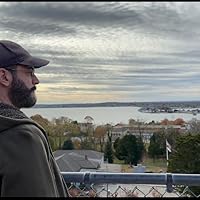
*The poet grew his signature beard to cover the burn scars from trying to save his wife's life.
*From the Smithsonian: "In 1867, Charles Dickens... spent Thanksgiving Day with Longfellow, renewing a friendship they had established 25 years earlier, when Dickens first visited the United States. Dickens wrote in a letter to his son that Longfellow 'is now white-haired and white-bearded, but remarkably handsome. He still lives in his old house, where his beautiful wife was burnt to death. I dined with him the other day, and could not get the terrific scene out of my imagination.'"
Eerie. Longfellow's dining room had the exact same effect on Dickens as it had on me when I visited 150 years later.
*Likewise, Emerson's reaction to Longfellow editing an 8,000 page anthology of poetry was mine as well: "The world is expecting better things of you than this ... You are wasting time that should be bestowed upon original production."
*“Who is the sleeper?” The words of Emerson, suffering from dementia, as he looked sadly down on Longfellow's casket.
More like 3.5 rounded up. I know the title says “poems” but the majority of the book is a collection of short stories masquerading as poems. Take for example the 135 page Song of Hiawatha. Let’s not forget Evangeline, The Courtship of Miles Standish, and The Saga of King Olaf all of which are 30+ pages long. Yes there are numerous familiar POEMS like Paul Revere’s Ride, The Village Blacksmith, God’s Acre and The Old Clock on the Stairs.
I picked up this collection of Longfellow's poetry because I SHOULD know more about one of America's all-time greatest poets. I write poetry; I love dissecting poetry; I SHOULD know more about Longfellow.
While reading, I came to know his clear and entertaining style. I came to appreciate how he can "spin yarn" (tell stories) effectively and efficiently. Whether he is writing in rhyme or in meter, he has the right word coming forth.
This collection contains one poem that is over 30 pages long. Other poems are much shorter, usually 1-2 pages in length. All these works are worth reading. The breadth of topics covered is quite impressive. Longfellow obviously had a supple and fertile mind and life. I can envy that he was able to make a life from poetry.
I am inspired to read more of his classic works. I gave this present work four stars instead of five because of what it omits. This collection contains his famous poem about Paul Revere, but misses some other classics such as The Song of Hiawatha and Evangeline. I am likewise inspired to read his poems on slavery as this is a particular interest of mine.
Longfellow is quite a clever fellow (his last name is enviable). He uses a variety of forms of poetry; 'Paul Revere', as what he's known for, is excellent.
I read lots of his poems alongside Dickinson; it was an interesting contrast between a man's perspective on life and poetry and a woman's. I'm a girl, so I leaned toward Emily's, but Longfellow's got a few profound thoughts that keep you captive a moment to reread the sentence in amazement to get it all again.
This is going to sound dreadfully picky, but the reason I gave this book 4/5 instead of 5/5 was for 'The Courtship of Miles Standish'; it had its moments of dragging, where the verse wasn't adding anything but volume and stuffing, and, because I am so needy—it didn't rhyme. I'm mostly fine with verses that don't rhyme, but it would've been deeper and more breath-taking, I believe, if the depth of rhyme was added. But overall a good volume of poetry to feed the soul.
I was surprised at how much I loved this book, which was inherited from an aunt several years ago and had been patiently resting on my to-be-read shelf. How sad that school children are no longer required to read, and sometimes memorize, Longfellow's works. "Paul Revere's Ride" is not just literature in a happy rhythm, it is history with an emotional poignancy. This collection intersperses short verses with the most well-known longer story poems such as "The Song of Hiawatha" and "The Courtship of Miles Standish." All are delightful. Through the weeks that I worked my way through the pages, I fell asleep each night with a cadence of the rhymes read just before my lids closed. Many lines were familiar, some not, but all seem fresh, despite their age of nearly two centuries. I pronounce them worthy escapism from today's more coarse world.
He may be dated in the age of free verse, but his talent is clear. A truly American poet (he seems little affected by any European influence) he should be known for more than Hiawatha. Enjoyable and tending to praise our heritage. I like it.
I'm trying to read more poetry and this is where I'm starting. There is some fine verse here, if a little simplistic compared to what poetry is today. If I were the type to memorize poems to recite, there are a few decent candidates here.
On the downside, 40% of this collection is taken up by one narrative poem, "The Courtship of Miles Standish." As one might expect, it contains some wildly inappropriate depictions of Native Americans, and if Standish is supposed to be seen as heroic, it was lost on me. Surprisingly, the woman at the center of the courtship is portrayed pretty well.
In other poems there are occasional hints at Manifest Destiny and a Christian-centric view of the United States, but I guess I have to consider the era.
زماني كه روحيه ي شما سست مي شود و نااميد مي گرديد به ياد آوريد: پايين تر جزر است كه مد را ايجاد مي كند
***
مرا دیگر یارای ایستادگی نیست ، ولی تسلیم نخواهم شد این رزمی نیست که در آن کم دلان تیغ بر کشند در این جا مغلوب ، فاتح میدان است .
***
از بهار عشق و جواني بهره بگير باقي را هر چه هست به فرشته ي نيكوكاري واگذار؛ چرا كه زمان به زودي اين حقيقت را به تو خواهد آموخت كه در لانه ي سال پيش مرغان بجاي نمانده اند
***
در آوردگاه پهناور دنيا در اردوي زندگي چون گوسفنداني مباش كه بي اراده رانده مي شوند قهرماني باش در تكاپو
***
دلهاي خانه نشين خوشبخت ترند زيرا دلهاي آواره نمي دانند به كجا مي روند گرانبارند از تشويش و گرانبارند از انديشه
There's this feeling behind it, beyond it, Dickens gets there through sentimentality to, another place, and some of Longfellow's poems dip into it.
The rest were quite pleasant.
A genuine surprise was the agency of the women in the two longer poems. In "Elizabeth," her forwardness in courting is basically seen is natural and ordained, and in "The Courtship of Miles Standish," who would have thought a character named Priscilla, the object of both men's affections, would be so straightfoward and knowing? Priscilla basically cuts through the hooey and woos her man.
Picked this up for a dollar or so at a used book sale, but got far more than a dollar's worth of enjoyment out of it. I found myself really loving these poems.
Many of the longer poems dealt with courtship and love, and were just really lovely. I'm thinking especially of the Building of the Ship, The Courtship of Miles Standish, and Elizabeth. The classic about Paul Revere deserves its reputation, and the Wreck of Hesperus was awfully haunting. The Reaper and the Flowers, The Village Blacksmith, The Rainy Day, and lastly, Christmas Bells; all of them memorable.
Poetry has always confounded me. Longfellow is the only poet whose work I consistently understand (mostly) and enjoy. Although I've long been familiar with his most famous poems—"Paul Revere's Ride," "Christmas Bells," "The Children's Hour," etc.—this is the first time I've actually sat down and read a whole collection of his work. This collection is a perfect primer. It's short, features a variety of Longfellow's poetry in different formats, and includes some of my very favorite of his poems. At a cost of $3, you can't go wrong with this slim collection.
Read This by the Fireside! One of the most well-known poets of 19th-century America was essentially erased by Modernist critics; he went from entertaining households to being the cannon fodder of academia. How unfortunate! As this brief collection illustrates, Longfellow was a master of narrative verse (see “The Courtship of Miles Standish”) and a craftsman with imagery figurative language (see “The Building of the Ship,” “My Lost Youth,” and “Elizabeth”). If you want verse that stands the test of time, look no further.
Poetry is not easy for me to understand, so I don't read very much of it. I chose this book because I read an historical fiction book that included a story-line about Wadsworth's life and I wanted to learn more about his work. It is amazing to me how popular and sought after he was as a writer. He faced tragedy in his life though. I was familiar with only two of his poems, one of them the hymn, I Heard the Bells on Christmas Day, which is a favorite of mine. It took me several months to finish reading this small compilation of poems, but I did enjoy it.
I'm really just getting into reading poetry so I'm just figuring out what I like. I did enjoy reading this collection even though I did not particularly care for the poems. I don't like the super typical abab rhyme pattern that Longfellow uses. I also found that some of his poems tend to feel "preachy" or "moralistic". This feels like the opposite of what poetry should be. Poetry can and should certainly be about religious matters, but should explore them in imaginative, creative ways. The way Longfellow writes about the Lord and romance feels dull and boring.
I like to read these at night when my house is quiet. I have a dream of reading these poems by candlelight, as they may have been written, read or pondered in times before me. The sentiments expressed reveal many hours of reflection on the mysteries of life, seemingly uninterrupted by trivial noises that crowd our lives now, like radio, news, and tv.
“Ships that pass in the night, and speak each other in passing, only a signal shown and a distant voice in the darkness; so on the ocean of life, we pass and speak one another, only a look and a voice, then darkness again and a silence.”