The Civil War leaves Willow Armstrong and women across the nation to manage the home fronts in their menfolk’s absence. With courage and spirit, these heroines go to extraordinary lengths to defend what they believe in. Some work to preserve slavery while others seek the end of a flawed system to create a new America.
Finley returns with an action-packed, heart-wrenching story in The Livingston Legacy series. For Home and Country is a tale of hardship and sufferance in a time when some sought change and others clutched at old beliefs.
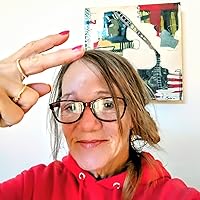
Naomi is a writer guided by a deep devotion to humanity and the stories that shape us across time. Drawn to the lives lived before us, she finds inspiration in the shared memory, resilience, and wisdom carried forward through generations.
Through her historical fiction, Naomi creates characters who feel real, tender, and unmistakably human. She is devoted to portraying people as they are, flawed, resilient, searching, and capable of profound love. In their struggles and survival, she believes we come to understand ourselves more fully.
For Naomi, storytelling is an act of remembrance and connection. A place where we meet our own humanity through story, learn from lives not our own, and return to what binds us together across generations and time.
The Livingston Legacy was wonderful. Sad that it is over. I kept reading till all four books were read. I miss the characters already. Impressed how the author would interweave characters in unexpected ways. I will continue to miss all my friends in this series. I appreciate the “faith” that was shared by some of the characters. Very important to me. Mrs Finley has a book about Charles I think I will start reading next. You will not want to put a book down till you have finished the series!
Finley is a talented author . so, why 3 stars? Because they don't offer 3.5. I have read a lot of Civil War novels but found these (I've read all 4) to be on the dark side. I don't mean just the war parts. Every character seem to come from dark tragedy, including the main characters. You expect that from the slave characters but they all seemed to be haunted souls. From the bullies to the downright sadistic.
I enjoyed reading all four books. I was disappointed that the author chose to cover the entire war with epilogue in one book. It just made it seem rushed to me. It was very well written. I think its just personal disappointment because I've come to love the characters. Even though it seems pretty well wrapped up, I'd love to read another one!
this was a bit too predictable, with the war here, the men fighting and the plantation still surviving. With McCoy wandering around, even though he was shot in the head. Bowden and Knox severely injured but yet can make it home and survive and only losing an arm. BUT wait, Willow gets pregnant and has a beautiful baby and all make it home safley in the end.
This entire review has been hidden because of spoilers.
All the books were a great read and I highly recommend them. The author's ability to draw out each character was amazing. The only suggestion I have is that the author should always note her references at the end so readers can go back to them. Note would have given 5 stars but the lack of historical evidence precluded me from doing so.
If you enjoy history this author brings the days of past history and the struggles that our ancestors endured and suffered for freedom and belief in love between friends & family no matter your skin color.
This series, Books 1-4, were very enjoyable and I think the 3rd one was probably my favorite. Book 4 brought closure to those who fought in the Civil War. I would have liked to have read about 1 year later and the Reconstruction process…
And this concludes a wonderfully entertaining, it not heartbreaking, well written series. Thanks for the hours of entertainment, strong, loyal characters, and book after book. My favorite series! My favorite author.
All thanks to Dr leker for the help you rendered to me by helping me to restore my relationship back.You can DM todays if you need his help him drleker307@gmail.com or WhatsApp number +234 703 950 2986
This entire review has been hidden because of spoilers.
For Home and Country by Naomi Finley is a powerful and emotionally charged conclusion (or near-conclusion) to a sweeping historical saga that has followed Willow Hendrick from the plantations of the antebellum South to the turbulent days of the Civil War. In this installment, Finley brings her characters—and readers—into the heart of the national conflict, where every choice carries weight, and every life is touched by sacrifice.
Willow continues to be a compelling heroine: deeply principled, morally driven, and braver than her time would have allowed most women to be. As the war escalates, she is forced to confront the consequences of her beliefs—not only to her family, but to the people she’s grown to love and protect. The strength she displays isn’t just in her actions, but in her resolve to stand firm in what she knows is right, even when the world around her is crumbling.
Finley’s writing shines here, particularly in how she captures the tension, grief, and resilience of life during wartime. The characters—especially the formerly enslaved individuals who continue to fight for their freedom and dignity—are written with depth and compassion. Their stories feel earned, never tokenized, and they are given the agency and emotional complexity they deserve.
The emotional beats are strong, the historical detail feels authentic, and the story continues to balance personal journeys with the broader, brutal realities of war. If there’s any critique, it’s that at times the pacing slows with some repetition in internal conflict—but it’s a minor flaw in an otherwise rich and moving narrative.
For Home and Country is a fitting continuation of a story rooted in courage, conscience, and the long, painful path to justice. It’s a story about what we fight for—and who we become in the process.