

What do you think?

The White Mosque
A historical tapestry of border-crossing travelers, of students, wanderers, martyrs and invaders, The White Mosque is a memoiristic, prismatic record of a journey through Uzbekistan and of the strange shifts, encounters, and accidents that combine to create an identity.
In the late nineteenth century, a group of German-speaking Mennonites traveled from Russia into Central Asia, where their charismatic leader predicted Christ would return.
Over a century later, Sofia Samatar joins a tour following their path, fascinated not by the hardships of their journey, but by its aftermath: the establishment of a small Christian village in the Muslim Khanate of Khiva. Named Ak Metchet, “The White Mosque,” after the Mennonites’ whitewashed church, the village lasted for fifty years.
In pursuit of this curious history, Samatar discovers a variety of characters whose lives intersect around the ancient Silk Road, from a fifteenth-century astronomer-king, to an intrepid Swiss woman traveler of the 1930s, to the first Uzbek photographer, and explores such topics as Central Asian cinema, Mennonite martyrs, and Samatar’s own complex upbringing as the daughter of a Swiss-Mennonite and a Somali-Muslim, raised as a Mennonite of color in America.
A secular pilgrimage to a lost village and a near-forgotten history, The White Mosque traces the porous and ever-expanding borders of identity, asking: How do we enter the stories of others? And how, out of the tissue of life, with its weird incidents, buried archives, and startling connections, does a person construct a self?
Finalist for the 2023 PEN/Jean Stein Book Award.
Winner of the 2023 Bernard J. Brommel Award for Biography & Memoir (Midland Authors Book Award).
In the late nineteenth century, a group of German-speaking Mennonites traveled from Russia into Central Asia, where their charismatic leader predicted Christ would return.
Over a century later, Sofia Samatar joins a tour following their path, fascinated not by the hardships of their journey, but by its aftermath: the establishment of a small Christian village in the Muslim Khanate of Khiva. Named Ak Metchet, “The White Mosque,” after the Mennonites’ whitewashed church, the village lasted for fifty years.
In pursuit of this curious history, Samatar discovers a variety of characters whose lives intersect around the ancient Silk Road, from a fifteenth-century astronomer-king, to an intrepid Swiss woman traveler of the 1930s, to the first Uzbek photographer, and explores such topics as Central Asian cinema, Mennonite martyrs, and Samatar’s own complex upbringing as the daughter of a Swiss-Mennonite and a Somali-Muslim, raised as a Mennonite of color in America.
A secular pilgrimage to a lost village and a near-forgotten history, The White Mosque traces the porous and ever-expanding borders of identity, asking: How do we enter the stories of others? And how, out of the tissue of life, with its weird incidents, buried archives, and startling connections, does a person construct a self?
Finalist for the 2023 PEN/Jean Stein Book Award.
Winner of the 2023 Bernard J. Brommel Award for Biography & Memoir (Midland Authors Book Award).
336 pages, Hardcover
Published October 25, 2022
About the author
Sofia Samatar
84 books670 followersSofia Samatar is the author of the novels A Stranger in Olondria and The Winged Histories, the short story collection Tender, and Monster Portraits, a collaboration with her brother, the artist Del Samatar.
Ratings & Reviews
Friends & Following
Create a free account to discover what your friends think of this book!
Community Reviews
Displaying 1 - 30 of 189 reviews
January 26, 2023
Memoirs are hard to rate. Sofia is the daughter of a Swiss-Mennonite and Somali-Muslim. This in itself immediately drew me in. Both of these religions are usually seen as very insular, especially on the outside looking in. I found her viewpoints to be quite diverse and modern. Shows what I know. Off to read more about Mennonites, because I have zero clue what that's about.

April 25, 2022
Stands shoulder to shoulder with some of the great travel writing--Jan Morris, Olivia Laing, Zora Neale Hurston--but also completely undermines and explodes expectations of what travel literature should be and do. Not to mention, the most complex and passionate reckonings with the imperial legacies of contemporary Christian global mission work I've ever read. And prose that flickers with light and drips with honey. All I could want from a memoir and more.

November 22, 2022
This book is a personal memoir told with a narrative that is intertwined with a travelogue of a recent tour group following the route of Claas Epp and a group of Mennonites who in the years 1880 to 1884 moved from the Ukraine to Uzbekistan in anticipation of Christ's return to earth. Epp had prophesied Christ's return on March 8, 1889. When that date came and nothing happened, he adjusted his calculations and corrected the year to 1891. The group continued to live in Ak Metchet, Uzbekistan until 1935 when the settlement was liquidated by the Soviets. By most accounts the colony coexisted successfully and peacefully with their Moslem neighbors until they enflamed the ire of the Soviet government by refusing to collectivize.
You can learn much about this group's Great Trek by reading this book, but there are other published books and articles that provide a more focused and thorough history. Readers of this book will learn more about the author's life and background than that of Claas Epp's. However, the author has done her research on the subject and her narrative branches in numerous directions to provide accounts of other interesting personalities related to this region and history.
In reading the excerpts I've included below from the book I hope readers of this review can get a feel for the author's introspective and insightful style of writing which I think is an excellent example of creative nonfiction literary writing. The rest of this review is made up of selected excerpts from the book that captured my attention along with my introductory commentaries.
The following is the author's description of her ethnic/religious ancestry:
The author uses her apparent incompatible ancestries to be a metaphorical mirror of the history she is recounting in her travelogue—i.e. Mennonites in Uzbekistan. Her own personal mosaic is described as follows.
The following excerpt from the book is the author's description of the Mennonite church to which she belongs.
Review from the LA Times:
https://www.latimes.com/entertainment...
You can learn much about this group's Great Trek by reading this book, but there are other published books and articles that provide a more focused and thorough history. Readers of this book will learn more about the author's life and background than that of Claas Epp's. However, the author has done her research on the subject and her narrative branches in numerous directions to provide accounts of other interesting personalities related to this region and history.
In reading the excerpts I've included below from the book I hope readers of this review can get a feel for the author's introspective and insightful style of writing which I think is an excellent example of creative nonfiction literary writing. The rest of this review is made up of selected excerpts from the book that captured my attention along with my introductory commentaries.
The following is the author's description of her ethnic/religious ancestry:
My mother's family are Swiss-German Mennonite, my father's Somali Muslims. (p.9)The above description is adequate for most people, but readers of this review who may share part of this ancestry will be interested in my elaboration on the subject in this
The author uses her apparent incompatible ancestries to be a metaphorical mirror of the history she is recounting in her travelogue—i.e. Mennonites in Uzbekistan. Her own personal mosaic is described as follows.
How often I've been told I'm false, impossible, unreal. Somali and Swiss Mennonite: no one can make it work. How often I've been told that everybody will look like me once time has ushered in the blessed, post racial kingdom.The following is a description of the author's growing understanding of her mixed background that was a product of colonialization and missionary work.
If to be a Mennonite writer is to be a cultural hybrid, and to be Somali and Swiss is to be an ethnic hybrid, and to be a Mennonite granddaughter of a Muslim sheikh is to be a religious hybrid, then I am not so much a hybrid as a Rubik's cube. (p.131)
During my childhood, people were trying to chart a path between nativism and assimilation. In their effort to decolonize they emphasized the agency of the colonized, who had roots and traveled—usually forced, in some way—on routes. By the time I reached college, this discussion had yielded to the notion of hybridity. Very quickly came creolization, indigenization, and global flows. I studied the methods of crossing: mestizaje, mimicry, and their delinquent cousin cultural appropriation. (p.208)We know the exact date of the end of the Mennonite colony in Uzbekistan. The following excerpt describes their involuntary departure forced by the Soviets.
The retired headmaster tells us how the Mennonites were taken away. It was June 18, 1935. ... Eighteen trucks drove into the village. Each deportee was permitted to pack one sack of belongings. The rest of their things were loaded onto the trucks, separate from the people, except for a few items hurriedly given away, like the one inherited by the retired headmaster's family. It was around lunchtime, very sudden. The Khivans who worked for the Mennonites or lived nearby were in an uproar, running after the trucks, shouting and weeping for their neighbors. And that was the end: a community snatched up, removed in the blink of an eye, in a chilling parody of the Rapture. (p.258)One place in the book it's said they were taken to the desert to die. This book is not clear about their fate. This Interactive Map of the Mennonite Great Trek indicates that they were deported to a barren area where "there was only heaven and steppe." [i.e. Village Number 7 - Kumsangir, Tajikistan] They lived there as a collective until the fall of the Soviet Union. Many from this exile settlement moved to Germany as "Aussiedler" during the 1990s. Descendants now live in the area around Bielefeld, Germany.
The following excerpt from the book is the author's description of the Mennonite church to which she belongs.
It's a wonderful grab bag of singers and readers and prodigals and seekers, a miscellany of either/or and both/and. And today, if you asked me to name the strength of the Mennonite Church, I would say it's precisely what looks like weakness and contradiction, the patchwork of people brought together in such different ways, by birth and faith and thirst, to build a house of effort and care. I would say my church almost looks like my idea of utopia. And I'd have to add that on a typical Sunday, with around three hundred in attendance, you can count the people of color on your two hands. (p.292)Near the end of the book, which is also the end of the Uzbekistan trip, the author provides the following reflections regarding the trip.
And was this trip my I Am event? Did I find the language of wholeness? ... I would call this trip my They Were event. For what was it that made the glow, the excitement that brought me here? I thought it was the promise of integration, of seeing myself as one, of finally claiming emphtically I Am, but instead I saw them, those others, how variously and chaotically They Were.
It wasn't me. It was them. The glow wasn't that I was reflected whole. It was that they were reflected prismatically, as mosaic. (p.303)
Review from the LA Times:
https://www.latimes.com/entertainment...

September 1, 2022
Mennonites? In Uzbekistan? The premise of this book caught me instantly, and I was rewarded for my curiosity. Samatar's white mosque in The White Mosque is a Mennonite church located in the heart of a Muslim community in Central Asia. Perhaps this reveals a biased tendency on my part; the juxtaposition of the Mennonites in Central Asia suggests an irresistible, exotic historical account.
That -- in part -- is what Samatar delivers, but the memoir is more than that. The White Mosque is also about the embodiment of a Christian/Muslim, Foreign/Autochthon juxtaposition within Samatar via their experience of living as a Somali-German American Mennonite, a second-generation immigrant in a largely White American community. In one sense, Samatar is a "white mosque" in her academic and personal worlds, as unique and unusual as a pilgrimage of German-speaking Mennonites trekking into Uzbekistan.
The White Mosque begins and ends with Samatar's touristic, scholarly pilgrimage to Uzbekistan in search of these European Mennonites who traversed that path over a century ago. It is a guided tour. Mennonites, non-Mennonites, tourists, and heritage-seekers accompany Samatar; their observations contribute to this memoir and help shape Samatar's embodied experience of being a Mennonite of color. The White Mosque also treks back in time, not only through this unique tangent of 19th century Mennonite history, but into Samatar's past as a child of a Somali father and a German-American mother and as a graduate student. The memoir flickers to the present too: Samatar as an accomplished researcher in pursuit of scholarship.
Indeed, what The White Mosque delivers to the reader is less a historical account, and more a commentary on the present moment, a moment in which cultural-ethnic-religious-racial juxtapositions are worth examination because of the violent divisions in our world along those same lines. This memoir suggests that a closer, more nuanced examination of such transcultural connections, persons, histories, and experiences is worthwhile because they are not as anomalous as they might initially seem.
Midway through reading it, The White Mosque forced me to reconsider why I was attracted to the premise of this book: Were the Mennonites so unusual in their pilgrimage? Is the idea of a European Christian sect in Central Asia such an exotic thing? Haven't such transcultural phenomena occurred all throughout history? .... Mmm. Well-played, well-played. As a historian, a humanist, and an anthropologist, I know that no human phenomenon should be surprising; we have been criss-crossing, mixing, transgressive and transcultured throughout our history. But The White Mosque makes that point poignant, brings it to the forefront cleverly and gently through personal memory, subjective experience, and beautiful prose.
For that reason alone The White Mosque is worth reading.
That -- in part -- is what Samatar delivers, but the memoir is more than that. The White Mosque is also about the embodiment of a Christian/Muslim, Foreign/Autochthon juxtaposition within Samatar via their experience of living as a Somali-German American Mennonite, a second-generation immigrant in a largely White American community. In one sense, Samatar is a "white mosque" in her academic and personal worlds, as unique and unusual as a pilgrimage of German-speaking Mennonites trekking into Uzbekistan.
The White Mosque begins and ends with Samatar's touristic, scholarly pilgrimage to Uzbekistan in search of these European Mennonites who traversed that path over a century ago. It is a guided tour. Mennonites, non-Mennonites, tourists, and heritage-seekers accompany Samatar; their observations contribute to this memoir and help shape Samatar's embodied experience of being a Mennonite of color. The White Mosque also treks back in time, not only through this unique tangent of 19th century Mennonite history, but into Samatar's past as a child of a Somali father and a German-American mother and as a graduate student. The memoir flickers to the present too: Samatar as an accomplished researcher in pursuit of scholarship.
Indeed, what The White Mosque delivers to the reader is less a historical account, and more a commentary on the present moment, a moment in which cultural-ethnic-religious-racial juxtapositions are worth examination because of the violent divisions in our world along those same lines. This memoir suggests that a closer, more nuanced examination of such transcultural connections, persons, histories, and experiences is worthwhile because they are not as anomalous as they might initially seem.
Midway through reading it, The White Mosque forced me to reconsider why I was attracted to the premise of this book: Were the Mennonites so unusual in their pilgrimage? Is the idea of a European Christian sect in Central Asia such an exotic thing? Haven't such transcultural phenomena occurred all throughout history? .... Mmm. Well-played, well-played. As a historian, a humanist, and an anthropologist, I know that no human phenomenon should be surprising; we have been criss-crossing, mixing, transgressive and transcultured throughout our history. But The White Mosque makes that point poignant, brings it to the forefront cleverly and gently through personal memory, subjective experience, and beautiful prose.
For that reason alone The White Mosque is worth reading.

May 29, 2023
Should have known this book wasn't for me as its described as a "tapestry," meaning its all over the place, total mishmash. Part history, part travelogue, part exploration of identity, part random musings. I enjoyed the history portions, the biographical sketches of Mennonite pilgrims in Uzbekistan. Chapter 2 was the only cohesive piece for me. The rest I skimmed, largely unreadable.

January 13, 2024
Beautifully written, moving and poetic, and the best travel writing I’ve ever read.
Samatar’s writing is characterized by The Turn, the way she takes one idea/person/event/emotion-- and then twists it suddenly in another direction, these shocking transformations that happen in a sentence or two. It’s SO effective you could call it a trick, but it is, ultimately, not a trick at all. It’s just the sudden realization of the connection between things we didn’t think to connect before. The trick, I guess, is empathy.
Some things I liked and want to remember:
- The Apotheosis of War, a painting by Vasily Vereshchagin
- “He turns, aghast, observing the fractured paths of his past, the maze he has made of his life. The outsider has too many homes.”
- Irene Worth, and her last great role.
- Das Heimweh - “Eugenius catches the home-ache”; “Father looking at him like a mother”; etc.
- “Or that there is another Shakhrisabz, a Shakhrisabz of the mind. Ever beyond us, green. A place that exists only in the abstract, where we can never go, for there is no refuge on earth.” “No one knows the exact location of the place of refuge, because the place of refuge *is* the place of exile.”
- Martyrs Mirror. “In her essay ‘Writing Like a Mennonite,’ Julia Spicher Kasdorf calls Martyrs Mirror ‘the first, and by far the most important work by Mennonite authors,’ a work that made trauma itself ‘a means of articulation and inscription.’” This section of the book had me thinking a lot about Israel/Palestine.
- “Adriaen Wens, a teenager in 1573” - a wild anecdote among wild anecdotes.
- “Rashid Nugmanov desired a film that was ‘perfectly meaningless—without meaning, without philosophy, without symbols— an empty shell.’”
- “Except that instead of quilt, I wrote guilt”
- “I tried to enter a story and felt it disintegrate around me”
- “Are you allowed to love a stranger? And if so, what form should that love take?”
Samatar’s writing is characterized by The Turn, the way she takes one idea/person/event/emotion-- and then twists it suddenly in another direction, these shocking transformations that happen in a sentence or two. It’s SO effective you could call it a trick, but it is, ultimately, not a trick at all. It’s just the sudden realization of the connection between things we didn’t think to connect before. The trick, I guess, is empathy.
Some things I liked and want to remember:
- The Apotheosis of War, a painting by Vasily Vereshchagin
- “He turns, aghast, observing the fractured paths of his past, the maze he has made of his life. The outsider has too many homes.”
- Irene Worth, and her last great role.
- Das Heimweh - “Eugenius catches the home-ache”; “Father looking at him like a mother”; etc.
- “Or that there is another Shakhrisabz, a Shakhrisabz of the mind. Ever beyond us, green. A place that exists only in the abstract, where we can never go, for there is no refuge on earth.” “No one knows the exact location of the place of refuge, because the place of refuge *is* the place of exile.”
- Martyrs Mirror. “In her essay ‘Writing Like a Mennonite,’ Julia Spicher Kasdorf calls Martyrs Mirror ‘the first, and by far the most important work by Mennonite authors,’ a work that made trauma itself ‘a means of articulation and inscription.’” This section of the book had me thinking a lot about Israel/Palestine.
- “Adriaen Wens, a teenager in 1573” - a wild anecdote among wild anecdotes.
- “Rashid Nugmanov desired a film that was ‘perfectly meaningless—without meaning, without philosophy, without symbols— an empty shell.’”
- “Except that instead of quilt, I wrote guilt”
- “I tried to enter a story and felt it disintegrate around me”
- “Are you allowed to love a stranger? And if so, what form should that love take?”

Did Not Finish
January 24, 2024Read through page 85 (the end of part 1). I love Samatar’s fantasy and sci-fi work, my favorite being her collection, Tender: she is a beautiful writer and a master of the short story. Given that I also love literary memoirs and history, this seemed like a strong choice, but sadly, I never vibed with it.
While I'd be glad to read a book about Uzbekistan and I'd be glad to read a book about the life of Sofia Samatar, who seems like an interesting person in her own right, as it turns out I was not so thrilled to read a book about Sofia Samatar's two-week Mennonite heritage tour of Uzbekistan. This is clearly not the most interesting part of her life and as a tourist, she doesn't have much insight into the place. Despite strong writing and moments of insight, it feels digressive, a book in search of a purpose.
The story of the group of Mennonites who moved to Uzbekistan in the 1880s (in part seeking religious freedom but mostly following a millenarian preacher who prophesied the end of the world in 1889) is interesting however, summarized in pages 31-60.
While I'd be glad to read a book about Uzbekistan and I'd be glad to read a book about the life of Sofia Samatar, who seems like an interesting person in her own right, as it turns out I was not so thrilled to read a book about Sofia Samatar's two-week Mennonite heritage tour of Uzbekistan. This is clearly not the most interesting part of her life and as a tourist, she doesn't have much insight into the place. Despite strong writing and moments of insight, it feels digressive, a book in search of a purpose.
The story of the group of Mennonites who moved to Uzbekistan in the 1880s (in part seeking religious freedom but mostly following a millenarian preacher who prophesied the end of the world in 1889) is interesting however, summarized in pages 31-60.

April 20, 2023
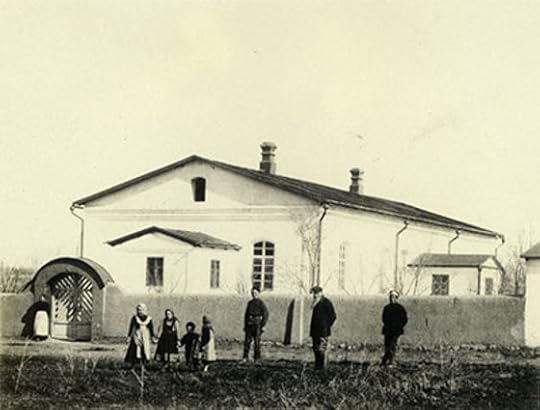
I was fascinated by Samatar's story of Mennonites in Uzbekistan, something I had no idea about until reading this book. I kept wondering how many people outside the Mennonite community know about this . . . maybe even within the community! In a nutshell, in the late 1800's after much petitioning of the government, 60 Swiss-Mennonite families migrated from their homes in a part of Russia (now Ukraine) to what was then Turkistan, now Uzbekistan. Russia wanted to conscript the men which was anathema to the Mennonites who above all are focused on peace and are committed to pacifism. This informative article focuses on this motivation. Samatar also emphasizes that minister Claas Epp, Jr. prophesied that Christ would return March 8, 1889 in the east and convinced these families to go with him. An early influencer, although we know how that prophesy worked out! This was not an easy journey as one can imagine in the 1880's in covered wagons in this inhospitable land. Not to mention they were not welcomed in Bukhara, their original destination, by the Muslim population. After many difficult years of toing and froing, trying to find a home, 32 families were granted permission to settle in the Khanate of Khiva. Even there they were not initially welcomed, but eventually settled in and were able to build a community and a church in Ak Mechet according to their practices and style in Germany. This church was whitewashed, hence the name The White Mosque given to it by the Muslim locals. They survived (and even thrived) in many ways in this area until they were expelled by the Russian government in 1935 for not turning over their profits as a cooperative. I'm not sure of the date of this photo, but it's from another informative article on Mennonites in Central Asia.
This story is at the heart of this book, but I kept wondering what Samatar's motivation for writing this book was. She writes in a poetic stream of consciousness and goes off on many tangents, all of which were interesting, but were they germane? It dawned on me on reflection that the Mennonites in Uzbekistan was a story within the larger story she is telling, that of Mennonites around the world, attempting to answer the question of who is a true Mennonite. We learn that converts from 100 years of missionary work in all areas of the world and with all races outnumber the blood descendants of those from Northern Europe (Netherlands, Switzerland and Germany). Samatar is pushing on who gets to tell the story of Mennonites. It seems after all of this missionary work, these descendants are still perceived to be the tellers and this huge population of non-descendants are perceived to be the receivers of the story. Part of her intent I believe was to tell of her and others' experiences as Mennonites of color and to stake their place in the community.
I realize now that I left out a key piece of how this book got written. Samatar and several other Mennonites recreated the migrants' route to Ak Machet in 2016. Even in an organized tour in a van and not covered wagons it was a difficult journey. Samatar tells us of a feeling many Mennonites have called "home-ache" or a "driving homesickness", and it felt to me like the people on this trip in 2016 were trying to quench this thirst for "home". In a way, it seems like they found it.
Why I'm reading this: I recently saw a review of this from one of my GR friends, and it immediately caught my attention. I grew up in a rural area with a large Mennonite community (along with other Anabaptist religious communities) and now I live in the U.S. state with the largest Somali population. The author's mother is Mennonite and her father is Somali - I'm looking forward to learning more about her and this Mennonite settlement in Uzbekistan.
This story is at the heart of this book, but I kept wondering what Samatar's motivation for writing this book was. She writes in a poetic stream of consciousness and goes off on many tangents, all of which were interesting, but were they germane? It dawned on me on reflection that the Mennonites in Uzbekistan was a story within the larger story she is telling, that of Mennonites around the world, attempting to answer the question of who is a true Mennonite. We learn that converts from 100 years of missionary work in all areas of the world and with all races outnumber the blood descendants of those from Northern Europe (Netherlands, Switzerland and Germany). Samatar is pushing on who gets to tell the story of Mennonites. It seems after all of this missionary work, these descendants are still perceived to be the tellers and this huge population of non-descendants are perceived to be the receivers of the story. Part of her intent I believe was to tell of her and others' experiences as Mennonites of color and to stake their place in the community.
I realize now that I left out a key piece of how this book got written. Samatar and several other Mennonites recreated the migrants' route to Ak Machet in 2016. Even in an organized tour in a van and not covered wagons it was a difficult journey. Samatar tells us of a feeling many Mennonites have called "home-ache" or a "driving homesickness", and it felt to me like the people on this trip in 2016 were trying to quench this thirst for "home". In a way, it seems like they found it.
Why I'm reading this: I recently saw a review of this from one of my GR friends, and it immediately caught my attention. I grew up in a rural area with a large Mennonite community (along with other Anabaptist religious communities) and now I live in the U.S. state with the largest Somali population. The author's mother is Mennonite and her father is Somali - I'm looking forward to learning more about her and this Mennonite settlement in Uzbekistan.

August 31, 2024
Although I've come across much praise of Sofia Samatar, I struggled to track down her books in order to experience them for myself. Then a copy of The White Mosque thankfully turned up in the Oxfam online bookshop, my number one source of titles that the library doesn't have. It's a beguiling combination of history and memoir, chronicling Samatar's research into and retracing of a journey made by Mennonites from Russia across Central Asia. Samatar was brought up as a Mennonite herself and reflects upon her own experience, as well as stories she encountered during her journey. I knew nothing about the Mennonites, so was interested to discover that the journey the book centres upon began because of their pacifism. They refused military service in Russia and instead sought a new home. Samatar's writing lived up to expectations; I found it evocative and lyrical:
I didn't have a religious upbringing, thus some of the details about being brought up Mennonite seemed extraordinary to me. Notably the game of martyr charades that Samatar played:
The White Mosque showcases Samatar's beautiful writing via patchwork of historical snippets, atmospheric travelogue, and insightful personal reflections, skillfully sewn together into a very readable book.
When I eat this honey, I'm not thinking about the Mennonite travelers. Only later, on the bus, do I wonder if they tasted it too. Eating this honey requires everything of you. I think of the Sufi philosophers who compared spiritual experience to the taste of honey. Honey is sweet and sugar is sweet, but their tastes are not the same. Is it possible to explain the difference in words? No: you can only know the taste of honey with your body. And only through feeling can you know the taste of love. When we leave this place with a bag of apples, one more gift for the road, I will think, There is so much goodwill in the world. And that one sentence will seem to weigh as much as a whole book. That's it, I'll think, that one sentence, that's all I have to write. But by the next day it will look worn, its sheen dissipated, it will have turned back into an ordinary glass bowl, and I'll think, what's wrong with me, why are my ideas so simplistic, so insipid, why do I think like a greeting card? How can a sentence like we are all one be so true and so false at the same time? I don't know, I tell Frank in the courtyard, if we can ever relate this experience, if we can ever express it without the tight grip of a handshake, the tang of cherries, the thickness of honey, and he says, "That's why we have writers."
I didn't have a religious upbringing, thus some of the details about being brought up Mennonite seemed extraordinary to me. Notably the game of martyr charades that Samatar played:
At the church retreat, we divide into groups and pick martyr stories out of a hat: each group will act out a story while the others guess what it is. The Dirk Willems story is so easy to guess, everybody groans. I'm not in that group: my group gets Gerrit Hazenpoet the tailor, who, as he was being burned at the stake, kicked off his slippers, saying, "It were a pity to burn them for they can be of service to some poor person." We can't use props, and we're not allowed to talk. One of us plays Gerrit Hazenpoet; another plays the stake. The children get on their knees and wave their arms in the air, wriggling their fingers around our Hazenpoet, in the role of flames. It's winter, at a Wisconsin campsite, beat-up couches around us, fluorescent light, and we're all laughing, and it occurs to me that this is a little bit ghoulish, that there's something macabre about the whole game, especially the children convulsed with giggles. Our martyr kicks off his shoes. "Gerrit Hazenpoet!" somebody yells.
The White Mosque showcases Samatar's beautiful writing via patchwork of historical snippets, atmospheric travelogue, and insightful personal reflections, skillfully sewn together into a very readable book.

December 13, 2022
I received a review copy of this book from Anabaptist World magazine. My extensive review can be found there. In brief, the book is a masterpiece. It can be appreciated by the many groups it touches -- Somali-Americans, Mennonites of all ethnicities, Muslims, and people of Uzbekistan, just to name the most obvious. Since she herself contains a multitude of cultures, Samatar is positioned to tell stories of cultural encounter, understandings and misunderstandings, with great perspicacity and deep love. The multiple pilgrimages in the book extending in time for more than a century, skillfully woven together by the artist-author, will leave the reader pondering what journeys they may be called to take.

June 14, 2023
In the 1950's Mennonite missionaries went to Somalia. The product of that trip was a marriage between a missionary and a Somali Muslim and their child is the author of this book. Her story weaves her personal search for identity and belonging with that of the Mennonite people. She gives us their history out of Germany/Switzerland and into her homeland as well as in Uzbekistan. Here she journeys to a small village stronghold of the religion within larger Muslim territory, telling us of her journey in modern times and that of the missionary leader and the group in the early 19th century.
I did this one on audio and I think that helped with readability. Sofia's personal story, thoughts and feelings are very compelling but that is interspersed with sections of drier history and philosophical ponderings. I think it was a good way to present a slice of history that is not well known and perhaps not largely sought after. She made it interesting and while I wouldn't call myself an expert on the topic by any means, I feel like I have a nice understanding of a lesser known group of people and their history. I also have a fonder feeling of the Mennonites who both want to spread their religion but also practice religious tolerance.
I am sure this one will resonate with anyone who has straddled the line between two groups of identity. The history here may be a bit obscure but it is well told and the overall message of peace, understanding and belonging. A bit memoir, a chunk of history, a sprinkle of philosophy and a dash of travelogue, this one will definitely challenge you and get you to think.
Thanks to HighBridge Audio for gifted access via Netgalley. All opinions above are my own.
I did this one on audio and I think that helped with readability. Sofia's personal story, thoughts and feelings are very compelling but that is interspersed with sections of drier history and philosophical ponderings. I think it was a good way to present a slice of history that is not well known and perhaps not largely sought after. She made it interesting and while I wouldn't call myself an expert on the topic by any means, I feel like I have a nice understanding of a lesser known group of people and their history. I also have a fonder feeling of the Mennonites who both want to spread their religion but also practice religious tolerance.
I am sure this one will resonate with anyone who has straddled the line between two groups of identity. The history here may be a bit obscure but it is well told and the overall message of peace, understanding and belonging. A bit memoir, a chunk of history, a sprinkle of philosophy and a dash of travelogue, this one will definitely challenge you and get you to think.
Thanks to HighBridge Audio for gifted access via Netgalley. All opinions above are my own.

October 31, 2022
Sofia Samatar's mother was an ethnically German American missionary of the Mennonite community, who met her husband on missionary duty in Somalia. This Muslim man married this American Mennonite woman and went to America. Sofia was raised in the Mennonite tradition.
She grew up having to explain her existence as a woman of color to the overwhelmingly white Mennonite community. The magic phrase was “my mother was a Glick”, then everyone would a-ha and welcome her as part of the extended family.
This book recounts how she learned of a most amazing trek of German Mennonites who fled Russia in Czarist times, as Mennonites refuse to serve in the military. This group followed a charismatic man who proclaimed that Christ would return in 1888 in a remote part of Uzbekistan. Samatar became fascinated by this story, and joined a tour group of Mennonites who followed the trek's route towards their destination.
This is a story of strangers in a strange land, first the history of the Mennonite emigration to Uzbekistan, but also Samatar's experiences in that land. Interspersed is her reflection on growing up Mennonite, including her time at a boarding school. As she has navigated her role in a world that she does not appear to resemble, she studies the way the Mennonite trekkers navigated their journey and the way they integrated themselves into the Uzbek community, before the Soviets disrupted their existence and exiled them to Siberia.
Samatar is a master of observation and the telling detail that sets a scene. Her language is lush but measured, alternating matter-of-fact accounts of history with her sensory impressions of her journey towards Uzbekistan. This book is a joy to read, and recounts two amazing stories: The journey of the Mennonite refugees in the 19th century, and Samatar's growing up and living in the 20th and 21st centuries.
She grew up having to explain her existence as a woman of color to the overwhelmingly white Mennonite community. The magic phrase was “my mother was a Glick”, then everyone would a-ha and welcome her as part of the extended family.
This book recounts how she learned of a most amazing trek of German Mennonites who fled Russia in Czarist times, as Mennonites refuse to serve in the military. This group followed a charismatic man who proclaimed that Christ would return in 1888 in a remote part of Uzbekistan. Samatar became fascinated by this story, and joined a tour group of Mennonites who followed the trek's route towards their destination.
This is a story of strangers in a strange land, first the history of the Mennonite emigration to Uzbekistan, but also Samatar's experiences in that land. Interspersed is her reflection on growing up Mennonite, including her time at a boarding school. As she has navigated her role in a world that she does not appear to resemble, she studies the way the Mennonite trekkers navigated their journey and the way they integrated themselves into the Uzbek community, before the Soviets disrupted their existence and exiled them to Siberia.
Samatar is a master of observation and the telling detail that sets a scene. Her language is lush but measured, alternating matter-of-fact accounts of history with her sensory impressions of her journey towards Uzbekistan. This book is a joy to read, and recounts two amazing stories: The journey of the Mennonite refugees in the 19th century, and Samatar's growing up and living in the 20th and 21st centuries.

March 18, 2023
Gelesen, weil in "The New Voices of Fantasy" eine gute Geschichte von Sofia Samatar war. Das hier war aber ganz anders, es ging schon wieder um Mennoniten und ich hatte oft Gelegenheit, meine bisherige Meinung "Mennoniten, haha, die mit den doofen Kleidern" zu bedauern. Etwa die Hälfte des Buchs (verstreut über die ganze Länge) war schön und es passieren Dinge. Die andere Hälfte ist schön und ereignislos, die habe ich ... etwas unaufmerksamer gelesen. Wenn man sich mehr als ich für poetisches Nachdenken über alles und nichts interessiert, wird man aber wahrscheinlich auch diese Teile des Buchs mögen.

November 28, 2023
I really enjoyed this book. Part memoir, part history, part cultural analysis of Mennonites and what makes one a Mennonite. Very poetic prose, this will be a book that I will think about for a while.

July 27, 2022
(Note: I received an advanced reader copy of this book courtesy of NetGalley)
In The White Mosque, author Sofia Samatar details the tour that she took through Uzbekistan that follows the path of a Mennonite band that journeyed from Russian into Central Asia and ended up settling there for several decades. From this journey, she spins off and explores a curiously rich array of different subjects.
I personally found myself deeply absorbed in her examination and musings of everything Mennonite-related beyond the aforementioned Central Asian settler group. The subjects explored here were incredibly varied on their own, and included early Mennonite martyrs, mission work, and the debate over whether being Mennonite means adhering to a particular faith, or whether there’s a (specially European) racial component - the latter being an increasingly difficult stance in a religious movement where adherents in Africa, Asia and Central America are now by far and away the majority. However, if everything that grabbed my attention in particular doesn’t sound so intriguing, I can promise other readers that there’s going to be something in here that will pique their interest, whether it’s Samatar’s numerous discussions that touch on the nature of identity, or the several sections of the book that are specifically devoted to Central Asian films.
Brimming with both bountiful information on little-known subjects and plenty of thought-provoking reflections from its author, “The White Mosque” is a gorgeously complex travelogue.
In The White Mosque, author Sofia Samatar details the tour that she took through Uzbekistan that follows the path of a Mennonite band that journeyed from Russian into Central Asia and ended up settling there for several decades. From this journey, she spins off and explores a curiously rich array of different subjects.
I personally found myself deeply absorbed in her examination and musings of everything Mennonite-related beyond the aforementioned Central Asian settler group. The subjects explored here were incredibly varied on their own, and included early Mennonite martyrs, mission work, and the debate over whether being Mennonite means adhering to a particular faith, or whether there’s a (specially European) racial component - the latter being an increasingly difficult stance in a religious movement where adherents in Africa, Asia and Central America are now by far and away the majority. However, if everything that grabbed my attention in particular doesn’t sound so intriguing, I can promise other readers that there’s going to be something in here that will pique their interest, whether it’s Samatar’s numerous discussions that touch on the nature of identity, or the several sections of the book that are specifically devoted to Central Asian films.
Brimming with both bountiful information on little-known subjects and plenty of thought-provoking reflections from its author, “The White Mosque” is a gorgeously complex travelogue.

September 16, 2022
The White Mosque is an outstanding and wide-ranging memoir about the curiousness of religion and religious difference, the desire for community, and the unexpected relationships that come out of travel and history and time to think while riding a tour bus across a desert. Samatar writes in an open, self-questioning, thoughtful way. She takes care in writing about both her disappointments and her joy as she travels; in creating canny portraits of her fellow-travelers; and in relating the history of the places she visits. I can't wait to read more of her work. Highly recommended.

September 2, 2022
Beautiful, lyrical writing.

October 13, 2022
Thank you to Netgalley and Catapult for providing me with an eARC of this book, however, all thoughts and opinions are my own.
This is a hard review for me. It's not that I didn't enjoy reading this book, I did, but I found myself unable to concentrate on it for long lengths of time. There was something so soothing about the writing style that it would always lull me to sleep after a few pages so it took me awhile to finish. It's in a stream of conscious, with beautiful descriptions and historical facts sprinkled in. I can respect this writing style, but it doesn't work for me when I'm trying to read full books.
Writing style aside, the subject matter of this book was extremely interesting. I didn't know anything about the Mennonites who had ventured into Uzbekistan. Honestly, I don't really know anything about Uzbekistan either. I learned a lot, not only about the Mennonites, but also about Uzbekistan, following Samatar on her journey. It's a great mixture of historical non-fiction and travel memoir.
Overall, I would recommend this for fans of travel memoirs, readers interested in both Mennonites and Uzbekistan, and lovers of beautiful prose. Because this such a niche topic, I'm unsure of how much it will appeal to the masses, but I would recommend readers giving it a chance. Samatar will suck you in and take you on a pretty magical journey.
This is a hard review for me. It's not that I didn't enjoy reading this book, I did, but I found myself unable to concentrate on it for long lengths of time. There was something so soothing about the writing style that it would always lull me to sleep after a few pages so it took me awhile to finish. It's in a stream of conscious, with beautiful descriptions and historical facts sprinkled in. I can respect this writing style, but it doesn't work for me when I'm trying to read full books.
Writing style aside, the subject matter of this book was extremely interesting. I didn't know anything about the Mennonites who had ventured into Uzbekistan. Honestly, I don't really know anything about Uzbekistan either. I learned a lot, not only about the Mennonites, but also about Uzbekistan, following Samatar on her journey. It's a great mixture of historical non-fiction and travel memoir.
Overall, I would recommend this for fans of travel memoirs, readers interested in both Mennonites and Uzbekistan, and lovers of beautiful prose. Because this such a niche topic, I'm unsure of how much it will appeal to the masses, but I would recommend readers giving it a chance. Samatar will suck you in and take you on a pretty magical journey.

January 21, 2023
In 2016, the author joined a tour group of Mennonites and travelled to Khiva, Uzbekistan. The goal was the village of Ak Metchet or “white mosque.” In the late 19th century a group of German-speaking Mennonites travelled from Russia to Uzbekistan and established a small village called Ak Metchet or The White Mosque in the middle of a Muslim area. Of Swiss-German Mennonite and Somali-Muslim heritage, Author Sofia Samatar is fascinated by this interesting historical fact and embarks on this tour to see and experience Ak Metchet. As she documents her travels, she embeds her memoir with insights from other documentarists and various other individuals along the way. Sharing the stage is her personal identity - who she is, where she came from, and her ethnic, religious, and cultural background. Her writing is captivating - in research, prose, and description. This was an interesting listen narrated by the author. Many thanks to the author, publisher, and NetGalley for the opportunity to read and review this book.

November 24, 2022
I like memoirs and have read quite a few this year, but this one didn't work for me. There's some fine writing and great observations if you're Mennonite-adjacent, but the whole premise of her travels came across as mechanically interested, not that it was truly connecting with her person, her story. The only part of the book that didn't feel like a bit of a drudge was the flashback to her boarding school days in chapter 8, which ironically, is basically disjointed from the rest of the narrative.

January 3, 2023
A stylistic feat. Every sentence sings, and its structure is as unpredictable as its premises. The White Mosque is not only a masterful excavation of religious and familial identity, it is also a powerful cure for literary nihilism. Samatar celebrates storytelling on every page. The White Mosque joyfully reminds us that there are always more stories to tell, more curiosity to feed, more listeners to captivate. As Samatar shows, it’s our collective stories, told slant with desire, over and over, that bind us.

February 13, 2023
I had mixed feelings as I read this book. Why was Sofia Samatar going on and on about Mennonites and all of her travel thoughts as if readers were supposed to care? I couldn’t relate to the Mennonites but what was coming up for me was my own irritation with my Roman Catholic background, my parents’ conflicts and innumerable other issues connected with my background, yes my ethnic background. I wanted to embrace my religious background somewhat, maybe not passionately like Sofia but at least somewhat. I felt sad that I’d left it behind and even felt shame about it. I had studied and thought about my ethnic background but it was incomplete. There was more to do. Thank you Sofia Samatar for the gift of your book.
There is so much more in this book. You’ll see. For example, I loved her account of Langston Hughes coming to Uzbekistan after the cancellation of the film on racism that Stalin had previously funded and how he came to the Soviet Union but stayed to visit Uzbekistan. I’ve included some of this about Langston in the novel I am writing now. Her retelling, early in the book, of the Mennonite trip to the destination Shakhrisabz is fantastic and that they were all purged brings tears to my eyes. But this is all part of life and yet there is survival.
I am inspired by her galloping writing, her rich details and streaming thoughts. Yes the feeling of inspiration is what makes me rate this book so highly. I don’t know what others may think while reading it, but I do think it is a book worth reading, a book full of questions. That’s what makes a book like this worth reading—the questions.
Some quotes:
A beautiful goal: to emerge from any encounter undamaged, but scraped some.
Shakhrisabz. Homesickness.
Here, it seems possible to recognize home as the site of transit, not ownership, a zone shot through with innumerable rays. The moral of the story of the leaky caravanserai is that we’re all travelers and it’s raining everywhere.
How do we enter the stories of others? We are already there. We are inhabited by archives, steeped in collective memory, permeated with images and impressions, porous to myth.
And what a joy it is to know you don’t know. It is joy to dwell in the place of hunger, to recognize that the acrobat of thought, climbing the rope of imagination, will never reach the top of this minaret! And so when I say that Shakhrisabz recalls the gaps in my knowledge, I don’t just mean that I’m trying to respect difference, although that’s part of it, and I don’t just mean that humility is a good thing, and we should take care with the stories of others. I mean that I want to feel alive.
So many passages I could quote.
There is so much more in this book. You’ll see. For example, I loved her account of Langston Hughes coming to Uzbekistan after the cancellation of the film on racism that Stalin had previously funded and how he came to the Soviet Union but stayed to visit Uzbekistan. I’ve included some of this about Langston in the novel I am writing now. Her retelling, early in the book, of the Mennonite trip to the destination Shakhrisabz is fantastic and that they were all purged brings tears to my eyes. But this is all part of life and yet there is survival.
I am inspired by her galloping writing, her rich details and streaming thoughts. Yes the feeling of inspiration is what makes me rate this book so highly. I don’t know what others may think while reading it, but I do think it is a book worth reading, a book full of questions. That’s what makes a book like this worth reading—the questions.
Some quotes:
A beautiful goal: to emerge from any encounter undamaged, but scraped some.
Shakhrisabz. Homesickness.
Here, it seems possible to recognize home as the site of transit, not ownership, a zone shot through with innumerable rays. The moral of the story of the leaky caravanserai is that we’re all travelers and it’s raining everywhere.
How do we enter the stories of others? We are already there. We are inhabited by archives, steeped in collective memory, permeated with images and impressions, porous to myth.
And what a joy it is to know you don’t know. It is joy to dwell in the place of hunger, to recognize that the acrobat of thought, climbing the rope of imagination, will never reach the top of this minaret! And so when I say that Shakhrisabz recalls the gaps in my knowledge, I don’t just mean that I’m trying to respect difference, although that’s part of it, and I don’t just mean that humility is a good thing, and we should take care with the stories of others. I mean that I want to feel alive.
So many passages I could quote.

November 7, 2022
Just a beautifully written and original memoir. Samatar, a professor at James Madison University (that I went to undergrad with, but I bet she doesn't remember me!), examines her weaving Swiss-German Mennonite and Muslim Somali roots through an expedition following the trail of a 19th-century Mennonite who was convinced the world was ending in Middle Asia. She has a keen insight into Mennonite culture as well as the complex philosophies of politics and hybridity. But more importantly, Samatar has absolutely mastered her voice - it's like listening to the musings of one of your most brilliant friends as you sit together with a cup of coffee. She expertly moves back and forth between the history of the ill-fated trek to meet Christ in Kyrgyzstan, recounting the poignant moments of her history tour, and higher musings on the complications of culture. A wonderful book for a fireside read or a graduate seminar on religion.

November 17, 2022
I'm sorry to say I was disappointed by this book. I was very impressed when I heard the author speak at a writer's conference in late September, and looked forward to this memoir since I knew something of the historical story.
And there is much excellent writing within the book. Samatar has a gift for language and observation that is a pleasure to read.
But the book's organization and the stream-of-consciousness writing style jerked me around way too much. I wished for something more clearly structured (in my view) than happened.
So it was a mixed blessing.
And there is much excellent writing within the book. Samatar has a gift for language and observation that is a pleasure to read.
But the book's organization and the stream-of-consciousness writing style jerked me around way too much. I wished for something more clearly structured (in my view) than happened.
So it was a mixed blessing.

October 21, 2022
What a unique story. I Have never ran across a woman with Mennonite-Muslim ancestry.
It’s a one if a kind memoir, interlaced with a lot of religious history that I skimmed. I was interested in the author’s story and her heritage. I also found her descriptions of her travel to Uzbekistan very interesting.
Thanks to Catapult and NetGalley for the advance read.
It’s a one if a kind memoir, interlaced with a lot of religious history that I skimmed. I was interested in the author’s story and her heritage. I also found her descriptions of her travel to Uzbekistan very interesting.
Thanks to Catapult and NetGalley for the advance read.
January 3, 2024
Non-fiction. Non-caucasian Mennonites journey in Middle East. Interesting personal story but I found it too disjointed and ranging.

April 28, 2026
I picked up this memoir by Sofia Samatar on the strength of her wonderful fantasy novel The Winged Histories and it does have a similar beautiful, lyrical use of language. This book centers around a historical journey of German-speaking Mennonites who traveled from Russian into Central Asia in the 1800s because a charismatic prophet predicted the second coming and told them Jesus would return there. This is woven through with a modern day tourist pilgrimage during which Samatar and fellow Mennonite travelers retraced some of that journey into contemporary Uzbekistan. Samatar is the child of a Swiss-Mennonite mother and a Somali-Muslim father, raised as a Mennonite of color in America. She grew into a wanderer and a writer, with stints living in Egypt and Sudan with her own family under her belt before this Central Asian trip. She wrestles with what it means to Mennonite in a Muslim land, in a foreign land, a Mennonite writer searching for stories that help her make sense of herself. There were many parts of this book I enjoyed, but there were parts during which I spaced out a little; the author falls down research rabbit holes including on the development of Uzbekistan photography and cinema, the history of prophesies of the end times, travelogues of women from the Mennonite community and who visited the region in the 1930s. If you are interested in travel writing, and religious history, this does contain from pretty wild stories (some desert crossings in wooden wagons that made me think of the Oregon trail), but, like the Mennonites, the tale wanders.

February 21, 2023
Rich, complex yet readable. Fascinating.
January 17, 2023
“…most of the world’s Mennonites are framed as receivers, rather than creators, of Mennonite stories.” Although she points that specific criticism to Mennonites, Samatar, in a larger sense, writes of how stories, including her own, are passed through history. Her book is part travel writing, focused on Uzbekistan; part history, focused on a 19th century religious trek of Germanic Mennonites to what is now Uzbekistan; part Mennonite church history, including her own family’s; part reflections on language and identity. But this book will be best appreciated as a very personal memoir by a talented writer.
Samatar raises intriguing questions: How do I reach back into my own people’s history to sort out who I am; What lines should I draw from history to who I am? She examines not just “what I saw” or “what I learned,” but, more important to her book, “what it speaks to me.”
The author draws broad and frequent metaphors, often very creatively written. But one of my criticisms of her book is that she shapes the metaphors to fit her narrative. Sometimes, to me, she reaches too hard.
A second criticism I have is that Samatar has too much material which seems like tangential filler, sort of saying “I did vast research for this book and I will include much.” In that regard, the book, to me, feels padded and unnecessarily pedantic in places.
I am glad I read the book. I am glad I asked our local library to purchase a copy. I hope her book reaches a diverse audience. It’s worth the read.
Samatar raises intriguing questions: How do I reach back into my own people’s history to sort out who I am; What lines should I draw from history to who I am? She examines not just “what I saw” or “what I learned,” but, more important to her book, “what it speaks to me.”
The author draws broad and frequent metaphors, often very creatively written. But one of my criticisms of her book is that she shapes the metaphors to fit her narrative. Sometimes, to me, she reaches too hard.
A second criticism I have is that Samatar has too much material which seems like tangential filler, sort of saying “I did vast research for this book and I will include much.” In that regard, the book, to me, feels padded and unnecessarily pedantic in places.
I am glad I read the book. I am glad I asked our local library to purchase a copy. I hope her book reaches a diverse audience. It’s worth the read.

February 18, 2023
Fascinating subject matter but too disjointed for my liking — jumping from commentary on Uzbekistan through to what it's like to be a mixed-race Mennonite, repeatedly, diluted this book for me. These are both illuminating things to read about: I just don't think it quite worked.
Displaying 1 - 30 of 189 reviews