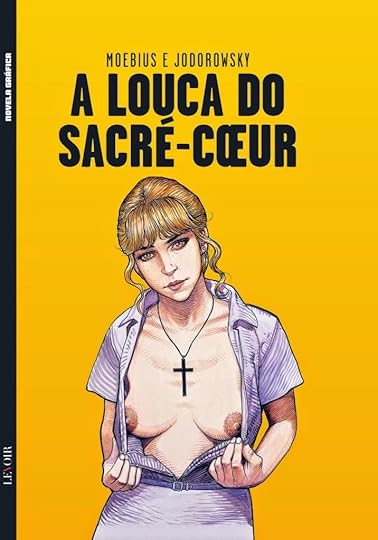
In a world of fifty-second soundbites, multinational corporations, and drug cartels, how would we deal with the coming of a new Messiah? University professor Mangel becomes involved in a plot by a group of religious fanatics to bring about the birth of a new Savior; and he has been chosen to be the reluctant father. Are they a sect of dangerous madmen, or is God really using them as his messengers?
Better known for his surreal films El Topo and The Holy Mountain filmed in the early 1970s, Alejandro Jodorowsky is also an accomplished writer of graphic novels and a psychotherapist. He developed Psychomagic, a combination of psychotherapy and shamanic magic. His fans have included John Lennon and Marilyn Manson.
This book damaged my bias towards admiring the work of Jodorowsky. Yeah, it's got a plot based on hermetic-ish principles and eventually one of the characters takes ayahuasca. But the implications of the plot go unexplored, in favor of using it for a thin porn premise. The main character is an irritating and unattractive old man who keeps shitting all over himself (a running gag in the book) but gets to continually have sex with a couple of gorgeous women because, although he's just drooling over their boobies and calling them bitches and sluts, women's sexuality is so spiritual (of course!) that they give everything and expect nothing from him at all. Lucky for him. Then there's a little questionable socio-political commentary. Did I mention that there are a lot of poop jokes?
Now I need to rewatch Santa Sangre to remind myself why I admire the author so much.
The art is great but the story is what it is. A middle aged philosophy teacher falls in with a religious cult and young women want to bang him. There's more to the plot than that but I couldn't help but think Moebius' talents could have been better used elsewhere.
Alejandro Jodorowsky's graphic novels, much like his films, ambitiously try to show his protagonists' entire spiritual awakening from earthly confusion. In the Jodorowsky-verse, gunfighters, private detectives, professors, and madmen traverse landscapes populated with cults, drug cartels, materialism, gurus, arcologies, circuses, etc. The protagonists face techno-fetishists, annihilation, rebirth, apocalypse, transgendered Jesuses, etc.
Despite all the weirdness, orgies, blasphemy, religion and violence, these books have no dramatic tension. Jodorowsky loves and identifies with his protagonists too much. Whenever a protagonist faces insurmountable difficulty or dies, he or supporting characters either meditate, pray, do yoga or drugs, and the obstacle is overcome, the problem is resolved, or the dead character is revived. All the spiritual journeying and situations become tedious once you realize nothing is at stake for any of the characters. Whether they are impoverished or die, they'll be smoking up, joining an orgy, or winning the lottery in the next few pages. Someone only needs to pray and open their third eye. Moebius's illustrations make these books worth a scan, but the stories are flat and unnecessarily drawn out. That said, I'd love these if I were 13, because violent religious orgies.
Alan Mangel, Philosophieprofessor an der Sorbonne, hat Vorlesungen über Husserl und Heidegger gehalten. Dann aber hat er sich aufs Spirituelle verlegt und eine regelrechte Gemeinde unter seinen Studenten gefunden, die ihn wie einen Guru verehren. Doch der Grat zwischen Erleuchtung und Heuchelei ist schmal, und nachdem Mangels Ehefrau an seinem Geburtstag eine Bombe platzen lässt, atomisiert sich auch die Anhängerschaft unter seinen Studenten. Der Heilige steht urplötzlich als Scheinheiliger da, sein Leben ein Scherbenhaufen. Aber da ist die Studentin Elisabeth, die in ihrer Verehrung zu Mangel nicht wankt und bedingungslos an ihn glaubt. Nur ist dieser Glaube wörtlich zu nehmen: sie will mit Mangel ein Kind zeugen, das die Wiedergeburt von Johannes dem Täufer sein soll. Mangel, der allem Fleischlichen schon lange entsagt hat, kämpft gegen seinen inneren Dämon und gegen das Wissen, dass Elisabeths Vorstellungen wahnhaft, verrückt sind. Er lässt sich von Elisabeth verführen und schwängert sie tatsächlich, obwohl er sich für impotent und unfruchtbar hielt. Das "Wunder" von Elisabeths Schwangerschaft stellt jedoch erst den Auftakt dar für eine Reihe von Geschehnissen, die immer abgedrehter werden. Elisabeth macht Mangel mit dem heroinabhängigen (ex?)kriminellen Muhammad bekannt, der sich für den heiligen Joseph hält, und gemeinsam befreien sie Rosanna, die Tochter eines südamerikanischen Drogenbarons aus einer psychiatrischen Einrichtung, die von einem Engel erleuchtet wurde und nun Maria ist. Was Mangel in der Folge mit diesen drei "Heiligen" erlebt, liest sich wie ein durchgeknallter Drogentrip, wobei die Wunder nicht ausbleiben und Mangel und der Leser bald nicht mehr wissen, was sie glauben sollen und was nicht.
Jodorowskys MADWOMAN OF THE SACRED HEART ist eine dreiteilige Graphic Novel, gezeichnet von der Comic-Legende Moebius. Heiliges, Scheinheiliges und Profanes werden kräftig zu einem Cocktail geschüttelt, bei dem weitere Zutaten Sex und Durchfall sind. Es wird reichlich gekackt, sorry, defäkiert, in dieser Story, und nicht nur von Immanuel Kant, dem Köter einer Studentin. Mehrfach macht sich Mangel in die Hose, und wenn er es bis aufs Klo schafft, ist er auch dort nicht immer ungestört. Ist das ein Spiel mit kleinbürgerlichen Ängsten, eine Provokation des Lesers oder eine Besessenheit von Jodorowsky? Diese Graphic Novel verlangt dem Leser einiges ab. Was soll das alles, ist das ernst gemeint? Ist MADWOMEN eine Satire oder eine Geschichte über Macht und Ohnmacht des Glaubens? Ist das Kunst oder kann das weg? Ich gebe zu, nach dem ersten Lesedurchgang bin ich etwas ratlos. Schade fand ich auch, dass der dritte Teil mich nicht mehr in gleicher Weise wie die beiden ersten beeindrucken konnte. Trotzdem muss gesagt werden, dass mit MADWOMAN eine Graphic Novel vorliegt, die sich fernab dessen bewegt, was der Leser üblicherweise geboten bekommt, und schon deswegen lesenswert ist.
For their first non-Incal collaboration, the creators of the legendary science fiction graphic novel ventured into radically different territory. Popular philosophy professor Alan Mangel appears to have it all: A tenured position at the world famous La Sorbonne university, academic acclaim, a seemingly happy marriage, and wealth. On his sixtieth birthday his world crumbles. His wife leaves him for another man. His students lose respect for him. Only Elisabeth, a beautiful and young student, still believes in him. But she's not working with a full deck. After receiving a vision from God, Elisabeth declares that Mangel must impregnate her with the second-coming of John the Baptist. The late Mœbius proves equally adept at creating gorgeous intimate exchanges between very earthbound contemporary people as producing spectacular alien vistas. Jodorowsky steers this racy parody into unexpected places and scenes while successfully keeping the story firmly in reality. The magnificent Madwoman of the Sacred Heart showcases two storytelling masters at the heights of their abilities.
Ao longo de 25 anos o jornal “Público” tem publicado em parceria com inúmeras editoras um conjunto de colecções de Banda Desenhada de qualidade e interesse inquestionável. Como não sou um leitor regular de Banda Desenhada aproveito para adquirir e ler essas edições. O lançamento de uma “colecção inédita e exclusiva de Novela Gráfica” iniciou-se no dia 26/02/2015 (quinta-feira) com a publicação de “Um Contrato com Deus” de Will Eisner a que se seguiu este livro da dupla Moebius e Jodorowsky “A Louca do Sacrè-Coeur”. Serão publicados 12 volumes, todas as quintas-feiras, a um preço unitário de 9,90€. “A Louca do Sacrè-Coeur” reúne três tomos “La folle du Sacrè-Coeur” (1992), “Le piège de l´irrationnel” (1993) e “Le fou de la Sorbonne” (1998).
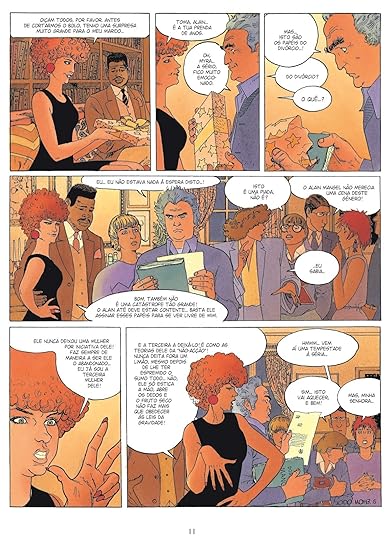
Alain Mangel é um reconhecido professor de filosofia na Sorbonne, que no dia do seu aniversário recebe uma prenda inesperada da sua terceira mulher - os papéis do divórcio, com a acusação de “passaste a ser um “monge universitário””, e a dupla revelação de ter um amante e estar grávida de Daouda. Mangel revela “Tudo o que muda está errado, do ponto de vista do espírito… mas tudo o que permanece está errado do ponto de vista da vida… dá razão à vida…” (Pág. 14). Perante a efígie de um veado, colocada na secretária de um auditório repleto de alunos, onde a humilhação pública de Mangel atinge proporções épicas, que culminam com o confronto sobre as suas afinidades com o filósofo “nazi” Heidegger e as suas teorias, fora da realidade política, da actividade espiritual e das “teorias divinas”. Depois há a leitura da Bíblia, as alusões ao cristianismo e uma aluna devota, Elizabeth, que revela o seu amor por Mangel, com um desfecho e revelações absolutamente surpreendentes. Primeiro a impotência sexual, depois sexo no confessionário da Basílica do Sagrado Coração/Sacrè-Coeur e por fim o “esperma santificado”. “… o sofrimento amoroso é apenas uma maneira dissimulada de ser feliz!” (Pág. 78) E no interregno, Mangel passou “a ser cúmplice dum drogado que assassinou dois enfermeiros… da filha dum gangster colombiano que acha que é a concubina de Nosso Senhor… e engravidei aquela maluca que imagina que vai dar à luz um “profeta”…”. (Pág. 78 – 79) Tudo é excessivo, delírios e paranóias, alucinações e Anúbis, um cão vegetariano, “Onde está Deus?”, narcotraficantes colombianos, comandos americanos da D. E. A. (que combate o narcotráfico), Jesusa, “Que o sangue sagrado purifique as nossas almas!”, a Santa Revolução, “João Batista vai nascer em breve!”, Dona Paz e o cogumelo da juventude, a loucura total… Neste encontro entre Moebius (desenho) e Jodorowsky (argumento) o lema principal foi: “Se um diz mata!, o outro diz esfola!.”
Lust, madness, spirituality, miracles, the nature of reality…and what a ride! This story follows a philosophy professor who, once at the top of his academic field at the Sorbonne, falls in lust with a student suffering from spiritual psychosis…or is she? In typical fashion, Jodorowsky and Moebius turn reality on its head again and again, with remarkably human characters in a wacky yet philosophical romp.
I've now read this a few times, and still consider it to be a great graphic novel. Although its controversial for its misogynistic themes and bathroom humor, Madwoman of the Sacred Heart (originally a series) is the escalating adventure of an ego as it goes through life's challenges.
Slightly autobiographical, Jodorowsky's commentary on spirituality, humanity, and sociology is expressed through an inner philosophical narrative that's always getting trumped by nature's reality. The main character Alan Mangel struggles with the balance of establishing one's own philosophy of life, aging, and relationships. One point that really encompasses the main ideas are made by Mangel's ex-wife in the second half of the novel. While being interviewed on television, she explains that "Philosophers have nothing in common with humans. They are mental giants and emotional dwarves". This is seen through Mangel's constant battles with his inner ego of his personality, until he fully accepts and becomes whole with himself at the end. However, most people only see this graphic novel for its sexuality, which can be hard to digest at times. But once looked past, those themes are necessary for explaining these concepts.
I agree that this isn't one of Moebius' stronger works artistically, but it did carry a sense of irony and humor which worked well. At times the art looks rushed, and the style changes slightly in the second half that I found somewhat distracting. Overall, its a great story but I would definitely prefer The Incal to this.
An egotistical philosophy professor gets sucked into a bizarre religious experience that has enough sex and explosions to make even Michael Bay happy. Since it takes place during the 1980's on Earth, Moebius was not able to go completely crazy with the art like his SF comics. Don't carry this book in areas with a strong, righteous Christian population, you may be burned at the stake as a heretic. One strange read.
One star is already too much. I can't believe that this has been published, and bought and even less actually written. I found it in my local library and tried it. I wasted my time with poop and fuck jokes. I could have liked it if I was a sex deprived teen, or could I ? Considering the "hero" is an old dude who keeps repeating comment as deep as Facebook memes about philosophy... I don't know. I think you need to be wasted to enjoy the book. Or maybe just enjoy being wasted cause anything will be better than this. Seriously. You could think there's something deeper or than it's going to get interesting, you couldn't be more wrong.
An old dude who keeps crapping himself and yet gets to fuck young, beautiful women. Apparently all his students are hot for him too. There are a lot of religious nutters in here and OMG their preachings were so repetitive and towards the end I was so bored and fed up that I simply skimmed the rest. Oh, and to top things off: language is misogynistic, all women are whores, sluts, skanks, bitches and so on. Also, all the philosopher-name-dropping and quotes were tedious.
I honestly don't know how to review this trilogy. It is simultaneously 1, 2, 3, 4 and 5 stars.
It's almost a R18+ version of Alice in Wonderland, spoken in the perspective of a garrulous old professor of philosophy as his world crumbles around him and he is led into a literally insane trip into his own psyche using the bible as an analogy. Some parts were cringe inducing, others made me laugh out loud and yet others were thought provoking.
This reads as if the writer wrote parts of this as a 14 year old sex deprived boy, some as a 32 year old cynic, more as a 56 year old burnt out bitter man and finished it off as an 80 year old wistful dreamer.
I wouldn't call it great. But it doesn't deserve to be called gratuitous crap either. There is certainly something refreshing about watching a story that gives absolutely no fucks about pandering to any current trends or political correctness unfold. This is necessary in today's cancel culture.
Moebius' artwork is stunning at the beginning then slowly unravels into merely average by the end. Again, it's difficult to say whether this is intentional or not simply because this whole thing tries to be clever in too many ways and only succeeds half the time.
A very bizarre, sometimes entertaining journey. I will definitely reread this in a decade or so and see what my 47 year old mind says then.
I was expecting too much from this BD and I was left disappointed mostly on the plot. Jodorowsky is known to me from his work on Incal, Bouncer and his movies and the premise of "Madwoman of the Sacred Heart" was interesting. Unfortunately, although I understand that "Hermetism VS. Reality" was the main linchpin of the first two issues, I was eye-rolling the entire time while reading the third and final act. The sudden jump from the slow esoteric journey of Alan Mangel to the -almost hollywood paced- action of the "narcotics kingpin meets religious fanatics" story was too perfunctory and badly written for me.
The design on the other hand was really satisfying on issues #1-2, since I fall for early Moebius style every time. It reminds me of "The gardens of Edena" and I loved every panel. The third issue, coming years later (1998) was cartoony and a bit forced, losing this admirable symmetry of it's predecessors. He used many small panels with big speech balloons on each page and I got tired everytime I finished one. I loved two one-page scetches, the first of the Sorbonne University and the one right before the third issue - the transformation of Alan.
All in all, 2/5 for Moebius' sake. With any other designer, Jodo would deserve 1/5 tops.
Reading this felt like an insane person was telling me their life story, complete with awkward sexy parts. Real disappointed with this. Moebius' art kept getting more and more smushed in. Recommended only for die hard Jodorowky and Moebius fans.
The first book is pretty good but it gets really repetitive and boring after a bit. It should have been half the length it is. Moebius's art is pretty dull here. Jodorowsky is overtly spiritual. This is probably the worst thing I could imagine these two doing.
Зізнаюся чесно, що не дуже вдумувався у цей комікс та основну концепцію. В дусі Ходоровського - психоделічний, філософський, псевдомістичний комікс про пошук людиною самої себе і віри у щось більше, ніж профанний світ цінностей. Ну і звісно мають бути бойовик, секс, любов, трохи дисонансу і затишне завершення із елементами загадки.
This book is insane. At first it didn’t click with me because I was try to make sense of it but, eventually, I gave up and just enjoyed(?) the experience. The art style is pretty good( I particularly loved Alan’s fever dreamy sequence). Also, I’d say Jodorowsky is trying to say something about religion and sex. But, in my opinion, he didn’t hit the mark because it was too mockery for its own good.
Imperdible comic del maestro Jodorowsky. Mediante el uso de la sátira, de la complejización de tema existenciales, filosóficos, religiosos y místicos, y de una historia bien contada, cuyos giros me parecieron hilarantes y sorpresivos, el autor logra fundir con éxito toda su crítica al sistema (iglesias+universidades+estados nacionales+economía) y proponer la necesidad de la disolución del ego en pos del encuentro con nuestra alma.
El protagonista, Alain Mangel, un vetusto hombre hediondo a ombligo, típico del mundo académico, es un respetado profesor de filosofía de la Sorbona. Sumiso, con poca autoestima y una nula relación con su homo demens, es irrespetado (paradójicamente) por todos sus pares, incluso por su esposa quien le despoja de todos sus bienes. Al perder "sus cosas", es contactado por una alumna desquiciada por el misticismo new age, quien lo invitará a emprender un viaje iniciático desordenado, surrealista (y sorprendentemente realista también) que lo va a transportar a un viaje interior que le permitirá relacionarse con su bestia, y a uno exterior que incluye la selva colombiana.
Creo que al ser una historieta fuerte, con mensajes claros y tajantes, es difícil que pase desapercibida, o que no genere algún sentimiento en el lector. Por eso, entiendo que algunas personas la puedan odiar y otras amar. Lo que es fiel reflejo de las reacciones que genera el propio Jodorowsky.
Sin perjuicio de ello, es lectura recomendada para cualquier persona con altura de miras, que quiera ahondar en la luz y sombra del ser humano. Recomiendo alejarse a los que gozan de basuras crepusculares, johngreenescas y del erotismo de las 50 sombras.
Jodorowsky and Moebius deliver as usual - I don't doubt the two, especially as a duo. It was interesting to see Moebius outside of science fiction - his detail is definitely at work in this graphic novel, especially with Mangel's character. Jodorowsky stays close to his usual philosophical themes and religious imagery, favoring a more natural approach as opposed to life in academia. It might sound tedious to some, but it's actually a fun read. Minus one star for the fairly unsatisfying ending.
Fascinating, complex storytelling that asks for another read immediately after the first (I didn't, but I want to again at some point). Much more going on beneath the surface, though I didn't start to become aware of that until probably the third volume. It's easy to dismiss this as an old-man-young-woman sexual fantasy (though I won't lie, that plays into it) but Jodorowsky does tackle deeper issues by the end.
I found it interesting how this adult comics comments on suppressed sexuality (and thus it is funny how its explicit pornographic component makes many people uncomfortable), it shows a slow slip into madness and the inability of the main protagonist to actually follow his philosophy. I also liked how a philosophy professor is confronted with his teachings and especially that he is not able to act on it.
A completely mad story but one that parallels with the writings of William Blake. It's sacrilegious, satirical, erotic, and heavily mystical. Overall It's a truly phenomenal book with impeccable artwork. Hopefully the reader will be transformed in the same way in which the books protagonist was. A true work of art
2º volume das novelas gráficas do jornal Público/Levoir. Um livro feito em parceria com argumento de Alejandro Jodorowsky e desenhos de Moebius (Jean Giraud). A parceria deu à luz um livro bem divertido e filosófico. Os 3 capítulos foram feitos em épocas diferentes e nota-se bem nos desenhos com diversas fases do Moebius. Um texto bem estranho por vezes, mas coerente na sua loucura.