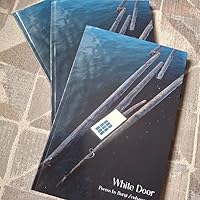
WINNER OF THE 2022 LENORE MARSHALL POETRY PRIZE FINALIST FOR THE 2022 PULITZER PRIZE IN POETRY FINALIST FOR THE 2022 PEN/VOELCKER AWARD FOR POETRY COLLECTION FINALIST FOR THE 2021 LOS ANGELES TIMES BOOK PRIZE FOR POETRY
A reinvestigation of chemical biological weapons dropped on the Hmong people in the fallout of the Vietnam War
In this staggering work of documentary, poetry, and collage, Mai Der Vang reopens a wrongdoing that deserves a new reckoning. As the United States abandoned them at the end of the Vietnam War, many Hmong refugees recounted stories of a mysterious substance that fell from planes during their escape from Laos starting in the mid-1970s. This substance, known as “yellow rain,” caused severe illnesses and thousands of deaths. These reports prompted an investigation into allegations that a chemical biological weapon had been used against the Hmong in breach of international treaties. A Cold War scandal erupted, wrapped in partisan debate around chemical arms development versus control. And then, to the world’s astonishment, American scientists argued that yellow rain was the feces of honeybees defecating en masse―still held as the widely accepted explanation. The truth of what happened to the Hmong, to those who experienced and suffered yellow rain, has been ignored and discredited.
Integrating archival research and declassified documents, Yellow Rain calls out the erasure of a history, the silencing of a people who at the time lacked the capacity and resources to defend and represent themselves. In poems that sing and lament, that contend and question, Vang restores a vital narrative in danger of being lost, and brilliantly explores what it means to have access to the truth and how marginalized groups are often forbidden that access.
Far more difficult than Vang's debut collection Afterland, Yellow Rain continues a line of formally inventive and intellectually invigorating engagements with documentary poetics (Philip Metres's Sand Opera, Solmaz Sharif's Look, Layli Long Soldier's Whereas). Here, Vang weaves together precise poems that move from the opaque to the direct while also jutxaposing the legacy of Yellow Rain dropped on the Hmong in Laos with U.S. state department materials that allude to greater knowledge of a culprit than the U.S. has ever formally acknowledged. There are a bevy of great lines throughout, but the final two poems are the payoff of Vang's procedural, justifying how poetry can avenge one's ancestors and certify the value of politically engaged poetry.
YELLOW RAIN by Mai Der Vang is a poetry collection that exposes the US’ involvement in dropping biochemical weapons on the Hmong people during the fallout of the Vietnam War.
If I was to gather a bunch of books I’ve read that has made me more aware of events that weren’t talked about in the US history I learned in school, this would definitely be part of it.
This collection of poems, collage, and documentary starts off by informing its readers what happened in Laos when the US abandoned them at the end of the Vietnam War. * When many Hmong refugees witnessed a mysterious “yellow rain,” a substance that started illnesses and thousands of deaths. * How the US denied they were biochemical weapons. * How the US had the audacity to deny analyzing samples, claiming it was bees’ feces. * How the US ignored and discredited the Hmong people who have suffered and died.
Mai Der Vang’s YELLOW RAIN forces our attention to listen to what happened in Laos. A collection that fights against what the US tried to cover up. Poems of resistance and lamentation, the dead will not easily be silenced or erased. Future generations who are forced to carry a history of this hurt and burden will not suffer alone.
What a fearless and astonishing collection. I hope to read more from Mai Der Vang.
this might be a controversial opinion, but i am beginning to suspect that the united states bears a deep and unforgivable moral culpability for several decades of destruction and terror in southeast asia. i guess we will never know, though!
what a beautiful blend of archival documents and poetry highlighting another atrocity committed by the united states that has been swept under the rug. mai der vang did an amazing job taking the reader through the history of “yellow rain” and how the american government changed public perception using language and falsifying scientific evidence — absolutely absurd that these theories are still accepted as fact today.
it also has the most interesting use of form i’ve ever seen in a poetry collection! every page looked completely different which added a lot to the reading experience.
The poems were well selected and arranged in this collection. Her style is complex in the details but simple in the big picture. Great use of imagery and syntax that enhances the content.
Overall, the collection works to expose the covert atrocities that the U.S. committed on the Hmong people after the Vietnam war, an act of re-colonization imo as they once exposed her people to biochemical weapons. My favorite aspect is the mosaic of research findings and results from the American archives on the page, exposed, and responded to in poetry.
3.5 stars. I rounded up but the book seemed very long and could have been more concise. Yet, I learned about the Hmong and the horrific treatment they experienced through chemical warfare in Laos and then the denial by governments, including the US, that they took part. It is truly a tragedy and the suffering by innocents that war brings.
Gut-wrenching collection of poetry, news clippings, government documents that tell of the atrocities and cover up of biochemical weapons used on the Hmong population. Extensive notes in the last part of the book document the research done by this author. A story that needed to be told, using poetry was an effective way to grip the reader.
This book is formally and thematically ambitious, and I admire the level of documentary research of this poet. If you do a cursory internet search on “yellow rain” you won’t find much. Quite a lot of US government information is classified. The Harvard scientist who concludes the yellow rain was merely bee feces has the biggest voice on the topic, and he is completely dismissive of the Hmong stories about this attack/disaster, thousands of whom were displaced because of it. Somewhere out there is a buried Radiolab podcast from 2012 (referenced in this book) in which they invited a prominent Hmong writer and her uncle to the discussion only to dismiss their claims as “heresay.” This book has made me very interested in this history, and I would love to read any recorded oral histories that exist on this event—I just don’t know where to find those yet.
Even though this work sheds light on such an important topic, I feel the poetic form is a risky one to mix with journalism. The most informative parts of the collection are the epigraphs and prose textual excerpts documenting the recorded history. I had a very well-educated discussion group to talk with about this book, and even then some who relied only on factual information from the text thought the poet was accusing the US of dropping the chemicals on Laos in this incident—which isn’t the claim. I think a creative non-fiction essay would have been the better route to go with the story. The poems and their disruptive lineation also weren’t generally my aesthetic preference, though they were plenty accomplished.
I can see why poems may be a perfect way to express the collective misery of a predominantly oral tribal culture, but it irks me that this very important telling of history could be misread. For this discomfort I’m giving just 3 stars, but this is an important work and the discussion group I had was excellent.
"I have been gardening myself / into this remembrance" ends the first poem ("Guide for the Channeling".) And what a magnificent and devastating remembrance this collection is, and what an enormous feat of reckoning! And too, what a gift to all its readers that reckoning. Do step into it and let it enter you and blow you away.
This is a stunning but difficult poetry collection. This collection goes beyond poems; there is a documentary-like approach to many of these poems that show the incredible amount of research that was done and woven in to explore the impact of yellow rain on the Hmong that go beyond the physical. Vang shares the story of what happened to the Hmong during the 1970s and 1980s, and considers the erasure and dismissal of their experience. Many of these poems have epigraphs pulled primarily from declassified reports and cables that reveal the United States’ involvement in biochemical warfare (yellow rain) and its impact on the Hmong. It really leaves a pit in your stomach having to process how bad all of this is.
I found many of these poems haunting and visceral due to word choice. For example, “Counting all the uncorked / Nightmares you digested” from “For the Nefarious” is such a distinct description. In addition, some of these poems take interesting forms, particularly the Composition poems. These were admittedly a little difficult to follow due to the collage-esque approach that Vang took, but these poems are (quite literally and figuratively) layered with meaning.
What I think Vang did a phenomenal job with is juxtaposing the almost voyeuristic and detached scientific reports to the emotions and experiences of the Hmong. “Toxicology Conference Proposal” is a particularly good example that I think successfully evoked discomfort of the consequences of yellow rain. Again, really gets you thinking about how bad this all is. Furthermore, these are lamenting poems that also brim with anger, but they’re also poems steeped in resilience.
I can’t say that I fully understood all the poems, especially because I’m not at all familiar with the topic Vang covered, but she sent me down a rabbit hole to learn more about yellow rain and the period when all of this was happening. This collection is a needed call to pay attention to a history that has been ignored. The fact that this collection was a finalist for many awards—including the Pulitzer Prize—makes sense. It’s a provocative collection that will challenge you.
Some favorites: “Anthem for Taking Back,” “They Think Our Killed Ones Cannot Speak to Us,” “Self-Portrait Together as CBW Questionnaire,” “Blood Cooperation,” “Procedures in Hunt of Wreckage,” “Toxicology Conference Proposal,” “A Moment Still Waiting for You,” “Allied with the Bees,” “Monument,” “And Yet Still More”
I appreciate this book’s argument, and the support lent to it by the arrangement of texts. These archived texts support the poet’s protest against the obfuscation by the United States government, pointing to the injustice of actions, the injustice of a government’s “suspicions” at wrongdoing with no real investigation into the cause, and the illogic of the alternative stories offered as explanation for the Yellow Rain in Laos. However, the book’s poetry is, for my reading, drowned out by these texts. It reminds me of reading Mona van Duyn, whose poetry would often include a lengthy quotation at the opening, which would then be followed by a poem which served as something close to “interlude” or “poetic consideration." Many times, the quotation offered at the opening to the poems in this book establishes the writer’s protest against all the implications this thing was said, but then it just doesn’t feel that the poems fully address that outrage. Or they provide an accompaniment to it.
Phenomenal poet, I was looking forward to the release of Yellow Rain after reading Afterland a few years ago. Mai Der Vang’s voice is unique, gut wrenching, and a punch in the face. Her research and obsession with finding out the truth of what happened to her Hmong ancestors during the Proxy war in the 1960’s in Laos. She takes us on a journey for truth with her. Her pain, her fury, her frustration of waiting gives voice to the Hmong people- the refugees and the dead. She has never forgotten them and she makes us look at what the United States of America- our country- has done to an innocent people. Hmong deserve to know the truth of Yellow Rain. We all do. The poems included here are fierce, unapologetic and beautiful at once. “And Yet Still More” asks when the wait will be over-never.
Der Vang experiments with form in heartbreaking ways. She possesses both the skillful craft of inventive and incisive wordplay as well as the ability to tell a deeply emotional story. Astounding.
“I follow what was left behind, fog of tropic lineage layered among the debris of old songs. I break the pages and let the bees fly out.”
Yellow Rain is a brave feat of opening up an erased violence, centering the voices of the dead through docupoetics, ancestral connection, and investigation. Her collection follows her personal investigation in the occurrence of “yellow rain” that many refugees described falling in Laos and leading to widespread sickness and death. This event was folded into the history of the cold war, scandalized and eventually alleged as honeybee feces, ignoring the narratives of the Hmong people. Multiple kinds of language were pulled from declassified documents, field manuals, descriptions of chemical weapon use, transformed maps and photos, and well crafted poems written in response to these primary sources. These kinds of responses show the importance of the poetic form, as its freedom allows for the sanitized language of bodies, referred to as “specimans”, to break free and remember. Fragments of historical documentation that travel back and forth through time, coupled with their poetic examinations, make a reading experience that mimics Vang's experience as the researcher. As I worked my way through the pages, the truth unfolded itself and added to my understanding of America's secret war on Hmong people. The poet uses visual transformation in their sequences of “Compositions”, which layer language taken from political documents in different opacities, italics, and different levels of legibility. This chaos invokes further investigation, not only does it unveil, it challenges the violence of erasure itself.
The collection follows six movements, evidence of years of writing and research. The first section centers the experience of Hmong people when the yellow rain came down. It often speaks directly from the past to the poet. In “They Think Our Killed Ones Cannot Speak to Us”, Vang channels her personal ancestry through the “we” pronoun to defy the silencing of history: “myth will not make us / into marginalia As ever / possessed by what we / have lost”. She shows that her commitment to this project is one facet of lineage-making, as these poems are part of a larger action of preservation. The second section deals with declassified documents of medical analysis of the Yellow Rain, or importantly, lack thereof analysis. Vang will often replace the language of these documents and insert her voice, starting what isn’t said, or questioning what failed to be questioned. The third section meditates on the aftereffects of Yellow Rain, theorizations of yellow rain, ecological effects, and the erasures and residues of yellow rain. The fourth section questions the role of bees as a scapegoat, therefore questioning the role of science in the overall political silencing of narrative. The fifth movement considers erasure and the continued searching. Vang concludes that there is a remaining openness of the tidy “closure” of this event by foreign bodies. The answer to what the Yellow Rain is, is never fully unveiled, but held hostage. “It was never about finding out what actually happened… something is still happening”. The final section closes on the repeated image of waiting as a refugee. Centering their stories of trauma, displacement and community in the wake of the war, she ends the collection meditating on the way truth is wielded as a weapon, further shelving the experiences of the affected, in this case, the Hmong people. Speaking for victims of this act of violence, Vang criticizes the legacy of erasure, the privileging of empirical perspective, and the deciders of truth.
In this innovative blend of poetry and historical documents, the poet presents a brilliant indictment of the U.S. government’s use of chemical weapons against the Hmong people in Laos, an expose of the Hmong’s erasure and dismissal, a condemnation of the failure of justice, and a powerful elegy for a people whose bones will always speak and forever tell the whole truth:
“Let them one day utter The narrative of the uncloaked.” —“The Shaman Asks about Yellow Rain” (p. 146)
Favorite Poems: “The Fact of the Matter Is the Consequence of Ugly Deaths” “A Daub of a tree Swallows as Aerial Ash” “Self-Portrait Together as CBW Questionnaire” “Specimens from Ban Vinai Camp, 1983” “Authorization to Depart Ravaged Homeland as Biomedical Sample” “Arriving as Lost” “Futile to Find You” “We Can’t Confirm Yellow Rain Has Happened, We Can’t Confirm It Didn’t” “Composition 2” “Agent Orange Commando Lava” “Syndrome Sleep Death Sudden” “Skin as a Vehicle for Experimentation” “For the Nefarious” “Composition 3” [wowza!] “Malediction” “Never to Have Had Your Song Blessed” “Notes in Rebuttal: What They May Have Known about the Possibility” “Prayer to the Redwood” “Allied with the Bees” “Noxious” “Orderly Wrap-up of CBW Investigation” “The Shaman Asks about Yellow Rain” “Revolt of Bees” “Composition 5” “Burn Copies” “Subject: ROI” “Sorrowed” “Manifesto of a Drum”
Like her debut collection, Afterland, Yellow Rain centers in Mai Der Vang's experience as a part of the Hmong diaspora. Recalling Muriel Ruckeyser's poetry of testimony, Yellow Rain merges documentary evidence of the chemical warfare conducted against the Hmong in Laos with powerful lyrical passages processing the echoing impact of the destruction. "Noxious" is one of the most powerful poems I've read in a while. A few lines:
From a ragged shape made unwhole.
The face is a mechanical cloth Tethered to the evocation of daylight.
They stockpile the hours in Beds of the missing, In shattered vials gathered by the witnessing moon.
The effect of the book is cumulative--there are concrete poetry-style passages focusing on the heavily redacted government documents Mai Der Vang erew on--but favorite poems include: "Specimens from Ban Vinai Camp, 1983"; "We Can't Confirm Yellow Rain Happened, We Can't Confirm It Didn't"; "Toxicology Conference Proposal': and "Vigil for the Missing."
A collection of poems about the chemical warfare (yellow rain) that was used against the Hmong people as they fled from conflict in the 1970s.
from A Body Always Yours: "For what will be / The chrome of your ribs // A coronation faceted / To the bead of your bone's cameo // For how you asylum / Your incisors into the clay //Of your jaws"
from Agent Orange Commando Lava: "Even the rain they think they own / Even the rain as casualty collateral / Price of their self-worth // Rain as refugee"
from Revolt of Bees: "Achieve us into your creatured machine / So that we may shrine before you / As immortal // This is how you love us in your illness / Of benevolence"
Throughout the 70s, US army dropped tons of chemical weapons on the Hmong in Laos. Tens of thousands of people died and were maimed by the yellow rain falling out of the sky. US government had the nerve to blame honeybee feces for the mass murder and worked its magic to neatly cover everything under a thick carpet. In a world where chemical weapons is a term that is being thrown around all too frequently, this collection of hard facts meshed with poems is a crucial one. The subject's inherent ugliness and depravity had me literallly sick to my stomach, yet still, I refused to turn away.
It is almost impossible to pull apart the pieces and assess them separately, which is to its credit.This is excellent as history and collage and polemic. Whether that overshadows or compensates for the poetry is an interesting question. The path from gas attacks to bee feces as an explanation is far less ridiculous in this our Plague Year 3. But do I come out the other end with the prosody in my head? Not so much as the tantalizing historical questions, no. A remarkable book, whatever we call it.
I don't know much about the Hmong culture, but this is just pure art for me. I know that not a lot of people will be receptive to the way this was curated, but it is different and eye-opening. History and poetry are given as a child through this book. The amount of effort and artistry that was risked with this was just five stars.
Edit: I also read other people's reviews and I understand that poetry could be overwhelmed by the art, but I stand by the 5 star rating. You don't need a lot of poems to convey your thought.
4.5 stars rounded down to 4 Innovative use of poetry as a way to declassify information about Yellow Rain. Highly informative and harrowing. This feels more like mixed media/hybrid forms rather than poetry as Mai Der Vang includes documents, photos, reports, and newspaper headlines in a collage-like format throughout the book. Concisely, precisely, and beautifully argued. I felt Der Vang's anger and sadness throughout her poems as she weaved her words among the sterile and indifferent reportings she included throughout the novel.
— Mai Der Vang / “Procedures in Hunt of Wreckage” / Yellow Rain
… Weapons are created. To / deter their own use. To make null their own / necessity.] / [Monster yourself. / Exert evil to dissuade evil / in others.] / [Preventative measures. As motive to conquer.]
— Mai Der Vang / “Notes in Rebuttal: What They May Have Known about the Possibility / Yellow Rain
This collection is a meticulously researched and gloriously incisive call to action. It is not enough for the poet to write beautiful poems. She uses her words and righteous anger to draw attention to a terrible tragedy in Hmong history. That tragedy being the thousands of deaths from the chemical biological weapon yellow rain.
I cannot recommend this more highly for anyone who fancies themselves a student of history or a champion of justice.
I definitely didn’t understand everything in this collection, and the style of poetry wasn’t my absolute favorite. But I learned so much from this book and am grateful to the poet for bringing yellow rain to my attention.
I highly value this collection of writing/poems for its purpose of educating me about the people groups that experienced yellow rain, displacement, and being gaslit about their experience. The writing style wasn’t particularly enjoyable.