

What do you think?

The Autistic Subject: On the Threshold of Language
This book presents a theory of autistic subjectivity from a Lacanian psychoanalytic perspective. Dr. Brenner describes autism as a singular mode of being that is fundamentally linked to one’s identity and basic practices of existence, offering a rigorous alternative to treating autism as a mental or physical disorder. Drawing on Freud and Lacan’s psychoanalytic understanding of the subject, Brenner outlines the unique features of the autistic subjective structure and provides a comprehensive synthesis of contemporary work on the psychoanalysis of autism.
The book examines research by theorists including Jean-Claude Maleval, Éric Laurent, Rosine and Robert Lefort that has been largely unavailable to Anglophone audiences until now. In this book autism is posited to be a singular subjective structure not reducible to neurosis or psychosis. In accordance with the Lacanian approach, autism is examined with detailed attention to the subject’s use of language, culminating in Brenner’s “autistic linguistic spectrum.” A compelling read for students and scholars of psychoanalysis and autism researchers and clinicians.
The book examines research by theorists including Jean-Claude Maleval, Éric Laurent, Rosine and Robert Lefort that has been largely unavailable to Anglophone audiences until now. In this book autism is posited to be a singular subjective structure not reducible to neurosis or psychosis. In accordance with the Lacanian approach, autism is examined with detailed attention to the subject’s use of language, culminating in Brenner’s “autistic linguistic spectrum.” A compelling read for students and scholars of psychoanalysis and autism researchers and clinicians.
292 pages, Hardcover
Published January 1, 2020
Ratings & Reviews
Friends & Following
Create a free account to discover what your friends think of this book!
Community Reviews
Displaying 1 - 8 of 8 reviews

February 14, 2024
"Jacques Lacan is one of the most important and influential thinkers of the 20th century. The reach of this influence continues to grow as we settle into the 21st century,..."
This book presents a new approach to autism that does not describe it as a pathology but as a mode of being."
In the Foreword of the book
"I am attacking philosophy? That’s greatly exaggerated!"
(Lacan, Seminar XVII
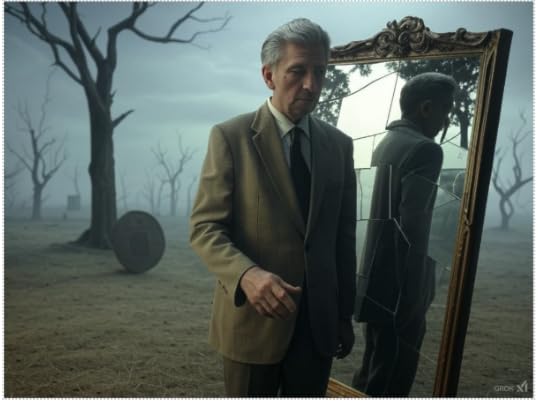
(AI-generated image)
Leon Brenner was disappointed with the perspective on Autism outside psychoanalysis. So, he took recourse to Lacan as Psychology theories were not satisfying. In the USA, Lacan once considered that there is something frozen about the way autistic people use language.
To Leon Brenner, Autism is a singular subjective structure that cannot be reduced to general diagnostic categories. At its inception, Autism was considered a form of psychosis.
Really, Leon Brenner is running against the psychiatric current. Autism, instead, he thinks, should be considered a mode of being. Clearly, a philosophical perspective. But then, we know Lacan ain't Philosophy....
https://www.newyorker.com/culture/ann...

May 29, 2021
I was the body without organs all along :')
The main thesis of the book is that "autism is a singular subjective structure, irreducible to any of the other subjective structures elaborated by Freud and Lacan--neurosis, perversion, and psychosis" (272). This on the basis of a "psychic mechanism of constitutive exclusion" called "autistic foreclosure" which indirectly "hinder[s] the functioning of Bejahung [affirmation] and, as a result, hinders the inscription of the signifier of the Name-of-the-Father" by foreclosing "three different psychic objects": "(1) the unary trait as the precursor of pure difference, (2) the rim as the symbolic designator of the hole, and (3) the rim as the symbolic marker of the circuit of the invocatory drive" (270). Autistic foreclosure occurs on a level which ontologically *precedes* psychotic foreclosure, thus preventing autistic subjects from entering the domain of signifiers (language) at all. Instead, Brenner argues that autistics construct their own unique proto-language with signs rather than with signifiers--an autistic "sign language." Following Lacan (who follows Pierce and de Saussure), "The signifier...is, contrary to the sign which represents something for someone, the what represents the subject for another signifier" (SIX, 27.2.67, quoted 230 in Brenner). Signs differ from signifiers in three important ways:
1) signs are directly related to a designated thing, a concrete semiotic-object, "while "the signifier has no referent and engenders meaning through its relationship with other signifiers (it entails the murder of the thing)" (232).
2) "The relationship between the sign and its referent is permanent, while the relationship between the signifier and the signified is fluid and ever changing" (232).
3) "Finally, in contrast to the signifier, the sign neither splits the subject nor implies the presence of the subject" (232).
Accordingly, "There is no [big] Other in autism" (212). And yet, autistic people are social beings--they speak "on the threshold of language," and they are, according to Lacan, "rather verbose" (quoted Brenner 219). It's just that when autistics speak, they do not identify with the [big] Other, they do not encounter the desire of the [big] Other, and therefore they are not alienated from the jouissance of their body by language as a system of signifiers. Instead, they construct a unique system of signs which Brenner calls a "sign language" in an attempt attempt to separate themselves from the unbearable jouissance of being, as Lacan describes, "eye to eye with reality" (SI, p. 69, quoted Brenner 172). Autistic subjects deploy signs directly onto objects in order to expel their bodily jouissance into their surrounding environment, constructing a complex proto-linguistic machine which functions as a rim for the unbearable jouissance which would otherwise overwhelm them.
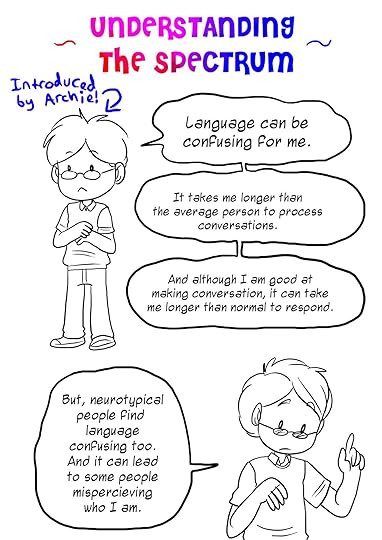
Brenner delineates four progressive stages of the "autistic linguistic spectrum" according to the complexity of this proto-symbolic "rim":
1) The absence of a rim, which designates "the most severe form of autism" (238). "On this level, immediately succeeding autistic foreclosure, the subject has not yet established access to the dimension of the rim in any mode of its supplementary construction. With no rim, autistic subjects suffer from the constant threat of a brutal invasion of jouissance--what Laurent and Maleval associate with the experience of the 'void in the real,' the 'black hole,' or the 'pure presence of death'...Linguistic expressions for autistic subjects on this level are almost absent. They appear only at the height of anxiety, manifesting in spontaneous broken utterances expressing sudden aggression and accompanied by the breaking or throwing of objects. After the sudden expreession of these holophtastic vocalizations, subjects immediately return to a state of mutism, sinking into an even deeper silence" (238-239).
2) The construction of a protective rim, in which a certain amount of jouissance is expelled onto a series of "simple autistic objects" to construct "a bodily 'shield' serving as a protection from unpredictable invasions of jouissance" (240) which establishes "a rim between the body and the outside world" (Maleval, quoted Brenner 240) through the transitive relationship between jouissance and signs. Once this supplementary rim is constructed, "it does not only protect the autistic subject from the invasion of jouissance, it also provides the means for a certain mediation of internal and external stimuli, evoking in the subject a fascination with language as a means to acquire mastery over the world...[I]n later stages, this knowledge can manifest in a variety of specific interests that materialize in the laborious cultivation of information and a passion for mastery in practical fields of expertise" (244).
3) The dynamic rim, which "is composed of 'complex autistic objects,' the double, and specific interests; and all of the above are supported by the synthetic Other" (245). The complex autistic object "combines the localized dynamic function of several simple autistic objects into a complex apparatus that enables the subject to apply more intricate treatments of jouissance in more complex circumstances...for the regulation of the subject's jouissance" (246). The double is an autistic object, animate or not, which, having been invested with the autistic subject's jouissance, is phenomenologically experienced as "other"--that is, of having vital properties of its own which the subject "plugs into" like a machine,** or incorporates back into itself, this time filtering it through the mediation of a complex dynamic rim of signs surrounding the body. Specific interests, as has already been noted above, involve an extended, and sometimes lifelong, attempt by the subject to gain mastery over their jouissance by investing it into specialized forms of knowledge or practice which are commonly born out of anxiety. "Thus, a fear of using toilets can turn into a fascination with plumbing and a fear of the sound of thunder can turn into a special interest in weather prediction" (248). Finally, the synthetic Other "is the supplementary locus that functions as the support for all the different modes of autistic linguistic functionality," akin to the Big Other of language which secures the functioning of linguistic signifiers, but "[d]ue to the lack of access to the signifier, the synthetic Other is solely disposed to the logic of the sign" (248). Because the synthetic Other is non-linguistic, it initially functions as a "closed" synthetic Other which exists only for the autistic subject alone, serving as the guarantor of a "private language" (250) which is "not open to social exchange" (251). However, this "closed" synthetic Other can become "open" to the social world when an autistic subject becomes concerned with "the investigation of the rules of the physical or intersubjective world," thus granting them an individualized "intellectual model" to deploy in their relationships with others. However, insofar as the synthetic Other of autism is produced by the transitive relation of jouissance to signs rather than by the transitive relation of jouissance to signifiers, autistic people do not address themselves to the Other's desire, nor can they easily inhabit the position of an "enunciatory" (i.e. unconscious) subject of the invocatory drive, which results in a speech that is devoid of emotional appeal to others (e.g. a flat affect), and instead serves only to communicate information (e.g. encyclopedic knowledge).
4) Finally, "[t]he growing reliance on the open synthetic Other opens up access to the last mode of the development of the rim--the 'hollowing-out' (evidement) of the rim. This mode entails the progressive libidinal disinvestment from autistic objects that are involved in the development of the rim...[T]he subject lets go of the immediate presence of the autistic object but keeps its dynamic capacities (in terms of the mediation of jouissance) by inscribing its loss in the open synthetic Other" (257). "This is a level in which autistic subjects become independent, even to the point where a psychiatric diagnosis of autism can sometimes be disregarded. Maleval terms this level of functioning the 'invisible pole' of autism. He adds that this pole is not only invisible to observers and clinicians but, in a lot of cases, is also invisible to the subject itself and, as a result, can be diagnosed only late in adulthood. On this level, the resources accumulated in the different modes of the development of the rim, supported by the open synthetic Other, are utilized in what might be called a 'normal' lifestyle--what under psychoanalytic terms could be determined as a seemingly neurotic conduct of a structured autistic" (258). Still, "the subject remains structurally autistic, open to the social bond but solely disposed to the logic of the sign with its numerous setbacks" (259).
The primary utility of this model is that "it prescribes a realist approach to autism, addressing it as a knowledge-independent phenomenon that underlies and conditions both its behavioral manifestations and its symptomatic categorization. In this sense, it goes against constructivist perspectives that would designate autism as a signifier that haphazardly groups together independently existing and treatable conditions (physiological or psychic). It bestows on autism an intrinsic quality, manifest in an underlying subjective structure through which the whole of autistic psychic reality is constructed" (274). By conceptualizing autism as a subjective structure rather than a disparate collection of traits, Brenner offers a positive formulation of what autism *is* rather than the prevailing negative formulations that understand it as a series of deficits (i.e. in empathy, sensory integration, central coherence, or executive function). The defining property of an autistic subject is their relationship to speech, which is secured by the functioning of a psychic mechanism of constitutive exclusion at the origin of autism--autistic foreclosure of the unary trait which establishes the conditions for the presentation of signifiers experienced by neurotic and psychotic subjects. Autistic subjects lack signifiers--and in this sense they lack a constitutive "lack" at all--but they can manage to achieve some relief from jouissance through the construction of a complex, dynamic rim composed of signs which establish a transitive relationship between a concrete object and a certain amount of bodily jouissance. The structure of this rim offers further delineations of autistic "functioning" which encompasses the wide variety of individuals across the spectrum.
Brenner's model not only has the advantage of unifying all of the previous diagnostic conceptualizations of autism, but of grounding them in a unique subjective structure. This structural model of autism further provides clinicians with a method and direction of treatment--the creation, modulation, and eventual hollowing-out of the supplementary autistic rim. Even more, "by designating autism as a legitimate mode of being--that is, something that someone is in every sense and not something that someone contingently has--the clinic of autism is re-oriented toward supporting individuals in being autistic and not 'curing' them of autism" (275-276).
The autistic body is, as Brenner suggests following Laurent, a "body 'without holes' or a 'body without organs'" (199) because it is not "cut" by linguistic siginifiers. However, autistic subjects still speak, and they have a lot to say,"on the threshhold of language" (284). While Brenner leaves open the question of whether or not autistic subjects have an unconscious--*if* they do, he speculates, it will be, as Lacan wrote, "like" a language, but one composed of signs rather than signifiers--this does not mean that they are not amenable to psychoanalysis. A psychoanalytic approach to autism involves listening to the speech of autistic subjects--but what is it that analysts should be listening for? How might analysts use speech (or language) to help alleviate the suffering of autistic people? How might the prevalence of queer and trans autistic people--and especially autistics who identify as non-binary and agender--be related to a Lacanian formula of sexuation? How might this model help autistics develop skills to modulate stress and proprioceptive capacities? How does it bear upon the double empathy problem? And how might this model be applied in a non-clinical setting? For example, given that Wittgenstein was likely autistic, how might this model influence our reception of his theory of language as it evolved from a representational "picture-theory" to a dynamic and intersubjective model of language as use? These are questions, I hope, for future research.
The main thesis of the book is that "autism is a singular subjective structure, irreducible to any of the other subjective structures elaborated by Freud and Lacan--neurosis, perversion, and psychosis" (272). This on the basis of a "psychic mechanism of constitutive exclusion" called "autistic foreclosure" which indirectly "hinder[s] the functioning of Bejahung [affirmation] and, as a result, hinders the inscription of the signifier of the Name-of-the-Father" by foreclosing "three different psychic objects": "(1) the unary trait as the precursor of pure difference, (2) the rim as the symbolic designator of the hole, and (3) the rim as the symbolic marker of the circuit of the invocatory drive" (270). Autistic foreclosure occurs on a level which ontologically *precedes* psychotic foreclosure, thus preventing autistic subjects from entering the domain of signifiers (language) at all. Instead, Brenner argues that autistics construct their own unique proto-language with signs rather than with signifiers--an autistic "sign language." Following Lacan (who follows Pierce and de Saussure), "The signifier...is, contrary to the sign which represents something for someone, the what represents the subject for another signifier" (SIX, 27.2.67, quoted 230 in Brenner). Signs differ from signifiers in three important ways:
1) signs are directly related to a designated thing, a concrete semiotic-object, "while "the signifier has no referent and engenders meaning through its relationship with other signifiers (it entails the murder of the thing)" (232).
2) "The relationship between the sign and its referent is permanent, while the relationship between the signifier and the signified is fluid and ever changing" (232).
3) "Finally, in contrast to the signifier, the sign neither splits the subject nor implies the presence of the subject" (232).
Accordingly, "There is no [big] Other in autism" (212). And yet, autistic people are social beings--they speak "on the threshold of language," and they are, according to Lacan, "rather verbose" (quoted Brenner 219). It's just that when autistics speak, they do not identify with the [big] Other, they do not encounter the desire of the [big] Other, and therefore they are not alienated from the jouissance of their body by language as a system of signifiers. Instead, they construct a unique system of signs which Brenner calls a "sign language" in an attempt attempt to separate themselves from the unbearable jouissance of being, as Lacan describes, "eye to eye with reality" (SI, p. 69, quoted Brenner 172). Autistic subjects deploy signs directly onto objects in order to expel their bodily jouissance into their surrounding environment, constructing a complex proto-linguistic machine which functions as a rim for the unbearable jouissance which would otherwise overwhelm them.
Brenner delineates four progressive stages of the "autistic linguistic spectrum" according to the complexity of this proto-symbolic "rim":
1) The absence of a rim, which designates "the most severe form of autism" (238). "On this level, immediately succeeding autistic foreclosure, the subject has not yet established access to the dimension of the rim in any mode of its supplementary construction. With no rim, autistic subjects suffer from the constant threat of a brutal invasion of jouissance--what Laurent and Maleval associate with the experience of the 'void in the real,' the 'black hole,' or the 'pure presence of death'...Linguistic expressions for autistic subjects on this level are almost absent. They appear only at the height of anxiety, manifesting in spontaneous broken utterances expressing sudden aggression and accompanied by the breaking or throwing of objects. After the sudden expreession of these holophtastic vocalizations, subjects immediately return to a state of mutism, sinking into an even deeper silence" (238-239).
2) The construction of a protective rim, in which a certain amount of jouissance is expelled onto a series of "simple autistic objects" to construct "a bodily 'shield' serving as a protection from unpredictable invasions of jouissance" (240) which establishes "a rim between the body and the outside world" (Maleval, quoted Brenner 240) through the transitive relationship between jouissance and signs. Once this supplementary rim is constructed, "it does not only protect the autistic subject from the invasion of jouissance, it also provides the means for a certain mediation of internal and external stimuli, evoking in the subject a fascination with language as a means to acquire mastery over the world...[I]n later stages, this knowledge can manifest in a variety of specific interests that materialize in the laborious cultivation of information and a passion for mastery in practical fields of expertise" (244).
3) The dynamic rim, which "is composed of 'complex autistic objects,' the double, and specific interests; and all of the above are supported by the synthetic Other" (245). The complex autistic object "combines the localized dynamic function of several simple autistic objects into a complex apparatus that enables the subject to apply more intricate treatments of jouissance in more complex circumstances...for the regulation of the subject's jouissance" (246). The double is an autistic object, animate or not, which, having been invested with the autistic subject's jouissance, is phenomenologically experienced as "other"--that is, of having vital properties of its own which the subject "plugs into" like a machine,** or incorporates back into itself, this time filtering it through the mediation of a complex dynamic rim of signs surrounding the body. Specific interests, as has already been noted above, involve an extended, and sometimes lifelong, attempt by the subject to gain mastery over their jouissance by investing it into specialized forms of knowledge or practice which are commonly born out of anxiety. "Thus, a fear of using toilets can turn into a fascination with plumbing and a fear of the sound of thunder can turn into a special interest in weather prediction" (248). Finally, the synthetic Other "is the supplementary locus that functions as the support for all the different modes of autistic linguistic functionality," akin to the Big Other of language which secures the functioning of linguistic signifiers, but "[d]ue to the lack of access to the signifier, the synthetic Other is solely disposed to the logic of the sign" (248). Because the synthetic Other is non-linguistic, it initially functions as a "closed" synthetic Other which exists only for the autistic subject alone, serving as the guarantor of a "private language" (250) which is "not open to social exchange" (251). However, this "closed" synthetic Other can become "open" to the social world when an autistic subject becomes concerned with "the investigation of the rules of the physical or intersubjective world," thus granting them an individualized "intellectual model" to deploy in their relationships with others. However, insofar as the synthetic Other of autism is produced by the transitive relation of jouissance to signs rather than by the transitive relation of jouissance to signifiers, autistic people do not address themselves to the Other's desire, nor can they easily inhabit the position of an "enunciatory" (i.e. unconscious) subject of the invocatory drive, which results in a speech that is devoid of emotional appeal to others (e.g. a flat affect), and instead serves only to communicate information (e.g. encyclopedic knowledge).
4) Finally, "[t]he growing reliance on the open synthetic Other opens up access to the last mode of the development of the rim--the 'hollowing-out' (evidement) of the rim. This mode entails the progressive libidinal disinvestment from autistic objects that are involved in the development of the rim...[T]he subject lets go of the immediate presence of the autistic object but keeps its dynamic capacities (in terms of the mediation of jouissance) by inscribing its loss in the open synthetic Other" (257). "This is a level in which autistic subjects become independent, even to the point where a psychiatric diagnosis of autism can sometimes be disregarded. Maleval terms this level of functioning the 'invisible pole' of autism. He adds that this pole is not only invisible to observers and clinicians but, in a lot of cases, is also invisible to the subject itself and, as a result, can be diagnosed only late in adulthood. On this level, the resources accumulated in the different modes of the development of the rim, supported by the open synthetic Other, are utilized in what might be called a 'normal' lifestyle--what under psychoanalytic terms could be determined as a seemingly neurotic conduct of a structured autistic" (258). Still, "the subject remains structurally autistic, open to the social bond but solely disposed to the logic of the sign with its numerous setbacks" (259).
The primary utility of this model is that "it prescribes a realist approach to autism, addressing it as a knowledge-independent phenomenon that underlies and conditions both its behavioral manifestations and its symptomatic categorization. In this sense, it goes against constructivist perspectives that would designate autism as a signifier that haphazardly groups together independently existing and treatable conditions (physiological or psychic). It bestows on autism an intrinsic quality, manifest in an underlying subjective structure through which the whole of autistic psychic reality is constructed" (274). By conceptualizing autism as a subjective structure rather than a disparate collection of traits, Brenner offers a positive formulation of what autism *is* rather than the prevailing negative formulations that understand it as a series of deficits (i.e. in empathy, sensory integration, central coherence, or executive function). The defining property of an autistic subject is their relationship to speech, which is secured by the functioning of a psychic mechanism of constitutive exclusion at the origin of autism--autistic foreclosure of the unary trait which establishes the conditions for the presentation of signifiers experienced by neurotic and psychotic subjects. Autistic subjects lack signifiers--and in this sense they lack a constitutive "lack" at all--but they can manage to achieve some relief from jouissance through the construction of a complex, dynamic rim composed of signs which establish a transitive relationship between a concrete object and a certain amount of bodily jouissance. The structure of this rim offers further delineations of autistic "functioning" which encompasses the wide variety of individuals across the spectrum.
Brenner's model not only has the advantage of unifying all of the previous diagnostic conceptualizations of autism, but of grounding them in a unique subjective structure. This structural model of autism further provides clinicians with a method and direction of treatment--the creation, modulation, and eventual hollowing-out of the supplementary autistic rim. Even more, "by designating autism as a legitimate mode of being--that is, something that someone is in every sense and not something that someone contingently has--the clinic of autism is re-oriented toward supporting individuals in being autistic and not 'curing' them of autism" (275-276).
The autistic body is, as Brenner suggests following Laurent, a "body 'without holes' or a 'body without organs'" (199) because it is not "cut" by linguistic siginifiers. However, autistic subjects still speak, and they have a lot to say,"on the threshhold of language" (284). While Brenner leaves open the question of whether or not autistic subjects have an unconscious--*if* they do, he speculates, it will be, as Lacan wrote, "like" a language, but one composed of signs rather than signifiers--this does not mean that they are not amenable to psychoanalysis. A psychoanalytic approach to autism involves listening to the speech of autistic subjects--but what is it that analysts should be listening for? How might analysts use speech (or language) to help alleviate the suffering of autistic people? How might the prevalence of queer and trans autistic people--and especially autistics who identify as non-binary and agender--be related to a Lacanian formula of sexuation? How might this model help autistics develop skills to modulate stress and proprioceptive capacities? How does it bear upon the double empathy problem? And how might this model be applied in a non-clinical setting? For example, given that Wittgenstein was likely autistic, how might this model influence our reception of his theory of language as it evolved from a representational "picture-theory" to a dynamic and intersubjective model of language as use? These are questions, I hope, for future research.

March 29, 2026
Brenner is doing a lot of important work, not only synthesizing and elaborating the psychoanalytic understanding of autism as a unique psychic structure but doing so via decades worth of writings familiar as of yet only to the Francophone world. As I’m about to acquire my first clinical experience as an entry-level ABA technician, I feel like this book gave me an essential theoretical grounding.
It’s also invaluable for parsing the minute details of Freudian and Lacanian metapsychology; Ausstoßung vs. Bejahung, demand vs desire vs drive, the relation of drive and desire to object a, and so on. Brenner has this stuff down and accordingly is able to explicate it with absolute clarity.
It’s also invaluable for parsing the minute details of Freudian and Lacanian metapsychology; Ausstoßung vs. Bejahung, demand vs desire vs drive, the relation of drive and desire to object a, and so on. Brenner has this stuff down and accordingly is able to explicate it with absolute clarity.

March 27, 2024
Expertly summaries the history of Lacanian work with autistic subjects, drawing on a tremendous amount of work that isn't translated into English yet.

March 19, 2025
NOTE: This is a pamphlet called Against Reality, initially published by Everyday Analysis. I wanted to write about it, but Goodreads doesn't have the pamphlet listed. Here's a link: https://everyday-analysis.sellfy.stor...
***
Brenner begins Against Reality with a provocative declaration: "I believe there is nothing more perverse than being a realist" (7). Later, Brenner clarifies this assertion by making a thought-provoking reference to institutions and their power. He writes, "By analyzing the role of realism in institutions, we can uncover how these entities perpetuate certain power dynamics and ideologies, shaping our collective understanding of reality" (9). In short, institutions subtly promulgate particular sets of ideologies by assuming a degree of outsized ownership over reality as a conceptual entity. This is far from a new idea (see Foucault), but it foregrounds Brenner's exploration of reality and how, if properly understood, psychoanalysis should discourage subjects from "adapting" to reality (12).
Brenner wants to rethink the role of the reality principle, specifically the presumption that the reality principle renders moot the pleasure principle. He writes, "The reality principle does not cancel out the pleasure principle. It perpetuates it...the reality principle comes to assure the satisfaction of the pleasure principle" (17). Here, Brenner understands the reality principle as not objective reality but, instead, as that which fortifies the subject's existence. He writes, "There is nothing objective about the reality principle for Freud. It is about what reality can hold together for the subject" (18). What I like about this formulation is how it refuses a linear trajectory from pleasure to reality. If anything, Brenner moves in reverse order. Reality exists as a means of gesturing back to pleasure. In short, we move from reality back to pleasure. Reality is a way to intersect the inevitability of pleasure, or, as Brenner writes, "The reality principle mediates the pleasure principle and is not outside of it" (20).
In addition to citing Freud, Brenner also references Lacan and how, for Lacan, references to reality are "about structures of language" (22). By reading Freud the way he does, Lacan believes "there is no reality principle that nullifies the pleasure principle" because "they always come together" (24). Once again, I want to emphasize Brenner's rejection of a linear trajectory of the pleasure principle. The reality principle and pleasure principle are not stages or levels; the subject of the reality principle is simultaneously the subject of the pleasure principle. What Lacan calls "psychic reality is the aspect of pleasure that is captured by the symbolic, or, in other words, mediated by the structures of language" (25-26).
We must, therefore, conclude that "psychic reality" is "a phantasmatic construction that masks the traumatic loss constituting it and against which it defends" (32-33). For example, Brenner cites the popular Freudian father who dreams that his son is burning. In the dream, the son comes to his father and asks, "Father, can't you see that I am burning?" Lacan thinks the father woke so "he could continue dreaming" (32). According to Brenner, Lacan means that "fantasy and reality have a similar structure: both are constituted on the basis of excluding the repressed" (32). In short, "What wakes the father is something unreal, something external to reality" (33). Here, Brenner references the Lacanian Real, which is to say, that which is "unwitnessable" (34). The Real is that which is beyond symbolic representation. We cannot experience or witness it because it is the site of the traumatic non-representational, yet the Real has unmistakable power. All of this matters to Brenner because "demanding that the subject wakes up and adapt to objective reality is like demanding the subject to take part in death, demanding the impossible" (35).
Chatter about realism is, according to Brenner, a perverse way of framing the impossibility of escaping lack. The best we can hope to accomplish this is to keep the traumatic kernel of our existence extimité.
***
Brenner begins Against Reality with a provocative declaration: "I believe there is nothing more perverse than being a realist" (7). Later, Brenner clarifies this assertion by making a thought-provoking reference to institutions and their power. He writes, "By analyzing the role of realism in institutions, we can uncover how these entities perpetuate certain power dynamics and ideologies, shaping our collective understanding of reality" (9). In short, institutions subtly promulgate particular sets of ideologies by assuming a degree of outsized ownership over reality as a conceptual entity. This is far from a new idea (see Foucault), but it foregrounds Brenner's exploration of reality and how, if properly understood, psychoanalysis should discourage subjects from "adapting" to reality (12).
Brenner wants to rethink the role of the reality principle, specifically the presumption that the reality principle renders moot the pleasure principle. He writes, "The reality principle does not cancel out the pleasure principle. It perpetuates it...the reality principle comes to assure the satisfaction of the pleasure principle" (17). Here, Brenner understands the reality principle as not objective reality but, instead, as that which fortifies the subject's existence. He writes, "There is nothing objective about the reality principle for Freud. It is about what reality can hold together for the subject" (18). What I like about this formulation is how it refuses a linear trajectory from pleasure to reality. If anything, Brenner moves in reverse order. Reality exists as a means of gesturing back to pleasure. In short, we move from reality back to pleasure. Reality is a way to intersect the inevitability of pleasure, or, as Brenner writes, "The reality principle mediates the pleasure principle and is not outside of it" (20).
In addition to citing Freud, Brenner also references Lacan and how, for Lacan, references to reality are "about structures of language" (22). By reading Freud the way he does, Lacan believes "there is no reality principle that nullifies the pleasure principle" because "they always come together" (24). Once again, I want to emphasize Brenner's rejection of a linear trajectory of the pleasure principle. The reality principle and pleasure principle are not stages or levels; the subject of the reality principle is simultaneously the subject of the pleasure principle. What Lacan calls "psychic reality is the aspect of pleasure that is captured by the symbolic, or, in other words, mediated by the structures of language" (25-26).
We must, therefore, conclude that "psychic reality" is "a phantasmatic construction that masks the traumatic loss constituting it and against which it defends" (32-33). For example, Brenner cites the popular Freudian father who dreams that his son is burning. In the dream, the son comes to his father and asks, "Father, can't you see that I am burning?" Lacan thinks the father woke so "he could continue dreaming" (32). According to Brenner, Lacan means that "fantasy and reality have a similar structure: both are constituted on the basis of excluding the repressed" (32). In short, "What wakes the father is something unreal, something external to reality" (33). Here, Brenner references the Lacanian Real, which is to say, that which is "unwitnessable" (34). The Real is that which is beyond symbolic representation. We cannot experience or witness it because it is the site of the traumatic non-representational, yet the Real has unmistakable power. All of this matters to Brenner because "demanding that the subject wakes up and adapt to objective reality is like demanding the subject to take part in death, demanding the impossible" (35).
Chatter about realism is, according to Brenner, a perverse way of framing the impossibility of escaping lack. The best we can hope to accomplish this is to keep the traumatic kernel of our existence extimité.
December 4, 2024
I appreciate the rigor of this work in distinguishing "autistic foreclosure" (of the unary trait) from both psychotic foreclosure and neurotic repression, as well as in transmitting developments in Lacanian theory in France since the '90s to an English-speaking audience. Substitutes for the rim structure and the signifier help to explain strategies deployed by people with autism. Perhaps most striking is the reading of the Wolf-Child from Seminar I's attempt to cut off his own penis as an attempt to make up for a lack of a Symbolic rim to mediate jouissance through the construction of a rim in the Real, which simply begs for a transfeminine reading.

May 2, 2026
Edging constantlymente, irritante na pre contextualizacao extensa mas com razão o que o torna ainda mas irritante, universidade alemã a pagar bem pra quem é prof filósofo e não analista ter um conhecimento tão profundo e random e conciso de tantos untranslated texts, tipo normalmente nem confio nesse tipo de raciocínios feitos em vácuos académicos que só apontam pra si mesmos mas este parece mm ter chegado a pelo menos um resumo homogenizador e inteligente mm, tanto que a partir disso conseguiu ir um step further e criar algo distinto, e isto apenas a partir da referida síntese de textos lidos com atenção e em grande quantidade, isso deve ser o sonho de qualquer bibliotecário, transcendeu a sua condição, vislumbrou uma nova maneira de ser, faz pensar no que os outros ditos investigadores fazem com o seu tempo…, tem que se dar props esse mereceee
January 16, 2023
I finally understood Lacan. All the pieces fell into place once I considered autism as a separate structure (I am autistic). Though much of the work is a reconstruction and collection of the work of other Lacanian theorists, this book cements the reality of autism in the Lacanian clinic in ways no other before has and the implications of that move bring forth entirely new avenues for the restructuring of the theory.
Displaying 1 - 8 of 8 reviews