

What do you think?
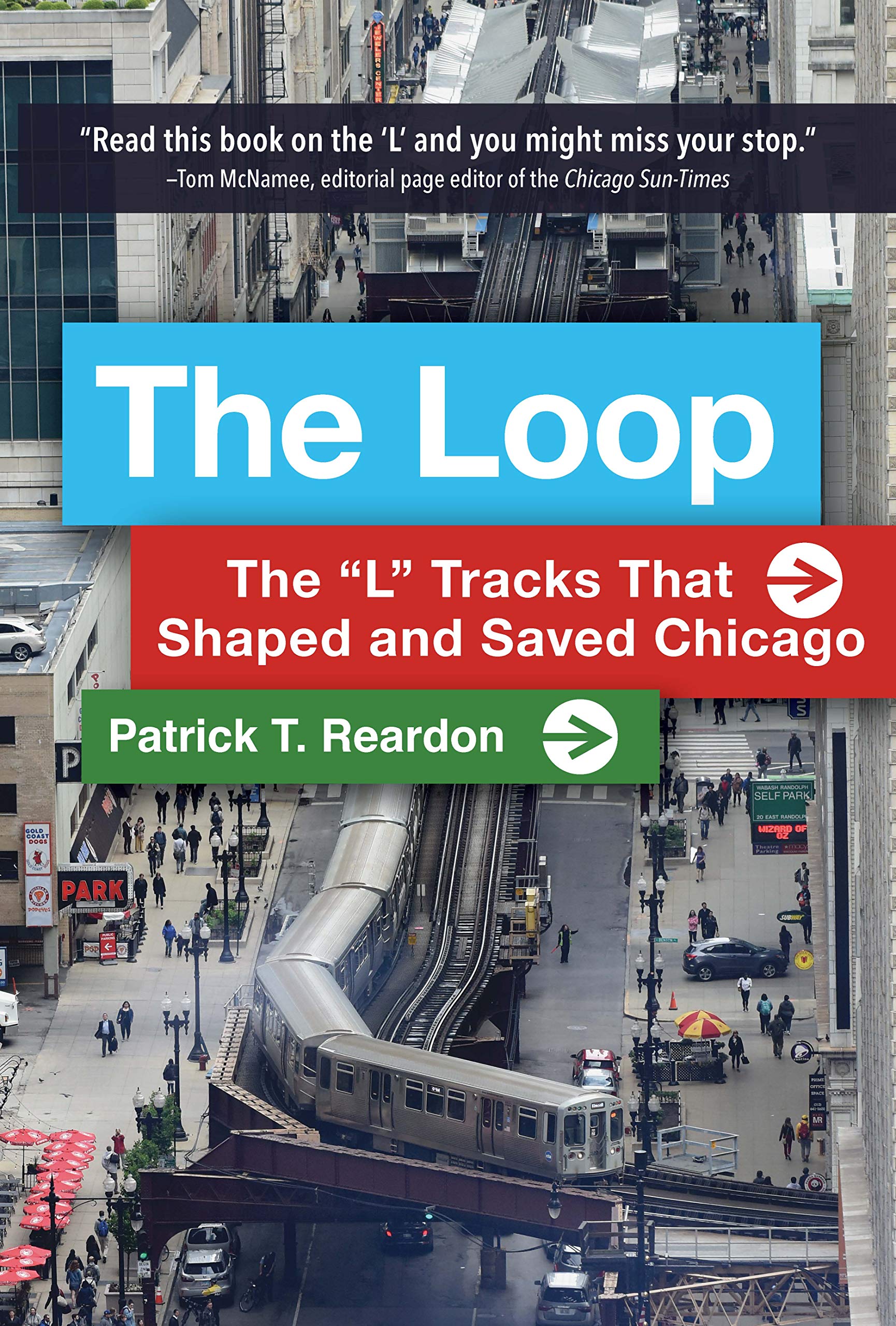
The Loop: The “L” Tracks That Shaped and Saved Chicago
The structure that anchors ChicagoEvery day Chicagoans rely on the loop of elevated train tracks to get to their jobs, classrooms, or homes in the city’s downtown. But how much do they know about the single most important structure in the history of the Windy City? In engagingly brisk prose, Patrick T. Reardon unfolds the fascinating story about how Chicago’s elevated Loop was built, gave its name to the downtown, helped unify the city, saved the city’s economy, and was itself saved from destruction in the 1970s. This unique volume combines urban history, biography, engineering, architecture, transportation, culture, and politics to explore the elevated Loop’s impact on the city’s development and economy and on the way Chicagoans see themselves. The Loop rooted Chicago’s downtown in a way unknown in other cities, and it protected that area—and the city itself—from the full effects of suburbanization during the second half of the twentieth century. Masses of data underlie new insights into what has made Chicago’s downtown, and the city as a whole, tick. The Loop features a cast of colorful Chicagoans, such as legendary lawyer Clarence Darrow, poet Edgar Lee Masters, mayor Richard J. Daley, and the notorious Gray Wolves of the Chicago City Council. Charles T. Yerkes, an often-demonized figure, is shown as a visionary urban planner, and engineer John Alexander Low Waddell, a world-renowned bridge creator, is introduced to Chicagoans as the designer of their urban railway. This fascinating exploration of how one human-built structure reshaped the social and economic landscape of Chicago is the definitive book on Chicago’s elevated Loop.
- GenresNonfictionHistory
312 pages, Kindle Edition
Published November 26, 2020
Ratings & Reviews
Friends & Following
Create a free account to discover what your friends think of this book!
Community Reviews
Displaying 1 - 17 of 17 reviews

January 19, 2021
3.5 stars
A fun bit of Chicago infrastructure history. I wish Reardon had talked about some of the more recent changes and developments in the Loop, but that might have been a bit more minutiae than most people are looking for. I did appreciate the detail that he put into figuring out the etymology of the Loop, even if the answer at the end of the day was the seemingly obvious one.
A fun bit of Chicago infrastructure history. I wish Reardon had talked about some of the more recent changes and developments in the Loop, but that might have been a bit more minutiae than most people are looking for. I did appreciate the detail that he put into figuring out the etymology of the Loop, even if the answer at the end of the day was the seemingly obvious one.

June 13, 2022
A history of the (e)L. I enjoyed this book- a historical journey through Chicago's most noticeable feature. It's a super local book so expectations were not sky-high but it flowed. I found the story about the fight to remove the L fascinating- a rare survivor of the Daley Administration. It will go on my (future) Chicago history shelf.
December 18, 2021
This book was totally okay, but nothing more. I think Reardon had an interesting idea for a book, and a big thesis about the ways that the Loop ties Chicago together, uniting its diverse peoples, neighborhoods and sides of town. However, there's really not enough in this book for a full-length treatment, and there are parts that I would think essential for his argument that seem glossed over.
He spends entirely too long on whether "the Loop" first referred to the loop cable car lines of the late 1800s or the neighborhood inside the elevated train tracks, without any real explanation of its importance. (I inferred from a later chapter that perhaps he was fighting against an argument made by Loop opponents in the 1970s.) What was most missing was evidence of how the Loop unites the city. He certainly states it often enough, but there's not a lot of evidence of it. I thought the book really picked up after we got out of the 19th century, and particularly in the last 50 pages or so, but there's so much time spent in the weeds about political infighting in the 1870s over cable-car lines that it was hard to really enjoy a book that I thought would be more interesting than it was.
He spends entirely too long on whether "the Loop" first referred to the loop cable car lines of the late 1800s or the neighborhood inside the elevated train tracks, without any real explanation of its importance. (I inferred from a later chapter that perhaps he was fighting against an argument made by Loop opponents in the 1970s.) What was most missing was evidence of how the Loop unites the city. He certainly states it often enough, but there's not a lot of evidence of it. I thought the book really picked up after we got out of the 19th century, and particularly in the last 50 pages or so, but there's so much time spent in the weeds about political infighting in the 1870s over cable-car lines that it was hard to really enjoy a book that I thought would be more interesting than it was.

September 10, 2021
Reardon approaches this fascinating story of Chicago’s famed, and often defamed, L Tracks with a reporter’s fly-on-the-wall lens, a city planner’s perspective, and a historian’s “quill” to put it all into context locally, nationally and even globally. The result is a lively tale that presents the mighty “L” as a character in the story of its own development and power --creating and protecting the monied downtown and forcing the rest of the metropolis to adapt. It’s a muscular and often pugilistic story, featuring a century of city leaders, both visionary and opportunistic. All of this, as Reardon enlightens us, has saved Chicago during the years when other rust belt cities declined, as well as served as a tool to shape its future. You don’t have to be from Chicago to be riveted. The Loop deserves to become the basis for a major PBS documentary. I can’t wait.
December 18, 2020
The author has uncovered many of the political, social and engineering facets of creating the Loop and the downtown area of Chicago along the impact on the citizens in the 19th century through the 21st century. As a life long resident of Chicago I've read many historical books on the city and Pat Reardon's book brought many interesting stories and facts I was unaware of. The use of archival newspaper stories created a sense of the feelings and emotions of the citizens along other details of the city. The book also compares Chicago's Loop and downtown area with other US and world cities to put Chicago's unique factors in perspective with the challenges and fates of those cities.

February 17, 2021
Honestly this was such a slog to get through. Uninteresting author with boring, repetitive prose. Reads like a literature review with a sprinkling of opinion. Occasionally brought up interesting topics about the specifics of what made the Loop (the elevated railroad, not the downtown as the author laboriously explains) ground breaking, but rarely gets to the level of detail that good nonfiction books usually do.

February 8, 2021
I'm sorry but this book is boring.
October 1, 2021
An excellent book on the history of the Loop and how it's structure and story tell us the story of the city of Chicago. Love it and love this city!

December 29, 2022
This is a very lovely textbook style informational about the elevated tracks that frame the 39 famous blocks in the heart of downtown Chicago enveloped between two beautifully painted stories, one of 1911 New Year's Eve in Chicago, and one of 2018 New Year's Eve in Chicago. A longtime lover of trains, I was drawn particularly to this book because I am a daily rider of the Chicago Transit Authority. And I am so very pleased to have learnt the history, particularly about the cable cars which preceded the elevated structure; about the amazing Mr. Charles Yerkes who is the primary responsible party for the creation of this beautiful elevated structure and who the author describes favorably versus the many historical accounts that compare him to the devil; about the unique design by a man who is now forgotten for this grand contribution to Chicago (John Alexander Waddell); about the post World War II days of perpetual migration to suburbs yet a continuance of the thriving of Chicago because of the elevated tracks (when all other city commerce began to falter: Cleveland, Detroit, my beloved Pittsburgh, etcetera); about Richard J. Daley who was before my time so despite seeing his name everywhere in the city, I knew nothing of the man until reading of this book, and the author shows his own personal liberal social slant when he accuses Daley of wanting to demolish the elevated tracks because they reportedly infiltrated the city with black people after 5pm; and finally about how Jane Byrne won the election and canceled all plans of the late 1970s demolishing plus combined with President Reagan's new policy on no more federal funding for silly city projects (yeah!) that the elevated tracks in The Loop would stay! I enjoy the author's autistic-like attention to vernacular as it pertains to how, when, and why the downtown area became known as "The Loop" in addition to the tracks being known as such. My only complaint exists for a few grammatical errors in this January 2021 edition. The first: page 84, paragraph 3 where he writes, "Although this loop for Alley 'L' was never was built..." (delete extra was). The second: page 93, paragraph 1 where he writes, "...although they did come out in force for the 1910 auction following Yerkes's death to pick through the his art holdings in search of bargains." (delete "the" before "his art holdings." The third: page 127. I believe that his math on word count for the described book is incorrect. It should cite 114,000 words based on the described rebuttal of 90,000 words being "just a little fewer than are in the book (which he seemingly incorrectly cites as 14,000 words). And finally page 185, paragraph 2. Missing a word. It is printed as, "Raymond DeGroote, a railroad enthusiast, was even younger when he took the Ravenswood visit his father in the Loop..." It should read as "to visit his father in the Loop." Great book. I recommend! Thank you to the author for dedicating his time to educating we the readers about The Loop!
April 12, 2025
The book club absolutely loved the book and felt the author's background as a journalist showed in the writing and research for the book. It was a wonderful depiction of L history and the development of downtown. It showed Charles Yerkes in a more forgiving light than I'd see before, more as a man of his age rather than just the corrupt robber baron. It also highlighted the technical genius of Waddell. the engineer for the project and pointed out the fact that neither man has been given credit for the creation of something that had such lasting impact on the city. It was also illuminating to hear about the battle to save the 'L' as a historic monument to the city's past and the fact that about 75% of the structure is still in use. It also serves as a nice introduction to Chicago's history as it names several of the notable figures of the past and includes their biographies.

May 15, 2022
Although this book had a few interesting stretches, it was mostly disjointed, uninteresting and difficult to read. A few of the biggest disappointments were that the book seems to concentrate too much on the very beginnings of the L, and the author seemed obsessed throughout the book with droning on about the true meaning of the word "Loop", and what it means in Chicago jargon.
Also, though the author seemed to describe well enough the mechanical workings of the early cable cars, a few diagrams of how the that system functioned would have been helpful. The sections on Charles Yerkes and later on Mayor Daley's and others' push to tear down the downtown L were interesting, but overall this book could have been much better.
Also, though the author seemed to describe well enough the mechanical workings of the early cable cars, a few diagrams of how the that system functioned would have been helpful. The sections on Charles Yerkes and later on Mayor Daley's and others' push to tear down the downtown L were interesting, but overall this book could have been much better.

January 28, 2025
I’m not sure exactly what this book is trying to do, the first 100 pages are spent proving that it is called the Loop because of the L not the cable cars that came before. Then goes into the loop being built ok cool, then pretty much jumps to 1970s. No mention of how L went from private to public and ends talking about how Daley tried to tear down the L. I love chicago so there was great stuff in here but probably not the best book ever BUT if you’re from chicago you gotta read it, 4/5.
February 15, 2022
While I find the history of the loop very interesting, especially Carles Yerks (what a cool dude), I did not enjoy the large portion of the book dedicated to questions of why downtown is called the loop and others like it — it seems irrelevant to understanding how the L shaped Chicago.

October 15, 2025
Good book, but a bit repetitive at times, even for my transit-oriented self (e.g., 30 pages on why the Loop got its name from the El and not the cable car lines preceding it??). Abandoned and came back but happy I finished it!

July 17, 2023
Entertaining account of the Loop and how it came to be--and how it almost was demolished in favor of new subways. Anyone interested in Chicago history will want to read this.
September 23, 2023
A wonderful book that details the Chicago Loop elevated trains in relation to Chicago history. A must read for people interested in Chicago history.
Read
February 6, 2025when hes a corrupt 19th century politician but hes lowkey a chill guy in spurring the growth of chicago's downtown in a uniquely cultural codified sense
Displaying 1 - 17 of 17 reviews