Jump to ratings and reviews
Rate this book

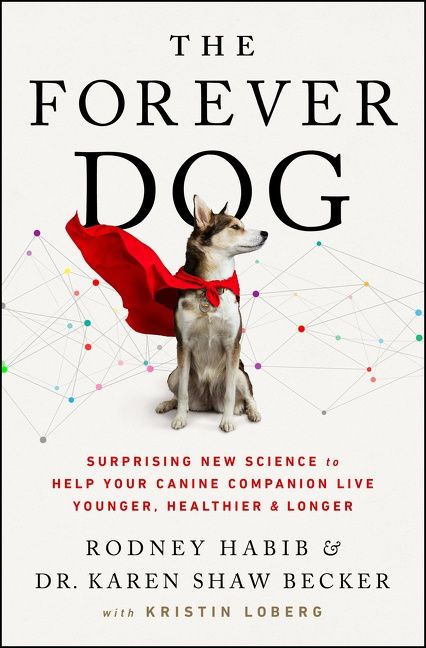
The Forever Dog: Surprising New Science to Help Your Canine Companion Live Younger, Healthier, and Longer

Rate this book
The Forever Dog has descriptive copy which is not yet available from the Publisher.

464 pages, Hardcover

First published October 12, 2021

2032 people are currently reading
4361 people want to read

About the author

Rodney Habib

3 books51 followers
Rodney Habib is one of the most influential pet health leaders in the world. He’s a filmmaker, multiple award-winning blogger, sought-after public speaker, founder of Planet Paws - the world’s largest pet health page on Facebook - and more importantly, a pet parent.

His honest and no-nonsense take on pet health and massive social media presence has gained him worldwide recognition. His 2017 documentary on the canine cancer epidemic The Dog Cancer Series accelerated his influencer status, leading to viral videos capturing more than 530 million views, then eventually achieving the status of most popular pet health food page on Facebook with 2.6 million followers.

Ratings & Reviews

What do you think?
Rate this book

Friends & Following

Create a free account to discover what your friends think of this book!

Community Reviews

5 stars
1,378 (48%)
4 stars
869 (30%)
3 stars
434 (15%)
2 stars
106 (3%)
1 star
52 (1%)
Displaying 1 - 30 of 313 reviews
Profile Image for Brennen McKenzie.
Author 3 books11 followers
November 10, 2021
Written by two of the least qualified, least reliable promoters of pseudoscience in the pet health space. Karen Becker is a veterinarian who runs the animal-centered portion of uber-quack Joseph Mercola’s misinformation empire. Rodney Habib is a social media influencer who has manufactured a lucrative role for himself as a pet health expert entirely out of his communications skills and opinions, with no actual training or expertise in science or veterinary medicine.

Though there are a few worthwhile things to be found here. Unlike the others, however, there is far, far more misinformation and ideology than legitimate scientific information in the book. Dog owners are likely to learn very little about canine aging biology, and they are likely to come away with a distorted view of what we know and don’t know about how dogs age and how we can improve healthspan and lifespan.

This isn’t really a book about canine aging. There are some sections that review aging biology generally in a cursory manner, predominantly with the goal of setting up specific beliefs the authors want to promote. But the core of the book is the same old tropes that Habib and Becker promote in the Truth About Pet Cancer and on their internet sites. This book is all about using the current excitement about aging and about the potential to use our scientific understanding of it to improve lifespan and health as a shiny new display case for the same old ideology of alternative medicine that they and others have been promoting for decades. There are few new ideas and little real science here, just a new frame for old ideas.

Here are the core ideas Forever Dog is designed to sell:

• Modernity is bad
This is not only an implicit message repeated on most every page, there is even a section entitled “The Hazards of Modernity that Lessen Longevity” and another called “The Modern Unwell Dog.” The same arguments they make in Truth about Pet Cancer and elsewhere against neutering, vaccination, commercial pet food, conventional medicines, electronic devices, “chemicals,” etc. reappear here, dressed up to look like they are connected to aging and longevity in dogs.

The authors are peddling a regressive view of history. They have one leitmotif which they repeat in a dozen different forms and settings: modernity is the root of all evil and we must retreat to some mythical simpler, cleaner past before technology ruined everyone’s life and health.

• The Naturalistic Fallacy
The obvious corollary to “modernity is bad” is, of course, “nature is good.” Nature, as used by Becker and Habib, is a mythical construct, usually centered in the past or in rural environments, in which health was optimal because humans hadn’t discovered or invented anything yet. The idea of nature as benign, even Edenic, is a silly fantasy only possible for people raised and embedded in a safe, technological society greatly distanced from the experience most humans had of nature for most of our species’ history.

• Health is a Personal Belief System
The authors go out of their way to emphasize that what matters most in caring for your dog’s health is what you believe. They have particular beliefs they want to sell you, of course, but they take pains to emphasize that you should “do your research” and “educate yourself” and that your observations and intuitions and feelings are ultimately the most important guide to what is good or bad for your dogs. Pet owners are responsible for their pets’ health (especially since vets and other “experts” can’t be trusted), and they shouldn’t doubt their own instincts or ability to teach themselves everything they need to know to confidently disregard science and scientific expertise. This idea is closely connected to the next,

• Science is Optional
Despite the frequent references to science, from the title to the citations the authors have relegated to their web site, in the universe of Forever Dog science exists only to validate what we already know through other means. Scientific studies are cited when they support the authors’ beliefs, and the exact same studies are ignored when they do not. These authors cherry pick, distort and ignore scientific evidence freely, without any apparent concern for how scientific research works and what the evidence can reasonable be understood to mean. Science is mere window-dressing, giving a patina of legitimacy and seriousness to ideas that are fundamentally ideological and only connected to reality through personal observation and anecdote.

• Be Afraid, Be Very Afraid
The authors paint a terrifying picture of the modern world as a toxic wasteland full of dangers and unscrupulous or misinformed false experts offering you bad advice for money. They need you to be afraid so that you will eagerly embrace the anodyne they offer for the malady they have created. And they do offer a way out of the nightmare, by giving you a sense of understanding, competence, agency, and validation in making your own decisions that they promise will miraculously transform the health of your pet, just like the pets in the numerous miracle stories that open many of the chapters. Marketers of all stripes have discovered the persuasive power of anxiety to undermine confidence in their current sources of information and drive them to seek eagerly after another.

It is not true to say that every point made in the book is wrong. In some ways, it would be a much less dangerous vehicle for misinformation if that were the case. The authors employ legitimate scientific information, plausible and sensible advice, and accurate comments on the many flaws of the human and animal healthcare systems, the pharmaceutical industry, and the pet food industry as part of their argument. They weave reality together with opinion and fantasy almost seamlessly, until it is difficult for the reader to tell them apart.
Profile Image for Krista.
1,469 reviews854 followers
October 6, 2021
Forever Dog ( fə -ˈre - vər - dȯɡ): A domesticated carnivorous mammal, descended from the gray wolf lineage, that lives a long and robust life free from degenerative disease, in part due to their humans making intentional choices and wise decisions that confer health and longevity.

The Forever Dog has been getting a lot of pre-release buzz — I’m hearing about it from every direction — and as a dog owner/lover myself, I was pretty excited to get an early digital ARC of it; why wouldn’t I want the information that could help my own pooch live a long and healthy life? But having now finished it, I’m of two minds: The information is compelling, but as a skeptic when it comes to “Surprising New Science”, I’m not 100% convinced that this book’s authors are the ultimate authority on pet health and nutrition (and especially when they warn the reader that any vet I approach with this information will probably push back against it). Rodney Habib is an influencer and blogger (and founder of the largest pet health page on Facebook) and Karen Shaw Becker is a Doctor of Veterinary Medicine (and certified in animal acupuncture and homeopathy), and while nothing they recommend is actually all that radical, this book doesn’t feel totally grounded in science. Three ambivalent stars. (Note: I read an ARC and passages quoted may not be in their final forms.)

If there’s one lesson you’re going to learn over and over again, it’s this: Eat less, eat fresher, and move more and more often. That’s a truism for both you and your dog. And it’s the biggest takeaway you’re going to get from this book.

I once had a vet say to me, “Never let anyone tell you that you can’t buy a good brand of dog food at the grocery store”, and that is the unexamined advice that I have brought to my dogs’ nutrition. (That and the fact that my last dog got bladder stones from sharing my meals with me, and my brother-in-law said he wishes he had never given his dog human food because Blue now drools at the table every time they eat, is why our current dog has only ever had grocery store kibble, and I thought I was doing what was best for him.) So I did find it very compelling when this book explained that “nutritionally complete” kibble has only been around a short while, and by comparing it to infant formula (which we now think of as second best, and at any rate, is only used for a few months in human lives, compared to a dog's entire life on processed foods), the authors did make the case for the addition of fresher, whole foods. There is a lot of nutrition science explained for why this or that is essential in a dog’s diet (and how ultraprocessed foods not only undernourish but actually harm various body systems), and the authors are careful to emphasise that it is very hard for a dog owner to successfully cook from scratch (there are many vital micronutrients that aren’t readily available in grocery store ingredients and supplements can be difficult to add in the precisely required amounts). However, there are many recommendations for how to boost kibble with add-ins (from blueberries to homemade mushroom broth), and in an ideal world, explains why one ought to switch to a minimally processed fresh dog food. I did find all of this to be compelling, supported, and I’ll look into it further; so what’s my beef with these authors as science communicators?

In an alarming 2018 study, Cornell University researchers found detectable glyphosate in all eighteen commercial dog and cat food products they tested (including the one GMO-free product in the group) and concluded that “exposure to glyphosate via food consumption is likely higher for pets than humans.” They calculated that our pets’ exposure to this likely cancer-causing agent is between four and twelve times higher than it is for us on a per kilogram basis.

The authors use a lot of the same buzzwords as the woo-woo purveyors (Vani Hari, Dave Asprey, Gwenyth Paltrow, etc.) that I tend to tune out; warning against GMOs, talking as though organic produce is grown without pesticides, promoting “detox” protocols. They anecdotally report that dogs avoid 5G routers (concluding that they are negatively affected by EMFs) and suggest, more than once, that the harmful chemicals off-gassing from dog beds can be mitigated by covering them with an organic cotton throw. Wherever there isn’t firm science to back up a claim (as in “likely cancer-causing” above), they write, “...we suspect these heightened risks are borne by our furry friends,too...researchers suggest...we can only imagine...we surmise the same is true for dogs…”, and that’s not good science. At one point they list their “Dirty Dozen”:

Avoid buying dog food with any of these ingredients listed on the labels (in no particular order):
➤ Any type of meal (i.e., “meat meal,”“poultry meal,” or “corn gluten meal”).
➤ Menadione (synthetic form of vitamin K)
➤ Titanium dioxide
➤ Peanut hulls (a significant source of mycotoxins)
➤ Dyes and colors (for example Red #40), including caramel
➤ Poultry or animal digest
➤ Animal fat
➤ Propylene glycol
➤ Soybean oil, soy flour, ground soybeans, soybean meal, soybean hulls, soybean mill run
➤ “Oxide” and “sulfate” forms of minerals (for example zinc oxide or copper sulfate)
➤ Poultry or beef by-products
➤ BHA, BHT, and ethoxyquin (synthetic preservatives)
➤ Sodium selenite (synthetic form of selenium)

But they don’t explain why you should avoid these particular ingredients. In a couple of other places the authors say that more information can be found on their website (including any of the sources that one might expect them to include in endnotes), but if that’s the case, what’s the point of writing a book? Beyond nutrition, the authors also suggest: not spaying or neutering a puppy before puberty; testing for the presence of antibodies before administering annual vaccines (other than Rabies); testing out natural (essential oil-based) flea/tick/heartworm repellents before agreeing to prescription broad-spectrum products; restricting a dog’s eating window to eight hours a day; turning off lights and routers at bed time. I like the idea that dogs should be taken on ten minute “sniffaris” — walks where they get to go where they like and sniff what they want — at dawn and dusk (and also be given many opportunities for heart-pumping active play throughout the week), but I don't know if sniffaris actually reset circadian rhythms..

Fifty years ago, vets saw patients primarily for acute injuries and infectious diseases. But these days most patients we see are suffering with GI problems, allergies and skin issues, musculoskeletal issues, and organ dysfunction. It’s an epidemic.

There’s no arguing against the fact that humans in the Western world have spent decades eating unwholesome convenience foods that have affected our health in countless negative ways; it should be unsurprising to conclude that the mass production of pet foods — which is a largely self-regulated, multi-billion dollar business — has led to similar negative health outcomes for the animals that are relying on us to provide for their every need. The bottom line — that we and they should eat less, eat fresher, and move more — is a good message, I just wish I didn’t feel so ambivalent about the messengers.
1 review
October 12, 2021
I'm a bit biased as the book reflects my own learning journey and I enjoy the approach of Dr Karen Becker & Rodney Habib towards wellness, but I think everyone should read this book because a lot of it applies to longevity in general, not just for dogs. After all, canine health (and lack of it) mirrors the state of health in humankind. Readers are empowered with actions to take that are backed up by science, many of which will benefit the dogs' families too. I did not feel pressured like I had to do it all, or do it perfectly, or I might as well do nothing; little things make big differences too. And, while there is ideal for which we can all aim, I felt the authors recognized that each reader has their individual reality with which to contend. The science is unobtrusive, referenced, made easy to understand, (and will continue to be updated online). The price is a small investment with the potential to pay off big; I had expected to pay more for a book of this length and depth. For those already in-the-know, the book will be a compilation of key information all in one place and a source to guide others toward. For those yet-to-know, it will be an eye-opener and thought-provoker, and hopefully --a life-changer. When it comes to saying that last good-bye to our dogs, we all want, we all ask for, more 'good days' together ---don't just wish, don't just hope, don't just pray ---make it happen. This book will help you get there.
1 review
October 12, 2021
Contrary to what other reviewers on this site have said, this book is so heavily rooted in science that I had to read some parts of it 2 or 3 times in order to understand the scientific foundation. Pet guardians finally have a place to go to find answers to many questions not available In the veterinarian's office. And in some cases there aren't any answers, but the discussion and experience of these 2 experts provide a good direction for many of us seeking Information that will help us take better care of our beloved animals. The best part of this book is definitelt the science, but the part that I will refer to over and over again is the how to part. How to choose healthy food, how to choose a healthy environment, how to create a healthy exercise program for my dogs. And as I read it, I began to realize that Dr. Karen and Rodney aren't just talking about the canine world; what they report also goes back up the leash and applies to me and my health in my world. I can't describe how grateful I am to them for writing this book.
Profile Image for Molly.
78 reviews3 followers
January 13, 2024
It is wild to me that a book with the subtitle "Surprising New Science to Help Your Canine Companion Live Younger, Healthier, and Longer" contains no citations or bibliography

In one section they reference a study they learn of anecdotally from another researcher where a dog was fasted for 100 days and "was still able to jump three feet over a fence and into his kennel" the point of sharing the study being that "healthy dogs can successfully fast."

It is BANANAS that learning secondhand about a study was enough to convince the authors that the study in question indicates that dogs can "successfully" fast (bro what does that even mean?) That is the kind of anecdote your second cousins drops during Thanksgiving dinner...not something you publish in a book with the word "science" on the cover.

I did my own research and actually found the study which was from 1912 (the authors refer to this as "back in the day") and the authors flat out mis-represented the facts as documented in the study:

"[Oscar] had been in the habit of jumping into his cage each day after being weighed but the practice was discontinued after the fifty-eighth fasting day in order to protect the dog from possible injury due to coming in contact with the sharp corners of the cage front. He continued to jump out of his cage up to and including the one hundred and first day of the fast. It was apparently quite a task for him at this time in his weakened condition to maintain his equilibrium after leaping from his cage to the floor."


Forgetting the fact that the authors condemned the study as "gross" (unethical, presumably) while simultaneously using it as evidence to their claim (now that is gross), this very small sample of the book demonstrates blatant and seemingly deliberate mischaracterization of information and ruins any credibility these authors may have had.
Profile Image for Yodamom.
2,208 reviews216 followers
November 2, 2022
I DNF this book. This came recommenced to me, sounded great. I should have known to do my research on the authors. I always do, why did I just trust and get this book ? Waste of time and money. I started reading, started seeing some weird statements. My dog need to eat like a wolf ? My dog has evolved far from his wolf ancestors. Get them tested before shots ? Don't let your dog get fat, well that's a total surprise, how did we not know that ? (Sarcastic) One author is a social media guy that runs a pet group, the other is a Vet that when I looked up is not anyone I would go to for help with my pet. I'm not a Vet, not a Social Media dog expert (WTH is that ?) I am a long time dog owner, been through cancer, dilated cardiomyopathy (DCM), allergies and more with my dogs. I've listened to experts in the field, Cardiologists, Vet Dermatologist, Vet Oncologists and a Vet Nutritionist and none of them have given most of this advice. Sure there are bits of good information but be careful how it's spun and see what they're selling. They are selling you their dog food.
Do your research
87 reviews3 followers
November 17, 2021
The authors have a good general point—that commercial dog food is garbage. But the only way to get actual balanced recipes is on their website, where each one costs you $5 and you can’t preview it until you buy. I bought 2. The ingredient list is unmanageable—5 lbs of beef heart? Canned oysters? Green lipped mussel powder? 15 ingredients in this one recipe. My dog is 15 lbs and it would take months for her to eat this. Plus, the cost if she doesn’t like it! It’s an interesting theoretical work, but implementation would be well nigh impossible.
Profile Image for Geri.
11 reviews1 follower
August 17, 2022
Repeat after me: Correlation does not equal Causation! Most everything in this book is about correlational studies of questionable quality. Or even worse, correlational observations.

In fact this book throw around a bunch of science words in completely bogus ways to make you think it’s science. The core concept is that exercise , body weight management and eating quality food can help you lead healthier life. Nothing new there.

What really got to me is the constant and redundant, repeating of every statement, multiple times. Book could be 1/3 the length of they stopped repeating themselves. And the constant. “I just told you something but I’m not going to explain until chapter x”. And then let me repeat that 4 more times. Oh yes I hate how they repeated themselves. When I want my dog to sit, I say “sit”. Once! I don’t say “sit”,”sit , “sit, “sit”, and then “in 5 minutes I’m going to tell you how to sit”. Stop repeating yourselves !!!
Profile Image for Tammy.
23 reviews
March 8, 2022
400 pages that could have been summed up in a 100.
Profile Image for Marley.
31 reviews
September 16, 2022
Confirmation Bias \ ˌkän-fər-ˈmā-shən ˈbī-əs \: noun. The tendency to interpret new evidence as confirmation of one's existing beliefs or theories.

We so desperately need a book like this, but this is not the book.

There are useful nuggets of information here and there, but this book serves, unfortunately, to confirm the biases of the ones who wrote it.

Rodney Habib has no certifications in animal health or nutrition - he is a film maker and a blogger that has a personal agenda which is to make money by furthering misinformation, and preying on people's fears about their pets health. Who wouldn't do anything to keep their furry friends alive for as long as possible?

Dr. Karen Becker should have her license revoked. A quick google search on her will tell you that her theologies have no grounding in real veterinary sciences. Telling people not to vaccinate their dogs is dangerous - have you ever heard of parvo?

This book is just a funnel to try and get vulnerable readers to purchase things from these people and it shows. Many dogs live fulfilled, healthy, long lives on kibble. You have to do your research and talk to your pets veterinarian to determine the best food for your pet. My dog thrives on Purina Pro Plan. My vet said he's never seen a healthier dog. I add in some blueberries, salmon oil, glucosamine, as well as some other vet-approved add ins on occasion, but my dogs food is well rounded enough, as the food is AAFCO certified, and my vet approved of the ingredients. My dog is so far removed from a wolf (we're talking anywhere between 14,000 and 40,000 years removed) at this point there is no reason she should be eating a grain free raw diet.

Of course, you should do for your pet what both you and your vet agree is the best option for your pet. If your dog has allergies or health concerns and requires a grain free diet, you should absolutely follow the advice of your vet. But if your dog is typically healthy, there's no reason for it.

That's my two cents, don't at me please.
Profile Image for Ali Mark.
732 reviews2 followers
October 13, 2022
was EXACTLY what I feared it would be, what I wanted it to be and so so much more. I cannot speak on this book enough, so I will try to keep this so so short (looking back, this is not as short as I hoped it would be... but I'm not sorry). Bare with me while I filter out all my emotions and thoughts. I've included a few photos from the book (sorry for the quality, but I initially wasn't going to include these as they were more for my personal use/Facebook spamming my friends and then realized this review would be incomplete without some of these features) that really stood out to me while reading and to hopefully entice you as a parent to jump down this rabbit hole of all things holy.. because this is the dog bible.

I do not read a lot of non-fiction because fiction simply makes me feel happier and less drained; less dry. This one, however, I have been waiting for months on end to have in my hands. I am so so glad that I pre-ordered this book because it's sold out in so many places. I watched Pet Fooled (the documentary featuring Dr. Karen Becker) about 5 years ago and found that everything I was doing -at the time- was right. I believed I was making great choices, and I have continued to evolve based on these two individuals (as well as our amazing integrative doctors) dedicating their lives to the exploration and science of dogs. This book took all the science, experiences, and history of our dogs and made me hate everything about it. I hate the pet food industry.

AAFCO. The FDA. The United States for not having stricter enforcement on the pet food industry. I am also sad. I am sad that there are pet parents who will never look at the information in this book (or choose not to hear this information as truth, despite SCIENCE) and they will continue to feed poor food only because it's cheap and they don't want to spend more, expose their pets routinely to poor environmental factors, and never provide proper mental stimulation (puzzles, Kongs, whatever) to their dogs because "it's just a dog." I am angry that we are routinely told in pet food stores that these things are acceptable - from toys, to chews (see how rawhides are made 🤮), treats, supplements, topicals and of course, food - and they obviously are not safe as they are treated and/or made with toxic ingredients.

Some of this information is not new to me. In fact, a great deal of it is not new to me. However, while reading the dog bible, I had planned to make only minor changes to improve our kiddos' lives (based on the information given to me to this point, we would be doing some rotational "feeding" of supplements, adding home cooked meals 2 times a week, and using fresher alternatives to fill our Kongs and mats the kids get everyday... twice a day... for mental exercise) because I felt we were doing everything right - and up until a certain point we were. I was nodding say, "yeah, we don't do that anymore.. that's not good quality..", etc. And then Dr. Becker released her Dirty Dozen about 3/4 of the way in, Sunday afternoon around 12:45 (when I read this point anyways). And that's when shit hit the fan for me.

A company I have trusted, a company I researched diligently, and a company that is human grade - is still choosing to put a toxic ingredient in their pet food (I'll tell you... it was the last one). And when that ingredient was in our food, I dug deeper. And it's in everything! We will slowly phase out those products as we find replacements for some of our treats, chews (don't worry, we already implement fresh foods constantly, but it's just not convenient with a resource guarder who snatches things he shouldn't have to store fresh fruits & veggies around the house in jars, so we will have to do the best we can with some commercial brands - I've found Bocce's to pass this test and some other freeze dried brands), and Kong fillers. I rushed out and bought a bag and box of raw food from our local Independent Pet Store who practices the values I believe in (no products with corn, wheat, soy, meat-by products, or made in China), taking the Dirty Dozen list with me to investigate the packaging labels and ensure it was "Dr. B approved." (It is now saved on my phone under favorites and I'll never buy another thing in my life without consulting this list.)

While my response is not necessarily the response most people will make, and while many of you may be screaming, "YOU DIDN'T SLOWLY TRANSITION TO RAW?!," and all of my friends on Facebook except like 1, thinks I'm bat shit crazy, I am so grateful. I'm grateful to science. I am grateful to Dr. Becker and Rodney Habib challenging the views and ideas that we've been conditioned to accept by commercialized pet food & the commercialized pet industry. (And no, we didn't slowly transition because despite the faults in our previous pet food, they were a high protein, very low carb, human grade food and in addition, my kids are used to eating fresh fruits and vegetables every single day as well as freeze dried meat and meat organ as well as dehydrated duck feet, and I knew the risk of them being sick was low.)

This book will change lives - from the new dog owner, to the experienced dog owner hearing about pro-tips from a Longevity Junkie, to the Longevity Junkie working their way through the world in 2.0 fashion (that's me). For some people, the greatest thing this book has to offer is the science - and for me, that's all I needed. I needed the proof in the "raw" pudding, if you will, and it was all there; but I can certainly see for others that the science may not be the most important thing. For some, exploring the "how it works and why" is too dry. And while a great portion of the book is science (parts 1 and 2), if you are struggling through that, Dr. B says no pressure... skim the science and let's put it in action (part 3 - doing/action part). The entire 3rd portion of this book discusses how the science works briefly and how to correct the dangers of our world - from feeding, environmental stressors (including you, the hooman), to movement and practical mental stimulation.

The largest takeaways are not strictly food related, and I want to be sure that I emphasize that heavily. While food took up a significantly large portion of this book, I strongly believe that is because it is the easiest thing to change in their lives. You don't have to run out and feed raw. You can continue to feed (...insertreallyshittyfoodhere...) what you are currently feeding and add to that with Longevity Foods that will still enhance your dogs' life. But aside from that, the relationships our dogs have - with humans, nature, and other animals was discussed. Environment, indoors and outdoors, was probably the absolute scariest thing I read about - and it is inevitably one of the hardest things to change (for me personally) given that I don't own my own home and do not make the primary decisions in or around our home (I am a caretaker for my parents, so they still get to call the shots AND we live in new construction for approximately the next 3 years). Physical activity that matches your dogs' needs is important - and because I really love this word, take them on a snifari! Mental engagement and mental exercise is also so so crucial. This book is totally inclusive of all things regarding your dogs' life span and health span.

This is not a quick read, by any means. I went through a couple of highlighters, and it took me 7.5 hours to read (an average book takes me 3.3 hours) and nearly a week to sift through as I needed to take some mental breaks between the science. There are charts and graphs (as seen above) throughout the book that truly make it easier to absorb some of the information - and my favorite reference point will be the pages in which it tells me which fruits, veggies, spices, and herbs are contributing to various "actions" in my kiddos' life. I'm not sure if Dr. B and Rodney have other books out - or if there's more to come on The Forever Dog (if you're a cat parent, they're asking you to beg the publisher for a book by the way!), but I will absolutely buy anything that comes out by either of these two beautiful human beings.

10/10, or in the case of my rating system, 10/5 - Buy it. Read it. Talk about it. It was amazing and heartbreaking and wonderful and will absolutely be my number one read of 2021. I would anticipate if I had to pick a "favorite book" for the rest of my life, this is going to be it.
Profile Image for Kerrie Hoar.
544 reviews13 followers
July 27, 2022
It’s sounds super sciency - there’s a vet, big words and research studies. In reality much of the science is simply non-existent or not applicable. Dr Becker is the veterinary and dog world’s version of Gwyneth Paltrow.

There’s some good stuff in here, unfortunately it is well hidden amongst the garbage.
Profile Image for Dianna.
255 reviews3 followers
December 24, 2021
3.5 stars. It's hard to give an overall review or rating of this book because it covers so many topics in very broad swathes. There are certain parts of the books that I loved (pages 290 - 350ish) that covered specific actionable diet changes and exercise recommendations. Then there were other parts of the book (i.e. the first 2 hundred pages) that covered so much, but in such a broad sense, that I don't think I really learned or absorbed anything at all. I understand it was to set up the background and educate the readers on the basics of nutrition and diet, but honestly, the supplementation section was overwhelming. I had never even heard of most of these supplements for human consumption, let alone dogs. I skimmed through all the benefits because they were sounding so much alike, it really didn't matter because I couldn't commit any of it to memory. It made me feel quite inadequate, like I needed to add 20 different supplements to my dogs meal. All the words like "anti-inflammatory," "antioxidant," "detox," "cardio vascular support" kept getting thrown around every other sentence that it lost all impact and meaning.

The most useful takeaway from this book was the formula to calculate starchy carbs of commercial dog kibble, because, to be frank, that's what most people are going to continue to feed their dogs in some capacity. This quick formula of (100% - protein, fiber, fat, moisture and ash) helps the average consumer sort through the myriad of brands and their nonsensical (and quite fraudulent) marketing to determine the quality of the food. I know the authors couldn't name brand names (probably due to liability, slander laws, potential for recipe change in the future), but I wish they would just come out and say, this is a brand I recommend, and this is a brand I would stay far away from, like they would on a blog post.

Another takeaway from this book was the attention we need to pay to the air quality in our homes. Before I even finished the book, I had ordered 2 for the house. We live in a big city, 15 minutes from the airport. Anything that can help my dog's allergies and eye goop, I'm willing to give a try. Although, I found the sections on epigenetics and impact of environment slightly contradicting. In the first part, the authors talk about how dogs need to be outside, feel the mud between their paw pads, lick grass, eat poop, etc. Then in the next chapter, telling us to take off our shoes before coming into the house because they track in carcinogens and feces. I don't know where the authors assume everyone lives, but the dirt outside of my house that I should not be tracking inside, is also the outside where my dog should be spending all her time. It's not like when my dog goes outside, she's in an unpolluted nature reserve, and when she's in the house, she's in a noisy city dwelling. The outside and the inside she's experiencing are two sides of the same coin.

Lastly, I just have to point out, this book I feel like is generally aimed at your run of the mill lab or retriever. Everyone thinks their dog is the pickiest eater, but I think I take the cake (girlfriend refused steak last night), so when the authors discuss CLT (Core Longevity Toppers - fruits and vegetables you should be feeding your dog as treats or meal toppers), I can't help but roll my eyes. There is no way in hell she is willingly going to eat broccoli, or steamed brussel sprouts or diced apples, which is fine. I've tried tough love, and learned that she is tougher than I. What I will find helpful are the recipes on foreverdog.com, great ideas for home cooked meals.
Profile Image for Kim Kinnear.
21 reviews2 followers
January 30, 2023
Fear-mongering, cherry-picking data, drawing inappropriate conclusions. As a scientist, this book represents the worst another scientist can do. I get it: there’s no strong, long-term data about different diets for dogs (and their effects on longevity). However, you can’t a) extrapolate human or other animal data to dogs, NOR can you b) make huge leaps from minimal existing data, and give people diet advice for their dogs based on NOTHING! There may have been some helpful behavioral or emotional inputs later in the book, but even the exercise chapter came back to the inadequately-supported assertion that well-researched kibble is horrible, and everyone should be feeding their dogs fresh, raw food with expensive supplements. Garbage.
1 review3 followers
October 13, 2021
This book is brilliant !!! 😻
I can’t thank enough Dr Becker and Rodney for this fabulous book which is so informative and so well written !! I can’t wait to read more of it !
If you want your dog or your kitty to live a long healthy and happy life, then it’s THE book to have, that’s for sure !!! 😎
MERCI from the bottom of my heart !! ❤️
Profile Image for Denise Liu.
14 reviews1 follower
December 26, 2022
Full of pseudoscience. The first red flag was the complete lack of end notes/ references etc. The authors frequently made exaggerated claims which I wanted to check out but as there were no citations it wasn't clear which studies the authors were referring to. Lots of anecdotes and rubbish that is, to my knowledge, not supported by evidence like carbs are poison etc, raw diets are the best. Someone please show me a well designed study that proves that raw diets are better and perhaps I'll be less skeptical. The only decent (and from my knowledge evidence-based) advice in the entire book is the use of fear-free training techniques. Wasted a few hours of my life. Thankfully I picked this book up from a community library and didn't spend a cent on it
This entire review has been hidden because of spoilers.
Profile Image for Lydia Tevenan.
141 reviews9 followers
February 19, 2024
5/5 - Everyone who lives with dogs MUST read this book. Informative and truly amazing. Thank you Dr Karen Becker.
Profile Image for Stephen Wallace.
848 reviews102 followers
March 26, 2024
Sometimes hard to know what to rate a book. This book is chalk full of so much information, I wound up giving it 5 stars. But it wasn't a book I rushed to go read. Although there were some good stories of dogs that lived to very old ages, and we all want that for our dogs, it was also like eating your vegetables because it is good for you, and not because you like it so much.

This book is also on Wesley Bank's current list on his website for '100 best dog books of all time.' I don't think it fits into that classification, but worth consideration. I believe this will be the 69th book out of his current list of 100 that I have read.

I am not enough of an expert on health related stuff so others will need to give more critical analysis. I get it, the desire to be healthy, but hard to know how far we really need to go.

There is a fair amount of the stuff you might expect, but they put enough science into their arguments with lots of scientific terms. The book can do a good job of putting fear into factors.

I did like this blurb talking about how commercial dog good got it's start before they the book goes into how commercial dog food is usually horrible to maybe only bad.

'One upon a time, there were no dog biscuits or milk bones. Someone had to invent them, and in 1860 James Spratt was the first to manufacture a dried dog biscuit food. His qualifications—he was an electrician and lightning rod salesman from Ohio—were dubious at best. He did, however, have the slick sales skills to turn a chance observation idea into a superbly contrived fortune, appealing largely to the elite at the start. While on a business trip to England, Spratt observed street dogs eating ship hardtack, the nonperishable, cracker-like food made from processed cereals that sailors ate on long trips (and which were often filled with worms, earning the nickname “wormcastles” among soldiers who ate it during the Civil War).
The idea for commercial dog food was born. '

I also liked this bit that was something new to consider for me.

'This phenomenon—protection from allergies through exposure to an agrarian lifestyle and its inherent dirt—is sometimes called the “farm effect.” Indeed, it pays to get dirty sometimes. The dirt, to be sure, is much more than what we find under our feet out in nature. The star player in the dirt is the community of microbes found in rural and natural environments that serves an important role in protecting against pathogens, supporting metabolism, and educating the immune system so it does not develop hypersensitivities to allergens. The dirt teaches the body how to distinguish between friend and potential foe.

I like the moral of the story that proceeded that, 'Bottom line: Fewer processed carbs and more dirt are key.'

I thought I would finish with giving away bullet points related to protecting your dog from toxins. You of course should read the book for the whole story, but we can start taking steps in the right direction with some of the advice:

1. It starts with food (fresher food diets).
2. Remove plastic water bowls (ok, but my plastic one that is also a fountain was cool and the dog and cat liked it)
3. Filter your dogs water (I can do that, I get bottled water for me, duh, I should give it to Tucker too.)
4. Purge the plastic. (including looking for dog toys labeled BPA free.)
5. Remove shoes when entering your home and wipe those paws (I can do that I guess, and better for the floors.)
6. Clean up your air: minimize sources of volatile organic compounds (VOG) and other noxious chemicals.
7. Rethink outdoor lawn care. (yep, chemicals on the yard are not good for dogs and I talked with my gardener I don't want roundup used and would rather have weeds.)
8. Rethink general household goods. (I like how the book says 'Be wary of labels that say safe, nontoxic, green, natural, because these terms have no legal meaning.'
9. Consider dog hygiene (choose organic or chemical free grooming products)
10. Maintain oral health. (I know important and I will work to do better)
11. Opt for vaccine antibody titer testing (intriguing. I will ask my vet. Seems like too many vaccines may cause issues)
12. Keep noise and light pollution in check.
13. Build a proactive, wellness team. (look for local micro-retailers to help with pet health journey).

So glad I read it. I think when we all think of it, taking actions to have our pet stay healthier and stay with us longer is worth it.
This entire review has been hidden because of spoilers.
Profile Image for Elizabeth.
397 reviews16 followers
January 7, 2024
I have mixed feelings about this book. On the plus side, it has a lot of information about what factors negatively influence the health of dogs (and humans). In fact, it was thorough to the point of taking up two thirds of the book. The last section with recommendations for dietary and lifestyle changes and supplements to aid the longevity of your dog was the part I was most interested in. Although there was some practical advice about how to incorporate some level of fresh food into your dog's diet, the list of supplements and their benefits went on and on.... you'd have to buy a GNC to keep them all in stock.

This is book is valuable as a reference book to be kept and referred to, as opposed to read cover to cover.
1 review
October 16, 2021
This book is the only resource of its kind. The authors have compiled all of the cutting edge science in one place (and yes, they cite everything - this is not just their opinion; they have done exhaustive research) to help dog parents provide the longest and best possible life for their furbabies. The information is presented in an engaging, easy-to-read style to make it accessible to everyone. But the wealth of hard science to back up each nugget of wisdom makes this a super resource for veterinary professionals, too. Anyone who loves, cares for, or is interested in dogs (or cats - or people, for that matter) needs this book.
Profile Image for Jesse JP.
68 reviews1 follower
April 1, 2023
DNF (30 pages)

When I started reading this book it felt very sensationalist and pseudosciencey in the way that it seemed to be trying to evoke fear in me by way of persuasion. I googled the book to see how credible it was and found endless claims that the authors aren’t qualified and are problematic, so I decided it wasn’t worth my time and I would find reputable and falsifiable information elsewhere.

On another note, while I agree that over feeding a dog can be bad for their health, this book was filled with underlying fatphobia in the parallels it was drawing to humans, and I don’t think I could handle another 400 pages of that.
1 review
October 13, 2021
This book is a must have for anyone who loves their dog. It is an easy to understand blueprint to helping dogs live healthier, happier lives thru simple changes. It includes the science behind these changes which is really interesting. I believe this groundbreaking book is about to change the way dogs are cared for, giving them a health span that matches their lifespan. The Forever Dog will serve as a reference for me for years to come. I bought several copies to give to friends as well.
Profile Image for Morgan Hockley.
78 reviews1 follower
April 9, 2023
Out of scope of practice for both of these authors for the majority of the book. Very frustrating to read.
Profile Image for Leila.
152 reviews4 followers
March 29, 2023
Like the Blue Zones for dogs EXCEPT there is some bizarre keto-mania going on here. Overall, the authors offer a lot of good ways to improve your dog's life. My dog will be happy that I read this book because Sniffaris and massages and more off leash time! But I do not trust all of the nutrition recommendations here.

The authors' take on nutrition smells like they started with a conclusion and went looking for things they could use to support it. Eliminating highly processed foods makes sense, but they simultaneously rail against carbs and advise you to feed your dog fruits and vegetables. Then they frequently cite carbs as the primary culprit in AGE formation in high heat applications without mentioning the role of fat and protein, particularly in meat (I would like to know who funded THAT study, if there is one). And warn about the dangers of lignans in beans (which is a dated argument that only applies to uncooked or partially cooked beans). And that plant food might expose your dog to pesticides, but a) they talked about organic food already and b) what do the animals raised for their meat eat? and c) we're already on the fruits and vegetables train.

What's bizarre is that it's clear the authors were going for a Blue Zones thing here, they even referenced it, but did they read it? Because the Forever Dog authors argue that humans should follow a ketogenic diet too, but those Blue Zones centenarians are not eating ketogenic diets.

To be fair, we do not have the same nutrition research for dogs that we do for humans. The authors could be totally correct in their assessment for dogs, but we don't have the research to support it. Their bias against carbohydrates without solid evidence to support it is a discredit to the good they have done with the rest of the book.

There is a lot of good information to gain here, and I hope a lot of dogs will live happier, healthier lives because their owners have read it and applied the best parts. And I hope better research about dog nutrition is on the horizon.
Profile Image for Jordan Lombard.
Author 1 book58 followers
November 13, 2021
I read Big Kibble by Shawn Buckley earlier this year and wanted more information on better dog food brands. This book has it, and more.

These authors teach you how to fish, giving you questions to ask of your current dog food brand or any brand you’re considering, to figure out if that’s the right brand for you and your dog.

It also covers what human foods dogs can eat (hint: there are only four they can’t!) and exactly how those foods affect the body and heal common ailments. This was the best part of the book for me! I borrowed this from my library, but I may purchase a copy to I can use it as a reference manual.

There’s a LOT more in this book, but those areas are what really stood out for me and what I was really looking for. I also appreciated how so much of this information can also work for humans. Apparently we have more in common with our dogs than we thought!
Profile Image for яᴏx.
82 reviews2 followers
August 19, 2024
I’ve fed my dog a raw diet for 11 years now and I started before I had this information. This book validates a lot of the positive experiences I’ve seen with raw (and the negatives I’ve seen with kibble). I didn’t feel that this book was fear mongering but I do understand how the realities of the world we live in are scary to hear, and if this book is the first time you’re hearing about some of these realities I understand that it may be a hard pill to swallow. There are lots of things I’m implementing from this book going forward and I’ll probably be referencing the nutrition aspects in the future as well— so this is a 5 star read for me. I’m glad I picked this up on a whim.
Profile Image for Kelli V Spann.
309 reviews80 followers
August 6, 2022

Forever Dog ( fə -ˈre - vər - dȯɡ): A domesticated carnivorous mammal, descended from the gray wolf lineage, that lives a long and robust life free from degenerative disease, in part due to their humans making intentional choices and wise decisions that confer health and longevity.


Once you begin reading this book, you will quickly find out that it is not going to be a light read. Trust me, it gets heavy, and dives deep into the science as to the how, what, when, where & why. As of the writing of the book, the authors give you most up to date science behind the questions of disease and shortened life, in our dogs (they refer the reader to their website, which is updated with any new info). I’m sure most of us do what we can to give our dogs the best and longest life possible. We have the routine check ups, vaccines and buy the best food we can afford. Only, isn’t it just as important, if not absolutely necessary, that we educate ourselves beyond what our local veterinarian or slick (targeted) food advertising? We usually end up chasing our tails (yes, pun intended) and after the basic care, we only take our pets in AFTER they get sick.

Nowadays more and more of us are questioning our own medical care, are advocates for our own and families health, and get second and third opinions. We seek out alternatives to modern day therapies. Only, why not do that for our dogs, the four legged members of our family? We assume that they will live short lives. Only, is that correct thinking? This book tells us that there are dogs who live up into their twenties, and yes, even thirty! Yep, 3-0!! And, they change the formula on human to dog aging. No more the old formula of 7 dog years to every year of human life! Current science debunks that old formula. Dogs still age much faster than humans, but the math changes. (Roughly: On your scientific calculator: enter the dogs age, then press LN, times 16, then add 31. Or! There is a chart)

Bottom line, we are in complete control of what are dogs eat and how they live. Of course, we can not control all external factors, or the sequence of their DNA, yet the new science gives us more control than we have ever had in history. When we know better, can’t we do better for these creatures and family members that give us their unconditional love? Life and death are facts of life. Yet, all the time in between has never been more in our control.

To get a glimpse of just some of the information you will find in this book, please follow “The Forever Dog” on Instagram. It will give you some snapshot, capsule insights on the new science being revealed. If nothing else it can give you a few actions you can implement now, in order to help your own dogs. If you, like me, are motivated to know more, and the science behind the recommendations - please do pick up this book and do the work.

Narrated excellently by Jean Ann Douglass and Joe Knezevitch
- though I now have the hardback, and will be reading it in that edition, as well.

Highly Recommend ✔️

Displaying 1 - 30 of 313 reviews

Can't find what you're looking for?

Get help and learn more about the design.