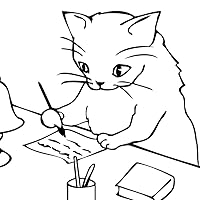
Two-year-old Leo is not your average house cat. One day he notices his young neighbor Tatsuru on his way to elementary school and he then decides to follow him and enroll himself! After receiving his own backpack and school supplies, young Leo realizes that anything Tatsuru can do, he can do as well! Leo can go to school! Leo can find a part-time job, become a mangaka or even be actor! Eventually Leo's life is full of wonderful memories, but it could have taken a very different turn if not for those who love him.
Moto Hagio (萩尾望都 Hagio Moto) is a manga artist born in Ōmuta, Fukuoka Prefecture, Japan, though she currently lives in Saitama Prefecture. She is considered a "founding mother" of modern shōjo manga, and a member of the Year 24 Group (24-Gumi). She helped pioneer modern shōjo manga, modern science fiction manga, and BL manga. In addition to being an "industry pioneer", her body of work "shows a maturity, depth and personal vision found only in the finest of creative artists". She has been described as "the most beloved shōjo manga artist of all time."
Moto Hagio made her professional debut in 1969 at the age of 20 with her short story Lulu to Mimi on Kodansha's magazine Nakayoshi. Later she produced a series of short stories for various magazines for Shogakukan. Two years after her debut, she published Juichigatsu no Gimunajiumu (The November Gymnasium), a short story which dealt openly with love between two boys at a boarding school. The story was part of a larger movement by female manga artists at the time which pioneered a genre of girls' comics about love between young men. In 1974, Hagio developed this story into the longer Toma no shinzo (The Heart of Thomas). She was awarded the Shogakukan Manga Award in 1976 for her science fiction classic Juichinin iru! (They Were Eleven) and her epic tale Poe no ichizoku (The Poe Family).
As is often the case with Moto, I felt like there may have been levels of intentionality or questioning that I can't quite pin down. Is the first story supposed to ironize the arbitrary and oppressive nature of regimented schooling? It felt sad rather than funny: poor Leo, poor kids who are so used to internalized rules. Some later episodes were funnier, like how Leo says the wrong thing to each woman at the matchmaker, but again I suspect it was parodic.
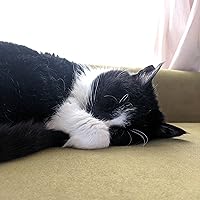
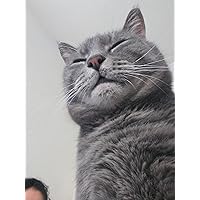
3.5 stars, rounded up for the section at the end that's made of photos of the author's cats having cartoon bubble dialog.
Note: this is atypical of the mangaka's work, don't be put off by lack of interest in cat slice-of-life misadventures. Most of her work is speculative.
So sweet and wholesome. But I'm also a bit confounded: This reads very young (in English) - for an "early reader" but, was originally josei manga? Hmmm..... did it also read this young in Japanese?
A good short manga to study Japanese with. Most expressions are simple enough and with an intermediate language level, you shouldn't really have any problems reading. Unfortunately, the gender stereotypes in the book are a little questionable, so the read doesn't make for the most wholesome, but it's still quite cute at places
Moto Hagio's Lil' Leo is that delightful sort of story where the main character is totally absurd and everyone else just plays along. In this case, the main character is Leo, a cat with big ambitions and the ability to talk like a human, if not act like one. In the first chapter, for instance, he wants to go to school, so his amused owner makes him a backpack and signs him up. It doesn't end well, though, as Leo has trouble accommodating to the classroom routine, earning him smiling-but-firm reprimands from the long-suffering teacher. Since his goal was not to acquire learning but to get some of the flan handed out at lunchtime, the whole thing ends ignominiously when it turns out he has gone to school on a half day, and all his efforts were for naught. In subsequent chapters he lets a matchmaker pair him up with different women, none of whom survive the first interview, and tries to be a movie star. Everyone acts as if it's all totally normal, only occasionally acknowledging that Leo is, in fact, a cat. It's a short, funny read, and it's just one volume long; the bright red cover, gold foil, and French flaps give it a nice deluxe feel as well.
Very weird in an unsettling way. It’s marketed for all ages. Each chapter is a different story about Leo. Leo is terribly whiny and pretty unbearable to read about (I know he’s a 2-year-old cat but still). The mechanics of the world don’t make sense either, as it’s apparently normal for cats to talk to their owners and do human things. There’s nothing wrong with that either, but I like having some rules established to the reader about the world they’re getting into, even if it’s for an episodic, basic concept like this book has.
I do like Hagio’s art style, though, and I want to check out some of her other works. I think this was just a little project for them to make some harmless children’s manga. It just wasn’t my thing.
A strange but cute collection of stories about the author's cats, primarily Lil' Leo, getting into shenanigans typically reserved for humans. I love stories where an animal is distinctly a little more human than it should be (speaking full sentences, walking on two legs, having a regular office job, going on dates...) but no one questions it.
The art style was simple but fit the story well and there were some bonus photos of the real cats behind the characters at the end.
A talking cat! Which everyone accepts as normal. Poop jokes! Because cats are dumb with their poop (ask me how I know). Leo is a little boy cat who tries school and part-time work and going to restaurants with ridiculous results. A fun read.
Very weird little story. I guess it highlights the absurdity of life, school and work when you have a cat in the main role. Unfortunately I didn't really like how Leo was drawn, which took a lot from the whole.
A fun read with not much more to it. No matter the premise, each story follows almost the exact same route: Leo gets himself in trouble, but it's okay because he's a cute little cat. Too repetitive for my liking.