What do you think?
Rate this book


365 pages, Paperback
First published January 1, 1985

"Niigata... toi(it's a long way). Go with car."
"It's really very kind of you, " I said, again in Japanese, "but I can't accept, and anyway, you seem to be going in the other direction. What I want is..."
He went on miming. "Niigata... toi... toi... toi..."
His girlfriend wound down the rear window and said, "Ne..."
"What?"
"He seems to be speaking Japanese."
"Baka na! (Don't be silly!)"
And the pantomime continued.
"Do you like the Japanese?"
"Which Japanese?"
"Do you feel at home in Japan?"
"No, I think it would be a peculiarly thick-skinned foreigner who was able to do that."
"Do you think you've learned much during the last four months?"
"Yes, I think I've learned a bit about Japan and a lot about myself."
"Do you like the Japanese?"That's the attitude to have when writing about a country. People are people, after all, no matter where they are.
"Which Japanese?"
"The Japanese?"
"Which Japanese?"
"I saw people jumping into the river in their working clothes to try and cool their peeling bodies. There were schoolgirls in their uniforms with their arms and half their faces burned away. I went to Tokyo shortly afterwards and saw people carrying armfuls of potatoes through the streets as though they were precious jewels..."The chapter on Hiroshima arrives late in the book- necessarily so given the reality of geography, and yet it also seemed narratively appropriate, bringing together in my mind a few things that I'm not sure Booth even intended. But it's a chapter in which it first of all stops being funny that he keeps getting mistaken for an American, and in which recollections of the bomb and the black rain that followed start to rhyme with Booth's recurring observations about the destruction of the environment that seems to accompany American-led "modernity", and which, by my understanding, stands in contrast to Shintoism's traditional reverence for nature (as Booth puts it, "it is not in the shrines and temples that the gods live, but in the mountains themselves"). A romantic and nostalgic streak is probably somewhat implicit in a journey like Booth's, and at times early on I felt only politely indulgent of his complaints about the pollution from factories and the dirtiness of the air and the cacophony of advertisements in the cities and so on- it's not that I like those things myself, but so much of what bothers Booth about the modern world of the 70s is now a little difficult to not just take for granted at times. But it eventually seemed to me that the last couple of chapters in the book mirrored the melancholy that Booth tells a friend he thinks he'll feel when the trip is over ("Tired, relieved, boastful, empty"), and part of that melancholy I think had to do with glimpsing the future, with his awareness that he was witnessing a vanishing world; a feeling that perhaps we can all relate to in the time of climate change.
She looked at me across the table. "Do you believe it?"
"Yes, I believe it."
"Young people today don't know what to believe. Their fathers sit in bars and sing the old soldiers' songs again. Nostalgia, they call it. I call it something else."
"Did you ever feel like giving up?"And in keeping with that circumspection, I don't know that I would draw too many strong conclusions from this book about the inhabitants of Japan, except that there are clearly some pretty friendly people there- like everyone who stopped to offer Booth a ride (even if the reactions ranged from incredulous to annoyed when he invariably refused), the clerks who would give him coffee for the road, the ryokan owners who would sit and talk with him late into the night; and also some pretty lonely people, like an older woman he meets whose only companion is a bird; as well as a few jerks here and there. And in fairness to Booth, these might be the only things you ever really learn about people in a foreign country (or even your own). When I came back from Russia, for example, some people here in the U.S. naturally enough wanted to know what Russians were like, and I never knew what to say. I still don't, except that some of them are pretty friendly, some of them are pretty lonely, and some of them...
"Once, early on, when I thought I might not be up to it, and once in Hiroshima when I began to wonder what the point was."
"Can you say now what the point was?"
"No."
..."Why did you decide to do it in the first place?"
"Because I'd lived in Japan for a quarter of my life and still didn't know whether I was wasting my time. I hoped that by taking four months off to do nothing but scrutinize the country I might come to grips with the business of living here, and get a clearer picture, for better or worse."
"Have you managed to do that?"
"No."
"Do you like the Japanese?"
"Which Japanese?"
"The Japanese."
"Which Japanese?"
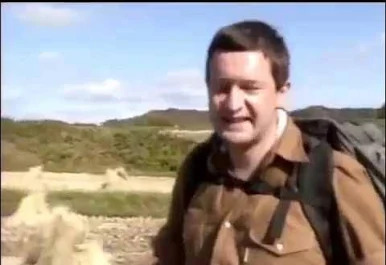
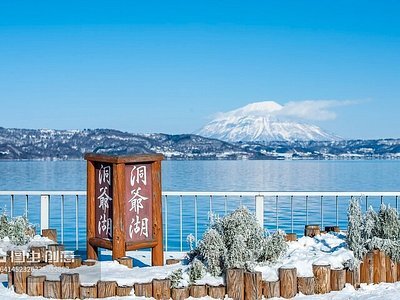
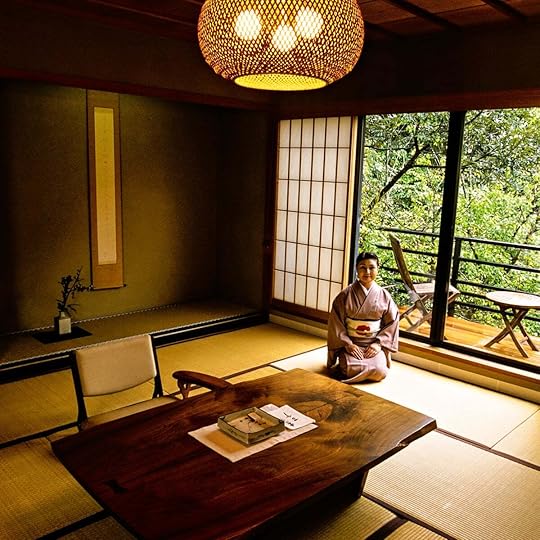
The people spoke with different accents but the same proportion were gracious & kind and the same proportion treated me like a freak. Japan had had so little contact with foreigners (in modern times only 5 generations) and it was their native inquisitiveness & not their rudeness that had got the better of them. Walk the length of Japan: what for? To hear a nation with a 2,000 year history complain of growing pains?As the author walks 3,300 kilometers, readers are treated to his reflections on intersections with people on the 3 major Japanese islands--Hokkaido, Honshu & Kyushu, as he merges Japanese culture, geography, history, the atomic devastation at Hiroshima & the haiku verses of Basho.