

What do you think?
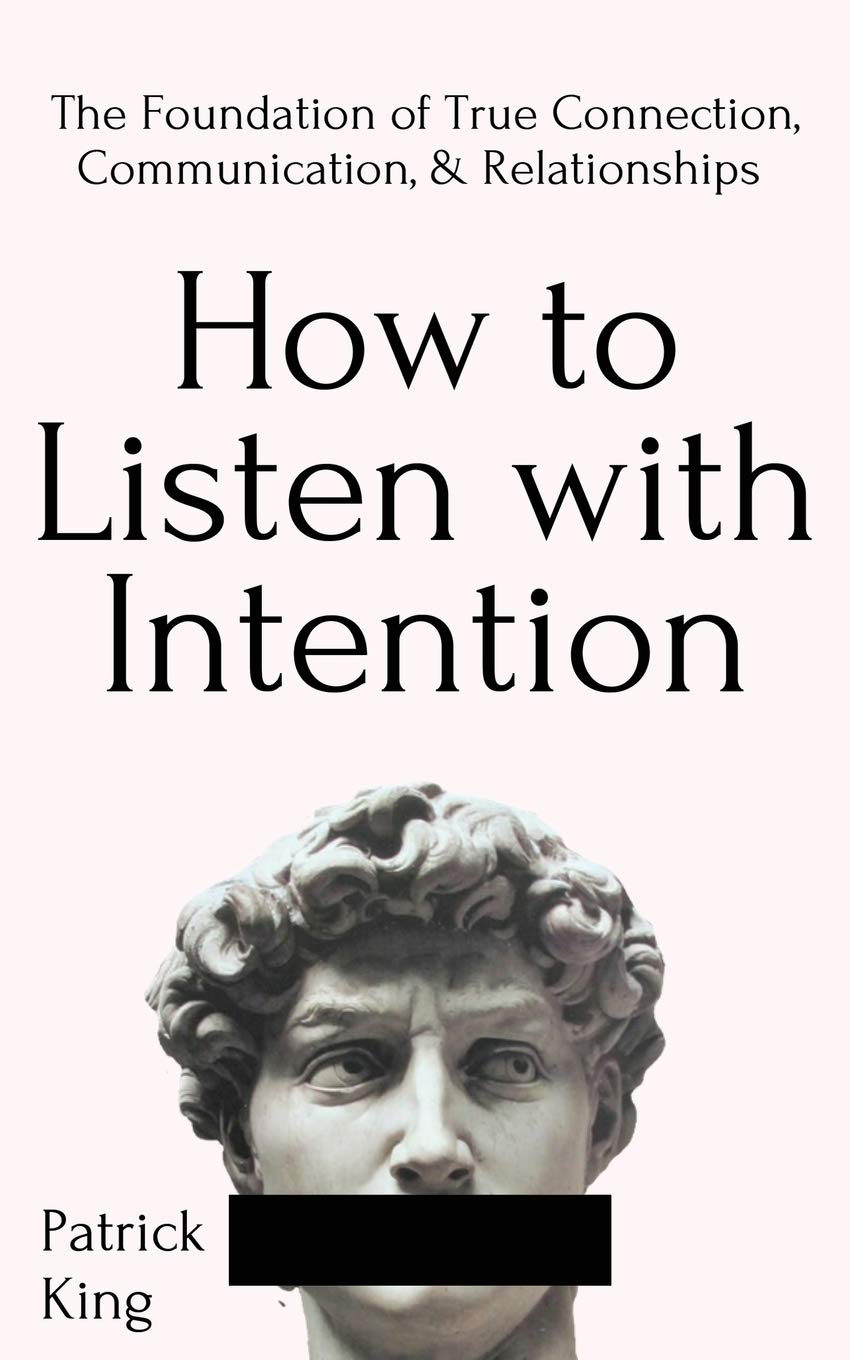
How to Listen with Intention: The Foundation of True Connection, Communication, and Relationships
Learn to connect, create rapport, develop trust, and build deep relationships.
In this day and age, the art of deep listening is a superpower. If you can make someone feel heard and important, you are on the highway to their heart. And it's not as difficult or complex as you think.
How to go from stranger to cherished friend in record time.
How to Listen with Intention is ultimately a book about relationships. A relationship must be give-and-take - are you taking more than you are giving? Are you making people feel comfortable opening up to you? Are you listening well, or unwittingly being a conversational/relationship narcissist?
It's time to ask these difficult questions and learn the skills to not only help people in times of need, but create new friendships with just about anyone -- after all, who doesn't like to be heard ?
Increase your emotional intelligence and people analyzing skills.
Patrick King is an internationally bestselling author and social skills coach. His writing draws a variety of sources, from scientific research, academic experience, coaching, and real-life experience.
Understand people two levels beneath their actual words.
--The most damaging mindsets for listening. -- How we are all biologically programmed to be terrible listeners, and we have no idea about it. --The one person you should emulate for better listening. -- How listening styles, frames, and levels can help you - and how you are not even close to what you think you are. --The concept of active, reflective listening, and why it's so tough. -- Reading people, emotional intelligence, and empathy.
Become the most trusted ally and source of comfort and understanding.
In this day and age, the art of deep listening is a superpower. If you can make someone feel heard and important, you are on the highway to their heart. And it's not as difficult or complex as you think.
How to go from stranger to cherished friend in record time.
How to Listen with Intention is ultimately a book about relationships. A relationship must be give-and-take - are you taking more than you are giving? Are you making people feel comfortable opening up to you? Are you listening well, or unwittingly being a conversational/relationship narcissist?
It's time to ask these difficult questions and learn the skills to not only help people in times of need, but create new friendships with just about anyone -- after all, who doesn't like to be heard ?
Increase your emotional intelligence and people analyzing skills.
Patrick King is an internationally bestselling author and social skills coach. His writing draws a variety of sources, from scientific research, academic experience, coaching, and real-life experience.
Understand people two levels beneath their actual words.
--The most damaging mindsets for listening. -- How we are all biologically programmed to be terrible listeners, and we have no idea about it. --The one person you should emulate for better listening. -- How listening styles, frames, and levels can help you - and how you are not even close to what you think you are. --The concept of active, reflective listening, and why it's so tough. -- Reading people, emotional intelligence, and empathy.
Become the most trusted ally and source of comfort and understanding.
198 pages, Paperback
Published July 10, 2020
About the author
Patrick King
239 books361 followersPatrick King is a Social Interaction Specialist, in other words, a dating, online dating, image, and communication and social skills coach based in San Francisco, California, and has been featured on numerous national publications such as Inc.com. He’s also a #1 Amazon best-selling dating and relationships author with the most popular online dating book on the market, and writes frequently on dating, love, sex, and relationships.
He focuses on using his emotional intelligence and understanding of human interaction to break down emotional barriers, instill confidence, and equip people with the tools they need for success. No pickup artistry and no gimmicks, simply a thorough mastery of human psychology delivered with a dose of real talk, perfected and honed through three years of law school.
He focuses on using his emotional intelligence and understanding of human interaction to break down emotional barriers, instill confidence, and equip people with the tools they need for success. No pickup artistry and no gimmicks, simply a thorough mastery of human psychology delivered with a dose of real talk, perfected and honed through three years of law school.
Ratings & Reviews
Friends & Following
Create a free account to discover what your friends think of this book!
Community Reviews
Displaying 1 - 30 of 80 reviews

April 11, 2021
Okay, a few issues with this book. First - it’s written like some random e book that an online self help guru whipped up to make passive income. That was a pretty big turn off for me. Which leads into the second issue - I don’t have any reason to trust the author. I don’t know what he does besides the fact that he’s a self identified social skills coach. What does that even mean? Who gave you that title? What made you qualified enough to be THE right perspective? Not that I believe heavily in meritocracy but like this felt random. There is no science at all in the book. Not that science is king but like if you’re going to talk about human psychology, can you cite a study that helps me understand like “ahh yes okay so the brain does actually work like that” as opposed to believing anything that you could have pulled out of your behind lol. I was hoping it wouldn’t be like any random self help book but alas, it is.
The content wasn’t horrible. It’s actually helpful in a lot of ways but....this book was itching for an editor and a more rigorous revision process before hitting the printing press.
The content wasn’t horrible. It’s actually helpful in a lot of ways but....this book was itching for an editor and a more rigorous revision process before hitting the printing press.

April 13, 2024
fork found in kitchen

October 12, 2021
There have been so many times I've come home from a dinner party, or a coffee with a friend, and felt the sting of embarrassment that maybe I talked too much, didn't listen enough, or was just generally socially awkward. Though I've been told I'm a good listener, I've never felt like I listened fully enough -- especially not with my heart. My head is the stronger and louder of the two, so I'll often feel like I heard someone's words but not necessarily their feelings. And I'm learning as I get older, conversation is mainly a communication of feelings, not words.
So, I picked up this book to help me better understand the art of listening. And while this slim, e-reader type book was not well written, it had a lot of good advice about improving one's social and emotional intelligence in conversation. Here are some of the best takeaways:
1. Figure out the frame of the conversation dynamic and if you even want to enter this shared space. I've learned this the hard way with friends who had drastically different values and I thought I could get past that -- only to leave conversations feeling drained and one-sided. So before you even start trying to be a better listener, ask yourself: Do I want to be listening and getting to know this person? A lot of pain can be avoided by identifying bad matches early and moving on.
2. The first step to being a good listener is to be genuinely curious and interested in the other person, and with that curiosity, be fully present and receptive to provide the emotional space for that other person to comfortably exist and open up.
3. Avoid "shift responses", which are responses that bring the topic back to you, and aim for "support responses", with gently prods the other person into opening up more and lets them feel heard.
4. Help the other person identify/name their emotions, and give genuine validation of their feelings.
5. Be honest. It will unveil how you truly feel about what they have communicated, because the honest interaction will bring light to the underlying values being communicated. These values will either be honored or broken though the conversation -- if the latter, than remember tip #1 (you are not meant to engage with ALL people) -- if the former, then the honesty will build a foundation of trust and mutual respect.
Though the writing was subpar in this book, the advice was good enough for me to want to read another book by the author. I definitely highlighted the heck out of this book and have tried to practice some of the techniques with my husband and see how it feels. Only good things can come from becoming a better listener, so I'm confident this was worth the time to read. Four stars!
So, I picked up this book to help me better understand the art of listening. And while this slim, e-reader type book was not well written, it had a lot of good advice about improving one's social and emotional intelligence in conversation. Here are some of the best takeaways:
1. Figure out the frame of the conversation dynamic and if you even want to enter this shared space. I've learned this the hard way with friends who had drastically different values and I thought I could get past that -- only to leave conversations feeling drained and one-sided. So before you even start trying to be a better listener, ask yourself: Do I want to be listening and getting to know this person? A lot of pain can be avoided by identifying bad matches early and moving on.
2. The first step to being a good listener is to be genuinely curious and interested in the other person, and with that curiosity, be fully present and receptive to provide the emotional space for that other person to comfortably exist and open up.
3. Avoid "shift responses", which are responses that bring the topic back to you, and aim for "support responses", with gently prods the other person into opening up more and lets them feel heard.
4. Help the other person identify/name their emotions, and give genuine validation of their feelings.
5. Be honest. It will unveil how you truly feel about what they have communicated, because the honest interaction will bring light to the underlying values being communicated. These values will either be honored or broken though the conversation -- if the latter, than remember tip #1 (you are not meant to engage with ALL people) -- if the former, then the honesty will build a foundation of trust and mutual respect.
Though the writing was subpar in this book, the advice was good enough for me to want to read another book by the author. I definitely highlighted the heck out of this book and have tried to practice some of the techniques with my husband and see how it feels. Only good things can come from becoming a better listener, so I'm confident this was worth the time to read. Four stars!

January 25, 2025
good audiobook. the concept that most of us are narcissistic listeners is a hard pill to swallow but the more i’ve sat with it and focus on my listening since starting this book, i’ve found it true. and not in a way that make us bad, but more so learned traits that we have the ability to correct to better connect with others— especially those we care about

June 8, 2023
This really just could have been an article

July 29, 2022
A book that proves conversational common sense isn’t common

September 14, 2021
…The secret is to be more interested than interesting…
This book, for me, was a much needed discovery. Personally, this served as an example of how much I didn’t know—that I didn’t know.
I had so many large eye-opening experiences while reading this book, that have given me incredible insight into a better way to manage my relationships. I never realize so many different things that I commonly did on accident, or without even thinking, in casual conversation that clearly can be improved upon.
This book will single-handedly improve my relationship, my ability to communicate what I actually mean to say, and the way other people receive me.
I am so excited and grateful for the opportunity to have read this book and now apply it into my life.
“You can make more friends in two months by becoming interested in other people than you can in two years by trying to get other people interested in you.” Dale Carnige
This book, for me, was a much needed discovery. Personally, this served as an example of how much I didn’t know—that I didn’t know.
I had so many large eye-opening experiences while reading this book, that have given me incredible insight into a better way to manage my relationships. I never realize so many different things that I commonly did on accident, or without even thinking, in casual conversation that clearly can be improved upon.
This book will single-handedly improve my relationship, my ability to communicate what I actually mean to say, and the way other people receive me.
I am so excited and grateful for the opportunity to have read this book and now apply it into my life.
“You can make more friends in two months by becoming interested in other people than you can in two years by trying to get other people interested in you.” Dale Carnige
December 10, 2020
Made it halfway through the second chapter and was so annoyed I quit reading. Not well organized. The typesetting is distracting. No page numbers. Not well constructed in the binding. Getting past the structural frustrations, the organization of the content left much to be desired. It lacks focus, and the writing is in dire need of a solid edit. I do not recommend.

April 26, 2025
Definitely some good insights and reminders of how to approach listening to others. Though, the book felt repetitive at times.

November 24, 2025
Als iedereen toch ook maar een derde van dit boek zou lezen. Voor mij ook een goede reminder, al is het niet erg nieuw voor mij. Wel schrijft King echt heel veel van hetzelfde dus het is eerlijk gezegd vrij inwisselbaar voor elk ander boek dat hij heeft geschreven

June 29, 2025
I enjoyed reading this as it explains what certain people have been trying to say for a while now.
4 stars because I would have loved more neuroscience attached to it BUT it is not needed as this is plainly saying listen to others and take a step down from your ego.
Treat others the same way you want to be treated.
Listen to others as you want to be listened to.
4 stars because I would have loved more neuroscience attached to it BUT it is not needed as this is plainly saying listen to others and take a step down from your ego.
Treat others the same way you want to be treated.
Listen to others as you want to be listened to.
December 17, 2022
This book changed the way I think about listening in a dramatic way. One particularly poignant point in King's book is that we may think of ourselves as talk show hosts, in order to move a conversation and activate an high level of enthusiasm and listening skill. I found this passage to be particularly helpful. Deep, true listening is a difficult thing to achieve, and to maintain, as a flawed human. I will keep this book nearby and continue to refer to it and refresh many of its points. Highly recommend!

September 22, 2023
Needed better organization and citations. Numerous paragraphs in the Kindle edition were missing from the audiobook which made it difficult to follow along.
Some good information about the thinking, feeling, doing frames of communication. Emphasized the essential element of Empathy. Not the worst content wise just needed some revision. Good entry point on the subject.
Some good information about the thinking, feeling, doing frames of communication. Emphasized the essential element of Empathy. Not the worst content wise just needed some revision. Good entry point on the subject.
September 9, 2021
Some good information and perspectives, but mostly common sense. It reads like a free online article or e-book and the formatting of the book is awful (lots of typos, no page numbers, random huge chunks of space between words).
Just skip this one.
Just skip this one.

May 10, 2022
Communication is not just based on the way that I speak, it also includes how I listen. Do I listen to react or response? This was the question I asked myself before reading this book.
To the part of how I listen, author categorized 4 main orientation; people, content, action and time. Each in their own description, I can notice if I was listen to solve a problem, with my head, heart or spirit. Generally, I see myself today, more of people orientated, being able to connect better and show empathy. Though I do see when my energy is low and especially when I'm busy, I would go into time orientated or action. Of matter to time, I notice myself saying the words, "i have 10 minutes for you now". Sounds so gracious, but not at all, as it will turn people off. The conversation becomes rush, actual message not be said and thus no deep connection.
The line that best explains emphatic listening; it is listening without judgement, interruption or a need to fix other person, and with interest to simply hear and understand other's experiences.
That is of high level (from lowest to highest; ignoring, pretend listening, selective listening, attentive listening and emphatic listening) of listening possible. The examples of how a conversation can be in these levels were funny, however, I can recall self being in all different 5, though mostly today in either selective or attentive (as how author mentioned most people would be). So how do I be better in this?
With reference from author's 6 steps of validation of; be present, accurate reflection, reading behavior and guessing what they're feeling, understand their behavior in the context of their lives ,normalize or affirm their emotional reactions, radical genuineness. Working on these, I could myself improving on my listening technique.
Be curious, put my ego aside, give the stage for others to express.
To the part of how I listen, author categorized 4 main orientation; people, content, action and time. Each in their own description, I can notice if I was listen to solve a problem, with my head, heart or spirit. Generally, I see myself today, more of people orientated, being able to connect better and show empathy. Though I do see when my energy is low and especially when I'm busy, I would go into time orientated or action. Of matter to time, I notice myself saying the words, "i have 10 minutes for you now". Sounds so gracious, but not at all, as it will turn people off. The conversation becomes rush, actual message not be said and thus no deep connection.
The line that best explains emphatic listening; it is listening without judgement, interruption or a need to fix other person, and with interest to simply hear and understand other's experiences.
That is of high level (from lowest to highest; ignoring, pretend listening, selective listening, attentive listening and emphatic listening) of listening possible. The examples of how a conversation can be in these levels were funny, however, I can recall self being in all different 5, though mostly today in either selective or attentive (as how author mentioned most people would be). So how do I be better in this?
With reference from author's 6 steps of validation of; be present, accurate reflection, reading behavior and guessing what they're feeling, understand their behavior in the context of their lives ,normalize or affirm their emotional reactions, radical genuineness. Working on these, I could myself improving on my listening technique.
Be curious, put my ego aside, give the stage for others to express.

September 12, 2025
Sometimes, I question myself in the middle of a conversation: “Am I taking over this conversation, or does the other person genuinely have nothing more to say?” There have been many times when I have felt like I am talking too much. For example, in the middle of a conversation, I tell myself: “Am I oversharing or not giving enough time to the other person?”
At the beginning of my career, as a coach, I struggled with communicating with my clients during the workouts. After all, it's every coach's job to communicate with the audience in the clearest, most effective way possible.
After many years of practice, now sometimes I “feel", I talk too much or I am not listening enough. It's also an important skill for coaches to be able to "listen" to their clients.
For fitness coaches, while we are trying to make sure clients perform exercises correctly, we need to make sure we don’t overcoach. The general philosophy behind keeping instruction brief is to ensure clients don't get overwhelmed and have a positive, successful experience. Trying to fix a complex movement issue can be demotivating and make the client feel inadequate.
I picked up this book to help me learn more about listening skills. And test myself to see if I am really talking too much? The author borrows heavily from Psychologist and journalist Daniel Goleman, author of the international bestseller Emotional Intelligence.
One nice thing about the book is that it can be used by many people in many different settings. Listening skills can be used at work, at home with your partner and family, and during your conversations with friends and total strangers to win friends and influence people.
At the beginning of my career, as a coach, I struggled with communicating with my clients during the workouts. After all, it's every coach's job to communicate with the audience in the clearest, most effective way possible.
After many years of practice, now sometimes I “feel", I talk too much or I am not listening enough. It's also an important skill for coaches to be able to "listen" to their clients.
For fitness coaches, while we are trying to make sure clients perform exercises correctly, we need to make sure we don’t overcoach. The general philosophy behind keeping instruction brief is to ensure clients don't get overwhelmed and have a positive, successful experience. Trying to fix a complex movement issue can be demotivating and make the client feel inadequate.
I picked up this book to help me learn more about listening skills. And test myself to see if I am really talking too much? The author borrows heavily from Psychologist and journalist Daniel Goleman, author of the international bestseller Emotional Intelligence.
One nice thing about the book is that it can be used by many people in many different settings. Listening skills can be used at work, at home with your partner and family, and during your conversations with friends and total strangers to win friends and influence people.
“Good conversation is like a tennis match where the attention moves equally between the two parties, like a tennis ball. If someone is never able to truly put their attention on anything other than themselves, it’s like playing tennis with a person who never properly serves the ball, or never returns it once it goes over the net. A conversation suddenly turns into a monologue, soliloquy, or simply a lecture to an unwilling student.”
Don’t mind-read, don’t assume, and don’t project your own story onto others—this will not feel like empathy, it will feel like an intrusion.
In listening, you want to travel alongside people as they reach their own conclusions, rather than assuming that you are wise and all-knowing and can show them something.
...

August 2, 2026
I came to How to Listen with Intention because listening is one of those skills that seems simple until you notice how often people get it wrong, myself included. Patrick King's argument is straightforward: communication is not just about speaking clearly, it is about making the other person feel heard.
The best part of the book is the reminder that most conversations fail because we are busy preparing our response instead of actually listening. The material on empathy, asking better questions, resisting the urge to jump in and solve the problem, and paying attention to what people are really saying, all of it is practical. I found myself using several of these ideas as reminders to slow down and stay present.
My hesitation is that the book feels basic, and it could have used tighter organization and more evidence behind its claims. Some of the advice is genuinely useful, but a lot of it will already be familiar to anyone who has spent time thinking seriously about communication. At times it reads closer to a collection of coaching tips than a real examination of the subject.
Overall, I think this is a solid introductory book for someone who wants to build better listening habits. It gives you practical reminders and pushes you toward a healthier way of showing up in conversation. It is not the final word on the subject, but it is a reasonable place to start.
The best part of the book is the reminder that most conversations fail because we are busy preparing our response instead of actually listening. The material on empathy, asking better questions, resisting the urge to jump in and solve the problem, and paying attention to what people are really saying, all of it is practical. I found myself using several of these ideas as reminders to slow down and stay present.
My hesitation is that the book feels basic, and it could have used tighter organization and more evidence behind its claims. Some of the advice is genuinely useful, but a lot of it will already be familiar to anyone who has spent time thinking seriously about communication. At times it reads closer to a collection of coaching tips than a real examination of the subject.
Overall, I think this is a solid introductory book for someone who wants to build better listening habits. It gives you practical reminders and pushes you toward a healthier way of showing up in conversation. It is not the final word on the subject, but it is a reasonable place to start.

Read
July 12, 2024On the #GenerousListeningBookClub this week 📚📖 :
“How to Listen with Intention: The Foundation of True Connection, Communication, and Relationships” by international bestselling author Patrick King.
Drawing from a variety of sources, from scientific research, academic experience, coaching, and real-life experience, this book is a guide to transforming relationships through listening.
“In this day and age, the art of deep listening is a superpower. If you can make someone feel heard and important, you are on the highway to their heart. And it’s not as difficult or complex as you think.”
A few of the topics the book covers:
• The most damaging mindsets for listening.
• How we are all biologically programmed to be terrible listeners, and we have no idea about it.
• The one person you should emulate for better listening.
• How listening styles, frames, and levels can help you - and how you are not even close to what you think you are.
• The concept of active, reflective listening, and why it’s so tough.
• Reading people, emotional intelligence, and empathy.
#GenerousListening #VuslatFoundation
“How to Listen with Intention: The Foundation of True Connection, Communication, and Relationships” by international bestselling author Patrick King.
Drawing from a variety of sources, from scientific research, academic experience, coaching, and real-life experience, this book is a guide to transforming relationships through listening.
“In this day and age, the art of deep listening is a superpower. If you can make someone feel heard and important, you are on the highway to their heart. And it’s not as difficult or complex as you think.”
A few of the topics the book covers:
• The most damaging mindsets for listening.
• How we are all biologically programmed to be terrible listeners, and we have no idea about it.
• The one person you should emulate for better listening.
• How listening styles, frames, and levels can help you - and how you are not even close to what you think you are.
• The concept of active, reflective listening, and why it’s so tough.
• Reading people, emotional intelligence, and empathy.
#GenerousListening #VuslatFoundation

May 1, 2023
This book smells and looks cheap. Its font print looks uncool and the cover looks like a DIY piece. It feels like a book that I could “publish” it at a random printing shop on my own. Not many will be impressed by it, unless there is a need. I would classify this book as my first successful self help book, and that it has identified an area that I am still a work-in-progress. It was a difficult read for me because I cannot help identifying how the author has rightfully pointed out what a lousy listener I have/had been. Today, I am thankful that my partner passed this book to me, implying what a terrible listener I have been. There are a few tips given to me, but there are rather “scratch-surface”. It is a book that reminds me to listen, not problem-solve, not judge, not be worried about what to reply/respond when the other party stops talking. My worry for awkward silence, the responsibility to entertain, and my tendency to help others must stop. Sometimes, what they really need is in output, and not our input

June 22, 2026
I found How to Listen with Intention: The Foundations to be an insightful and practical read. As I went through it, I realized that I already practice many of the listening techniques the author highlights, which was both affirming and encouraging. At the same time, the book helped me see a few aspects of listening in a new light—especially the importance of being fully present and listening beyond just words.
What I appreciated most was how the author broke down listening into clear, intentional actions that can be applied in everyday conversations. It’s not just about hearing someone, but truly understanding them. This perspective made me reflect on my own habits and consider small but meaningful improvements.
Overall, this was a good read, thoughtful, easy to follow, and a helpful reminder of how powerful intentional listening can be in both personal and professional relationships. I would recommend it to anyone looking to strengthen their communication skills.
What I appreciated most was how the author broke down listening into clear, intentional actions that can be applied in everyday conversations. It’s not just about hearing someone, but truly understanding them. This perspective made me reflect on my own habits and consider small but meaningful improvements.
Overall, this was a good read, thoughtful, easy to follow, and a helpful reminder of how powerful intentional listening can be in both personal and professional relationships. I would recommend it to anyone looking to strengthen their communication skills.
February 19, 2025
Helped me understand how and why some of my interactions were successful while others were not
This book did a great job in explaining core concepts of building solid interactions with people. I would sometimes wonder why some interactions that I had with people that I had just met were extremely successful, while others were the picture of utter disaster. Well, I did not realize my listening style and frames (explained in this book) was not matching that of the person I was communicating with, when it was an unsuccessful interaction. That equates and equated to a bad conversation or an unsuccessful interaction. The book kept my attention and was entertaining while being extremely helpful. I will definitely read more from the author. 10 for 10 if you are trying to level up your experience with people, and understand people better.
This book did a great job in explaining core concepts of building solid interactions with people. I would sometimes wonder why some interactions that I had with people that I had just met were extremely successful, while others were the picture of utter disaster. Well, I did not realize my listening style and frames (explained in this book) was not matching that of the person I was communicating with, when it was an unsuccessful interaction. That equates and equated to a bad conversation or an unsuccessful interaction. The book kept my attention and was entertaining while being extremely helpful. I will definitely read more from the author. 10 for 10 if you are trying to level up your experience with people, and understand people better.

November 7, 2023
this 200 page book can be summed up by “shut up and listen”. honestly didn’t need to be this long, could have been pared down to like 30 pages.
good content, although I’m mildly convinced that this was written by a self proclaimed communication guru, because who even is this guy? the book’s presentation lowkey gives the vibes of an e-book made solely for the purpose of “passive income” (if you know what I’m getting at. you need to have the physical book to understand). I’ll be taking some pointers though considering most of my evening plans consist of reading all by my lonesome (who needs relationships though when you can be reading gut wrenching philosophy?) (I’ll answer that, probably still everyone)
good content, although I’m mildly convinced that this was written by a self proclaimed communication guru, because who even is this guy? the book’s presentation lowkey gives the vibes of an e-book made solely for the purpose of “passive income” (if you know what I’m getting at. you need to have the physical book to understand). I’ll be taking some pointers though considering most of my evening plans consist of reading all by my lonesome (who needs relationships though when you can be reading gut wrenching philosophy?) (I’ll answer that, probably still everyone)

August 28, 2025
4,5⭐
Baca di 2024
Tertarik karena judulnya yang membuatku penasaran.
Terbagi atas 5 bab di bukunya. Semua pembahasan buku ini menarik, banyak insight-insight baru tentang mendengarkan, beberapa part ada yang buatku bertanya dalam diri. Overall, buku ini dapat mudah dinikmati sampai akhir bab membuatku tercengang: Oh begini, jadinya?
Melalui buku ini, aku introspeksi kembali dan belajar dari percakapan dengan seseorang yang pernah salah-paham atau
salah satu pihak yang tidak memahami maksud dari lawan bicara.
Tapi sayangnya kurang ada referensi dari sumber lain misalnya daftar pustaka untuk penelitian/riset penulis yang mengaitkan dengan topik buku tersebut.
Baca di 2024
Tertarik karena judulnya yang membuatku penasaran.
Terbagi atas 5 bab di bukunya. Semua pembahasan buku ini menarik, banyak insight-insight baru tentang mendengarkan, beberapa part ada yang buatku bertanya dalam diri. Overall, buku ini dapat mudah dinikmati sampai akhir bab membuatku tercengang: Oh begini, jadinya?
Melalui buku ini, aku introspeksi kembali dan belajar dari percakapan dengan seseorang yang pernah salah-paham atau
salah satu pihak yang tidak memahami maksud dari lawan bicara.
Tapi sayangnya kurang ada referensi dari sumber lain misalnya daftar pustaka untuk penelitian/riset penulis yang mengaitkan dengan topik buku tersebut.

September 17, 2023
Hermosura de libro!
Hermosura de libro! I am skeptical about how much this kind of book can caught my attention. Then I find myself absolutely involved, with my heart, plenty there.
I continue discovering that these books, that preconceivedly touch our egos, try not to demonstrate that we are wrong, and showing us that the other side can be, at least, beautiful as well.
Thank u Patrick King for teaching me to be a better listening, a more empathetic person, and why not, even more interesting speaking less.
Hermosura de libro! I am skeptical about how much this kind of book can caught my attention. Then I find myself absolutely involved, with my heart, plenty there.
I continue discovering that these books, that preconceivedly touch our egos, try not to demonstrate that we are wrong, and showing us that the other side can be, at least, beautiful as well.
Thank u Patrick King for teaching me to be a better listening, a more empathetic person, and why not, even more interesting speaking less.

January 15, 2024
Kind of a weird book…. the text size, font, binding, and lack of intro, publishing information, notes, sources, etc makes the book seem oddly like a manifesto of sorts. It does provide a good amount of information that I found unique and helpful for when it comes to listening to others and being engaged in conversation, something that I am not the best at. Because the text size is so large, I was able to finish the book in less than three hours and found it was a pretty light and easy read.

May 20, 2024
A quick read with a lot of good tips and tools on how to not just be a better listener but also just a better person in general. It teaches how to slow down and be an empathetic, active listener. Easier said than done and yes exhausting but worth it. From the very beginning of the book I changed the way I interacted with others and it has made an instantaneous impact on my relationships and in turn, my life.

August 22, 2024
Short, but kind of basic. Could be good for those who have never heard of emotional intelligence or need some basic pointers on how to be a better conversationalist, but does not really go deep enough into the underlying human psychology that would lead to a more profound shift in behavior. Appreciate some of the applicable tips (e.g., act like a talk show host), but there are better books to get wiser about this.

July 18, 2025
almost my first DNF.
passages & paragraphs were so messy. structure could’ve been significantly better, cleaner, and easier to read to flow better
STILL, a lot of really great advice & questions!
but a book on communication literally communicated poorly.
gave it thought and went from a 4 to a mid 3. would’ve just reread Emotional Intelligence tbh, but still good reminders, finally glad to get it off my shelf
passages & paragraphs were so messy. structure could’ve been significantly better, cleaner, and easier to read to flow better
STILL, a lot of really great advice & questions!
but a book on communication literally communicated poorly.
gave it thought and went from a 4 to a mid 3. would’ve just reread Emotional Intelligence tbh, but still good reminders, finally glad to get it off my shelf

January 30, 2026
Elements of listening and understanding how we listen are defined with detailed elements.
A lot of new aspects for me, however it is not very well explained in practice and how to use suggested points.
The entire listening process seems utopian, who can all the time listen actively, empathetically?
After reading this book, I may be a better listener but definitely not reaching desired 5th level of listening…
A lot of new aspects for me, however it is not very well explained in practice and how to use suggested points.
The entire listening process seems utopian, who can all the time listen actively, empathetically?
After reading this book, I may be a better listener but definitely not reaching desired 5th level of listening…

June 15, 2026
Good book on the topic of the nature and structure of conversations.
It makes strong points and calls out a couple of key frameworks within a concise clear text.
My criticism (3 stars only) is that it did not have diagrams or broken out sections.
Not really as finished as I would hope for a book of this type, more of a manuscript thrown over the wall for publication.
That said, the guy is an expert in his subject.
Displaying 1 - 30 of 80 reviews