

What do you think?

Le crépuscule de Shigezo
Akiko est une femme au foyer de Kyoto. Sa vie s'écoule entre courses, cuisine et éducation de son fils adolescent. Mais l'équilibre est rompu le jour où sa belle-mère meurt brusquement. Son beau-père, Shigezo, un home autoritaire et conservateur, devient sénile. C'est sur Akiko que va reposer la lourde tâche de s'occuper de Shigezo. Alors que le vieil homme glisse vers une seconde enfance, Akiko découvrira qu'il symbolise peut-être l'amour le plus authentique, le plus désintéressé qu'elle ait jamais connu.
368 pages, Mass Market Paperback
First published January 1, 1972
About the author
Sawako Ariyoshi
128 books96 followersBorn in Wakayama City and a graduate of Tokyo Women's Christian College, Sawako Ariyoshi spent part of her childhood in Java. A prolific novelist, she dramatises significant issues in her fiction such as the suffering of the elderly, the effects of pollution on the environment, and the effects of social and political change on Japanese domestic life and values, especially on the lives of women. Her novel The Twilight Years depicts the life of a working woman who is caring for her elderly, dying father-in-law. Among Ariyoshi's other novels is The River Ki, an insightful portrait of the lives of three rural women: a mother, daughter, and granddaughter. Her novel The Doctor's Wife, a historical novel dramatising the roles of nineteenth-century Japanese women as it chronicles the experience of a pioneer doctor with breast cancer surgery, has identified her as one of the finest postwar Japanese women writers. The Doctor's Wife (1966) is considered as her best novel. Starting in 1949, Ariyoshi studied literature and theatre at the Tokyo Women's Christian College until she graduated in 1952. In 1959 she spent a year at the Sarah Lawrence College in New York. She then worked with a publishing company and also wrote for journals, joined a dance troupe, and wrote short stories and scripts for various media. She travelled extensively, getting material for her serialized novels of domestic life, mostly dealing with social issues. Recipient of a Rockefeller Foundation Fellowship in 1959, Ariyoshi had received some Japanese literary awards and was at the height of her career when she died quietly in her sleep.
See Wikipedia
See Wikipedia
Ratings & Reviews
Friends & Following
Create a free account to discover what your friends think of this book!
Community Reviews
Displaying 1 - 30 of 83 reviews

October 31, 2022
Akiko is a working wife and mother of a teenage son. Her in-laws live in a small cottage at the back of their property. When her mother-in-law suddenly dies of a stroke, Akiko becomes the sole caregiver for her cantankerous, selfish father-in-law.
The book deals with the issues of quality of life for the elderly, caregiving, and the dilemmas of women who have both career and family obligations.

MINOR SPOILERS FOLLOW BUT MAJOR ONES ARE HIDDEN
Akiko’s father-in-law has always made it known to his daughter-in-law that he doesn’t like her cooking and doesn’t like her working outside the home. They live in high-cost Tokyo and without her working how else are they going to pay for their son’s college, the mother-in-law’s funeral expenses and now the father-in-law’s medical bills?
It turns out that, unknown to her, her father-in-law has Alzheimer’s and her mother-in-law has been putting up with his bizarre behaviors while working full-time all these years. Her father-in-law is a complaining, quarrelsome tyrant who expects to be waited on hand and foot.
Apparently, in Japan, the burden of caring for elderly parents falls on the wife of the oldest son (her husband), not a biological daughter as is often the case in the US. Her husband is useless in helping his wife care for his father. He doesn’t even want to be bothered talking about the problems and options – it annoys him. I know any woman reading this book will be waiting for the moment when Akiko screams at her husband “WELL HE’S YOUR FATHER, SO WHY DON’T YOU TAKE CARE OF HIM!” Will that happen?
There are two sections where we learn a lot about Japanese customs. Akiko has no prior experience with handling funerals, so her neighbors and in-laws give her and us a primer on what to do through the several days of her mother-in-law’s funeral.
Akiko talks with a social worker about options for getting help with her father-in-law’s care. We learn a lot about the various kinds of assistance and institutions which are a lot like those in present-day USA even though this is Japan in the 1970s.
The writing is simple and straightforward. It’s amazing how modern the story seems and how similar the issues seem to those of any woman struggling with care of elderly parents in present-day US.
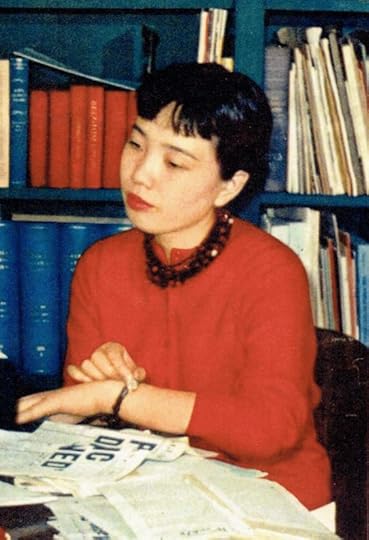
The author (1931-1984) wrote many novels, most focusing on aspects of women’s issues. I also read and reviewed her best-known book translated into English, The River Ki, which follows three generations of Japanese women as attitudes about the role of women modernize over time. Here is a link to that review:
The River Ki
Top photo of a traditional Japanese house from businessinsider.com
The author from Wikipedia
The book deals with the issues of quality of life for the elderly, caregiving, and the dilemmas of women who have both career and family obligations.
MINOR SPOILERS FOLLOW BUT MAJOR ONES ARE HIDDEN
Akiko’s father-in-law has always made it known to his daughter-in-law that he doesn’t like her cooking and doesn’t like her working outside the home. They live in high-cost Tokyo and without her working how else are they going to pay for their son’s college, the mother-in-law’s funeral expenses and now the father-in-law’s medical bills?
It turns out that, unknown to her, her father-in-law has Alzheimer’s and her mother-in-law has been putting up with his bizarre behaviors while working full-time all these years. Her father-in-law is a complaining, quarrelsome tyrant who expects to be waited on hand and foot.
Apparently, in Japan, the burden of caring for elderly parents falls on the wife of the oldest son (her husband), not a biological daughter as is often the case in the US. Her husband is useless in helping his wife care for his father. He doesn’t even want to be bothered talking about the problems and options – it annoys him. I know any woman reading this book will be waiting for the moment when Akiko screams at her husband “WELL HE’S YOUR FATHER, SO WHY DON’T YOU TAKE CARE OF HIM!” Will that happen?
There are two sections where we learn a lot about Japanese customs. Akiko has no prior experience with handling funerals, so her neighbors and in-laws give her and us a primer on what to do through the several days of her mother-in-law’s funeral.
Akiko talks with a social worker about options for getting help with her father-in-law’s care. We learn a lot about the various kinds of assistance and institutions which are a lot like those in present-day USA even though this is Japan in the 1970s.
The writing is simple and straightforward. It’s amazing how modern the story seems and how similar the issues seem to those of any woman struggling with care of elderly parents in present-day US.
The author (1931-1984) wrote many novels, most focusing on aspects of women’s issues. I also read and reviewed her best-known book translated into English, The River Ki, which follows three generations of Japanese women as attitudes about the role of women modernize over time. Here is a link to that review:
The River Ki
Top photo of a traditional Japanese house from businessinsider.com
The author from Wikipedia

April 6, 2013
Tokyo, the seventies, years of affluence and social change in Japan. Through the eyes of the working mother Akiko we are confronted with the old age-problems of dementia and senility. Ariyoshi's way of writing is very descriptive and dry, and there's a lot of factual information on dementia and social security in Japan. But don't be wrong: this is a very moving story about getting old and the hardships of women in an evolving Japanese society. Akiko has a rough time, caring for her 84-year-old father in law, she is confronted with a lack of empathy in her surrounding (especially the men are very sullen), she struggles with her own fear of getting old, but in the end she finds peace and even a kind of happiness in her caring. Beautiful.

July 11, 2017
"Don't you think a man should die the minute he retires?" says the middle-aged man in this book. Or this: "Mum, dad, don't live this long!" says the teenage son of the same man after seeing how miserable his grandpa's life is at the age of 87. These two lines struck me most and it proved that lines can be this simple and yet could mean a lot to a reader depending on the situation the reader is in.
This book, originally published in Japan in 1972, is about Japan's aging population. This happens when birth rate is lower than death rate so there are more senior citizens than financially-gaining (working) people. In the book, there is a small office where most of the workers are worried about their aging parents whom they need to support financially and/or physically.
They say that it is when we are at the age of 50's when we will most likely experience the death of our parents. I am now 52 and my mom is 82 and she now oftentimes talk about dying. My father died when I was 33 years old but that was because of cancer and not really because of old age per se. Last year, my father-in-law died at the age of 96. The character in this book, Shigezo, reminded me of him particularly the symptoms of Alzheimer's Disease that Ariyoshi referred to as senile dementia. Wikipedia states that the first case of Alzheimer's was first recorded in 1906 by Dr. Aloysius Alzheimer, a German psychiatrist and pathologist. Maybe it was lost in translation or Ariyoshi wasn't aware of Alzheimer's Disease yet.
Aging is a scary thought. However, that is part of the cycle of life. We are born to die. The minute we were born, we were already on our way to dying. Ariyoshi was spot on in her characterizations in this book especially when she said that young people are mostly self-centered: they are too young to think about going old so they are naturally unsympathetic to old people even to their parents. They are to busy building their future or as someone eloquently said during the graduation rite of my daughter in high school: "too busy growing up so they don't notice that their parents are growing old."
I think most of us parents don't want to burden our kids when we grow old. We would like to die a painless sudden death. Most of my friends also don't want to hit 90's. Me? I prefer to die in my 60's; I just want to surpass my dad who died at the age of 60. Upon retirement, I would like to have a few years to do the things that I'd like to do but no available time while working. These include writing a book or books, putting up a secondhand bookstore and possibly a cafe, turn our ancestral home in the province to a memorial library, and then bring my wife to see the Holy Land and some places in Europe (we will kiss at the foot of Eiffel Tower!) and the US and Canada to visit our relatives. Once I've done those, I guess I will die a happy man.
Read this book to help you plan on what to do in case are still alive during your twilight years. These are the years when you become helpless again like a child. I am not really looking forward to it. Most of us don't. However, Ariyoshi tried to show some beauty in reaching those years especially towards the end of the book. It's just that she wasn't able to convince me.
This book, originally published in Japan in 1972, is about Japan's aging population. This happens when birth rate is lower than death rate so there are more senior citizens than financially-gaining (working) people. In the book, there is a small office where most of the workers are worried about their aging parents whom they need to support financially and/or physically.
They say that it is when we are at the age of 50's when we will most likely experience the death of our parents. I am now 52 and my mom is 82 and she now oftentimes talk about dying. My father died when I was 33 years old but that was because of cancer and not really because of old age per se. Last year, my father-in-law died at the age of 96. The character in this book, Shigezo, reminded me of him particularly the symptoms of Alzheimer's Disease that Ariyoshi referred to as senile dementia. Wikipedia states that the first case of Alzheimer's was first recorded in 1906 by Dr. Aloysius Alzheimer, a German psychiatrist and pathologist. Maybe it was lost in translation or Ariyoshi wasn't aware of Alzheimer's Disease yet.
Aging is a scary thought. However, that is part of the cycle of life. We are born to die. The minute we were born, we were already on our way to dying. Ariyoshi was spot on in her characterizations in this book especially when she said that young people are mostly self-centered: they are too young to think about going old so they are naturally unsympathetic to old people even to their parents. They are to busy building their future or as someone eloquently said during the graduation rite of my daughter in high school: "too busy growing up so they don't notice that their parents are growing old."
I think most of us parents don't want to burden our kids when we grow old. We would like to die a painless sudden death. Most of my friends also don't want to hit 90's. Me? I prefer to die in my 60's; I just want to surpass my dad who died at the age of 60. Upon retirement, I would like to have a few years to do the things that I'd like to do but no available time while working. These include writing a book or books, putting up a secondhand bookstore and possibly a cafe, turn our ancestral home in the province to a memorial library, and then bring my wife to see the Holy Land and some places in Europe (we will kiss at the foot of Eiffel Tower!) and the US and Canada to visit our relatives. Once I've done those, I guess I will die a happy man.
Read this book to help you plan on what to do in case are still alive during your twilight years. These are the years when you become helpless again like a child. I am not really looking forward to it. Most of us don't. However, Ariyoshi tried to show some beauty in reaching those years especially towards the end of the book. It's just that she wasn't able to convince me.
January 5, 2019
Paru au Japon en 1972, le roman fut tout d’abord publié en français en 1986 sous le titre Les années de crépuscule, puis réédité en 1994. Il rejoint finalement les étagères des libraires le 18 octobre 2018, rebaptisé « Le crépuscule de Shigezo », pour l’occasion. Une chance de redécouvrir ce classique de Sawako Ariyoshi, qui mérite largement sa place parmi les chefs d’œuvre de l’auteur.
De tous temps, l’œuvre a toujours été perçue comme représentative des engagements de la « Simone de Beauvoir japonaise » : un pamphlet féministe, dans lequel « l’adoption » du vieillard vise à mettre en relief la condition de l’épouse type de l’ère Shōwa. Autrement dit, celle d’une femme réduite au rôle de servante, forcée de prendre en charge un beau-père incontinent dont son époux refuse de s’occuper, prétextant d’autres responsabilités. Bien qu’Akiko soit elle-même employée, son travail n’est pas bien sérieux aux yeux de son mari, qui continue de la voir comme une femme au foyer. Lui, à le droit au repos en tant que pilier de la famille et échappe de fait à toutes les tâches ingrates, y compris celles qui concernent ses propres parents.
Si cette thématique demeure toujours une réalité dans nombre de foyers japonais, et permet donc au livre de rester pertinent de nos jours, le renouvellement du titre apporte en revanche un nouveau niveau de lecture, beaucoup plus en adéquation avec la société nippone actuelle. En effet, tandis que les années de crépuscule pouvaient être interprétées à la fois comme la folie du vieillard, mais aussi et surtout comme la période de détresse qui affecte Akiko, le regard est désormais centré sur Shigezo. Cela permet mettre en évidence l’un des problèmes majeurs de ce pays: le vieillissement de la population. Le roman ne manquait d’ailleurs pas de se livrer à quelques prédictions à ce sujet qui se sont avérées tout à fait juste. Les « vieux » sont devenus un fardeau, qui menace le bien être des familles et constituent un problème sérieux dont il faut s’échapper coûte que coûte.
On notera également de nombreuses piques envers Tokyo, mis en opposition avec les campagnes, qui incarne le tournant moderne que prit le Japon dans la période d’après-guerre.
« Le crépuscule de Shigezo » est à mes yeux le meilleur roman de Sawako Ariyoshi. Il s’agit d’une œuvre intemporelle, d’une richesse inouïe, et aux interprétations multiples.
Le lecteur y trouve toujours autant de sens aujourd’hui qu’il y a plusieurs décennies et sa vision prophétique ne fait qu’appuyer sa pertinence. On dévore chaque page, l’une après l’autre, avec la curiosité malsaine de savoir quel malheur enfoncera encore davantage cette mère de famille, à s’emporter contre ce mari d’un égoïsme fou, à se prendre de pitié pour ce vieillard sénile. En somme, l’histoire d’une vie.
De tous temps, l’œuvre a toujours été perçue comme représentative des engagements de la « Simone de Beauvoir japonaise » : un pamphlet féministe, dans lequel « l’adoption » du vieillard vise à mettre en relief la condition de l’épouse type de l’ère Shōwa. Autrement dit, celle d’une femme réduite au rôle de servante, forcée de prendre en charge un beau-père incontinent dont son époux refuse de s’occuper, prétextant d’autres responsabilités. Bien qu’Akiko soit elle-même employée, son travail n’est pas bien sérieux aux yeux de son mari, qui continue de la voir comme une femme au foyer. Lui, à le droit au repos en tant que pilier de la famille et échappe de fait à toutes les tâches ingrates, y compris celles qui concernent ses propres parents.
Si cette thématique demeure toujours une réalité dans nombre de foyers japonais, et permet donc au livre de rester pertinent de nos jours, le renouvellement du titre apporte en revanche un nouveau niveau de lecture, beaucoup plus en adéquation avec la société nippone actuelle. En effet, tandis que les années de crépuscule pouvaient être interprétées à la fois comme la folie du vieillard, mais aussi et surtout comme la période de détresse qui affecte Akiko, le regard est désormais centré sur Shigezo. Cela permet mettre en évidence l’un des problèmes majeurs de ce pays: le vieillissement de la population. Le roman ne manquait d’ailleurs pas de se livrer à quelques prédictions à ce sujet qui se sont avérées tout à fait juste. Les « vieux » sont devenus un fardeau, qui menace le bien être des familles et constituent un problème sérieux dont il faut s’échapper coûte que coûte.
On notera également de nombreuses piques envers Tokyo, mis en opposition avec les campagnes, qui incarne le tournant moderne que prit le Japon dans la période d’après-guerre.
« Le crépuscule de Shigezo » est à mes yeux le meilleur roman de Sawako Ariyoshi. Il s’agit d’une œuvre intemporelle, d’une richesse inouïe, et aux interprétations multiples.
Le lecteur y trouve toujours autant de sens aujourd’hui qu’il y a plusieurs décennies et sa vision prophétique ne fait qu’appuyer sa pertinence. On dévore chaque page, l’une après l’autre, avec la curiosité malsaine de savoir quel malheur enfoncera encore davantage cette mère de famille, à s’emporter contre ce mari d’un égoïsme fou, à se prendre de pitié pour ce vieillard sénile. En somme, l’histoire d’une vie.

November 1, 2015
This Japanese novel was originally published in 1972, but many aspects felt very much from today. The novel follows Akiko a middle-aged wife and mother whose father-in-law becomes senile and his care falls to Akiko. So many themes here--taking care of the elderly, quality of life and indignities in aging, the sandwich generation, how care responsibility often falls on women, and the bewilderment of the system of elder care. I would be reading along in this novel and would learn a bit about Japanese culture in he 20th century only to then be struck by Akiko's story and how familiar it felt to the experience here in the US in the 21st century.
This wasn't exactly a feel-good novel. In fact, it dredged up a whole lot of feelings and made want to give my brother a hug for all he does for our mother in Southern California every day. And this book also made me re-experience that year of bewilderment and pain our family had when Mom fell ill and we had to make the decision to put her in a senior home. A piece of advice--get your parent a good geriatric attorney to help you sort everything out. I'll be visiting her here in just a few weeks. For years, I called my Mom every single day but she is at that point now where she can't call me anymore, and if I talk to her on the phone she won't stay on for long. This summer I visited I had the opportunity to sit with her for a couple of hours, and it was the first time in a long time that we seemed to have a real conversation like we did for so many years. I miss my Mom. And I take a little comfort from some scenes with Akiko that sometimes you just need to hold on to these small moments--one where she finds her father-in-law looking at a beautiful magnolia blossom or the small joy he gets from watching a bird they buy him.
This wasn't exactly a feel-good novel. In fact, it dredged up a whole lot of feelings and made want to give my brother a hug for all he does for our mother in Southern California every day. And this book also made me re-experience that year of bewilderment and pain our family had when Mom fell ill and we had to make the decision to put her in a senior home. A piece of advice--get your parent a good geriatric attorney to help you sort everything out. I'll be visiting her here in just a few weeks. For years, I called my Mom every single day but she is at that point now where she can't call me anymore, and if I talk to her on the phone she won't stay on for long. This summer I visited I had the opportunity to sit with her for a couple of hours, and it was the first time in a long time that we seemed to have a real conversation like we did for so many years. I miss my Mom. And I take a little comfort from some scenes with Akiko that sometimes you just need to hold on to these small moments--one where she finds her father-in-law looking at a beautiful magnolia blossom or the small joy he gets from watching a bird they buy him.

April 16, 2025
Une belle découverte, un roman profond et réaliste sur le devenir des personnes âgées dans le Japon des année '70, écrit par une femme née en 1931. Le roman parut en français pour la première fois en 1986.
Akiko, environ 45 ans, a trouvé son équilibre familial. Elle fait partie de la petite catégorie de femmes ouvertes à la modernité. Ainsi, elle travaille, malgré la mauvaise image sociale que cela provoque encore, mange régulièrement des produits surgelés et des plats simples, accepte que son adolescent se nourrisse de nouilles, est fournie en appareils électro ménagers, et, en accord avec son mari, a délogé ses beaux-parents du nid familial pour les installer dans un petit pavillon construit dans leur jardin. En compensation, elle gère des doubles journées travail/ménage/cuisine, avec un dimanche "à l'occidentale" où on se repose des tâches de la semaine.
Lorsque sa belle-mère meurt inopinément, la petite famille s'aperçoit que son beau-père, "grand-père", Shizego, est complètement sénile et incapable d'encore se gérer seul - fait probablement caché et compensé par sa défunte épouse pour ne pas déranger et par honte.
Or, ce type de "problème gênant" est traditionnellement réservé à la maitresse de maison. Par conséquent, tout naturellement et sans que son mari (le fils du concerné) ne soulève un sourci, Akiko est contrainte de gérer le vieil homme de 84 ans fugueur, constamment affamé, et de moins en moins capable de gérer ses besoins, au sens propre comme figuré.
Akiko est prise entre son besoin d'indépendance (elle voudrait conserver son travail émancipateur), son sens du devoir (c'est son rôle traditionnel), ses sentiments (son beau-père est, de l'avis de tous, un homme désagréable, jamais content, qui ne la jamais acceptée dans la famille), son dégoût (la décrépitude du corps, les odeurs, la saleté, les excréments ...) et ses limites physiques et mentales (l'épuisement la guette).
Bien vite, elle ne suffit plus à la tâche, et des solutions sont recherchées. Mais le fils et la fille de Shigezo ne s'impliquent pas auprès de leur père, les institutions n'ont pas de solutions pour une personne de type alzheimer, les centres de loisirs pour senior exigent une personne âgée en forme. Les quelques maisons de repos ont des exigences et une longue liste d'attente. L'angoisse l'étreint, étreint le lecteur aussi. Seuls des solutions en mode bouts de ficelles aident un peu, mais jamais dans la sérénité. Heureusement, Akiko est équilibrée et dévouée par humanisme et presque en rébellion contre ce système qui ne prévoit rien.
J'ai trouvé ce livre étonnant, intelligent, très observateur, et encore d'actualité.
L'auteure fait le tour de la vieillesse dans ce qu'elle a de plus apeurant, de tout ce qu'on ne veut pas devenir "quand on sera vieux" : troubles neurologiques, ne plus reconnaitre son enfant, incontinence, dépendance physique, sans nous épargner. Elle évoque les vieillards vivant selon la tradition japonaise, au foyer familial d'un enfant, avec les travers que cela peut comporter lorsque cette tradition impose le devoir d'avoir un parent grabataire à la maison (ressentiment, médication excessive, négligence, maltraitance, à l'abri des regards). Mais aussi d'autres personnes âgées tenues en vie à l'hôpital durant des années, comme une plante, ruinant les familles devant se partager le coût de ces soins.
Elle parle aussi du sentiment d'inutilité, de l'infantilisation des retraités, des institutions qui ne suivent pas les changements de société, du poids des traditions sur les femmes japonaises souvent sacrifiées. Et de la peur de vieillir, de perdre ses capacités.
Enfin, malgré tout ce côté qui peut paraître pesant, la plume japonaise de Sawako Ariyoshi apporte quelques éléments de légèreté et beauté, laquelle est partout : dans la première neige qui tombe, la fleur qui s'ouvre, la capacité à marcher droit devant soi sans s'arrêter, ou celle de décortiquer une pince de crabe avec des baguettes.
J'ai aussi souri parce que Shigezo a beaucoup de points communs avec feue ma grand-mère qui fugua beaucoup, s'obséda sur ses dents, réclama à manger sans cesse, était devenu gentille une fois son esprit perdu. Et étala chaque matin ses excréments sur les murs de l'institution spécialisée qui en pris soin (infinie gratitude)
Les romans sur la vieillesse qui ne présentent pas un archétype de grand-mère ou de grand-père sympathique (je pense à La douce empoisonneuse de Paasilinna par ex. ou ceux de Barbara Constantine, Grimaldi ou Anne-Gaëlle Huon) sont rares. J'avoue préférer les textes plus difficiles mais plus vrais.
Akiko, environ 45 ans, a trouvé son équilibre familial. Elle fait partie de la petite catégorie de femmes ouvertes à la modernité. Ainsi, elle travaille, malgré la mauvaise image sociale que cela provoque encore, mange régulièrement des produits surgelés et des plats simples, accepte que son adolescent se nourrisse de nouilles, est fournie en appareils électro ménagers, et, en accord avec son mari, a délogé ses beaux-parents du nid familial pour les installer dans un petit pavillon construit dans leur jardin. En compensation, elle gère des doubles journées travail/ménage/cuisine, avec un dimanche "à l'occidentale" où on se repose des tâches de la semaine.
Lorsque sa belle-mère meurt inopinément, la petite famille s'aperçoit que son beau-père, "grand-père", Shizego, est complètement sénile et incapable d'encore se gérer seul - fait probablement caché et compensé par sa défunte épouse pour ne pas déranger et par honte.
Or, ce type de "problème gênant" est traditionnellement réservé à la maitresse de maison. Par conséquent, tout naturellement et sans que son mari (le fils du concerné) ne soulève un sourci, Akiko est contrainte de gérer le vieil homme de 84 ans fugueur, constamment affamé, et de moins en moins capable de gérer ses besoins, au sens propre comme figuré.
Akiko est prise entre son besoin d'indépendance (elle voudrait conserver son travail émancipateur), son sens du devoir (c'est son rôle traditionnel), ses sentiments (son beau-père est, de l'avis de tous, un homme désagréable, jamais content, qui ne la jamais acceptée dans la famille), son dégoût (la décrépitude du corps, les odeurs, la saleté, les excréments ...) et ses limites physiques et mentales (l'épuisement la guette).
Bien vite, elle ne suffit plus à la tâche, et des solutions sont recherchées. Mais le fils et la fille de Shigezo ne s'impliquent pas auprès de leur père, les institutions n'ont pas de solutions pour une personne de type alzheimer, les centres de loisirs pour senior exigent une personne âgée en forme. Les quelques maisons de repos ont des exigences et une longue liste d'attente. L'angoisse l'étreint, étreint le lecteur aussi. Seuls des solutions en mode bouts de ficelles aident un peu, mais jamais dans la sérénité. Heureusement, Akiko est équilibrée et dévouée par humanisme et presque en rébellion contre ce système qui ne prévoit rien.
J'ai trouvé ce livre étonnant, intelligent, très observateur, et encore d'actualité.
L'auteure fait le tour de la vieillesse dans ce qu'elle a de plus apeurant, de tout ce qu'on ne veut pas devenir "quand on sera vieux" : troubles neurologiques, ne plus reconnaitre son enfant, incontinence, dépendance physique, sans nous épargner. Elle évoque les vieillards vivant selon la tradition japonaise, au foyer familial d'un enfant, avec les travers que cela peut comporter lorsque cette tradition impose le devoir d'avoir un parent grabataire à la maison (ressentiment, médication excessive, négligence, maltraitance, à l'abri des regards). Mais aussi d'autres personnes âgées tenues en vie à l'hôpital durant des années, comme une plante, ruinant les familles devant se partager le coût de ces soins.
Elle parle aussi du sentiment d'inutilité, de l'infantilisation des retraités, des institutions qui ne suivent pas les changements de société, du poids des traditions sur les femmes japonaises souvent sacrifiées. Et de la peur de vieillir, de perdre ses capacités.
Enfin, malgré tout ce côté qui peut paraître pesant, la plume japonaise de Sawako Ariyoshi apporte quelques éléments de légèreté et beauté, laquelle est partout : dans la première neige qui tombe, la fleur qui s'ouvre, la capacité à marcher droit devant soi sans s'arrêter, ou celle de décortiquer une pince de crabe avec des baguettes.
J'ai aussi souri parce que Shigezo a beaucoup de points communs avec feue ma grand-mère qui fugua beaucoup, s'obséda sur ses dents, réclama à manger sans cesse, était devenu gentille une fois son esprit perdu. Et étala chaque matin ses excréments sur les murs de l'institution spécialisée qui en pris soin (infinie gratitude)
Les romans sur la vieillesse qui ne présentent pas un archétype de grand-mère ou de grand-père sympathique (je pense à La douce empoisonneuse de Paasilinna par ex. ou ceux de Barbara Constantine, Grimaldi ou Anne-Gaëlle Huon) sont rares. J'avoue préférer les textes plus difficiles mais plus vrais.

September 26, 2010
At the first half of this book I kept on screaming silently: "It's Alzheimer's disease! It's Alzheimer's, you dimwits!" But never did the word Alzheimer's crop up in the entirety of the novel. The terms the doctor used, when he finally got to examine the old man, were "senile dementia" and "senile melancholia." Well, good enough.
Unless you die of a disease or an accident, this could be your story. Husband and wife with a teenage son studying for the university entrance examinations (a big deal for young people in Japan). In a cottage adjoining their house live the husband's aging parents. The grandmother suddenly dies after a beauty trip to her favorite parlor. Then her 84-year-old husband, the grandfather, begins to act strangely. From there his "senile dementia" progressed, putting the family into so much pressure. Lots of ruminations about getting old, of its effects upon the old people's family, death and dying, etc. At one point, in exasperation, the teenage son tells her parents to please don't live as long as his grandfather.
No remarkable prose (or maybe something was lost in the translation because this was originally in Japanese), but I was not surprised why this novel became a bestseller, especially in Japan with an aging population (over one million copies sold within a year of its publication in 1972). Sawako Ariyoshi was 41 when this book was published. She died in 1984, only age 53, perhaps happy that she did not undergo the ordeals of old age she had written about vividly in her book.
Unless you die of a disease or an accident, this could be your story. Husband and wife with a teenage son studying for the university entrance examinations (a big deal for young people in Japan). In a cottage adjoining their house live the husband's aging parents. The grandmother suddenly dies after a beauty trip to her favorite parlor. Then her 84-year-old husband, the grandfather, begins to act strangely. From there his "senile dementia" progressed, putting the family into so much pressure. Lots of ruminations about getting old, of its effects upon the old people's family, death and dying, etc. At one point, in exasperation, the teenage son tells her parents to please don't live as long as his grandfather.
No remarkable prose (or maybe something was lost in the translation because this was originally in Japanese), but I was not surprised why this novel became a bestseller, especially in Japan with an aging population (over one million copies sold within a year of its publication in 1972). Sawako Ariyoshi was 41 when this book was published. She died in 1984, only age 53, perhaps happy that she did not undergo the ordeals of old age she had written about vividly in her book.
October 1, 2024
C’est d’un rageant de constater la réalité de la vie des femmes japonaise à l’époque de cette histoire ! La société japonaise ne mettait vraiment rien en place pour aider les familles, tout retombait comme une évidence sur les femmes. Ce n’est pas du tout surprenant, mais c’est fou cette apathie totale de la part des maris et de l’entourage des femmes, proche comme éloigné.
Je mets 3 étoiles parce que l’écriture n’avait rien de particulier selon moi, ou en tout cas elle ne m’a pas ému•e outre mesure, mais c’était une lecture intéressante !
Je mets 3 étoiles parce que l’écriture n’avait rien de particulier selon moi, ou en tout cas elle ne m’a pas ému•e outre mesure, mais c’était une lecture intéressante !

February 24, 2018
Growing old should not be someone else's problem.
This line seems to summarize the mood of this book pretty well. The Twilight Years addresses several different questions of life, including that of the quality of life and how much effort should be given to keep someone alive. Ariyoshi also digs into the gender roles and the expectations on young women--all with the mid-century, post-war Japan as the backdrop.
This book is truly a disturbing and unsettling look into the end of life and what awaits each of us. As a young woman in my mid-twenties, death is something I don't want to bother myself with too much, and neither did the protagonist, Akiko. However, she frequently comes to the realization that "we, too, will grow old one day." With that in consideration, it is important to treat our elderly as we hope to be treated by our descendants. Although Akiko fights this truth and desperately tries to find a new solution so that she may continue to live the life she has grown accustomed to, she learns to move with life and make the sacrifices necessary to make her father-in-law live the end of his life comfortably and happily.
I wouldn't say that I loved this book, but I'm glad I read it. I always love learning as much as I can about my Japanese heritage and the changes that they went through in the 20th century, plus the other issues addressed here were both thought-provoking and uncomfortable--qualities in a book that are so important.
I think the biggest takeaway I had was the hopelessness that those who do not know Jesus have, especially in regards to death. I don't believe that death and the afterlife should be the reason one believes in God, but it reminded me of the importance of hope and how much it changes my own self-preservation impulses so that I am not so desperate for perfection and painlessness. I am also not afraid of becoming burdensome or losing myself because my pride is not something to hold on to with white knuckles.
All in all, it's a decent book that forces you to think about the thoughts you try to avoid.
This line seems to summarize the mood of this book pretty well. The Twilight Years addresses several different questions of life, including that of the quality of life and how much effort should be given to keep someone alive. Ariyoshi also digs into the gender roles and the expectations on young women--all with the mid-century, post-war Japan as the backdrop.
This book is truly a disturbing and unsettling look into the end of life and what awaits each of us. As a young woman in my mid-twenties, death is something I don't want to bother myself with too much, and neither did the protagonist, Akiko. However, she frequently comes to the realization that "we, too, will grow old one day." With that in consideration, it is important to treat our elderly as we hope to be treated by our descendants. Although Akiko fights this truth and desperately tries to find a new solution so that she may continue to live the life she has grown accustomed to, she learns to move with life and make the sacrifices necessary to make her father-in-law live the end of his life comfortably and happily.
I wouldn't say that I loved this book, but I'm glad I read it. I always love learning as much as I can about my Japanese heritage and the changes that they went through in the 20th century, plus the other issues addressed here were both thought-provoking and uncomfortable--qualities in a book that are so important.
I think the biggest takeaway I had was the hopelessness that those who do not know Jesus have, especially in regards to death. I don't believe that death and the afterlife should be the reason one believes in God, but it reminded me of the importance of hope and how much it changes my own self-preservation impulses so that I am not so desperate for perfection and painlessness. I am also not afraid of becoming burdensome or losing myself because my pride is not something to hold on to with white knuckles.
All in all, it's a decent book that forces you to think about the thoughts you try to avoid.

October 20, 2014
A decent, humourous, and feces-filled journey into the world of caregiving of older relatives. For those unaccustomed to Japanese culture, there may be certain aspects of the interactions between characters that may seem "odd." This may pertain to the context-driven aspects of Japanese culture. This aspect of things makes the protagonist's journey even more bewildering to herself as she navigates the details of healthcare, social welfare, familial interaction, and relationships with her surrounding neighbors. Despite the "context-driven" aspect of Japanese culture, the protagonist finds herself stumbling through navigating the vagaries of caregiving, while trying to maintain her livelihood and household the midst of all the craziness of dealing with a dementia-ridden elderly man.
One of the more interesting things about this "context-driven" aspect of society is how the most humourous parts of the book happen when characters come out and speak their minds directly, whether it is the decaying Father of the family, or if it is the grandson preparing for college examinations.
There are other more "scandalous" aspects of the novel, in terms of how often people admit to harboring the understandable sentiments of anger and frustration at having to care for the elderly. As in "Please don't get old." or "Just die already, I'm going crazy."
I think at one point someone mentions how often older men would go up to the mountain to fetch wood, while older women would go the river to do laundry. My eyes popped out at this, since this may relate to the distinct possibility that these older men and women left home to go to those places to commit suicide. I believe that this custom is called "Ubasete," but the particular portion of the novel that speaks of this gives indication this may have been something the elderly did on their own accord, without specific societal prompting.
A prescient, culturally foreshadowing text. The people are as real as they come.
One of the more interesting things about this "context-driven" aspect of society is how the most humourous parts of the book happen when characters come out and speak their minds directly, whether it is the decaying Father of the family, or if it is the grandson preparing for college examinations.
There are other more "scandalous" aspects of the novel, in terms of how often people admit to harboring the understandable sentiments of anger and frustration at having to care for the elderly. As in "Please don't get old." or "Just die already, I'm going crazy."
I think at one point someone mentions how often older men would go up to the mountain to fetch wood, while older women would go the river to do laundry. My eyes popped out at this, since this may relate to the distinct possibility that these older men and women left home to go to those places to commit suicide. I believe that this custom is called "Ubasete," but the particular portion of the novel that speaks of this gives indication this may have been something the elderly did on their own accord, without specific societal prompting.
A prescient, culturally foreshadowing text. The people are as real as they come.

February 4, 2013
In "Twilight Years", Sawako Ariyoshi mesmerizes with detail. The reader is forced to confront the mundane, the bizarre, and the often appalling aspects of growing old, and empathizes with the family who must care for "Grandfather" as his physical and mental condition continue to deteriorate. We sympathize especially with the wife, Akiko, who seems close to losing her own sanity at several points, realizing her frustration and despair as she comes to understand that the societal system in place is not equipped to deal with the steadily rising number of elderly who cannot live independently. If the father-in-law who spent decades tormenting her mercilessly is to survive, it must be through her own efforts. The crux of the novel is her journey to redemption through sacrifice, and until the final pages, the reader wonders which whether Akiko and her family, whose daily life had been so neatly mapped out, will themselves survive the chaos that descends when caring for Grandfather becomes their communal responsibility.
To a non-Japanese reader, this book may seem hopelessly outdated and far-fetched at times, but to those who have lived in a Japanese extended family for any amount of time, the details ring true. Ariyoshi-san's novel was first published in 1972, but with the steadily declining birthrate in recent years, the issues it raises bear re-examining. Will society be able to shoulder the burden of yet more and more "Grandfathers", especially those without family or reliable networks?
Approach this book cautiously, and be prepared to face the inevitability of your own death. Yet if the subject matter is dark, Akiko's struggle is uplifting; readers who persevere till the end will be uplifted as well. An excellent and thought-provoking read.
To a non-Japanese reader, this book may seem hopelessly outdated and far-fetched at times, but to those who have lived in a Japanese extended family for any amount of time, the details ring true. Ariyoshi-san's novel was first published in 1972, but with the steadily declining birthrate in recent years, the issues it raises bear re-examining. Will society be able to shoulder the burden of yet more and more "Grandfathers", especially those without family or reliable networks?
Approach this book cautiously, and be prepared to face the inevitability of your own death. Yet if the subject matter is dark, Akiko's struggle is uplifting; readers who persevere till the end will be uplifted as well. An excellent and thought-provoking read.

February 13, 2019
Une histoire à la fois belle et révoltante - oui, la vieillesse est un naufrage, oui, c'est sur l'entourage que cela retombe, oui, les femmes (et surtout les femmes japonaises en 1970) ne sont pas sorties d'affaire - mais qui trouve le moyen de mettre en lumière des moments de grâce, et le glissement de la protagoniste de la répugnance à un amour quasi-maternel.
J'ai acheté ce roman parce que j'adore son autrice, mais je craignais de ne pas accrocher plus que cela. J'ai eu tort : l'écriture d'Ariyoshi Sawako m'a tout de suite happée, et sa réflexion sur la place des femmes dans la société japonaise, et en particulier des belles-filles, m'a beaucoup parlé.
J'ai acheté ce roman parce que j'adore son autrice, mais je craignais de ne pas accrocher plus que cela. J'ai eu tort : l'écriture d'Ariyoshi Sawako m'a tout de suite happée, et sa réflexion sur la place des femmes dans la société japonaise, et en particulier des belles-filles, m'a beaucoup parlé.

February 29, 2016
Moving depiction of the life of a working woman who is acting as caretaker for her elderly, dying father-in-law. When Akiko's senile father-in-law is rejected by community services, the responsibility for his care automatically devolves upon her, increasing a domestic and employment workload which she already finds hard to cope with. Ariyoshi correctly anticipated the problems that Japan's rapidly aging society would cause. The book is both funny and heart-warming.

October 27, 2018
Quel beau livre ! Bien sûr, c'est "dur" à lire car ça nous renvoie à notre propre avancement sur le chemin de la vieillesse, et ça ne plaira pas à tout le monde.
Je craignais un peu que le texte soit vieilli (la publication originale date de 1972) mais non, cela pourrait tout aussi bien être aujourd'hui.
Et comme toujours, un délice de se plonger dans la culture japonaise.
Vivement recommandé.
Je craignais un peu que le texte soit vieilli (la publication originale date de 1972) mais non, cela pourrait tout aussi bien être aujourd'hui.
Et comme toujours, un délice de se plonger dans la culture japonaise.
Vivement recommandé.

March 7, 2017
Important, honest, and a little dark:
Full Review:
https://ianjoshyateswriting.blogspot....
Full Review:
https://ianjoshyateswriting.blogspot....

December 1, 2021
An interesting, sad, poignant, short novel about old age and aged care in Japan in the 1960s and early 1970s. When the wife of an old man dies, the son and daughter in law quickly come to the realisation that the old man, Shigezo, needs full time care and attention. They become aware that Sigezo has senile dementia. Shigezo cannot recognise Nobutoshi, his son and comes to be fully dependent on the daughter in law, Akiko. Akiko and Nobutoshi both work full time. They have one teenage son. Fortunately they live next to the cottage that Shigezo lives in. Akiko takes on the full responsibility of looking after Shigezo. Nobutoshi does nothing!
Akiko learns a lot of the type of care available to the aged in Japan.
This book was first published in Japan in 1972.
Akiko learns a lot of the type of care available to the aged in Japan.
This book was first published in Japan in 1972.

February 26, 2024
Hyper fluide et agréable à lire, après l’histoire tourne essentiellement autour de la vieillesse : c’est très deep et ça renforce mon envie de vieillir avec un esprit et un corps qui tiennent la route.
Moralité : je vais me mettre à faire du sport pour pas être alitée à 60 ans (faux mais je vais être moins tranquille en pensant à la vieillesse maintenant alors merci pour cette lecture je suppose)
Moralité : je vais me mettre à faire du sport pour pas être alitée à 60 ans (faux mais je vais être moins tranquille en pensant à la vieillesse maintenant alors merci pour cette lecture je suppose)
September 7, 2021
Le crépuscule de Shigezo, narre le parcours difficile d’une famille modeste devant prendre soin d’un parent atteint de démence. Sacrifices, charge mentale, épuisement, honte, angoisse face à sa propre vieillesse, voilà quelques thèmes abordés dans ce récit à la fois cru et délicat. Beau et tragique, comme la vie humaine, résolument universel.

April 28, 2023
Swako Airyoshi's novel " The Twilight Years" takes a look at aging and how women, in particular, are left to care for their elderly relatives. While it is set in Japan (and certainly is a reflection of Japanese culture,) the issues it raises universal issues that can be identified with by other cultures as well.
Akiko, the protagonist, is tasked with caring for her elderly father-in-law, who has dementia and navigating the complex system of care available (and not available for him.) I didn't feel like I had a lot of emotional investment in the book but I did find it an interesting look at Japanese everyday life.
Akiko, the protagonist, is tasked with caring for her elderly father-in-law, who has dementia and navigating the complex system of care available (and not available for him.) I didn't feel like I had a lot of emotional investment in the book but I did find it an interesting look at Japanese everyday life.

November 18, 2009
Sawako Ariyoshi. The Twilight Years. Great Britain: Peter Owen Publishers, 1984.
I returned to this author as I did with Blackburn. The first and only other book I read of Ariyoshi’s was her more famous book, The Doctor’s Wife (March 1993, pg 6 of my Book Journal). Of course, also like Blackburn’s novel, it was long out of print and I found it on-line too through Alibris. The Twilight Years was translated poorly into English, but I still liked reading it.
The Doctor’s Wife was a story about a troublesome mother-in-law and the long-suffering daughter-in-law. The Twilight Years described the relationship of a dislikeable father-in-law and the daughter-in-law, the wife of the eldest son. The story begins with the death of the mother-in-law, whom the entire family loves and admires, in part, because she somehow endures the hypochondriacal, unpleasant, and psychologically abusive husband. Once the mother-in-law dies, the father-in-law descends into deep senility and the wife of the son must care for the old man.
Akiko, the daughter-in-law, works outside of the home and this is very difficult. She struggles between the expectations of being a modern Japanese woman and the deep expectations of being a traditional Japanese woman who does everything for family. Her husband works long hours and then goes drinking almost every night. Akiko must maintain the home and do all the chores as well as work her job at a law office.
The medical care for the father-in-law falls to her too. It’s very graphic – wiping his excrement; bathing him; one gross thing after another, including having to sleep next to him so he doesn’t wander away at night. She must go to work with little sleep and then come home to take care of things again – shopping, making dinner, cleaning him. It’s really depressing. Akiko cobbles together different ways to have someone watch him while she is at work. At times, I could barely stand to read it.
The husband agonizes about his mortality and that he may become his father, which isn’t much help to his wife. He can’t stand to touch his father so all is left to her and sometimes, minor things, to their teenage son.
The story contemplates old age – terrifying – and what makes a good death. Her mother-in-law died a good death – healthy till the end (in fact, she died right after having her hair done), no burden to anyone Pg. 41. She compared it to her own mother’s long illness and how it upset everyone and exhausted them.
Right after reading this book, I had two people – the accountant and Destry’s wife – tell me about their parent’s long battle with senility, ending with caring for their “walking dead” parent with all the nasty caretaking chores – diapers, bathing. I hope neither of my parents have to endure this and I certainly hope that I don’t live so long that my children have to witness this abominable way of existing.
I returned to this author as I did with Blackburn. The first and only other book I read of Ariyoshi’s was her more famous book, The Doctor’s Wife (March 1993, pg 6 of my Book Journal). Of course, also like Blackburn’s novel, it was long out of print and I found it on-line too through Alibris. The Twilight Years was translated poorly into English, but I still liked reading it.
The Doctor’s Wife was a story about a troublesome mother-in-law and the long-suffering daughter-in-law. The Twilight Years described the relationship of a dislikeable father-in-law and the daughter-in-law, the wife of the eldest son. The story begins with the death of the mother-in-law, whom the entire family loves and admires, in part, because she somehow endures the hypochondriacal, unpleasant, and psychologically abusive husband. Once the mother-in-law dies, the father-in-law descends into deep senility and the wife of the son must care for the old man.
Akiko, the daughter-in-law, works outside of the home and this is very difficult. She struggles between the expectations of being a modern Japanese woman and the deep expectations of being a traditional Japanese woman who does everything for family. Her husband works long hours and then goes drinking almost every night. Akiko must maintain the home and do all the chores as well as work her job at a law office.
The medical care for the father-in-law falls to her too. It’s very graphic – wiping his excrement; bathing him; one gross thing after another, including having to sleep next to him so he doesn’t wander away at night. She must go to work with little sleep and then come home to take care of things again – shopping, making dinner, cleaning him. It’s really depressing. Akiko cobbles together different ways to have someone watch him while she is at work. At times, I could barely stand to read it.
The husband agonizes about his mortality and that he may become his father, which isn’t much help to his wife. He can’t stand to touch his father so all is left to her and sometimes, minor things, to their teenage son.
The story contemplates old age – terrifying – and what makes a good death. Her mother-in-law died a good death – healthy till the end (in fact, she died right after having her hair done), no burden to anyone Pg. 41. She compared it to her own mother’s long illness and how it upset everyone and exhausted them.
Right after reading this book, I had two people – the accountant and Destry’s wife – tell me about their parent’s long battle with senility, ending with caring for their “walking dead” parent with all the nasty caretaking chores – diapers, bathing. I hope neither of my parents have to endure this and I certainly hope that I don’t live so long that my children have to witness this abominable way of existing.

October 30, 2021
Avant de commencer, on se dit qu'on a peut-être eu tort d'acheter ce roman qui décrit comment une mère de famille active, déjà bien occupée, se retrouve, après le décès brutal de sa belle-mère, à devoir prendre soin de son beau-père sénile ; on regrette de n'avoir pas choisi un autre roman de cette romancière féministe , la "Simone de Beauvoir japonaise", peut-être plus ample et plus historique, comme "les dames de Kimoto"... et puis on ouvre le livre, l'héroïne sort d'un magasin sous la pluie, et on est embarqués : la beauté japonaise nichée dans les détails les plus insignifiants, le mélange fascinants d'éléments connus (le fils ado qui mange comme quatre, le parent âgé) et de composantes exotiques (la nourriture, les règles de politesse, les rituels). Le roman décrit en effet, en n'omettant pas les détails les plus rebutants, la dégradation de l'état de Shizego, et tout ce qui peut l'accompagner : l'aggravation des symptômes, les soucis matériels lors d'un décès qui font que le chagrin passe au second plan, le sentiment qu'on ne va pas y arriver, la solitude, les solutions inattendues, les moments de colère, mais aussi la rencontre avec d'autres personnes, le bonheur qu'il y a à faire de son mieux y compris pour une personne qui ne s'en rend pas compte, la confrontation à la perspective de son propre vieillissement, un nouveau regard sur la société... Le roman, splendidement écrit, saisit la société japonaise des années 70 à un moment clé (le père a connu la guerre et a des flashbacks des camps de prisonniers et dans le même temps, ses jeunes collègues ne veulent plus venir travailler le samedi après-midi). Ce n'est pas démoralisant du tout, bien au contraire. A la fin, on a envie de le relire, tant est puissante l'impression que l'on a raté quelque chose dans cet enchevêtrement de dimensions subtiles.

December 28, 2010
Akiko's life is busy. This Japanese woman works full time outside of the home and cares for her husband, her high school son and her in laws who live in a small cottage adjacent to her house. But her life really gets crazy when her mother-in-law suddenly dies of a heart attack. Now Akiko takes on the task of preparing meals, laundry and daily chores for her father-in-law, Shigezo. What quickly becomes apparent after her mother-in-law's death is that Shigezo suffers from dementia and not only is prone to wandering the streets but also needs help dressing and daily hygiene. Akiko struggles with the conflict of maintaining her role as a modern Japanese working woman and the traditional expectations of keeping home for her family and in-laws.
This story hit very close to home for me. My parents are elderly and finding care for them is not only a logistics nightmare, but a subliminal source of guilt. Shouldn't I take on the role of dutiful daughter and care for them? I could empathize with Akiko's life that becomes an endless day as a caregiver. But the biggest gem for me was how Akiko finally comes to terms in her relationship with her father-in-law. Beautiful story and very touching.
This story hit very close to home for me. My parents are elderly and finding care for them is not only a logistics nightmare, but a subliminal source of guilt. Shouldn't I take on the role of dutiful daughter and care for them? I could empathize with Akiko's life that becomes an endless day as a caregiver. But the biggest gem for me was how Akiko finally comes to terms in her relationship with her father-in-law. Beautiful story and very touching.

February 4, 2016
An interesting glimpse into both the world of the traditional Japanese wife (because Akiko, the main character, does not live up to the standard) and the problem of aging in a society that is defined almost entirely by the work done by the male head of household. Akiko's mother-in-law drops dead unexpectedly, leaving her to care for her senile father-in-law while still working a full-time job and waiting on her husband and teenage son hand and foot. While the husband and son are described as being forced to contribute much more to the running of the household than is common (by occasionally getting their own food or staying at home with Grandpa while she does the grocery shopping), the burden falls largely on her and she struggles to balance her duties as a daughter-in-law with being a person in her own right. I kind of felt like the part of the thread about Akiko just vanished at some point and it became all about the care of the father-in-law and the concerns of a rapidly aging population with health problems that the infrastructure of the country was not prepared to cope with instead.

October 9, 2013
I was really impressed with this story of a middle-aged Japanese woman coping with a career as well as looking after her husband and son. Her life takes a sudden turn for the worse when her mother-in-law dies and she finds herself responsible for her father-in-law who is suffering from senile dementia. Ariyoshi spares us no details and this makes for some unpleasant reading but all is dealt with with a down to earth practicality in which our protaganist tries to make the best of a bad situation. It seems to me to prophetic as it discusses both society's and the state's attitude to the increasing life expectancy in 60's Japan. The effects on family members both from a practical physical point of view as well as the emotional toll are explored to the full. I found it to be an excellent discussion of the topic even though some episodes one would rather not have to face up to.

August 26, 2013
I happened to stumble upon this book by chance, and am very happy I decided to pick up the book and read it. It surprised me to be so much of a page turner. I think the storyline between Akiko, whose life has turned upside down because she has to take care of her father-in-law Shigezo as he enters his final stage of life is a reality that happens and will happen to all of us. This book gave me a different perspective of the elderly and how in society we all are in general so disrespectful to our elders. I didn't think I'd like this book as much as I did, but I am grateful for the insight it has given me. I would like to pick up another Ariyoshi book in the future.
June 6, 2012
Sawako Ariyoshi is probably best known in the west for her historical novels The River Ki and The Doctor’s Wife. Although I enjoyed both of these titles, The Twilight Years (1972) has been my favorite. The Twilight Years deals with the role of the working woman in Japan and ageism. Not only an interesting leisure read, but also provides a glimpse into social issues that still exist today in Japan.

June 10, 2015
This is the simple tale of a modern Tokyo woman dealing with her father-in-law's senility. Without being trite or treacly or 'life-affirming,' it meditates deeply on aging and how this process that affects us all can eventually affect all those around us. Ariyoshi is Japan's most popular female writer, and I can see why -- her novels are immensely readable and give us a different perspective on things in a society still very much dominated by men.
August 14, 2010
Excellent,the author addresses the issue of aging in a modern society. The main character is a working wife and mother of one. Culturally, the reader learns about family structure, shopping, meal preparation etc and also family relationships, death, wakes and funerals and nursing homes. I enjoy books about aging and I enjoyed reading this book about aging in Japan.
September 25, 2011
My mom recommended this to me and I'm glad because it doesn't sound like riveting reading material. But it is - this book is so well written. I could not put it down, though the story is not what you would think of as a page turner. I read it in one day. It put me in touch with a different side of my humanity.

Did Not Finish
March 2, 2019Delicate book that I'm quitting half-way through because it's SAD. There's DEATH. There's AMNESIA. And the middle-aged couple is always feeling frustrated by the husband's old amnesic father that they have to take care of. A part of me understands that frustration, but there's simply not enough love and affection for me to go on.
Displaying 1 - 30 of 83 reviews