

What do you think?

The Sun Chronicles #1
Unconquerable Sun
First in a galactic-scale, gender-swapped space opera trilogy inspired by the life of Alexander the Great.'An entertaining shoot-'em-up, replete with epic starship battles, court intrigue and Machiavellian betrayals' Guardian It has been eight centuries since the beacon system failed, sundering the heavens. Rising from the ashes of the collapse, cultures have fought, system-by-system, for control of the few remaining beacons. The Republic of Chaonia is one such polity. Surrounded by the Yele League and the vast Phene Empire, they have had to fight for their existence. After decades of conflict, Queen-Marshal Eirene has brought the Yele to heel.Now it is time to deal with the Empire. Princess Sun, daughter and heir, has come of age.In her first command, she drove a Phene garrison from the beacons of Na Iri – an impressive feat. But growing up in the shadow of her mother – a ruler both revered and feared – has been no easy task. While Sun may imagine that her victorious command will bring further opportunity to prove herself, it will in fact place her on the wrong side of court politics. There are those who would like to see Sun removed as heir, or better yet, dead. To survive, the princess must rely on her wits and her biggest rival, her secret lover, and a dangerous prisoner of war.
528 pages, Paperback
First published July 7, 2020
About the author
Kate Elliott
108 books2,989 followersAs a child in rural Oregon, Kate Elliott made up stories because she longed to escape to a world of lurid adventure fiction. She now writes fantasy, steampunk, and science fiction, often with a romantic edge. She currently lives in Hawaii, where she paddles outrigger canoes and spoils her schnauzer.
Ratings & Reviews
Friends & Following
Create a free account to discover what your friends think of this book!
Community Reviews
Displaying 1 - 30 of 586 reviews

May 6, 2020
ARC provided by the publishers—Tor Books & Head of Zeus—in exchange for an honest review.
It’s quite outrageous that it took me this long to finally read Kate Elliott’s book for the very first time.
I’ve heard many good things about Kate Elliott’s books. Black Wolves, Crossroads, Spiritwalker, and recently Crown of Stars (despite this being the oldest out of the series I mentioned) are series that I’ve seen occasionally in social media. But for whatever reasons, I just haven’t gotten around to them. Then Unconquerable Sun, the first book in The Sun Chronicles, appeared, and I decided to read this one first before finalizing my decision to read Elliott's backlog of books. I knew pretty much nothing about this book other than that it’s been continuously advertised as Gender-swapped Alexander the Great on an interstellar scale, and it ended up being a wonderful book that surprised me in many ways.
Princess Sun grew up behind the shadow of her mother, Eirene. This is a difficult task for Sun because Eirene, the legendary queen-marshal, has accumulated tons of achievements in her life. Eirene has expelled invaders, and most importantly, she has built Chaonia into an incredible republic. It is not an easy task for Princess Sun to live up to her insanely high expectations, things are made worse when noble houses schemes to have Sun removed from her position as an heir to Eirene. Sun has to fight off these threats to her life by relying on her wit, charisma, and companions that consists of her biggest rival, secret lover, and a dangerous prisoner of war from Gatoi.
Upon reading the first few chapters of Unconquerable Sun, I honestly thought that this novel wouldn’t work for me. I really wouldn’t call this book an easy read; Elliott won’t hold your hands, it’s up to the readers themselves to divulge the meaning behind each name and terminologies through the contexts and narratives provided, and there was a LOT to take in. Do note that I’m not too knowledgeable on the story of Alexander the Great; I don’t know how that affects my enjoyment. Plus, I’m also much more well-versed in an epic fantasy than space opera; names and terminologies tend to be much easier for me to learn in epic fantasy, so this situation might not apply to you. I eventually became used to the in-world names and terms, and when the story exploded in the quarter mark of the novel, the actions never let up from there, and the rest of the book was filled with events I found myself entertained in.
Unconquerable Sun is very heavy on its action sequences. Excluding the first quarter of the book, everything else was non-stop actions with almost no breather in-between. From deceptions, deadly politics, close-quarter combat, and large-scale space war, this novel has everything a military space-opera enthusiast loves to read. The constant exposure to battles and wars with tons of names/terms to remember did hinder the pacing of the book for me at times. Thankfully, the characters really pulled through for me. Sun is a well-written character; her determination and strength to win are inspiring. That being said, although Sun is the titular character, I did find myself feeling more invested in the other POV characters: Persephone Lee and Zizou. The chemistry between Sun and her Companions were the definite key points of the book to me. I love reading all of them trying their best to cooperate and overcome their differences despite each of them coming from a different background, and I found their banter with each other utterly enjoyable to read.
Considering that this is the first time I read anything by Elliott, I can’t judge whether her prose has improved from her past books or not, but I love the choices of words she implemented into her prose. Elliott also uses a storytelling device that’s different than the standard. Sun’s and Apama’s POV chapters are written in the third-person past tense; Persephone Lee’s POV chapters are written in the first-person present tense; Zizou’s POV chapters are written in the third-person present tense. This is quite a rare combination of narration choices to encounter in a single book for me, and although I didn’t see the necessity of doing it, I found the actual reading experience itself refreshing and engaging. As I mentioned earlier, the POV chapters in this book that utilizes present tense ended up being my favorite chapters to read compared to the one that uses past tense—the one I’m much more familiar with. The most important question to ask about these is whether they’re well-written or not, and I have to say that they were. Also, this is purely coincidental, but somehow the previous upcoming book I just finished—The Bone Shard Daughter by Andrea Stewart—reading uses a similar kind of switches in POV.
Unconquerable Sun may be a bit challenging to get into at first, but once you’re in the 25% section of the book, you will most likely find that persevering through the difficult sections worthwhile. Great diverse characters, massive in scope, complex and richly detailed world-building, Unconquerable Sun is a must-read for military sci-fi/space-opera readers. I definitely look forward to reading more of Kate Elliott’s backlog now while I wait for the next book in the series. I still don’t know whether I’ll read Crown of Stars or Black Wolves next; I was thinking of getting the entire Crown of Stars series in paperback (the cover arts are gorgeous) to read, but then I found out that each book will cost me around $22-30 each. In total, that means I have to spend at least $150 to get the entire set; this is way too overpriced for a mass market paperback collection for me. I might end up going the Kindle route for Crown of Stars eventually or maybe—despite the discontinued state of the series—read Black Wolves, which I already own now, first instead.
Official release date: 7th July 2020 (US) & 1st October 2020 (UK)
You can pre-order the book from: Amazon | Book Depository (Free shipping)
The quotes in this review were taken from an ARC and are subject to change upon publication.
You can find this and the rest of my reviews at Novel Notions
Special thanks to my Patrons on Patreon for giving me extra support towards my passion for reading and reviewing!
My Patrons: Alfred, Devin, Hamad, Joie, Mike, Miracle, Nicholas.
It’s quite outrageous that it took me this long to finally read Kate Elliott’s book for the very first time.
I’ve heard many good things about Kate Elliott’s books. Black Wolves, Crossroads, Spiritwalker, and recently Crown of Stars (despite this being the oldest out of the series I mentioned) are series that I’ve seen occasionally in social media. But for whatever reasons, I just haven’t gotten around to them. Then Unconquerable Sun, the first book in The Sun Chronicles, appeared, and I decided to read this one first before finalizing my decision to read Elliott's backlog of books. I knew pretty much nothing about this book other than that it’s been continuously advertised as Gender-swapped Alexander the Great on an interstellar scale, and it ended up being a wonderful book that surprised me in many ways.
“Rule of Sun, Rule One. Never show weakness because the moment we show weakness, we will die.”
Princess Sun grew up behind the shadow of her mother, Eirene. This is a difficult task for Sun because Eirene, the legendary queen-marshal, has accumulated tons of achievements in her life. Eirene has expelled invaders, and most importantly, she has built Chaonia into an incredible republic. It is not an easy task for Princess Sun to live up to her insanely high expectations, things are made worse when noble houses schemes to have Sun removed from her position as an heir to Eirene. Sun has to fight off these threats to her life by relying on her wit, charisma, and companions that consists of her biggest rival, secret lover, and a dangerous prisoner of war from Gatoi.
“What my family wants harmed, I will. Even if Sun is a bitch.”
Upon reading the first few chapters of Unconquerable Sun, I honestly thought that this novel wouldn’t work for me. I really wouldn’t call this book an easy read; Elliott won’t hold your hands, it’s up to the readers themselves to divulge the meaning behind each name and terminologies through the contexts and narratives provided, and there was a LOT to take in. Do note that I’m not too knowledgeable on the story of Alexander the Great; I don’t know how that affects my enjoyment. Plus, I’m also much more well-versed in an epic fantasy than space opera; names and terminologies tend to be much easier for me to learn in epic fantasy, so this situation might not apply to you. I eventually became used to the in-world names and terms, and when the story exploded in the quarter mark of the novel, the actions never let up from there, and the rest of the book was filled with events I found myself entertained in.
“What does honor mean if it is just a word used as a currency in trade?”
Unconquerable Sun is very heavy on its action sequences. Excluding the first quarter of the book, everything else was non-stop actions with almost no breather in-between. From deceptions, deadly politics, close-quarter combat, and large-scale space war, this novel has everything a military space-opera enthusiast loves to read. The constant exposure to battles and wars with tons of names/terms to remember did hinder the pacing of the book for me at times. Thankfully, the characters really pulled through for me. Sun is a well-written character; her determination and strength to win are inspiring. That being said, although Sun is the titular character, I did find myself feeling more invested in the other POV characters: Persephone Lee and Zizou. The chemistry between Sun and her Companions were the definite key points of the book to me. I love reading all of them trying their best to cooperate and overcome their differences despite each of them coming from a different background, and I found their banter with each other utterly enjoyable to read.
“Holding on to my grudge isn’t worth it. In this world we can’t afford to lose the companions who have our backs. Everyone makes mistakes; everyone succumbs to pressures, many of which are out of their control.”
Considering that this is the first time I read anything by Elliott, I can’t judge whether her prose has improved from her past books or not, but I love the choices of words she implemented into her prose. Elliott also uses a storytelling device that’s different than the standard. Sun’s and Apama’s POV chapters are written in the third-person past tense; Persephone Lee’s POV chapters are written in the first-person present tense; Zizou’s POV chapters are written in the third-person present tense. This is quite a rare combination of narration choices to encounter in a single book for me, and although I didn’t see the necessity of doing it, I found the actual reading experience itself refreshing and engaging. As I mentioned earlier, the POV chapters in this book that utilizes present tense ended up being my favorite chapters to read compared to the one that uses past tense—the one I’m much more familiar with. The most important question to ask about these is whether they’re well-written or not, and I have to say that they were. Also, this is purely coincidental, but somehow the previous upcoming book I just finished—The Bone Shard Daughter by Andrea Stewart—reading uses a similar kind of switches in POV.
“Don’t diminish your accomplishments, but don’t boast of them either. The evidence of your deeds is the only trophy you need.”
Unconquerable Sun may be a bit challenging to get into at first, but once you’re in the 25% section of the book, you will most likely find that persevering through the difficult sections worthwhile. Great diverse characters, massive in scope, complex and richly detailed world-building, Unconquerable Sun is a must-read for military sci-fi/space-opera readers. I definitely look forward to reading more of Kate Elliott’s backlog now while I wait for the next book in the series. I still don’t know whether I’ll read Crown of Stars or Black Wolves next; I was thinking of getting the entire Crown of Stars series in paperback (the cover arts are gorgeous) to read, but then I found out that each book will cost me around $22-30 each. In total, that means I have to spend at least $150 to get the entire set; this is way too overpriced for a mass market paperback collection for me. I might end up going the Kindle route for Crown of Stars eventually or maybe—despite the discontinued state of the series—read Black Wolves, which I already own now, first instead.
Official release date: 7th July 2020 (US) & 1st October 2020 (UK)
You can pre-order the book from: Amazon | Book Depository (Free shipping)
The quotes in this review were taken from an ARC and are subject to change upon publication.
You can find this and the rest of my reviews at Novel Notions
Special thanks to my Patrons on Patreon for giving me extra support towards my passion for reading and reviewing!
My Patrons: Alfred, Devin, Hamad, Joie, Mike, Miracle, Nicholas.

June 2, 2020
Unconquerable Sun hooked me on the premise of a genderbent Alexander the Great. And with further research, Kate Elliot confirmed that it was sapphic. Amd while the sapphic elements were there, they took the backseat to a character who one, isn’t the Alexander the Great equivalency, Sun, and two, is a complete mess of a bi/pansexual stereotype. While the plot kept me reading, the characters, the worldbuilding, and the clunky writing really made me wish that I hadn’t. But sometimes you persevere so others don’t have to.
The world was a mash of cultures, but I kept seeing Asian elements in the worldbuilding. It has the Asian-vague that I see from a lot of white authors, where elements from Korean, Chinese, and Japanese cultures are plucked without context and mashed together - like when they go to a ramen shop and smell the scent of fried rice. There were also just randomly space dinosaurs. I don’t know why that bothered me so much, but it did.
The book was fast-paced with plenty of action and the political intrigue was engaging, but it felt like Kate Elliot was trying to put out a character driven novel, which didn’t work for me because all of the characters fell flat. I felt very removed from Sun and her companions because of the writing style.
Princess Sun is not the protagonist we are promised from the description. Her parts of the story are told in third person past tense - and that isn’t what I have the problem with. I like third person POVs, in fact, I prefer them over first person. The problem comes in when at 15% of the way into the book, a new, first person POV character is introduced. It was at this point that we met Persephone Lee - a series of walking stereotypes and an extremely annoying character.
Persephone is unnecessarily catty. Before she has even met or talked to Princess Sun once, she is already calling her a bitch. This felt so unnecessary and really set me off. It’s not the swearing that I have a problem with. It is the need for there to be superficial conflict between female characters when there is nothing to base that conflict off of - it screams of internalized misogyny. I hate the concept that women have to hate each other for no reason. Persephone also had a lot of other prejudices - which are only partially addressed in the book.
Persephone doesn’t feel like a real person, ever. Everything she thinks is incredibly melodramatic, she falls in insta-love with every hot person that she sees, she was somehow so incredibly unaware of anything having to do with strategy or military or fighting even though she had just spent the last several years at a military academy??? I was frustrated every moment I had to read her POV because her character wasn’t as interesting or as competent as Princess Sun, and she honestly felt unnecessary to the plot.
Also, can someone please explain why you would call a book a genderswapped Alexander the Great in space when the stand-in for Alexander the Great (Princess Sun) isn’t even the POV character????
And finally, on to what bothered me the most. This sapphic elements of this book took a back seat to a heterosexual romance based around a character who was a walking bisexual stereotype. Princess Sun and Hetty are in a secret relationship, which somehow doesn’t lend itself to any interesting drama or conflict, that is mentioned here and there, but isn’t anything significant. Instead, we are faced with Persephone’s instant lust for a man who tries to kill her. This isn’t unprecedented - Persephone immediately lusts after any hot person in her vicinity. She herself even says “I’m all about physical infatuation.” It’s a frustrating and tired stereotype that every bisexual could live without.
I was disappointed that any sapphic elements were overwhelmed by the budding relationship between Persephone and Zizou (and Zizou’s budding erection - I’m still grossed out that I had to read about “the changing contours of his body” when they were making out).
If you, like me, were planning to pick up Unconquerable Sun because you are looking for a sapphic space opera, save yourself the trouble - instead, look out for queer authors like Arkaday Martine and Melissa Scott. This book might be better suited to a different audience.
The world was a mash of cultures, but I kept seeing Asian elements in the worldbuilding. It has the Asian-vague that I see from a lot of white authors, where elements from Korean, Chinese, and Japanese cultures are plucked without context and mashed together - like when they go to a ramen shop and smell the scent of fried rice. There were also just randomly space dinosaurs. I don’t know why that bothered me so much, but it did.
The book was fast-paced with plenty of action and the political intrigue was engaging, but it felt like Kate Elliot was trying to put out a character driven novel, which didn’t work for me because all of the characters fell flat. I felt very removed from Sun and her companions because of the writing style.
Princess Sun is not the protagonist we are promised from the description. Her parts of the story are told in third person past tense - and that isn’t what I have the problem with. I like third person POVs, in fact, I prefer them over first person. The problem comes in when at 15% of the way into the book, a new, first person POV character is introduced. It was at this point that we met Persephone Lee - a series of walking stereotypes and an extremely annoying character.
Persephone is unnecessarily catty. Before she has even met or talked to Princess Sun once, she is already calling her a bitch. This felt so unnecessary and really set me off. It’s not the swearing that I have a problem with. It is the need for there to be superficial conflict between female characters when there is nothing to base that conflict off of - it screams of internalized misogyny. I hate the concept that women have to hate each other for no reason. Persephone also had a lot of other prejudices - which are only partially addressed in the book.
Persephone doesn’t feel like a real person, ever. Everything she thinks is incredibly melodramatic, she falls in insta-love with every hot person that she sees, she was somehow so incredibly unaware of anything having to do with strategy or military or fighting even though she had just spent the last several years at a military academy??? I was frustrated every moment I had to read her POV because her character wasn’t as interesting or as competent as Princess Sun, and she honestly felt unnecessary to the plot.
Also, can someone please explain why you would call a book a genderswapped Alexander the Great in space when the stand-in for Alexander the Great (Princess Sun) isn’t even the POV character????
And finally, on to what bothered me the most. This sapphic elements of this book took a back seat to a heterosexual romance based around a character who was a walking bisexual stereotype. Princess Sun and Hetty are in a secret relationship, which somehow doesn’t lend itself to any interesting drama or conflict, that is mentioned here and there, but isn’t anything significant. Instead, we are faced with Persephone’s instant lust for a man who tries to kill her. This isn’t unprecedented - Persephone immediately lusts after any hot person in her vicinity. She herself even says “I’m all about physical infatuation.” It’s a frustrating and tired stereotype that every bisexual could live without.
I was disappointed that any sapphic elements were overwhelmed by the budding relationship between Persephone and Zizou (and Zizou’s budding erection - I’m still grossed out that I had to read about “the changing contours of his body” when they were making out).
If you, like me, were planning to pick up Unconquerable Sun because you are looking for a sapphic space opera, save yourself the trouble - instead, look out for queer authors like Arkaday Martine and Melissa Scott. This book might be better suited to a different audience.

July 14, 2020
Check out my interview with Kate Elliott!: https://youtube.com/live/XTJCtbXetBE?...
2023 Reread: This is such an underrated book! Really enjoyed this reread and looking forward to book 2.
Actual Rating: 4.5 stars
If you like epic sci-fi with political intrigue, an interesting cast of characters, and plenty of action, then I would definitely recommend checking out Unconquerable Sun. This is pitched as a gender-flipped Alexander the Great, and halfway through the book I did a little reading on his life. It's interesting to see how this takes key events and characters from real history and puts them in a completely different setting.
Princess Sun wants nothing more than her mother's approval, but Eirene is not only a ruler, but a lauded military mind who is sparing with her praise. The world is complex and you are thrown right in, expected to just figure it out. And if you pay attention, you will. Sun's father is from a different race and her mother has multiple consorts. There are a number of elite families, from which are drawn the members of Sun's inner circle. Court intrigue and political agendas abound, along with military clashes with the Phene Empire. I won't say too much about the plot, but it is both intricate and action-packed. After a slightly slower stop, it feels nearly non-stop right up to the end. In fact, I might have preferred a little less action (hence the not quite 5 star rating), but I'm sure others will feel differently.
The relationships among Sun's retinue are fascinating, and how they interplay with social and cultural rules. There are a number of casually queer characters in the book. Eirene has both male and female consorts, Sun has a (frowned upon) romantic relationship with one of the women in her circle, and Persephone (another perspective character) is interested in both men and women. There are other interesting touches, like a sort of reality TV competition type thing, but more complicated and with futuristic technology. I like that this thinks through the role of celebrity in a future world. We see the plight of refugees and the ways that seemingly good policies can be used in harmful ways to the most vulnerable.
There's a lot more, but suffice to say I really enjoyed my time with this book and definitely plan to continue on in the series. It's one that I could see re-reading in the future and taking more away from it after having a better grasp on the world. I received an advance copy of this book for review via NetGalley. All opinions are my own.
2023 Reread: This is such an underrated book! Really enjoyed this reread and looking forward to book 2.
Actual Rating: 4.5 stars
If you like epic sci-fi with political intrigue, an interesting cast of characters, and plenty of action, then I would definitely recommend checking out Unconquerable Sun. This is pitched as a gender-flipped Alexander the Great, and halfway through the book I did a little reading on his life. It's interesting to see how this takes key events and characters from real history and puts them in a completely different setting.
Princess Sun wants nothing more than her mother's approval, but Eirene is not only a ruler, but a lauded military mind who is sparing with her praise. The world is complex and you are thrown right in, expected to just figure it out. And if you pay attention, you will. Sun's father is from a different race and her mother has multiple consorts. There are a number of elite families, from which are drawn the members of Sun's inner circle. Court intrigue and political agendas abound, along with military clashes with the Phene Empire. I won't say too much about the plot, but it is both intricate and action-packed. After a slightly slower stop, it feels nearly non-stop right up to the end. In fact, I might have preferred a little less action (hence the not quite 5 star rating), but I'm sure others will feel differently.
The relationships among Sun's retinue are fascinating, and how they interplay with social and cultural rules. There are a number of casually queer characters in the book. Eirene has both male and female consorts, Sun has a (frowned upon) romantic relationship with one of the women in her circle, and Persephone (another perspective character) is interested in both men and women. There are other interesting touches, like a sort of reality TV competition type thing, but more complicated and with futuristic technology. I like that this thinks through the role of celebrity in a future world. We see the plight of refugees and the ways that seemingly good policies can be used in harmful ways to the most vulnerable.
There's a lot more, but suffice to say I really enjoyed my time with this book and definitely plan to continue on in the series. It's one that I could see re-reading in the future and taking more away from it after having a better grasp on the world. I received an advance copy of this book for review via NetGalley. All opinions are my own.

Want to Read
February 27, 2019if yall gon write genderbend alex the great yall better write genderbend hepaestion too 👀👀👀

February 22, 2019
Well it appears TOR heard me because WTF is that cover?

Actual review
Well...wasn't everything I was hoping for. I found myself pretty bored for the last half of the book.

October 16, 2020
I've heard this referred to as "gender-bending Alexander the Great in space" and that might be true. Court intrigue, warring families and factions that control vast planetary systems, budding romances and older political romances, characters who struggle between destiny and desire; military conquest and quantum space travel. I also had to look up some words for this one, like oleaginous.
In a discussion in the Sword and Laser group, I mentioned that in some ways this could be in the same universe as The Expanse, but a much broader swatch of the universe. The Expanse really does stick pretty close to "home" but in this era, they have the tech figured out in ways that figure in to the story. But even if it were in a similar universe, the storytelling is a completely different style.
In a discussion in the Sword and Laser group, I mentioned that in some ways this could be in the same universe as The Expanse, but a much broader swatch of the universe. The Expanse really does stick pretty close to "home" but in this era, they have the tech figured out in ways that figure in to the story. But even if it were in a similar universe, the storytelling is a completely different style.

November 20, 2020
I thought I'd kept some notes on this one before I abandoned it, not quite halfway in. If I did, I can't find them. The novel isn't "real" SF space-opera, but rather Star Trek™-like furniture for a succession battle over who will be the next Emperor/Empress of everything. It's pretty well-written, but I lost interest after awhile. It sat on the shelf until my library copy came due, and I'm writing this note just to say: it wasn't for me. The advertised "Gender-swapped Alexander the Great" business wasn't obvious to me. And I'd read the 2-star reviews before you take it on, if I were you.
Mind, this is a minority opinion, so you may love the thing. But I didn't, and life is too short to read books I don't care for. So I don't any more, once I figure that out.
Mind, this is a minority opinion, so you may love the thing. But I didn't, and life is too short to read books I don't care for. So I don't any more, once I figure that out.

Read
September 23, 2022Ripped through this so fast when it first came out that I wanted to wait to make a semi-coherent review, then time and pandemic stuff stretched days into months, and as usual, all I retained were a few vivid images. But I got an ARC from NetGalley of the second book, sooo...time to reread the first book, as this is a series--as one would expect from Kate Elliott--not to be plunging into in the middle.
The story actually plunges the reader in medias res from the gitgo. It takes about 150 pages to get the gigantic cast lined up, and the patented Elliott fascinating, complicated world more or less in mind. First thing I noticed, though all the hype trumpeted "Gender-swapped Alexander the Great in SPAAAACE!" the world-building drew less on Greek and Persian elements than it did Asian.
This second read reminded me once again of a roller coaster ride, how at first there is the slow ascent to the top of the first big hill. It's slow, but you know the tip-over and acceleration is going to come. Pow! Then maybe a slowdown to catch your breath. Only in this book, there is no slowdown. It's breakneck crazy pacing from the moment the car begins the drop, and doesn't brake until the last page.
The climax reveals some surprises, setting us up for book two. I'd say that the ending has enough resolution not to feel like one of those cliff-hangers that leave the reader unsatisfied. This time I knew who survived and who didn't, so I was able to savor the skillful resolution of one question at the same time another mystery is ignited, as the main action draws to a close...well, a respite. Leaving me quite eager for the next book.
Also on this read, I kept finding that Persephone's first person segments skewed the protagonist energy more toward her than toward Princess Sun, who is our gender-bent Alexander. The other first person POV was more of a grace note, and the third person segments, from various POVs, skillfully lay the action down so that we're not jerked back in time continually, the way third-person limited sometimes does, but I found myself wishing that Elliott had opted for an omniscient narrator, a voice that really lends itself to big stories with huge casts. Omni can get up close and personal as well as pull back to the gods-eye view.
I also wondered if the fans of Alexander the Great and Hephaeston would be satisfied, as this story focused far more on the conquering-the-world aspect of "Alexander"'s life, rather than dealing with the same-gender romance. I'm okay with that. Mary Renault gave us a more than satisfactory angsty twentieth-century Gay Romance in her Alexander books. We don't get inside Sun that much--she's too busy forming herself into an arrow and shooting for the sun, in effect, a forceful catalyst that reminded me of Alexander's meteoric career. And maybe that's okay, because if this series has to end the way Alexander's relatively short life does, I'd like to care about other characters who might survive. I don't like tragic endings, especially when I've invested a lot of time in a story. (Looking at you, Nirvana in Fire.)
Speaking of, the Asian elements. Since I'm no scholar in Asian studies, I'll only note that I'm not sure how far in the future this story is set. I guess I'd expected more of a substrate of Confucianism, twined with Daoism, in the cultural design. Confucianism is such a strong element of Chinese history, culture, and literature, the way it seems to reinvent itself over the centuries, from dynasty to dynasty. Rather as wuxia has, actually.
And I do see the wuxia elements here. Further, I in my western ignorance, wonder if Jin Yong would give an approving nod here, going solely by the fact that he seems to have gleefully plucked all kinds of Western elements from his own reading to flesh out his own worldbuilding, from Greek myths to Shakespeare. I love seeing threads from human cultures of the world woven together inventively, though I realize that can be problematical for some readers. And I did note that the young characters--skilled, smart, wise-cracking, fascinatingly competent--reminded me strongly of American kids of privilege, especially when arguing with or outright blowing off the elders.
But I loved the banter, I loved the diversity, and I really liked that Elliott paid attention to her pronoun use. That is, in too many books with nonbinary characters of late, the authors triumphantly get those "they" and "them" in often, perhaps forgetting that in a scene with more than one person, the reader might have to stop the story and go back to reread sentences over and over to figure out if it's one or more persons involved in a bit of action. Whereas writers grow up learning how to differentiate names and pronouns: if, say, there are three women in a scene, we generally know which "she" is being referred to. But that is not always the case with random "them"s in books of the past few years--except here, the "they/them" never tripped me up.
Well, I don't know how coherent that is after all, so I shall sum up by saying: loved the first book, looking forward to the next.
The story actually plunges the reader in medias res from the gitgo. It takes about 150 pages to get the gigantic cast lined up, and the patented Elliott fascinating, complicated world more or less in mind. First thing I noticed, though all the hype trumpeted "Gender-swapped Alexander the Great in SPAAAACE!" the world-building drew less on Greek and Persian elements than it did Asian.
This second read reminded me once again of a roller coaster ride, how at first there is the slow ascent to the top of the first big hill. It's slow, but you know the tip-over and acceleration is going to come. Pow! Then maybe a slowdown to catch your breath. Only in this book, there is no slowdown. It's breakneck crazy pacing from the moment the car begins the drop, and doesn't brake until the last page.
The climax reveals some surprises, setting us up for book two. I'd say that the ending has enough resolution not to feel like one of those cliff-hangers that leave the reader unsatisfied. This time I knew who survived and who didn't, so I was able to savor the skillful resolution of one question at the same time another mystery is ignited, as the main action draws to a close...well, a respite. Leaving me quite eager for the next book.
Also on this read, I kept finding that Persephone's first person segments skewed the protagonist energy more toward her than toward Princess Sun, who is our gender-bent Alexander. The other first person POV was more of a grace note, and the third person segments, from various POVs, skillfully lay the action down so that we're not jerked back in time continually, the way third-person limited sometimes does, but I found myself wishing that Elliott had opted for an omniscient narrator, a voice that really lends itself to big stories with huge casts. Omni can get up close and personal as well as pull back to the gods-eye view.
I also wondered if the fans of Alexander the Great and Hephaeston would be satisfied, as this story focused far more on the conquering-the-world aspect of "Alexander"'s life, rather than dealing with the same-gender romance. I'm okay with that. Mary Renault gave us a more than satisfactory angsty twentieth-century Gay Romance in her Alexander books. We don't get inside Sun that much--she's too busy forming herself into an arrow and shooting for the sun, in effect, a forceful catalyst that reminded me of Alexander's meteoric career. And maybe that's okay, because if this series has to end the way Alexander's relatively short life does, I'd like to care about other characters who might survive. I don't like tragic endings, especially when I've invested a lot of time in a story. (Looking at you, Nirvana in Fire.)
Speaking of, the Asian elements. Since I'm no scholar in Asian studies, I'll only note that I'm not sure how far in the future this story is set. I guess I'd expected more of a substrate of Confucianism, twined with Daoism, in the cultural design. Confucianism is such a strong element of Chinese history, culture, and literature, the way it seems to reinvent itself over the centuries, from dynasty to dynasty. Rather as wuxia has, actually.
And I do see the wuxia elements here. Further, I in my western ignorance, wonder if Jin Yong would give an approving nod here, going solely by the fact that he seems to have gleefully plucked all kinds of Western elements from his own reading to flesh out his own worldbuilding, from Greek myths to Shakespeare. I love seeing threads from human cultures of the world woven together inventively, though I realize that can be problematical for some readers. And I did note that the young characters--skilled, smart, wise-cracking, fascinatingly competent--reminded me strongly of American kids of privilege, especially when arguing with or outright blowing off the elders.
But I loved the banter, I loved the diversity, and I really liked that Elliott paid attention to her pronoun use. That is, in too many books with nonbinary characters of late, the authors triumphantly get those "they" and "them" in often, perhaps forgetting that in a scene with more than one person, the reader might have to stop the story and go back to reread sentences over and over to figure out if it's one or more persons involved in a bit of action. Whereas writers grow up learning how to differentiate names and pronouns: if, say, there are three women in a scene, we generally know which "she" is being referred to. But that is not always the case with random "them"s in books of the past few years--except here, the "they/them" never tripped me up.
Well, I don't know how coherent that is after all, so I shall sum up by saying: loved the first book, looking forward to the next.

April 22, 2021
This is a military SF, the first volume of the trilogy. I read is as a part of monthly reading for April 2021 at SFF Hot from Printers: New Releases group.
This is the story of Princess Unconquerable Sun. She is the heir of queen-marshal Eirene, who is a great military leader, who build of the Republic of Chaonia, a conglomeration of star systems. The princess is quite young (early 20s) but the book starts with the info that she returns victorious from a military campaign. From the start there is a powerplay and local lords showing their importance and the need to thread gently, which is not the way for Sun, who has anger issues.
Another important protagonist with own POV is Wily Persephone, a heir of one of the noble houses, who run from home and entered military academy under false identity, but whose past caught her up. Her father is the head of the republic secret police with own plans.
The plot initiated when Sun’s father, queen’s consort João from an enemy state Phene Empire, who assumes that his nation’s warriors – Gatoi banner soldiers – are mindwashed in some way by Phene. A group of enemy’s Gatoi soldiers are captured and Sun’s father moves in the secret lab to investigate, on a surface playing that he now in queen-marshal disfavor, and she seeks for a new matrimonial alliance.
The world is quite interesting, actively borrowing from Asian cultures; with a unique two way faster-than-light travel – an instant one by beacon or much slower by knnu drives; with Phenes gene-modding pilots to have for arms… while readers most likely prefer Sun’s side of war conflict, there is no clear and definite good vs evil struggle, which is a great plus.
On the downside, a lot of info-dumps are made very crudely – by one character or another answering to a question that bores them immensely, but they have to show that they know and this is done with no direct connection to what happens at the moment and leaving a reader wondering why this info is here and what’s its value. Major characters, Sun and Persephone are spoiler rich and powerful brats, with no interesting personalities. It is said in book’s blurb that Sun is a gender-swapped version of Alexander the Great and after I read it I saw similarities, but before that I haven’t made a connection.
A very unusual and interesting setting but extremely dull story.
This is the story of Princess Unconquerable Sun. She is the heir of queen-marshal Eirene, who is a great military leader, who build of the Republic of Chaonia, a conglomeration of star systems. The princess is quite young (early 20s) but the book starts with the info that she returns victorious from a military campaign. From the start there is a powerplay and local lords showing their importance and the need to thread gently, which is not the way for Sun, who has anger issues.
Another important protagonist with own POV is Wily Persephone, a heir of one of the noble houses, who run from home and entered military academy under false identity, but whose past caught her up. Her father is the head of the republic secret police with own plans.
The plot initiated when Sun’s father, queen’s consort João from an enemy state Phene Empire, who assumes that his nation’s warriors – Gatoi banner soldiers – are mindwashed in some way by Phene. A group of enemy’s Gatoi soldiers are captured and Sun’s father moves in the secret lab to investigate, on a surface playing that he now in queen-marshal disfavor, and she seeks for a new matrimonial alliance.
The world is quite interesting, actively borrowing from Asian cultures; with a unique two way faster-than-light travel – an instant one by beacon or much slower by knnu drives; with Phenes gene-modding pilots to have for arms… while readers most likely prefer Sun’s side of war conflict, there is no clear and definite good vs evil struggle, which is a great plus.
On the downside, a lot of info-dumps are made very crudely – by one character or another answering to a question that bores them immensely, but they have to show that they know and this is done with no direct connection to what happens at the moment and leaving a reader wondering why this info is here and what’s its value. Major characters, Sun and Persephone are spoiler rich and powerful brats, with no interesting personalities. It is said in book’s blurb that Sun is a gender-swapped version of Alexander the Great and after I read it I saw similarities, but before that I haven’t made a connection.
A very unusual and interesting setting but extremely dull story.

March 12, 2023
3.5 Stars
I've read Kate Elliott's fantasy before so I've been eager to finally experience her science fiction. While classified as space opera, I felt this book read more like sci fantasy with a heavy emphasis on court politics.
As with Kate Elliott's other work, I found this one to be an easy, entertaining story. However, in terms of lasting impact, I found the story to not be particularly memorable or unique. I think the challenge comes from Sun being a rather plain character and so I wasn't as deeply invested in her well-being.
That being said, I had a fun enough time reading it so I would be interested in reading the sequel.
Disclaimer I received a copy of this book from the publisher.
I've read Kate Elliott's fantasy before so I've been eager to finally experience her science fiction. While classified as space opera, I felt this book read more like sci fantasy with a heavy emphasis on court politics.
As with Kate Elliott's other work, I found this one to be an easy, entertaining story. However, in terms of lasting impact, I found the story to not be particularly memorable or unique. I think the challenge comes from Sun being a rather plain character and so I wasn't as deeply invested in her well-being.
That being said, I had a fun enough time reading it so I would be interested in reading the sequel.
Disclaimer I received a copy of this book from the publisher.

August 11, 2023
DNF for now. I've spent three months reading this off and on, and at this point even ten pages feels near-insurmountable, much less the actual 150 that remains. I may come back to it later, whether due to a crisis of conscience, or some time off work, or a spontaneous renewed interest in seeing where this might be going on the larger scale.
I've enjoyed several of Elliott's fantasies, but much of what I appreciated in those books doesn't seem to be present here, or is too lightly sketched out. Cast is too large, culture doesn't feel solid and lived-in to me. There are a lot of action sequences and other kabooms, which are not what I read fiction for. The overall plot is on a "kings and generals, war and conquest" level, also not a favorite.
Main character Sun is a self-confident winner, and I always find that rather boring to read. (Maybe I should have read up on Alexander so I would have known that going in.) I liked Persephone's parts, since she was a more vulnerable and conflicted character, but she isn't enough to keep Sun's parts from being a slog.
This probably deserves three stars, but considering my lack of enjoyment, I've given it two, subject to change if the aforementioned completion ends up happening.
I've enjoyed several of Elliott's fantasies, but much of what I appreciated in those books doesn't seem to be present here, or is too lightly sketched out. Cast is too large, culture doesn't feel solid and lived-in to me. There are a lot of action sequences and other kabooms, which are not what I read fiction for. The overall plot is on a "kings and generals, war and conquest" level, also not a favorite.
Main character Sun is a self-confident winner, and I always find that rather boring to read. (Maybe I should have read up on Alexander so I would have known that going in.) I liked Persephone's parts, since she was a more vulnerable and conflicted character, but she isn't enough to keep Sun's parts from being a slog.
This probably deserves three stars, but considering my lack of enjoyment, I've given it two, subject to change if the aforementioned completion ends up happening.

January 8, 2021
I saw many reviewers and readers were excited about "gender-swapped Alexander the Great in space" as a pitch for this novel, but as a reader with exactly zero knowledge of Alexander the Great I wasn't pulled in by the hype this built. But, give me a strong willed, relentless, unconquerable woman any day of the week and I'll be happy.
The story follows Princess Sun, the unconquerable woman in question, who has grown up in the shadow of her mother, the battle-scarred and incredibly fierce Queen Marshall Eirene. As heir, Sun must ensure she is accepted by her people of Chaonia, and every day battles for recognition of her strengths despite her terrible temper. Meanwhile, Chaonia is years deep into war with the Phene Empire after Eirene has finally managed to make peace with the Yele, another race.
This novel is extremely plot driven. There are a lot of races, people, politics, ships, and concepts to keep straight in your head as you read, and Elliot seems to take pleasure in forcing you to scramble to keep up. The plot itself is extremely fast paced after the first quarter, and truly, I really struggled following what was going on at times. I don't mind using context to come to conclusions, and I don't mind flicking back a few pages now and then to check something - but the lack of context and the incessant torrent of information was challenging and not always enjoyable. As a plot driven story featuring some huge "twists", I felt that this style of writing and communication didn't work. On more than one occasion I was aware that something dramatic was happening, but failed to realise the full implications until some pages later, since it took me so long to dredge up the right information. This being said, I eventually found a good rhythm while reading - I glossed over a lot of the details in favour of enjoying the pace, the drama, and the action of the story and found it to be enjoyable overall. The action sequences were entertaining and suitably over the top for a fun space opera.
Another thing I did like was Sun - I loved her as a character even though I felt she was a little flat. I loved her relentlessness, her audacity and her drive, her incomparable wit and intelligence in the face of serious danger. But for all this entertainment, she didn't feel much like a real person. This was also the case with her companions, who were fine enough but never really got to shine on their own, since the pacing of the story leaves no room for character led moments. Zizou, a prisoner of war who Sun takes into her care, was the most interesting character of the group and I felt he had the most impactful arc, but still his screen time is fairly short.
For those hoping to read a sapphic romance, Unconquerable Sun may not be a satisfying read. Sun has a secret female lover in her companion Hetty (not a spoiler, since it's clear early on) but this relationship is very much on the sidelines for the entire novel. Much more emphasis is placed on Zizou's romance with another character, Persephone, which was in my opinion a much less interesting relationship. Persephone falls in insta-love with Zizou despite him literally attempting to throttle her, so I was checked out of that entire romance early on. It's a shame because I cared so little for Persephone and was desperate throughout the entire book to read more about Sun and Hetty, how they came to love one another so deeply (in comparison to Persephone and Zizou's lust) and how they navigated their relationship in secret.
On the whole, the world building is somehow extremely detailed and also frustratingly vague, the rocket-fuelled plot is challenging but entertaining, and the main character is everything I wanted while also having no depth of personality. It's a novel of paradoxes which ultimately has left me disinterested in reading any following instalments.
The story follows Princess Sun, the unconquerable woman in question, who has grown up in the shadow of her mother, the battle-scarred and incredibly fierce Queen Marshall Eirene. As heir, Sun must ensure she is accepted by her people of Chaonia, and every day battles for recognition of her strengths despite her terrible temper. Meanwhile, Chaonia is years deep into war with the Phene Empire after Eirene has finally managed to make peace with the Yele, another race.
This novel is extremely plot driven. There are a lot of races, people, politics, ships, and concepts to keep straight in your head as you read, and Elliot seems to take pleasure in forcing you to scramble to keep up. The plot itself is extremely fast paced after the first quarter, and truly, I really struggled following what was going on at times. I don't mind using context to come to conclusions, and I don't mind flicking back a few pages now and then to check something - but the lack of context and the incessant torrent of information was challenging and not always enjoyable. As a plot driven story featuring some huge "twists", I felt that this style of writing and communication didn't work. On more than one occasion I was aware that something dramatic was happening, but failed to realise the full implications until some pages later, since it took me so long to dredge up the right information. This being said, I eventually found a good rhythm while reading - I glossed over a lot of the details in favour of enjoying the pace, the drama, and the action of the story and found it to be enjoyable overall. The action sequences were entertaining and suitably over the top for a fun space opera.
Another thing I did like was Sun - I loved her as a character even though I felt she was a little flat. I loved her relentlessness, her audacity and her drive, her incomparable wit and intelligence in the face of serious danger. But for all this entertainment, she didn't feel much like a real person. This was also the case with her companions, who were fine enough but never really got to shine on their own, since the pacing of the story leaves no room for character led moments. Zizou, a prisoner of war who Sun takes into her care, was the most interesting character of the group and I felt he had the most impactful arc, but still his screen time is fairly short.
For those hoping to read a sapphic romance, Unconquerable Sun may not be a satisfying read. Sun has a secret female lover in her companion Hetty (not a spoiler, since it's clear early on) but this relationship is very much on the sidelines for the entire novel. Much more emphasis is placed on Zizou's romance with another character, Persephone, which was in my opinion a much less interesting relationship. Persephone falls in insta-love with Zizou despite him literally attempting to throttle her, so I was checked out of that entire romance early on. It's a shame because I cared so little for Persephone and was desperate throughout the entire book to read more about Sun and Hetty, how they came to love one another so deeply (in comparison to Persephone and Zizou's lust) and how they navigated their relationship in secret.
On the whole, the world building is somehow extremely detailed and also frustratingly vague, the rocket-fuelled plot is challenging but entertaining, and the main character is everything I wanted while also having no depth of personality. It's a novel of paradoxes which ultimately has left me disinterested in reading any following instalments.

July 16, 2020
I'll be reviewing this book more in depth in an upcoming video -- subscribe here so you don't miss out!
I'll be honest, "gender-swapped Alexander the Great retelling set in space" was all I needed to know about Unconquerable Sun -- it immediately got added to the "most anticipated books of the year" list. Having only read, but absolutely adored, one book by Kate Elliott before, I knew she'd be able to pull of a book with such an epic scope.
Unconquerable Sun is an ambitious start to an epic new sci-fi series. Filled with action, adventure, political intrigue, pop culture, and shifting allegiances, this book is an absolute thrill to read and was incredibly difficult to put down. Elliott doesn't hold your hand with the sprawling world building, so it takes a few pages to really dig into the story, however I was totally hooked.
There are numerous POVs in this book, however our main two are Princess Sun -- our Alexander the Great character -- and Persephone Lee -- the reluctant daughter of one of the core houses who is desperate to escape her family's conniving. Splitting up the points of view was the smartest thing Elliott did for this book -- I surprisingly found Sun the most difficult to relate to and sympathise with because she's all sharp edges with little softness (even her vulnerabilities have spikes). Persephone's point of view adds a wonderful and extremely sympathetic layer to the story -- she's easily one of my absolute new favourite characters ever. When paired with the POVs of enemy soldiers and allies alike, the shifting perspectives in this book are so well done and add such wonderful dimension to what could have been a flat story.
Unconquerable Sun wasn't a technically perfect book, it is easily one of best reading experiences I've had this year. A truly unputdownable tale, you'll be just as desperate as me to see what happens next!
I'll be honest, "gender-swapped Alexander the Great retelling set in space" was all I needed to know about Unconquerable Sun -- it immediately got added to the "most anticipated books of the year" list. Having only read, but absolutely adored, one book by Kate Elliott before, I knew she'd be able to pull of a book with such an epic scope.
Unconquerable Sun is an ambitious start to an epic new sci-fi series. Filled with action, adventure, political intrigue, pop culture, and shifting allegiances, this book is an absolute thrill to read and was incredibly difficult to put down. Elliott doesn't hold your hand with the sprawling world building, so it takes a few pages to really dig into the story, however I was totally hooked.
There are numerous POVs in this book, however our main two are Princess Sun -- our Alexander the Great character -- and Persephone Lee -- the reluctant daughter of one of the core houses who is desperate to escape her family's conniving. Splitting up the points of view was the smartest thing Elliott did for this book -- I surprisingly found Sun the most difficult to relate to and sympathise with because she's all sharp edges with little softness (even her vulnerabilities have spikes). Persephone's point of view adds a wonderful and extremely sympathetic layer to the story -- she's easily one of my absolute new favourite characters ever. When paired with the POVs of enemy soldiers and allies alike, the shifting perspectives in this book are so well done and add such wonderful dimension to what could have been a flat story.
Unconquerable Sun wasn't a technically perfect book, it is easily one of best reading experiences I've had this year. A truly unputdownable tale, you'll be just as desperate as me to see what happens next!

March 23, 2020
4.5 stars! If "Gender-swapped Alexander the Great in space" isn't the best concept for a book ever, then it's pretty high up there, so I've been eagerly anticipating this book this since I first heard about. I was super excited when I won a copy in a giveaway from Tor and I'm glad to say it did not disappoint! It's a space opera that just FEELS large, full of fascinating, diverse characters, wild futuristic cultures (there are people with four arms! and others with glowing skin!) and plenty of dramatic space politics. Although it took me a hundred or so pages to really get my bearings in this universe, I got really hooked after about a hundred or so pages and couldn't put it down. Considering my copy was something like 560 pages long, I was impressed at how relentless the pacing was. There are galactic conspiracies, reality TV shows, big space battles, family feuds, and assassination attempts. Also, for those who are wondering, yes, there is a female version of Hephaestion as well, and she and Sun do have a romance! This book doesn't come out for months so I feel like I shouldn't say too much except that I liked this a lot and I'm very excited to see what adventures Sun and her Companions will embark on in the future volumes.

April 26, 2020
I don't know what hour of the #Readathon it is now, I got sidetracked by a last minute social distancing visit. But I finally finished this book, which I loved! One of my fav reads of 2020. An incredibly intricate, deftly weaved space opera with a majority queer cast. Action-packed and fascinating women characters who are not made likable or palatable. Very cool world-building too! Oh yeah this is a gender-swapped retelling of Alexander the Great. More later, gotta keep reading!

July 21, 2020
Everything I expected and more. Longer RTC.
July 2, 2020
"It rises out of the sea like the huge cables of a giant suspension bridge have gotten loose and are lashing this way and that, cutting through wind and waves. Each cable is a living neck, bronze and glossy, and each neck ends in a vast horned head. Their jaws aren't quite big enough to bite our boats in half, but if even one of the necks slams down full force onto our boat it will crush and sink us."
Kate Elliott, pen name for Alis A. Rasmussen, is an author that I've been meaning to get into, with Black Wolves having sat on my shelf for an embarrassingly long time. It's not like books expire though, so QUIT JUDGING ME!
What a delightful surprise to have received Elliott's upcoming release, Unconquerable Sun, from Tor. A genderbent Alexander the Great in space? With hints of Princess Leia? Surely this was the sign I needed to finally dive into one of the most well-regarded SFF modern authors out there!
Unconquerable Sun is the beginning of the Sun Chronicles, a trilogy that is expected to see the release of each subsequent volume over the next two years.
Following two main perspectives through various storylines, third-person narration from Princess Sun in past-tense and first-person Persephone Lee in present-tense, Elliott manages to deftly incorporate multiple combinations of narrative styles in such a brilliant way with a memorable cast of characters in a world that crackles.
There's plenty to unpack, so I won't get into too much of the plot.
Princess Sun is a 20-year-old heir to the queen-marshal of the Republic of Chaonia, Eirene. Her mother's expectations are exceedingly tough on Sun. Unlike the legendary queen-marshal, her father Prince João is incredibly devoted to his only child. Because João isn't Chaonian, the queen-marshal could marry a full-blooded Chaonian and produce another heir, which in turn could replace Sun.
And Eirene does in fact take on another spouse - Manea, a wife from House Lee. Manea is the cousin to Persephone, who is at the Central Defense Cadet Academy under a false identity. Rather than graduate from the military academy, Persephone is uprooted and brought back to her powerful family. She is forced to become a Companion to Princess Sun (think Queen Amidala and her handmaidens). The aides are brought along to assist Sun during a public relations tour, which turns treacherous.
Sun and Persephone must work together or risk losing it all.
"Fuck! Fuck! Fuck! Fuck! Fuck!"
Family drama, sea monsters, politics, secret lovers, bonkers space battles, pop idols and seers. Unconquerable Sun is action-packed, richly detailed and intelligently written with social commentary on sex work, religion, xenophobia and war.
This sprawling, unapologetically queer space fantasy is not to be missed!
(Big thanks to Tor Books for sending me a copy!)
**The quotes above were taken from an ARC & are subject to change upon publication**
Kate Elliott, pen name for Alis A. Rasmussen, is an author that I've been meaning to get into, with Black Wolves having sat on my shelf for an embarrassingly long time. It's not like books expire though, so QUIT JUDGING ME!
What a delightful surprise to have received Elliott's upcoming release, Unconquerable Sun, from Tor. A genderbent Alexander the Great in space? With hints of Princess Leia? Surely this was the sign I needed to finally dive into one of the most well-regarded SFF modern authors out there!
Unconquerable Sun is the beginning of the Sun Chronicles, a trilogy that is expected to see the release of each subsequent volume over the next two years.
Following two main perspectives through various storylines, third-person narration from Princess Sun in past-tense and first-person Persephone Lee in present-tense, Elliott manages to deftly incorporate multiple combinations of narrative styles in such a brilliant way with a memorable cast of characters in a world that crackles.
There's plenty to unpack, so I won't get into too much of the plot.
Princess Sun is a 20-year-old heir to the queen-marshal of the Republic of Chaonia, Eirene. Her mother's expectations are exceedingly tough on Sun. Unlike the legendary queen-marshal, her father Prince João is incredibly devoted to his only child. Because João isn't Chaonian, the queen-marshal could marry a full-blooded Chaonian and produce another heir, which in turn could replace Sun.
And Eirene does in fact take on another spouse - Manea, a wife from House Lee. Manea is the cousin to Persephone, who is at the Central Defense Cadet Academy under a false identity. Rather than graduate from the military academy, Persephone is uprooted and brought back to her powerful family. She is forced to become a Companion to Princess Sun (think Queen Amidala and her handmaidens). The aides are brought along to assist Sun during a public relations tour, which turns treacherous.
Sun and Persephone must work together or risk losing it all.
"Fuck! Fuck! Fuck! Fuck! Fuck!"
Family drama, sea monsters, politics, secret lovers, bonkers space battles, pop idols and seers. Unconquerable Sun is action-packed, richly detailed and intelligently written with social commentary on sex work, religion, xenophobia and war.
This sprawling, unapologetically queer space fantasy is not to be missed!
(Big thanks to Tor Books for sending me a copy!)
**The quotes above were taken from an ARC & are subject to change upon publication**

August 21, 2021
DNF 60% Not my bag baby. Too simple, too much angsty romance, too in love with politics.
Goblin Empire fans may like this one and it isn't bad, just not what I want to read.
Goblin Empire fans may like this one and it isn't bad, just not what I want to read.

July 15, 2020
Listen and learn, my unconquerable Sun.
On my blog.
Rep: lesbian mc, bi mc, bi side character, mlm & wlw side characters
Galley provided by publisher
The first Kate Elliott book I ever read was Cold Magic a good few years back, and that book, and the series as a whole really, firmly cemented her as one of my favourite authors. The next one was Black Wolves (and yes, I am still incredibly bitter there won’t be a sequel to it, with that ending!), which I loved just as much. So, obviously, I have been waiting impatiently for this book since then.
And in no way does it disappoint.
Unconquerable Sun is based off Alexander the Great, but it’s sapphic and it’s set in space. It follows Sun, the daughter of the Queen-Marshal Eirene, and Persephone, who is drafted into Sun’s companions after her brother’s death. It is a book full of politics, both internal to the republic and external, on account of the empire that threatens their freedom.
If you have never read a book by Kate Elliott before, don’t expect a fast-moving, action-packed adventure from the off. And that is most definitely also the case here. Not a whole lot actually happens plot-wise, but the book itself is over 500 pages. So you have to be ready to immerse yourself in a slow-moving and occasionally pretty dense novel (at one point, they spend a good 15% of the book just escaping).
But the payoff is so worth it. When the action comes, it comes thick and fast, and it’s so tense you don’t want to put the book down for a moment. I all but devoured the last third of the book or so because I had to know what was happening. Honestly, the only reason I didn’t give this book the full five stars is because it was slow and dense at the beginning, which I wasn’t necessarily in the mood for.
And now all I have to do is actually hope that the rest of this series gets published.
Not that I’m bitter.

September 14, 2023
the star is for the first chapter, which i truly believe was the only one ever read by the editor/publisher.
i’m angry at this book, because i’ve been excited to read it since it came onto my radar (two years ago?) and expected it to be incredible—alexander the great in space! seriously, how could it not be? well…
sloppy writing, immature and static characters, and a plot that resolves itself because That’s What Plots Do. the writing during the battle scenes was so uninspired i actually zoned out and started skimming (characters kept “dozing” during them, which is such a lazy way to time skip in the first place, but during a SPACE BATTLE?). the stakes were so low, even though the secondary cast around the supposed main character was so bloated that none of them had personalities and were defined by one thing that was hammered home so many times i actually wanted to scream—i get it, james wears a cap. i get it, alika plays the ukulele and everyone in the solar system wants to lick him for some reason. hetty smiles a lot. persephone is an awful person who’s obsessed with hot people. tiana is a hot person. sun… exists, and is incredibly boring, and whoever decided to compare her to alexander the great should be forced to go back in time and tell him that to his face.
seriously, i cannot stress enough how much i didn’t enjoy my time in this book. nothing made sense: why were there dinosaurs? why was alika constantly carrying his ukulele around? why the hell did some people randomly have a second head on the back of their head? i also can’t believe i read all this just for the final chapters to mainly centre around persephone lee’s instalove lust for the man who tried to kill her, and his ensuing erection over it. like, what the fuck? no thank you.
ALSO! [i come stomping back in] i hate it when someone is hot and their attractiveness is what makes them cool, and is just constantly remarked upon. it’s so boring. hot people are boring. authors should be banned from using attractiveness as a crutch just because they can’t think of more than one personality trait
i’m angry at this book, because i’ve been excited to read it since it came onto my radar (two years ago?) and expected it to be incredible—alexander the great in space! seriously, how could it not be? well…
sloppy writing, immature and static characters, and a plot that resolves itself because That’s What Plots Do. the writing during the battle scenes was so uninspired i actually zoned out and started skimming (characters kept “dozing” during them, which is such a lazy way to time skip in the first place, but during a SPACE BATTLE?). the stakes were so low, even though the secondary cast around the supposed main character was so bloated that none of them had personalities and were defined by one thing that was hammered home so many times i actually wanted to scream—i get it, james wears a cap. i get it, alika plays the ukulele and everyone in the solar system wants to lick him for some reason. hetty smiles a lot. persephone is an awful person who’s obsessed with hot people. tiana is a hot person. sun… exists, and is incredibly boring, and whoever decided to compare her to alexander the great should be forced to go back in time and tell him that to his face.
seriously, i cannot stress enough how much i didn’t enjoy my time in this book. nothing made sense: why were there dinosaurs? why was alika constantly carrying his ukulele around? why the hell did some people randomly have a second head on the back of their head? i also can’t believe i read all this just for the final chapters to mainly centre around persephone lee’s instalove lust for the man who tried to kill her, and his ensuing erection over it. like, what the fuck? no thank you.
ALSO! [i come stomping back in] i hate it when someone is hot and their attractiveness is what makes them cool, and is just constantly remarked upon. it’s so boring. hot people are boring. authors should be banned from using attractiveness as a crutch just because they can’t think of more than one personality trait

September 29, 2020
Very few books managed to hold my attention this year, so it’s no shame to Unconquerable Sun that I found myself frustrated at times by its 500+ pages – mostly during the slow opening act, which is heavy on exposition. But the supporting characters – tart-tongued Persephone Lee, determined to disappoint her family; mysterious cee-cee Tiana, whose secrets kept me guessing until the end – rapidly won me over and kept me engaged until the plot pot bubbled over.
And Unconquerable Sun is a book in which I find more to admire the longer I reflect on it. It’s expertly constructed, layered with intrigue and nuance. I loved that the Companions' journey forces Sun to look past the propaganda and acknowledge the inequities of Chaonian society. I appreciated that none of the societies were monoliths, each preoccupied by different ideologies and riven with different prejudices. There’s so much seeded here that I look forward to finding out more about: the mysteries of the beacon builders, the dark secrets of the Lee family, the biotech of the Phene Empire.
If I was sometimes distracted by its historical inspirations, that’s entirely my own fault. I wanted to be able to admire how Kate Elliott has rewoven history into her new context, but I haven’t read up on Alexander the Great since I was 14. Instead, I had to settle for reading it as fictional space opera.
And on that score, Unconquerable Sun succeeds beautifully.
Side-note: key arcs are all closed out (so this can be read as a stand alone) whilst neatly setting up characters and conflicts for future books.
Full review
I received a free copy from the publisher in exchange for an honest review
And Unconquerable Sun is a book in which I find more to admire the longer I reflect on it. It’s expertly constructed, layered with intrigue and nuance. I loved that the Companions' journey forces Sun to look past the propaganda and acknowledge the inequities of Chaonian society. I appreciated that none of the societies were monoliths, each preoccupied by different ideologies and riven with different prejudices. There’s so much seeded here that I look forward to finding out more about: the mysteries of the beacon builders, the dark secrets of the Lee family, the biotech of the Phene Empire.
If I was sometimes distracted by its historical inspirations, that’s entirely my own fault. I wanted to be able to admire how Kate Elliott has rewoven history into her new context, but I haven’t read up on Alexander the Great since I was 14. Instead, I had to settle for reading it as fictional space opera.
And on that score, Unconquerable Sun succeeds beautifully.
Side-note: key arcs are all closed out (so this can be read as a stand alone) whilst neatly setting up characters and conflicts for future books.
Full review
I received a free copy from the publisher in exchange for an honest review

January 31, 2021
The Republic of Chaonia is a powerful interstellar society ruled by the queen-marshal Eirene. Her court is a mess of intrigues, with the various conflicts that the Republic faces seemingly only a distraction from political power plays from just about everyone.
Eirene's daughter, princess Sun, has just returned from a victorious military campaign only to be sidelined with a show tour on the Republic's outskirts. When Sun and her retinue discover that they're under surveillance and their information feeds are being censored, she realizes that she's run into some nasty political trouble, only made more dire when two people in her retinue are murdered in an apparent accident.
The story is told from a few different points-of-view, including Sun, a runaway-turned-soldier highborn woman who is to replace her dead brother in Sun's retinue and that of a barely human pilot in the forces of Chaonia's enemies. It's also meant to be an adaptation of Alexander the Great (with Sun cast in Alexander's role).
Unfortunately, this didn't grab me at all. I didn't feel that princess Sun had a story arc in her own book, and I felt that the most interesting character was that of the enemy soldier who we didn't see much of and whose story only just started to develop at the end of the book. The other main character, Persephone Lee does have a satisfying story arc though, and her character ended up dragging me through the novel.
I think I've read much better books from this author.
Eirene's daughter, princess Sun, has just returned from a victorious military campaign only to be sidelined with a show tour on the Republic's outskirts. When Sun and her retinue discover that they're under surveillance and their information feeds are being censored, she realizes that she's run into some nasty political trouble, only made more dire when two people in her retinue are murdered in an apparent accident.
The story is told from a few different points-of-view, including Sun, a runaway-turned-soldier highborn woman who is to replace her dead brother in Sun's retinue and that of a barely human pilot in the forces of Chaonia's enemies. It's also meant to be an adaptation of Alexander the Great (with Sun cast in Alexander's role).
Unfortunately, this didn't grab me at all. I didn't feel that princess Sun had a story arc in her own book, and I felt that the most interesting character was that of the enemy soldier who we didn't see much of and whose story only just started to develop at the end of the book. The other main character, Persephone Lee does have a satisfying story arc though, and her character ended up dragging me through the novel.
I think I've read much better books from this author.

anti-library
September 9, 2017Genderbend Alexander the Great as space opera? Tor knows my reading preferences \O/

July 7, 2020
'Unconquerable Sun' is an action-packed, plot-driven novel, at the expense of its characters. Fans of epic space opera that bounces from action scene to action scene without pause will get a real adrenaline rush from this – but for those who need to connect to the characters to care about the story, this becomes more of a slog through over 500 pages of a confusing mess.
It is pitched as a gender-bent Alexander the Great in space. I adore Greek and Roman history and mythology, and I’m a huge sci-fi fan, so this sounded right up my street. Alexander the Great is a historical figure I’m less familiar with, but I know enough to see the parallels between him and his equivalent in this book – Princess Sun. Weirdly, however, Sun doesn’t feel entirely like the main character. This book contains multiple point-of-view characters – as many epic science fiction stories do – but while Princess Sun’s perspective is told in third person past, another character, Persephone, gets sections told in first person present. This gives the impression that Unconquerable Sun is about her, with the other characters merely lending a different perspective. Persephone is a promising character but also exceptionally irritating, and her sections being told in a different perspective disrupts the story’s flow.
The main issue I have with the story is how flat the characters are. As I read, I’m constantly being told what the characters are feeling, but never shown it. None of the feelings feel authentic, and I can’t fathom any of the characters motivations. Princess Sun is angry at her parents for treating her like a child and not believing in her ability – but if this wasn’t explicitly stated on the page, it wouldn’t be clear. Persephone is desperate to escape from her family’s clutches and make a stamp as her own person – but it’s never entirely clear why. She also falls instantly in lust with almost everyone she meets, which is irritating to read about and an unnecessary distraction from the plot. Zizou is actually a great character, and the only one to make me feel something, but vastly under-utilised. Princess Sun’s Companions feature prominently, but there are so many of them it’s very difficult to remember which one is which – especially as the reader is told so little about them beyond their names, so they never evolve into fully-fledged characters. It’s difficult for struggles and deaths to be impactful when the characters didn’t feel alive in the first place.
The setting and backdrop are intriguing. The Chaonian’s, led by Princess Sun’s mother Queen Eirene, have been at war with the Phene for generations. The Chaonian’s have military might – with military intelligence led by the Lee family – but the Phene have superior technology and the allegiance of the Gatoi, beings engineered to be the perfect soldiers. However, a few Gatoi have switched sides – one of them Princess Sun’s father, making her half-Gatoi and in many respects an unsuitable heir to the throne. The descriptions of the different cultures – Chaonian, Gatoi, Phene – and technological advances are very interesting, but never really developed. The story never slows its pace enough to allow any kind of explanation or worldbuilding. This mostly works, but there are sections where this becomes confusing and the story becomes difficult to visualise. The book takes place on such an epic scale that full description would probably put the page count somewhere upwards of eight hundred, but it might be worth it to make sure that the reader actually understands what’s going on.
The plot is the novel’s highlight. Most of the book is spent with the Chaonians, with occasional glimpses at the Phene’s plans through Apama – an intriguing character who deserved more screentime. There are tangled webs of secrets and lies, betrayals, assassinations, and frank invasions, and the plot never takes its foot off the throttle. I think this would work 100x better as a film than a book – so much happens that would be incredible to see on screen. It’s harder to take in via written format.
I feel I should also mention that this is marketed as an LGBT book, and it contains plenty of diversity, with relationships between all genders entirely normalised. Princess Sun is in a stable relationship with another female-presenting character, which seems to have great potential at the start but never becomes as prominent as the beginning hints at. The representation is generally done very well – with the exception of Persephone, who falls into the trope of bisexual or pansexual character who falls in lust with everyone.
Overall, a book that fans of fast-paced, plot-driven science fiction will adore, but those who like fully-fledged characters will struggle to connect with. Unfortunately, it isn’t my cup of tea.
It is pitched as a gender-bent Alexander the Great in space. I adore Greek and Roman history and mythology, and I’m a huge sci-fi fan, so this sounded right up my street. Alexander the Great is a historical figure I’m less familiar with, but I know enough to see the parallels between him and his equivalent in this book – Princess Sun. Weirdly, however, Sun doesn’t feel entirely like the main character. This book contains multiple point-of-view characters – as many epic science fiction stories do – but while Princess Sun’s perspective is told in third person past, another character, Persephone, gets sections told in first person present. This gives the impression that Unconquerable Sun is about her, with the other characters merely lending a different perspective. Persephone is a promising character but also exceptionally irritating, and her sections being told in a different perspective disrupts the story’s flow.
The main issue I have with the story is how flat the characters are. As I read, I’m constantly being told what the characters are feeling, but never shown it. None of the feelings feel authentic, and I can’t fathom any of the characters motivations. Princess Sun is angry at her parents for treating her like a child and not believing in her ability – but if this wasn’t explicitly stated on the page, it wouldn’t be clear. Persephone is desperate to escape from her family’s clutches and make a stamp as her own person – but it’s never entirely clear why. She also falls instantly in lust with almost everyone she meets, which is irritating to read about and an unnecessary distraction from the plot. Zizou is actually a great character, and the only one to make me feel something, but vastly under-utilised. Princess Sun’s Companions feature prominently, but there are so many of them it’s very difficult to remember which one is which – especially as the reader is told so little about them beyond their names, so they never evolve into fully-fledged characters. It’s difficult for struggles and deaths to be impactful when the characters didn’t feel alive in the first place.
The setting and backdrop are intriguing. The Chaonian’s, led by Princess Sun’s mother Queen Eirene, have been at war with the Phene for generations. The Chaonian’s have military might – with military intelligence led by the Lee family – but the Phene have superior technology and the allegiance of the Gatoi, beings engineered to be the perfect soldiers. However, a few Gatoi have switched sides – one of them Princess Sun’s father, making her half-Gatoi and in many respects an unsuitable heir to the throne. The descriptions of the different cultures – Chaonian, Gatoi, Phene – and technological advances are very interesting, but never really developed. The story never slows its pace enough to allow any kind of explanation or worldbuilding. This mostly works, but there are sections where this becomes confusing and the story becomes difficult to visualise. The book takes place on such an epic scale that full description would probably put the page count somewhere upwards of eight hundred, but it might be worth it to make sure that the reader actually understands what’s going on.
The plot is the novel’s highlight. Most of the book is spent with the Chaonians, with occasional glimpses at the Phene’s plans through Apama – an intriguing character who deserved more screentime. There are tangled webs of secrets and lies, betrayals, assassinations, and frank invasions, and the plot never takes its foot off the throttle. I think this would work 100x better as a film than a book – so much happens that would be incredible to see on screen. It’s harder to take in via written format.
I feel I should also mention that this is marketed as an LGBT book, and it contains plenty of diversity, with relationships between all genders entirely normalised. Princess Sun is in a stable relationship with another female-presenting character, which seems to have great potential at the start but never becomes as prominent as the beginning hints at. The representation is generally done very well – with the exception of Persephone, who falls into the trope of bisexual or pansexual character who falls in lust with everyone.
Overall, a book that fans of fast-paced, plot-driven science fiction will adore, but those who like fully-fledged characters will struggle to connect with. Unfortunately, it isn’t my cup of tea.

April 4, 2021
Dnf at 75%. Neither writing, nor plot, nor characters could grip me in any way. A classical example of "not for me".

August 31, 2023
this was rather epic!
it maybe even felt abit longer than its a-little-short-of 18 hours! tho possibly cos I read it on and off over a few weeks 😉
but it felt far reaching in scope: the world building; the characters; differently bodied humanoids; gender and sexuality diversity and complexity; plots within plots, and the machinations of courts, families, houses; the physical vastness of space...
I'm not especially into court and/or state politics of the power manipulating, rivalry, scheming sort, so I didn't really get very involved/pay alot of attention to that... which was probably actually alot of the main plot 😆 but even while letting it glide over me alot of the time, I got a sense of it, and I think it was likely cleverly constructed.
I enjoyed more the characters, their interactions, some of the interesting alliances, and the relationships formed.
I very much enjoyed that it was not a more conventional scifi novel - not cisheteronormative, and not entrenched/constructed within white Anglo-European neocolonial cultural narratives that have long been so dominant in science fiction. I enjoyed it for these things alone in many ways.
and it worked to actively question some of the still existent current norms, alot of the time by simply presenting something so clearly different, and the question that why should it be any different than that. I think this is another instance where the strength of the world and character building shows - the novel didn't feel esp issue focussed, despite challenging alot of norms, and most of the critique was so smoothly contained within the world we spend time in. there was also some nice exploration of power dynamics.
I also liked the kinda simple, but layered, play on words and meanings in the title 🙂
✨💫🌟💫✨
accessed as a library audiobook, well read by Natalie Naudus 🙂
(it was another novel I came across by searching others they were the narrator for 😉).
it maybe even felt abit longer than its a-little-short-of 18 hours! tho possibly cos I read it on and off over a few weeks 😉
but it felt far reaching in scope: the world building; the characters; differently bodied humanoids; gender and sexuality diversity and complexity; plots within plots, and the machinations of courts, families, houses; the physical vastness of space...
I'm not especially into court and/or state politics of the power manipulating, rivalry, scheming sort, so I didn't really get very involved/pay alot of attention to that... which was probably actually alot of the main plot 😆 but even while letting it glide over me alot of the time, I got a sense of it, and I think it was likely cleverly constructed.
I enjoyed more the characters, their interactions, some of the interesting alliances, and the relationships formed.
I very much enjoyed that it was not a more conventional scifi novel - not cisheteronormative, and not entrenched/constructed within white Anglo-European neocolonial cultural narratives that have long been so dominant in science fiction. I enjoyed it for these things alone in many ways.
and it worked to actively question some of the still existent current norms, alot of the time by simply presenting something so clearly different, and the question that why should it be any different than that. I think this is another instance where the strength of the world and character building shows - the novel didn't feel esp issue focussed, despite challenging alot of norms, and most of the critique was so smoothly contained within the world we spend time in. there was also some nice exploration of power dynamics.
I also liked the kinda simple, but layered, play on words and meanings in the title 🙂
✨💫🌟💫✨
accessed as a library audiobook, well read by Natalie Naudus 🙂
(it was another novel I came across by searching others they were the narrator for 😉).
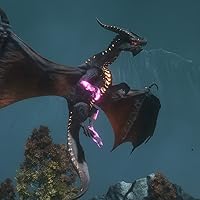
November 2, 2021
I've done it! I've actually finished a Kate Elliot book!
Not gonna lie: it was a struggle for at least the first 30-40%. Something about Elliot's writing style just does not click in my brain and I had to sit down and concentrate, reading and re-reading paragraphs, to actually parse it. This was true even when those paragraphs were just description and not anything complex; it's a sentence-level stumbling block where things just don't flow the way I expect them to. (I also think that portions of this book, especially the beginning, are under-edited; there were quite a few conversations which felt painfully 'As you know, Bob' to me.)
But man. Once things started happening - once all the characters were in the right places and things began to fall into place - this was quite a ride. There is simply so much going on, both immediately visible and under the surface, and once I was immersed enough to track most of it, I was engrossed. Reading Elliot's 'Excavating Unconquerable Sun' essays on Tor.com also helped, because they gave me a clearer idea of how this story related to the history that inspired it, and the level of thought which went into everything which was included and everything which wasn't. I started, just barely, to get a feeling for how many layers there are to this narrative.
And then, of course, the book ended.
I want to read the sequels, but honestly I think I'll need to wait until the entire series is out and I can binge it all straight through, because if I have to go through the prose/worldbuilding learning curve in each installment, I may never finish them.
Not gonna lie: it was a struggle for at least the first 30-40%. Something about Elliot's writing style just does not click in my brain and I had to sit down and concentrate, reading and re-reading paragraphs, to actually parse it. This was true even when those paragraphs were just description and not anything complex; it's a sentence-level stumbling block where things just don't flow the way I expect them to. (I also think that portions of this book, especially the beginning, are under-edited; there were quite a few conversations which felt painfully 'As you know, Bob' to me.)
But man. Once things started happening - once all the characters were in the right places and things began to fall into place - this was quite a ride. There is simply so much going on, both immediately visible and under the surface, and once I was immersed enough to track most of it, I was engrossed. Reading Elliot's 'Excavating Unconquerable Sun' essays on Tor.com also helped, because they gave me a clearer idea of how this story related to the history that inspired it, and the level of thought which went into everything which was included and everything which wasn't. I started, just barely, to get a feeling for how many layers there are to this narrative.
And then, of course, the book ended.
I want to read the sequels, but honestly I think I'll need to wait until the entire series is out and I can binge it all straight through, because if I have to go through the prose/worldbuilding learning curve in each installment, I may never finish them.
November 15, 2019
YES. Could not put this down, and I immediately wanted to give it to all my sci-fi loving friends so I can talk with them about how great the reimagining of Alexander the Great’s story is, how well the gender-swapping works, and how phenomenal the space opera setting & pacing is in this book.

April 8, 2021
Good space opera is an indulgence: rich, creamy, flavorful, slightly embarassing but hard to stop eating. Unconquerable Sun is low-fat frozen diary space opera product. Technically dessert, and mostly unsatisfying.

Frozen yogurt
Princess Sun is heir to the Chaonian Republic, three systems with a host of valuable jump points caught between the much larger Yele League and Phene Republic. But Chaonia has two edges. First, the ruling Queen-Marshall is a skilled commander and has built up a powerful navy. Second, Sun is inspired by Alexander the Great and is destined to conquer a whole bunch of shit. I'm not spoiling anything, because that the main tagline and some of the references are painfully obviously, like Sun's battlecruiser named Boukephalous, but the whole book totters under the weight of historical analogies and a sense of capital-D Destiny rather than actually doing any world building or characterization.
We meet Sun coming back from her first victory, but still unable to earn what she truly wants in her mother's approval. Court intrigue swirling around her, connected to her foreign father and a secret project to gain the loyalty of the Phene empire's most fanatical soldiers. But it's not really actual intrigue so much as stagey Intrigue, characters making outlandish boasts, threats, and declarations of secrecy. Worse, the primary point-of-view swerves to Persephone Lee, a daughter of one of the seven great houses that rule Chaonia (it's a very flawed Republic). She's ducked out from family responsibility by enrolling in the military academy as a commoner under an assumed name, but is called back to replace her assassinated brother as one of Sun's Companions. Perse is an utter wet blanket, who mostly is around to admire Sun and be doubtful of her place near Sun. There's roughly 200 pages of slogging filler, dribbles of slice-of-life which seem to mostly be about an idiotic propaganda show called Channel Idol, and then the Phene empire mounts an impossibly bold attack. There's another 200 pages of serviceable action with land and space battles, though again it is so incredibly generic that it could come from literally any science fiction written since 1960, and Sun wins. Hooray.
Space opera is full of military geniuses. Ender Wiggin, Miles Vorkosigan, and Honor Harrington spring to mind. But I believe their genius because the story tells us the rules of warfare and how they break them. And even when they win crushing victories, it hurts on a personal level. Neither is true here, and it absolutely robs the military action of any tension or drama. The other major flaw is personal. All these characters feel like American kids, not militaristic noble scions. The "fun" part of fiction is that the fate of worlds is in the hands of hormonal erratic kids barely old enough to legally drink, as opposed to decrepit and senile gerontocrats. Sun's Companions and the nobles of Lee House are a wasted group of stock characters who mostly stand around to say "wow Princess Sun, looking good." I firmly believe that the stories of chivalric societies are so full of things like courtly love and undying loyalty because the actually reality was lots of adultery and betrayal, which are much more interesting subjects for a book. Again, Red Rising and theNew Moon series handle larger than life emotions and coming of age in a much more engaging way.
There are decent moments in this book, which serve to highlight how dismal most of it is. An actually sparking confrontation between two Yele admirals who disagree about how to contain Chaonia. An escape from massive sea monsters on boats. The Riders, the Janus-faced hivemind that holds the Phene Empire together with psychic FTL communication. And while Princess Sun is a lesbian, or at least female favoring bi, it barely comes up. Chaonia has Asian influences in names and cuisine, but it's P.F. Chang Americanized orientalism with nothing below the surface. Yoon Ha Lee, Aliette de Bodard, and the whole contemporary Chinese SF movement are actually writing non-Western scifi and a lot of it is quite good. While I'm all for more diversity in fiction, it feels so ham-handed here.
And ultimately, this book is just too long at 500+ pages. Even if you want to read pap, there's better pap. Serves me right for taking book recommendations off Twitter.
Frozen yogurt
Princess Sun is heir to the Chaonian Republic, three systems with a host of valuable jump points caught between the much larger Yele League and Phene Republic. But Chaonia has two edges. First, the ruling Queen-Marshall is a skilled commander and has built up a powerful navy. Second, Sun is inspired by Alexander the Great and is destined to conquer a whole bunch of shit. I'm not spoiling anything, because that the main tagline and some of the references are painfully obviously, like Sun's battlecruiser named Boukephalous, but the whole book totters under the weight of historical analogies and a sense of capital-D Destiny rather than actually doing any world building or characterization.
We meet Sun coming back from her first victory, but still unable to earn what she truly wants in her mother's approval. Court intrigue swirling around her, connected to her foreign father and a secret project to gain the loyalty of the Phene empire's most fanatical soldiers. But it's not really actual intrigue so much as stagey Intrigue, characters making outlandish boasts, threats, and declarations of secrecy. Worse, the primary point-of-view swerves to Persephone Lee, a daughter of one of the seven great houses that rule Chaonia (it's a very flawed Republic). She's ducked out from family responsibility by enrolling in the military academy as a commoner under an assumed name, but is called back to replace her assassinated brother as one of Sun's Companions. Perse is an utter wet blanket, who mostly is around to admire Sun and be doubtful of her place near Sun. There's roughly 200 pages of slogging filler, dribbles of slice-of-life which seem to mostly be about an idiotic propaganda show called Channel Idol, and then the Phene empire mounts an impossibly bold attack. There's another 200 pages of serviceable action with land and space battles, though again it is so incredibly generic that it could come from literally any science fiction written since 1960, and Sun wins. Hooray.
Space opera is full of military geniuses. Ender Wiggin, Miles Vorkosigan, and Honor Harrington spring to mind. But I believe their genius because the story tells us the rules of warfare and how they break them. And even when they win crushing victories, it hurts on a personal level. Neither is true here, and it absolutely robs the military action of any tension or drama. The other major flaw is personal. All these characters feel like American kids, not militaristic noble scions. The "fun" part of fiction is that the fate of worlds is in the hands of hormonal erratic kids barely old enough to legally drink, as opposed to decrepit and senile gerontocrats. Sun's Companions and the nobles of Lee House are a wasted group of stock characters who mostly stand around to say "wow Princess Sun, looking good." I firmly believe that the stories of chivalric societies are so full of things like courtly love and undying loyalty because the actually reality was lots of adultery and betrayal, which are much more interesting subjects for a book. Again, Red Rising and theNew Moon series handle larger than life emotions and coming of age in a much more engaging way.
There are decent moments in this book, which serve to highlight how dismal most of it is. An actually sparking confrontation between two Yele admirals who disagree about how to contain Chaonia. An escape from massive sea monsters on boats. The Riders, the Janus-faced hivemind that holds the Phene Empire together with psychic FTL communication. And while Princess Sun is a lesbian, or at least female favoring bi, it barely comes up. Chaonia has Asian influences in names and cuisine, but it's P.F. Chang Americanized orientalism with nothing below the surface. Yoon Ha Lee, Aliette de Bodard, and the whole contemporary Chinese SF movement are actually writing non-Western scifi and a lot of it is quite good. While I'm all for more diversity in fiction, it feels so ham-handed here.
And ultimately, this book is just too long at 500+ pages. Even if you want to read pap, there's better pap. Serves me right for taking book recommendations off Twitter.

February 6, 2023
This book was nothing like I expected, and far better for it! I thought it would have been about Princess Sun and her military prowess, but it's more about her Companions and protecting her home.
Most of this story revolves around Persephone Lee, in fact. Her mixed feelings about her House, her crushes and loves, her wishes and desires and general young-adultishness. There's a lot of the latter, as Sun is 20, and her Companions are mostly around the same age. However it never really felt like the book was holding my hand and guiding me to adulthood along with these characters, the way so many YA / NA books tend to do. Kate Elliott has skill in writing youthful voices without it coming across childish or condescending.
At times I thought the writing a bit difficult to understand. Having read many of Kate Elliott's works over the years I knew to just go with it and it'll be worth it. This wasn't different. Even though there's moments I couldn't entirely grasp, I did grasp the general picture of those scenes.
The plot goes completely bonkers. At the beginning of the book it all felt a little too contrived, but then a certain plot point is revealed and it all makes more sense. By the end of the book I was riding this giant, cresting adventure-wave for all it was worth. I felt like the end set up a ton of plot lines for the future book(s), and I can't wait to see where they go. Even Apama felt interesting by the end, though I was honestly skimming her chapters early on.
The universe is wild and futuristic with dinosaurs and wormholes and American-Idol-esque competitions bracketed by space battles that Ender would envy, politics within many organizations and solar-system spanning empires, and the personal, intimate stories of a Princess and her closest companions. The scope goes from vast to tiny and vice versa with no qualms. Yet it's easy enough to grasp and it pulls you in to see how it all fits together.
An excellent book, and I can't wait to read the sequel.
Most of this story revolves around Persephone Lee, in fact. Her mixed feelings about her House, her crushes and loves, her wishes and desires and general young-adultishness. There's a lot of the latter, as Sun is 20, and her Companions are mostly around the same age. However it never really felt like the book was holding my hand and guiding me to adulthood along with these characters, the way so many YA / NA books tend to do. Kate Elliott has skill in writing youthful voices without it coming across childish or condescending.
At times I thought the writing a bit difficult to understand. Having read many of Kate Elliott's works over the years I knew to just go with it and it'll be worth it. This wasn't different. Even though there's moments I couldn't entirely grasp, I did grasp the general picture of those scenes.
The plot goes completely bonkers. At the beginning of the book it all felt a little too contrived, but then a certain plot point is revealed and it all makes more sense. By the end of the book I was riding this giant, cresting adventure-wave for all it was worth. I felt like the end set up a ton of plot lines for the future book(s), and I can't wait to see where they go. Even Apama felt interesting by the end, though I was honestly skimming her chapters early on.
The universe is wild and futuristic with dinosaurs and wormholes and American-Idol-esque competitions bracketed by space battles that Ender would envy, politics within many organizations and solar-system spanning empires, and the personal, intimate stories of a Princess and her closest companions. The scope goes from vast to tiny and vice versa with no qualms. Yet it's easy enough to grasp and it pulls you in to see how it all fits together.
An excellent book, and I can't wait to read the sequel.
Displaying 1 - 30 of 586 reviews