Across a shared driveway in a 1970s Georgia housing project, two girls find a sanctuary that the world outside refuses to provide.
In this deeply personal, semi-autobiographical novel, childhood hands Isabelle realities she must navigate long before she has words for them. In a community gripped by systemic poverty and the deep-seated tensions of the South, her only true refuge is her friendship with Evelyn. Their bond is an act of fierce loyalty, a connection forged within a world shaped by rigid, unspoken boundaries.
But when the fragile safety of their shared world is fractured by tragedy, Isabelle must confront a loss far beyond her years. She discovers the quiet strength required to carry her forward through a life defined by circumstances she did not choose.
Character-driven and intimate, Sparrows reads like a memoir, drawing readers into an emotional rollercoaster where moments of laugh-out-loud absurdity meet scenes of heartbreaking reality. Told with a deadpan eye for the absurd and a raw emotional depth, this immersive narrative is sure to leave a lasting impact on readers long after the final page is turned.
Content Advisory: Sparrows is a semi-autobiographical work of fiction that addresses sensitive themes, including racism, racist language, violence, child abuse, and references to sexual assault.
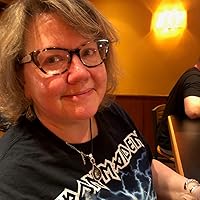
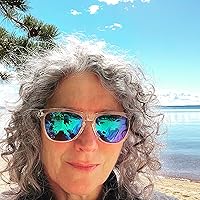
Rose Betit resides in Montreal, QC. She has a growing repertoire of published works, including articles, short stories, and poetry. Her debut novel, Sparrows, was released in June of 2021 and is the recipient of several literary awards.
Betit's latest venture has been writing and illustrating children's books, to which she has produced two. ( Maisie and Moe: The Two Extra-Extraordinary Basset Hounds of Court Street- 2023 and GO AWAY, MONSTERS! 2025)
All of Rose Betit's works can be found on Amazon. Sparrows may also be found at your public library. (If not, it can be requested.)
(Transparency: This review was commissioned by the author, however this does not at all affect my rating)
This is a semi-autobiographical book written from the perspective of a girl named Isabelle. We watch Isabelle's life and experiences from the time she's 4 until she is 18. I'd recommend this for anyone who enjoyed The Secret Life Of Bees by Sue Monk Kidd.
TW you should know before reading: child abuse, child abandonment, emotional abuse, physical abuse, racial slurs used by folks around the main character but not the main character herself, prejudice, extreme poverty, racism, colorism, food insecurity, forced eviction, child death (off page), murder of a child (off page but described)
This book really dives in to what it means to live in extreme poverty and live as a child facing food insecurity in a broken home with an abusive mother. This child's experiences broke my heart so many times. I wanted to reach in and save Isabelle so many times.
The prose was good and i felt grew with the main character as she grew up. I appreciate the care the author took in this aspect.
My issues with the book that cause me to give it a 3 instead of a higher rating are that there is really no plot. And when a book is this length, I crave a typical story arc. This did not have that. I left the book caring deeply for Isabelle but I felt frustrated at the end and not satisfied because it went on for so long in a way that felt meandering. So while it was good in it's prose and it's introspective qualities and it's ability to make you care deeply for the main character, any reader who is like me who deeply loves plot arcs will have trouble with the structure of this. I think it would've made more sense if certain characters like Isabelle's grandmothers had not been introduced only to drop out of the book, but rather center the book around a shorter time frame of her life and maybe make simple and short call backs to these characters. I think structuring the book around Isabelle's experiences with her best friend, rather than Isabelle's whole life from age 4, would've made this a more plot-centric book. There are scenes with her best friend that we learn later in retrospect that we should've experienced while they were actively still together, such as them making christmas cookies together and then measuring each others heights. Seeing these happen in real time and then calling back to them later would have made more sense. I think the book really should've started with the two of them meeting, and centered around their friendship.
In summation: Thematically i think it did things well. The way it was written was good, but the structure could've been redone for a more impactful and plot focused read.
This book transported me to another time and place. The story's main narrator is four year old Isabelle and we see the world through her eyes and watch her find her way in her world while trying to make sense of it. It is beautifully written, and poignant. Looking forward to reading her next novel.
This was an amazing book. It was told from a little girls perspective from the time she was 4 all the way to age 18. It’s a great book about struggle, diversity, hardships and love & happiness. Even though it was set back in the 1970s it’s honestly things that still occur to this day. It’s a true story but told in a fictional way. There was a few times I caught myself with tears in my eyes feeling for Isabelle and what she went through.
So thought provoking. It s heartbreaking to think of anyone suffering from hunger and despairing through poverty. This book made me cry, which I rarely do. I applaud Rose for her talent , compassion, and and strength.
Based on the author's own childhood experiences, with some fictional elements, this book tells of her years growing up in poverty. At times starving, sometimes homeless & sometimes living in "the projects", all while dealing with racial injustice and grief. A thought-provoking read.
Heart wrenching yet beautiful story about a young girl growing up in poverty in the southeastern United States. Some of the scenes will stay with you for a long time.
WOW. What a beautiful book. I’m not even really sure where to begin. My thoughts are all over the place and I know that this story will live in my thoughts for a long time.
This isn’t a memoir, but it definitely had the feel of one. The author says that it’s semi-autobiographical, which is absolutely heartbreaking when you start to read this story. I won’t go into too much detail, but I will say that we see life through the eyes of a young girl named Isabelle who faces poverty, hunger, and heartbreak.
This book had me thinking about things that I often don’t even think twice about. It made me uncomfortable. I had to literally stop, put the book down, and take some time to reflect. I honestly didn’t know what to do with myself. That’s the kind of book this is. But in saying all that, I really urge you to read it because I think it’s important.
There were some things I wanted to know more about. The love story between Isabelle and Roderick was adorable and I wanted to see right into their future. Steven, Isabelle’s brother, was such a great character and I wanted to see his future all lined up. I also wanted to see more for Isabelle’s mother. Now, that’s definitely just me being greedy! The book wraps the storylines up quite nicely.
I guess I just wasn’t ready to say goodbye to the characters yet. It’s crazy how a book can do that to you.
I had such a beautiful experience with this one. I really encourage everyone to go check it out! But please keep in mind that it is a very heavy read and you need to be in the right frame of mind.
Never have I ever read such a heartbreaking story about how the people who are poor suffer every single day of their life, I spent a good amount of time in the projects of Pittsburgh but not as a permanent resident...my aunt, uncle their six plus kids lived in the public housing duplexes and we would be there every single weekend and all summer long. I look at the same duplexes today and I can't imagine how we all fit. I know the pangs of hunger Rose is speaking of. I know what it's like to not have a toy and try to make up games to entertain yourself with the hot sun bearing down on you. I know what it's like to be one of the only white people in a sea of hungry, angry black neighborhoods who are not bad people but resort to criminal behavior just to survive. ..black and white alike. I know the fear of a beat down...not only from somebody's Momma but for no reason at all. I know the despair and shame of being poor. People are so quick to make judgment because of their social status. Those same people who are judging just don't know. Excellent work in describing the life of the poor, regardless of skin color.
Once I start a book, I’m committed to finishing it. Maybe I want to give the author a chance to change my opinion on the book by the ending. But that didn’t happen here. I was excited to read the book since I’m from Albany and lived there from infancy until college (early 60’s through early 80’s). I acknowledge that constant hunger and extreme poverty is absolutely horrific for children to have to endure. But this book reads like a virtue signaling woke ultra feminist using a 4-16 year old kid to convey her leftist agenda. It seems like little Isabelle’s head was opened up and filled with ideas from an adult forty- fifty years after the fact. Growing up in Albany, I was all over the place with kids from most of the schools in Albany for over 18 years. I never heard people, black or white, speak in that stereotypical made for TV “uneducated southern hillbilly” manner, except on Hee Haw or the Beverly Hillbillies. But apparently everyone spoke that way except the teacher “Mrs. Washington”.
The book is racially biased against and constantly derogatory of white people. For example, it complained that Disney princesses were only blonde. Back then in the 60’s-80’s there were only 3 Disney princesses total-now there are 13. Then we heard about Roots and Kunta Kinte (yes- we all watched it ) and heard how it was ENTIRELY the white man’s fault. Isabelle talks somewhere around there about kids being switched. When I was a kid, I had to go pick my own switches from the pyracantha bush in the backyard or get a hairbrush for the black maids to switch my rear end. They also washed my mouth out with soap a couple of times. But guess what? I loved, respected and learned to mind them. They taught me a lot and they were influential in my life. I grew up better from it. And my parents put some of them in their will. That’s how great they were to my parents.
Isabelle recounts incidents where white people said horrible things to black people- but never the other way around. I never witnessed or heard others recount any incidences like that. I was at just about every fair, carnival, movies, football games, grocery stores, all over town for 18 years and never saw anyone go up and accost or yell at a black person or vice versa. But sweet little tolerant Isabelle would describe the people offensive to her with phrases like “Elmer’s glue skin, “fat blonde white woman”, “white skin that turned red when he raised his voice”, “ red sunburned white man with cavities and bad teeth” or cut down what the person was wearing like a “brown suit with brown socks and tie”. Isabelle’s mother cuts down white people for being phony and having yellow teeth- yet she doesn’t have a tooth in her head! Isabelle doesn’t like when people cut her down for having “high water” pants, but EVERY kid had a couple pairs of high water pants. We all got made fun of for it. It’s part of life. I always used McDonald’s and other bathrooms without buying anything and never thought about agonizing for the homeless people as bleeding heart Isabelle did. Isabelle should be happy today though bc all those bathrooms especially Starbucks are being used by folks to shoot up heroin.
Part of the reason I kept reading the book is because some of the names were familiar to me. I kept reading and lo and behold- there was my last name- right there in the book. LOL!! Somehow it didn’t surprise me.
Isabelle rose above her plight and moved on to achieve a better situation. Back then, kids had to fend for themselves because there were not a myriad of bottomless government programs, food banks/churches giving “free” food and money creating dependency like they do today. Today in the USA if kids go hungry, their parents are to blame. Sparrows learn how to survive because they aren’t given anything. They work hard for it, and if they don’t like the situation-they fly away. That’s what Isabelle did. Even though she lived in Albany - which was not horrible at all- THEN.
What an emotional rollercoaster of a read. A well crafted story which takes you along with our protagonist Isabelle as she grows from a child to a caring young adult. The descriptions of her life of grinding poverty and the surrounding casual cruelty are both heartbreaking and eye opening. The characters are drawn from real life and you live through their despair and triumphs. This book is both heartbreaking and reaffirming; a tricky skill to bring off but Betit pulls it off. 100% recommend.
simple but brilliant depiction of the best and worst memories of childhood. The sorrow stings the good times bring a smile. The emotion of growing up beautifully captured This book will stay with me for awhile.
Betit does remind of horrors racism and poverty still bring in this world. The book takes place in the 1970 in Georgia, unfortunately not all that much has changed. She describes the wonderful relationship between best friends that make the book a joy to read