

What do you think?

Commissario Montalbano #25
La red de protección
En una ciudad transformada en set de rodaje, Montalbano se enfrentará a nuevos dilemas de actualidad.
La cotidianidad de Vigàta se ve completamente trastocada cuando la ciudad se convierte de la noche a la mañana en un set de rodaje ambientado en los años cincuenta. Mientras todos colaboran enérgicamente en la película, un incidente pone en jaque a la población: un tiroteo en el instituto.
El comisario iniciará una investigación sobre el mundo de los adolescentes que lo llevará a enfrentarse a la realidad agazapada tras las redes sociales. Entre los misterios del pasado, las incertidumbres del presente y el deseo de protegernos a nosotros y nuestros seres queridos, La red de protección nos sumerge en los problemas más acuciantes de hoy: las nuevas generaciones y sus hábitos, la inmigración, el debate ecológico y los beneficios y las trampas de internet.
La cotidianidad de Vigàta se ve completamente trastocada cuando la ciudad se convierte de la noche a la mañana en un set de rodaje ambientado en los años cincuenta. Mientras todos colaboran enérgicamente en la película, un incidente pone en jaque a la población: un tiroteo en el instituto.
El comisario iniciará una investigación sobre el mundo de los adolescentes que lo llevará a enfrentarse a la realidad agazapada tras las redes sociales. Entre los misterios del pasado, las incertidumbres del presente y el deseo de protegernos a nosotros y nuestros seres queridos, La red de protección nos sumerge en los problemas más acuciantes de hoy: las nuevas generaciones y sus hábitos, la inmigración, el debate ecológico y los beneficios y las trampas de internet.
272 pages, Paperback
First published May 25, 2017
About the author
Andrea Camilleri
464 books2,552 followersAndrea Camilleri was an Italian writer. He is considered one of the greatest Italian writers of both 20th and 21st centuries.
Originally from Porto Empedocle, Sicily, Camilleri began studies at the Faculty of Literature in 1944, without concluding them, meanwhile publishing poems and short stories. Around this time he joined the Italian Communist Party.
From 1948 to 1950 Camilleri studied stage and film direction at the Silvio D'Amico Academy of Dramatic Arts, and began to take on work as a director and screenwriter, directing especially plays by Pirandello and Beckett. As a matter of fact, his parents knew Pirandello and were even distant friends, as he tells in his essay on Pirandello "Biography of the changed son". His most famous works, the Montalbano series show many pirandellian elements: for example, the wild olive tree that helps Montalbano think, is on stage in his late work "The giants of the mountain"
With RAI, Camilleri worked on several TV productions, such as Inspector Maigret with Gino Cervi. In 1977 he returned to the Academy of Dramatic Arts, holding the chair of Movie Direction, and occupying it for 20 years.
In 1978 Camilleri wrote his first novel Il Corso Delle Cose ("The Way Things Go"). This was followed by Un Filo di Fumo ("A Thread of Smoke") in 1980. Neither of these works enjoyed any significant amount of popularity.
In 1992, after a long pause of 12 years, Camilleri once more took up novel-writing. A new book, La Stagione della Caccia ("The Hunting Season") turned out to be a best-seller.
In 1994 Camilleri published the first in a long series of novels: La forma dell'Acqua (The Shape of Water) featured the character of Inspector Montalbano, a fractious Sicilian detective in the police force of Vigàta, an imaginary Sicilian town. The series is written in Italian but with a substantial sprinkling of Sicilian phrases and grammar. The name Montalbano is an homage to the Spanish writer Manuel Vázquez Montalbán; the similarities between Montalban's Pepe Carvalho and Camilleri's fictional detective are remarkable. Both writers make great play of their protagonists' gastronomic preferences.
This feature provides an interesting quirk which has become something of a fad among his readership even in mainland Italy. The TV adaptation of Montalbano's adventures, starring the perfectly-cast Luca Zingaretti, further increased Camilleri's popularity to such a point that in 2003 Camilleri's home town, Porto Empedocle - on which Vigàta is modelled - took the extraordinary step of changing its official denomination to that of Porto Empedocle Vigàta, no doubt with an eye to capitalising on the tourism possibilities thrown up by the author's work.
In 1998 Camilleri won the Nino Martoglio International Book Award.
Camilleri lived in Rome where he worked as a TV and theatre director. About 10 million copies of his novels have been sold to date, and are becoming increasingly popular in the UK and North America.
In addition to the degree of popularity brought him by the novels, in recent months Andrea Camilleri has become even more of a media icon thanks to the parodies aired on an RAI radio show, where popular comedian, TV-host and impression artist Fiorello presents him as a raspy voiced, caustic character, madly in love with cigarettes and smoking (Camilleri is well-known for his love of tobacco).
He received an honorary degree from University of Pisa in 2005.
Originally from Porto Empedocle, Sicily, Camilleri began studies at the Faculty of Literature in 1944, without concluding them, meanwhile publishing poems and short stories. Around this time he joined the Italian Communist Party.
From 1948 to 1950 Camilleri studied stage and film direction at the Silvio D'Amico Academy of Dramatic Arts, and began to take on work as a director and screenwriter, directing especially plays by Pirandello and Beckett. As a matter of fact, his parents knew Pirandello and were even distant friends, as he tells in his essay on Pirandello "Biography of the changed son". His most famous works, the Montalbano series show many pirandellian elements: for example, the wild olive tree that helps Montalbano think, is on stage in his late work "The giants of the mountain"
With RAI, Camilleri worked on several TV productions, such as Inspector Maigret with Gino Cervi. In 1977 he returned to the Academy of Dramatic Arts, holding the chair of Movie Direction, and occupying it for 20 years.
In 1978 Camilleri wrote his first novel Il Corso Delle Cose ("The Way Things Go"). This was followed by Un Filo di Fumo ("A Thread of Smoke") in 1980. Neither of these works enjoyed any significant amount of popularity.
In 1992, after a long pause of 12 years, Camilleri once more took up novel-writing. A new book, La Stagione della Caccia ("The Hunting Season") turned out to be a best-seller.
In 1994 Camilleri published the first in a long series of novels: La forma dell'Acqua (The Shape of Water) featured the character of Inspector Montalbano, a fractious Sicilian detective in the police force of Vigàta, an imaginary Sicilian town. The series is written in Italian but with a substantial sprinkling of Sicilian phrases and grammar. The name Montalbano is an homage to the Spanish writer Manuel Vázquez Montalbán; the similarities between Montalban's Pepe Carvalho and Camilleri's fictional detective are remarkable. Both writers make great play of their protagonists' gastronomic preferences.
This feature provides an interesting quirk which has become something of a fad among his readership even in mainland Italy. The TV adaptation of Montalbano's adventures, starring the perfectly-cast Luca Zingaretti, further increased Camilleri's popularity to such a point that in 2003 Camilleri's home town, Porto Empedocle - on which Vigàta is modelled - took the extraordinary step of changing its official denomination to that of Porto Empedocle Vigàta, no doubt with an eye to capitalising on the tourism possibilities thrown up by the author's work.
In 1998 Camilleri won the Nino Martoglio International Book Award.
Camilleri lived in Rome where he worked as a TV and theatre director. About 10 million copies of his novels have been sold to date, and are becoming increasingly popular in the UK and North America.
In addition to the degree of popularity brought him by the novels, in recent months Andrea Camilleri has become even more of a media icon thanks to the parodies aired on an RAI radio show, where popular comedian, TV-host and impression artist Fiorello presents him as a raspy voiced, caustic character, madly in love with cigarettes and smoking (Camilleri is well-known for his love of tobacco).
He received an honorary degree from University of Pisa in 2005.
Ratings & Reviews
Friends & Following
Create a free account to discover what your friends think of this book!
Community Reviews
Displaying 1 - 30 of 341 reviews

September 20, 2020
The Safety Net by Andrea Camilleri
The main plot in this book featuring Inspector Montalbano is not even a crime. A man asks Montalbano to help him solve a personal mystery. The man’s father was a film buff in the early days of hand-held cameras. After his father died, the man went through all the family films. Among all the recordings of Christmases and birthdays he found six videos of a blank brick wall all taken on the same day at the same time on six sequential years. What’s going on? Montalbano loves a mystery, so he becomes as fascinated as the man’s son in trying to figure out the meaning of these films.
There’s always something going on that causes Montalbano no end of annoyance. In this book it’s a Swedish film crew that is filming a TV serial in his hometown. A Swedish girl has fallen in love with a Sicilian boy on a visit. At one point the camera crews have taken over his beloved beach and he has to hide out in his own house away from the spotlights and the noise.
And, as usual in Camilleri’s police procedurals, there is a subplot. In this story it’s about a school invasion where two thugs break into a classroom and shoot into the ceiling for no apparent reason.

Other than the crimes, these mysteries are fun reads as the Inspector is known for his love of good food both at a local (Sicilian) trattoria and the meals cooked for him by his maid/cook. This story features swordfish involtini (a wrap; the equivalent of the French roulade); and a timballo (deep dish in a crust) of pasta and eggplant rings. One of several sites that features recipes for the foods in the Montalbano books is https://www.ft.com/content/9c78994c-9...
I like the occasional idioms: “…like Lou Ravi in a creche.” This is the awestruck shepherd in traditional Italian nativity scenes who has the expression of astonishment or rapture.
A good story – one of the best of the six Montalbanos I’ve read, so I’ll give it a ‘5.’ Camilleri’s novels feature a lot of dialog, sometimes filling whole pages.
I have read a dozen of the Inspector Montalbano series. I won’t list my reviews of all of them but below are links to my reviews of some of the ones I most enjoyed.
The Smell of the Night #6
The Terra-Cotta Dog #2
The Patience of the Spider #8
The Other End of the Line #24
The Voice of the Volin #4
The author died recently (2019) at age 94. He was best known for this Inspector Montalbano series, I think twenty-six in all, although some of the most recent ones do not yet appear to have been translated into English. The stories were made into a popular TV series in Italy. His hometown, featured in his novels under the fictitious name, Vigàta, has officially appended that name to attract tourists. So it’s now called Porto Empedocle Vigàta, Sicily.
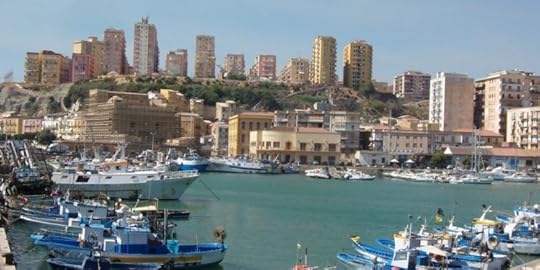
Top photo of Porto Empedocle from .siciliaonpress.com
Map of Sicily from siculotrip.it
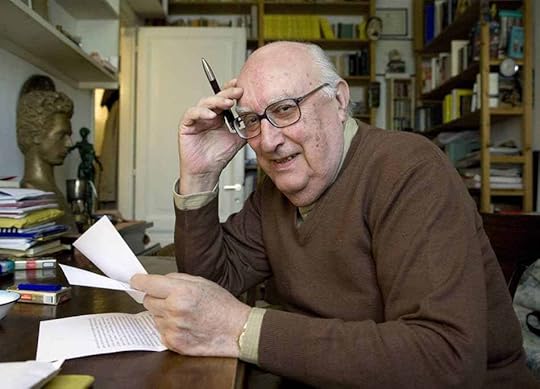
The author from in-cyprus.philenews.com
The main plot in this book featuring Inspector Montalbano is not even a crime. A man asks Montalbano to help him solve a personal mystery. The man’s father was a film buff in the early days of hand-held cameras. After his father died, the man went through all the family films. Among all the recordings of Christmases and birthdays he found six videos of a blank brick wall all taken on the same day at the same time on six sequential years. What’s going on? Montalbano loves a mystery, so he becomes as fascinated as the man’s son in trying to figure out the meaning of these films.
There’s always something going on that causes Montalbano no end of annoyance. In this book it’s a Swedish film crew that is filming a TV serial in his hometown. A Swedish girl has fallen in love with a Sicilian boy on a visit. At one point the camera crews have taken over his beloved beach and he has to hide out in his own house away from the spotlights and the noise.
And, as usual in Camilleri’s police procedurals, there is a subplot. In this story it’s about a school invasion where two thugs break into a classroom and shoot into the ceiling for no apparent reason.
Other than the crimes, these mysteries are fun reads as the Inspector is known for his love of good food both at a local (Sicilian) trattoria and the meals cooked for him by his maid/cook. This story features swordfish involtini (a wrap; the equivalent of the French roulade); and a timballo (deep dish in a crust) of pasta and eggplant rings. One of several sites that features recipes for the foods in the Montalbano books is https://www.ft.com/content/9c78994c-9...
I like the occasional idioms: “…like Lou Ravi in a creche.” This is the awestruck shepherd in traditional Italian nativity scenes who has the expression of astonishment or rapture.
A good story – one of the best of the six Montalbanos I’ve read, so I’ll give it a ‘5.’ Camilleri’s novels feature a lot of dialog, sometimes filling whole pages.
I have read a dozen of the Inspector Montalbano series. I won’t list my reviews of all of them but below are links to my reviews of some of the ones I most enjoyed.
The Smell of the Night #6
The Terra-Cotta Dog #2
The Patience of the Spider #8
The Other End of the Line #24
The Voice of the Volin #4
The author died recently (2019) at age 94. He was best known for this Inspector Montalbano series, I think twenty-six in all, although some of the most recent ones do not yet appear to have been translated into English. The stories were made into a popular TV series in Italy. His hometown, featured in his novels under the fictitious name, Vigàta, has officially appended that name to attract tourists. So it’s now called Porto Empedocle Vigàta, Sicily.
Top photo of Porto Empedocle from .siciliaonpress.com
Map of Sicily from siculotrip.it
The author from in-cyprus.philenews.com

November 26, 2021
Two interesting mysteries, as usual, in this volume, #25, that I enjoyed quite a bit. The first story is again about the infiltration of "world" terrorism into small town Vigata--two masked men in Guy Fawkes masks and guns break into an elementary school classroom and, while no child is hurt, they fire their guns. They associate themselves with an international terrorist organization, Anonymous. Salvo begins interviewing the students themselves at one point and actually sends an anonymous email to one student with Cat's help that leads. . . somewhere useful.
Then, there's filming going on in Vigata, annoying Salvo, as it disrupts his private life, and in the process of looking for fifties films they find a series of photographs taken of the wall of a building where we discover something happened decades ago. Poignant moments in both stories. I like it. And again, it is another book without Salvo falling head over heels with some woman as he navigates his long distance relationship with Livia.
Then, there's filming going on in Vigata, annoying Salvo, as it disrupts his private life, and in the process of looking for fifties films they find a series of photographs taken of the wall of a building where we discover something happened decades ago. Poignant moments in both stories. I like it. And again, it is another book without Salvo falling head over heels with some woman as he navigates his long distance relationship with Livia.

June 5, 2017
Leggere Camilleri è come tornare a casa... si va in trattoria da Enzo, si fa la passiata al porto e ci si riposa sullo scoglio piatto, si trovano le ghiottonerie di Adelina... E ancora, si firma tanticchia di carte (che sempre si accumulano!) e si guarda storto Catarella che, come sempre, irrompe nella stanza del commissario. Sono quasi diventati stereotipi, ma è quello che ci si aspetta, insieme a una Vigata che ci regala una ficzion ambientata negli anni Cinquanta e ci fa tenerezza il rapporto con Livia. Bello :)
UPDATE: seconda lettura a qualche anno di distanza, ne vale sempre la pena.
UPDATE: seconda lettura a qualche anno di distanza, ne vale sempre la pena.

March 27, 2020
I am pretty much in a state of ecstasy having read two wonderful books today. This final Montalbano book from the wonderful Andrea Camilleri was perfection. It contains all the elements of the best books in this series and is the more satisfying to see his last novel so beautifully rendered.
Library Loan
Library Loan

November 15, 2020
I am absolutely in love with the Montalbano series. I have devoured all of the books that have been translated into English so far, and love snuggling up to watch the TV adaptation.
In the safety net, Montalbano works to try and solve two mystery’s. One involving a film recording the same wall, at the same time for 5 years. The other involving an attack on a school.
Firstly, in general what I love about the Montalbano series is the world that Camilleri has created. I adore the characters and their little quirks. The scenery and food transports me to Italy from the comfort of my home. Sartarelli does an excellent job of translating the series.
What I specifically enjoyed about this novel was how unique it seemed. Montalbano isn’t one for modern technology, but I loved how Camilleri brought him into contemporary times in this novel. You could sense Montalbano’s discomfort with computers and social media. It gave a wonderful contrast, highlighting how quickly technology has moved. I also found the link between the two investigations to be profound.
I would recommend the Montalbano series to anyone that enjoys mystery’s with a touch of light-heartedness and sentimentality.
In the safety net, Montalbano works to try and solve two mystery’s. One involving a film recording the same wall, at the same time for 5 years. The other involving an attack on a school.
Firstly, in general what I love about the Montalbano series is the world that Camilleri has created. I adore the characters and their little quirks. The scenery and food transports me to Italy from the comfort of my home. Sartarelli does an excellent job of translating the series.
What I specifically enjoyed about this novel was how unique it seemed. Montalbano isn’t one for modern technology, but I loved how Camilleri brought him into contemporary times in this novel. You could sense Montalbano’s discomfort with computers and social media. It gave a wonderful contrast, highlighting how quickly technology has moved. I also found the link between the two investigations to be profound.
I would recommend the Montalbano series to anyone that enjoys mystery’s with a touch of light-heartedness and sentimentality.

October 6, 2020
Ah, these books are such a solace with their comedy and general feel-good aura but without ever becoming purely escapist and saccharine. Montalbano has two puzzles to solve in this one while escaping from a Swedish film crew who have taken over town - and he even manages to send an email with the inimitable help of Cat!

April 19, 2020
Vigata is in turmoil because of film is being shot on location, most importantly interfering with daily lunch meals. To get a feeling for the place, the director has asked for old films, producing weird ones of a blank wall, all shot on the same day of the year, where a suicide too place in the late 1950s. His nephew asks Inspector Montalbano to investigate this ancient death. Meanwhile, one of his detective's son is in trouble at school for fighting to protect a tech-savvy schoolmate from bullies. When two masked men break into the school, and start shooting, everyone is worried about terrorism. There are no leads, and Montalbano cuts short his visit with Livia, and starts a series of detailed interviews to see what he can glean, eventually making a break through. I thought both plots were a bit weird although 90-year old Camilleri certainly does keep up with topical events.

July 18, 2017
Non c'è nulla da fare. Sono di parte: adoro Montalbano!

August 24, 2020
Έξι χρονολογημένα φιλμάκια που επί έξι χρόνια, την ίδια πάντα ώρα, την ίδια μέρα και τον ίδιο μήνα, κινηματογραφούν με εμμονή τη θαμπή λευκότητα ενός τοίχου.Τι μπορεί να σημαίνει αυτό; Ποιο μυστικό κρύβεται;
Μια αυτοκτονία με αναπάντητα ερωτήματα..
Αυτοκτονία;Ή μήπως όχι;
Παράλληλα, σε ένα σχολείο της Σικελίας ακούγονται πυροβολισμοί..
Το βιβλίο αυτό διαπραγματέυεται δύο υποθέσεις του επιθεωρητή Μονταλμπάνο. Ξεκινώντας, η πρώτη υπόθεση με ενθουσίασε και ύψωσε την περιέργεια μου στα ύψη!
Σκεφτόμουν πόσο πρωτότυπη ήταν μέχρι που διακόπηκε απότομα χωρις να διαλευκανθεί και επικεντρώθηκε σε μια νέα υπόθεση , σχετικά με μια επίθεση σε ένα σχολείο.
Δυστυχώς , άρχισα να χάνω το ενδιαφέρον μου γιατί η προηγούμενη υπόθεση ήταν σαφώς πιο ενδιαφέρουσα και σκεφτόμουν πότε θα επέστρεφε ξανά εκεί. Δεν κατάφερε να με κερδίσει και τελικά όλα ήταν προβλέψιμα. Περίμενα περισσότερα απο τον Καμιλλερι 😕
Μια αυτοκτονία με αναπάντητα ερωτήματα..
Αυτοκτονία;Ή μήπως όχι;
Παράλληλα, σε ένα σχολείο της Σικελίας ακούγονται πυροβολισμοί..
Το βιβλίο αυτό διαπραγματέυεται δύο υποθέσεις του επιθεωρητή Μονταλμπάνο. Ξεκινώντας, η πρώτη υπόθεση με ενθουσίασε και ύψωσε την περιέργεια μου στα ύψη!
Σκεφτόμουν πόσο πρωτότυπη ήταν μέχρι που διακόπηκε απότομα χωρις να διαλευκανθεί και επικεντρώθηκε σε μια νέα υπόθεση , σχετικά με μια επίθεση σε ένα σχολείο.
Δυστυχώς , άρχισα να χάνω το ενδιαφέρον μου γιατί η προηγούμενη υπόθεση ήταν σαφώς πιο ενδιαφέρουσα και σκεφτόμουν πότε θα επέστρεφε ξανά εκεί. Δεν κατάφερε να με κερδίσει και τελικά όλα ήταν προβλέψιμα. Περίμενα περισσότερα απο τον Καμιλλερι 😕

April 11, 2020
A perfect gentle read; a book to savour and take your time with.
Despite the advent of a TV series bringing Inspector Montalbano to life; the books crate a clear sense of place and time. The writing is absorbing, full of character and brimming with personality.
It is a police procedural yes, but it is more than this. It is about colleagues and friends with an almost family relationship and trust.
Montalbano is finding life hard; no meaty cases to take up his day and we know he hates routine paperwork. But things are worse a film crew has taken over the town which restricts everything he holds dear and takes for granted. His walks along the jetty, his favourite restaurant now serving the actors and crew. Even his home is no escape as then film night scenes on the beach in front of his property.
As a distraction he agrees to look into some old film that makes no sense to the owner. Shots of a wall taken over a few years at the same time on the same date but an anniversary of what?
The sense of crime and police work which is taken very serious and fully investigated is secondary to the conversations, interactions and exchanges of all the characters. This includes all who participate in the drama. The familiar characters or those introduced to drive this new and engaging story.
The 25th novel now in this series and I have read each one in sequence. I adore the writing, the sense of Italy revealed in these novels, through the customs, language, food and idiosyncratic mores.
I desire to read these books as soon as they are released and once finished feel a real sense of loss. More so now that the maestro,Andrea Camilleri has died. The work of translator Stephen Sartarelli can not go without a mention, his work means that the English version reads and flows without any heavy moments or second glances. If I was ever to learn Italian it wouldn’t be a criticism of these translations but to simply have these books to read in the author’s own voice. That is never going to happen so thank you Stephen.
Despite the advent of a TV series bringing Inspector Montalbano to life; the books crate a clear sense of place and time. The writing is absorbing, full of character and brimming with personality.
It is a police procedural yes, but it is more than this. It is about colleagues and friends with an almost family relationship and trust.
Montalbano is finding life hard; no meaty cases to take up his day and we know he hates routine paperwork. But things are worse a film crew has taken over the town which restricts everything he holds dear and takes for granted. His walks along the jetty, his favourite restaurant now serving the actors and crew. Even his home is no escape as then film night scenes on the beach in front of his property.
As a distraction he agrees to look into some old film that makes no sense to the owner. Shots of a wall taken over a few years at the same time on the same date but an anniversary of what?
The sense of crime and police work which is taken very serious and fully investigated is secondary to the conversations, interactions and exchanges of all the characters. This includes all who participate in the drama. The familiar characters or those introduced to drive this new and engaging story.
The 25th novel now in this series and I have read each one in sequence. I adore the writing, the sense of Italy revealed in these novels, through the customs, language, food and idiosyncratic mores.
I desire to read these books as soon as they are released and once finished feel a real sense of loss. More so now that the maestro,Andrea Camilleri has died. The work of translator Stephen Sartarelli can not go without a mention, his work means that the English version reads and flows without any heavy moments or second glances. If I was ever to learn Italian it wouldn’t be a criticism of these translations but to simply have these books to read in the author’s own voice. That is never going to happen so thank you Stephen.

July 15, 2017
Nessuna "ammazzatina" questa volta, bensì due indagini, entrambe con lo stesso movente: la protezione.
La prima parte da alcuni strani filmini che riprendono - anno dopo anno, sempre lo stesso giorno e la stessa ora - un muro bianco; la seconda è un caso di bullismo in una scuola media che degenera in una scorribanda armata, per fortuna senza conseguenze.
Ma anche il disagio, la solitudine, il dolore, l'amore e il futuro incerto sono carte messe in tavola dalla vita e non sono certo il "due di briscola", anzi sono "carichi" pesanti.
Non male, per la verità, ma - al di là della "rete di protezione" - è facile individuare la soluzione di entrambe le storie: questo rende un po' debole tutto il romanzo.
La "ficzion" vigato-svedese funge da incipit, è vero, ma alla fine rimane sullo sfondo, rappresentando solo un disagio che smuove momentaneamente la normalità di tutti i giorni.
Bella questa considerazione:
"Com'era possibili che l'era della comunicazioni globale, che l'era indove tutte le frontiere culturali, linguistiche, geografiche ed economiche erano state scancillate dalla faccia della terra, che questo spazio immenso avissi provocato 'na moltitudini di solitudini, 'n'infinità di solitudini 'n comunicazioni tra di loro, sì, ma sempre in assoluta solitudini?"
Poco più di tre ⭐️
La prima parte da alcuni strani filmini che riprendono - anno dopo anno, sempre lo stesso giorno e la stessa ora - un muro bianco; la seconda è un caso di bullismo in una scuola media che degenera in una scorribanda armata, per fortuna senza conseguenze.
Ma anche il disagio, la solitudine, il dolore, l'amore e il futuro incerto sono carte messe in tavola dalla vita e non sono certo il "due di briscola", anzi sono "carichi" pesanti.
Non male, per la verità, ma - al di là della "rete di protezione" - è facile individuare la soluzione di entrambe le storie: questo rende un po' debole tutto il romanzo.
La "ficzion" vigato-svedese funge da incipit, è vero, ma alla fine rimane sullo sfondo, rappresentando solo un disagio che smuove momentaneamente la normalità di tutti i giorni.
Bella questa considerazione:
"Com'era possibili che l'era della comunicazioni globale, che l'era indove tutte le frontiere culturali, linguistiche, geografiche ed economiche erano state scancillate dalla faccia della terra, che questo spazio immenso avissi provocato 'na moltitudini di solitudini, 'n'infinità di solitudini 'n comunicazioni tra di loro, sì, ma sempre in assoluta solitudini?"
Poco più di tre ⭐️

January 7, 2020
Αγαπημένος Καμιλέρι...

January 25, 2023
Camilleri’s writing here feels worn out. His main characters tread their old paths, eat and drink what they usually eat and drink and relationships hover in perpetuity.
The two mysteries here are slightly unusual and, of course, Montalbano works them out, having care for the people involved. This time I guessed the main mystery well before our detective. Perhaps id seen it on tv?
The two mysteries here are slightly unusual and, of course, Montalbano works them out, having care for the people involved. This time I guessed the main mystery well before our detective. Perhaps id seen it on tv?

March 16, 2021
Ya aviso que cuando el Montalbano de Camilleri entra por la puerta, mi objetividad salta por la ventana.
Me encantan sus novelas, y esta serie es una de mis grandes debilidades: es humor socarrón que tenía Andrea Camilleri, esa conciencia social, ese grandísima ambientación tan siciliana y tan mediterránea... es que me encanta. Y los casos que plantean siempre son ingeniosos y atractivos, dentro de la belleza de su simplicidad.
Y con el caso (mejor dicho, con los dos casos) que se plantean en esta novela ha vuelto a conseguirlo. Me he divertido muchísimo (hay escenas, especialmente con los ataques de rabieta de Salvo, y con algunas de las salidas de Catarella, en que he reído a carcajadas), los casos me han enganchado (aunque eran muy sencillos y no era complejo adivinar su resolución) y, sobre todo, he hecho lo que nos propone siempre Camilleri con estas novelas: disfrutar con el trayecto, más que con el destino (que también está muy bien, pero el viaje es lo que cuenta).
Me fascina que con 90 años, ciego (de modo que ya no podía escribir las novelas, sino que tenía que dictarlas) siguiera tan lúcido y tuviera las cosas tan claras como para seguir ofreciéndonos estas maravillosas novelas sin perder ni un ápice de su esencia.
Y, en esta novela en particular, ese canto de amor y admiración que realiza a la juventud actual me ha parecido especialmente conmovedor.
Me encantan sus novelas, y esta serie es una de mis grandes debilidades: es humor socarrón que tenía Andrea Camilleri, esa conciencia social, ese grandísima ambientación tan siciliana y tan mediterránea... es que me encanta. Y los casos que plantean siempre son ingeniosos y atractivos, dentro de la belleza de su simplicidad.
Y con el caso (mejor dicho, con los dos casos) que se plantean en esta novela ha vuelto a conseguirlo. Me he divertido muchísimo (hay escenas, especialmente con los ataques de rabieta de Salvo, y con algunas de las salidas de Catarella, en que he reído a carcajadas), los casos me han enganchado (aunque eran muy sencillos y no era complejo adivinar su resolución) y, sobre todo, he hecho lo que nos propone siempre Camilleri con estas novelas: disfrutar con el trayecto, más que con el destino (que también está muy bien, pero el viaje es lo que cuenta).
Me fascina que con 90 años, ciego (de modo que ya no podía escribir las novelas, sino que tenía que dictarlas) siguiera tan lúcido y tuviera las cosas tan claras como para seguir ofreciéndonos estas maravillosas novelas sin perder ni un ápice de su esencia.
Y, en esta novela en particular, ese canto de amor y admiración que realiza a la juventud actual me ha parecido especialmente conmovedor.

April 13, 2022
This 2 stories in one a mysterious film of a wall filmed over number of years and gun raid on local school. Camilleri really shows his age when wrote this in 2015 just 4ys before he died.
Italian police must retired later than UK because Montalbano is now over 60.
Italian police must retired later than UK because Montalbano is now over 60.

June 11, 2017
Titolo alternativo per l'ultima fatica di Camilleri : "Montalbano e i giovani d'oggi", di guareschiana memoria. Il perno dell'azione è la difficoltà del commissario di comprendere il linguaggio dei giovani, con cui invece un emozionato Catarella si destreggia abilmente. E tra "tuista"("uno chi scrivi solo 140 cataratteri"), fessibuc, uozap, schermi di computer e di smartphone, alla fine scopre " 'n'infinità di solitudini 'n comunicazioni tra di loro". Montalbano, che, come sa bene, ha l'età per essere il nonno di tutti questi giovani, riesce comunque a trovare il bandolo della matassa, in un'indagine, questa volta, senza cadaveri.
Il cadavere ci sarebbe anche, un vecchio suicidio, su cui Montalbano indaga informalmente, una storia di gemelli, di antiche case di famiglia, che prometteva bene; noi lettori già ci immaginavamo scambi di identità, scabrose trame sotterranee, magari i soliti adulterii, le gelosie etc.... a cui Camilleri ci ha abituato. Invece no, nulla. Solo la pietas familiare, che Montalbano riconosce e rispetta.
Due vicende che si intersecano e che lasciano il commissario, e noi lettori, con un po' di nostalgia.
Il cadavere ci sarebbe anche, un vecchio suicidio, su cui Montalbano indaga informalmente, una storia di gemelli, di antiche case di famiglia, che prometteva bene; noi lettori già ci immaginavamo scambi di identità, scabrose trame sotterranee, magari i soliti adulterii, le gelosie etc.... a cui Camilleri ci ha abituato. Invece no, nulla. Solo la pietas familiare, che Montalbano riconosce e rispetta.
Due vicende che si intersecano e che lasciano il commissario, e noi lettori, con un po' di nostalgia.

August 7, 2017
La formula è ormai stanca, e pure ripetitiva. Rimane la piacevolezza della lettura ma in questo ultimo lavoro, sarà perchè dettato invece che scritto (mi spiace per l'autore, e la differenza c'è) ho faticato più del previsto.
A un quarto del libro avevo capito come il "cold case" avrebbe trovato soluzione (siamo lontanissimi dal fulgore de Il cane di terracotta) e la parte sul bullismo secondo me è stiracchiata e pure poco credibile.
Temo che ormai la macchina da soldi sia in moto, e impossibile fermarla. Tuttavia vorrei che lo facessero, prima di rovinare un personaggio che comunque ha segnato la storia del giallo (soprattutto televisivo, ammettiamolo) italiano.
A un quarto del libro avevo capito come il "cold case" avrebbe trovato soluzione (siamo lontanissimi dal fulgore de Il cane di terracotta) e la parte sul bullismo secondo me è stiracchiata e pure poco credibile.
Temo che ormai la macchina da soldi sia in moto, e impossibile fermarla. Tuttavia vorrei che lo facessero, prima di rovinare un personaggio che comunque ha segnato la storia del giallo (soprattutto televisivo, ammettiamolo) italiano.

January 27, 2020
Δεν ξέρω πόσες ακόμα ιστορίες του Μονταλμπάνο είναι ήδη γραμμένες και περιμένουν να εκδοθούν,ξέρω όμως ότι διαβάζοντας ακόμα τα βιβλία του είναι σα να είναι ακόμα εδώ ο Maestro,δεν θα φύγει ποτέ.

March 30, 2020
The Chief Inspector Salvo Montalbano’s fictional town of Vigàta has been turned upside down by an international movie crew filming in the Sicilian town; however, neither of the two mysteries in this, the 25th novel in this exceptional series, has anything to do with that.
Montalbano finds himself looking into two very different events: a set of six ancient home movies filmed in the late 1950s and early 1960s by a long-dead man and the appearance of two gun-toting men in a classroom of 13-year-old boys. To give away much more or to reveal the meaning of the title would be to spoil the fun. Let’s just say there are memories and remorse aplenty mixed up with the mysteries. And now that author Andrea Camillieri is dead, every Montalbano novel — like the exquisite treats they are — must be savored without anyone spoiling this delightful morsel.
In the interest of full disclosure, I received this book from NetGalley and Penguin Books in exchange for an honest review.
Montalbano finds himself looking into two very different events: a set of six ancient home movies filmed in the late 1950s and early 1960s by a long-dead man and the appearance of two gun-toting men in a classroom of 13-year-old boys. To give away much more or to reveal the meaning of the title would be to spoil the fun. Let’s just say there are memories and remorse aplenty mixed up with the mysteries. And now that author Andrea Camillieri is dead, every Montalbano novel — like the exquisite treats they are — must be savored without anyone spoiling this delightful morsel.
In the interest of full disclosure, I received this book from NetGalley and Penguin Books in exchange for an honest review.

April 8, 2020
It was quite a blow to the world of literature when we lost International Best-Selling author Andrea Camilleri in 2019. His Inspector Montalbano mysteries are beloved and have spawned twenty-five novels as well as an Italian Television series. THE SAFETY NET marks the 25th appearance of the afore-mentioned Inspector Montalbano and I dove into it with obvious mixed feelings as I so look forward to these brief journeys to Sicily but saddened in knowing that it was the last time I would be doing so with Mr. Camilleri as my guide. Rumors abound that there may be some unpublished Montalbano stories still out there and I can only hope they see the light of day.
One of the many reasons for liking this series is the easy-going writing style of Camilleri. Yes, these novels are being interpreted from the original Italian text, but I am confident not much is being lost in translation and the author's style rings true throughout. THE SAFETY NET, like all other Montalbano mysteries, is like spending time with some friends from Sicily where the pace is a little bit slower and everything around you is a treat for the senses. From the food (which is always described with great detail by Camilleri) to the weather to the close-knit community that goes back for centuries --- these books are a treat for the reader each and every time you open up one of these well-crafted tales
If you have read prior novels in this series you will find THE SAFETY NET sucks you in completely based on the great characters and descriptions of their day-to-day lives. In fact, I found that I was so engrossed with Montalbano and the recurring and new characters that surround him that it never occurred to me that at some point a mystery or crime was going to present itself for solving. There are a handful of plot-lines in this novel, each of which could have owned a singular novel. Together, they create a tapestry of life in Vigàta, Sicily, representing both past, present, and future.
Throughout the novel, Montalbano and his team must deal with a Swedish film team that is making a TV-movie set in Vigàta. Montalbano has become friendly with the film company producer, Ingrid, and has the opportunity to share several meals with her team all while showing her the sights of Vigàta and recounting some of its' history. The second story-line, and the one I found the most compelling, is when Montalbano is sent a movie reel that was taken on Super 8 film. Once he is able to obtain a player, he watches a series of filmed shots all of the same location taken once a year on the same day. The shot is of a wall with nothing specifically interesting about it. The sender, Ernesto Sabatello, explains that this same shot was filmed by his father right up until the year 1963 when he passed. The family history and tragedy that befell them will eventually come out as Montalbano investigates this engaging puzzle on his own time.
The third and final story-line is one that definitely hits home in the day and age we presently live in. Long prior to the current Pandemic that has the world in its' firm grip, the biggest tragedy has been the random mass-shootings that have plagued different parts of the world. It involves a school shooting that takes place in Vigàta while Montalbano was attempting to enjoy the first of his four days of vacation up north. It is when he sees one of his own team, Mimi Augello, on the TV at the site of the shooting that he abruptly ends his vacation and returns to Vigàta.
Upon his return, Montalbano learns all the details of this event. Augello was actually inside the school where it happened, rushing there once an emergency call was received at the precinct as his son attended that school. Two masked gunmen entered the school and fired warning shots prior to delivering their intended message. They apparently belonged to an alleged group known as Anonymous and the possible intention of their violent visit was to address cases of school bullying. This is quite an interesting case as the interviews Montalbano and his team collect show evidence that it could have been an inside job.
At one point towards the end of the novel, Montalbano walks the beaches near where the film crew was shooting and kicks up a plastic object buried in the sand. It was part of a net intended to protect the film set. Based on all that was going on in Vigàta as well as around the globe, Montalbano imagines that this net symbolized the different kinds of protection we seek as a people. How there is a widespread desire to feel safe from the unknown. Highly ironic thoughts when compared to the current state of our world. We lost a literary giant with the death of Andrea Camilleri, but at least he lives on in his works that include this enlightening last novel.
Reviewed by Ray Palen for Criminal Element

February 7, 2025
This was another great instalment of the Inspector Montalbano series. I will hate when I've read the last in this series since they are always so good. Ciao Salvo!

April 18, 2020
Αν και ο κόσμος του κομισάριο Μονταλμπάνο, μου είναι πολύ οικείος και κάθε φορά καταφέρνει να με παρασύρει ταχύτατα στη Βιγκάτα, στο βιβλίο αυτό παρατήρησα εμφανή σημεία κόπωσης του αγαπημένου μου συγγραφέα. Γραμμένο, όπως είδα στο τέλος του βιβλίου το 2015 και για είμαι περισσότερο ακριβής, υπαγορευμένο, ήταν εμφανώς προβλέψιμο και με δηλωμένο πλέον το άγχος του συγγραφέα για τα αναπότρεπτα γεράματα και την αναπόφευκτη αντίστροφη μέτρηση.
Στο βιβλίο ο Μονταλμπά, (η συνήθεια των Ιταλών να κόβουν τα ονόματα εμφανίζεται εδώ, στο όνομα του επιθεωρητή και του βαφτισιμιού του Σαλβού, από το υποκοριστικό του Σάλβο, Σαλβούτσο) απωθεί την ιδέα των χρόνων που περνούν και βαραίνουν σιλουέτες, πρόσωπα και ψυχές. Αντικατοπτρίζει τις σκέψεις του συγγραφέα και δίνει ένα μελαγχολικό τόνο στο βιβλίο, ιδιαίτερα προς το τέλος.
Όλοι οι γνώριμοι ήρωες παρελαύνουν, με τις γνωστές ιδιαιτερότητες των χαρακτήρων τους και το αβίαστο χιούμορ από μερικούς. Εξαίρεση αποτελεί ο εμφανώς απών ιατροδικαστής με τα κανόλι, Πασκουάνο.
Σε κάποιο σημείο του βιβλίου, ο Μονταλμπάνο αναγκάζεται να καταφύγει στο δωμάτιο του νεώτερου Σάλβο, του βαφτισιμιού του, στο οποίο έκπληκτος αντικρίζει τη (γνωστή σε όλους) ακαταστασία των εφήβων και του έρχεται αυτόματα στο μυαλό, η παρακάτω σύνθεση "Venus of the Rags", του Michelangelo Pistoletto, από το μακρινό έτος 1967.
https://images.app.goo.gl/ttkgjfPwW2y...
Στο βιβλίο ο Μονταλμπά, (η συνήθεια των Ιταλών να κόβουν τα ονόματα εμφανίζεται εδώ, στο όνομα του επιθεωρητή και του βαφτισιμιού του Σαλβού, από το υποκοριστικό του Σάλβο, Σαλβούτσο) απωθεί την ιδέα των χρόνων που περνούν και βαραίνουν σιλουέτες, πρόσωπα και ψυχές. Αντικατοπτρίζει τις σκέψεις του συγγραφέα και δίνει ένα μελαγχολικό τόνο στο βιβλίο, ιδιαίτερα προς το τέλος.
Όλοι οι γνώριμοι ήρωες παρελαύνουν, με τις γνωστές ιδιαιτερότητες των χαρακτήρων τους και το αβίαστο χιούμορ από μερικούς. Εξαίρεση αποτελεί ο εμφανώς απών ιατροδικαστής με τα κανόλι, Πασκουάνο.
Σε κάποιο σημείο του βιβλίου, ο Μονταλμπάνο αναγκάζεται να καταφύγει στο δωμάτιο του νεώτερου Σάλβο, του βαφτισιμιού του, στο οποίο έκπληκτος αντικρίζει τη (γνωστή σε όλους) ακαταστασία των εφήβων και του έρχεται αυτόματα στο μυαλό, η παρακάτω σύνθεση "Venus of the Rags", του Michelangelo Pistoletto, από το μακρινό έτος 1967.
https://images.app.goo.gl/ttkgjfPwW2y...

October 10, 2020
This is definitely one of the stronger Montalbano books and I was astonished to find out it was dictated! Amazing that Camilleri wrote this in his nineties too, I am in awe!

July 26, 2017
Che dire? Questo libro per quanto mi riguarda è decisamente all'altezza dei 24 precedenti. E' quasi inquietante come Camilleri mantenga sempre uno standard elevatissimo senza perdere un colpo e rinnovandosi continuamente. Montalbano cresce ancora e con lui i comprimari che in quest'ultimo romanzo ci sono praticamente tutti...da una Livia che si dimostra ancora una volta la sola compagna possibile per il commissario a un Salvuzzo lasciato al battesimo e che ritroviamo ragazzino arguto e sagace come il suo padrino. Insomma, spero davvero Camilleri possa continuare ancora e ancora a scrivere (o, in questo caso, dettare) le storie di Vigata e del suo commissariato.

June 2, 2017
Questo romanzo risale al 2015 ed è il primo scritto sotto dettatura. Continuo ad amare Montalbano e le sue storie, ma ci sono alcuni passaggi che, ricorrenti, sono diventati un po' degli stereotipi che dopo tanti e tanti romanzi ormai sono fin troppo prevedibili. Mi riferisco ad esempio alla pila di carte da firmare sulla scrivania, al solito Catarella che irrompe nella stanza del commissario sempre nello stesso modo, alle pietanze che Adelina fa trovare nel forno o nel frigo.
In compenso una delle due vicende di cui il commissario si occupa è bella e struggente, e anche il rapporto con Livia ci fa vedere momenti un po' più intensi. Aspettiamo che Salvo se ne vada in pensione e finalmente vada a vivere con la sua donna.
In compenso una delle due vicende di cui il commissario si occupa è bella e struggente, e anche il rapporto con Livia ci fa vedere momenti un po' più intensi. Aspettiamo che Salvo se ne vada in pensione e finalmente vada a vivere con la sua donna.

July 10, 2017
Just grateful that there was another Montalbano this summer, even if this one was written in 2015. It's tough when your favorite Italian mystery author is over 90...each summer I wait with bated breath.

May 29, 2017
Un Camilleri in grande spolvero.


June 2, 2020
Montalbano Disrupted
Review of the Penguin Books paperback (March 2020) English language translation of the Italian language original La rete di protezione (2017)
Commissario Montalbano's daily routine in Vigàta, Sicily is disrupted when a Swedish film crew takes over the town to film a romantic comedy TV movie about a Swedish/Sicilian love relationship. The town's store facades are converted back several decades, streets and locations are shut down and even the main room of Montalbano's favourite lunch spot is swarming daily with noisy film crews.
Fortunately two cases come along to divert Montalbano's attention in the meantime, one a seemingly inexplicable mystery based on archival Super 8 films and the other a possible terrorist act at a local school. The regular cast is all in place and hit their lines perfectly, the bumbling receptionist Cat, the faithful Fazio and the wily Mimi. Montalbano even manages a quick trip to Genoa to visit love-of-his-life Livia while puzzling over the cases. The significance of the book's title doesn't become apparent until the very end.
Although his eye sight was failing when he dictated this book in 2015, Camilleri (1925-2019) showed no drop off in quality. Due to the delays of publication and translation, we still have 3 more Montalbano adventures Il metodo Catalanotti (planned English title The Sicilian Method) (2018), Il cuoco dell'Alcyon (The Cook of Alcyon) (2019) and Riccardino (2020? not yet published in Italian) to look forward to in English.
Review of the Penguin Books paperback (March 2020) English language translation of the Italian language original La rete di protezione (2017)
Commissario Montalbano's daily routine in Vigàta, Sicily is disrupted when a Swedish film crew takes over the town to film a romantic comedy TV movie about a Swedish/Sicilian love relationship. The town's store facades are converted back several decades, streets and locations are shut down and even the main room of Montalbano's favourite lunch spot is swarming daily with noisy film crews.
Fortunately two cases come along to divert Montalbano's attention in the meantime, one a seemingly inexplicable mystery based on archival Super 8 films and the other a possible terrorist act at a local school. The regular cast is all in place and hit their lines perfectly, the bumbling receptionist Cat, the faithful Fazio and the wily Mimi. Montalbano even manages a quick trip to Genoa to visit love-of-his-life Livia while puzzling over the cases. The significance of the book's title doesn't become apparent until the very end.
Although his eye sight was failing when he dictated this book in 2015, Camilleri (1925-2019) showed no drop off in quality. Due to the delays of publication and translation, we still have 3 more Montalbano adventures Il metodo Catalanotti (planned English title The Sicilian Method) (2018), Il cuoco dell'Alcyon (The Cook of Alcyon) (2019) and Riccardino (2020? not yet published in Italian) to look forward to in English.
June 28, 2020
I'm letting my rating be influenced by my fear that this is the last Montalbano book--Camilleri died recently. Vigata has been invaded by a Swedish film crew, much to Montalbano's dismay, and to make matters worse (better?) local crime has dropped precipitously, so he doesn't have much to do. Then a man asks why his father filmed the same blank stretch of wall on the same day, at the same time, each year during the last year of his life. Montalbano's interest is piqued, but he no sooner starts to investigate than there's a school invasion by two masked gunmen that takes up much police time and effort.
Displaying 1 - 30 of 341 reviews