

What do you think?

Οράματα του Κόντυ
Very good condition
541 pages, Paperback
First published January 1, 1959
About the author
Jack Kerouac
401 books11.9k followersJean-Louis Lebris de Kérouac, known as Jack Kerouac, was an American novelist and poet who, alongside William S. Burroughs and Allen Ginsberg, was a pioneer of the Beat Generation.
Of French-Canadian ancestry, Kerouac was raised in a French-speaking home in Lowell, Massachusetts. He "learned English at age six and spoke with a marked accent into his late teens." During World War II, he served in the United States Merchant Marine; he completed his first novel at the time, which was published more than 40 years after his death. His first published book was The Town and the City (1950), and he achieved widespread fame and notoriety with his second, On the Road, in 1957. It made him a beat icon, and he went on to publish 12 more novels and numerous poetry volumes.
Kerouac is recognized for his style of stream of consciousness spontaneous prose. Thematically, his work covers topics such as his Catholic spirituality, jazz, travel, promiscuity, life in New York City, Buddhism, drugs, and poverty. He became an underground celebrity and, with other Beats, a progenitor of the hippie movement, although he remained antagonistic toward some of its politically radical elements. He has a lasting legacy, greatly influencing many of the cultural icons of the 1960s, including Bob Dylan, The Beatles, Jerry Garcia and The Doors.
In 1969, at the age of 47, Kerouac died from an abdominal hemorrhage caused by a lifetime of heavy drinking. Since then, his literary prestige has grown, and several previously unseen works have been published.
Of French-Canadian ancestry, Kerouac was raised in a French-speaking home in Lowell, Massachusetts. He "learned English at age six and spoke with a marked accent into his late teens." During World War II, he served in the United States Merchant Marine; he completed his first novel at the time, which was published more than 40 years after his death. His first published book was The Town and the City (1950), and he achieved widespread fame and notoriety with his second, On the Road, in 1957. It made him a beat icon, and he went on to publish 12 more novels and numerous poetry volumes.
Kerouac is recognized for his style of stream of consciousness spontaneous prose. Thematically, his work covers topics such as his Catholic spirituality, jazz, travel, promiscuity, life in New York City, Buddhism, drugs, and poverty. He became an underground celebrity and, with other Beats, a progenitor of the hippie movement, although he remained antagonistic toward some of its politically radical elements. He has a lasting legacy, greatly influencing many of the cultural icons of the 1960s, including Bob Dylan, The Beatles, Jerry Garcia and The Doors.
In 1969, at the age of 47, Kerouac died from an abdominal hemorrhage caused by a lifetime of heavy drinking. Since then, his literary prestige has grown, and several previously unseen works have been published.
Ratings & Reviews
Friends & Following
Create a free account to discover what your friends think of this book!
Community Reviews
Displaying 1 - 30 of 183 reviews

July 30, 2011
What can I say? As much as I love Kerouac for all that he has meant for literature and counter culture, this book was too experimental for me to enjoy. And I love experimentation! It helps keep literature fresh, interesting, and evolving. Even so, I thought that The Visions of Cody needed more structure...because there was practically none. There was no story. No narrative. No plot. No development of character. It wasn't about ANYTHING.
The first section felt like a collection of unrelated creative writing exercises---What do you see right now? Describe it. That type of exercise. So we get descriptions of city streets, strangers, cafes, diners, brick buildings, and glowing neon signs. This is the stuff that inspires Kerouac in its raw form. But great artists take that raw material and shape it into something tangible. This is where craft comes in. The ability to perfect one's craft is what separates the good artists from the bad ones.
Then we get a 150 pg transcript of a series of conversations between Jack, Neal, and friends. It didn't bother me that they were drunk, stoned, and high on benzies. It bothered me that they were incoherent ramblings. It was impossible to follow without references. There was no context other than the little the reader knows about their lives. I thought it was a cool idea, but I found it very frustrating instead. The most I could get out of it is that they were getting fucked up talking about old times when they were getting fucked up. Following this is an "imitation of the tape" which was even more confusing and incoherent. Truthfully, by this point I had lost patience, skimmed through the rest, and gave up.
Besides the incoherent ranting and disjointed musings, I found myself reacting to Jack and Neal's reckless lifestyle---mainly the drug abuse. I lost some of the romanticism that I attributed to the beats. Jack died of alcoholism in his 40's. Neal died in his 40's as well, most likely because of drugs. I read a quote in which Neal was giving advice to a 19 year old kid: "Twenty years of fast living – there's just not much left, and my kids are all screwed up. Don't do what I have done." As I find myself growing older and maturing the concept of BALANCE is becoming extremely important to me. Listen, I think it's healthy to experiment with drugs and open new doors of perception, to live life passionately and intensely, to question authority and reject many of the social norms in our society that seem to trap people and suffocate their spirit. But once you get to a certain level of awareness, you cannot evolve further doing the same shit all the time. Sooner or later, that behavior becomes self destructive, and it's important to find healthy alternatives to continue to evolve mentally, emotionally, and spiritually.
The first section felt like a collection of unrelated creative writing exercises---What do you see right now? Describe it. That type of exercise. So we get descriptions of city streets, strangers, cafes, diners, brick buildings, and glowing neon signs. This is the stuff that inspires Kerouac in its raw form. But great artists take that raw material and shape it into something tangible. This is where craft comes in. The ability to perfect one's craft is what separates the good artists from the bad ones.
Then we get a 150 pg transcript of a series of conversations between Jack, Neal, and friends. It didn't bother me that they were drunk, stoned, and high on benzies. It bothered me that they were incoherent ramblings. It was impossible to follow without references. There was no context other than the little the reader knows about their lives. I thought it was a cool idea, but I found it very frustrating instead. The most I could get out of it is that they were getting fucked up talking about old times when they were getting fucked up. Following this is an "imitation of the tape" which was even more confusing and incoherent. Truthfully, by this point I had lost patience, skimmed through the rest, and gave up.
Besides the incoherent ranting and disjointed musings, I found myself reacting to Jack and Neal's reckless lifestyle---mainly the drug abuse. I lost some of the romanticism that I attributed to the beats. Jack died of alcoholism in his 40's. Neal died in his 40's as well, most likely because of drugs. I read a quote in which Neal was giving advice to a 19 year old kid: "Twenty years of fast living – there's just not much left, and my kids are all screwed up. Don't do what I have done." As I find myself growing older and maturing the concept of BALANCE is becoming extremely important to me. Listen, I think it's healthy to experiment with drugs and open new doors of perception, to live life passionately and intensely, to question authority and reject many of the social norms in our society that seem to trap people and suffocate their spirit. But once you get to a certain level of awareness, you cannot evolve further doing the same shit all the time. Sooner or later, that behavior becomes self destructive, and it's important to find healthy alternatives to continue to evolve mentally, emotionally, and spiritually.

February 28, 2015
Kerouac, America, And The Holy Goof
Jack Kerouac (1922 -- 1969) wrote his long, sprawling book "Visions of Cody" in 1951-52, but the book was not published in full until 1972.. The book shows great nostalgia for a lost America of the 1930s and 1940s. The work is a meditation of Kerouac's friend Neal Cassady (1926 -- 1968), who is called Cody Pomeray in this book. Kerouac portrayed Cassady under the name Dean Moriarty in "On the Road". The book is about Kerouac himself as much as it is about Cody and about America.
The book includes much that is wonderful and much that is exasperating. There is no continuous plot but rather a stream of threads influenced by Proust, among other writers. Much of the book is written in a ranting, stream-of-consciousness style that Kerouac later named "spontaneous prose". Sentences and paragraphs often are long and wandering; words are invented or used in strange ways. The book can be highly difficult to follow. The lives of the protagonists and the vision of a past America connect the story.
Kerouac had an extraordinary eye for painstaking description as shown in much of this book. He paints pictures of diverse places that he or Cody knew, such as Lowell, New York City, San Francisco, Denver, Texas, Mexico City, and towns and rural areas of the Midwest. He offers a portrait of intimate streets, jazz clubs, railroads leading everywhere, fast cars on pre-freeway roads, poolhalls, small diners. The book is full of pot, alcohol, and drugs and raw sexual depictions and terms. There are many short, effective character studies. The book also develops idealized, romanticized pictures of the two main characters, Cody and the narrator. Kerouac biographer Tom Clark aptly describes the book as offering a story of "a tantalizing power that removes one from humdrum existence and takes one on a remarkable voyage".
The narrative sections of "Visions of Cody" frame a long middle portion of the book that consists of Kerouac's transcripts of taped conversations between Cody, himself, and others that took place over five days at Cody's home in San Francisco. The characters are frequently high or drunk and the conversations wander interminably. They have a strong feel of authenticity (the original tapes have been lost) and provide insight into how the characters saw themselves. Unfortunately, they are of mixed interest, go on for too long, and disrupt the flow of the book. The next part of the book, called "Imitation of the Tape" in which Kerouac parodies what he has just done is even worse and tends to bring the book to a halt.
The opening and the closing parts of the book more than compensate for the difficulties in following the tapes. The final section of the book retells in a much more free-flowing impressionistic way the story of the cross-country trips that Kerouac made famous in "On the Road".
What did Kerouac see that inspired his love and devotion for Cody? He is described throughout as a hero and in the final farewell of the book as "Adios, King". Cody was a hustler, thief, and con-man who spent substantial portions of his life in jail. Abandoned by his drunken father, he fended for himself in poolhalls and on the road from a young age. He was, apparently, irresistible to women and used them shamelessly. Cody also was highly intelligent, interested in bettering himself, and had ambitions to learn and to write. Kerouac admired his friend's vitality, sexuality, independence, wanderlust, and ability to take and love whatever life threw his way. Here is how Kerouac introduces Cody and Cody's father in a passage from the second part of this book.
" Around the poolhalls of Denver during World War II, a strange looking boy began to be noticeable to the characters who frequented the places afternoon and night and even to the casual visitors who dropped in for a game of snookers after supper wen all the tables were busy in an atmosphere of smoke and great excitement and a continual parade passed in the alley from the backdoor of one poolroom on Gleanarn Street to the backdoor of another -- a boy called Cody Pomeray, the son of a Larimer Street wino. Where he came from nobody know or at first cared. Older heroes of other generations had darkened the walls of the poolhalls long before Cody got there; memorable eccentrics, great poolsharks, even killers, jazz musicians, raveling salesmen, anonymous frozen bums who came in on winter nights to sit an hour by the heat never to be seen again, among whom (and not to be remembered by anyone because there was no one there to keep a love check on the majority of the boys as they swarmed among themselves year by year with only casual but sometimes haunted recognition of faces, unless strictly local characters from around the corner) was Cody Pomeray, Sr., who in his hobo life that was usually spent stumbling around other parts of town had somehow stumbled in here and sat in the same old bench which was later to be occupied by his son in desperate meditations on life."
Kerouac said: "I'm making myself seek to find the wild form, that can grow with my wild heart" in writing "Visions of Cody". He thought this the best of his books, and, for all the unevenness and frustrating qualities of the work, he may have been right. This is a book for readers with a strong interest in American literature and a passion for Kerouac. It is tempting to think of abridging the book, (it was first published in an abridged form in 1962) but it is best read as Kerouac wrote and conceived it. It is not a good place to start for readers unfamiliar with or with only a casual interest in this writer.
Robin Friedman
Jack Kerouac (1922 -- 1969) wrote his long, sprawling book "Visions of Cody" in 1951-52, but the book was not published in full until 1972.. The book shows great nostalgia for a lost America of the 1930s and 1940s. The work is a meditation of Kerouac's friend Neal Cassady (1926 -- 1968), who is called Cody Pomeray in this book. Kerouac portrayed Cassady under the name Dean Moriarty in "On the Road". The book is about Kerouac himself as much as it is about Cody and about America.
The book includes much that is wonderful and much that is exasperating. There is no continuous plot but rather a stream of threads influenced by Proust, among other writers. Much of the book is written in a ranting, stream-of-consciousness style that Kerouac later named "spontaneous prose". Sentences and paragraphs often are long and wandering; words are invented or used in strange ways. The book can be highly difficult to follow. The lives of the protagonists and the vision of a past America connect the story.
Kerouac had an extraordinary eye for painstaking description as shown in much of this book. He paints pictures of diverse places that he or Cody knew, such as Lowell, New York City, San Francisco, Denver, Texas, Mexico City, and towns and rural areas of the Midwest. He offers a portrait of intimate streets, jazz clubs, railroads leading everywhere, fast cars on pre-freeway roads, poolhalls, small diners. The book is full of pot, alcohol, and drugs and raw sexual depictions and terms. There are many short, effective character studies. The book also develops idealized, romanticized pictures of the two main characters, Cody and the narrator. Kerouac biographer Tom Clark aptly describes the book as offering a story of "a tantalizing power that removes one from humdrum existence and takes one on a remarkable voyage".
The narrative sections of "Visions of Cody" frame a long middle portion of the book that consists of Kerouac's transcripts of taped conversations between Cody, himself, and others that took place over five days at Cody's home in San Francisco. The characters are frequently high or drunk and the conversations wander interminably. They have a strong feel of authenticity (the original tapes have been lost) and provide insight into how the characters saw themselves. Unfortunately, they are of mixed interest, go on for too long, and disrupt the flow of the book. The next part of the book, called "Imitation of the Tape" in which Kerouac parodies what he has just done is even worse and tends to bring the book to a halt.
The opening and the closing parts of the book more than compensate for the difficulties in following the tapes. The final section of the book retells in a much more free-flowing impressionistic way the story of the cross-country trips that Kerouac made famous in "On the Road".
What did Kerouac see that inspired his love and devotion for Cody? He is described throughout as a hero and in the final farewell of the book as "Adios, King". Cody was a hustler, thief, and con-man who spent substantial portions of his life in jail. Abandoned by his drunken father, he fended for himself in poolhalls and on the road from a young age. He was, apparently, irresistible to women and used them shamelessly. Cody also was highly intelligent, interested in bettering himself, and had ambitions to learn and to write. Kerouac admired his friend's vitality, sexuality, independence, wanderlust, and ability to take and love whatever life threw his way. Here is how Kerouac introduces Cody and Cody's father in a passage from the second part of this book.
" Around the poolhalls of Denver during World War II, a strange looking boy began to be noticeable to the characters who frequented the places afternoon and night and even to the casual visitors who dropped in for a game of snookers after supper wen all the tables were busy in an atmosphere of smoke and great excitement and a continual parade passed in the alley from the backdoor of one poolroom on Gleanarn Street to the backdoor of another -- a boy called Cody Pomeray, the son of a Larimer Street wino. Where he came from nobody know or at first cared. Older heroes of other generations had darkened the walls of the poolhalls long before Cody got there; memorable eccentrics, great poolsharks, even killers, jazz musicians, raveling salesmen, anonymous frozen bums who came in on winter nights to sit an hour by the heat never to be seen again, among whom (and not to be remembered by anyone because there was no one there to keep a love check on the majority of the boys as they swarmed among themselves year by year with only casual but sometimes haunted recognition of faces, unless strictly local characters from around the corner) was Cody Pomeray, Sr., who in his hobo life that was usually spent stumbling around other parts of town had somehow stumbled in here and sat in the same old bench which was later to be occupied by his son in desperate meditations on life."
Kerouac said: "I'm making myself seek to find the wild form, that can grow with my wild heart" in writing "Visions of Cody". He thought this the best of his books, and, for all the unevenness and frustrating qualities of the work, he may have been right. This is a book for readers with a strong interest in American literature and a passion for Kerouac. It is tempting to think of abridging the book, (it was first published in an abridged form in 1962) but it is best read as Kerouac wrote and conceived it. It is not a good place to start for readers unfamiliar with or with only a casual interest in this writer.
Robin Friedman

October 18, 2015
This was one of the hardest books for me to rate. Jack Kerouac was one of the most magnificent prose writers; that is something I firmly believe. I also believe that some of the best examples of his prolific, dynamic prose can be found in Visions of Cody. The reason for my three star rating is simply the long winded passages connecting those incredible sections of prose. If you want Jack Kerouac in all his glory, read this book. But he makes you work for those moments of magic and there are many, many passages in this novel that I think it would work perfectly well without. But by the time I reached the end, the last few pages had me in bits. Not only were the descriptions so vivid and tangible, but the raw emotion pounded out of those pages. One of the most interesting relationships that came out of the Beat Generation was that of Jack Kerouac and Neal Cassady, and this book goes a long way to explore Jack's feelings for Neal.
April 19, 2011
One
of
three
books most influencial
that
I
will Never
finish
TOO
good to finish
always more in store
take it in take it out take it to take two or more
it I
for feel
a it
test saying
thought things
I
hear
it
feeling
things
it
couldn't
say
of
three
books most influencial
that
I
will Never
finish
TOO
good to finish
always more in store
take it in take it out take it to take two or more
it I
for feel
a it
test saying
thought things
I
hear
it
feeling
things
it
couldn't
say

September 12, 2017
When Jack Kerouac typed out On The Road it was on an endless scroll of paper, as if to indicate that he was writing on an endless path of paper about being "on the road". It was a wild concept, but the result was a somewhat structured work about wanderlust and all its wonders. Visions of Cody fulfills the endless scroll concept, and as indicated by many reviews here the effect is somewhat taxing.
But it really isn't. I don't believe Kerouac wanted Visions of Cody to be read page by page and cover to cover. I think as if hitching a ride form one town to another the reader is recommended to pick up the book, read a few pages, put it down, and start back up again a few days later, bit by bit. Unorthodox, but this isn't a narrative novel. There's a lot of free associating here, and stronger readers will hang in there.
I really liked the almost pop art descriptions of roadside diners with their cheap tin frames and food smells and the colors of the menus. The exhaustive details he gives the newsstands and bars of Manhattan have a Rosenquist/Rauschenberg style cartoon collage effect. You can almost breathe in this book. His recollections of Cody could be any generic American boy; there's a great universality in every sentence. Visions of Cody is the kind of work that sets him alongside Whitman and his hero, Jack London.
But it really isn't. I don't believe Kerouac wanted Visions of Cody to be read page by page and cover to cover. I think as if hitching a ride form one town to another the reader is recommended to pick up the book, read a few pages, put it down, and start back up again a few days later, bit by bit. Unorthodox, but this isn't a narrative novel. There's a lot of free associating here, and stronger readers will hang in there.
I really liked the almost pop art descriptions of roadside diners with their cheap tin frames and food smells and the colors of the menus. The exhaustive details he gives the newsstands and bars of Manhattan have a Rosenquist/Rauschenberg style cartoon collage effect. You can almost breathe in this book. His recollections of Cody could be any generic American boy; there's a great universality in every sentence. Visions of Cody is the kind of work that sets him alongside Whitman and his hero, Jack London.

September 13, 2012
this book is a lyrical trip.
if you're afraid of getting in too deep, don't bother trying.
too many adjectives or clauses, but really, that's just the point.
pass the tea already.
if you're afraid of getting in too deep, don't bother trying.
too many adjectives or clauses, but really, that's just the point.
pass the tea already.

July 1, 2008
This wild, vertically-narrated novel has got some of Kerouac's absolute finest writing, simple, straight, and hugely compassionate. It is also host to some of his worst writing, pages upon pages of drug-addled sketches, a long transcription of a tape made while Jack and Cody was HI, and then an imitation of said tape that goes off the deep end, Kerouac jerking off his typewriter.
Thing is tho, this all builds a complex and abstract (can the novel be simple and abstract? I dunno) picture of the American Man, Cody Pomeray... also allows Kerouac to brood upon the America of dusty lonesome roads and jazz he adored. Kerouac had one hell of a fertile artistic mind, and in Visions of Cody he throws it up onto the page, and it works. If that sounds unpleasant, this may not be the Kerouac for you. However, as a portrait of an artist just blowing and creating, riffing upon America and friendship, it's unparalleled.
The tape transcription runs thusly:
JACK: Cody where is that roach man
CODY: Jack Jack Jack wait listen just hold on, listen, to this guy blow on this piece here it is wild he just pulls it out of his soul,-
JACK: (inhales) now I need me wine
CODY: (intense long story about how he met so-and-so, how he boned so-and-so, or the first time he did speed)
Good stuff!
Thing is tho, this all builds a complex and abstract (can the novel be simple and abstract? I dunno) picture of the American Man, Cody Pomeray... also allows Kerouac to brood upon the America of dusty lonesome roads and jazz he adored. Kerouac had one hell of a fertile artistic mind, and in Visions of Cody he throws it up onto the page, and it works. If that sounds unpleasant, this may not be the Kerouac for you. However, as a portrait of an artist just blowing and creating, riffing upon America and friendship, it's unparalleled.
The tape transcription runs thusly:
JACK: Cody where is that roach man
CODY: Jack Jack Jack wait listen just hold on, listen, to this guy blow on this piece here it is wild he just pulls it out of his soul,-
JACK: (inhales) now I need me wine
CODY: (intense long story about how he met so-and-so, how he boned so-and-so, or the first time he did speed)
Good stuff!

November 2, 2007
I've read a lot of Kerouac with great interest. I can't say that I've been let down by him but frequently his books recede into the same emotional landscape. They all blend together and that seems to be part of his intent.
However, Visions of Cody is un-like any of his other books. One has to go to the likes of James Joyce (specifically Ulysses) and William Faulkner to find such a watershed narrative event in prose.
When I read Vision's of Cody I had more respect then ever for Kerouac's writing. He tried something very brave with this one and its worth it to give it a shot. It is the naked body of On the Road, uninhibited and free.
However, Visions of Cody is un-like any of his other books. One has to go to the likes of James Joyce (specifically Ulysses) and William Faulkner to find such a watershed narrative event in prose.
When I read Vision's of Cody I had more respect then ever for Kerouac's writing. He tried something very brave with this one and its worth it to give it a shot. It is the naked body of On the Road, uninhibited and free.

April 19, 2019
Read this book after you've notched several of his earlier published titles for a better fix on Kerouac's venture into experimental collage type fiction. The book assembles writings/fragments, recordings of dialogue, and fused bits/pieces from musings and reworkings of material old/new. It's also and foremost a paean to his Sundance Kid sidekick in kicks Neal Cassidy who together they ride roughshod headlong into the wilds of town and city America as well as old Mexico. The boppy prose bounces down the sadsack roads in jalopy drug-fueled adventures, the same as "On The Road" but even more rickety and deeper into allusions and the awakening to sorrowful joys of existence. Go!

September 2, 2013
Sixteen years after I read "On the Road," I tried "Visions of Cody," partly because I had embarked on a road-trip around the Eastern Seaboard, and partly because I wanted to give Kerouac another chance. "On the Road" had been a formative, nearly biblical experience for me, but when I read "Dharma Bums" earlier this year, I found it a little childish. I was afraid that I had completely outgrown the Beats, the way a kid no longer finds amusement in an Etch-a-Sketch.
But "Visions of Cody" was a great surprise: Not only were these "B-side" reflections raw and beautiful, more diary than chronicle, but they also mirrored many of my own movements. He briefly passes through Pittsburgh, the beloved city I just left. He spends time in New York, a section I read at the very time I was hosteling in the Bowery. He jets through Boston, just as I was in Boston. When I read passages on trains or buses, I was also on trains or buses. Some of the language is so thickly eloquent, I started to believe that this was some of his finest prose on the books. The story is particularly watery, and there is no philosophic backdrop, and in a way, I found these omissions relieving.
But "Visions of Cody" was a great surprise: Not only were these "B-side" reflections raw and beautiful, more diary than chronicle, but they also mirrored many of my own movements. He briefly passes through Pittsburgh, the beloved city I just left. He spends time in New York, a section I read at the very time I was hosteling in the Bowery. He jets through Boston, just as I was in Boston. When I read passages on trains or buses, I was also on trains or buses. Some of the language is so thickly eloquent, I started to believe that this was some of his finest prose on the books. The story is particularly watery, and there is no philosophic backdrop, and in a way, I found these omissions relieving.

March 28, 2022
Though not published until 1972, Kerouac wrote the book in 1952. Visions indeed. Experimental, he combines forms, he tries to write like jazz (possibly a contribution to rap), he follows his friendship with Neal Cassady, and he relates all of their wild journeys by car back and forth across America as well as into Mexico. A sort of companion to On the Road.
I was dazzled by his description of American cities and scenes. Kerouac's perception of American life, politics, music is, in my opinion, equal or even better than those satirical verbose writers of the 1950s and 1960s. Take your pick.
Most of all, I discovered the roots of the kind of life I and my first husband were trying to live in the late 1960s. So all the time it took to read Visions of Cody was well spent for me. Those are the years I am writing about now. Loves, friendships, lifestyles, run in seasons. They come and they go. But while they come they are so incredibly intense, especially when one is young.
I was dazzled by his description of American cities and scenes. Kerouac's perception of American life, politics, music is, in my opinion, equal or even better than those satirical verbose writers of the 1950s and 1960s. Take your pick.
Most of all, I discovered the roots of the kind of life I and my first husband were trying to live in the late 1960s. So all the time it took to read Visions of Cody was well spent for me. Those are the years I am writing about now. Loves, friendships, lifestyles, run in seasons. They come and they go. But while they come they are so incredibly intense, especially when one is young.

March 3, 2013
Of all Kerouacs great novels, ON THE ROAD, THE SUBTERRANEANS, THE DHARMA BUMS...the level of quality of the prose in this one is consistently amazing. It is a dense, melancholy novel that flashes between a stark, lonely New York with forlorn ambitions and a sort of jazzy, but haunted hobo Denver...so many great moments throughout and the last 100 pages of the book read like an amazing prose poem. For all Denverites it is a MUST becuase its in this novel Jack really pays homage to Neal Cassady's hometown in all its Cow Town glory with billiard halls, pick up football games, dirty barber shops, bakc alleys, dry hot summer days and boyos cruising and on the make on that great spectacle of an American Saturday night. I enjoyed the hell out of this one after having not read Kerouac for a long time and it was like a late night whiskified visit from an old friend...

September 27, 2010
The flip-side to On the Road. It's long, it's frustrating and by turns pretentious and sublime. It's bars, diners, movie-house balconies, red-brick buildings, bums, girls, highways and Joan Rawshanks in the Fog. It's a long rambling patchwork of tapes, scribbles and notebooks written by a romantic bent on self-destruction.
Why do I like Visions of Cody so much? Maybe simply because I read it at the right time in life. One of those books we all have that did it for us.
Read On the Road first, then maybe the Dharma Bums or Desolation Angels. Then Cody will be there "rushing and gliding like Groucho Marx in heaven" whenever you feel like taking the ride.
Why do I like Visions of Cody so much? Maybe simply because I read it at the right time in life. One of those books we all have that did it for us.
Read On the Road first, then maybe the Dharma Bums or Desolation Angels. Then Cody will be there "rushing and gliding like Groucho Marx in heaven" whenever you feel like taking the ride.

December 7, 2022
Ah! Not really too sure if this book is possible to be rated on any ordinary rating system, belongs with Finnegans Wake and In Search of Lost Time.This is the Proust, Joyce, of America. A work to read after reading a bunch of Kerouac – to finally absorb and understand everything, a history and symphony for the beats – a confession, a tragedy, a great mad laugh, a long sorrow of the soul. It’s a beautiful book, especially the first three hundred pages, skimmed through the rest, as I don’t have the time and needed energy to get through it at the moment, but go for it. Come in and out of if ready to live and to love and to fuck and to sing and to die.

November 28, 2013
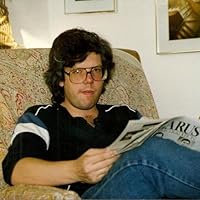
"It was dawn; he lay on the hard reformatory bed and decided to start reading books in the library so he would never be a bum, no matter what he worked at to make a living, which was the decision of a great idealist."
Knights of the Road
https://youtu.be/SQKclkBD7F0
Knights of the Road
https://youtu.be/SQKclkBD7F0
August 18, 2020
A mess of a book, some unbearable, some brilliant. At times I did not think I would finish, other times, I didn't want it to end.

July 25, 2011
This book is the definition of "bromance". It is quite funny that in the introduction Ginsberg says that Jack and Neil would probably both have benefited from a more "physical" relationship. But this book is such a labour of love. All the things that Jack loves best about America summed up in Neil Cassady. When reading it in places I got the feeling that "Cody" was Coyote of American myth, particularly in a more modern urban setting. Kerouac's prose was astounding in this, sentances going on and on gloriously. Even while talking about horrible things your just surrounded by so much beauty that it doesn't matter, everything becomes glorious. I'm really glad I read Carolyn Cassady's biography first as it really put everything in context, particularly the tapes of Neil and Jack drunk and high. The tapes are so perfect. It's fascinating to see the way different drugs and booze made them act differently. The first night stoned off their asses where they can't remember for more than a few sentances what they're talking about, (like a very humourous early podcast) to the last night where Jack practically passes out and Neil ends up rambling away with Carolyn only half listening. It's de-mythifying in a way, did anyone need to know about the warts on Jack's dick? But honest and insightfull. I'm sure so many essays have been written about the tapes. But then honestly that's missing the point because it's the night that you sit around chatting with your closest friends and the absurd stuff that you come up with. And it was interesting to hear them discuss the tragedy of June, their previous adventures and mispent youth. It reminded me of people who no longer do all the things they used to but remember how great the past was. (Despite being filled with theives, murderes, drug addicts...) And there are really touching moments, not only Jack's confession of love, but when he mentions that he thinks he's becoming an alcoholic and Neal says he knows, and then the subject drops. Or when they sit around wondering how Burroughs will die, and it's tragic cause they both end up dying so much sooner. And then there's another beautiful chaotic prose section again, with so much insight and love. It's funny cause I don't think Neil was as great as Jack did but I can read Jack writing about him and love it. There's no story here just chaos around a character and it's gorgeous. I borrowed this book from the library but will definitely have to buy my own copy as there's just so much in here it'll keep me busy for years. This might end up being the book that is the one that's the answer to the "if you were stuck on a desert island and could only bring one book what would it be?" As novels or stories I like other books of Kerouac's better. But this one is vast and fantastic and will definitely need a lot of re-reading.

February 15, 2012
I may only have enjoyed 30 pages of this. Most of it is drugged out stupidity. Cody and Jack both struck me as complete assholes.
The only good things I take away from this book are the memories of where I was when I read it. The first half I read curled up in bed beside Sean. The second half I read on the boat trip around Komodo National park.
The only good things I take away from this book are the memories of where I was when I read it. The first half I read curled up in bed beside Sean. The second half I read on the boat trip around Komodo National park.

February 3, 2017
This one was quite the journey...much more difficult than any of Kerouac's works I've read before but essential if you want to get to know Kerouac as a writer.
December 16, 2024
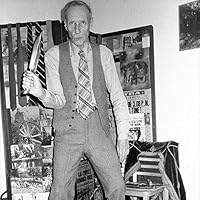
’cody doesn't realize how much i love him.'
was it casual when i wrote an entire six hundred page novel about you?

August 9, 2025
It took my ages to read this, plus the teensy font was headache inducing, but it won a special place in my heart. Everything's painted out beautifully in prose and it shares a bunch about the past. It's like you're seeings snippets of another life, things we don't really have acess to.
I like what he writes in the introduction, "this is a young book"; I can really see that. It's had bleak notes, an "end of the world" kind of feeling, but takes a very romantic stance, finding and capturing beauty and livelyness.
At about page 330 it's a subtle shift and from then on is what I most enjoyed reading. The tape recordings were entertaining too; I tend to like listening to people just reencounting stories. Oh, and I was also fascinated reading about Cody's (/Neal's) early life in Denver.
I feel like there's a lot in there I wouldn't have found otherwise, just in terms of what I know of the world.
I like what he writes in the introduction, "this is a young book"; I can really see that. It's had bleak notes, an "end of the world" kind of feeling, but takes a very romantic stance, finding and capturing beauty and livelyness.
At about page 330 it's a subtle shift and from then on is what I most enjoyed reading. The tape recordings were entertaining too; I tend to like listening to people just reencounting stories. Oh, and I was also fascinated reading about Cody's (/Neal's) early life in Denver.
I feel like there's a lot in there I wouldn't have found otherwise, just in terms of what I know of the world.
April 24, 2026
I like Visions of Cody but I would not say it is his best work (3/5), although the audio version of the book is exceptional (4/5). I recommend that as the preferred way to consume this book. The audiobook version really brings the Beat generation vibe to life and makes it work in a way the printed text just wasn't for me.

October 27, 2013
This is not the book for a new-comer to Kerouac; it can be tough going. I confess that I nearly stopped reading it about halfway through, and I've been on a steady diet of Kerouac since last March. I'm glad I stayed with it.
The book can be considered a companion to On the Road because Visions of Cody explores the Dean Moriarty (called Cody Pomeray in Visions) character and the friendship he and Kerouac (Jack Duluoz) shared. That friendship was at its strongest in the years covered by On the Road. Once those years had passed the relationship faded. To paraphrase Cody Pomeray in Visions, "What do we have to talk about together? We've already said it all."
This comes as a great loss to Kerouac (as Duluoz), whose life has been filled with losses of one kind or another. Some of the saddest stuff I've ever read comes in the last third of the book, when Jack Duluoz realizes that he and Cody have drifted apart. The end of the book is an elegy to a friendship Kerouac cherished. It has come to an end, as all things must.
The transcripts of conversations between Jack and Cody can be hard to get through. Kerouac wanted to get everything down on paper, avoiding as much as possible the filtering and self-editing a writer does even when doing a rough draft. There is no underlying organizational principle in these sections; much is said, then said again, and the conversation can be frustratingly self-referential. But the reward for the person who remains patient and "listens" to the improvisatory, be-bop flow of ideas exchanged between Jack and Cody is a deeper appreciation for Kerouac the man and the writer, a man who said he was born to write, who was possessed of a deep, sensitive, and empathetic nature and brilliant writing talent.
The book can be considered a companion to On the Road because Visions of Cody explores the Dean Moriarty (called Cody Pomeray in Visions) character and the friendship he and Kerouac (Jack Duluoz) shared. That friendship was at its strongest in the years covered by On the Road. Once those years had passed the relationship faded. To paraphrase Cody Pomeray in Visions, "What do we have to talk about together? We've already said it all."
This comes as a great loss to Kerouac (as Duluoz), whose life has been filled with losses of one kind or another. Some of the saddest stuff I've ever read comes in the last third of the book, when Jack Duluoz realizes that he and Cody have drifted apart. The end of the book is an elegy to a friendship Kerouac cherished. It has come to an end, as all things must.
The transcripts of conversations between Jack and Cody can be hard to get through. Kerouac wanted to get everything down on paper, avoiding as much as possible the filtering and self-editing a writer does even when doing a rough draft. There is no underlying organizational principle in these sections; much is said, then said again, and the conversation can be frustratingly self-referential. But the reward for the person who remains patient and "listens" to the improvisatory, be-bop flow of ideas exchanged between Jack and Cody is a deeper appreciation for Kerouac the man and the writer, a man who said he was born to write, who was possessed of a deep, sensitive, and empathetic nature and brilliant writing talent.

January 27, 2012
Either a 1* or a 5* considering that this had by turns some of the most masturbatory & misogynist (seriously, women in here are either silent or elevated to the form of mythos and grandeur of some sort) benzo'd & stoned ramblings ever written, & yet-- so much attention & intention given to the lost forgotten wild mania of America & the picayune that makes it just a really fucking big novel, of, yes, visions. However scattered & abstruse.
So uhh three stars or something. Would not recommend anyone else actually read this unless for a class or if you still believe that Whitman / Kerouac's America still exists, which even Kerouac himself knew that it was not, the freighthopping & hitchhiking just the detritus from post-war general sympathies and gung-ho neighborliness. My vision of Cody is that I'll get stabbed if I try and hitch a ride even 20 miles down the road. Yipe!
So uhh three stars or something. Would not recommend anyone else actually read this unless for a class or if you still believe that Whitman / Kerouac's America still exists, which even Kerouac himself knew that it was not, the freighthopping & hitchhiking just the detritus from post-war general sympathies and gung-ho neighborliness. My vision of Cody is that I'll get stabbed if I try and hitch a ride even 20 miles down the road. Yipe!

July 13, 2021
Kerouac at his most challenging - this nearly-plotless novel runs the linguistic gamut from stoned gibberish to dense, richly poetic ruminations on love, friendship, and the passage of time. The beautiful passages - and there are a great many of these - more than counterbalance the spliff-addled, less-than-entirely-lucid moments. Read it out loud.

January 23, 2017
This was a strange one. At times the writing was inspired and fantastic, and then it could be so tedious. Same themes and cast of characters as in On the Road, but uneven. Highly recommended to Kerouac fans for the sections of great writing (which even made me LOL literally a couple of times) and for historical reasons. Non-fans will probably hate it.

July 30, 2025
It started off so well. No one takes ephemeral moments to such sacred heights as Kerouac but he can't sustain the momentum. The tape transcription rambles on and the prose experiments towards the end are tough to follow.

February 19, 2020
This novel is Kerouac at his best and worst. At times this narrative pulls you along with the power of On The Road or the Dharma Bums. There are too many words though. I understand what Jack was trying to do, in the end he succeeds. He gives us as clear a description as anyone could of that complex, amazingly interesting friend of his Cody ( Neal ). I am not sorry I read it, but outside of Big Sur , it is the only Kerouac novel I had to struggle to get through.
August 3, 2024
Kerouac, Proust, Time and Memory in Visions of Cody
There are scattered references to Proust in many of Kerouac’s novels, alongside others in his journals and interviews. Although mostly slight, they serve Kerouac’s locating of himself in the 20th century current of memoir-remembrance novel writing that Proust has come to symbolize. Commentators on Kerouac stress the compatibility of Kerouac’s ideas on memory to those of Proust. Dezen Jones has cited Kerouac’s fiction as ‘The last great American novel in the form of an authentic search for lost time’ whilst Nicosia in his Biography of Kerouac (Memory Babe- pps 303, 376) underlines the fact that Kerouac and Neal Cassidy read Proust aloud to one another, (described, also, in Visions of Cody (344). In the (online) Ginsberg Project there is to be found a transcript of a university seminar where Ginsberg underlines Proust’s form of mémoire involontaire-epiphany as a key influence on Kerouac’s On the Road.
But when we look at what Kerouac actually states about Proust, particularly in Visions of Cody and here and there in his other novels, the burden is to associate the writer with the Proust of the roman flueve than that of remembrance, the madeleine and involuntary memory. In the preface to Big Sur Kerouac states:
…my work comprises one vast book like Proust’s except that my remembrances are written on the run instead of afterwards in a sick bed.
Anyone who reads all of Kerouac’s novels will note the continuities, that the same characters appearing and even speaking the same sentences and acting in similar ways yet having different names. It was Kerouac’s ambition to edit out these differences and comprehensively make his oeuvre a coherent whole.
One key thing about Visions of Cody is that it has an expansiveness that is missing in On the Road: it is the lopped-off other half of that novel. Kerouac was bullied by his editor Malcolm Cowley and know-it-all Beats like Ginsberg to cut-down the long roll that was the original of On the Road. In Visions he was in a position as a successful author to resist their advice to cut (particularly the tape transcripts). So where On the Road has something of a compressed spontaneity, with characters bouncing around the nucleus of Dean Moriarty, Visions was allowed to be more free flowing, the prose truly spontaneous and expansive.
So we see in Visions of Cody Kerouac’s prose contrasting to the type of highly controlled, non-spontaneous writing that Proust produced in his pursuit of lost time, the weighty aesthetic means (a Bergsonian aspect – see below) to evoke remembrance. However, there is in Proust’s idea of mémoire involontaire something that is uncontrolled as it impacts on the individual. This type of memory is ‘unmotivated’, something that flashes up and disturbs the present as a result of ‘prompts’ like the madeleine or other seemingly trivial objects (on this interpretation see Deleuze, Proust and Signs pps 49-96).
Proust’s highly measured writing, his narrative structured (avoiding repetition!) contrasts to Kerouac’s spontaneous prose which gets across to the reader the experience of present time, but one that is also pregnant with future as much as past memories. It is Visions of Cody, much more than On the Road, that shows that Kerouac has very different concerns than Proust when it comes to time, memory and remembrance. For one thing, the ‘total’ recall form of remembrance in Proust’s terms of involuntary memory is not preeminent. For Kerouac it is forced memory, not involuntary memory, that dominates - memory as active recall in the ‘and now’ or hurly-burley of the present that is key. Thus we find Kerouac both lauding and rejecting Proust within a sentence, stressing at the end that all memory is ephemeral – all (i.e. all that was uniquely original) will inevitably be lost:
Oh Proust! Had I been your kind of …writer, I’d give a description of that eaten and mungy face, prophecy of all men’s sorrow, no rivers no lips no starlit cunts for that sweet old loser, and all is ephemeral, all is lost anyway. (Desolation Angels: 99)
In Visions of Cody the tape transcripts of Kerouac’s conversation with Cassidy are evidential, a modern, technological, aide memoire enabling an evaluation as well as an evoking of past time. For Kerouac, audiotaping offers a means to develop the ‘sprawling logic’ of his type of roman flueve:
I could keep the most complete recording the world which in itself could be divided into twenty massive and pretty interesting volumes of tapes describing activities everywhere and excitements and thoughts of mad valuable me and it would really have a shape but a crazy big shape yet just as logical as a novel by Proust because I do keep on harkening back…128-9
Kerouac here is placing himself consciously in contrast to Proust’s highly individualistic-personal ‘redemptive’ understanding of mémoire involontaire. Kerouac more often than not in Visions of Cody sees the practice of writing about the present as a process of enhancing memory, apparent in this quote from dialogue about recall in the tape transcript section:
…what it was -what it actually was, was a recalling right now on my part, a recalling of me having either told about it or thought about the bed [in Irwin’s room, where he had a brief liaison with a woman] concretely before, see, so therefore I, all I did now was re – go back to that memory and bring up a little rehash of, ah, pertinent things, as far as I can remember, in little structure line, a skeletonized thing of the – what I thought earlier, and that’s what one does you know, you know when you go back and remember about a thing that you clearly thought out and went around before, you know what I’m saying
Of course, Proust would criticize these types of conscious reflections as ‘forced memory’ lacking the ‘truth’ to past experience found via involuntary memory, perhaps saying something like ‘you can’t tape smells or taste!’. But Kerouac likes the idea of taping because for him the moment is ultimately ‘ungraspable’:
…we who make the mad night all the way (four-way sex orgies, three-day conversations, uninterrupted transcontinental drives) have that momentary glumness that advertises the need for sleep – reminds us it is possible to stop all this – more so reminds us that the moment is ungraspable, is already gone… (31)
Nevertheless, in Visions of Cody 20th century technologies like the tape recorder and cinema are embraced by Kerouac as means to capture sight and sound in actuality. In the section based on Kerouac seeing Joan Crawford filming, ‘Joan Rawshanks in the Fog’, we find Kerouac welcoming these technologies as tools for assessing the actuality of what is past, their ability to record in real time. Kerouac underlines not so much the flow of still images at 24 fps in cinematic film but the time of production ‘Takes’. In takes time in the process of cinematic production is covered-up by the flow of images that gives audiences an illusion of immediacy.
This contrast between the two writers’ views on time and remembrance can be referenced in the different ways Bergson conceptualized time. Kerouac not only read Proust but also Bergson (on this see Nicosia: Memory Babe – 145) whose ideas of personal time, durée, is widely acknowledged as a key influence on Proust. But whilst Proust privileges durée and the novelist’s art as the means to convey the individual’s experience of regaining time, Kerouac is perhaps closer to the Bergson of time as ‘a continuum’, or the time of ‘creative evolution’. This is a type of longue durée, that might convey experiences that may only bear significance in the future. In his journals Kerouac remarks on how present experience may be influenced by the longue durée:
When someone winks at me I take this as being a serious invocation to memory of some fact we both entertained, and still do entertain, in living, and has no limit. Therefore the wink may be a hint of several centuries old between us, or older with the intention of communicating to me something I have forgotten due to sheer prurience and inability to understand or be straight. (Brinkley, D (ed) Windblown World: the journals of Jack Kerouac 231)
In Visions of Cody such intuitive feelings that Kerouac’s characters experience are suggestive that even their own personal present may provide fodder in the longue durée for future expression or recovery. In the transcripts section, we find Cody (in contrast to Cassidy’s manifestation as the time-tabling Dean Moriarty in On the Road) stressing how the time of past experience will be inevitably subject to reinterpretation in the process of active recall, or more generally subject to the concerns of the living in the present. This convoluted ‘real-time’ transcript of Kerouac’s recording of his and Cody’s rambling discussions about memory is mainly evidence of Cassidy’s thinking. But although Cassidy/Cody may appear to be lord of misrule, master of the moment (or, in the gambling sections of Visions and On the Road, someone who likes calculating odds on the future). But in his comments on the transcripts Kerouac, ironically, wraps Cody’s words around with classical, mythological and other longue durée-type historical references:
Cody has a broken nose that gives a ridge to his bone, Grecian and slight, and a soft nose-end that only slightly Romanizes down but not like a banana nose, it is exactly the nose of a Roman warrior or prelate and like nose I once saw in the sketches of Leonardo da Vinci that he has made in the sunny streets of active day in old medieval Italy […] Cody’s cheekbones are smooth, makes an arcade-covering for his mouth whenever demurely he presses and prunes it together, or warps, or persimmons it, for a moment of patience, which usually comes after a statement like he made about Time, patience to await the foolish unconsidered words ever ready to blurt from the mouths not the minds of poor moral humankind. (343)
In some of Kerouac’s other novels this attitude to time and memory is also to be found. In Desolation Angels Kerouac refers to the role of irrelevant signs, rather than Proustian relevant signs like the madeleine, in evoking memory. These have the character of vague historical presences permeating themselves into personal experience:
[Rose Wise Lazuli] Reminds me of my Aunt Clementine but not like her at all – ‘Who does she remind me of?’ I keep asking myself – she reminds me of an ancient lover I had in some other place… (184-5)
In Maggie Cassidy Kerouac states that in ‘the cables by the factory by the canal I understood future dreams’ (55) or in the following quote that the dead might still have the ability to emit signs:
Ah life, God – we wont find them any more the Nova Scotias of flowers! No more saved afternoons! The shadows, the ancestors, they’ve all walked in the dust of 1900 seeking the new toys of the twentieth century just as Celine says… (41)
Visions of Cody is an important novel in conveying how far Kerouac is different from Proust in regard to time and memory. Whereas Proust stresses the personal experience of durée as being recovered by involuntary memory, Kerouac is much more about how recall is often an editing or enhancement of past time or experience. Whereas Bergsonian longue durée wasn’t important for Proust, for Kerouac’s approach to memory it is suggestive, relating to how he saw memories which may be impersonal in origin springing up in the present. Proust may be all about remembrance, but his stress is on personal memory. Kerouac, in contrast, may appear to be all about the present, but memory figures there, personal but also likely to be reconfigured or influenced by myths, visions or intuitive thoughts.
For a properly formatted version and other reviews visit: www.cantab.net/users/john.myles
There are scattered references to Proust in many of Kerouac’s novels, alongside others in his journals and interviews. Although mostly slight, they serve Kerouac’s locating of himself in the 20th century current of memoir-remembrance novel writing that Proust has come to symbolize. Commentators on Kerouac stress the compatibility of Kerouac’s ideas on memory to those of Proust. Dezen Jones has cited Kerouac’s fiction as ‘The last great American novel in the form of an authentic search for lost time’ whilst Nicosia in his Biography of Kerouac (Memory Babe- pps 303, 376) underlines the fact that Kerouac and Neal Cassidy read Proust aloud to one another, (described, also, in Visions of Cody (344). In the (online) Ginsberg Project there is to be found a transcript of a university seminar where Ginsberg underlines Proust’s form of mémoire involontaire-epiphany as a key influence on Kerouac’s On the Road.
But when we look at what Kerouac actually states about Proust, particularly in Visions of Cody and here and there in his other novels, the burden is to associate the writer with the Proust of the roman flueve than that of remembrance, the madeleine and involuntary memory. In the preface to Big Sur Kerouac states:
…my work comprises one vast book like Proust’s except that my remembrances are written on the run instead of afterwards in a sick bed.
Anyone who reads all of Kerouac’s novels will note the continuities, that the same characters appearing and even speaking the same sentences and acting in similar ways yet having different names. It was Kerouac’s ambition to edit out these differences and comprehensively make his oeuvre a coherent whole.
One key thing about Visions of Cody is that it has an expansiveness that is missing in On the Road: it is the lopped-off other half of that novel. Kerouac was bullied by his editor Malcolm Cowley and know-it-all Beats like Ginsberg to cut-down the long roll that was the original of On the Road. In Visions he was in a position as a successful author to resist their advice to cut (particularly the tape transcripts). So where On the Road has something of a compressed spontaneity, with characters bouncing around the nucleus of Dean Moriarty, Visions was allowed to be more free flowing, the prose truly spontaneous and expansive.
So we see in Visions of Cody Kerouac’s prose contrasting to the type of highly controlled, non-spontaneous writing that Proust produced in his pursuit of lost time, the weighty aesthetic means (a Bergsonian aspect – see below) to evoke remembrance. However, there is in Proust’s idea of mémoire involontaire something that is uncontrolled as it impacts on the individual. This type of memory is ‘unmotivated’, something that flashes up and disturbs the present as a result of ‘prompts’ like the madeleine or other seemingly trivial objects (on this interpretation see Deleuze, Proust and Signs pps 49-96).
Proust’s highly measured writing, his narrative structured (avoiding repetition!) contrasts to Kerouac’s spontaneous prose which gets across to the reader the experience of present time, but one that is also pregnant with future as much as past memories. It is Visions of Cody, much more than On the Road, that shows that Kerouac has very different concerns than Proust when it comes to time, memory and remembrance. For one thing, the ‘total’ recall form of remembrance in Proust’s terms of involuntary memory is not preeminent. For Kerouac it is forced memory, not involuntary memory, that dominates - memory as active recall in the ‘and now’ or hurly-burley of the present that is key. Thus we find Kerouac both lauding and rejecting Proust within a sentence, stressing at the end that all memory is ephemeral – all (i.e. all that was uniquely original) will inevitably be lost:
Oh Proust! Had I been your kind of …writer, I’d give a description of that eaten and mungy face, prophecy of all men’s sorrow, no rivers no lips no starlit cunts for that sweet old loser, and all is ephemeral, all is lost anyway. (Desolation Angels: 99)
In Visions of Cody the tape transcripts of Kerouac’s conversation with Cassidy are evidential, a modern, technological, aide memoire enabling an evaluation as well as an evoking of past time. For Kerouac, audiotaping offers a means to develop the ‘sprawling logic’ of his type of roman flueve:
I could keep the most complete recording the world which in itself could be divided into twenty massive and pretty interesting volumes of tapes describing activities everywhere and excitements and thoughts of mad valuable me and it would really have a shape but a crazy big shape yet just as logical as a novel by Proust because I do keep on harkening back…128-9
Kerouac here is placing himself consciously in contrast to Proust’s highly individualistic-personal ‘redemptive’ understanding of mémoire involontaire. Kerouac more often than not in Visions of Cody sees the practice of writing about the present as a process of enhancing memory, apparent in this quote from dialogue about recall in the tape transcript section:
…what it was -what it actually was, was a recalling right now on my part, a recalling of me having either told about it or thought about the bed [in Irwin’s room, where he had a brief liaison with a woman] concretely before, see, so therefore I, all I did now was re – go back to that memory and bring up a little rehash of, ah, pertinent things, as far as I can remember, in little structure line, a skeletonized thing of the – what I thought earlier, and that’s what one does you know, you know when you go back and remember about a thing that you clearly thought out and went around before, you know what I’m saying
Of course, Proust would criticize these types of conscious reflections as ‘forced memory’ lacking the ‘truth’ to past experience found via involuntary memory, perhaps saying something like ‘you can’t tape smells or taste!’. But Kerouac likes the idea of taping because for him the moment is ultimately ‘ungraspable’:
…we who make the mad night all the way (four-way sex orgies, three-day conversations, uninterrupted transcontinental drives) have that momentary glumness that advertises the need for sleep – reminds us it is possible to stop all this – more so reminds us that the moment is ungraspable, is already gone… (31)
Nevertheless, in Visions of Cody 20th century technologies like the tape recorder and cinema are embraced by Kerouac as means to capture sight and sound in actuality. In the section based on Kerouac seeing Joan Crawford filming, ‘Joan Rawshanks in the Fog’, we find Kerouac welcoming these technologies as tools for assessing the actuality of what is past, their ability to record in real time. Kerouac underlines not so much the flow of still images at 24 fps in cinematic film but the time of production ‘Takes’. In takes time in the process of cinematic production is covered-up by the flow of images that gives audiences an illusion of immediacy.
This contrast between the two writers’ views on time and remembrance can be referenced in the different ways Bergson conceptualized time. Kerouac not only read Proust but also Bergson (on this see Nicosia: Memory Babe – 145) whose ideas of personal time, durée, is widely acknowledged as a key influence on Proust. But whilst Proust privileges durée and the novelist’s art as the means to convey the individual’s experience of regaining time, Kerouac is perhaps closer to the Bergson of time as ‘a continuum’, or the time of ‘creative evolution’. This is a type of longue durée, that might convey experiences that may only bear significance in the future. In his journals Kerouac remarks on how present experience may be influenced by the longue durée:
When someone winks at me I take this as being a serious invocation to memory of some fact we both entertained, and still do entertain, in living, and has no limit. Therefore the wink may be a hint of several centuries old between us, or older with the intention of communicating to me something I have forgotten due to sheer prurience and inability to understand or be straight. (Brinkley, D (ed) Windblown World: the journals of Jack Kerouac 231)
In Visions of Cody such intuitive feelings that Kerouac’s characters experience are suggestive that even their own personal present may provide fodder in the longue durée for future expression or recovery. In the transcripts section, we find Cody (in contrast to Cassidy’s manifestation as the time-tabling Dean Moriarty in On the Road) stressing how the time of past experience will be inevitably subject to reinterpretation in the process of active recall, or more generally subject to the concerns of the living in the present. This convoluted ‘real-time’ transcript of Kerouac’s recording of his and Cody’s rambling discussions about memory is mainly evidence of Cassidy’s thinking. But although Cassidy/Cody may appear to be lord of misrule, master of the moment (or, in the gambling sections of Visions and On the Road, someone who likes calculating odds on the future). But in his comments on the transcripts Kerouac, ironically, wraps Cody’s words around with classical, mythological and other longue durée-type historical references:
Cody has a broken nose that gives a ridge to his bone, Grecian and slight, and a soft nose-end that only slightly Romanizes down but not like a banana nose, it is exactly the nose of a Roman warrior or prelate and like nose I once saw in the sketches of Leonardo da Vinci that he has made in the sunny streets of active day in old medieval Italy […] Cody’s cheekbones are smooth, makes an arcade-covering for his mouth whenever demurely he presses and prunes it together, or warps, or persimmons it, for a moment of patience, which usually comes after a statement like he made about Time, patience to await the foolish unconsidered words ever ready to blurt from the mouths not the minds of poor moral humankind. (343)
In some of Kerouac’s other novels this attitude to time and memory is also to be found. In Desolation Angels Kerouac refers to the role of irrelevant signs, rather than Proustian relevant signs like the madeleine, in evoking memory. These have the character of vague historical presences permeating themselves into personal experience:
[Rose Wise Lazuli] Reminds me of my Aunt Clementine but not like her at all – ‘Who does she remind me of?’ I keep asking myself – she reminds me of an ancient lover I had in some other place… (184-5)
In Maggie Cassidy Kerouac states that in ‘the cables by the factory by the canal I understood future dreams’ (55) or in the following quote that the dead might still have the ability to emit signs:
Ah life, God – we wont find them any more the Nova Scotias of flowers! No more saved afternoons! The shadows, the ancestors, they’ve all walked in the dust of 1900 seeking the new toys of the twentieth century just as Celine says… (41)
Visions of Cody is an important novel in conveying how far Kerouac is different from Proust in regard to time and memory. Whereas Proust stresses the personal experience of durée as being recovered by involuntary memory, Kerouac is much more about how recall is often an editing or enhancement of past time or experience. Whereas Bergsonian longue durée wasn’t important for Proust, for Kerouac’s approach to memory it is suggestive, relating to how he saw memories which may be impersonal in origin springing up in the present. Proust may be all about remembrance, but his stress is on personal memory. Kerouac, in contrast, may appear to be all about the present, but memory figures there, personal but also likely to be reconfigured or influenced by myths, visions or intuitive thoughts.
For a properly formatted version and other reviews visit: www.cantab.net/users/john.myles
March 27, 2026
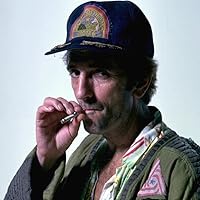
Too rhizomatic.
This was probably a blast for Kerouac to write but it wasn’t so fun to read, even when on tea as they say. I much preferred reading Neal Cassady’s autobiography and his own memories from his life than reading Jack Kerouac’s so-called visions of Cody (I say so-called because Kerouac was incapable of writing about anyone but himself and young girls’ cunts as he calls them; this book should’ve been called Glimpses of Cody instead of Visions of Cody). I guess I wanted more from Neal Cassady and less from Jack Kerouac.
This was probably a blast for Kerouac to write but it wasn’t so fun to read, even when on tea as they say. I much preferred reading Neal Cassady’s autobiography and his own memories from his life than reading Jack Kerouac’s so-called visions of Cody (I say so-called because Kerouac was incapable of writing about anyone but himself and young girls’ cunts as he calls them; this book should’ve been called Glimpses of Cody instead of Visions of Cody). I guess I wanted more from Neal Cassady and less from Jack Kerouac.
Displaying 1 - 30 of 183 reviews