

What do you think?

Harlem Cycle #1
A Rage in Harlem
A Rage in Harlem is a ripping introduction to Coffin Ed Johnson and Grave Digger Jones, patrolling New York City’s roughest streets in Chester Himes’s groundbreaking Harlem Detectives series.
For love of fine, wily Imabelle, hapless Jackson surrenders his life savings to a con man who knows the secret of turning ten-dollar bills into hundreds—and then he steals from his boss, only to lose the stolen money at a craps table. Luckily for him, he can turn to his savvy twin brother, Goldy, who earns a living—disguised as a Sister of Mercy—by selling tickets to Heaven in Harlem. With Goldy on his side, Jackson is ready for payback.
For love of fine, wily Imabelle, hapless Jackson surrenders his life savings to a con man who knows the secret of turning ten-dollar bills into hundreds—and then he steals from his boss, only to lose the stolen money at a craps table. Luckily for him, he can turn to his savvy twin brother, Goldy, who earns a living—disguised as a Sister of Mercy—by selling tickets to Heaven in Harlem. With Goldy on his side, Jackson is ready for payback.
159 pages, Paperback
First published January 1, 1957
About the author
Chester Himes
69 books510 followersChester Bomar Himes began writing in the early 1930s while serving a prison sentence for armed robbery. From there, he produced short stories for periodicals such as Esquire and Abbott's Monthly. When released, he focussed on semi-autobiographical protest novels.
In 1953, Himes emigrated to France, where he was approached by Marcel Duhamel of Gallimard to write a detective series for Série Noire, which had published works from the likes of Raymond Chandler, Dashiell Hammett and Jim Thompson. Himes would be the first black author included in the series. The resulting Harlem Cycle gained him celebrity when he won France's Grand Prix de Littérature Policière for La Reine des Pommes (now known in English as A Rage in Harlem) in 1958. Three of these novels have been adapted into movies: Cotton Comes to Harlem, directed by Ossie Davis in 1970; Come Back, Charleston Blue (based on The Heat's On) in 1972; and A Rage in Harlem, starring Gregory Hines and Danny Glover in 1991.
In 1968, Himes moved to Spain where he made his home until his death.
In 1953, Himes emigrated to France, where he was approached by Marcel Duhamel of Gallimard to write a detective series for Série Noire, which had published works from the likes of Raymond Chandler, Dashiell Hammett and Jim Thompson. Himes would be the first black author included in the series. The resulting Harlem Cycle gained him celebrity when he won France's Grand Prix de Littérature Policière for La Reine des Pommes (now known in English as A Rage in Harlem) in 1958. Three of these novels have been adapted into movies: Cotton Comes to Harlem, directed by Ossie Davis in 1970; Come Back, Charleston Blue (based on The Heat's On) in 1972; and A Rage in Harlem, starring Gregory Hines and Danny Glover in 1991.
In 1968, Himes moved to Spain where he made his home until his death.
Ratings & Reviews
Friends & Following
Create a free account to discover what your friends think of this book!
Community Reviews
Displaying 1 - 30 of 868 reviews

October 24, 2021
Descriptive!
Get out the medication because somebody is believing in the impossible!
A story about Harlem and con artists and delusional love 💕
Jackson is in love with Imabelle, but does she love him, too? When he is conned out of his money, he knows that she is not involved; and nobody can convince him otherwise.
I don’t know much about the citizenry of today’s Harlem, but they were certainly rocking in the past.
The evil are horribly evil. The ugly, ferociously ugly. The gullible especially gullible. The stupid are brilliantly stupid.
This story is as much about Harlem as it is about gold ore and a good con.
Exceptional dialogue and brilliant scenic descriptions of times, characters and places. The descriptive paragraphs give widespread vistas that come with abrasive sounds and smells.
A new author for me, and I am in love with his explosive writing.
Well deserved five stars. ⭐️⭐️⭐️⭐️⭐️
Get out the medication because somebody is believing in the impossible!
A story about Harlem and con artists and delusional love 💕
Jackson is in love with Imabelle, but does she love him, too? When he is conned out of his money, he knows that she is not involved; and nobody can convince him otherwise.
I don’t know much about the citizenry of today’s Harlem, but they were certainly rocking in the past.
The evil are horribly evil. The ugly, ferociously ugly. The gullible especially gullible. The stupid are brilliantly stupid.
This story is as much about Harlem as it is about gold ore and a good con.
Exceptional dialogue and brilliant scenic descriptions of times, characters and places. The descriptive paragraphs give widespread vistas that come with abrasive sounds and smells.
A new author for me, and I am in love with his explosive writing.
Well deserved five stars. ⭐️⭐️⭐️⭐️⭐️

March 17, 2016
Speaking of rage ... it surprises me that Himes wasn't consumed with rage against America even sooner. Not as a little boy in Arkansas, when he watched his injured older brother refused admittance to an all-white hospital. Not in Cleveland, when he fell down an elevator shaft and was refused by a white hospital too. Not in Columbus, when—in spite of his high I.Q.—he was expelled from Ohio State for one stupid, harmless prank. Not even when, at the age of nineteen, the police suspended him in chains—upside down—and beat him until he confessed to armed robbery did Himes give into bitterness. Instead, he used his time in the Ohio State Penitentiary to hone his writing skills and emerged on parole eight years later with four stories in Esquire to his credit and a growing reputation.
It was only later, after he moved to L.A. to seek his fortune, after he had published the novel If He Hollers Let Him Go (1945) to considerable acclaim (catching even Frantz Fanon's attention), after he was hired as a screenwriter by Warner Brothers, that his rage against America got the better of him. Jack Warner, learning of his hiring, said, “I don't want no niggers on this lot.” He was fired, and not long after, Himes moved to France, never to return to the U.S.A.
The “Harlem Detective” series (featuring Coffin Ed Johnson and Gravedigger Jones) consists of novels Himes wrote in Paris to make money. He never considered them to be on a level with his “serious novels,” but on the basis of the first book, A Rage in Harlem, I believe that this series deserves a place of honor all its own. (So did the French, who honored him with the Grand Prix de Littérature Policière in 1958.)
The novel is about an undertaker's assistant named Jackson—“Coffin” and “Gravedigger” are only minor characters in this first adventure—who, along with his brother, a cross-dressing panhandler and police-informant, goes looking for Jackson's girlfriend Imabelle and her “husband” Slim who have bilked Jackson out of a good deal of money, money that he stole from his undertaker boss, Mr. H. Exodus Clay. Misunderstandings, complications and some really good chases ensue.
The whole thing, spiced with sleazy sex and brutal violence, is leavened with a large dose of the darkest comedy. And all the time Himes is creating a vivid portrait of an improbable—but believable—Harlem, painted in vivid prose.
Looking eastward from the towers of Riverside Church, perched among the university buildings on the high banks of the Hudson River, in a valley far below, waves of gray rooftops distort the perspective like the surface of a sea. Below the surface, in the murky waters of fetid tenements is a city of black people who are convulsed in desperate living, like the voracious churning of millions of hungry cannibal fish. Blind mouths eating their own guts. Stick in a hand and draw back a nub.
This is Harlem.

November 3, 2016
Read by Samuel Jackson, this was an absolute auditory treat, keeping me transfixed on the drive from Georgia to Kentucky.
Expecting something more of the snoozy literary bent, I discovered a tight little story of the dark comedy-thriller school set in Harlem in the 1950s. Jackson has scraped together every last cent to get his money 'raised up' from $10 bills to $100 bills. Though he has a job in a funeral home, he would like to make a good life for his new girlfriend... at least, once she gets divorced from her missing husband. As the money 'cooks,' the stove blows up and a FBI agent raids the kitchen. Jackson finds himself holding the bag and driven to contact his twin brother who operates in the fringes of the criminal world. What follows is a bunch of escalating craziness as everyone tries for a cut of the action, and poor ol' Jackson the character is the simpleton pivot on which it all turns.
It turns out that hidden beneath the rather madcap plotting is a great deal of social commentary. I loved Himes' sly insinuations through rich characterization and setting. Instead of the "it was this way, we were so poor that way, racial inequity was terrible that way," he uses solid and more emotionally powerful examples to demonstrate various realities. For instance, at one point someone is being chased by a white policeman and there's a bit of back-and-forth about what it means to give any information to the police from the perspective of a black man.
I was a little exhausted by the escalating insanity by the end (driving as much as listening, I expect, as the audio comes in under 6 hours), but the voice acting by Jackson the actor was effing a-ma-zing. He voiced an indigent landlady, a stiff white detective, a black reverend, a junkman, slick con men, and doper transvestites without missing a beat. I loved his drunk 'Fats' voice at the railway station and his pompous Reverend voice. The acting was excellent and brought a flavor to it that I would have missed reading on my own. There was a time or two when quality of the recording changed between chapters, but it soon resumed enjoyable. Himes' writing is very descriptive, evoking the flavor of a time period in Harlem and the lives of various residents. Himes makes various points about 'black dialect,' country versus city, and the 'educated' voice. The skill of the voice acting absolutely added to the quality of the experience.
Five stars for the audio.
A large chunk of gold for Kemper for reviewing the audio and bringing it to my attention. Just check under the coal chute.
Expecting something more of the snoozy literary bent, I discovered a tight little story of the dark comedy-thriller school set in Harlem in the 1950s. Jackson has scraped together every last cent to get his money 'raised up' from $10 bills to $100 bills. Though he has a job in a funeral home, he would like to make a good life for his new girlfriend... at least, once she gets divorced from her missing husband. As the money 'cooks,' the stove blows up and a FBI agent raids the kitchen. Jackson finds himself holding the bag and driven to contact his twin brother who operates in the fringes of the criminal world. What follows is a bunch of escalating craziness as everyone tries for a cut of the action, and poor ol' Jackson the character is the simpleton pivot on which it all turns.
It turns out that hidden beneath the rather madcap plotting is a great deal of social commentary. I loved Himes' sly insinuations through rich characterization and setting. Instead of the "it was this way, we were so poor that way, racial inequity was terrible that way," he uses solid and more emotionally powerful examples to demonstrate various realities. For instance, at one point someone is being chased by a white policeman and there's a bit of back-and-forth about what it means to give any information to the police from the perspective of a black man.
I was a little exhausted by the escalating insanity by the end (driving as much as listening, I expect, as the audio comes in under 6 hours), but the voice acting by Jackson the actor was effing a-ma-zing. He voiced an indigent landlady, a stiff white detective, a black reverend, a junkman, slick con men, and doper transvestites without missing a beat. I loved his drunk 'Fats' voice at the railway station and his pompous Reverend voice. The acting was excellent and brought a flavor to it that I would have missed reading on my own. There was a time or two when quality of the recording changed between chapters, but it soon resumed enjoyable. Himes' writing is very descriptive, evoking the flavor of a time period in Harlem and the lives of various residents. Himes makes various points about 'black dialect,' country versus city, and the 'educated' voice. The skill of the voice acting absolutely added to the quality of the experience.
Five stars for the audio.
A large chunk of gold for Kemper for reviewing the audio and bringing it to my attention. Just check under the coal chute.

October 2, 2012
”Looking eastward from the towers of Riverside Church, perched among the university buildings on the high banks of the Hudson River, in a valley far below, waves of gray rooftops distort the perspective like the surface of a sea. Below the surface, in the murky waters of fetid tenements, a city of black people who are convulsed in desperate living, like the voracious churning of millions of hungry cannibal fish. Blind mouths eating their own guts. Stick in a hand and draw back a nub.
That is Harlem.”

For Love of Imabelle paperback first edition
This book was originally published in a paperback original under the title For Love of Imabelle. The original title is very apt because the book is all about one man's crazy obsession with a woman named Imabelle. In the 1980s an English publisher named Allison & Busby decided to reprint the Harlem Cycle in hardcover. They used the artwork of Edward Burra for the covers and for a collector like me, the great covers make adding them to my book collection that much more fun.

Savoy Ballroom by Edward Burra
Chester Himes was born in Jefferson City, Missouri in a middle class family. Both of his parents were teachers. He was accepted and expelled from Ohio State University. In 1928 he was sent to prison for armed robbery. Instead of sitting around staring at four walls worrying about his next trip to the showers he started writing short stories. He sent them out for publication and they were published. For those struggling writers out there, a stint in prison seems to lend focus to your work. (Publisher’s still like writers with a checkered past.) Not that I’m advocating prison, but maybe a monastic stint will heat up your keyboard. Himes was originally given 25 years for his crime, but was released early in 1936 into the custody of his mother.
”There were pictures of three colored men wanted in Mississippi for murder. That meant they had killed a white man because killing a colored man wasn’t considered murder in Mississippi".

Chester Himes
In the 1950s Himes moved to Paris and embraced the Bohemian lifestyle. This was a productive period for him; in fact, this book was part of that era with a publication date of 1957. His circle of friends in Paris included: Langston Hughes, Richard Wright, Malcolm X, Carl Van Vechten, Picasso, Jean Miotte, Ollie Harrington, Nikki Giovanni and Ishmael Reed. When the group decided to move on to Spain Himes went with them where he died from Parkinson’s Disease in 1984. I can only imagine how inspiring it was to be around such talent and creativity. They were also the type of people who wouldn’t judge him for having a white wife.
”Imabelle was Jackson’s woman. She was a cushioned-lipped, hot-bodied, banana-skin chick with the speckled-brown eyes of a teaser and the high-arched, ball-bearing hips of a natural-born amante. Jackson was as crazy about her as moose for doe.”

In the movie version from 1987 Forest Whitaker plays Jackson and Robin Givens plays Imabelle.
Jackson was a short, stumpy, round man with limited intelligence, and for him to get time with a high yella woman like Imabelle was like being in heaven on earth. The problem is having a woman like that makes a man ambitious and make him worry about how much money he makes. Jackson was a prime candidate for a sting. He is introduced to a man, an acquaintance of Imabelle, who has this special paper that when baked with a ten dollar bill in an oven will turn that ten dollar bill into a hundred dollar bill. Before you get excited and start looking for this magical paper...it didn’t work. If you think it is crazy to even think that a scheme like that would work that is simply because you haven’t met Imabelle.

Goldy made the cover of a later edition.
One of the more fascinating characters in the book is Jackson’s twin brother Goldy who makes his living masquerading as a nun under the moniker Sister Gabriel. He walks the streets selling “tokens to heaven” and keeping his eye peeled for any business that might be going down that could prove to be profitable for a Sister of Mercy.
”There were more bars on his itinerary than on any other comparable distance on earth. In every one the jukeboxes blared, honeysuckle-blues voices dripped stickily through jungle cries of wailing saxophones, screaming trumpets, and buckdancing piano-notes; someone was either fighting, or had just stopped fighting, or was just starting to fight, or drinking ruckus-juice and talking about fighting.”
Goldy has another problem that keeps him NEEDING money. Jackson on the run from schemers and cops comes to his brother for help.
”Goldy there’s something I want to ask you.
I got to feed my money first.
Jackson looked about for the monkey.
He’s on my back, Goldy explained.
Jackson watched him with silent disgust as Goldy took an alcohol lamp, teaspoon and a hypodermic needle from the table drawer. Goldy shook two small papers of crystal cocaine and morphine into the spoon and cooked a C and M speedball over the flame. He groaned as he banged himself in the arm while the mixture was still warm.
It’s the same stuff as Saint John the Divine used, Goldy explained.”
Now mixed up in all of this trying to make heads or tails out of what exactly is going on, are two cops who are the focus of the Harlem Cycle, although in this book they are only in a few key scenes.
”Grave Digger and Coffin Ed weren’t crooked detectives, but they were tough. They had to be tough to work for Harlem. Colored folks didn’t respect colored cops. But they respected big shiny pistols and sudden death. It was said in Harlem that Coffin Ed’s pistol would kill a rock and that Grave Digger’s would bury it.”
And when they have suspects lined up under their guns they always offer them some really down home advice. ”Don’t make graves.”

The Scarlet Woman
Jackson gets separated from Imabelle and spends most of the novel trying to find her, never once doubting her motives. She has had a bit of a rough time herself hanging around with those scheming criminals, trying to avoid church going men wanting to solicit her charms, and keeping out of the hands of the police.
”Jackson had just time to see that she was dressed in a red dress and a black coat before she fell into his arms. She smelled like burnt hair-grease, hot-bodied woman, and dime-store perfume. Jackson embraced her, holding the iron pipe clutched against her spine. She wriggled against the curve of his fat stomach and welded her rouge-greasy mouth against his dry, puckered lips.”
I think I need a shower after just reading about that hug. Do you suppose that scarlet dress has any significance? hmmm I can guarantee you significant or not Jackson doesn’t care.
This book really surprised me. I thought it was going to be one thing and turned into something different. The plot is so convoluted you might need to draw a chart with rainbow colored arrows and overlapping circles. Don’t let that worry you. Himes will bring it all together for you. I laughed out loud several times, and these days a writer really has to sneak up on me to do that. The descriptions as you can see from the few bits I shared are purple; and yet, shaded with so much originality they are a pleasure to go back and read several times. The drug use and a transvestite nun had to make this book a bit of a controversy in 1957. When I talked about it with a buddy of mine on the phone, who had read it as well, I could hear the grin on his face and there was an equally wide smile on my face as well.
If you wish to see more of my most recent book and movie reviews, visit http://www.jeffreykeeten.com
I also have a Facebook blogger page at:https://www.facebook.com/JeffreyKeeten
That is Harlem.”

For Love of Imabelle paperback first edition
This book was originally published in a paperback original under the title For Love of Imabelle. The original title is very apt because the book is all about one man's crazy obsession with a woman named Imabelle. In the 1980s an English publisher named Allison & Busby decided to reprint the Harlem Cycle in hardcover. They used the artwork of Edward Burra for the covers and for a collector like me, the great covers make adding them to my book collection that much more fun.

Savoy Ballroom by Edward Burra
Chester Himes was born in Jefferson City, Missouri in a middle class family. Both of his parents were teachers. He was accepted and expelled from Ohio State University. In 1928 he was sent to prison for armed robbery. Instead of sitting around staring at four walls worrying about his next trip to the showers he started writing short stories. He sent them out for publication and they were published. For those struggling writers out there, a stint in prison seems to lend focus to your work. (Publisher’s still like writers with a checkered past.) Not that I’m advocating prison, but maybe a monastic stint will heat up your keyboard. Himes was originally given 25 years for his crime, but was released early in 1936 into the custody of his mother.
”There were pictures of three colored men wanted in Mississippi for murder. That meant they had killed a white man because killing a colored man wasn’t considered murder in Mississippi".

Chester Himes
In the 1950s Himes moved to Paris and embraced the Bohemian lifestyle. This was a productive period for him; in fact, this book was part of that era with a publication date of 1957. His circle of friends in Paris included: Langston Hughes, Richard Wright, Malcolm X, Carl Van Vechten, Picasso, Jean Miotte, Ollie Harrington, Nikki Giovanni and Ishmael Reed. When the group decided to move on to Spain Himes went with them where he died from Parkinson’s Disease in 1984. I can only imagine how inspiring it was to be around such talent and creativity. They were also the type of people who wouldn’t judge him for having a white wife.
”Imabelle was Jackson’s woman. She was a cushioned-lipped, hot-bodied, banana-skin chick with the speckled-brown eyes of a teaser and the high-arched, ball-bearing hips of a natural-born amante. Jackson was as crazy about her as moose for doe.”

In the movie version from 1987 Forest Whitaker plays Jackson and Robin Givens plays Imabelle.
Jackson was a short, stumpy, round man with limited intelligence, and for him to get time with a high yella woman like Imabelle was like being in heaven on earth. The problem is having a woman like that makes a man ambitious and make him worry about how much money he makes. Jackson was a prime candidate for a sting. He is introduced to a man, an acquaintance of Imabelle, who has this special paper that when baked with a ten dollar bill in an oven will turn that ten dollar bill into a hundred dollar bill. Before you get excited and start looking for this magical paper...it didn’t work. If you think it is crazy to even think that a scheme like that would work that is simply because you haven’t met Imabelle.

Goldy made the cover of a later edition.
One of the more fascinating characters in the book is Jackson’s twin brother Goldy who makes his living masquerading as a nun under the moniker Sister Gabriel. He walks the streets selling “tokens to heaven” and keeping his eye peeled for any business that might be going down that could prove to be profitable for a Sister of Mercy.
”There were more bars on his itinerary than on any other comparable distance on earth. In every one the jukeboxes blared, honeysuckle-blues voices dripped stickily through jungle cries of wailing saxophones, screaming trumpets, and buckdancing piano-notes; someone was either fighting, or had just stopped fighting, or was just starting to fight, or drinking ruckus-juice and talking about fighting.”
Goldy has another problem that keeps him NEEDING money. Jackson on the run from schemers and cops comes to his brother for help.
”Goldy there’s something I want to ask you.
I got to feed my money first.
Jackson looked about for the monkey.
He’s on my back, Goldy explained.
Jackson watched him with silent disgust as Goldy took an alcohol lamp, teaspoon and a hypodermic needle from the table drawer. Goldy shook two small papers of crystal cocaine and morphine into the spoon and cooked a C and M speedball over the flame. He groaned as he banged himself in the arm while the mixture was still warm.
It’s the same stuff as Saint John the Divine used, Goldy explained.”
Now mixed up in all of this trying to make heads or tails out of what exactly is going on, are two cops who are the focus of the Harlem Cycle, although in this book they are only in a few key scenes.
”Grave Digger and Coffin Ed weren’t crooked detectives, but they were tough. They had to be tough to work for Harlem. Colored folks didn’t respect colored cops. But they respected big shiny pistols and sudden death. It was said in Harlem that Coffin Ed’s pistol would kill a rock and that Grave Digger’s would bury it.”
And when they have suspects lined up under their guns they always offer them some really down home advice. ”Don’t make graves.”

The Scarlet Woman
Jackson gets separated from Imabelle and spends most of the novel trying to find her, never once doubting her motives. She has had a bit of a rough time herself hanging around with those scheming criminals, trying to avoid church going men wanting to solicit her charms, and keeping out of the hands of the police.
”Jackson had just time to see that she was dressed in a red dress and a black coat before she fell into his arms. She smelled like burnt hair-grease, hot-bodied woman, and dime-store perfume. Jackson embraced her, holding the iron pipe clutched against her spine. She wriggled against the curve of his fat stomach and welded her rouge-greasy mouth against his dry, puckered lips.”
I think I need a shower after just reading about that hug. Do you suppose that scarlet dress has any significance? hmmm I can guarantee you significant or not Jackson doesn’t care.
This book really surprised me. I thought it was going to be one thing and turned into something different. The plot is so convoluted you might need to draw a chart with rainbow colored arrows and overlapping circles. Don’t let that worry you. Himes will bring it all together for you. I laughed out loud several times, and these days a writer really has to sneak up on me to do that. The descriptions as you can see from the few bits I shared are purple; and yet, shaded with so much originality they are a pleasure to go back and read several times. The drug use and a transvestite nun had to make this book a bit of a controversy in 1957. When I talked about it with a buddy of mine on the phone, who had read it as well, I could hear the grin on his face and there was an equally wide smile on my face as well.
If you wish to see more of my most recent book and movie reviews, visit http://www.jeffreykeeten.com
I also have a Facebook blogger page at:https://www.facebook.com/JeffreyKeeten

May 29, 2021
ترجمهی فوقالعاده خوب و روونی داشت، ولی خود کتاب اونقدرها جذبم نکرد. کلاً نمیدونم چرا با فضای جرم و جنایت امریکایی هیچ احساس نزدیکی نمیکنم. از بیلی باتگیت یا فیلم دارودستهی نیویورکیهای اسکورسیزی هم به همین دلیل خوشم نمیاد. شاید جرم و جنایت روسها بهنظرم شبیهتره به خودمون

February 10, 2016
Preface: It's taking me a couple of weeks since I finished A Rage in Harlem to decide the tone to take in writing my review. To frame it in a way that calmly, invitingly, properly, in a scholarly fashion, metaphorically, smacks every reader upside the head and, once I've gotten his/her attention, communicate persuasively that this is one of the best, most overlooked, most mis-read American novels. Ever. And it's a masterpiece. And you need to read it. So much for calm, persuasive invitation.
I also sought to write a review that was less-than-blunt and didn't reveal my personal politics and perspective on issues of race and literature in America. So much for that, too.
Warning: this isn't the usual social-media me that endeavors to smooth the edges, hang around the already converted and not make folks uncomfortable because, after all, this is entertainment for most users and I acknowledge that few seek to be made uncomfortable when they seek entertainment.
******************
First, about Chester Himes. He was born in 1909 into a middle-class academic black family. His father was a tradesman and Himes described him as “raised in the tradition of the Southern Uncle Tom.” Prior to marriage, his mother (light-skinned enough to pass for white) taught at an elite seminary in North Carolina. At 19, Himes was arrested for a few things, did 8 years in the Ohio State Penitentiary, and – in the early 1930s - began writing, for the most part short stories for magazines, and later semi-autobiographical protest novels. He also was a protege of Richard Wright. Like Wright, he self-exiled in the 1950s to Paris, where he received an offer to write a detective series for a publication that had published works of Raymond Chandler, Dashiell Hammett, etc. and Himes was the first black author included in the series. A Rage in Harlem, published in 1957 when Himes was 46 years old - is the first of his 9-book Harlem Cycle. According to a 2001 NYTimes review of a biography of Himes, Chester Himes: A Life, Himes influenced John A. Williams, Ishmael Reed, Clarence Cooper Jr., Melvin Van Peebles and Donald Goines. Walter Mosely calls Himes, “[o]ne of the most important American writers of the 20th century. . . . A quirky American genius.” All of which, collectively, makes one wonder why so few of us who consider ourselves well-read in African-American literature (and also mid-century detective novels) have heard of him. Doesn’t it?
The ostensible protagonist of A Rage in Harlem is Jackson, a naive man, not too bright, in love with a faithless, light-skinned (this part of her description matters to Himes, greatly – getting back at his mama, perhaps?) young lady, who borrows (without permission) cash from his undertaker-boss in order to take advantage of a get-rich-quick scheme, gets ripped off by a couple of ex-cons a couple of times, is duped into committing a couple of crimes, and is racing against the clock to get his money (and a hearse) back before he’s arrested by black Harlem cops, Grave Digger Jones and Coffin Ed Johnson. The only reason Jackson makes it to the end of his novel is that he is blessed with a twin brother – Goldy - who is as savvy as Jackson is naive and knows everybody in Harlem.
Goldy is married, a snitch, and earns money to support himself and his daily drug habit by dressing up as a Sister of Mercy – standing on a street corner, selling tickets to Heaven. His brother doesn’t know where he lives. Goldy is easily the most fascinating character I’ve encountered in a novel in the last several years.
The cops, Jones and Johnson? They slap a woman around, “with such savage violence it spun her out of the chair to land in a grotesque splay-legged posture on her belly on the floor, the red dress hiked so high it showed the black nylon panties she wore”. No, that slap wasn’t in self-defense. There are several police witnesses. All watch. No one intervenes. They arrest several black men, regardless of any evidence, just to make a point, and losing them jobs in the process. Their sole importance is to confirm for contemporary readers that black folk have been being arrested, had evidence planted on them and been killed by police officers of all races for at least 60 years, if there was some question about that fact. To be clear, Jones and Johnson don’t respect black folk any more than their white peers.
The real focus and star, though, of A Rage in Harlem is Harlem and its residents, in the aggregate. Himes puts the reader there, in 1955, on the street, going through the dark alleys, listening to the trains from blocks away and to conversations from 2 – 3 feet away, understanding the poverty, darkness, desperation and ugliness, and its toll on folks trying to consider themselves as people to whom the American Dream is available, but not seeing any evidence of that possibility in their immediate community. Whatever happens to Jackson, Goldy and the gang, everyone in Harlem will be getting up tomorrow and trying to get by and stay alive. Just like the day before and the day after. This novel has as much of a sense of place and community as any work written by Thomas Wolfe or William Faulkner.
Here’s a sample:
Describing Harlem residents:
and another passage:
Himes wasn’t interested in writing [mere] detective novels, per se, not that there’s anything wrong with that, as they say. While the plot of A Rage in Harlem superficially fits the detective novel framework, and the publishers’ marketing of the novel is determined to make A Rage in Harlem fit that genre, and Himes was smart enough to write what the publisher was willing to pay him to write, A Rage in Harlem is the story of a place and a people, writ large. Roughly 4 generations after the end of the Civil War, and instant freedom with little if any education, zero resources and no sense of family (parents and siblings were sold elsewhere), many black folk took themselves north to Chicago, Detroit, and New York anticipating a better life and more opportunity. Here, in A Rage in Harlem, the reader sees how that plan for betterment and freedom worked out for those who selected New York. Himes paints a picture that is almost devoid of white people. This novel is about the community into which blacks have been warehoused together and how they interact on a daily basis. Himes invites the reader to consider whether Harlem (up through at least the 1980s) was fit for Americans to raise their children, work jobs, live their lives, pursue happiness. Is Flint? To read A Rage in Harlem and focus only on the plot and what happens next, seeing it only as a detective novel, is to enjoy perhaps 65% of its charm, but inevitably results in getting frustrated with Jackon’s naivete, as – even to the very end – he stands by his woman’s faithfulness. There’s no traditional detective novel hero in A Rage in Harlem. No Spenser PI. No washed up but honest cop. But everyone’s real. Especially, Goldy. Heart be still.
On the other hand, if all you want is a well-written detective novel, and you're okay with a certain amount of violence, and you don’t care about Harlem or tenements or ugliness or police brutality or social criticism? You’re invited to enjoy A Rage in Harlem, too. Literature doesn’t get any better than this:
Finally, to those who consider A Rage in Harlem to be absurd and unrealistic, here is Hime’s perspective on his own work: “I thought I was writing realism. It never occurred to me that I was writing absurdity. Realism and absurdity are so similar in the lives of American blacks one cannot tell the difference.''
Himes is one of the most important and best American writers you’ve never heard of, and A Rage in Harlem is likely a book you haven’t read. Change that.
p.s. Notwithstanding the myriad of references to Raymond Chandler on the cover of A Rage in Harlem (which is almost impossible to find available in public libraries – whether it’s the use of “colored” or the occasional n-word, quoted as part of song lyrics of the day, the Himes’ Harlem Cycle appear to be subject to a national blacklist), there’s no Raymond Chandler here.
p.s.s. if you want to read more about A Rage in Harlem as ‘not-a-detective-novel’, here are 2 blogs I recommend.
http://www.crimesegments.com/2015/03/...
http://therapsheet.blogspot.com/2013/...
I also sought to write a review that was less-than-blunt and didn't reveal my personal politics and perspective on issues of race and literature in America. So much for that, too.
Warning: this isn't the usual social-media me that endeavors to smooth the edges, hang around the already converted and not make folks uncomfortable because, after all, this is entertainment for most users and I acknowledge that few seek to be made uncomfortable when they seek entertainment.
******************
First, about Chester Himes. He was born in 1909 into a middle-class academic black family. His father was a tradesman and Himes described him as “raised in the tradition of the Southern Uncle Tom.” Prior to marriage, his mother (light-skinned enough to pass for white) taught at an elite seminary in North Carolina. At 19, Himes was arrested for a few things, did 8 years in the Ohio State Penitentiary, and – in the early 1930s - began writing, for the most part short stories for magazines, and later semi-autobiographical protest novels. He also was a protege of Richard Wright. Like Wright, he self-exiled in the 1950s to Paris, where he received an offer to write a detective series for a publication that had published works of Raymond Chandler, Dashiell Hammett, etc. and Himes was the first black author included in the series. A Rage in Harlem, published in 1957 when Himes was 46 years old - is the first of his 9-book Harlem Cycle. According to a 2001 NYTimes review of a biography of Himes, Chester Himes: A Life, Himes influenced John A. Williams, Ishmael Reed, Clarence Cooper Jr., Melvin Van Peebles and Donald Goines. Walter Mosely calls Himes, “[o]ne of the most important American writers of the 20th century. . . . A quirky American genius.” All of which, collectively, makes one wonder why so few of us who consider ourselves well-read in African-American literature (and also mid-century detective novels) have heard of him. Doesn’t it?
The ostensible protagonist of A Rage in Harlem is Jackson, a naive man, not too bright, in love with a faithless, light-skinned (this part of her description matters to Himes, greatly – getting back at his mama, perhaps?) young lady, who borrows (without permission) cash from his undertaker-boss in order to take advantage of a get-rich-quick scheme, gets ripped off by a couple of ex-cons a couple of times, is duped into committing a couple of crimes, and is racing against the clock to get his money (and a hearse) back before he’s arrested by black Harlem cops, Grave Digger Jones and Coffin Ed Johnson. The only reason Jackson makes it to the end of his novel is that he is blessed with a twin brother – Goldy - who is as savvy as Jackson is naive and knows everybody in Harlem.
Goldy is married, a snitch, and earns money to support himself and his daily drug habit by dressing up as a Sister of Mercy – standing on a street corner, selling tickets to Heaven. His brother doesn’t know where he lives. Goldy is easily the most fascinating character I’ve encountered in a novel in the last several years.
Goldy sat across the table, silently staring at him. Goldy’s huge, black-pupiled eyes were hypnotic. They looked like glinting black pools of evil. Jackson tried to tear his gaze away but couldn’t. Finally Goldy stood up and put on his wig and bonnet. He still hadn’t said anything yet.
The cops, Jones and Johnson? They slap a woman around, “with such savage violence it spun her out of the chair to land in a grotesque splay-legged posture on her belly on the floor, the red dress hiked so high it showed the black nylon panties she wore”. No, that slap wasn’t in self-defense. There are several police witnesses. All watch. No one intervenes. They arrest several black men, regardless of any evidence, just to make a point, and losing them jobs in the process. Their sole importance is to confirm for contemporary readers that black folk have been being arrested, had evidence planted on them and been killed by police officers of all races for at least 60 years, if there was some question about that fact. To be clear, Jones and Johnson don’t respect black folk any more than their white peers.
The real focus and star, though, of A Rage in Harlem is Harlem and its residents, in the aggregate. Himes puts the reader there, in 1955, on the street, going through the dark alleys, listening to the trains from blocks away and to conversations from 2 – 3 feet away, understanding the poverty, darkness, desperation and ugliness, and its toll on folks trying to consider themselves as people to whom the American Dream is available, but not seeing any evidence of that possibility in their immediate community. Whatever happens to Jackson, Goldy and the gang, everyone in Harlem will be getting up tomorrow and trying to get by and stay alive. Just like the day before and the day after. This novel has as much of a sense of place and community as any work written by Thomas Wolfe or William Faulkner.
Here’s a sample:
Looking eastward from the towers of Riverside Church, perched among the university buildings on the high banks of the Hudson River, in a valley far below, waves of gray rooftops distort the perspective like the surface of a sea. Below the surface, in the murky waters of fetid tenements, a city of black people who are convulsed in desperate living, like the voracious churning of milions of hungry, cannibal fish. Blind mouths eating their own guts. Stick in a hand and draw back a nub.
That is Harlem.
The farther east it goes, the blacker it gets.
East of Seventh Avenue to the Harlem River is called The Valley. Tenements thick with teeming life spread in dismal squalor. Rats and cockroaches compete with mangy dogs and cats for the man-gnawed bones. . . .
Up there in Harlem, Park Avenue is flanked by cold-water, dingy tenement buildings, brooding between junk yards, dingy warehouses, factories, garages, trash-dumps where smart young punks raise marihuana weed.
It is a truck-rutted street of violence and danger, known in the underworld as the Bucket-of-Blood. See a man lying in a gutter, leave him lay, he might be dead.
Describing Harlem residents:
Colored people passed along the dark sidewalks, slinking cautiously past the dark, dangerous doorways, heads bowed, every mother’s child of them looking as though they had trouble.
Colored folks and trouble, Jackson thought, like two mules hitched to the same wagon.
and another passage:
His overcoat was torn, the buttons missing, the sleeve slashed, he was covered wtih black muck, dropping dirty slime; his mouth was swollen, his eyes were red, and he looked half dead. But the other people didn’t look much better. The sound of pistol shooting and the screaming of the patrol car sirens had brought them rushing from their beds to see the cause of the excitement. It sounded like a battle royal taking place and shootings and cuttings and folks dead and dying were a big show in Harlem. Men, women and children had piled into the street, wrapped in blankets, two and three overcoats, pyjama legs showing over the tops of rubber overshoes, towels tied about their heads, draped with dusty rugs snatched hastily from the floor. Alongside some of the apparitions, Jackson looked like a man of elegance.
Himes wasn’t interested in writing [mere] detective novels, per se, not that there’s anything wrong with that, as they say. While the plot of A Rage in Harlem superficially fits the detective novel framework, and the publishers’ marketing of the novel is determined to make A Rage in Harlem fit that genre, and Himes was smart enough to write what the publisher was willing to pay him to write, A Rage in Harlem is the story of a place and a people, writ large. Roughly 4 generations after the end of the Civil War, and instant freedom with little if any education, zero resources and no sense of family (parents and siblings were sold elsewhere), many black folk took themselves north to Chicago, Detroit, and New York anticipating a better life and more opportunity. Here, in A Rage in Harlem, the reader sees how that plan for betterment and freedom worked out for those who selected New York. Himes paints a picture that is almost devoid of white people. This novel is about the community into which blacks have been warehoused together and how they interact on a daily basis. Himes invites the reader to consider whether Harlem (up through at least the 1980s) was fit for Americans to raise their children, work jobs, live their lives, pursue happiness. Is Flint? To read A Rage in Harlem and focus only on the plot and what happens next, seeing it only as a detective novel, is to enjoy perhaps 65% of its charm, but inevitably results in getting frustrated with Jackon’s naivete, as – even to the very end – he stands by his woman’s faithfulness. There’s no traditional detective novel hero in A Rage in Harlem. No Spenser PI. No washed up but honest cop. But everyone’s real. Especially, Goldy. Heart be still.
On the other hand, if all you want is a well-written detective novel, and you're okay with a certain amount of violence, and you don’t care about Harlem or tenements or ugliness or police brutality or social criticism? You’re invited to enjoy A Rage in Harlem, too. Literature doesn’t get any better than this:
Goldy’s scream mingled with the scream of the locomotive as the train thundered past overhead, shaking the entire tenement city. Shaking the sleeping black people in their lice-ridden beds. Shaking the ancient bones and the aching muscles and the t.b. lungs and the uneasy fetuses of young girls. Shaking the plaster from the ceilings, mortar from between the bricks of the building walls. Shaking the rats between the walls, the cockroaches crawling over kitchen sinks and leftover food; shaking the sleeping flies hibernating in lumps like bees behind the casings of the windows. Shaking the fat, blood-filled bedbugs crawling over black skin. Shaking the fleas, making them hop. Shaking the sleeping dogs in their filthy pallets, the sleeping cats, the clogged toilets, loosening the filth.
Finally, to those who consider A Rage in Harlem to be absurd and unrealistic, here is Hime’s perspective on his own work: “I thought I was writing realism. It never occurred to me that I was writing absurdity. Realism and absurdity are so similar in the lives of American blacks one cannot tell the difference.''
Himes is one of the most important and best American writers you’ve never heard of, and A Rage in Harlem is likely a book you haven’t read. Change that.
p.s. Notwithstanding the myriad of references to Raymond Chandler on the cover of A Rage in Harlem (which is almost impossible to find available in public libraries – whether it’s the use of “colored” or the occasional n-word, quoted as part of song lyrics of the day, the Himes’ Harlem Cycle appear to be subject to a national blacklist), there’s no Raymond Chandler here.
p.s.s. if you want to read more about A Rage in Harlem as ‘not-a-detective-novel’, here are 2 blogs I recommend.
http://www.crimesegments.com/2015/03/...
http://therapsheet.blogspot.com/2013/...

March 14, 2012
I’ve been wanting to read Chester Himes for a while so when I saw this available as an audio book and that Samuel L. Jackson narrated it, I downloaded it so fast that smoke was coming out of my laptop.
Set in Harlem in the 1950s, it features a hard-working church-going man Jackson whose girlfriend Imabelle has hooked him up with shady characters who can ‘raise’ money by taking ten dollar bills and turning them into hundreds. Jackson gathers all the cash he can for the conversion, but when a cop shows up in the middle of the raising process, Jackson has not only lost his life savings, he has to steal more from his boss at a funeral home to bribe the cop. Desperate to locate Imabelle who he thinks must be in danger and on the run from the police after this theft, Jackson goes to his brother for help. (You've probably guessed that Jackson isn't the sharpest knife in the drawer.)
Goldy is Jackson’s twin, but the two couldn’t be more different. While Jackson is a trusting rube who can’t figure out when he’s being scammed, Goldy is a small-time street hustler who disguises himself as a nun and collects money for ‘charities’ while selling tickets to heaven to the relatives of dying people. When Jackson tells Goldy about some valuables in a trunk of Imabelle’s, Goldy starts trying to play his own angles. Goldy also has a sideline as a stoolie for Harlem’s toughest cops. Black detectives Gravedigger Jones and Coffin Ed Johnson keep the peace through intimidation and regular use of their pistols, and when Goldy tips them off to the con men who scammed Jackson, all hell breaks loose in Harlem.
This is a top notch crime story with a dark sense of deadpan humor. Himes makes you feel as if you’re running the streets of Harlem with a bunch of shady characters. My favorite bits were the ones with Gravedigger Jones and Coffin Ed, and Himes did several more books with them that have instantly moved up my To Read list.
Samuel Jackson’s narration added a lot of flavor to the story, and he did a nice job of creating distinct voices and personalites to each character. It was worth listening to this just for the way he repeatedly says ‘mother raper’ as the ultimate profanity.
Set in Harlem in the 1950s, it features a hard-working church-going man Jackson whose girlfriend Imabelle has hooked him up with shady characters who can ‘raise’ money by taking ten dollar bills and turning them into hundreds. Jackson gathers all the cash he can for the conversion, but when a cop shows up in the middle of the raising process, Jackson has not only lost his life savings, he has to steal more from his boss at a funeral home to bribe the cop. Desperate to locate Imabelle who he thinks must be in danger and on the run from the police after this theft, Jackson goes to his brother for help. (You've probably guessed that Jackson isn't the sharpest knife in the drawer.)
Goldy is Jackson’s twin, but the two couldn’t be more different. While Jackson is a trusting rube who can’t figure out when he’s being scammed, Goldy is a small-time street hustler who disguises himself as a nun and collects money for ‘charities’ while selling tickets to heaven to the relatives of dying people. When Jackson tells Goldy about some valuables in a trunk of Imabelle’s, Goldy starts trying to play his own angles. Goldy also has a sideline as a stoolie for Harlem’s toughest cops. Black detectives Gravedigger Jones and Coffin Ed Johnson keep the peace through intimidation and regular use of their pistols, and when Goldy tips them off to the con men who scammed Jackson, all hell breaks loose in Harlem.
This is a top notch crime story with a dark sense of deadpan humor. Himes makes you feel as if you’re running the streets of Harlem with a bunch of shady characters. My favorite bits were the ones with Gravedigger Jones and Coffin Ed, and Himes did several more books with them that have instantly moved up my To Read list.
Samuel Jackson’s narration added a lot of flavor to the story, and he did a nice job of creating distinct voices and personalites to each character. It was worth listening to this just for the way he repeatedly says ‘mother raper’ as the ultimate profanity.

July 13, 2022
مهمترین ویژگی کتاب خشم درهارلم نوشته چستر هایمز نویسنده آمریکایی را می توان در سرگرم کنندگی آن دانست که به کمک سیر سریع حوادث ، طنز و شوخ طبعی و خشونت بی پرده آن ، خواننده را کامل جذب خود می کند .
نویسنده تصویر ترسناک و سرشار از قتل و دزدی از محله جرم خیز و خطرناک هارلم نشان داده ، هایمز با وجود آنکه ریشه آفریقایی داشته و خود سیاه پوست بوده اما نگاه او به سیاهان همان نگاه کلیشه ای بوده ، سیاه پوستان کتاب او بیشتر دزد ، سارق و قاتل هستند و اگر هم اینگونه نباشند سادگی آنان کم از حماقت ندارد .
خواندن کتاب خشم در هارلم را می توان مانند تماشای یک فیلم مهیج و هیجان انگیز دانست که با وجود داستانی قوی و کارگردانی خوب فایده آن تنها سرگرم کردن است .
نویسنده تصویر ترسناک و سرشار از قتل و دزدی از محله جرم خیز و خطرناک هارلم نشان داده ، هایمز با وجود آنکه ریشه آفریقایی داشته و خود سیاه پوست بوده اما نگاه او به سیاهان همان نگاه کلیشه ای بوده ، سیاه پوستان کتاب او بیشتر دزد ، سارق و قاتل هستند و اگر هم اینگونه نباشند سادگی آنان کم از حماقت ندارد .
خواندن کتاب خشم در هارلم را می توان مانند تماشای یک فیلم مهیج و هیجان انگیز دانست که با وجود داستانی قوی و کارگردانی خوب فایده آن تنها سرگرم کردن است .

June 15, 2011
A Rage in Harlem
Chester Himes
Major Characters:
Jackson - patsy
Imabelle – Jackson’s woman
Hank - Crook
Jodie -Crook
Billy - Crook
Goldy – Jackson’s brother (Sister Gabriel)
H. Exodus Clay – Funeral Director (Jackson’s boss)
Coffin Ed Johnson - Detective
Grave Digger Jones – Detective
Himes did a great job in describing Harlem and the characters in the book. For example, Jackson is described as “a short, black, fat man with purple-red gums and pearly white teeth…” Imabelle is “a cushioned-lipped, hot-bodied, banana-skin chick with speckled-brown eyes of a teaser and high arched, ball-bearing hips of a natural-born amante.” Himes summarizes all the characters in the same fashion.
The period of the story was probably early 1950s and starts out with Jackson, Imabelle, Hank, and Jodie in Jackson’s apartment. The confidence team which includes Imabelle has convinced Jackson that Hank can turn Jackson’s one-hundred and fifty (150) ten dollar bills into hundreds. Out of the fifteen thousand (15,000) dollars to be raised, Hank will get ten (10) percent for producing the bills, with his special paper, and Jodie will get five (5) percent for putting the deal together. Jackson has seen them perform this trick before and has scraped together all his money for this deal. Well, they put the tens in a tube a put the tube in the oven to accomplish the change. You guessed it, the oven explodes and everyone scatters. In the mean time a U.S. Marshall appear and the only one left in the apartment is Jackson who he puts under arrest. Jackson bribes the Marshall with two-hundred (200) dollars which he does not have and has to steal from his boss in order to pay him. So Jackson has now been fleeced out of seventeen-hundred (1,700) dollars. He actually steals five-hundred (500) dollars and tries to use the other three hundred (300) dollars to gamble and get his money back. He has no idea that he has been conned and that Imabelle was part of the con. He stays true to her throughout the story.
The rest of the story centers on Jackson trying to get his money and his woman back. He enlists his brother Goldy who has his/her own confidence game to help him with both these goals. Many twists and turns take place; however, Jackson remains the patsy throughout.
I recommended to all fans of detective, crime, and mystery fiction. The book has a considerable amount of violence. The story also is humorous.
Chester Himes
Major Characters:
Jackson - patsy
Imabelle – Jackson’s woman
Hank - Crook
Jodie -Crook
Billy - Crook
Goldy – Jackson’s brother (Sister Gabriel)
H. Exodus Clay – Funeral Director (Jackson’s boss)
Coffin Ed Johnson - Detective
Grave Digger Jones – Detective
Himes did a great job in describing Harlem and the characters in the book. For example, Jackson is described as “a short, black, fat man with purple-red gums and pearly white teeth…” Imabelle is “a cushioned-lipped, hot-bodied, banana-skin chick with speckled-brown eyes of a teaser and high arched, ball-bearing hips of a natural-born amante.” Himes summarizes all the characters in the same fashion.
The period of the story was probably early 1950s and starts out with Jackson, Imabelle, Hank, and Jodie in Jackson’s apartment. The confidence team which includes Imabelle has convinced Jackson that Hank can turn Jackson’s one-hundred and fifty (150) ten dollar bills into hundreds. Out of the fifteen thousand (15,000) dollars to be raised, Hank will get ten (10) percent for producing the bills, with his special paper, and Jodie will get five (5) percent for putting the deal together. Jackson has seen them perform this trick before and has scraped together all his money for this deal. Well, they put the tens in a tube a put the tube in the oven to accomplish the change. You guessed it, the oven explodes and everyone scatters. In the mean time a U.S. Marshall appear and the only one left in the apartment is Jackson who he puts under arrest. Jackson bribes the Marshall with two-hundred (200) dollars which he does not have and has to steal from his boss in order to pay him. So Jackson has now been fleeced out of seventeen-hundred (1,700) dollars. He actually steals five-hundred (500) dollars and tries to use the other three hundred (300) dollars to gamble and get his money back. He has no idea that he has been conned and that Imabelle was part of the con. He stays true to her throughout the story.
The rest of the story centers on Jackson trying to get his money and his woman back. He enlists his brother Goldy who has his/her own confidence game to help him with both these goals. Many twists and turns take place; however, Jackson remains the patsy throughout.
I recommended to all fans of detective, crime, and mystery fiction. The book has a considerable amount of violence. The story also is humorous.

September 26, 2013
This was the first book I read by Chester Himes and I loved it! It was exciting, well-written, darkly comic, and unexpectedly absurd while still being noir to its core. Because of his love for his sexy lady-friend: the loose, conniving, high-yellow Imabelle (
“She smelled of burnt hair-grease, hot-bodied woman, and dime-store perfume.”
), simple and square working man Jackson loses all of his money to some con men, setting off a chain reaction that leads to a funeral home robbery, acid throwing, a runaway hearse, and a plot involving a trunk full of 18-karat gold ore. In order to navigate this dangerous terrain, Jackson gets the help of his resourceful twin brother Goldy, who makes his living impersonating a Sister of Mercy nun, soliciting bogus charity donations and selling tickets to heaven on the streets of Harlem.
Sounds awesome doesn't it? It gets even better.
Here's a sample:
As you can see, this book is a blast to read, with writing like none other, and should be considered a noir classic.
And how crazy is the cover of this early edition? A sex and soul novel...awesome!

Sounds awesome doesn't it? It gets even better.
Here's a sample:
"She held him at arms’ length, looked at the pipe still gripped in his hand, then looked at his face and read him like a book. She ran the tip of her red tongue slowly across her full cushiony, sensuous lips, making them wet-red and looked him straight in the eyes with her own glassy, speckled bedroom eyes.
The man drowned.
When he came up, he stared back, passion cocked, his whole black being on a live-wire edge. Ready! Solid ready to cut throats, crack skulls, dodge police, steal hearses, drink muddy water, live in a hollow log, and take any rape-fiend chance to be once more in the arms of his high-yellow heart.”
As you can see, this book is a blast to read, with writing like none other, and should be considered a noir classic.
And how crazy is the cover of this early edition? A sex and soul novel...awesome!

July 26, 2018
"Colored folks and trouble, Jackson thought, like two mules hitched to the same wagon."
- Chester Himes, A Rage in Harlem

Funny as hell. Brilliant. Absurd. Subversive. This shit was published in 1959. Some of the best AAVE I've ever read and the imagery Himes pulls out kills me. This is my first Himes, but definitely not my last. I think I'll read 'The Real Cool Killers' and 'If He Hollers Let Him Go.' I spent a couple days in Harlem earlier this year with my wife. I love recognizing the geography Himes describes. Its been 60 years, but somethings, apparently, in New York, don't change much. Here's a good example of his fluency:
"Looking eastward from the towers of Riverside Church, perched among the university buildings on the high banks of the Hudson River, in a valley far below, waves of gray rooftops distort the perspective like the surface of a sea. Below the surface, in the murky waters of fetid tenements, a city of black people who are convulsed in desperate living, like the voracious churning of millions of hungry cannibal fish. Blind mouths eating their own guts. Stick in a hand and draw back a nub. That is Harlem."
- Chester Himes, A Rage in Harlem
Funny as hell. Brilliant. Absurd. Subversive. This shit was published in 1959. Some of the best AAVE I've ever read and the imagery Himes pulls out kills me. This is my first Himes, but definitely not my last. I think I'll read 'The Real Cool Killers' and 'If He Hollers Let Him Go.' I spent a couple days in Harlem earlier this year with my wife. I love recognizing the geography Himes describes. Its been 60 years, but somethings, apparently, in New York, don't change much. Here's a good example of his fluency:
"Looking eastward from the towers of Riverside Church, perched among the university buildings on the high banks of the Hudson River, in a valley far below, waves of gray rooftops distort the perspective like the surface of a sea. Below the surface, in the murky waters of fetid tenements, a city of black people who are convulsed in desperate living, like the voracious churning of millions of hungry cannibal fish. Blind mouths eating their own guts. Stick in a hand and draw back a nub. That is Harlem."

September 1, 2021
این کتاب شبیه به قصهایه که از یه فیلم جنایی با امتیاز بالا اقتباس شده باشه :)) تصویرسازیا، ریتم سریع و دیالوگها، همه و همه کاملا جلو چشمم عین یه فیلم شکل میگرفت؛ و این یعنی پرداخت خیلی خوب داستان! خشم در هارلم داستان مرد ساده و عاشقیه که تو یکی از محلههای سیاهپوستنشین آمریکا با آدمهای کلاهبردار و خطرناکی درگیر میشه. قصه با یک حادثه شروع میشه و رو یه خط زمانی مستقیم تا انتهای این برخوردها و تعقیب و گریزها پیش میره.
من از خوندنش لذت بردم، همونطور که از دیدن فیلمهایی جنایی و پلیسی همیشه لذت میبرم. ترجمهی خیلی خوبی هم داشت. کلا نشر بیدگل چند سال اخیر در ترجمه، طراحی جلد و انتخاب عنوانها خیلی خیلی خوب عمل کرده، و البته امیدوارم این روند رو در قیمتگذاری هم پیش بگیره، چون متاسفانه خیلی از کتابهای تازه چاپشون غیرمنصفانه گرونن!
من از خوندنش لذت بردم، همونطور که از دیدن فیلمهایی جنایی و پلیسی همیشه لذت میبرم. ترجمهی خیلی خوبی هم داشت. کلا نشر بیدگل چند سال اخیر در ترجمه، طراحی جلد و انتخاب عنوانها خیلی خیلی خوب عمل کرده، و البته امیدوارم این روند رو در قیمتگذاری هم پیش بگیره، چون متاسفانه خیلی از کتابهای تازه چاپشون غیرمنصفانه گرونن!

July 17, 2017
Δεν κατανοώ γιατί αυτό το βιβλίο δεν έχει την επιτυχία που του αξίζει. Αδιανόητο χιουμοριστικό νουάρ. Σκηνή ανθολογίας εκείνη της νεκροφόρας.

August 5, 2021
4,5* (με κούρασαν αυτά τα αστέρια)
«Κοιτώντας ανατολικά από τους πυργίσκους της εκκλησίας του Ρίβερσάιντ, ανάμεσα στα πανεπιστημιακά κτίρια στις ψηλές όχθες του ποταμού Χάντσον, σε μια κοιλάδα από κάτω, κύματα από γκρίζες σκεπές παραμόρφωναν την εικόνα, που έμοιαζε με την επιφάνεια θάλασσας. Κάτω από την επιφάνεια αυτή, μέσα σε βρόμικα νερά, ξανοίγεται μια πόλη μαύρων ανθρώπων που μοιάζουν να αναδεύουν μέσα σε δύσοσμες κατοικίες σαν εκατομμύρια αχόρταγα σαρκοβόρα ψάρια, συγκλονισμένοι από την απελπισμένη ζωή τους. Είναι τυφλά στόματα που τρώνε τις ίδιες τους τις σάρκες. Βάζεις το χέρι σου μέσα και το βγάζεις ακρωτηριασμένο.
Αυτό είναι το Χάρλεμ.»
Ρε τι κορυφαίο αστυνομικό ντελίριο είναι αυτό; Αλήθεια, εδώ έχουμε να κάνουμε με μια καταπληκτική παράσταση, μια ιστορία τόσο ζωντανή και βουτηγμένη στην ιλαρότητα που θα ήθελα πολύ να τη δω στο σινεμά δια χειρός κάποιου ικανού σκηνοθέτη.
Τύποι της τελευταίας υποστάθμης, μπάτσοι που λέγονται Μακάβριος Εντ και Νεκροθάφτης Τζόουνς, Κάντιλακ νεκροφόρα που τρέχει αφηνιασμένη καβαλώντας πεζοδρόμια, μπαούλα με αμφίβολο περιεχόμενο, επιχείρηση «Έκρηξη» που μετατρέπει δεκαδόλαρα σε κατοσταδόλαρα, μπουνταλάς κι αγαθιάρης πρωταγωνιστής, μαγκιά, κλανιά κι εξάτμιση, και επιβεβαίωση της ρήσης ότι όποιος τη νύχτα περπατεί, λάσπες και σκατά πατεί.
Ήταν σαν να μπουρδουκλώθηκα σε μια φαρσοκωμωδία χωρίς ταίρι, σε ένα roller coaster χωρίς οδηγό, με τραγελαφικά συμβάντα, ευφυείς διαλόγους της πιάτσας –αυτής στην οποία δε συχνάζουμε εμείς οι απλοί νομιμόφρονες πολίτες, μέχρι που σκέφτηκα ότι η ζωή μου είναι πολύ βαρετή ρε φίλε. Όχι, εντάξει, δε ζήλεψα και πολύ το μέρος όπου οι άνθρωποι κλέβουν «ακόμα και τα μάτια ενός τυφλού».
Αστυνομικό με λογοτεχνική στόφα, εκτελεσμένο με φοβερό χιούμορ και κυρίως μια ατμόσφαιρα φρενιτιώδη που σε κάνει να θέλεις να πας στο Χάρλεμ εκδρομή για να δεις όλα αυτά να συμβαίνουν μπροστά σου. Ή και όχι.
«Κοιτώντας ανατολικά από τους πυργίσκους της εκκλησίας του Ρίβερσάιντ, ανάμεσα στα πανεπιστημιακά κτίρια στις ψηλές όχθες του ποταμού Χάντσον, σε μια κοιλάδα από κάτω, κύματα από γκρίζες σκεπές παραμόρφωναν την εικόνα, που έμοιαζε με την επιφάνεια θάλασσας. Κάτω από την επιφάνεια αυτή, μέσα σε βρόμικα νερά, ξανοίγεται μια πόλη μαύρων ανθρώπων που μοιάζουν να αναδεύουν μέσα σε δύσοσμες κατοικίες σαν εκατομμύρια αχόρταγα σαρκοβόρα ψάρια, συγκλονισμένοι από την απελπισμένη ζωή τους. Είναι τυφλά στόματα που τρώνε τις ίδιες τους τις σάρκες. Βάζεις το χέρι σου μέσα και το βγάζεις ακρωτηριασμένο.
Αυτό είναι το Χάρλεμ.»
Ρε τι κορυφαίο αστυνομικό ντελίριο είναι αυτό; Αλήθεια, εδώ έχουμε να κάνουμε με μια καταπληκτική παράσταση, μια ιστορία τόσο ζωντανή και βουτηγμένη στην ιλαρότητα που θα ήθελα πολύ να τη δω στο σινεμά δια χειρός κάποιου ικανού σκηνοθέτη.
Τύποι της τελευταίας υποστάθμης, μπάτσοι που λέγονται Μακάβριος Εντ και Νεκροθάφτης Τζόουνς, Κάντιλακ νεκροφόρα που τρέχει αφηνιασμένη καβαλώντας πεζοδρόμια, μπαούλα με αμφίβολο περιεχόμενο, επιχείρηση «Έκρηξη» που μετατρέπει δεκαδόλαρα σε κατοσταδόλαρα, μπουνταλάς κι αγαθιάρης πρωταγωνιστής, μαγκιά, κλανιά κι εξάτμιση, και επιβεβαίωση της ρήσης ότι όποιος τη νύχτα περπατεί, λάσπες και σκατά πατεί.
Ήταν σαν να μπουρδουκλώθηκα σε μια φαρσοκωμωδία χωρίς ταίρι, σε ένα roller coaster χωρίς οδηγό, με τραγελαφικά συμβάντα, ευφυείς διαλόγους της πιάτσας –αυτής στην οποία δε συχνάζουμε εμείς οι απλοί νομιμόφρονες πολίτες, μέχρι που σκέφτηκα ότι η ζωή μου είναι πολύ βαρετή ρε φίλε. Όχι, εντάξει, δε ζήλεψα και πολύ το μέρος όπου οι άνθρωποι κλέβουν «ακόμα και τα μάτια ενός τυφλού».
Αστυνομικό με λογοτεχνική στόφα, εκτελεσμένο με φοβερό χιούμορ και κυρίως μια ατμόσφαιρα φρενιτιώδη που σε κάνει να θέλεις να πας στο Χάρλεμ εκδρομή για να δεις όλα αυτά να συμβαίνουν μπροστά σου. Ή και όχι.

March 29, 2024
"All of these people sound as though they're raving crazy," he muttered
Wow, this is a blast! It's a fast and furious story that is part madcap crime plot and part portrait of mid-century Harlem. Himes pulls off a merging of brutal violence with genuinely hilarious absurdity that had me thinking about Chandler's noir mixed with Zora Neale Hurston's vivid, loving and unsentimental portraits of Black lives, overlaid with a Tarantino-esque choreography of violence.
There's no getting away from the fact this is a brutal world overseen, inadequately, by Coffin Ed and Grave Digger, a pair of Black cops who are violent but, explicitly, not corrupt. Everyone's a grifter trying to get by, even those like Mr Clay who run sustainable businesses - he's an undertaker, so no shortage of work there.
In the foreground is naive and gullible Jackson (definite shades of Chandler's Moose Malloy) and his twin brother, Goldy - famous for his transvestism as a Sister of Mercy gulling passers by with his charity tin to keep him in his drug habit. When Jackson finds himself tangled up in a racket put together by some men on the run from the murder of a white man in Mississippi (the killing of a Black man wouldn't count, of course) a frenzy of chaos ensues.
The paciness of the narrative is head-spinning with run-on chapters that barely give us space to put the book down. But this isn't shallow plot: there are gems of throwaway characterisation here from the Reverend Gaines in his purple silk pyjamas to Billie, a Madame with dual sexual characteristics and perpetrator of one of the most sickening acts of violence to protect her girls, to the unnamed poor man who finds his horse-cart stolen under his nose by Jackson, fleeing very slowly.
This may riff on Chandler's noir vision but there's certainly no Marlowe here as a moral centre. Everyone is compromised in Himes' world and even Jackson's innocence is not seen as a good thing: it's his gullibility which kickstarts the 'rage' of the title. The closest thing we get to a 'hero' is Grave Digger - a man who thinks nothing of pistol-whipping Imabelle and threatening to destroy her face: we, like she, believe he would do it. But his loyalty to his cop partner, Coffin Ed, is all we have to cling to, just as Goldy's attempts to help Jackson are coloured by his sly eye on what's in it for him: cash to feed his habit.
All of which sounds as if the book shouldn't be funny, but it is, gloriously so. The Harlem code of Black solidarity against white cops and a larger world is a response to serious oppressions and constraints but the sheer aliveness of this vision of Harlem is irrepressible.

May 11, 2023
Повече калейдоскоп на някогашния черен Харлем и обитателите му отколкото кримка, този кратък ноар роман си струва да се прочете, хареса ми.
Самият автор, преди да се захване с писане е бил сводник и контрабандист на алкохол и определено знае от собствен опит, какво и как да вкара в историите си.
Моята оценка - 3,5*.
"От любов към Имабел" днес би била заклеймена като силно расистка книга, само дето мистър Хаймс също е бил черен. 😁
P.S. Незнайно защо, хората на българската корица са бели, докато в книгата всички главни герои са афроамериканци…
Самият автор, преди да се захване с писане е бил сводник и контрабандист на алкохол и определено знае от собствен опит, какво и как да вкара в историите си.
Моята оценка - 3,5*.
"От любов към Имабел" днес би била заклеймена като силно расистка книга, само дето мистър Хаймс също е бил черен. 😁
P.S. Незнайно защо, хората на българската корица са бели, докато в книгата всички главни герои са афроамериканци…

January 16, 2013
A Rage in Harlem is a novel that should NOT be read just for plot. Let's face it -- the plot in this story is kind of a comical farce that combines humor with violence, a scam that backfires and leads to all sorts of mayhem (complete with requisite crazy chase scene throughout Harlem), a naive central character named Jackson and his brother who tries to protect him from some very bad people who are completely out of his league. Sadly, I'm discovering that few people who read this book care about what's going on outside of the plot, and in my opinion, this is a freakin' travesty. In all honesty, the plot is just so-so; the focus should really be on Harlem of the 1950s, the people in this place, and above all, race. I think reading it as a photograph of Harlem of the time is more of what Chester Himes had on his mind, although I realize I'm not a medium who can speak to the dead and pick his brain. All anyone would have to do is to google "Chester Himes" and find even the briefest biographical reference and come up with something like this:
"Chester Himes was born on this date in 1909 in Jefferson City, Missouri. He was an African American writer whose novels and autobiographies explore the absurdity of racism,"
absurdity as in daily life played out in streets of Harlem as the "theatre of the absurd" -- as he notes:
"realism and absurdity are so similar in the lives of American blacks one cannot tell the difference.”
But no. Reviews from a large number of readers come back to "a must for Chandler enthusiasts," or parroting the back blurb by John Edgar Wideman re "surreal, grotesque, comic, hip," etc. I can't begin to count the number of reviews I've read that use the word "surreal" without any explanation as why the reader thought so, or how Himes is like Chandler. Again, another cover blurb parroted, this time from Newsweek. Then there are the readers who bring up the movie as if the book was an afterthought, or those who can't find anything original to say so they just stuff a bunch of quotations into a review.
People, you are missing the boat big time here.
This is Himes' Harlem:
P.93:
"Looking eastward from the towers of Riverside Church, perched among the university buildings on the high banks of the Hudson River, in a valley far below, waves of gray rooftops distort the perspective like the surface of a sea. Below the surface, in the murky waters of fetid tenements, a city of black people who are convulsed in desperate living, like the voracious churning of millions of hungry cannibal fish. Blind mouths eating their own guts. Stick in a hand and draw back a nub.
That is Harlem."
That is Harlem. So why are readers not talking about Himes' cynical approach to Harlem? About writing about Harlem from the point of view as an exile in Paris? About the borders between the white world and the black world and about how the few (exemplified in the character of Goldy's wife, who we never see) who cross the border on a regular basis do so only as domestic servants to wealthy white people? About the violence, the scamming, the people feeding like sharks on each other -- preying especially on the more naive folks like Jackson or the more religious-minded people who buy fake "tickets to Heaven" for their deceased relatives or themselves? About the alcoholism, the drug use, about a reality that in itself is something, as even Himes notes, "stranger than fiction?" About how some of these people lived in places virtually unfit for habitation? Where are the mentions of police violence being okay when directed at African-Americans? And above all, what about a brief mention concerning the message running throughout the entire novel that things are not what they seem to be on the surface in this little slice of the city?
How a 5-star review can include absolutely NONE of these elements is just beyond my scope of comprehension. A Rage in Harlem is an incredibly important novel of its time but no one seems to care -- and that is just a shame. A genuine shame.
"Chester Himes was born on this date in 1909 in Jefferson City, Missouri. He was an African American writer whose novels and autobiographies explore the absurdity of racism,"
absurdity as in daily life played out in streets of Harlem as the "theatre of the absurd" -- as he notes:
"realism and absurdity are so similar in the lives of American blacks one cannot tell the difference.”
But no. Reviews from a large number of readers come back to "a must for Chandler enthusiasts," or parroting the back blurb by John Edgar Wideman re "surreal, grotesque, comic, hip," etc. I can't begin to count the number of reviews I've read that use the word "surreal" without any explanation as why the reader thought so, or how Himes is like Chandler. Again, another cover blurb parroted, this time from Newsweek. Then there are the readers who bring up the movie as if the book was an afterthought, or those who can't find anything original to say so they just stuff a bunch of quotations into a review.
People, you are missing the boat big time here.
This is Himes' Harlem:
P.93:
"Looking eastward from the towers of Riverside Church, perched among the university buildings on the high banks of the Hudson River, in a valley far below, waves of gray rooftops distort the perspective like the surface of a sea. Below the surface, in the murky waters of fetid tenements, a city of black people who are convulsed in desperate living, like the voracious churning of millions of hungry cannibal fish. Blind mouths eating their own guts. Stick in a hand and draw back a nub.
That is Harlem."
That is Harlem. So why are readers not talking about Himes' cynical approach to Harlem? About writing about Harlem from the point of view as an exile in Paris? About the borders between the white world and the black world and about how the few (exemplified in the character of Goldy's wife, who we never see) who cross the border on a regular basis do so only as domestic servants to wealthy white people? About the violence, the scamming, the people feeding like sharks on each other -- preying especially on the more naive folks like Jackson or the more religious-minded people who buy fake "tickets to Heaven" for their deceased relatives or themselves? About the alcoholism, the drug use, about a reality that in itself is something, as even Himes notes, "stranger than fiction?" About how some of these people lived in places virtually unfit for habitation? Where are the mentions of police violence being okay when directed at African-Americans? And above all, what about a brief mention concerning the message running throughout the entire novel that things are not what they seem to be on the surface in this little slice of the city?
How a 5-star review can include absolutely NONE of these elements is just beyond my scope of comprehension. A Rage in Harlem is an incredibly important novel of its time but no one seems to care -- and that is just a shame. A genuine shame.

August 27, 2024
"“For a man what calls himself a Christian, you’ve had yourself a night. Now what you goin’ to do?”
It’s been a while since I have read and reviewed one of Himes’ books.
Harlem is no longer the Harlem of post W.W. II that Himes was so familiar with. Don’t try to conflate it with what is happening in Harlem right now. Just take this tale on its own merits.
I value my Goodreads friends for many reasons but one of those reasons is that they help me see facets of books that I would have missed on my own. In this case, I am very grateful to:
Carol https://www.goodreads.com/review/show...
Zain https://www.goodreads.com/review/show...
carol https://www.goodreads.com/review/show...
I read their reviews, and each was something I needed to fill out my understand of the book, its significance and its context.
Himes channels his own rage into an entertaining, amusing and ultimately satisfying tale of greed and gullibility.
Here is a sample of how Himes puts the reader right in the middle of the action:
"“Next good shooter,” the stick man sang and looked at Jackson.
“What you shoot, short-black-and-fat?”
“Ten bucks.” Jackson threw a ten-dollar bill and fifty cents into the circle. Red Horse covered it. The bettors got down, win and lose, in the books. The stick man threw the dice to Jackson, who caught the dice, held them in his cupped hand close to his mouth and talked to them. “Just get me out of this trouble and I ain’t goin’ to ask for no more.” He crossed himself, then shook the dice to get them hot.
“Turn ’em loose, Reverend,” the stick man said. “They ain’t titties and you ain’t no baby. Let ’em run wild in the big corral.”
Jackson turned them loose. They hopped across the green like scared jackrabbits, jumped the dog chain like frisky kangaroos, romped toward Abie’s field-cloth like locoed steers, got tired and rested on six and five. “Natural eleven!” the stick man sang. “Eleven from heaven. The winner!” Jackson let his money ride, threw another natural for the twenty; then crapped out for the forty with snake-eyes. He shot ten again, threw seven, let the twenty ride, threw another seven, shot the forty, and crapped out again. He was twenty dollars loser. He wiped the sweat from his face and head, took off his overcoat, put it with his hat on the coat rack, loosened the double-breasted jacket of his black hard-finished suit, and said to the dice, “Dice, I beg you with tears in my eyes as big as watermelons.” He shot ten again, rapped three times in a row, and asked the stick man to change the dice. “These don’t know me,” he said.
The stick man put in some black-eyed number eight dice that were stone cold. Jackson warmed them in his crotch, and threw four naturals in a row. He had eighty dollars in the pot. He took down the fifty dollars he had lost and shot the thirty. He caught a four and jumped it, took down another fifty, and shot ten. “Jealous man can’t gamble, scared man can’t win,” the stick man crooned. The bettors got off Jackson to win and bet him to lose. He caught six and sevened out. “Shooter for the game,” the stick man sang. “The more you put down the more you pick up.”"
We get to meet the two iconic police who will be reprised in future novels. But here is the start:
"They were having a big ball in the Savoy and people were lined up for a block down Lenox Avenue, waiting to buy tickets. The famous Harlem detective-team of Coffin Ed Johnson and Grave Digger Jones had been assigned to keep order….Grave Digger and Coffin Ed weren’t crooked detectives, but they were tough. They had to be tough to work in Harlem. Colored folks didn’t respect colored cops. But they respected big shiny pistols and sudden death. It was said in Harlem that Coffin Ed’s pistol would kill a rock and that Grave Digger’s would bury it. They took their tribute, like all real cops, from the established underworld catering to the essential needs of the people – gamekeepers, madams, streetwalkers, numbers writers, numbers bankers. But they were rough on purse snatchers, muggers, burglars, con men, and all strangers working any racket. And they didn’t like rough stuff from anybody else but themselves. “Keep it cool,” they warned. “Don’t make graves.”"
I particularly enjoyed the humorous characterization of the people of Harlem, which balanced the difficult lives that were forced on them by poverty and the “powers that be.”
"The people of Harlem take their religion seriously. If Goldy had taken off in a flaming chariot and galloped straight to heaven, they would have believed it – the godly and the sinners alike."
Finally, the main characters are twin brothers and Himes gives us a lot of descriptive prose about them:
"After Jackson had entered, Goldy padlocked the door on the inside and lit a rusty black kerosene stove which smoked and stank. He then threw the stool onto the couch, put his money box on the table, and sat down with a long sigh. He took off his white bonnet and gray wig. Seen without his disguise, he was the spitting image of Jackson. White people in the South, where they had come from, had called them the Gold Dust Twins because of their resemblance to the twins pictured on the yellow boxes of God Dust soap powder."
Samuel L. Jackson gives a nuanced reading of the book that adds to its impact. 4*
(I see James McBride picking up on this style for books such as Deacon King Kong) https://www.goodreads.com/review/show...
It’s been a while since I have read and reviewed one of Himes’ books.
Harlem is no longer the Harlem of post W.W. II that Himes was so familiar with. Don’t try to conflate it with what is happening in Harlem right now. Just take this tale on its own merits.
I value my Goodreads friends for many reasons but one of those reasons is that they help me see facets of books that I would have missed on my own. In this case, I am very grateful to:
Carol https://www.goodreads.com/review/show...
Zain https://www.goodreads.com/review/show...
carol https://www.goodreads.com/review/show...
I read their reviews, and each was something I needed to fill out my understand of the book, its significance and its context.
Himes channels his own rage into an entertaining, amusing and ultimately satisfying tale of greed and gullibility.
Here is a sample of how Himes puts the reader right in the middle of the action:
"“Next good shooter,” the stick man sang and looked at Jackson.
“What you shoot, short-black-and-fat?”
“Ten bucks.” Jackson threw a ten-dollar bill and fifty cents into the circle. Red Horse covered it. The bettors got down, win and lose, in the books. The stick man threw the dice to Jackson, who caught the dice, held them in his cupped hand close to his mouth and talked to them. “Just get me out of this trouble and I ain’t goin’ to ask for no more.” He crossed himself, then shook the dice to get them hot.
“Turn ’em loose, Reverend,” the stick man said. “They ain’t titties and you ain’t no baby. Let ’em run wild in the big corral.”
Jackson turned them loose. They hopped across the green like scared jackrabbits, jumped the dog chain like frisky kangaroos, romped toward Abie’s field-cloth like locoed steers, got tired and rested on six and five. “Natural eleven!” the stick man sang. “Eleven from heaven. The winner!” Jackson let his money ride, threw another natural for the twenty; then crapped out for the forty with snake-eyes. He shot ten again, threw seven, let the twenty ride, threw another seven, shot the forty, and crapped out again. He was twenty dollars loser. He wiped the sweat from his face and head, took off his overcoat, put it with his hat on the coat rack, loosened the double-breasted jacket of his black hard-finished suit, and said to the dice, “Dice, I beg you with tears in my eyes as big as watermelons.” He shot ten again, rapped three times in a row, and asked the stick man to change the dice. “These don’t know me,” he said.
The stick man put in some black-eyed number eight dice that were stone cold. Jackson warmed them in his crotch, and threw four naturals in a row. He had eighty dollars in the pot. He took down the fifty dollars he had lost and shot the thirty. He caught a four and jumped it, took down another fifty, and shot ten. “Jealous man can’t gamble, scared man can’t win,” the stick man crooned. The bettors got off Jackson to win and bet him to lose. He caught six and sevened out. “Shooter for the game,” the stick man sang. “The more you put down the more you pick up.”"
We get to meet the two iconic police who will be reprised in future novels. But here is the start:
"They were having a big ball in the Savoy and people were lined up for a block down Lenox Avenue, waiting to buy tickets. The famous Harlem detective-team of Coffin Ed Johnson and Grave Digger Jones had been assigned to keep order….Grave Digger and Coffin Ed weren’t crooked detectives, but they were tough. They had to be tough to work in Harlem. Colored folks didn’t respect colored cops. But they respected big shiny pistols and sudden death. It was said in Harlem that Coffin Ed’s pistol would kill a rock and that Grave Digger’s would bury it. They took their tribute, like all real cops, from the established underworld catering to the essential needs of the people – gamekeepers, madams, streetwalkers, numbers writers, numbers bankers. But they were rough on purse snatchers, muggers, burglars, con men, and all strangers working any racket. And they didn’t like rough stuff from anybody else but themselves. “Keep it cool,” they warned. “Don’t make graves.”"
I particularly enjoyed the humorous characterization of the people of Harlem, which balanced the difficult lives that were forced on them by poverty and the “powers that be.”
"The people of Harlem take their religion seriously. If Goldy had taken off in a flaming chariot and galloped straight to heaven, they would have believed it – the godly and the sinners alike."
Finally, the main characters are twin brothers and Himes gives us a lot of descriptive prose about them:
"After Jackson had entered, Goldy padlocked the door on the inside and lit a rusty black kerosene stove which smoked and stank. He then threw the stool onto the couch, put his money box on the table, and sat down with a long sigh. He took off his white bonnet and gray wig. Seen without his disguise, he was the spitting image of Jackson. White people in the South, where they had come from, had called them the Gold Dust Twins because of their resemblance to the twins pictured on the yellow boxes of God Dust soap powder."
Samuel L. Jackson gives a nuanced reading of the book that adds to its impact. 4*
(I see James McBride picking up on this style for books such as Deacon King Kong) https://www.goodreads.com/review/show...

June 17, 2017
A Rage in Harlem was the first of a series of nine hardboiled detective novels featuring Gravedigger Jones and Coffin Ed Johnson, the two toughest police detectives you ever heard of. These books are fascinating because they are among the first to feature African- American detectives and are set in Harlem and other central city locations in the 1950's. Besides telling a fascinating story, the writing is simply superb. Himes was first and foremost a writer and he could write in such poetic fashion that he simply transports the reader into a different world: Harlem in the 1950's.
At the heart of A Rage in Harlem (originally published as For Love of Imabelle) are several confidence schemes and a femme fatale that has transfixed Jackson and bewitched him so that he doesn't realize who or what Imabelle, his woman he thinks, is. One confidence scheme is "raising money," that is you find a poor sucker like Jackson and tell him to bring all his money, you'll put it in the oven, and "raise" the denominations. Another scheme involves a gold mine in Mexico and shares are being sold for the mine. Jackson must have sucker written all over his face.
Jackson was "a short, black, fat man with purple-red gums and pearly white teeth made for laughing," but Jackson took it seriously, at least until his twin brother, who went around town dressed as a nun seeking money for the Lord, set him straight.
"Imabelle was Jackson's woman. She was a cushioned-lipped, hot- bodied, banana-skin chick with the speckled brown eyes of a teaser and the high-arched, ball-bearing hips of a natural born amante. Jackson was as crazy about her as moose for doe." He had only known her for ten months but he couldn't live without her and they were going to get married as soon as she got her divorce from that man down South.
The story takes Jackson through the bars, crap games, numbers rackets, schemes, and games of Harlem. Himes embodies this story with a flavor that few other writers can ever hope to match.
Coffin Ed and Gravedigger Jones are not the main characters in this novel, but they are drawn quite vividly. "Both were tall, loose-jointed, sloppily dressed, ordinary-looking dark-brown colored men. They would yell "Straighten up" and "Count off" and everyone listened. They had no qualms about violence and were as tough and unyielding as the neighborhood they worked.
It is astounding that Himes is not more well known and more acclaimed than he is. His writing is that good.
At the heart of A Rage in Harlem (originally published as For Love of Imabelle) are several confidence schemes and a femme fatale that has transfixed Jackson and bewitched him so that he doesn't realize who or what Imabelle, his woman he thinks, is. One confidence scheme is "raising money," that is you find a poor sucker like Jackson and tell him to bring all his money, you'll put it in the oven, and "raise" the denominations. Another scheme involves a gold mine in Mexico and shares are being sold for the mine. Jackson must have sucker written all over his face.
Jackson was "a short, black, fat man with purple-red gums and pearly white teeth made for laughing," but Jackson took it seriously, at least until his twin brother, who went around town dressed as a nun seeking money for the Lord, set him straight.
"Imabelle was Jackson's woman. She was a cushioned-lipped, hot- bodied, banana-skin chick with the speckled brown eyes of a teaser and the high-arched, ball-bearing hips of a natural born amante. Jackson was as crazy about her as moose for doe." He had only known her for ten months but he couldn't live without her and they were going to get married as soon as she got her divorce from that man down South.
The story takes Jackson through the bars, crap games, numbers rackets, schemes, and games of Harlem. Himes embodies this story with a flavor that few other writers can ever hope to match.
Coffin Ed and Gravedigger Jones are not the main characters in this novel, but they are drawn quite vividly. "Both were tall, loose-jointed, sloppily dressed, ordinary-looking dark-brown colored men. They would yell "Straighten up" and "Count off" and everyone listened. They had no qualms about violence and were as tough and unyielding as the neighborhood they worked.
It is astounding that Himes is not more well known and more acclaimed than he is. His writing is that good.

March 14, 2015
[9/10]
Looking eastward from the towers of Riverside Church, perched among the university buildings on the high banks of the Hudson River, in a valley far bellow, waves of gray rooftops distort the perspective like the surface of the sea. Below the surface, in the murky waters of fetid tenements, a city of black people who are convulsed in desperate living, like the voracious churning of millions of hungry cannibal fish. Blind mouths eating their own guts. Stick in a hand and draw back a nub.
That is Harlem.
The story could have been funny, with its screwball comedy plot and its cast of colourful characters (like the huge coloured man dressed up in nun habit), but what is left in my memory is a bitter aftertaste of a world that shouldn't exist so close to the soaring towers of glass and steel of Manhattan, with their luxury penthouses and sophisticated cocktail bars. I believe the current title is more appropriate than the original "For Love of Imabelle" , because it serves to underline the social injustice that a large part of the population of New York is still dealing with. Of course, part of the blame for their misery can be laid at their own doorstep ( I thought Jackson was abismally stupid), but the lack of jobs, of education, of any hope at a decent living will drive a man to crime as much as his inner nature.
Imabelle is a typical 'femme fatale', driving men crazy with her lush body and pouting lips. Jackson is an easy prey, naive and insecure, overweight and pious, he falls for one of the most obvious tricks in the business: a friend of Imabelle claims he can turn 10 dollar bills into 100 dollar bills using a special catalyst and some oven heat. In the ensuing explosion, Jackson loses all his life's savings and his hot wife. Instead of going to the police, Jackson gets drunk, and steals some money from the funeral home he works at, money that he quickly squanders in a gambling den. Jackson still refuses to believe that Imabelle is in league with the men who robbed him, and all too gullibly falls for another confidence scheme, a Mexican Gold Mine, but he lacks the funds. Desperate, he appeals to his brother Goldy for help. Goldy is himself one of the crooks of Harlem, a drug addict and a wastrel who feels in his element in the middle of this predatory jungle:
No one who noticed it thought it strange for a Sister of Mercy to kick a cur dog in the ribs, enter a dope den, and quote enigmatic Scripture to reefer-smoking delinquents.
I had little sympathy for the plight of Jackson, and even less for the shifty Goldie. There are no heroes in Harlem, not even the local police officers Coffin Ed Johnson and Gravedigger Jones, who are alternately closing their eyes to minor infractions and are trigger happy with other types of crooks. Despite the fact that they are the nominal protagonists of the Harlem series, the detectives were mostly circumstantial and passive witnesses to the unfolding events
That's enough said about the plot for now: expect complications, bullets flying and a copious amounts of blood, a rollercoaster ride that culminates with a car chase under the EL train. I can understand now why Chester Himes is considered a master of the crime genre. With a spare prose and sharp dialogue, he brings to live a place and a period as few of his contemporaries could. Himes had direct experience of the criminal underworld, having honed his skills in prison after a wild youth. His greater achievement I think is to fade into the background and let his characters and their actions speak for themselves. He is cited as an influence on a host of later authors, and I can definitely see why: he feels more raw, more authentic than Walter Mosley, who gets carried away too often by his anger and is prone to moralizing rants. He is also more visceral and direct than the introspective and lyrical James Sallis. The rage of Chester Himes is implied instead of explicit - he shows us a world that crushes and corrupts any who comes into contact with it, and I believe the most enduring memory I will have about this first novel of his that I read will be the dirty and depressing urban decay in all its sick splendour:
Colored people passed along the dark sidewalks, slinking cautiously past the dark, dangerous doorways, heads bowed, every mother's child of them looking as though they had trouble.
Colored folks and trouble, Jackson thought, like two mules hitched to the same wagon.
For soundtrack suggestions, I would pick mostly Chicago and St Louis blues : Tampa Red, Big Bill Broonzy, Big Joe Turner, Sonny Boy Williamson, Taj Mahal (to have one New Yorker on the list). Jackson in the novel is prone to hum a line or two of blues lyrics, they would be fun to track down:
"I feel low enough to be buried in whalebones,
and they're on the bottom of the sea."
----
"If trouble was money
I'd be a millionaire ..."
There's also a movie version of this novel that I plan to check out.
Looking eastward from the towers of Riverside Church, perched among the university buildings on the high banks of the Hudson River, in a valley far bellow, waves of gray rooftops distort the perspective like the surface of the sea. Below the surface, in the murky waters of fetid tenements, a city of black people who are convulsed in desperate living, like the voracious churning of millions of hungry cannibal fish. Blind mouths eating their own guts. Stick in a hand and draw back a nub.
That is Harlem.
The story could have been funny, with its screwball comedy plot and its cast of colourful characters (like the huge coloured man dressed up in nun habit), but what is left in my memory is a bitter aftertaste of a world that shouldn't exist so close to the soaring towers of glass and steel of Manhattan, with their luxury penthouses and sophisticated cocktail bars. I believe the current title is more appropriate than the original "For Love of Imabelle" , because it serves to underline the social injustice that a large part of the population of New York is still dealing with. Of course, part of the blame for their misery can be laid at their own doorstep ( I thought Jackson was abismally stupid), but the lack of jobs, of education, of any hope at a decent living will drive a man to crime as much as his inner nature.
Imabelle is a typical 'femme fatale', driving men crazy with her lush body and pouting lips. Jackson is an easy prey, naive and insecure, overweight and pious, he falls for one of the most obvious tricks in the business: a friend of Imabelle claims he can turn 10 dollar bills into 100 dollar bills using a special catalyst and some oven heat. In the ensuing explosion, Jackson loses all his life's savings and his hot wife. Instead of going to the police, Jackson gets drunk, and steals some money from the funeral home he works at, money that he quickly squanders in a gambling den. Jackson still refuses to believe that Imabelle is in league with the men who robbed him, and all too gullibly falls for another confidence scheme, a Mexican Gold Mine, but he lacks the funds. Desperate, he appeals to his brother Goldy for help. Goldy is himself one of the crooks of Harlem, a drug addict and a wastrel who feels in his element in the middle of this predatory jungle:
No one who noticed it thought it strange for a Sister of Mercy to kick a cur dog in the ribs, enter a dope den, and quote enigmatic Scripture to reefer-smoking delinquents.
I had little sympathy for the plight of Jackson, and even less for the shifty Goldie. There are no heroes in Harlem, not even the local police officers Coffin Ed Johnson and Gravedigger Jones, who are alternately closing their eyes to minor infractions and are trigger happy with other types of crooks. Despite the fact that they are the nominal protagonists of the Harlem series, the detectives were mostly circumstantial and passive witnesses to the unfolding events
That's enough said about the plot for now: expect complications, bullets flying and a copious amounts of blood, a rollercoaster ride that culminates with a car chase under the EL train. I can understand now why Chester Himes is considered a master of the crime genre. With a spare prose and sharp dialogue, he brings to live a place and a period as few of his contemporaries could. Himes had direct experience of the criminal underworld, having honed his skills in prison after a wild youth. His greater achievement I think is to fade into the background and let his characters and their actions speak for themselves. He is cited as an influence on a host of later authors, and I can definitely see why: he feels more raw, more authentic than Walter Mosley, who gets carried away too often by his anger and is prone to moralizing rants. He is also more visceral and direct than the introspective and lyrical James Sallis. The rage of Chester Himes is implied instead of explicit - he shows us a world that crushes and corrupts any who comes into contact with it, and I believe the most enduring memory I will have about this first novel of his that I read will be the dirty and depressing urban decay in all its sick splendour:
Colored people passed along the dark sidewalks, slinking cautiously past the dark, dangerous doorways, heads bowed, every mother's child of them looking as though they had trouble.
Colored folks and trouble, Jackson thought, like two mules hitched to the same wagon.
For soundtrack suggestions, I would pick mostly Chicago and St Louis blues : Tampa Red, Big Bill Broonzy, Big Joe Turner, Sonny Boy Williamson, Taj Mahal (to have one New Yorker on the list). Jackson in the novel is prone to hum a line or two of blues lyrics, they would be fun to track down:
"I feel low enough to be buried in whalebones,
and they're on the bottom of the sea."
----
"If trouble was money
I'd be a millionaire ..."
There's also a movie version of this novel that I plan to check out.

October 13, 2016
Chester Himes brought noir to Harlem in 1957. This is dark, inner-city Harlem:
As you can see, the man can write. His landmark Rage in Harlem combines that writing with a sortof madcap caper story, complete with a gold ore MacGuffin, a femme fatale ("Come on in and kill him, Daddy. I'm all yours.") and a junkie whose racket is disguising himself as a nun. There are some very dark moments - the death of one character is downright upsetting - and some funny ones, culminating in a crazy hearse chase with a corpse lolling out the back and what might be the invention of the "car chase through crowded food stalls" staple. He manages to keep his hands on the reins, just barely.
Himes is building on a Harlem Renaissance tradition that began with books like Claude McKay's Home to Harlem and particularly the work of Nella Larsen, who can make a pretty convincing case for being the first African American noir writer herself. Himes' audacious mix of tones, and the grimy feel of his writing, make A Rage in Harlem feel distinctive and memorable; this is a great book.
"'I ain't done nothing.'
'Den what you runnin' for?'
'I just don't want to get caught.'"
Below the surface, in the murky waters of fetid tenements, a city of black people who are convulsed in desperate living, like the voracious churning of millions of hungry cannibal fish. Blind mouths eating their own guts. Stick in a hand and draw back a nub.
That is Harlem.
As you can see, the man can write. His landmark Rage in Harlem combines that writing with a sortof madcap caper story, complete with a gold ore MacGuffin, a femme fatale ("Come on in and kill him, Daddy. I'm all yours.") and a junkie whose racket is disguising himself as a nun. There are some very dark moments - the death of one character is downright upsetting - and some funny ones, culminating in a crazy hearse chase with a corpse lolling out the back and what might be the invention of the "car chase through crowded food stalls" staple. He manages to keep his hands on the reins, just barely.
Himes is building on a Harlem Renaissance tradition that began with books like Claude McKay's Home to Harlem and particularly the work of Nella Larsen, who can make a pretty convincing case for being the first African American noir writer herself. Himes' audacious mix of tones, and the grimy feel of his writing, make A Rage in Harlem feel distinctive and memorable; this is a great book.
"'I ain't done nothing.'
'Den what you runnin' for?'
'I just don't want to get caught.'"

September 26, 2012
Read on the plane from Budapest to London
After finishing both of my books for this trip to Budapest on the flight out thanks to terrible service from Easyjet it became imperitive that I find the English language bookshop. A room with two bookcases it was actually the best collection of secondhand fiction I've ever found. The kind of place that speaks of broken promises and facing up to the stark realism of what a holidaying person is prepared to actually read. Row upon row of highbrow literature and not a single piece of chicklit. It was secondhand fiction heaven. I found some brilliant stuff in immaculate condition at very cheap prices. Included was this first Harlem Cycle novel from Chester Himes.
I didn't even realise it wasn't social commentary type stuff, I'd assumed Himes was always high brow but this was a fabulous blend of social commentary with a zany blaxploitation plot of unbelievably convoluted proportions. Incredibly it all works perfectly and Himes demonstrates an undeniable skill at recalling the sights, sounds and smells of late 1950s Harlem. Great stuff.
After finishing both of my books for this trip to Budapest on the flight out thanks to terrible service from Easyjet it became imperitive that I find the English language bookshop. A room with two bookcases it was actually the best collection of secondhand fiction I've ever found. The kind of place that speaks of broken promises and facing up to the stark realism of what a holidaying person is prepared to actually read. Row upon row of highbrow literature and not a single piece of chicklit. It was secondhand fiction heaven. I found some brilliant stuff in immaculate condition at very cheap prices. Included was this first Harlem Cycle novel from Chester Himes.
I didn't even realise it wasn't social commentary type stuff, I'd assumed Himes was always high brow but this was a fabulous blend of social commentary with a zany blaxploitation plot of unbelievably convoluted proportions. Incredibly it all works perfectly and Himes demonstrates an undeniable skill at recalling the sights, sounds and smells of late 1950s Harlem. Great stuff.

September 2, 2025
Hardboiled Mayhem
A review of the Penguin Modern Classics paperback (March 25, 2021) of the original English language For Love of Imabelle (1957) & the original French language La Reine des Pommes (The Queen of Fools) (1958).
A Rage in Harlem has a curious gestation story. After being paroled from a prison sentence, during which he began writing, Chester Himes (1909-1984) wrote stories and novels based on his life experiences and then worked briefly in Hollywood as a screenwriter. Due to racism he left the US and eventually settled in France in the 1950s. There he was commissioned by Marcel Duhamel to write for French publisher Gallimard's Serie Noire.
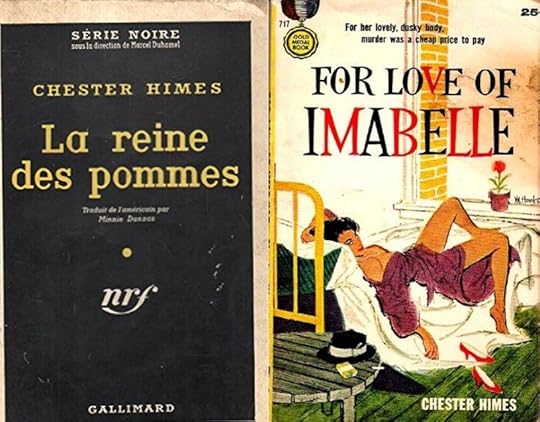
The original French and English language editions of A Rage in Harlem. Images sourced from Goodreads.
Himes original proposed title was The Five-Cornered Square but the translated book appeared in French as La Reine des Pommes (1958). The original English appeared as a pulp paperback For Love of Imabelle (1957). When the Harlem Cycle turned into a continuing series, later reprints changed the title to A Rage in Harlem.
The book introduces several recurring characters, particularly the duo of hard-boiled Harlem detectives Coffin Ed Johnson and Gravedigger Jones, but also the Funeral Home director H. Exodus Clay. The protagonist of the story is the hapless Jackson who is roped in by femme fatale Imabelle into a get-rich scheme and loses his own money and some he has embezzled from the funeral home where he works.
Jackson's brother Goldy, who himself works a scam dressed as a nun who collects alms, tries to extricate Jackson and restore his money. They end up getting tied into another scam by the same gang who are using a chest full of fool's gold to entice suckers. As the bodies pile up, the Harlem detective duo try to sort out who are the grifter criminals and who are the suckers. Mostly they do it with guns blazing.
The set pieces are rather over the top and it seems ridiculous that Jackson could fall for schemes such as turning $10 bills into $100 bills. In the end it is a miracle that he not only survives but gets his job back at the funeral home!
A Rage in Harlem is a fast-paced read, but you have to suspend belief in order to accept its absurd situations. I'm sure Himes wrote it tongue-in-cheek. He went on to write several more in the series and one of them (Blind Man with a Pistol (#8 - 1969) is included in the popular 1001 Books You Must Read Before You Die.
Trivia and Links
A Rage in Harlem was adapted for the same-titled feature length film A Rage in Harlem (1991) directed by Bill Duke and starring Forest Whitaker, Danny Glover, Badja Djola, Robin Givens and Gregory Hines. You can see a trailer for the film on YouTube here.
A review of the Penguin Modern Classics paperback (March 25, 2021) of the original English language For Love of Imabelle (1957) & the original French language La Reine des Pommes (The Queen of Fools) (1958).
“My own brother,” he gasped. “Here us is, got the same mama and papa. Look just alike. And there you is, ain’t got hep yet that you been beat. You has been swindled, man. You has been taken by The Blow. They take you for your money and they blow. You catch on? Changing tens into hundreds. What happened to your brains? You been drinking embalming fluid?”
A Rage in Harlem has a curious gestation story. After being paroled from a prison sentence, during which he began writing, Chester Himes (1909-1984) wrote stories and novels based on his life experiences and then worked briefly in Hollywood as a screenwriter. Due to racism he left the US and eventually settled in France in the 1950s. There he was commissioned by Marcel Duhamel to write for French publisher Gallimard's Serie Noire.
The original French and English language editions of A Rage in Harlem. Images sourced from Goodreads.
Himes original proposed title was The Five-Cornered Square but the translated book appeared in French as La Reine des Pommes (1958). The original English appeared as a pulp paperback For Love of Imabelle (1957). When the Harlem Cycle turned into a continuing series, later reprints changed the title to A Rage in Harlem.
The book introduces several recurring characters, particularly the duo of hard-boiled Harlem detectives Coffin Ed Johnson and Gravedigger Jones, but also the Funeral Home director H. Exodus Clay. The protagonist of the story is the hapless Jackson who is roped in by femme fatale Imabelle into a get-rich scheme and loses his own money and some he has embezzled from the funeral home where he works.
Jackson's brother Goldy, who himself works a scam dressed as a nun who collects alms, tries to extricate Jackson and restore his money. They end up getting tied into another scam by the same gang who are using a chest full of fool's gold to entice suckers. As the bodies pile up, the Harlem detective duo try to sort out who are the grifter criminals and who are the suckers. Mostly they do it with guns blazing.
The set pieces are rather over the top and it seems ridiculous that Jackson could fall for schemes such as turning $10 bills into $100 bills. In the end it is a miracle that he not only survives but gets his job back at the funeral home!
A Rage in Harlem is a fast-paced read, but you have to suspend belief in order to accept its absurd situations. I'm sure Himes wrote it tongue-in-cheek. He went on to write several more in the series and one of them (Blind Man with a Pistol (#8 - 1969) is included in the popular 1001 Books You Must Read Before You Die.
Trivia and Links
A Rage in Harlem was adapted for the same-titled feature length film A Rage in Harlem (1991) directed by Bill Duke and starring Forest Whitaker, Danny Glover, Badja Djola, Robin Givens and Gregory Hines. You can see a trailer for the film on YouTube here.

June 20, 2026
A Rage in Harlem is a story in perpetual, sweaty, frenetic motion! A small-time hustle with big-time consequences is going down in 1950s New York. Con-artists, femme fatales, suspicious nuns, and unassuming squares collide and break apart in multiple directions while crooked cops buzz around looking for their cut.
There's a hearse chase sequence-a hearse!-that's unforgettable. This is the kind of book that twists the tension so high it makes Training Day seem like a gentle spa experience.
Folks with names like Grave Digger and Coffin Ed are bustin' skulls and working angles, and we get to hear about it through tight, sharp prose peppered with mid-century slang. 125th St and 7th Ave comes alive for readers. A Rage in Harlem is heaven for noir fans who don't need a morally upstanding title character in a trenchcoat to headline the piece.
There's a hearse chase sequence-a hearse!-that's unforgettable. This is the kind of book that twists the tension so high it makes Training Day seem like a gentle spa experience.
Folks with names like Grave Digger and Coffin Ed are bustin' skulls and working angles, and we get to hear about it through tight, sharp prose peppered with mid-century slang. 125th St and 7th Ave comes alive for readers. A Rage in Harlem is heaven for noir fans who don't need a morally upstanding title character in a trenchcoat to headline the piece.

September 20, 2016
"For a man what calls himself a Christian, you've had yourself a night. Now what you goin' to do?"
When Jackson, a goodhearted but gullible man, succumbs to a little criminal enterprise in having his ten dollar bills "raised" to hundreds by a counterfeiter, he quickly finds himself embroiled in--and scrambling to get out of--escalating violence and a massive con, while he just wants his girlfriend and money back. He's helped out by his twin brother, Goldy, far savvier, who makes his living masquerading as a respectable Sister of Mercy. Along the way, they get mixed up with Coffin Ed Johnson and Grave Digger Jones, two steely Harlem cops, and pretty much all of Harlem, respectable or otherwise.
I listened to this on audiobook, because there's never a good reason to miss a Samuel L. Jackson performance, especially when he's reading classic noir, and I'll take a moment to note that this was an absolute treat to listen to. All the voices are well-differentiated and -characterized, and the performance brings out both the humor and the pleasures of the snappy hardboiled prose. (Seriously, if the only recorded part of this novel was Samuel L. Jackson doing the voice of a white detective, I would still advise everyone to buy it, but that's about five minutes out of five also great hours, so everyone should absolutely buy it.) I highly recommend checking out the Audible edition.
The crime plot is fun, twisty, and high-stakes--there's one late moment that genuinely shocked me, and Himes gives the moment a kind of bravura force, spiraling out to contextualize the act of violence not just as personal but as a kind of shattering moment for Harlem as a whole--but the novel also has weight and ambitions beyond it, or, rather, weight and ambitions that are best realized through it, because Jackson becomes a sort of hapless tour guide to the ups and downs of Harlem, giving Himes room to explore and explain. There's corruption and trickery behind sanitized exteriors--Goldy lives as an eminently respectable woman of a certain age in a house full of other sharp operators who have found they get overlooked wearing women's clothes; a minor character with a good job and a churchgoing history appears late to take aggressive umbrage at Imabelle's refusal of him--as well as honesty and loyalty of all stripes--every black man and woman in Harlem knows the code to not give away information to white cops, for one thing, and Grave Digger and Coffin Ed's partnership is something higher and more motivating than any legal justice. The feel of the world, in all its virtues and vices, is real and specific.
I'm looking forward to reading more Himes--Samuel L. Jackson doesn't narrate all of them, but you can't have everything--and seeing more of Grave Digger and Coffin Ed.
When Jackson, a goodhearted but gullible man, succumbs to a little criminal enterprise in having his ten dollar bills "raised" to hundreds by a counterfeiter, he quickly finds himself embroiled in--and scrambling to get out of--escalating violence and a massive con, while he just wants his girlfriend and money back. He's helped out by his twin brother, Goldy, far savvier, who makes his living masquerading as a respectable Sister of Mercy. Along the way, they get mixed up with Coffin Ed Johnson and Grave Digger Jones, two steely Harlem cops, and pretty much all of Harlem, respectable or otherwise.
I listened to this on audiobook, because there's never a good reason to miss a Samuel L. Jackson performance, especially when he's reading classic noir, and I'll take a moment to note that this was an absolute treat to listen to. All the voices are well-differentiated and -characterized, and the performance brings out both the humor and the pleasures of the snappy hardboiled prose. (Seriously, if the only recorded part of this novel was Samuel L. Jackson doing the voice of a white detective, I would still advise everyone to buy it, but that's about five minutes out of five also great hours, so everyone should absolutely buy it.) I highly recommend checking out the Audible edition.
The crime plot is fun, twisty, and high-stakes--there's one late moment that genuinely shocked me, and Himes gives the moment a kind of bravura force, spiraling out to contextualize the act of violence not just as personal but as a kind of shattering moment for Harlem as a whole--but the novel also has weight and ambitions beyond it, or, rather, weight and ambitions that are best realized through it, because Jackson becomes a sort of hapless tour guide to the ups and downs of Harlem, giving Himes room to explore and explain. There's corruption and trickery behind sanitized exteriors--Goldy lives as an eminently respectable woman of a certain age in a house full of other sharp operators who have found they get overlooked wearing women's clothes; a minor character with a good job and a churchgoing history appears late to take aggressive umbrage at Imabelle's refusal of him--as well as honesty and loyalty of all stripes--every black man and woman in Harlem knows the code to not give away information to white cops, for one thing, and Grave Digger and Coffin Ed's partnership is something higher and more motivating than any legal justice. The feel of the world, in all its virtues and vices, is real and specific.
I'm looking forward to reading more Himes--Samuel L. Jackson doesn't narrate all of them, but you can't have everything--and seeing more of Grave Digger and Coffin Ed.

April 30, 2016
Having read novels set in 1950's Harlem like Invisible Man by Ralph Ellison and Go Tell It on the Mountain by James Baldwin, led me to expect something along those lines with A Rage in Harlem. Wow! Was I ever surprised. Early on in the book I thought Himes must be pulling my leg. His description of the place and the characters felt like a comedic caricature of the real Harlem, the one that I have read about and imagined. I have never been there so I have no way of knowing, but Himes version certainly left an impression with me.
I'm not going to summarize the story because, frankly, that would be near impossible. It is so disjointed and convoluted that it is hard to follow, but that doesn't seem to matter and Himes brings it all together in a somewhat unbelievable conclusion. So what is this amazing book? Well, it is a crime novel. Parts of it were gruesome and other parts made me laugh out loud. But Himes certainly knew where he was headed and the end result is a very entertaining story that I would recommend to anyone. The writing is outstanding. It was non-stop action from beginning to end and I throughly enjoyed it.
I'm not going to summarize the story because, frankly, that would be near impossible. It is so disjointed and convoluted that it is hard to follow, but that doesn't seem to matter and Himes brings it all together in a somewhat unbelievable conclusion. So what is this amazing book? Well, it is a crime novel. Parts of it were gruesome and other parts made me laugh out loud. But Himes certainly knew where he was headed and the end result is a very entertaining story that I would recommend to anyone. The writing is outstanding. It was non-stop action from beginning to end and I throughly enjoyed it.

August 24, 2018
Το συγκεκριμένο 'νουάρ' 'διαμαντάκι' της αστυνομικής λογοτεχνίας (1957) έκανε γνωστό στο ευρύ κοινό, μετά από σχεδόν 2 δεκαετίες, τον Τσέστερ Χάιμς, και απέσπασε το πρώτο βραβείο αστυνομικής λογοτεχνίας στη Γαλλία το 1958. Λόγω των φυλετικών διακρίσεων στις Η.Π.Α., ο Χάιμς βρισκόταν στην αφάνεια μέχρι που μετακόμισε στη Γαλλία και γνώρισε την επιτυχία.
Το 'Χαμός στο Χάρλεμ' είναι, πολύ πιθανόν, εμπνευσμένο από τα χρόνια που πέρασε στη φυλακή λόγω καταδίκης για ένοπλη ληστεία (αρχές της δεκαετίας του '30). Σίγουρα πρόκειται για ένα από τα πιο πρωτότυπα 'νουάρ' αστυνομικά μυθιστορήματα, όπου οι χαρακτήρες έχουν μοναδικά στοιχεία προσωπικότητας, και το 'βιτριολικό' χιούμορ του συγγραφέα κατακλύζει, κυρίως, το 1ο μέρος, αλλά καί σχεδόν ολόκληρο το βιβλίο.
Στοιχεία της αμερικάνικης κουλτούρας δηλ. από τις φυλετικές διακρίσεις μέχρι τη θρησκοληπτική τάση της εποχής, όπως καί η επικίνδυνη καθημερινότητα σε μια πόλη σαν το Χάρλεμ σατυρίζονται και αποδομούνται με ένα τρόπο που μένει αξέχαστος στον αναγνώστη.
Σαν μειονεκτήματα του βιβλίου θα ανέφερα την αναφορά πολλών δρόμων και λεωφόρων του Χάρλεμ όπου κινούνται οι ήρωες, αλλά και κάποιες επαναλήψεις της πλοκής στο 2ο μέρος. Πέρα από αυτό, πρόκειται για ένα μυθιστόρημα με καταδιωκτική ατμόσφαιρα, αγωνία, γρήγορους ρυθμούς και την... Αδελφή Γαβριηλία να χαρίζει άφθονο γέλιο στους αναγνώστες.
Υ.Γ.: Όποιος αναγνώστης 'ανακαλύψει' το βιβλίο, θα... ανταμειφθεί.
Βαθμολογία: 4,3/5 ή 8,6/10.
Το 'Χαμός στο Χάρλεμ' είναι, πολύ πιθανόν, εμπνευσμένο από τα χρόνια που πέρασε στη φυλακή λόγω καταδίκης για ένοπλη ληστεία (αρχές της δεκαετίας του '30). Σίγουρα πρόκειται για ένα από τα πιο πρωτότυπα 'νουάρ' αστυνομικά μυθιστορήματα, όπου οι χαρακτήρες έχουν μοναδικά στοιχεία προσωπικότητας, και το 'βιτριολικό' χιούμορ του συγγραφέα κατακλύζει, κυρίως, το 1ο μέρος, αλλά καί σχεδόν ολόκληρο το βιβλίο.
Στοιχεία της αμερικάνικης κουλτούρας δηλ. από τις φυλετικές διακρίσεις μέχρι τη θρησκοληπτική τάση της εποχής, όπως καί η επικίνδυνη καθημερινότητα σε μια πόλη σαν το Χάρλεμ σατυρίζονται και αποδομούνται με ένα τρόπο που μένει αξέχαστος στον αναγνώστη.
Σαν μειονεκτήματα του βιβλίου θα ανέφερα την αναφορά πολλών δρόμων και λεωφόρων του Χάρλεμ όπου κινούνται οι ήρωες, αλλά και κάποιες επαναλήψεις της πλοκής στο 2ο μέρος. Πέρα από αυτό, πρόκειται για ένα μυθιστόρημα με καταδιωκτική ατμόσφαιρα, αγωνία, γρήγορους ρυθμούς και την... Αδελφή Γαβριηλία να χαρίζει άφθονο γέλιο στους αναγνώστες.
Υ.Γ.: Όποιος αναγνώστης 'ανακαλύψει' το βιβλίο, θα... ανταμειφθεί.
Βαθμολογία: 4,3/5 ή 8,6/10.

August 26, 2018
Harlem In Noir
Chester Himes' 1957 novel, "Rage in Harlem" offers a tough, unsentimental, and visceral look at the people, streets, and places of Harlem in the 1950s. His description of Harlem is detailed and intimate on a street-by-street, place-by-place basis. Himes can describe a place precisely and closely, but he can also compound image on image in long, heavily enjambed sentences, which reminded me of Walt Whitman. The story takes place in Harlem's tenements, streets, alleys, bars, brothels, train stations, hotels, gambling houses, and businesses. Himes knows them all. He writes of Harlem in lengthy paragraphs and in short one-liners. Here is an example of the former:
"Looking eastward from the towers of Riverside Church, perched among the university buildings on the high banks of the Hudson River, in a valley far below, waves of gray rooftops distort the perspective like the surface of a sea. Below the surface, in the murky waters of fetid tenements, a city of black people who are convulsed in desperate living, like the voracious churning of millions of hungry cannibal fish. Blind mouths eating their own guts. Stick in a hand and draw back a nub. That is Harlem."
And here is an example of the latter, as Himes describes the environs and people in Harlem's 125th Street train station:
"Whores buzzed about the area like green flies over stewing chitterlings."
Trains play a large role in the portrayal of Harlem. They are used, for example, below, in a climactic scene in which a main character, a scoundrel named Goldy, who makes his living impersonating a nun on Harlem's streets, is murdered brutally.
"Goldy's scream mingled with the scream of the locomotive as the train thundered past overhead, shaking the entire tenement city. Shaking the sleeping black people in their lice-ridden beds. Shaking the ancient bones and the aching muscles and the t.b. lungs and the uneasy foetuses of unwed girls. Shaking plaster from the ceilings, mortar from between the bricks of the building walls. Shaking the rats between the walls, the cockroaches crawling over kitchen sinks and leftover food; shaking the sleeping flies hibernating in lumps like bees behind the casings of the windows. Shaking the fat, blood-filled bedbugs, crawling over black skin. Shaking the fleas, making them hop. Shaking the sleeping dogs in their filthy pallets, the sleeping cats, the clogged toilets, loosening the filth."
Harlem is the primary character of this novel, even though the book offers a tangled noir story of crime, scams, and killings together with many sharply described people. The major character, Jackson, 29, has come to Harlem from the South and is hardworking, religious, naive and gullible. Jackson works at a funeral parlor and is caught in scams by his femme fatale ladyfriend, Immabelle, and forced to engage in a series of robberies and crimes. Jackson is unswervingly loyal to and trusting of Immabelle. Jackson's twin brother, an addict named Goldy, impersonates a nun in the Sisters of Mercy and sells tickets to heaven on the streets. Jackson, Imabelle, and Goldy become involved in counterfeiting and goldmine scams. The African American detectives Coffin Ed Johnson and Grave Digger Jones also become involved. There is a great deal of acerbic humor as well as violence as the story proceeds. The dead bodies pile up, as in Elizabethan tragedy.
Besides the descriptions of places and people, "Rage in Harlem" includes several scenes of fights and rumbles, including a long passage set in a deserted, forbidding Harlem street formerly in a building formerly used by the Father Divine movement. The scenes of action in the book, for me, tended to become chaotic in places and to slow the book down. Unusually enough, the plot components are more background for the descriptions of Harlem than the latter are backdrops for a noir story.
Himes' book offers the feel of understanding Harlem from the inside. Yet, when Himes (1909 -- 1984) wrote this work, he was living in exile in France. For many years, Himes was more appreciated in France than in his native United States. Himes' novel was used as the basis for a movie starring Robin Givens as Immabelle. The book will fascinate readers interested in the African American experience, Harlem, or noir literature.
Robin Friedman
Chester Himes' 1957 novel, "Rage in Harlem" offers a tough, unsentimental, and visceral look at the people, streets, and places of Harlem in the 1950s. His description of Harlem is detailed and intimate on a street-by-street, place-by-place basis. Himes can describe a place precisely and closely, but he can also compound image on image in long, heavily enjambed sentences, which reminded me of Walt Whitman. The story takes place in Harlem's tenements, streets, alleys, bars, brothels, train stations, hotels, gambling houses, and businesses. Himes knows them all. He writes of Harlem in lengthy paragraphs and in short one-liners. Here is an example of the former:
"Looking eastward from the towers of Riverside Church, perched among the university buildings on the high banks of the Hudson River, in a valley far below, waves of gray rooftops distort the perspective like the surface of a sea. Below the surface, in the murky waters of fetid tenements, a city of black people who are convulsed in desperate living, like the voracious churning of millions of hungry cannibal fish. Blind mouths eating their own guts. Stick in a hand and draw back a nub. That is Harlem."
And here is an example of the latter, as Himes describes the environs and people in Harlem's 125th Street train station:
"Whores buzzed about the area like green flies over stewing chitterlings."
Trains play a large role in the portrayal of Harlem. They are used, for example, below, in a climactic scene in which a main character, a scoundrel named Goldy, who makes his living impersonating a nun on Harlem's streets, is murdered brutally.
"Goldy's scream mingled with the scream of the locomotive as the train thundered past overhead, shaking the entire tenement city. Shaking the sleeping black people in their lice-ridden beds. Shaking the ancient bones and the aching muscles and the t.b. lungs and the uneasy foetuses of unwed girls. Shaking plaster from the ceilings, mortar from between the bricks of the building walls. Shaking the rats between the walls, the cockroaches crawling over kitchen sinks and leftover food; shaking the sleeping flies hibernating in lumps like bees behind the casings of the windows. Shaking the fat, blood-filled bedbugs, crawling over black skin. Shaking the fleas, making them hop. Shaking the sleeping dogs in their filthy pallets, the sleeping cats, the clogged toilets, loosening the filth."
Harlem is the primary character of this novel, even though the book offers a tangled noir story of crime, scams, and killings together with many sharply described people. The major character, Jackson, 29, has come to Harlem from the South and is hardworking, religious, naive and gullible. Jackson works at a funeral parlor and is caught in scams by his femme fatale ladyfriend, Immabelle, and forced to engage in a series of robberies and crimes. Jackson is unswervingly loyal to and trusting of Immabelle. Jackson's twin brother, an addict named Goldy, impersonates a nun in the Sisters of Mercy and sells tickets to heaven on the streets. Jackson, Imabelle, and Goldy become involved in counterfeiting and goldmine scams. The African American detectives Coffin Ed Johnson and Grave Digger Jones also become involved. There is a great deal of acerbic humor as well as violence as the story proceeds. The dead bodies pile up, as in Elizabethan tragedy.
Besides the descriptions of places and people, "Rage in Harlem" includes several scenes of fights and rumbles, including a long passage set in a deserted, forbidding Harlem street formerly in a building formerly used by the Father Divine movement. The scenes of action in the book, for me, tended to become chaotic in places and to slow the book down. Unusually enough, the plot components are more background for the descriptions of Harlem than the latter are backdrops for a noir story.
Himes' book offers the feel of understanding Harlem from the inside. Yet, when Himes (1909 -- 1984) wrote this work, he was living in exile in France. For many years, Himes was more appreciated in France than in his native United States. Himes' novel was used as the basis for a movie starring Robin Givens as Immabelle. The book will fascinate readers interested in the African American experience, Harlem, or noir literature.
Robin Friedman

September 25, 2021
جکسون پسری مذهبی در محلهای پر از جرم و جنایت و تباهیه. یک لغزش و اشتباه کوچک اون رو به یک سلسله قانونشکنی وادار میکنه و درحالی که از شرم گناهانش میسوزه و دنبال اولین فرصت برای توبه کردنه، هر لحظه بیشتر به ضلالت کشیده میشه جایی که کشیش هم حاضر به شنیدن اعترافاتش نیست و برندهی بازی کسی هست که کسبوکارش با مردههاست...

October 23, 2011
Great!
Just finished reading it.
I'm too awed to write more right now.
If you haven't read it, read it.
Update:
A must-read for Chandler enthusiasts.
In certain passages this novel played towards a kind of stereotypical depiction of black people as portrayed in B-movies by beloved character actors but there was an undeniable poignancy to it all ...and Himes' prose reads like poetry in places.
Chester Himes' descriptions of 1950s Harlem rings in perfect rhyme with Chandler's 1940s Los Angeles.
Same coin - different toss.
A work of undeniable genius.
Displaying 1 - 30 of 868 reviews