Originally published in 1950, Orientations is a hidden gem among Julius Evola’s impressive body of work. Orientations provides a lucid and concise introduction to Evola’s thought, presenting a framework for the European right-wing to approach the post-war modern world. Evola calls for the creation of a New Man, who will hold himself steady among the ruins of our unmoored civilizations, as they lurch violently towards ever-increasing strife and chaos. He warns against the various trappings of modernity—materialism, bourgeois decadence, contingent economic trivialities, and so on—advising men to embrace the spiritual, heroic, and aristocratic values of the world of Tradition. Evola states that men must lead by example, rise above, and form a new elite, filling the void created by the age of decline and forces of modernity. Orientations is essential reading for all right-wing youth. Other important works by Evola include Revolt Against The Modern World (1934), in which he delineates the concepts of Modernity and Tradition, and Men Among The Ruins (1953), which builds upon the framework laid out in Orientations.
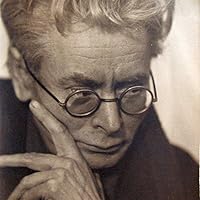
Julius Evola, born Giulio Cesare Andrea Evola, was an Italian philosopher and esoteric scholar. Born in Rome to a family of the Sicilian landed gentry, Evola was raised a strict Catholic. Despite this, his life was characterised by 'an anti-bourgeois approach' hostile to both 'the dominant tradition of the West—Christianity and Catholicism—and to contemporary civilization—the 'modern world' of democracy and materialism'.
By turns 'engineering student, artillery officer, Dadaist poet and painter, journalist, alpinist, scholar, linguist, Orientalist, and political commentator', he has been described as a 'rare example of universality in an age of specialization'. Yet behind it all lay a singular emphasis on, and pursuit of, a 'direct relationship to the Absolute'. For Evola, 'the center of all things was not man, but rather the Transcendent.' This metaphysical conviction can be seen to have determined both Evola's stance on socio-political issues, and his antipathetic attitude towards 'all professional, sentimental and family routines'.
The author of many books on esoteric, political and religious topics (including The Hermetic Tradition, The Doctrine of Awakening and Eros and the Mysteries of Love), his best-known work remains Revolt Against the Modern World, a trenchant critique of modern civilisation that has been described as 'the gateway to his thought'. Since his death, also in Rome, his writings have influenced right-wing, reactionary and conservative political thought not only in his native Italy, but throughout continental Europe and, increasingly, the English-speaking world. Nevertheless, he should not be considered primarily as a political thinker, but rather as an exponent of the wider Traditionalist School that encompasses the work of such individuals as René Guénon, Titus Burckhardt and Frithjof Schuon.
Considering that this book was written quite a long time ago, it is hard not to believe in the author's particular foresight. Evola expertly challenges the ability of leftist forces, which at the time were represented by the Maoists and Marcuseans, to engage in real resistance. He literally shows young generation that their ideology is just a proliferation of the late capitalist project they are so fiercely fighting against. It's still the same materialism, lacking a minimal spiritual component.
Overall, Orientations is an interesting text for an introduction to a radical critique of both socialism, especially in the Marcusean form, and pro-capitalist thought. Evola proposes to take a Third path, to put the "Idea" at the center of the worldview, to form not a party, which inevitably turns into a totalitarian sect, but an "Order".
Evola at his prime. ’Orientations’ is rightly framed as an appendix to ’Men Among the Ruins’ for it represents a transitional moment to Evola’s more pessimistic post-war thought.
While ’Ride the Tiger’ is a more thorough handbook for the ’aristocrats of the soul’ and ’Men Among the Ruins’ a more complete metapolitical essay, in ’Orientations’ one finds a manifesto, a call to arms directed to the young men of post-war Italy.
Evola is an accomplished master of nonfictional prose. Elegant in style, highly original, and captivating.
I couldn't stop thinking, as I read ’Orientations’, of the Katechon, that mysterious figure of neo testamentary literature.
The Katechon is ’the one who withholds’ the coming of the Son of Perdition, that something which restrains him and prevents him from being fully manifested. A non identified guardian that delays the advancement of hell over the earth, a stone in the Antichrist’s shoe.
Throughout the centuries, that vague concept has been variously identified with the Christian Empire or with the Church.
As the liberal revolutions utterly destroyed the ’Christianum Imperium’ and the Catholic Church started its complicated opening to the world, many began to think that the Katechon had disappeared and that the time was ripe for the coming of the Antichrist.
Evola’s metaphysics and cosmology are not Christian, he thinks in terms of Cyclical ages of Eternal Return. Nevertheless, as we approach the end of this age of degeneracy we are living in (Kali Yuga) and begin a new age of heroes, an exemplary élite of transcendent men will lead humanity out of chaos.
This counter-revolutionary élite is Evola’s katechon.
No wonder then, that one way or another, Evola works as an inspiration to contemporary constitutional autocracies.
The Schmittian legitimization of constitutional autocracies relies on the Führer’s galvanization of the will of the people. Schmitt reaches a decisionist dead end and can’t escape the form of plebiscitary democracy.
Evola’s political Ideal dismisses the majoritarian games of liberal democracies and insists on the exemplary power of a few good men to rebuild a new integral and organic hierarchy.
Coming off with startling and bold statements with which any sensible person would concur with, yet lacking the essencial argumentative foundation. It is said that he went a bit mad, that perennialist and esotericist.