Why would someone leave a shining career in management to work among the dead?
Angjolie Mei, funeral director and "life celebrant", recounts how the death of her father—a veteran known as ‘The Coffin King’ in the funeral industry—prompted this dramatic choice.
What exactly happens during embalming? What kind of post-death restoration is needed for second-degree burn victims? What are the little-known facts surrounding suicide in Singapore?
Angjolie offers the insider’s view on these and other aspects of an industry usually shrouded in mystery, and reflects on how her perceptions of death, and life, have changed since she chose this extraordinary profession.
I was really excited to pick this up because it is the story of one of the only female funeral directors in Singapore. That is so unusual and I wanted to know more about this unlikely change maker and entrepreneur. The topic of death and funerals is so taboo in Singapore. We, Chinese do not speak of it as we feel it brings bad luck. I feel it is scary to think about death and plan for it.
But Angjolie managed to make death and funerals sound interesting and even neutral. It sounded like an uphill battle for her to carry on her father's business in a male dominated industry. I liked how she shares that being around death so much made her appreciate life more and helped her to learn more about humanity.
Though her gender did put her in scary situations like an almost rape while she was in Vietnam. Her mother discouraged her to continue in this industry for fear of being shunned and not being able to be happy in life. It must have been so tough for both of them to pick up the pieces of the business after her father "The Coffin King" passed away and left debt. She mentions that though her father is generous and kind, he had vices too which balances out the memory of him. No one is perfect.
She tactfully explains what the differences are between wakes and funerals (I did not know there was a difference), shares her experiences with different types of cases like suicide, infant deaths, unnatural and natural deaths. There was a really informative section on the process of what happens when a person dies all the way to the funeral and cremation. Other than that there is a section on customs to observe at a Chinese funeral, reasons for it and what are the funeral practices around the world.
I did not know there was such a thing as a celebrant as opposed to a funeral director, I thought they were the same. I was surprised that you have to go to funeral school in US to get certified and there are funeral trade shows.
I did not know much about the embalming process either and had fears of it but the way it was written was factual. I do believe in what she values in the sense of educating her clients on their options, what exactly is happening and thinking from their point of view. That is the mark of a good business person. I loved how open minded she was to incorporate practices from around the world into the Singapore scene. I do agree that each person's wishes and religion should be respected in terms of their funeral. That is even if I do not exactly understand why certain things are done.
I thought it was important that the book teaches on how to talk to children about death. She shares her trauma with not being able to have closure after her friend dies suddenly in Primary School. It is normal that all parents naturally want to shield children from an event that might be too emotional and unpleasant or thBnk they cannot understand what is going on. But then there is a risk of no closure and that could bring problems.
But it has to be noted that she did not write the book. I found out in the acknowledgements that she had the help of a writer. Nonetheless, this was a very compelling look into a little known industry and I could not put it down.
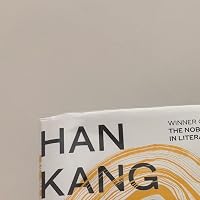
I couldn't take the original edition seriously, with the glamorous photo of author on the cover. I much prefer this edition with the pleasantly innocuous wreath. I am also glad to have read the second edition as there are updates on the author's later clients, including stories of those who died of the dreaded 2020 disease.
Having recently read Will My Cat Eat My Eyeballs?: And Other Questions About Dead Bodies, some of the information of what happens to the human body after life has left it is not new, but this book is still interesting to me, and moving testimony to the importance of having proper closure for family members when a loved one dies. In land-hungry Singapore, you no longer can bury your dead and expect them to stay buried forever. In places like Hong Kong, it's even worse, especially if you are poor.
The many possible alternatives to burial mentioned in this book has given me food for thought to the sort of send-off and final "resting place" I want for myself.
Last Sunday was the 100th day and we visited Mandai again to mark the end of all formal rituals. Mandai now holds a different meaning to me and returning back there reminded me about this book which I chanced upon in a book store. I read this book so quickly because it was really interesting to learn about the different superstitions and rituals around death/funerals, especially amongst the Chinese. Even though there is so much bad luck associated with death, I still have so much respect for those who continue in this line of demanding business. // To remember one is to celebrate one’s life by keeping memories close to ours, and to love well and live well. ❤️
What better way is there to appreciate life than to read about deaths and funerals? 💀
In Dying to Meet You, funeral director and life celebrant Angjolie Mei shares about how she left a promising career as a financial advisor to take over her father’s funeral company after he died unexpectedly. ⚰️
From having to navigate the male-dominated industry as a young woman, to the technicalities of funeral preparations and the embalming of decedents, Mei walks us through her experiences and the fascinating facts vis-à-vis this ineluctable destination of our lives. ⚱️
What stands out to me most in this book is Mei’s unwavering dedication to ensuring the comfort and dignity of the decedents under her care. As she professes, she views every funeral as “a celebration of someone’s life.” Behind every dead body are stories to be told and legacies to live on. And for us, who have the advantage of being presently alive, shouldn’t we ponder about what we want our lives to add up to and be remembered by? ⏳
So I tell myself to cherish my life, focus on the present, appreciate the things and people around me, and know in my heart that what I’m doing is what I truly want. Also, love one another, don’t let hatred breed, and be kind and forgiving. As the author succinctly words it: I am sorry. Please forgive me. I thank you. I love you. ❤️
an easy read that gave insight to this less commonly talked about industry in singapore. it was refreshing and inspirational to learn about it from a female’s perspective!
I loved it. The candid and lucid accounts of the work of a funeral director has made me develop a great respect for those who are in the funeral industry. Angjolie is an amazing lady. She has been through so much since she made the decision to take over her father's business. I wish her all the best.
Such an inspiring book written by one of the few female funeral directors in Singapore.
AngJolie's passion in this industry is very admirable. When people travel they visit tourist attractions. When she travels, she makes arrangements to visit funeral parlours. The chapter on how different countries have different funeral processes was so interesting to learn about!
This book talks about how death was such a taboo subject that very rarely do people talk about it because it is so uncomfortable for them.
She used her own primary school experience to remind the importance of a closure for young children who have lost someone close to them. She had no closure after her good friend died in an accident, and that trauma and lack of dealing with, had a tremendous impact for the rest of her life. I do agree that it is as important for the young children, as is for the adults, to have a proper closure.
It was interesting that she noted how we generally put in so much effort to plan many of our life's major milestones but hardly anyone plan for our own demise. But it is important! Planning our own funeral would save a lot of agony and argument between family members who have different views about "what daddy would want".
Through her words, I could feel her love and respect for her late father, Mr Ang Yew Seng. He seemed like such an awesome man that people still remember him many years later. His daughter now carries on his legacy and I think it is such a beautiful thing.
All in all, she inspires me so much so I followed her IG! I shall end it with a quote from one of her posts -
Live life with no regrets, leave life with no regrets
This entire review has been hidden because of spoilers.
Although this is a sombre topic, but I did enjoy reading it.
I always wonder how do the non Muslim cater their funeral. How is the embalming process being done? I always thought the embalming chemical is inserted into the body by cutting up the body, taking out the organs and stuffing chemical into the cavity of the body. Was I wrong... The enbalming process is much more simpler than that.
In Islam, once a person is announced dead, the burial of the body must be done as soon as possible. Thus, there is no need to enbalm the body.
Reading further in this book, in Hong Kong when someone dies, to get a cremation slot, it usually takes a month or two as Hong Kong ageing population is high. While waiting for the cremation slot, the body is kept in cold storage. Not only the land is scarce in Hong Kong, the facility to cremate the body too is insufficient while the population is high.
In Nepal, the cremation is done openly outside the temple while people including tourist can watch while having picnics in public park nearby the temple.
What other option do the family have other than placing the creamains (ashes) in a columbarium? They could blend the ashes into concrete and keep it. Divide the ashes among family members and keep it or interestingly, even turning the ashes into diamonds and mounted it on a ring.
Every culture and religion has their own way to deal with death. Whether it is burial or cremation, it's an important final rites not only to the deceased but also to his family and friends as a channel to grief their loved ones.
I truly enjoyed reading this book and whoever said non fiction books are boring, haven't found the right book to read.
Not my usual source for book recommendations, but this was one of titles that caught my attention when HongisBored visited Epigram Books(!!)
I was captivated and "read" (the audobook) in pretty much 1 sitting. I have been to a few wakes in Singapore, but not of very close relatives, so I am always a bit clueless as there are such diverse beliefs and practices by religion, cultural/dialect group, and generation. I learned so much from this book that would otherwise have just been my ignorant/insensitive questions.
Given the author's background, it is understandably more comprehensive on Chinese-related traditions. I would have liked more coverage of Malay and Indian traditions in Singapore, but perhaps that means I just need to find some other books.
While the book can jump around a bit and perhaps be a bit unclear as to what the core message is, I actually enjoyed the conversational charm and it being a bit rojak. There are many aspects to enjoy and learn from, among which is another story of growing up in the generation that uniquely spanned kampong life to HDB, uni, and a white-collar career (before following in the family's most unconventional business).
Death and funerals are typically considered taboo but I've somehow always found myself drawn to these discussions. So it was a no-brainer for me to pick this one up at the Aesop x Epigram event last month.
This was a candid and eye-opening view of the funeral industry from Angjolie Mei, one of the few female funeral directors in Singapore. Her writing is easy to understand and get into, and it feels almost as if she's having a private conversation with you.
Angjolie draws from her personal life and work experiences to flesh out the different aspects of the funeral industry (the embalming process, funerals in the time of COVID, funeral celebrants etc.) that people not privy to it would be curious about. I found myself tearing up at some of her recounts as she discusses the deaths of those as young as infants to families who have gotten into tragic accidents.
More than a book that educates about the funeral industry, this is definitely one that makes you reflect on your own life and relationships – and what more you can do to make your days count. Strongly recommended!
Death is often considered a taboo topic, but Dying to Meet You breaks through societal discomfort to offer a fascinating and deeply insightful look into Singapore’s funeral industry. From the very first chapter, I found myself completely engrossed, eager to uncover more about the industry’s inner workings and the compelling stories shared throughout the book.
What makes this book stand out is how it not only informs but also shifts perspectives. It sheds new light on the complexities, traditions, and human experiences surrounding death, adding depth to a subject that many prefer to avoid. The narratives are engaging, sometimes poignant, and always thought-provoking, making it a truly eye-opening read.
Whether you have a curiosity about the funeral industry or simply appreciate books that challenge societal norms, Dying to Meet You is well worth picking up. It’s a compelling reminder that there’s much to learn—even from topics we tend to shy away from.
1) Anyone that is curious about the funeral industry in Singapore; the life and thought process of a Funeral Director 2) Anyone that is going to die
And yes - that means everyone.
Seeing death from the lens and perspectives of Angjolie Mei, is refreshing. It’s upon reading this book that the impermanence of our lives - our bodies especially - sets in. You realise that the body is simply just a vehicle for a soul to live and express. And when it’s time, the soul moves on to its next form, and the body disintegrates...
I learnt so much from this book, which is written simply - but my one point of reflection is the question - we have a lifetime to plan for our final send offs, and yet we don’t do anything about it. Why? I’m curious to hear your views.
Just want to say “suicide survivors” was misinterpreted in the book; it does not refer to attempts but rather, to loved ones surviving the deceased and being grievously affected by their deaths.
Aside from that, this book is wonderfully written. Very neutral language and straightforward, but also poignant at the same time. I found myself being overwhelmed at Jason’s Smile. For this, I thank Wong Sher Maine for being such an excellent writer. Along this vein, while I do appreciate Angjolie Mei’s insights, I wish the credit for the author would be placed on the cover (Angjolie and Sher Maine)! It seems to me that the credit needs to be balanced in this aspect, but feel free to disagree.
Overall, a fantastic read. I love death & dying topics and this was great. Will definitely refer back to it as and when. :)
Dying to Meet You is a captivating and candid exploration of Singapore’s funeral industry. Angjolie Mei, a certified funeral celebrant and director, offers a detailed look at funeral planning, covering administrative conversations required, the embalming process, various religious rituals available, and the paperwork involved.
As a young person, death rarely crossed my mind. However, this book serves as a poignant reminder that it’s not something to avoid but something to anticipate. The author shares very insightful and personal stories, emphasising the importance of preparing for our eventual departure. Her reflections on being a minority in a predominantly male industry and how her work has inspired her to live more fully particularly moved me.
This is such an important book to read and reflect upon.
The Confessions of a Funeral Director, is not only a down-to-earth inside look into the 'industry', including the gory bits of why and how of embalming, and how an experienced professional can make a difference through many of the cases she has worked on.
It is also an uplifting and reflective account, where she calls the job 'incredibly fulfilling' as being so directly involved in the passing of a life, allowed her to offer her services at a time when people are at their most vulnerable. It also makes her more appreciative of life and also to make the necessary preparations so that those left behind are not further burdened.
Insightful phrase: A wake/funeral is ... 'a lifetime in a day'.
I really enjoyed reading Angjolie’s Dying to Meet You. I’ve always been naturally interested in topics related to death, funerals, and end-of-life traditions, so this book was a fascinating read for me.
What I liked most was how the book gives insight into how funerals are conducted across different religions in Singapore. The real-life stories shared throughout the book also made it feel personal and meaningful instead of overly educational or heavy.
I would highly recommend this book to anyone who is curious about death, funerals, or Singapore’s multicultural funeral practices. If this topic interests you, you’ll probably find it very eye-opening. But if you’re not interested in funeral or death-related topics, this may not be the book for you.
Interesting insight into the funeral industry, at least locally (though there was a chapter on practices in countries other than Singapore). Fun fact: there're places where you can hire professional mourners, and even strippers, for wakes. Some cool description of enbalming, cremation, and other processes relating to the deceased body. My main gripe was the hard-to-hear narration, even at max volume; had to download a volume booster and sound equaliser app.
An interesting autobiography of the only female funeral director in Singapore. Reading this gave me a new perspective on the taboo of funerals and death in Singapore, as Angjolie breaks down and explains every process from embalming to cremation. This also makes me reconsider how one can view the death of a loved one as the meaningful celebration of a life well-lived.
A loose memoir by Singapore's answer to Caitlin Doughty, who entered the funeral industry on her death of her father who was himself an undertaker. It was fairly good, slightly less engaging than Doughty's books, but with an Asian spin that made it interesting to me. I recommend picking up the 2020 version which has a brief chapter on dealing with Covid in the industry and some updates on post-cremation options.
it was beautifully written and certainly a page turner. somehow the author wrote about death in a way it doesn’t make us feel sad or depressed. in the book, it was as if she was assuring us how we felt when we lose someone we love is perfectly fine and grieving is important for you to accept in your own time
Valuable and informative insights into a lesser known profession- makes you contemplate not just our mortality, but our loved ones’ and how we eventually have to face it. Some parts felt a tad heavy on the promoting (author’s own companies and services) but for most part there were lots of eye-opening anecdotes into the industry. Pleasant read.
Don’t really know how many starts should I give so I’ll leave it blank. Dying To Meet You is an insightful look into death culture I haven’t seen often, especially not in the Western world were I live. Enjoyed the personal bits and the more “professional” one I would say.
This is a compelling and nuanced memoir about the author's experience as a funeral director. It provides well-researched information about the funeral business in Singapore and in other countries. Full review to come.
It did give me a glimpse of the different burial traditions around Asia, particularly more Chinese ones and I get drawn with some of the narratives at times but the writing is just so clinical. As a reader, I didn’t feel engaged.
An excellent read, both eye opening, informative and on occasion, tear inducing. The author has used simple language, yet the depth of her experiences with the world of funerals and the emotions of those featured come through string and clear. A must read.
Funerals are when these regrets are laid bare. As people cry their way through litanies of "I should have" or "I shouldn't have", I often wonder, why didn't you tell that to the deceased when they were alive?
I really love this book! Gave me pretty useful insights and learnt a lot from it despite having months of experience working as a palliative doctor. Really appreciated the chapter on how to help children cope with grief.
This was such an intriguing and highly informative read. Besides understanding the customs surrounding death, the author's sharing of personal stories was very relatable and adequately encompass the message that she wants to convey regarding life and death. I highly recommend everyone to read this.