

What do you think?
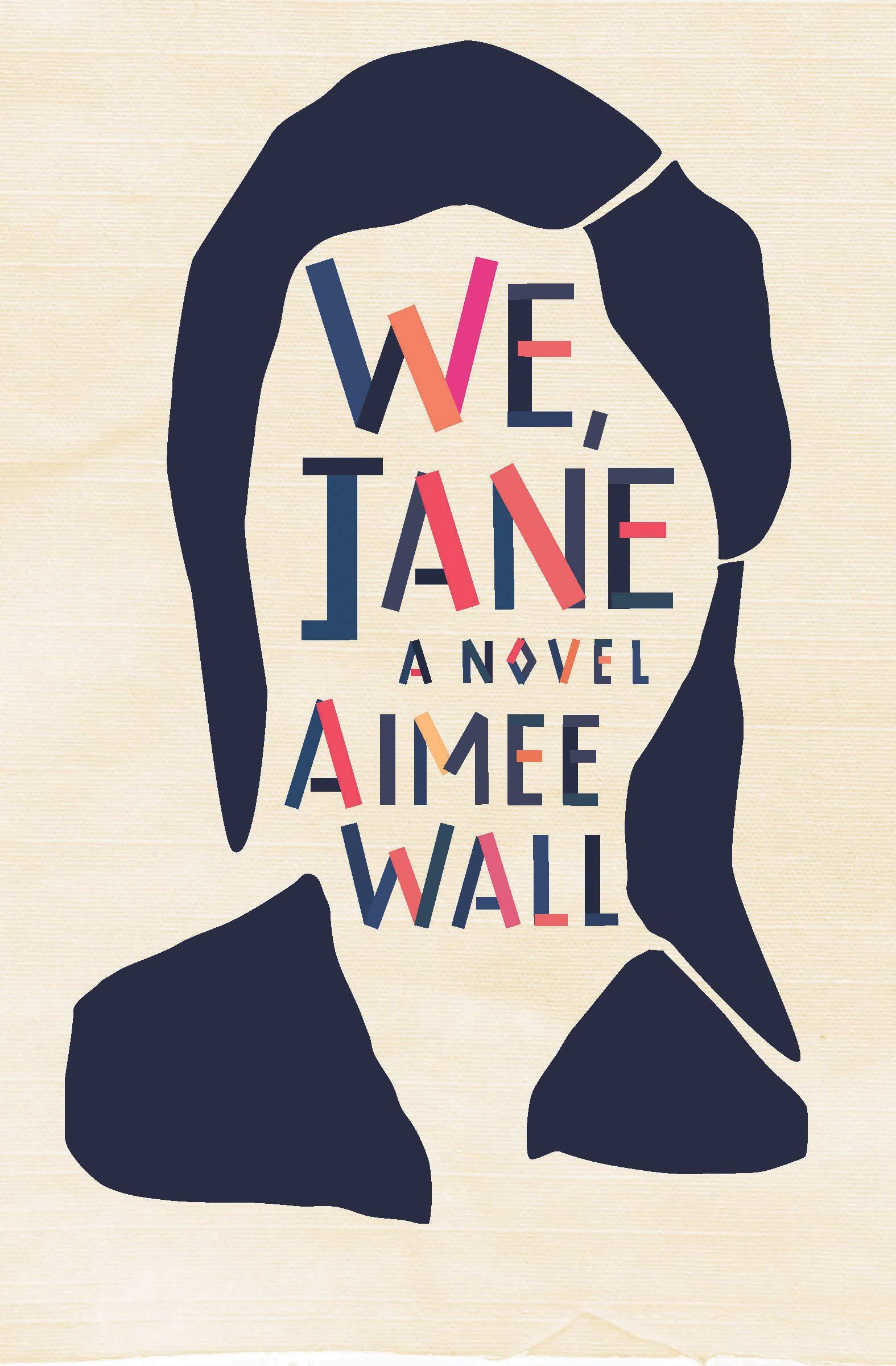
We, Jane
A remarkable debut about intergenerational female relationships and resistance found in the unlikeliest of places, We, Jane explores the precarity of rural existence and the essential nature of abortion.
Searching for meaning in her Montreal life, Marthe begins an intense friendship with an older woman, also from Newfoundland, who tells her a story about purpose, about a duty to fulfill. It's back home, and it goes by the name of Jane.
Marthe travels back to a small town on the island with the older woman to continue the work of an underground movement in 60s Chicago: abortion services performed by women, always referred to as Jane. She commits to learning how to continue this legacy and protect such essential knowledge. But the nobility of her task and the reality of small-town, rural life compete, and personal fractures in the small movement become clear.
We, Jane probes the importance of care work by women for women. It underscores the complexity of relationships in close circles, and beautifully captures the inevitable heartache of understanding home. From a celebrated translator of cutting-edge fiction, this is Red Clocks meets Women Talking; a quiet, compelling novel about the magnitude of women's friendships and connection—individually and across eras.
Searching for meaning in her Montreal life, Marthe begins an intense friendship with an older woman, also from Newfoundland, who tells her a story about purpose, about a duty to fulfill. It's back home, and it goes by the name of Jane.
Marthe travels back to a small town on the island with the older woman to continue the work of an underground movement in 60s Chicago: abortion services performed by women, always referred to as Jane. She commits to learning how to continue this legacy and protect such essential knowledge. But the nobility of her task and the reality of small-town, rural life compete, and personal fractures in the small movement become clear.
We, Jane probes the importance of care work by women for women. It underscores the complexity of relationships in close circles, and beautifully captures the inevitable heartache of understanding home. From a celebrated translator of cutting-edge fiction, this is Red Clocks meets Women Talking; a quiet, compelling novel about the magnitude of women's friendships and connection—individually and across eras.
240 pages, Paperback
First published April 27, 2021
Ratings & Reviews
Friends & Following
Create a free account to discover what your friends think of this book!
Community Reviews
Displaying 1 - 30 of 121 reviews

July 9, 2021
🍁🇨🇦—I was a bit mystified by this book.
I was anxious to read We, Jane, thinking I'd learn a little about the Jane collective—an underground abortion service begun of necessity(?) in 1960s Chicago (think hippies and free love) when abortion was illegal. Wall's novel begins by introducing us to Marthe—a 20-something Newfoundlander living/working in Montreal who returns to the rock after meeting and falling under the spell of Ruth (aka Jane) who encourages her to come back to St. John's where she, too, can get involved with the Janes as a Jane "apprentice". Sounds interesting, I thought! And it would have been if the book didn't turn out to be all about Marthe and her self-effacing need to "become" every woman she meets. The Marthe character—IMHO—was not interesting enough to carry the book, so I assumed the focus would soon have to turn to the Jane experience, but... it didn't! There was, in fact, very little about it other than being alluded to here and there as kind of a backdrop. This book could just as easily have been called Me, Marthe!
So, I was a bit disappointed.
I was anxious to read We, Jane, thinking I'd learn a little about the Jane collective—an underground abortion service begun of necessity(?) in 1960s Chicago (think hippies and free love) when abortion was illegal. Wall's novel begins by introducing us to Marthe—a 20-something Newfoundlander living/working in Montreal who returns to the rock after meeting and falling under the spell of Ruth (aka Jane) who encourages her to come back to St. John's where she, too, can get involved with the Janes as a Jane "apprentice". Sounds interesting, I thought! And it would have been if the book didn't turn out to be all about Marthe and her self-effacing need to "become" every woman she meets. The Marthe character—IMHO—was not interesting enough to carry the book, so I assumed the focus would soon have to turn to the Jane experience, but... it didn't! There was, in fact, very little about it other than being alluded to here and there as kind of a backdrop. This book could just as easily have been called Me, Marthe!
So, I was a bit disappointed.

October 28, 2021
Wow. What to say about this book...
It was difficult subject matter, abortion, but this book mostly wasn't about the procedure or the women receiving them. It was about a movement. A group of women who called themselves Jane with the goal to provide the service.
The book was beautifully written, elegant, and very high-brow. It read like something in the New Yorker, distant yet beautiful. The words flowed in an almost lyrical manner. I assume that the author is quite the intellectual.
With that said, I really didn't enjoy this book. I can see why others do, and I think it was beautiful and well-written, but I didn't enjoy myself. It made me feel depressed, and incredibly sad for all the women involved in this book. Not because I'm against abortion - because I'm not - but because there was this undercurrent of sadness that leaked through the pages and into my soul. Which was probably the point, but I read more for joy, so this just wasn't my jam.
It was difficult subject matter, abortion, but this book mostly wasn't about the procedure or the women receiving them. It was about a movement. A group of women who called themselves Jane with the goal to provide the service.
The book was beautifully written, elegant, and very high-brow. It read like something in the New Yorker, distant yet beautiful. The words flowed in an almost lyrical manner. I assume that the author is quite the intellectual.
With that said, I really didn't enjoy this book. I can see why others do, and I think it was beautiful and well-written, but I didn't enjoy myself. It made me feel depressed, and incredibly sad for all the women involved in this book. Not because I'm against abortion - because I'm not - but because there was this undercurrent of sadness that leaked through the pages and into my soul. Which was probably the point, but I read more for joy, so this just wasn't my jam.

April 24, 2022
I am really not sure how to rate this book. I feel that just finishing it was an accomplishment or maybe an accident.
This is a debut novel that I have seen described multiple times as brilliant but my experience has not been the same.
The structure of the book is rather unconventional. The speaker is not always identified and certainly the spoken words are never offset in quotations. As such it is not always clear if words are being spoken or if the words are thoughts or otherwise part of the narrative.
The story follows Marthe as she tries to find direction in her life. She is in Montreal when the story opens but is from Newfoundland. She meets another woman, also from Newfoundland, and returns to the island with her, in the hopes of finding purpose and perhaps a career.
The story continues around a group of women but never seems to move forward. From the title, the expectation was that I’d learn something about the Jane movement but that doesn’t really pan out, until about 85% of the way into the book. (And even then the references are scant and general. I would have liked more information.)
The plot seems to jump and move continuously and doesn’t gel into something tangible. Maybe that is reflective of Marthe’s struggle to find direction and purpose.
For me this story just didn’t work. Too many run-on yet disjointed ideas, and insufficient development of plot and characters. Unfortunately I could not find a common ground to enjoy this one. I will however search out other books on this topic.
Update: A book that I enjoyed much more on this topic is Looking for Jane
This is a debut novel that I have seen described multiple times as brilliant but my experience has not been the same.
The structure of the book is rather unconventional. The speaker is not always identified and certainly the spoken words are never offset in quotations. As such it is not always clear if words are being spoken or if the words are thoughts or otherwise part of the narrative.
The story follows Marthe as she tries to find direction in her life. She is in Montreal when the story opens but is from Newfoundland. She meets another woman, also from Newfoundland, and returns to the island with her, in the hopes of finding purpose and perhaps a career.
The story continues around a group of women but never seems to move forward. From the title, the expectation was that I’d learn something about the Jane movement but that doesn’t really pan out, until about 85% of the way into the book. (And even then the references are scant and general. I would have liked more information.)
The plot seems to jump and move continuously and doesn’t gel into something tangible. Maybe that is reflective of Marthe’s struggle to find direction and purpose.
For me this story just didn’t work. Too many run-on yet disjointed ideas, and insufficient development of plot and characters. Unfortunately I could not find a common ground to enjoy this one. I will however search out other books on this topic.
Update: A book that I enjoyed much more on this topic is Looking for Jane

March 31, 2022
I should have loved this book, but I never really got fully immersed in it, or attached to any of the characters.
Having said that it is a compelling story, and is beautifully written, but seems to keep the reader at arms length throughout.
Newfoundland is a place I have on my bucket list to visit, but this book is so disdainful of the tourists who visit, I feel like I have to sneak in-lol
Having said that it is a compelling story, and is beautifully written, but seems to keep the reader at arms length throughout.
Newfoundland is a place I have on my bucket list to visit, but this book is so disdainful of the tourists who visit, I feel like I have to sneak in-lol

March 10, 2021
This book is so good.

November 14, 2021
Malaise. I’ve been trying to finger exactly what this recreated that was at once disaffecting… and oddly relatable and captivating. Not much happens in this book. The plot is, two women move back home to the maritimes, each for a different reason. Both are rootless and they keep attempting to form some substance in their early 20s by way of breaking from old patterns or completely falling into them.
Interactions are Rooney level insightful and tinged with a similar perspicacity. Similarly, I found myself moving in similar patterns. I would be completely riveted to what was happened and feeling like the dialogue or a particular affection or movement was filled with such meaning as to divine something greater—and then I’d meander into listlessness as things became more ephemeral.
It’s really hard to rate this book. I can see why people love it and why people didn’t think it worked. But I felt like, for me, I liked that it was doing that to me. It feels intentional. It’s too well written for it to not be, to be honest. And I kind of like how… ballsy that is? It’s like something David Foster Wallace would do. This book is about boredom. Now I’m going to make you retreat into your brain a defence mechanism because I’m going to make you feel exactly as bored as this guy on an airplane, literally doing nothing.
This is like that. But with sadness. And yeah, I’m about it, apparently.
Interactions are Rooney level insightful and tinged with a similar perspicacity. Similarly, I found myself moving in similar patterns. I would be completely riveted to what was happened and feeling like the dialogue or a particular affection or movement was filled with such meaning as to divine something greater—and then I’d meander into listlessness as things became more ephemeral.
It’s really hard to rate this book. I can see why people love it and why people didn’t think it worked. But I felt like, for me, I liked that it was doing that to me. It feels intentional. It’s too well written for it to not be, to be honest. And I kind of like how… ballsy that is? It’s like something David Foster Wallace would do. This book is about boredom. Now I’m going to make you retreat into your brain a defence mechanism because I’m going to make you feel exactly as bored as this guy on an airplane, literally doing nothing.
This is like that. But with sadness. And yeah, I’m about it, apparently.

October 28, 2021
It’s hard for me to really say what I think about this book. It was more vague and scattered than I wanted it to be regarding abortion which I thought was the main point of the book. However, I liked The reflections and musing of an early 30some kind of directionless. I like seeing myself in novels it makes me feel cosy.

February 25, 2025
i was really interested in the subject matter and there were a lot of passages i liked but i found the main character confusing. i'd be interested in reading other books on this whole movement though
October 13, 2021
I’m so obsessed with the ideal of this book, many women collectively being Jane for each other, and refusing to feel shame when we need Jane’s help ourselves. Incredible read

i-give-up
December 25, 2022DNF at page 132. I could power through and read the remaining 70 pages but at this point I’m way too bored and I couldn’t care less.

March 20, 2021
WE, JANE by Aimee Wall is a very thought provoking debut novel! First off content warning: abortion is a major topic in this book. This story revolves around Marthe, a young woman who meets Jane, an older woman who sparks an intense friendship. Together they travel from Montreal to their small hometown in Newfoundland to work in underground abortions. Right away I loved the Canadian setting as I could easily connect to the characters drinking their Tim Hortons coffee. The subject matter is definitely intense but also at the heart of this novel are the themes of friendship and community between women and neighbours. Marthe had a deep longing for her permanent place in the world and was seeking that strong connection in her relationship with Jane. I really enjoyed the writing that sucked me into this story. I read the majority of this book in one sitting. Definitely pick up this book if you’re interested to read some good Can Lit!
Thank you to Bookhug Press for my advance reading copy!
Thank you to Bookhug Press for my advance reading copy!

June 30, 2021
This was an incredible novel. The narration was steady and thought-provoking, and the third person perspective kept me far enough away from the protagonist, Marthe, to internalize the notion of “Jane” as being a shifting, anonymous collective of women as opposed to the cast of characters that make up the story.
It’s also an interesting take on access to reproductive healthcare and abortion care—contrasting urban and rural settings—and the development of Newfoundland in the 21st century. I’d encourage background reading on the history of abortion in Canada to fully grasp the context of the novel, but it also makes a great casual read.
It’s also an interesting take on access to reproductive healthcare and abortion care—contrasting urban and rural settings—and the development of Newfoundland in the 21st century. I’d encourage background reading on the history of abortion in Canada to fully grasp the context of the novel, but it also makes a great casual read.

July 22, 2021
A quiet and confident debut. Complicated (non-familial) relationships between women of different generations & life experiences; rural (small town Newfoundland) access to reproductive health care; knowledge passed down from one generation to the next; finding connections & purpose in life.
April 16, 2022
As girl caught between NL and Montreal yearning to feel obliged, this was chilling. But an absolute must read for all.

July 30, 2023
3.5 stars, rounded down to 3.
This little book is an excellent example of CanCon (Canadian Content). Anywhere else, it probably wouldn't have been published, but lest we be overtaken by American or British markets, Canada subsidizes Canadian authors and presses (and TV and music), so they can provide cultural material by us, for us. This is all super niche Canadiana, and while it explores female friendships and the desire to secure reproductive freedoms, it's also a lot about what it means to leave Newfoundland, and then come back again, which I suspect is not that universal of a theme.
Despite the fact that this is pretty niche, I did mostly enjoy this. Wall does a good job of capturing the aimlessness that has hit the current generation of early 30s people, and I do always love a Newfoundland story. I think I picked this up partly because I read The Story of Jane: The Legendary Underground Feminist Abortion Service, and it turns out the author did too. Wall explores the need for non-official abortion services, even in places where abortion is legal, because access is not always as easy as one might think. To her credit, she doesn't do this through sob or horror stories. Instead, this is about convictions and principles.
Anyway, if you like CanCon, Newfoundland or books about friendships between women, you might like this. But I suspect the audience for this is pretty small.
This little book is an excellent example of CanCon (Canadian Content). Anywhere else, it probably wouldn't have been published, but lest we be overtaken by American or British markets, Canada subsidizes Canadian authors and presses (and TV and music), so they can provide cultural material by us, for us. This is all super niche Canadiana, and while it explores female friendships and the desire to secure reproductive freedoms, it's also a lot about what it means to leave Newfoundland, and then come back again, which I suspect is not that universal of a theme.
Despite the fact that this is pretty niche, I did mostly enjoy this. Wall does a good job of capturing the aimlessness that has hit the current generation of early 30s people, and I do always love a Newfoundland story. I think I picked this up partly because I read The Story of Jane: The Legendary Underground Feminist Abortion Service, and it turns out the author did too. Wall explores the need for non-official abortion services, even in places where abortion is legal, because access is not always as easy as one might think. To her credit, she doesn't do this through sob or horror stories. Instead, this is about convictions and principles.
Anyway, if you like CanCon, Newfoundland or books about friendships between women, you might like this. But I suspect the audience for this is pretty small.

September 15, 2021
Okay, I had to sit on this one. I liked it, but it was different than what I was expecting. The abortion “movement” angle was secondary to the plot, which is a huge understatement. This book tackles what it’s like for a person to live vicariously through someone else. Especially for a young person aiming to come off as more assertive, in control, and serving an integral purpose within society. This book is made up entirely of women’s stories; the male characters are either relegated to bit parts or nonexistent. That’s something I loved about the book because it ties into the themes of the female body, women’s agency, and sisterhood.
Thought-provoking with energetic prose; slightly disappointed it didn’t go into the movement a little further. But hey, maybe I needed to readjust my expectations. Good read.
Thought-provoking with energetic prose; slightly disappointed it didn’t go into the movement a little further. But hey, maybe I needed to readjust my expectations. Good read.

December 13, 2021
3.5* rounded up because it's a debut

October 4, 2021
So ... I am very confused about why this book is included in the Giller Long List? We, Jane is boring, poorly written, and highly overrated. It reads like a second-wave feminist novel someone forgot to reject forty or fifty years ago. Not to mention that both the story and characters are really disingenuous. Wall shifts between referencing archaic feminist theory to beginner reader language like: "Jane and Marthe got on the road very early on a light grey day." My niece, who cannot yet read, can describe a scene in more enlightening terms. If you think I am being overly critical, let us move to a later passage: "Marthe wanted to belong to something but she wanted it to be the right thing. Marthe wanted to really do something." I mean, when a discussion of belonging is reduced to the kind of language we would use to describe putting on a pair of socks?! I ask you. I'm just going to drive right on by the split infinitive.
The worst part is that in the middle of the book, Wall writes about the very problem she perpetuates: "Nobody read novels anymore, not really ... Jane didn't have much patience for the fragment, the autofictional, the contemporary confessional essay. She didn't have much patience for the novel interrupted by theory or some meta reflection." How original. A novel in which a character suggests nobody reads novels (see how I fixed the grammar there!) ... then complains about "meta reflection." #facepalm Probably best not to alienate readers halfway through the story. Although, halfway is a generous term because this book has no plot. There is a vague plan that is unrealized set against the backdrop of lackluster and stilted dialogue. A "whither thou goest" plot only works with emotion. This novel contains none; instead, we have dry toast descriptions of mediocre feelings. The characters are flat and lack any depth or nuance. The "Newfoundland affect" seems poorly performed at best and like a caricature at worst. Before you come for me, yes, I spent many years living on the island so I can tell when a book is written by an islander versus someone who is now squarely CFA.
This is an irrelevant book. The topic is timely and always relevant. This book, though, is not. There are WAY better books about abortion. Let us turn our minds to Alka Joshi's Henna Artist which was an instant bestseller. Oh yes, a book full of heart!
Sadly, let us return to We, Jane. The only reason I finished this novel was so I could be sure of my critique. This is a "big fish, little pond" problem by which I mean that this book might sell a few hundred copies and be read by a few Newfoundland book clubs, but otherwise, it is not relevant. I work in a public library so I have a very good idea of which books will be read, and which books will sit on the shelf. And no, I am not suggesting Newfoundland lit is not relevant. Just this book.
I'm really frustrated by books being elevated to prize list status when they are poorly written. Yes, I am now repeating myself. The book is poorly written. I have no problem with accessible language. I have a huge problem with basic language and lazy composition. Do not tell me that We, Jane is in any way comparable to The Strangers or What Strange Paradise which also feature on the Giller List this year.
Honestly, please do not waste your time with this book. I wish there was a way I could get my time back. I would read something of value.
The worst part is that in the middle of the book, Wall writes about the very problem she perpetuates: "Nobody read novels anymore, not really ... Jane didn't have much patience for the fragment, the autofictional, the contemporary confessional essay. She didn't have much patience for the novel interrupted by theory or some meta reflection." How original. A novel in which a character suggests nobody reads novels (see how I fixed the grammar there!) ... then complains about "meta reflection." #facepalm Probably best not to alienate readers halfway through the story. Although, halfway is a generous term because this book has no plot. There is a vague plan that is unrealized set against the backdrop of lackluster and stilted dialogue. A "whither thou goest" plot only works with emotion. This novel contains none; instead, we have dry toast descriptions of mediocre feelings. The characters are flat and lack any depth or nuance. The "Newfoundland affect" seems poorly performed at best and like a caricature at worst. Before you come for me, yes, I spent many years living on the island so I can tell when a book is written by an islander versus someone who is now squarely CFA.
This is an irrelevant book. The topic is timely and always relevant. This book, though, is not. There are WAY better books about abortion. Let us turn our minds to Alka Joshi's Henna Artist which was an instant bestseller. Oh yes, a book full of heart!
Sadly, let us return to We, Jane. The only reason I finished this novel was so I could be sure of my critique. This is a "big fish, little pond" problem by which I mean that this book might sell a few hundred copies and be read by a few Newfoundland book clubs, but otherwise, it is not relevant. I work in a public library so I have a very good idea of which books will be read, and which books will sit on the shelf. And no, I am not suggesting Newfoundland lit is not relevant. Just this book.
I'm really frustrated by books being elevated to prize list status when they are poorly written. Yes, I am now repeating myself. The book is poorly written. I have no problem with accessible language. I have a huge problem with basic language and lazy composition. Do not tell me that We, Jane is in any way comparable to The Strangers or What Strange Paradise which also feature on the Giller List this year.
Honestly, please do not waste your time with this book. I wish there was a way I could get my time back. I would read something of value.

March 26, 2021
Marthe is living in Montreal when she meets an older woman, another Islander away from the rock: Newfoundland. Her name is Ruth, or Jane, she's been known by both it seems. Jane is full of stories, and wants Marthe in on her secrets. But who is Ruth/Jane, and these other women from her stories... Jane, and Jane, and Jane? The Janes: A collective born out of necessity in 1960s Chicago. Women caring for women; performing illegal abortions when there was no legal access to choice. Jane continued on in the unlikliest of places: a sleepy coastal town in Newfoundland. Essential skills passed along, from Jane to Jane, the same way cans of soup are stashed on a shelf in a storm cellar: for that day. The assumption being all the progress gained could be taken away given a certain mood, a certain set of circumstances.
Marthe finds herself back home. The prodigal daughter returned. Where does she fit? Everyone knows everyone's business, and Marthe is finding what hers needs to be. Through intergenerational friendships, imperfect but beautiful and binding, Marthe begins to see both herself, and her home, in new ways.
Marthe finds herself back home. The prodigal daughter returned. Where does she fit? Everyone knows everyone's business, and Marthe is finding what hers needs to be. Through intergenerational friendships, imperfect but beautiful and binding, Marthe begins to see both herself, and her home, in new ways.
This entire review has been hidden because of spoilers.

May 8, 2021
I really enjoyed this book. The characters felt real to me in their understated quirkiness. I loved the strong sense of place in the Quebec and Newfoundland settings. I enjoyed the historical references to Jane, the underground abortion service collective in Chicago in the late 60s and early 70s. There is a great zine out there about this that I would recommend reading before or after this book and the author recommends some other resources too. This book also gave me new insights in to some intersections between reproductive rights and climate change especially in remote communities. The writing reminded me of Sally Rooney's style. Definitely recommended if you like her books or are interested in the topics described here!

April 27, 2021
I absolutely loved this novel. Leaving home, romanticizing home, hating home, coming home. Feminism and sorority and growing up and survival.
"We're just people. It's worse if we have to pretend to be saints and sisters (...) there were so many conflicting ideas and directions and so many blindspots and so much stubbornness. But you know, just because it came apart eventually doesn't mean it failed. I hate it when the story is told like that. None of these things were ever meant to stay on in the same form forever"
"We're just people. It's worse if we have to pretend to be saints and sisters (...) there were so many conflicting ideas and directions and so many blindspots and so much stubbornness. But you know, just because it came apart eventually doesn't mean it failed. I hate it when the story is told like that. None of these things were ever meant to stay on in the same form forever"
Read
January 18, 2022This book was on the CBC Best Canadian Books of 2021 so I borrowed it from the library and dived in! The author explores many emotions facing women in our globalized world - moving away from the place you grew up, establishing a new life but discovering that as you try to move forward you are always being pulled back to the times and places that came before. The plot and characters illustrate how difficult it can be to nurture and develop new relationships, how little you know of those who we place our trust in to support us, and the fears that accompany our interactions with those we have newly met but whose support we need in our lives. The author weaves in themes of climate change, surgical and medication abortions, multi-generational relationships, romantic relationships, small-town secrets, and gentrification. The writing style is 'dreamy' floating between thoughts, places, characters, and times. Although I enjoyed this book I found it very sad in that the characters who had left home for faraway places were always struggling to develop trusting relationships whereas those who had stayed were portrayed as having more hopeful lives and fewer regrets; perhaps illustrative of the author's emotions of leaving Newfoundland for her new life in Quebec.

April 27, 2021
This book was wonderful in such a subtle way, a book that stands out not because of how flashy or climactic it is but how well the story is told.
The writing style reminded me a lot of Small Game Hunting at the Local Coward Gun Club by Megan Gail Coles. Also an author from Newfoundland, they both have a way of bringing you into those small towns on the island and making you feel both homely and a bit suffocated by the intimacy of knowing everyone.
Following the story of Marthe and how she learns about and becomes involved with Jane, this novel is about wanting to be part of something bigger than yourself and wanting a purpose. The female characters involved with Jane are revolutionary in a way that isn’t famous or spectacular, but their impact on their community highlights the importance of women caring for women and the world of difference it makes.
Thank you Book Hug Press and ZG Stories for my gifted copy of this novel!
The writing style reminded me a lot of Small Game Hunting at the Local Coward Gun Club by Megan Gail Coles. Also an author from Newfoundland, they both have a way of bringing you into those small towns on the island and making you feel both homely and a bit suffocated by the intimacy of knowing everyone.
Following the story of Marthe and how she learns about and becomes involved with Jane, this novel is about wanting to be part of something bigger than yourself and wanting a purpose. The female characters involved with Jane are revolutionary in a way that isn’t famous or spectacular, but their impact on their community highlights the importance of women caring for women and the world of difference it makes.
Thank you Book Hug Press and ZG Stories for my gifted copy of this novel!

January 9, 2022
There's a lot to love about this novel, but I found the narrative voice a bit off-putting. I love interiority, but sometimes there was so much interiority that I couldn't keep track of the characters or the story. Mentally, I kept getting bogged down.
But then there were passages like this that made the whole thing worthwhile.
"[Jane] liked novels of ideas with the ideas woven into the world of the book, novels where vaguely weak sick people sit around the sanatorium talking about time and philosophy and art. Jane wanted, always, the transcendent. The almost over the top. She liked opera. Most anything played by Glenn Gould. She was impatient with anything less....She wanted, unabashedly, her art to be beautiful; she wanted fire and transcendence." (pg. 84)
But then there were passages like this that made the whole thing worthwhile.
"[Jane] liked novels of ideas with the ideas woven into the world of the book, novels where vaguely weak sick people sit around the sanatorium talking about time and philosophy and art. Jane wanted, always, the transcendent. The almost over the top. She liked opera. Most anything played by Glenn Gould. She was impatient with anything less....She wanted, unabashedly, her art to be beautiful; she wanted fire and transcendence." (pg. 84)
January 9, 2022
So poetically written, really interesting way to read about such a heavy topic. Loved it. It’s also read beautiful (listened as an audiobook)

May 27, 2022
DNF The 3rd person writing style didn't work for me. I felt removed from the story. I also couldn't connect to any of the characters. In the end, I lost interest and just never finished.

June 5, 2022
Slooooooooow but an interesting premise and prescient cautions at the end

July 28, 2022
Very good debut novel. I hope she keeps writing fiction.

June 19, 2023
This book was going nowhere. I stopped giving it a chance at 31%.

Read
March 6, 2024DNF at 44%
Displaying 1 - 30 of 121 reviews