

What do you think?

To Rescue the Republic: Ulysses S. Grant, the Fragile Union, and the Crisis of 1876
#1 New York Times Bestseller
Fox News Channel’s Chief Political Anchor illuminates the heroic life of Ulysses S. Grant
"To Rescue the Republic is narrative history at its absolute finest. A fast-paced, thrilling and enormously important book." —Douglas Brinkley
An epic history spanning the battlegrounds of the Civil War and the violent turmoil of Reconstruction to the forgotten electoral crisis that nearly fractured a reunited nation, Bret Baier’s To Rescue the Republic dramatically reveals Ulysses S. Grant’s essential yet underappreciated role in preserving the United States during an unprecedented period of division.
Born a tanner’s son in rugged Ohio in 1822 and battle-tested by the Mexican American War, Grant met his destiny on the bloody fields of the Civil War. His daring and resolve as a general gained the attention of President Lincoln, then desperate for bold leadership. Lincoln appointed Grant as Lieutenant General of the Union Army in March 1864. Within a year, Grant’s forces had seized Richmond and forced Robert E. Lee to surrender.
Four years later, the reunified nation faced another leadership void after Lincoln’s assassination and an unworthy successor completed his term. Again, Grant answered the call. At stake once more was the future of the Union, for though the Southern states had been defeated, it remained to be seen if the former Confederacy could be reintegrated into the country—and if the Union could ensure the rights and welfare of African Americans in the South. Grant met the challenge by boldly advancing an agenda of Reconstruction and aggressively countering the Ku Klux Klan.
In his final weeks in the White House, however, Grant faced a crisis that threatened to undo his life’s work. The contested presidential election of 1876 produced no clear victory for either Republican Rutherford B. Hayes or Democrat Samuel Tilden, who carried most of the former Confederacy. Soon Southern states vowed to revolt if Tilden was not declared the victor. Grant was determined to use his influence to preserve the Union, establishing an electoral commission to peaceably settle the issue. Grant brokered a grand the installation of Republican Hayes to the presidency, with concessions to the Democrats that effectively ended Reconstruction. This painful compromise saved the nation, but tragically condemned the South to another century of civil-rights oppression.
Deep with contemporary resonance and brimming with fresh detail that takes readers from the battlefields of the Civil War to the corridors of power where men decided the fate of the nation in back rooms, To Rescue the Republic reveals Grant, for all his complexity, to be among the first rank of American heroes.
Fox News Channel’s Chief Political Anchor illuminates the heroic life of Ulysses S. Grant
"To Rescue the Republic is narrative history at its absolute finest. A fast-paced, thrilling and enormously important book." —Douglas Brinkley
An epic history spanning the battlegrounds of the Civil War and the violent turmoil of Reconstruction to the forgotten electoral crisis that nearly fractured a reunited nation, Bret Baier’s To Rescue the Republic dramatically reveals Ulysses S. Grant’s essential yet underappreciated role in preserving the United States during an unprecedented period of division.
Born a tanner’s son in rugged Ohio in 1822 and battle-tested by the Mexican American War, Grant met his destiny on the bloody fields of the Civil War. His daring and resolve as a general gained the attention of President Lincoln, then desperate for bold leadership. Lincoln appointed Grant as Lieutenant General of the Union Army in March 1864. Within a year, Grant’s forces had seized Richmond and forced Robert E. Lee to surrender.
Four years later, the reunified nation faced another leadership void after Lincoln’s assassination and an unworthy successor completed his term. Again, Grant answered the call. At stake once more was the future of the Union, for though the Southern states had been defeated, it remained to be seen if the former Confederacy could be reintegrated into the country—and if the Union could ensure the rights and welfare of African Americans in the South. Grant met the challenge by boldly advancing an agenda of Reconstruction and aggressively countering the Ku Klux Klan.
In his final weeks in the White House, however, Grant faced a crisis that threatened to undo his life’s work. The contested presidential election of 1876 produced no clear victory for either Republican Rutherford B. Hayes or Democrat Samuel Tilden, who carried most of the former Confederacy. Soon Southern states vowed to revolt if Tilden was not declared the victor. Grant was determined to use his influence to preserve the Union, establishing an electoral commission to peaceably settle the issue. Grant brokered a grand the installation of Republican Hayes to the presidency, with concessions to the Democrats that effectively ended Reconstruction. This painful compromise saved the nation, but tragically condemned the South to another century of civil-rights oppression.
Deep with contemporary resonance and brimming with fresh detail that takes readers from the battlefields of the Civil War to the corridors of power where men decided the fate of the nation in back rooms, To Rescue the Republic reveals Grant, for all his complexity, to be among the first rank of American heroes.
400 pages, Hardcover
First published October 12, 2021
About the author
Bret Baier
15 books255 followersWilliam Bret Baier is an American journalist and the host of Special Report with Bret Baier on the Fox News Channel and the chief political anchor for Fox. He previously worked as the network's Chief White House Correspondent and Pentagon correspondent.
Ratings & Reviews
Friends & Following
Create a free account to discover what your friends think of this book!
Community Reviews
Displaying 1 - 30 of 448 reviews
October 16, 2021
This is a work of history written by a news reporter. It's not a scholarly work that delves into the arcane details of Grant's life. In this case, that's not a bad thing. Being a history buff, I was prepared to hate the writing as cheap popularization of history with a bit of conservative philosophy thrown in the mix. I was wrong on all counts. I found Baier's writing simple and clear. He describes and explains complex events, like the disputed presidential election of 1876, in a way that's understandable and which makes no claim to legitimize either political party's activities. Nor does he hide the darker side of politics. Baier humanizes Grant and seems to have dispelled the notion of Grant as a dim-witted drunk who permitted corruption while in office. Grant appears as a man of single purpose, utterly dedicated to not only ending slavery, but to pulling all Americans together in one hard-working and prosperous community. He was utterly devoted to his family, and eternally loyal to friends, even those who did not deserve his loyalty. Americans saw something in him that caused them to elect him twice with overwhelming margins. He was intensely popular, in both the North and the South, and widely admired for his Lincoln-like compassion. He lost his battle to bringing full equality to African Americans as the nation tired of the tensions that wracked this country for so many years after the Civil War. It would take nearly one hundred more years before the nation seriously addressed that agenda again. This was an intelligent, well-researched book, and I would recommend it to anyone interested in this country's history and, especially, on this country's long, long journey to equality that is not yet complete.

October 14, 2021
This is a 10-star book in a five-Star World. I really enjoyed listening to the audio narration, which was fantastic as you might expect. When I wasn't able to be near my book player, I read much of the book in Bookshare. They must have used a publisher copy. It was beautifully paginated and there were no errors. This is essentially the story of President Grant the unifier. I must admit that, having read a variety of Grant biographies, I knew at least much of what I read in the early chapters. I was initially a little disappointed, thinking perhaps this would not provide me with anything I didn't know already. I was extremely wrong! First, you need to know that this is well written. It's a compelling book about one of the great presidents in our history. The authors accurately portray Grant as a man of peace who was forced to deal with war. He was sickened by blood loss and he was revolted by human suffering. When the Civil War ended, it was his rather magnanimous surrender terms that helped unite the country. But a scant 11 years later, the nation would once again be in trouble. The famous election of Rutherford Hayes and Samuel Tilden would divide the nation dangerously and in ways not seen since the election of Abraham Lincoln in 1860. This is a great set of chapters. You read about Grant's efforts to find compromise. He was in the final weeks of his presidency, but he knew that to do nothing would be national suicide. Emotions ran high, and many in Congress brought pistols with them into the session. These final chapters are extremely compelling and will keep you reading to the back of the book. This is a highly sympathetic book toward Ulysses Grant. I was thrilled to see it that way. It would have meant a great deal less to me had this been some kind of slash-and-trash book.
The bottom line is this will probably go down as my favorite nonfiction book of the year. It really is just that good! I learned many things I didn't know, and the authors kept me interested in the story with every page and every word. I have read this duo's other books, and they, too, were very much worth my time. This one will not disappoint by any measure!
Just a quick personal note, if I may: I am dealing with a significant arthritis flare today, which meant that I used the Microsoft Edge dictation features to craft this review. I think I have gone over it quite well in terms of some of the quirky things that can happen when you dictate, but if there is a number 2 instead of the word to or too, I apologize for not catching it.
The bottom line is this will probably go down as my favorite nonfiction book of the year. It really is just that good! I learned many things I didn't know, and the authors kept me interested in the story with every page and every word. I have read this duo's other books, and they, too, were very much worth my time. This one will not disappoint by any measure!
Just a quick personal note, if I may: I am dealing with a significant arthritis flare today, which meant that I used the Microsoft Edge dictation features to craft this review. I think I have gone over it quite well in terms of some of the quirky things that can happen when you dictate, but if there is a number 2 instead of the word to or too, I apologize for not catching it.

November 4, 2023
I had a difficult time deciding on my rating here. I mostly enjoyed the time I spent reading this book. The writing is really quite excellent; the author is a talented reporter and gifted wordsmith. I do have some reservations and concerns that keep me from giving a higher rating than 3 to 3.5 stars. As one can see by the title, the book is presented as an analysis of the electoral crisis of 1876 and how President Grant "rescued the republic" and transcended the constitutional emergency. This is misleading. The book is actually better described as a selective biography of Grant, with the aforementioned crisis being covered in a couple chapters towards the end which ironically leave the impression that Grant's role in the resolution was actually rather peripheral. The other problem I had with this book is that there is clearly evidence of a reporter's tendency to cut corners or shade events to fit a preferred storyline. As a work of history, it is at times sloppy and questionable history (especially the parts describing Gettysburg and George Gordon Meade: these eyebrow raising passages should have been omitted entirely). Because I am a fan of Ulysses S. Grant, and because I did frequently enjoy the moments of poignantly elevated prose, I do come down on the side of liking this book. But I also strongly feel that in future I'm going to stick with reading histories written by historians, not reporters.

October 31, 2021
If your knowledge of U.S. Grant comes primarily from history classes in high school and college, you learned that Grant was the commander who won the Civil War accepting Robert E. Lee’s surrender at Appomattox and later became a two term president. You were taught little to nothing about his childhood, his military campaigns from Mexico through the Civil War itself, or his administration’s policies nor did you learn of his role during reconstruction or his personal involvement settling the contested presidential election of 1876.
This book offers you an opportunity to eliminate those gaps in your knowledge of the 18th President of the United States.
Bret Baier covers the Civil War in 85 pages! Obviously, this abridged narrative leaves out many aspects of the war and Grant’s role in it but it was never the author’s goal to compete with the James McPhersons’s, the Shelby Foote’s, or any of the other popular and well read historians of that timeframe. His objective was to convey a sense of the man himself and his nation saving actions. In this, he succeeds!
I particularly enjoyed Chapter 9 (The Battleground of Reconstruction) and Part Four (A Grand Bargain) for there the real U.S. Grant is revealed. If you are one who believes that the 2000 (Bush v Gore) or the 2020 (Trump v Biden) were disputed and unfair, you will find that the election of 1876 very interesting.
This is a book worth reading.
This book offers you an opportunity to eliminate those gaps in your knowledge of the 18th President of the United States.
Bret Baier covers the Civil War in 85 pages! Obviously, this abridged narrative leaves out many aspects of the war and Grant’s role in it but it was never the author’s goal to compete with the James McPhersons’s, the Shelby Foote’s, or any of the other popular and well read historians of that timeframe. His objective was to convey a sense of the man himself and his nation saving actions. In this, he succeeds!
I particularly enjoyed Chapter 9 (The Battleground of Reconstruction) and Part Four (A Grand Bargain) for there the real U.S. Grant is revealed. If you are one who believes that the 2000 (Bush v Gore) or the 2020 (Trump v Biden) were disputed and unfair, you will find that the election of 1876 very interesting.
This is a book worth reading.

July 23, 2022
This is Nonfiction/History/Biography. I really enjoyed this one. This book is well researched....well written...and the audio was perfection. And I absolutely loved the wrap up at the end especially when talking about how the statue of Ulysses S Grant was toppled over.
I always expect to be bored, at least partly, by books like this, but that SO WAS NOT the case with this one. I was actually sad to see it end. So 4 stars.
I always expect to be bored, at least partly, by books like this, but that SO WAS NOT the case with this one. I was actually sad to see it end. So 4 stars.

March 18, 2022
Outside of a couple major errors, this was a fantastic book. Error #1: the battle of Shiloh took place on April 6-7 1862, not sometime in July. Error #2: General Robert E. Lee died on October 12, 1870. Not September 28 as stated in the book. Other than that, it was a great book.

August 25, 2026
Ulysses S. Grant is one of those outliers who just happen to appear throughout American history. These are the leaders who are not supposed to become anything yet always manage to pop up when needed. Inevitably, they are working-class or lower middle-class individuals who do more for their nation than those born with silver spoons jammed down their throats. These are the uncommon commoners. Abraham Lincoln was one, perhaps the greatest of all outliers. But what people have forgotten is that Mr. Grant was one, also. This book uses the political crisis of 1876 to provide a gateway to understanding the life and career of U.S. Grant, the right man who just happened to come along at the right time, when the United States needed him the most.
A man of common roots, a reluctant but heroic warrior, a flawed but resolute president, Grant lived his life by a moral code of respect for the worth of every individual.
Like Lincoln, life was not supposed to be all that great for Ulysses Grant. He was born in 1822 to a hardscrabble family in Ohio, which was then the frontier of the growing United States. His father was a tanner who was also a fervent abolitionist. Grant’s future was supposed to be that of a son who follows his father into the same business, but the young Ulysses couldn’t bear the tanning business, for its animal cruelty and its smells. The father worked hard and developed a successful business of tannery franchises, if there was such a word for it back then, so the family finally had the means to send young Ulysses off to West Point, where he barely made any impressionable dent whatsoever.
Eventually, U.S. Grant would fight in the Mexican-American War, a conflict that would provide the generals of both sides in the future American Civil War. He served as a Quartermaster, but that was not the role best fitted to him. Grant had little aptitude for administrative supplies or any kind of business sense. But what he did have was a natural ability to see a battle in all its tactics and strategies, although neither he nor anyone else understood that at the time. Grant would always consider the Mexican-American War to be a “bad war”, one that was forced on Mexico so that the slave-owning states could expand their reach across the new territories. The future savior of the Union considered the coming Civil War to be the penance the Americans had to pay for such transgressions. By the time the Civil War started, Grant was considered a loser, having resigned from the military due to rumors of alcoholic binges. He was destined to work in his father’s business, unhappy and scraping the poverty line.
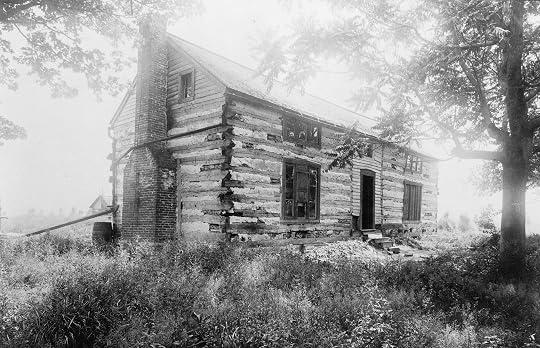
(Grant’s log cabin that he built when between wars)
But then came the War Between The States and everything changed. The Union couldn’t buy decent leaders and when Grant volunteered his way back into the army, his future and that of his country, would be forever wedded. As the war raged on and Lincoln lamented the lack of fight in each general he appointed, Ulysses S. Grant was taking control of the western frontier in such a way that it was inevitable he would become the eventual leader of the Union forces. Imbued with a brilliant military mind, his accession meant the end of the old South. The tanner’s son hounded Robert E. Lee, the aristocratic Southerner, into surrender.
However, the nation’s joy was soon dissolved after President Lincoln’s assassination. Grant was supposed to have been murdered also, but he chose to be with family instead of attending the theatre. He would remain Commander-In-Chief under Andrew Johnson, but the newly sworn-in President was not the man needed to mend the nation’s wounds, and everything went to snuff fairly quickly. Eventually, Grant would himself be elected as President, trying his best to follow Lincoln’s original plan to bring the two sides together. He would end up serving two terms as the American President, where he used his remaining time in office to secure the union, as the Southern Democrats were threatening to start another war all over again. His leadership in 1876 preserved the Union.
If you talk about Ulysses S. Grant to anyone, he will either be lauded as a brilliant general or a weak President. The South still has a hate/love jones for him, angry that he defeated Lee but understanding his mindset to mend the relationship. And it was Grant who fought for the civil rights of the freed slaves, which put him up against the Klu Klux Klan and the other Southerners who promulgated the ridiculous “Lost Cause” theory of the war. In fact, it hasn’t been until recently that his reputation has been rescued by historians who haven’t been part of the South party line.
This book runs over 350 pages, so if you’re looking to get a detailed explanation of every battle and every White House meeting, there simply isn’t enough space. The focus of the book is to provide the background of Grant’s life up to the 1876 Crisis, so the reader can understand why he did what he had to do to save the United States. This is the man who was living in poverty when gifted a slave from his in-laws. Although he could have sold the slave for much-needed money, he instead gave him freedom, long before the Civil War occurred. And while President, Grant was also intent on bringing the Native Americans into the American fold, believing that corrupt Indian Agents were endorsing the Indian Wars.
Grant was a resolute patriot with many flaws. I think the author has really made an effort to provide all views of the humble man, from birth until death. It was a page-turner for me and made me admire Grant even more. If you haven’t checked out Grant’s brilliant autobiography, written as he was dying from cancer, do so. This is a long review for me, perhaps pushed by the fact that I look at the American political landscape today and see a nasty President surrounded by mediocre functionaries who have been looting the country for their own profit. Will we ever see another Grant or another Lincoln? The Union still needs saving, some 150 years later.
Book Season = Autumn (breeze, breath, and soul)
A man of common roots, a reluctant but heroic warrior, a flawed but resolute president, Grant lived his life by a moral code of respect for the worth of every individual.
Like Lincoln, life was not supposed to be all that great for Ulysses Grant. He was born in 1822 to a hardscrabble family in Ohio, which was then the frontier of the growing United States. His father was a tanner who was also a fervent abolitionist. Grant’s future was supposed to be that of a son who follows his father into the same business, but the young Ulysses couldn’t bear the tanning business, for its animal cruelty and its smells. The father worked hard and developed a successful business of tannery franchises, if there was such a word for it back then, so the family finally had the means to send young Ulysses off to West Point, where he barely made any impressionable dent whatsoever.
Eventually, U.S. Grant would fight in the Mexican-American War, a conflict that would provide the generals of both sides in the future American Civil War. He served as a Quartermaster, but that was not the role best fitted to him. Grant had little aptitude for administrative supplies or any kind of business sense. But what he did have was a natural ability to see a battle in all its tactics and strategies, although neither he nor anyone else understood that at the time. Grant would always consider the Mexican-American War to be a “bad war”, one that was forced on Mexico so that the slave-owning states could expand their reach across the new territories. The future savior of the Union considered the coming Civil War to be the penance the Americans had to pay for such transgressions. By the time the Civil War started, Grant was considered a loser, having resigned from the military due to rumors of alcoholic binges. He was destined to work in his father’s business, unhappy and scraping the poverty line.
(Grant’s log cabin that he built when between wars)
But then came the War Between The States and everything changed. The Union couldn’t buy decent leaders and when Grant volunteered his way back into the army, his future and that of his country, would be forever wedded. As the war raged on and Lincoln lamented the lack of fight in each general he appointed, Ulysses S. Grant was taking control of the western frontier in such a way that it was inevitable he would become the eventual leader of the Union forces. Imbued with a brilliant military mind, his accession meant the end of the old South. The tanner’s son hounded Robert E. Lee, the aristocratic Southerner, into surrender.
However, the nation’s joy was soon dissolved after President Lincoln’s assassination. Grant was supposed to have been murdered also, but he chose to be with family instead of attending the theatre. He would remain Commander-In-Chief under Andrew Johnson, but the newly sworn-in President was not the man needed to mend the nation’s wounds, and everything went to snuff fairly quickly. Eventually, Grant would himself be elected as President, trying his best to follow Lincoln’s original plan to bring the two sides together. He would end up serving two terms as the American President, where he used his remaining time in office to secure the union, as the Southern Democrats were threatening to start another war all over again. His leadership in 1876 preserved the Union.
If you talk about Ulysses S. Grant to anyone, he will either be lauded as a brilliant general or a weak President. The South still has a hate/love jones for him, angry that he defeated Lee but understanding his mindset to mend the relationship. And it was Grant who fought for the civil rights of the freed slaves, which put him up against the Klu Klux Klan and the other Southerners who promulgated the ridiculous “Lost Cause” theory of the war. In fact, it hasn’t been until recently that his reputation has been rescued by historians who haven’t been part of the South party line.
This book runs over 350 pages, so if you’re looking to get a detailed explanation of every battle and every White House meeting, there simply isn’t enough space. The focus of the book is to provide the background of Grant’s life up to the 1876 Crisis, so the reader can understand why he did what he had to do to save the United States. This is the man who was living in poverty when gifted a slave from his in-laws. Although he could have sold the slave for much-needed money, he instead gave him freedom, long before the Civil War occurred. And while President, Grant was also intent on bringing the Native Americans into the American fold, believing that corrupt Indian Agents were endorsing the Indian Wars.
Grant was a resolute patriot with many flaws. I think the author has really made an effort to provide all views of the humble man, from birth until death. It was a page-turner for me and made me admire Grant even more. If you haven’t checked out Grant’s brilliant autobiography, written as he was dying from cancer, do so. This is a long review for me, perhaps pushed by the fact that I look at the American political landscape today and see a nasty President surrounded by mediocre functionaries who have been looting the country for their own profit. Will we ever see another Grant or another Lincoln? The Union still needs saving, some 150 years later.
Book Season = Autumn (breeze, breath, and soul)

November 4, 2021
Since the author is with Fox News, I admit that I was skeptical. Fox News has been repeating Republican lies that the presidential election of 2020 was rigged and has been defending the pro-Trump insurrectionists who stormed the US Capitol on January 6, 2021. I have heard some Trump allies call for the federal government to convene a commission to decide the true outcome of the election and I have heard them cite the commission set up under Grant to sort through the results of the disputed election of 1876.
So, I suspected that Baier's book might have been an elaboration of that argument, using more history.
Baier says otherwise. As he has claimed in interviews about his book, like many media outlets, Fox maintains a firewall between opinion and news. And while commentators like Sean Hannity have been repeating Trump talking points about the 2020 election, news anchors on the network have stuck close to the facts. Baier says that he is aware of no evidence to call the election into question and that he was horrified by the Capitol insurrection.
I was still skeptical but once I started his Grant book, I discovered that I need not have worried. It appears to be a fair and historically accurate history well documented with primary and secondary sources of the kind you'd find from an academic historian. But unlike their books, Baier's is written for a general reader and so is more accessible and frankly, more entertaining than the average Grant biography.
I don't know if Baier or co-writer Catherine Whitney deserves more of the credit for producing a gripping narrative that also seems to be solid history, but somebody deserves thanks and praise.
The book is an excellent introduction to Grant for anyone, spending about half its pages on a summary of his life and career through the end of the Civil War. For a reader already aware of that part of Grant's story, the other half of the book offers much value. It tells the story of Grant's post-war generalship, his presidency and the climax of his work to save the nation by overseeing the process to determine the winner of the 1876 presidential race.
Grant himself was immensely proud of his role in finding a compromise that would work for both sides, in his mind preventing a renewal of open violence that threatened to become a second Civil War. Baier shows much sympathy for Grant and especially for his efforts to protect the civil rights of Black Southerners, and his text is keenly aware of the tragedy that the compromise of 1876 wound up ending Reconstruction.
This is a story that needs to be told today more than ever and with this engaging book, Baier has proven that he may just be one of the best people to tell it.
So, I suspected that Baier's book might have been an elaboration of that argument, using more history.
Baier says otherwise. As he has claimed in interviews about his book, like many media outlets, Fox maintains a firewall between opinion and news. And while commentators like Sean Hannity have been repeating Trump talking points about the 2020 election, news anchors on the network have stuck close to the facts. Baier says that he is aware of no evidence to call the election into question and that he was horrified by the Capitol insurrection.
I was still skeptical but once I started his Grant book, I discovered that I need not have worried. It appears to be a fair and historically accurate history well documented with primary and secondary sources of the kind you'd find from an academic historian. But unlike their books, Baier's is written for a general reader and so is more accessible and frankly, more entertaining than the average Grant biography.
I don't know if Baier or co-writer Catherine Whitney deserves more of the credit for producing a gripping narrative that also seems to be solid history, but somebody deserves thanks and praise.
The book is an excellent introduction to Grant for anyone, spending about half its pages on a summary of his life and career through the end of the Civil War. For a reader already aware of that part of Grant's story, the other half of the book offers much value. It tells the story of Grant's post-war generalship, his presidency and the climax of his work to save the nation by overseeing the process to determine the winner of the 1876 presidential race.
Grant himself was immensely proud of his role in finding a compromise that would work for both sides, in his mind preventing a renewal of open violence that threatened to become a second Civil War. Baier shows much sympathy for Grant and especially for his efforts to protect the civil rights of Black Southerners, and his text is keenly aware of the tragedy that the compromise of 1876 wound up ending Reconstruction.
This is a story that needs to be told today more than ever and with this engaging book, Baier has proven that he may just be one of the best people to tell it.

January 13, 2022
I liked this biography of Grant. I’ve also read Chernow’s which was good, but too long.
To me, an enjoyable biography should hit the high points (positive and negative) and let you know about the man. Some biographies try to be the seminal authoritative work on a subject and it ends up being way too long and way too detailed about ancillary topics (example is Chernow’s detail on Grant’s attempt annex Santo Domingo). while informational and sometimes interesting, really didn’t justify that much real estate/pages in a biography.
The book DID go into detail in the presidential election crisis of 1876 and the fight for electoral votes, double submissions, fraud, bribery, etc. Guess what?!?! Last year wasn’t the first time, nor the last. And as bad as we think things are between the two sides…? They’ve always been split, cutthroat, divisive.
I think this book may have swung Grant into the lead as
My favorite president. He strikes me as the “every man” / “common man”. He was anti-slavery (was given a slave by his father-in-law and set him free), yearned for peaceful reconciliation with the South, tried to have policies helpful to Indian rights (but his appointees did not back his own policies). If he had a fault, it was trusting the wrong people sometimes, maybe an inability to accurately judge character. Because he was bitten more than once by bad actors lying and stealing from him, his bank, the government.
In most of my readings on the Civil War, Grant’s key attribute seems his ability to stay cool and make decisions under fire. While others dawdled, hesitated, or panicked, he calmly led his troops into and through the horrific battles to victory.
Like I said this was a shorter biography but it was a good one by Bret Baier and I listened to the audiobook from my library app. Bret actually narrated himself with that great broadcaster voice (don’t be hatin’) . Overall I recommend this book.
To me, an enjoyable biography should hit the high points (positive and negative) and let you know about the man. Some biographies try to be the seminal authoritative work on a subject and it ends up being way too long and way too detailed about ancillary topics (example is Chernow’s detail on Grant’s attempt annex Santo Domingo). while informational and sometimes interesting, really didn’t justify that much real estate/pages in a biography.
The book DID go into detail in the presidential election crisis of 1876 and the fight for electoral votes, double submissions, fraud, bribery, etc. Guess what?!?! Last year wasn’t the first time, nor the last. And as bad as we think things are between the two sides…? They’ve always been split, cutthroat, divisive.
I think this book may have swung Grant into the lead as
My favorite president. He strikes me as the “every man” / “common man”. He was anti-slavery (was given a slave by his father-in-law and set him free), yearned for peaceful reconciliation with the South, tried to have policies helpful to Indian rights (but his appointees did not back his own policies). If he had a fault, it was trusting the wrong people sometimes, maybe an inability to accurately judge character. Because he was bitten more than once by bad actors lying and stealing from him, his bank, the government.
In most of my readings on the Civil War, Grant’s key attribute seems his ability to stay cool and make decisions under fire. While others dawdled, hesitated, or panicked, he calmly led his troops into and through the horrific battles to victory.
Like I said this was a shorter biography but it was a good one by Bret Baier and I listened to the audiobook from my library app. Bret actually narrated himself with that great broadcaster voice (don’t be hatin’) . Overall I recommend this book.

June 6, 2022
Wasn’t what I expected….I though this was concentrating on Ulysses S Grant during his presidency more than a condensed biography. It spans his entire life but spent less time on the Crisis of 1876 than I wanted. I mean the crisis is in the title and only happened in the last 1/3. That being said I loved the first 2/3s more than the end which seemed to drag on with too many political figures introduced and never spoken of again.
Anyone interested in his presidency should just watch the History Channel special honestly.
Anyone interested in his presidency should just watch the History Channel special honestly.

March 31, 2022
Absolutely brilliant! I have read a number of General Grant's biographies. This one was the easiest to read and flowed nicely from beginning to end.

November 21, 2021
To Rescue the Republic
I enjoyed the book. Mostly because it focused on one of my favorite presidents, President Grant.
I cannot say I learned much new, but that is likely because I have already read President Grant’s memoir, Ron Chernow’s book and several others. If you have not read up on General Grant, you will find this book very informative and interesting. Baier’s writing style is compelling.
I do not agree with the comparison to January 6, 2020. Since Baier states he was already well into researching and writing the book when those events occurred, it seems likely the focus of the book was changed in an attempt to make it relevant to a larger audience.
It does illustrate the fact that the divisions of today are nothing new. They have always existed, and likely always will.
I enjoyed the book. Mostly because it focused on one of my favorite presidents, President Grant.
I cannot say I learned much new, but that is likely because I have already read President Grant’s memoir, Ron Chernow’s book and several others. If you have not read up on General Grant, you will find this book very informative and interesting. Baier’s writing style is compelling.
I do not agree with the comparison to January 6, 2020. Since Baier states he was already well into researching and writing the book when those events occurred, it seems likely the focus of the book was changed in an attempt to make it relevant to a larger audience.
It does illustrate the fact that the divisions of today are nothing new. They have always existed, and likely always will.

February 18, 2022
Very well laid out story on Grant. It is not a complete biography; however, it gives you insight into his thoughts. Easy to read and follow. It is a well written book about one of the greatest presidents in our history. It kept me well entertained. As well as being informative, it was very thought provoking. I have not read any books on Reconstruction, just bits and pieces in other civil war books. I intend to correct that.
I found Chapter 9 very interesting. If you thought that the controversy of the 2000 Bush v. Gore or the 2020 Trump v. Biden were interesting wait until you read about The Grand Bargain and the way the 1876 presidential election was decided. Highly recommended.
I found Chapter 9 very interesting. If you thought that the controversy of the 2000 Bush v. Gore or the 2020 Trump v. Biden were interesting wait until you read about The Grand Bargain and the way the 1876 presidential election was decided. Highly recommended.

July 22, 2026
Making my way through the presidents!
What a tall task Grant had — shaping the union after the civil war & a hostile and prejudice administration (A. Johnson), while pioneering reconstruction. I appreciated the writer’s fresh look on Grant’s leadership & commitment to equal rights for blacks. I was fascinated to learn that he was highly respected by many confederate soldiers and generals by the way he treated them with dignity during peace talks. He even had 2 former confederate soldiers as Paul bearers at his funeral.
What a tall task Grant had — shaping the union after the civil war & a hostile and prejudice administration (A. Johnson), while pioneering reconstruction. I appreciated the writer’s fresh look on Grant’s leadership & commitment to equal rights for blacks. I was fascinated to learn that he was highly respected by many confederate soldiers and generals by the way he treated them with dignity during peace talks. He even had 2 former confederate soldiers as Paul bearers at his funeral.
July 15, 2025
2.5 Stars- definitely enjoyable but far from what it could be. Loses half a star because the author gets a fact wrong about the Grant House in Gelena. Am I that petty? Yes. Does anyone care about the text of my goodreads review? Well, you're reading it.
Baier, it seems, really wanted to write a biography of Grant, but didn't have the stamina to do so. He approaches the president's life story with energy and conviction... which fades away as the book reaches its halfway point. By the time the author reaches the central action of the book- at least the moment he claims is the central action- his prose and storytelling start to fail him.
Still, this is a perfectly enjoyable sparknotes of Chernow's excellent biography of Grant.
Baier, it seems, really wanted to write a biography of Grant, but didn't have the stamina to do so. He approaches the president's life story with energy and conviction... which fades away as the book reaches its halfway point. By the time the author reaches the central action of the book- at least the moment he claims is the central action- his prose and storytelling start to fail him.
Still, this is a perfectly enjoyable sparknotes of Chernow's excellent biography of Grant.

January 17, 2022
I was very interested in what this book had to offer, and was even more encouraged by the introduction which tied the election crisis of 1876 to the election crisis of 2020. I was heartily disappointed to find this book little more than an abridged history of Grant which has been so meticulously documented before by much more capable historians. I would recommend instead of reading this book to alternately read the direct source material which this book rips off (and which is much better); namely Grant’s memoirs and the Ken Burns Civil War documentary for the entire first half of the book, Ron Chernow’s History and Wikipedia for the rest.
Plainly put, this lazy ghost written book adds nothing new to the Grant canon and serves only to make money for the TV personality which attaches his name to the title.
Plainly put, this lazy ghost written book adds nothing new to the Grant canon and serves only to make money for the TV personality which attaches his name to the title.

November 16, 2021
I am loathe to ever pick up a book “written” by a t.v talking head. They tout their best selling book while shilling every day on their show.
But President Grant is one of (if not my) favorite President. So I felt compelled.
It’s a great intro into the man. If you’re somewhat interested in learning about this President, I recommend it.
But President Grant is one of (if not my) favorite President. So I felt compelled.
It’s a great intro into the man. If you’re somewhat interested in learning about this President, I recommend it.

November 14, 2021
Having read several Grant biographies, I didn't pick up a lot new here. But Bret Baier has still done an excellent job, especially in detailing Grant's role in settling the disputed 1876 presidential election. Reconstruction was dying regardless of the outcome of the 1876 election, but Grant's efforts prevented the United States from reigniting a Civil War.

August 30, 2026
"To Rescue the Republic by Bret Baier is an outstanding look at one of the most overlooked periods in American history. While many books end with Appomattox, this one picks up where the Civil War left off, showing how Ulysses S. Grant fought just as hard to preserve the Union during Reconstruction as he did on the battlefield.
What impressed me most was how Baier presents Grant as a complete person, not just the victorious Union general, but a reluctant politician, a principled president, and a man determined to protect the rights of formerly enslaved Americans against the rising violence of the Ku Klux Klan. The book also does an excellent job explaining the contested election of 1876 and how fragile the nation remained more than a decade after the war.
One of the themes I appreciated most was Baier's portrayal of Grant as both an extraordinary and an ordinary man. He was undeniably one of the greatest figures in American history, a victorious general, president, and defender of the Union, yet he never fit the larger-than-life image many associate with military heroes. Quiet, humble, and unassuming, Grant symbolized the average American. Baier shows that his greatness wasn't rooted in charisma or a commanding presence, but in his integrity, perseverance, humility, and unwavering determination. It serves as a powerful reminder that ordinary people, through character and conviction, are capable of accomplishing extraordinary things.
The writing is fast-paced and engaging, making a complicated period easy to follow without sacrificing historical depth. I especially appreciated that Baier challenged many of the old myths surrounding Grant and painted a far more balanced picture of his presidency than the one many of us learned in school.
This book filled an important gap in the broader memory of United States history. It reinforced that preserving the Union did not end with Lee's surrender, it continued through the difficult political battles that followed.
I highly recommend To Rescue the Republic to anyone interested in Ulysses S. Grant, Reconstruction, or American history. It's one of the best books I've read on Grant and a reminder that some of the greatest battles for the Republic were fought not only on the battlefield, but in the years that followed.
What impressed me most was how Baier presents Grant as a complete person, not just the victorious Union general, but a reluctant politician, a principled president, and a man determined to protect the rights of formerly enslaved Americans against the rising violence of the Ku Klux Klan. The book also does an excellent job explaining the contested election of 1876 and how fragile the nation remained more than a decade after the war.
One of the themes I appreciated most was Baier's portrayal of Grant as both an extraordinary and an ordinary man. He was undeniably one of the greatest figures in American history, a victorious general, president, and defender of the Union, yet he never fit the larger-than-life image many associate with military heroes. Quiet, humble, and unassuming, Grant symbolized the average American. Baier shows that his greatness wasn't rooted in charisma or a commanding presence, but in his integrity, perseverance, humility, and unwavering determination. It serves as a powerful reminder that ordinary people, through character and conviction, are capable of accomplishing extraordinary things.
The writing is fast-paced and engaging, making a complicated period easy to follow without sacrificing historical depth. I especially appreciated that Baier challenged many of the old myths surrounding Grant and painted a far more balanced picture of his presidency than the one many of us learned in school.
This book filled an important gap in the broader memory of United States history. It reinforced that preserving the Union did not end with Lee's surrender, it continued through the difficult political battles that followed.
I highly recommend To Rescue the Republic to anyone interested in Ulysses S. Grant, Reconstruction, or American history. It's one of the best books I've read on Grant and a reminder that some of the greatest battles for the Republic were fought not only on the battlefield, but in the years that followed.

April 27, 2022
I was a little apprehensive when I realized the author of this book was a Fox News commentator, since I don’t often agree with that network’s perspective. But I was intrigued by a book that compared the corruption and divisiveness of the reconstruction era with events in the US today. And I wasn’t disappointed. Although some of the history of Grant and his experiences was familiar to me, having it placed in contrast with the Trump era was helpful in confirming my belief that, contrary to popular opinion, we are not seeing the end of our free nation despite the political and media rhetoric. Baier’s Point is rather that freedom and racial equality are the products of an ongoing and difficult process. We have to confront current realities and the divisive spirit that plagues us, and work out a path forward. It isn’t easy, it isn’t perfect, but it can and must be done. We need intelligent, selfless leaders like Grant who care more about the nation than they do about their own image, and who are willing to compromise.
March 5, 2022
I have read a lot about Grant including his memoir. Yet I found a lot a historical tidbits about Grant in this book that I hadn't previously seen or heard about. Which means there was very good original research that went into writing it. I also liked the author's style as it's conversational and flows well. It's the first book I've read by this author and after reading this, I will be reading more of his works.


May 14, 2026
Grant’s humanity comes through here, his life as a parent, husband, and friend intertwined with his military career (particularly when his children accompany him during the war). He is shown to be a flexible and unflappable tactical thinker, a man who doesn’t care who gets the credit for a successful plan.
It’s common for a biographer to be partisan towards their subject, and Baier is no exception, writing off Grant’s alcoholism as a mix of slander and his being a lightweight. But I feel like it’s a missed opportunity to tell the story of a man who accomplished incredible things despite his flaws and challenges. I would have liked to know a few specifics of the staggering number of demerits he got at West Point: were they for drunkenness? Tardiness? Arguing with his instructors? Baier’s protectiveness of his subject keeps us from knowing Grant more fully.
It’s common for a biographer to be partisan towards their subject, and Baier is no exception, writing off Grant’s alcoholism as a mix of slander and his being a lightweight. But I feel like it’s a missed opportunity to tell the story of a man who accomplished incredible things despite his flaws and challenges. I would have liked to know a few specifics of the staggering number of demerits he got at West Point: were they for drunkenness? Tardiness? Arguing with his instructors? Baier’s protectiveness of his subject keeps us from knowing Grant more fully.
Want to Read
October 7, 2021I see two people gave less than sterling stars. Without explaining why they opted to give 3 stars is not any help. Thus, I ignore.
January 7, 2022
Recommended only for the coverage of the 1876 election.
Because I've read Chernow's "Grant", the first 2/3rds of this biography presents itself as simplistic, shallow, superficial history. In the Introduction, Baier himself admits he views himself as a "reporter of history", not an historian. The devil is in the details.
However, starting with Chapter 10 with the coverage of the 1876 election I found myself much more interested and intrigued. Whether this was due to my lack of in-depth knowledge of that election (I have not yet read a biography about Rutherford B. Hayes) as compared to my knowledge of Grant's early life, Civil War actions and his presidency due to Chernow, or because Baier did a much better job with the latter part of the book's research, I do not know. I suspect the latter, as he opened and closed the book with chapters comparing the political environment then to now.
Because I've read Chernow's "Grant", the first 2/3rds of this biography presents itself as simplistic, shallow, superficial history. In the Introduction, Baier himself admits he views himself as a "reporter of history", not an historian. The devil is in the details.
However, starting with Chapter 10 with the coverage of the 1876 election I found myself much more interested and intrigued. Whether this was due to my lack of in-depth knowledge of that election (I have not yet read a biography about Rutherford B. Hayes) as compared to my knowledge of Grant's early life, Civil War actions and his presidency due to Chernow, or because Baier did a much better job with the latter part of the book's research, I do not know. I suspect the latter, as he opened and closed the book with chapters comparing the political environment then to now.

January 19, 2022
From the book, I realized Grant was an amazing, humble, and very patriotic man. Two interesting aspects of the book stand out for me. First, regarding Grant, the man, the book does a good job of reviewing his life including fascinating aspects of his military and political career. “In many respects, Grant symbolized a particularly American characteristic - the ability of ordinary people to accomplish the extraordinary … No doubt much of the confusion is due to Grant’s failure to conform to what we think is the nature of powerful men.” The other aspect of the book is the political turmoil, bigotry and racial hatred, inability of Dems and Republicans to reach agreement, and corruption in voting in the 1876 election. Many of the same issues that Grant had to deal with, we are still dealing with today.

January 27, 2022
This book provides an in-depth look at Ulysses S. Grant and his leadership (both successes and failures) during the Reconstruction Era.
Grant may have been a quiet man, but he wasn't a simple one and this book neither vilifies nor romanticizes him.
Born a tanner's son and tested in battle by the Mexican American War, Grant soon became one of the boldest generals of the American Civil War. Many had high hopes for his Reconstruction plans to give recently enslaved Black Americans a leg up while reintegrating the South into the Union, but in his final weeks in the White House an election crisis threatened to undo his life's work.
Readers will be astounded at parallels to today's politics and may be left wondering..."What if Grant had served as president again?"
Grant may have been a quiet man, but he wasn't a simple one and this book neither vilifies nor romanticizes him.
Born a tanner's son and tested in battle by the Mexican American War, Grant soon became one of the boldest generals of the American Civil War. Many had high hopes for his Reconstruction plans to give recently enslaved Black Americans a leg up while reintegrating the South into the Union, but in his final weeks in the White House an election crisis threatened to undo his life's work.
Readers will be astounded at parallels to today's politics and may be left wondering..."What if Grant had served as president again?"

February 22, 2022
Oh, my. History in sound bites.

December 28, 2021
A Great Book To Add To Your Civil War/Reconstruction/Presidential Libraries
This is essential to understand Grant and the United States. But, mistakes were made in this book.
1. Shiloh began on April 6th, 1862, not July 6th
2. Grant was in northern Mississippi in July of 1862.
3. Grant's army had 40,000-43,000 men during the Vicksburg Campaign, reinforcements would come later during the siege of Vicksburg, but it was not 75,000 men during the campaign and the early stages of the siege.
4. It was May 17th-May 18th that Grant and his army arrived at Vicksburg. June 18th was the middle of the siege at Vicksburg.
5. Both Baier and Whitney confuse the three assaults at Vicksburg and confuse the reader that there were constant assaults at Vicksburg. There were only two, after two assaults, Grant settled in for a siege.
6. Baier turns Lee into a God and a saint.
7. Gettysburg was a random farm town that got caught up in the war. It did not have and still is not militarily significant whatsoever. The battle happened because of the roads, the armies bumped into one another. The town was not important.
8. The Union came in from the South, the Confederacy came in from the North.
9. Winfield Scott Hancock and his corps did not fight on July 1st.
10. Why the focus on Gettysburg, when Vicksburg was much more important? Baier did not have to include Gettysburg and Civil War buffs and other readers would know what Gettysburg was already. He didn't have to focus on Gettysburg, if he did this nobody would even notice it. Grant was not focused on Gettysburg, he was focused on Vicksburg only.
11. Lee ordered Pickett's Charge, not Pickett.
12. Pickett's Charge took place on July 2nd, not July 3rd. Pickett and his division didn't arrive at Gettysburg until the evening of July 2nd.
13. Both authors repeat themselves about Pickett's Charge.
14. Both authors glorify the charge and don't show the bloody and gory reality of it.
15. Comparing Gettysburg to Waterloo. Too much Gettysburg worship. Focus on Grant and Vicksburg.
16. Treating a treasonus Confederate soldier right does not mean brotherhood.
17. Lincoln dedicated Gettysburg's National Cemetery to Union soldiers, not Confederate ones. Again, Confederate soldiers fought against America and fought for slavery.
18. Grant was still a Major General after Vicksburg. His rank did not change until March of 1864.
19. Mary Todd Lincoln did not call Grant a butcher after Vicksburg. She called him a butcher after the battle of Cold Harbor, Virginia in 1864.
20. Both authors did not mention Order#11 which expelled Jews from his military district. Did not mention that when he was president he was a firm supporter of the Jewish-American community. They both white-wash Grant and turning him into a saint and God like Lee. Grant was human, he was a sinner, he made mistakes, he wasn't a saint and he wasn't God.
21. Grant and Longstreet we're not friends. They were acquaintances that knew each other very well.
22. Sherman and The Army Of The Tennessee attacked Missionary Ridge, George Thomas and The Army Of The Cumberland attacked, not Hookers army. Thomas's army attacked Missionary Ridge without orders, Thomas didn't attack which resulted in Sherman's army getting pinned down on the ridge. Plus Thomas didn't obey Grant's order to attack at first.
23. Author did not mention Antietam leading Lincoln to sign the Emancipation Proclamation.
24. Battle of Petersburg happened on June 15th, 1864. Not May 15th.
25. The 1864 Election was very partisan. It was very close than what Americans think it was. There was a huge anti-war movement in the North as well as sentiment. Most Americans wanted Lincoln out of office.
26. John Bell Hood was not in command of Confederate army at Atlanta until August of 1864. You can correct this if I'm wrong.
27. Hoods army burned a third of Atlanta before Sherman even got there. Civilians burned down the city as well.
28. Sherman's capture of Atlanta helped Lincoln win re-election. But the capture of Mobile Bay by Admiral David Farragut also helped Lincoln. Sheridan's Shenandoah Valley Campaign, also credit goes to Grant for this campaign as well. And the Battle of Cedar Creek, Virginia helped destroy the breadbasket of the Confederacy in October even before the election started in November.
29. Minor thing, Baier doesn't mention the Appomattox Campaign and the Battle of Sayler's Creek and the other battles that happened before Lee surrendered.
30. The letters between Grant and Lee did not happen until the end of the Appomattox Campaign, not before.
31. Liberal Republicans we're not 21st century liberals. Liberal Republicans we're the conservative faction of the Republican Party during Reconstruction and believed in States rights, which includes supporting removing troops from the South and thus abandon African-Americans and theur rights under the 13th, 14th, and 15th Amendments. Republicans in the 19th century were liberal, while Democrats in the 19th century were conservative.
32. No bibliography.
This is essential to understand Grant and the United States. But, mistakes were made in this book.
1. Shiloh began on April 6th, 1862, not July 6th
2. Grant was in northern Mississippi in July of 1862.
3. Grant's army had 40,000-43,000 men during the Vicksburg Campaign, reinforcements would come later during the siege of Vicksburg, but it was not 75,000 men during the campaign and the early stages of the siege.
4. It was May 17th-May 18th that Grant and his army arrived at Vicksburg. June 18th was the middle of the siege at Vicksburg.
5. Both Baier and Whitney confuse the three assaults at Vicksburg and confuse the reader that there were constant assaults at Vicksburg. There were only two, after two assaults, Grant settled in for a siege.
6. Baier turns Lee into a God and a saint.
7. Gettysburg was a random farm town that got caught up in the war. It did not have and still is not militarily significant whatsoever. The battle happened because of the roads, the armies bumped into one another. The town was not important.
8. The Union came in from the South, the Confederacy came in from the North.
9. Winfield Scott Hancock and his corps did not fight on July 1st.
10. Why the focus on Gettysburg, when Vicksburg was much more important? Baier did not have to include Gettysburg and Civil War buffs and other readers would know what Gettysburg was already. He didn't have to focus on Gettysburg, if he did this nobody would even notice it. Grant was not focused on Gettysburg, he was focused on Vicksburg only.
11. Lee ordered Pickett's Charge, not Pickett.
12. Pickett's Charge took place on July 2nd, not July 3rd. Pickett and his division didn't arrive at Gettysburg until the evening of July 2nd.
13. Both authors repeat themselves about Pickett's Charge.
14. Both authors glorify the charge and don't show the bloody and gory reality of it.
15. Comparing Gettysburg to Waterloo. Too much Gettysburg worship. Focus on Grant and Vicksburg.
16. Treating a treasonus Confederate soldier right does not mean brotherhood.
17. Lincoln dedicated Gettysburg's National Cemetery to Union soldiers, not Confederate ones. Again, Confederate soldiers fought against America and fought for slavery.
18. Grant was still a Major General after Vicksburg. His rank did not change until March of 1864.
19. Mary Todd Lincoln did not call Grant a butcher after Vicksburg. She called him a butcher after the battle of Cold Harbor, Virginia in 1864.
20. Both authors did not mention Order#11 which expelled Jews from his military district. Did not mention that when he was president he was a firm supporter of the Jewish-American community. They both white-wash Grant and turning him into a saint and God like Lee. Grant was human, he was a sinner, he made mistakes, he wasn't a saint and he wasn't God.
21. Grant and Longstreet we're not friends. They were acquaintances that knew each other very well.
22. Sherman and The Army Of The Tennessee attacked Missionary Ridge, George Thomas and The Army Of The Cumberland attacked, not Hookers army. Thomas's army attacked Missionary Ridge without orders, Thomas didn't attack which resulted in Sherman's army getting pinned down on the ridge. Plus Thomas didn't obey Grant's order to attack at first.
23. Author did not mention Antietam leading Lincoln to sign the Emancipation Proclamation.
24. Battle of Petersburg happened on June 15th, 1864. Not May 15th.
25. The 1864 Election was very partisan. It was very close than what Americans think it was. There was a huge anti-war movement in the North as well as sentiment. Most Americans wanted Lincoln out of office.
26. John Bell Hood was not in command of Confederate army at Atlanta until August of 1864. You can correct this if I'm wrong.
27. Hoods army burned a third of Atlanta before Sherman even got there. Civilians burned down the city as well.
28. Sherman's capture of Atlanta helped Lincoln win re-election. But the capture of Mobile Bay by Admiral David Farragut also helped Lincoln. Sheridan's Shenandoah Valley Campaign, also credit goes to Grant for this campaign as well. And the Battle of Cedar Creek, Virginia helped destroy the breadbasket of the Confederacy in October even before the election started in November.
29. Minor thing, Baier doesn't mention the Appomattox Campaign and the Battle of Sayler's Creek and the other battles that happened before Lee surrendered.
30. The letters between Grant and Lee did not happen until the end of the Appomattox Campaign, not before.
31. Liberal Republicans we're not 21st century liberals. Liberal Republicans we're the conservative faction of the Republican Party during Reconstruction and believed in States rights, which includes supporting removing troops from the South and thus abandon African-Americans and theur rights under the 13th, 14th, and 15th Amendments. Republicans in the 19th century were liberal, while Democrats in the 19th century were conservative.
32. No bibliography.
January 30, 2022
I enjoyed this very readable biography. I came away really liking Grant as a very good person who tried very hard to serve well and who had flaws as we all do. His father got him appointed to West Point and he served in the Army and then left it only to return when the Civil War started. He was an excellent leader who was ruthless and unflappable in battle but hated the sight of blood and suffering. He was kind and charitable to those who he defeated, never wishing to cause them shame or suffering. When Lee surrendered he allowed the men to keep their sidearms and horses and offered rations for 25,000 hungry Confederate Soldiers. He fought to preserve the Union and also to free the slaves, which was not the object of all.
As President (though not a politician) he worked to protect and bring the vote to Native Americans and Blacks, although some of his ideas did not work out I believe his intentions were always good. He went after the Ku Klux Klan and effectively put an end to the Klan's activities for many years. At the end of his last term the election results of who won the election, Hayes or Tilden, were in question. There was deceit, threats, violence, encouragement to vote early and often. Grant was determined to make sure that right prevailed. He worked hard to establish a commission of five Democrats, five Republicans, and five members of the Supreme Court to go through the electoral votes.
Above all Grant and his wife, Julia, adored one another and their children. Theirs was a happy home.
As President (though not a politician) he worked to protect and bring the vote to Native Americans and Blacks, although some of his ideas did not work out I believe his intentions were always good. He went after the Ku Klux Klan and effectively put an end to the Klan's activities for many years. At the end of his last term the election results of who won the election, Hayes or Tilden, were in question. There was deceit, threats, violence, encouragement to vote early and often. Grant was determined to make sure that right prevailed. He worked hard to establish a commission of five Democrats, five Republicans, and five members of the Supreme Court to go through the electoral votes.
Above all Grant and his wife, Julia, adored one another and their children. Theirs was a happy home.
Displaying 1 - 30 of 448 reviews