

What do you think?

Shearwater: A Bird, an Ocean, and a Long Way Home
A very personal mix of memoir and natural history from the author of Liquid Gold.
Ten weeks into its life, a Manx shearwater chick will emerge from its burrow and fly 8,000 miles from the west coast of the British Isles to the South Atlantic. It will be unlikely to touch land again for four years.
Part memoir, part homage to wilderness, Shearwater traces the author’s 50-year obsession with one of nature’s supreme travellers. In the finest tradition of nature writing, Roger Morgan-Grenville, author of Liquid Gold – described by Mary Colwell (Curlew Moon) as ‘a book that ignites joy and warmth’ – unpicks the science behind its incredible journey; and into the story of a year in the shearwater’s life, he threads the inspirational influence of his Hebridean grandmother who instilled in him a love of wild places and wild animals.
Full of lightly-worn knowledge, acute human observation and self-deprecating humour, Shearwater brings to life a truly mysterious and charismatic bird.
Ten weeks into its life, a Manx shearwater chick will emerge from its burrow and fly 8,000 miles from the west coast of the British Isles to the South Atlantic. It will be unlikely to touch land again for four years.
Part memoir, part homage to wilderness, Shearwater traces the author’s 50-year obsession with one of nature’s supreme travellers. In the finest tradition of nature writing, Roger Morgan-Grenville, author of Liquid Gold – described by Mary Colwell (Curlew Moon) as ‘a book that ignites joy and warmth’ – unpicks the science behind its incredible journey; and into the story of a year in the shearwater’s life, he threads the inspirational influence of his Hebridean grandmother who instilled in him a love of wild places and wild animals.
Full of lightly-worn knowledge, acute human observation and self-deprecating humour, Shearwater brings to life a truly mysterious and charismatic bird.
282 pages, Hardcover
Published April 8, 2021
Ratings & Reviews
Friends & Following
Create a free account to discover what your friends think of this book!
Community Reviews
Displaying 1 - 30 of 43 reviews
July 4, 2021
Click here to hear my thoughts on this book over on my Booktube channel, abookolive.
A blend of memoir, nature writing, and travel writing that focuses on the longstanding object of the author's fascination: the impressive seabird, the Manx Shearwater. Although the travel writing leaves something to be desired, the book is full of heart and interesting information about these birds.
A blend of memoir, nature writing, and travel writing that focuses on the longstanding object of the author's fascination: the impressive seabird, the Manx Shearwater. Although the travel writing leaves something to be desired, the book is full of heart and interesting information about these birds.

January 14, 2021
The Manx shearwater (puffinus puffinus) spends most of its life at sea, commuting 20,000 miles clockwise round the Atlantic each year, following the trade winds as early navigators did, returning to land only to breed. Its three main breeding sites are on Rum, Skomer and Skokholm islands, off the west coasts of Scotland and Wales. Like the puffin, it raises its chicks in burrows but, to avoid its predators, it only leaves the relative safety of the sea in the pitch dark of night when they land in their thousands to attend to the important business of maintaining their burrows, mating and raising their solitary chick. When the 70 day old fledgling leaves its burrow, having been deserted by its parents some time before, it will not touch land again for between 2 and 4 years. It is a remarkable life to learn about and Morgan-Grenville makes it an interesting read. Thanks to the author, I should now be able to recognise a Manx shearwater from their distinctive flight pattern across the tops of the waves, giving them their name - flap, flap, flap, glide.
Spending time with researchers in various locations, M-G finds their dedication and enthusiasm inspiring. Most of their work is necessarily done in pitch dark, on the sides of cliffs or mountains, often in horrible conditions. He is clearly full of admiration for them and, as someone who cannot imagine being so obsessed with anything that I would want to camp out in a tent or hut on an island for months on end (not for one minute in my case!), spending my nights scrambling around on cliff faces surrounded by the unearthly din created by thousands of shearwaters, so am I!
Roger had planned to follow the Manx shearwater’s annual journey from its breeding grounds in Britain down to Brazil and Argentina and then north towards the Caribbean and up the east coast of the United States before heading home again. Covid didn’t stop the shearwaters but it sadly thwarted his plans and only the Argentine leg could be completed. I enjoyed his trip to the south western tip of Ireland to watch for the shearwaters returning in March, however, and perhaps he wouldn’t have made that trip if he had been able to travel further afield.
While I found the book interesting and shared the author’s enthusiasm for his investigative journey, it most definitely suffers from him being unable to complete his travels. I found it became quite repetitious for a while as the blank pages were filled in. An abiding image will be the picture he paints of droves of oceanic birds returning to Britain each spring - shearwaters, puffins, razorbills, guillemots and the rest - from their overwintering in Newfoundland, Iceland, and elsewhere. It reminded me of the droves of cattle travelling to market from all airts and pairts of Scotland that I read about in The Drove Roads of Scotland. Admittedly very different but the picture in my mind is very similar. The book is also a memoir about his childhood visits to his grandmother in Mull, a wonderful woman that we would all have loved as a guiding influence in our lives. I love Mull and enjoyed reminiscing with him. 3.5 stars.
With thanks to NetGalley and Icon Books for a review copy.
Spending time with researchers in various locations, M-G finds their dedication and enthusiasm inspiring. Most of their work is necessarily done in pitch dark, on the sides of cliffs or mountains, often in horrible conditions. He is clearly full of admiration for them and, as someone who cannot imagine being so obsessed with anything that I would want to camp out in a tent or hut on an island for months on end (not for one minute in my case!), spending my nights scrambling around on cliff faces surrounded by the unearthly din created by thousands of shearwaters, so am I!
Roger had planned to follow the Manx shearwater’s annual journey from its breeding grounds in Britain down to Brazil and Argentina and then north towards the Caribbean and up the east coast of the United States before heading home again. Covid didn’t stop the shearwaters but it sadly thwarted his plans and only the Argentine leg could be completed. I enjoyed his trip to the south western tip of Ireland to watch for the shearwaters returning in March, however, and perhaps he wouldn’t have made that trip if he had been able to travel further afield.
While I found the book interesting and shared the author’s enthusiasm for his investigative journey, it most definitely suffers from him being unable to complete his travels. I found it became quite repetitious for a while as the blank pages were filled in. An abiding image will be the picture he paints of droves of oceanic birds returning to Britain each spring - shearwaters, puffins, razorbills, guillemots and the rest - from their overwintering in Newfoundland, Iceland, and elsewhere. It reminded me of the droves of cattle travelling to market from all airts and pairts of Scotland that I read about in The Drove Roads of Scotland. Admittedly very different but the picture in my mind is very similar. The book is also a memoir about his childhood visits to his grandmother in Mull, a wonderful woman that we would all have loved as a guiding influence in our lives. I love Mull and enjoyed reminiscing with him. 3.5 stars.
With thanks to NetGalley and Icon Books for a review copy.

April 28, 2021
I have not yet been fortunate to see a Manx Shearwater, but they are a fascinating bird from all that I have read about them. They are moderately sized birds with a wingspan of around 80cm and weigh approximately 400g. They nest and breed on islands on the west coast of the UK that are free from rats. After breeding they abandon the chick in the burrow and make the 8000-mile journey to the South Atlantic just off Argentina.
Morgan -Grenville first came across them when he used to stay with his grandmother at her croft on the Island of Mull. While they were staying they were expected to help around the place in the mornings, pulling ragwort, hefting sacks of seaweed and equally hard but necessary jobs. That done the afternoon was time for adventure; climbing hills, swimming and having tea with some of her eccentric friends. One special treat was being taken out in a boat to see the puffins. It was on one of these trips that he noticed this bird just above the water and wasn’t quite sure what it was. The skipper of the boat told him it was a shearwater and his life was never quite the same again.
Thirteen years later and he is on his way to South Georgia for military duty. He has just stepped out from the bridge as he felt rather nauseous. He thought about the letter he has just received from his grandmother, he always saved it until last when he noticed a bird in the distance, his first albatross and a veteran bird too by the looks of it. He had the same feeling when he saw the shearwater and it set a question in his mind that he would spend the next thirty years answering: What happens with those ocean birds when they go out of sight?
This book is his story to seek the answers to that question and it will take him back to the places of his childhood, the tiny island of Lundy and all the way to South America. He helps with the research team on the Island of Skomer and sits waiting in a bar in Ireland waiting for a storm to pass.
I thought this was another step up from his previous book, Liquid Gold. This is part memoir, part travelogue and you can tell that this is a bird that he is obsessed with, from the story that he tells within the pages. The prose is rich and full of personal moments that do not detract from the book at all. Not quite a funny as his previous book, the narrative is a fitting tribute to these amazing birds and his fiercely independent grandmother.
Morgan -Grenville first came across them when he used to stay with his grandmother at her croft on the Island of Mull. While they were staying they were expected to help around the place in the mornings, pulling ragwort, hefting sacks of seaweed and equally hard but necessary jobs. That done the afternoon was time for adventure; climbing hills, swimming and having tea with some of her eccentric friends. One special treat was being taken out in a boat to see the puffins. It was on one of these trips that he noticed this bird just above the water and wasn’t quite sure what it was. The skipper of the boat told him it was a shearwater and his life was never quite the same again.
Thirteen years later and he is on his way to South Georgia for military duty. He has just stepped out from the bridge as he felt rather nauseous. He thought about the letter he has just received from his grandmother, he always saved it until last when he noticed a bird in the distance, his first albatross and a veteran bird too by the looks of it. He had the same feeling when he saw the shearwater and it set a question in his mind that he would spend the next thirty years answering: What happens with those ocean birds when they go out of sight?
This book is his story to seek the answers to that question and it will take him back to the places of his childhood, the tiny island of Lundy and all the way to South America. He helps with the research team on the Island of Skomer and sits waiting in a bar in Ireland waiting for a storm to pass.
I thought this was another step up from his previous book, Liquid Gold. This is part memoir, part travelogue and you can tell that this is a bird that he is obsessed with, from the story that he tells within the pages. The prose is rich and full of personal moments that do not detract from the book at all. Not quite a funny as his previous book, the narrative is a fitting tribute to these amazing birds and his fiercely independent grandmother.

June 4, 2021
Morgan-Grenville weaves a delightful celebration of the solitary Manx Shearwater and their habits and habitats. But he also touches on how human behaviour has led to decreased populations of birds in general and the wider natural world. A fascinating, well written and engaging read for any bird or nature enthusiast.
September 21, 2023
Genuinely beautiful book

November 2, 2022
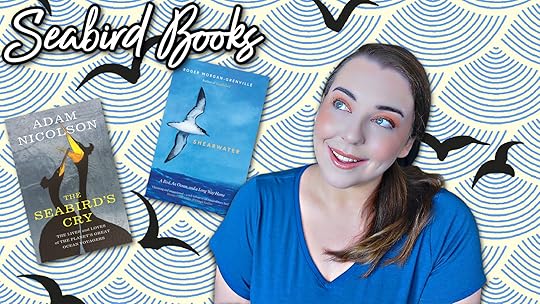
Morgan-Grenville intertwines memoir and nature writing in this year-long adventure following Manx shearwaters from the Hebrides to Argentina and back. The memoir aspect mostly focuses on his boyhood summers in the Hebrides with his grandmother, who encouraged his love of seabirds. I enjoyed the descriptions of the life on the islands, and his remembrances of his grandmother hit home for me, mostly because of similarities for me in idyllic summers with my own wonderful and irascible grandmother. He refers back often to his own identity as "an old soldier," but goes over his time as a soldier without much detail, though he passingly mentions being in South Georgia (he does mention the penguins there) and Northern Ireland (which he only mentions as a location where he received bad news). Anyway, I really enjoyed the audiobook and would highly recommend it as a companion to Adam Nicolson's The Seabird's Cry: The Lives and Loves of the Planet's Great Ocean Voyagers. Morgan-Grenville goes out with researchers, but does not dive into great detail on seabird science as Nicolson does. We do go through a lot of details of shearwater nesting and migration, and the field work that the scientists do, but I think a layman could feel more comfortable with this book. I like that he ended on a positive note in the afterword, encouraging action and a balance between positive thinking and extinction despair. Good book! I want to be a grandma in the Hebrides right now.
May 22, 2022
In my humble opinion, to write a great non-fic book, you need one of two things: a great story to tell, or the ability to write a great story. Unfortunately, while this book is by no means poor, i dont think it quite ticks either of those boxes.
For starters, Shearwater is simply too long. If you cut out around 70 pages or so, i think it would read a lot better, but therein lies another problem. The book reads more like a loose collection of stories and essays than a proper joined up work. There are some enjoyable parts for sure: the history of Shearwater research is fascinating, and the last 50 pages or so are definitely strong, as you can actually feel the authors author's emotion, something i felt was a but absent for large stretches. Unfortunately, just when part of a chapter or story sounds interesting, it ends, and the book feels disjointed and meandering as a result. The author often writes as though he expects us to know right from the off what he is talking about, and who these people are, and why this story or that memory is important. Finally, this is quite a repetitive book. I will definitely never forget the weight of a Shearwater, how long they live, how many miles they travel, or how long they take between coming to land, because the author repeats all of these facts seemingly at least once a chapter.
For starters, Shearwater is simply too long. If you cut out around 70 pages or so, i think it would read a lot better, but therein lies another problem. The book reads more like a loose collection of stories and essays than a proper joined up work. There are some enjoyable parts for sure: the history of Shearwater research is fascinating, and the last 50 pages or so are definitely strong, as you can actually feel the authors author's emotion, something i felt was a but absent for large stretches. Unfortunately, just when part of a chapter or story sounds interesting, it ends, and the book feels disjointed and meandering as a result. The author often writes as though he expects us to know right from the off what he is talking about, and who these people are, and why this story or that memory is important. Finally, this is quite a repetitive book. I will definitely never forget the weight of a Shearwater, how long they live, how many miles they travel, or how long they take between coming to land, because the author repeats all of these facts seemingly at least once a chapter.
Read
June 7, 2022A lovely book, loosely written around a framework of trips around the fringes of the Atlantic to visit the birds at various stages of their year. In truth, the travelogue parts of the book aren't exactly breathtaking bits of adventure writing (though he does write with humour), and it usually results in the author getting a couple of sightings of shearwaters flying past but not much more (though this is all he is aiming for). But they allow the lives of the shearwaters to be explained in context, and what lives they lead! From their burrow nests on west-coast islands, the half-kilogram chicks will fly south as far as Morocco before crossing the Atlantic and wintering off Argentina, there to develop for a few years before heading back along the western Atlantic seaboard and back across to the very place they were born. Then for the next 40 or so years, they will make this ridiculous journey annually, potentially covering some two million miles in their 50-year lifespans. The book divulges how they navigate, how they find food (their sense of smell is fundamental to both), how they mate, and what they're doing out at sea all year. I learned a great deal, and it's made me very excited to see them when I visit Pembrokeshire next week. Thoroughly recommend to anyone who likes birds, and especially seabirds.

August 30, 2023
Oh this is just really lovely.
Roger Morgan-Grenville claims at times to be chasing his childlike sense of wonder, but the truth is clear: he never lost it!I found this book quite touching in its innocence and its unpretentious bonhomie! I’m very glad Roger took us on his utterly bizarre and whimsical adventure chasing the Manx Shearwater, but the very best writing here is found in the recollections of his eccentric grandmother and of the bond they shared. Bravo!
Roger Morgan-Grenville claims at times to be chasing his childlike sense of wonder, but the truth is clear: he never lost it!I found this book quite touching in its innocence and its unpretentious bonhomie! I’m very glad Roger took us on his utterly bizarre and whimsical adventure chasing the Manx Shearwater, but the very best writing here is found in the recollections of his eccentric grandmother and of the bond they shared. Bravo!
January 16, 2025
The book is unfortunately overshadowed by political undertones and frequent references to the author’s military experiences. This makes for a jarring and at times unsettling read, which feels out of place in a book about Shearwater birds—creatures that transcend borders and embody freedom. It’s ironic that the author didn’t seem to embrace the very lessons these birds could teach us, despite dedicating an entire book to them.
August 2, 2022
A really, really interesting read.

May 24, 2021
Have you ever been excited by seeing a bird? Roger Morgan Grenville was! The Manx Shearwater made a big impression on him when he was young. He went out to see the Puffins off the shore of an island that his grandmother lived on. He asked for the name and scoured his grandparent's book for everything that he could find on it. He wanted to learn more about it. It was a vagrant, a bird seemingly away of its usual routes. From then on he began a search that lasted for 50 years. During that time, he learned about this remarkable bird.
Why did I want to read this book? I saw a vagrant bird too and had a bird guide that said it was extinct! I saw an Ivory billed woodpecker at the side yard of our home in Indiana. I checked the guide, found it and keep saying "No, it is extinct to the book! I did read a lot about the bird, but I never had the good fortune and or money to go looking for him, but I hope he is alive today. It was Audubon's favorite bird and Roger Tory Peterson searched for it but could not find it. $50,000 was by Cornell in 2012 for proof that it still exists. I did not have a camera and film when I saw it, but it is engraved in my memory. I am sure that if you ever saw it, you would never forget the bird.
OK, back to the book, I have never seen the bird that excited the author but reading it, I learned interesting tales of his grandmother. But the bird excited me more! This bird can fly, fly and fly without stopping. One of them flew 800 miles and then died. They would fly to an island then turn around without touching land and go back! When reading this book, I keep wanting to ask the bird, "Why?"
Amazing facts: Can live up to 50 years, can dig a burrow like a rabbit does for its family; makes a strange call like a baby crying Does 20,000 clockwise miles each year. Of course, there is more in this book, but then you will need to read it.
I won this book from the Library Thing and received an uncorrected proof from the publishers.
Why did I want to read this book? I saw a vagrant bird too and had a bird guide that said it was extinct! I saw an Ivory billed woodpecker at the side yard of our home in Indiana. I checked the guide, found it and keep saying "No, it is extinct to the book! I did read a lot about the bird, but I never had the good fortune and or money to go looking for him, but I hope he is alive today. It was Audubon's favorite bird and Roger Tory Peterson searched for it but could not find it. $50,000 was by Cornell in 2012 for proof that it still exists. I did not have a camera and film when I saw it, but it is engraved in my memory. I am sure that if you ever saw it, you would never forget the bird.
OK, back to the book, I have never seen the bird that excited the author but reading it, I learned interesting tales of his grandmother. But the bird excited me more! This bird can fly, fly and fly without stopping. One of them flew 800 miles and then died. They would fly to an island then turn around without touching land and go back! When reading this book, I keep wanting to ask the bird, "Why?"
Amazing facts: Can live up to 50 years, can dig a burrow like a rabbit does for its family; makes a strange call like a baby crying Does 20,000 clockwise miles each year. Of course, there is more in this book, but then you will need to read it.
I won this book from the Library Thing and received an uncorrected proof from the publishers.

April 30, 2022
Roger Morgan-Granville’s Shearwater is one of those books which I see myself returning to again and again. Essentially it is a book of two parallel journeys - the first, a physical journey to gain insight into the Atlantic wandering of the Manx Shearwater; the second a personal and reflective odyssey triggered by the influence of an inspiring and practical grandmother. The result is a carefully crafted book, which is to me, of the most rewarding kind. We are all formed by our experience and, although we may not all be as lucky as the author with his characterful grandmother, the importance of guidance from key individuals as we grow up can guide a lifetime.
To me author clearly exudes that vital mix of pragmatism and hope which we need if our positive conservation aims are to be achieved. It is a delight to read a book of such balance. So many hammer a negative message, admittedly and sadly much of which is true, but in order to get somewhere, we must have hope. Thankfully, Roger Morgan-Grenville has encapsulated this hope in this absorbing read.
To me author clearly exudes that vital mix of pragmatism and hope which we need if our positive conservation aims are to be achieved. It is a delight to read a book of such balance. So many hammer a negative message, admittedly and sadly much of which is true, but in order to get somewhere, we must have hope. Thankfully, Roger Morgan-Grenville has encapsulated this hope in this absorbing read.
December 19, 2024
Morgan-Grenville delightfully weaves stories associated with his adventures following the vast migrations of the Manx Shearwater, an iconic British Seabird.
As in Liquid Gold, his last book describing his hobby of beekeeping, words come easy to him. This makes the quest he went on, wending his way over the Atlantic to Peninsula Valdés in Argentina, a remarkable romp. The shearwaters spend most of their lives in the Atlantic, only returning to the offshore islands of Great Britain to breed. Morgan-Grenville spends the year with researchers over the course of a bird’s year, from when they first emerge from their coastal burrows, to when they return to the same burrows to breed the next generation of birds. Linking throughout the narrative is that of his grandmother, early instigator of all things bird, who lived on the Scottish Island of Mull.
The New Zealand link is that Ronald Lockley, the most famous of all shearwater researchers, came to New Zealand to live.
As in Liquid Gold, his last book describing his hobby of beekeeping, words come easy to him. This makes the quest he went on, wending his way over the Atlantic to Peninsula Valdés in Argentina, a remarkable romp. The shearwaters spend most of their lives in the Atlantic, only returning to the offshore islands of Great Britain to breed. Morgan-Grenville spends the year with researchers over the course of a bird’s year, from when they first emerge from their coastal burrows, to when they return to the same burrows to breed the next generation of birds. Linking throughout the narrative is that of his grandmother, early instigator of all things bird, who lived on the Scottish Island of Mull.
The New Zealand link is that Ronald Lockley, the most famous of all shearwater researchers, came to New Zealand to live.

May 10, 2021
The Manx Shearwater, Puffinus Puffinus, is a medium-sized seabird that visits the western coast of the UK each summer to breed. The rest of its life is spent on the open ocean, predominantly off the coast of South America. By the time it is 50 years old, a single bird may have covered over a million km on migration alone.
Shearwater is part natural history book, part nature journal and part memoir. Not only do we learn a fascinating array of facts about the bird itself, but we learn how the author first encountered and became captivated with these marvellous birds and join him as he follows them around the globe.
It was also intriguing to compare the field methods of early nature pioneers such as Ronald Lockley (hint: not always enjoyable for the Shearwaters themselves) with the methodology employed by field researchers today.
I approached this book as a keen nature enthusiast and wildlife watcher. I have seen Manx Shearwater out at sea; I have been to their island breeding ground of Skomer. Whilst some of the travel log sections felt a tad repetitive at times, on the whole I found this to be a fascinating read. Recommended for bird and nature lovers everywhere.
Thank you to NetGalley and Icon Books for an ARC in exchange for an honest review.
Shearwater is part natural history book, part nature journal and part memoir. Not only do we learn a fascinating array of facts about the bird itself, but we learn how the author first encountered and became captivated with these marvellous birds and join him as he follows them around the globe.
It was also intriguing to compare the field methods of early nature pioneers such as Ronald Lockley (hint: not always enjoyable for the Shearwaters themselves) with the methodology employed by field researchers today.
I approached this book as a keen nature enthusiast and wildlife watcher. I have seen Manx Shearwater out at sea; I have been to their island breeding ground of Skomer. Whilst some of the travel log sections felt a tad repetitive at times, on the whole I found this to be a fascinating read. Recommended for bird and nature lovers everywhere.
Thank you to NetGalley and Icon Books for an ARC in exchange for an honest review.

May 17, 2021
What a wonderful book. I thought perhaps I might have to stifle a yawn or two due to lots of scientific lingo sure to be involved and yet while it was there I became deeply engrossed by the child who became a man who loved Shearwater birds. I love the thought that perhaps Samuel Taylor Coleridge unwittingly inspired marine conservation with his "Rime of the Ancient Mariner"by making people feel it was unlucky to kill an albatross.
His summers with his grandmother are the stuff of all boys dreams. A simple life, simple food and a grandmother who saw to it that adventures awaited almost daily. Thank you sir for a well informed history of the Shearwater bird and for inspiring me to believe that with proper conservation we can turn around this race to extinction.
His summers with his grandmother are the stuff of all boys dreams. A simple life, simple food and a grandmother who saw to it that adventures awaited almost daily. Thank you sir for a well informed history of the Shearwater bird and for inspiring me to believe that with proper conservation we can turn around this race to extinction.
July 25, 2021
I received a copy of this book through LibraryThing Early Reviewers.
The author weaves together the story of the Manx shearwater with a recounting of his own decades-long interest in the birds, culminating in a year of travels following the birds' migration. Throughout the book, his passion for seabirds--both shearwaters, and more generally--and their conservation is really clear, and I really appreciated that. It took me quite some time to get into this book (I think I struggled to sort out the book's dual focus at the beginning, though this became clearer later), but I'm definitely glad that I read it.
The author weaves together the story of the Manx shearwater with a recounting of his own decades-long interest in the birds, culminating in a year of travels following the birds' migration. Throughout the book, his passion for seabirds--both shearwaters, and more generally--and their conservation is really clear, and I really appreciated that. It took me quite some time to get into this book (I think I struggled to sort out the book's dual focus at the beginning, though this became clearer later), but I'm definitely glad that I read it.
August 3, 2022
I was attracted to this book by its cover, which was actually painted by the author's wife. Then I was completely drawn in by the initial facts described on the inner flap: the shearwater bird, at 10 weeks old, ventures out of its burrow by itself, with no parent birds or other adults to teach it, and sets off on a 8000 mile journey across the Atlantic Ocean, unlikely to touch land again for four years. I wanted to know more.
The book is also part memoir, and a story of the writer's grandmother and her influence on his life and his interest in nature. It is written with curiosity and tenderness, and a clear reverence for the ways of nature.
The book is also part memoir, and a story of the writer's grandmother and her influence on his life and his interest in nature. It is written with curiosity and tenderness, and a clear reverence for the ways of nature.
April 2, 2026
As a keen birdwatcher I was hoping to learn some new things and to be entertained. Although not a bad book it was hardly ground breaking in information about the Manx Shearwater. It is perhaps aimed at somebody with a casual interest in nature. His constant referencing his military past was irritating. I also aggrieved on his wife's behalf. She had been waiting 40 years to go back to Argentina where she had been brought up and he goes without her, on some half-baked trip, without a workable plan and counts it a success as he sees a few distant shearwaters.
November 8, 2021
Hard to decide on a rating, either 3 and 1/2 out of 5, or 4 out of 5. Probably closer to a 4. A very interesting and informative book, well-told, and almost like a memoir in some ways, as the author recounts his adventures following shearwaters from one hemisphere to another, and he adds in stories from his youth about his grandmother, who was a bit of a mentor for him learning about nature. A fascinating bird to learn about, too.
February 12, 2023
A very interesting account of the extraordinary life of the Manx Shearwater.
I had encountered these birds during trips to St Kilda in the early 1980's, but had not known their story. I was fasinated to learn that as soon as they are fledged, they leave the borrow and may not return for up to 4 years, which they spend at sea, much off it off the coast of South America.
The book is a lovely mix of factual information about the bird, along with personal details about the author's relationship with his grandmother in the Ross of Mull and his heroic attempts to follow these birds on their odessey.
I had encountered these birds during trips to St Kilda in the early 1980's, but had not known their story. I was fasinated to learn that as soon as they are fledged, they leave the borrow and may not return for up to 4 years, which they spend at sea, much off it off the coast of South America.
The book is a lovely mix of factual information about the bird, along with personal details about the author's relationship with his grandmother in the Ross of Mull and his heroic attempts to follow these birds on their odessey.

March 19, 2023
TW: death of family member, mentions of dead birds and global warming effects.
A mix of memior and the author's stream of consciousness all bound together by the facinating Shearwater. Sometimes the book meandered back and forth more than I'm used to in a book, yet it more matched a conversation, of topics weaving back and forth and re-crossing topics after memories or experiences are brought up. A well done mix of nature and memior perfect for fans of either/or of the genre.
A mix of memior and the author's stream of consciousness all bound together by the facinating Shearwater. Sometimes the book meandered back and forth more than I'm used to in a book, yet it more matched a conversation, of topics weaving back and forth and re-crossing topics after memories or experiences are brought up. A well done mix of nature and memior perfect for fans of either/or of the genre.
February 13, 2023
Excellent book but mainly for bird/wildlife lovers. It reminded me of watching pelagic birds in the wild Southern oceans. I enjoyed his determination to follow in the tracks of a particular bird (T72) from its birthplace in the UK to its feeding grounds in the South Antlantic.
Less impressed with his musings about his grandmother etc.
Overall though this is highly recommended.
Less impressed with his musings about his grandmother etc.
Overall though this is highly recommended.
February 4, 2024
Beautifully written and engaging natural history of a remarkable bird. The Shearwaters journey from the Scottish highland to Argentina is remarkable! Morgan-Grenville's intersperses this with an engaging account of his early life but the stand out character is his grandmother portrayed with respect and warmth. A book to relax into...

Read
June 5, 2021Part memoir, part nature writing on an unassuming-yet-graceful flier, part tribute to Morgan-Greenville’s grandmother, this book embodies a person’s intense passion and pursuit of an interest that I find intriguing and admirable.
July 8, 2021
Somewhat bitty, and oddly unsatisfying as not being meaty enough in content. One thing in particular I want to know: why does Bardsey Island with a substantial Manx shearwater population not even get a mention? Sounds like the author's research hasn't been very comprehensive.

March 9, 2022
This book is the story of three lives; the life of a bird species, the life of an individual human, and the life of a planet. It is a really enjoyable read. Thanks to the publisher for letting me a copy of this book
January 13, 2023
As someone who is keen on all aspects of natural history but birds in particular I was interested to see this book which was not presented in the usual monograph style. The book is a superb mix of well researched facts but additionally harnessed with a pleasant tale. Totally enjoyable.

June 23, 2024
Some have commented that the book wanders too much. For me the wandering resonated as my mind wanders here and there looking out at the ocean for birds. I am a keen birder and love nothing more than the oceanic birds. This book was outstanding.
Read
February 25, 2025Surprised just how much I enjoyed this book - perhaps my love of manx shearwaters - or having heard author speak at Tobermory Book Festival - felt like he was chatting to me recounting the story direct...audio book perhaps? It is a very touching tale altogether on so many levels..
Displaying 1 - 30 of 43 reviews