

What do you think?

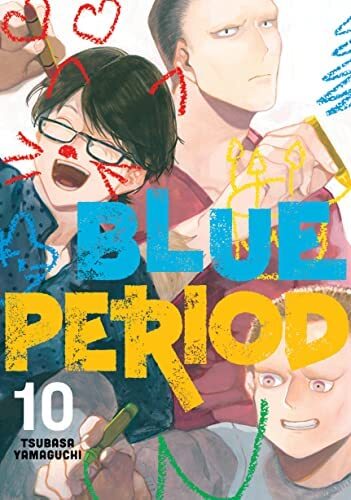
ブルーピリオド [Blue Period] #10
ブルーピリオド 10 [Blue Period 10]
高2で絵を描くことの楽しさに目覚めた矢口八虎の新しい生活が始まった。
新しい仲間たちと受ける講義、課題、講評は厳しく…。凹んでモチベーションすら無くす日々は
八虎を成長させるのか、それとも…。そしてそれは八虎のライバルの世田介にも訪れる。
猫屋敷教授から厳しい指摘を受けた世田介。自信をなくしてほしくない八虎は
世田介くんには才能があるから…と励ますが「才能」と「努力」の考え方の違いでさらに険悪な空気に。
2人の会話を聞いていた鉢呂から客観的な意見を聞いた八虎は自分の視野の狭さを痛感する。
そこで改めて世田介と向き合うため「絵は好きか」と問うが……。
2020年数々の漫画賞を受賞し、2021年TVアニメ化が決定した超話題作のスポ根美術漫画最新刊登場!!
新しい仲間たちと受ける講義、課題、講評は厳しく…。凹んでモチベーションすら無くす日々は
八虎を成長させるのか、それとも…。そしてそれは八虎のライバルの世田介にも訪れる。
猫屋敷教授から厳しい指摘を受けた世田介。自信をなくしてほしくない八虎は
世田介くんには才能があるから…と励ますが「才能」と「努力」の考え方の違いでさらに険悪な空気に。
2人の会話を聞いていた鉢呂から客観的な意見を聞いた八虎は自分の視野の狭さを痛感する。
そこで改めて世田介と向き合うため「絵は好きか」と問うが……。
2020年数々の漫画賞を受賞し、2021年TVアニメ化が決定した超話題作のスポ根美術漫画最新刊登場!!
192 pages, Paperback
First published May 21, 2021
About the author
Tsubasa Yamaguchi
36 books449 followersTsubasa Yamaguchi (山口つばさ, Yamaguchi Tsubasa) is a Japanese mangaka.
Ratings & Reviews
Friends & Following
Create a free account to discover what your friends think of this book!
Community Reviews
Displaying 1 - 30 of 187 reviews

May 13, 2022
fellas is it gay to decide not to quit art school bc of ur homies

August 16, 2021
yotasuke’s character development was incredible and it made me cry!!

November 17, 2022
It’s the end of the term as he knows it, but Yatora doesn’t feel fine. His final project looms and his idea isn’t really coming together. But he’s not the only one struggling and Yotasuke might just burn his life to the ground to fix it.
It was a given that Yatora was going to have issues here - he’s been having a period so blue ever since coming to university that he seems like the demonstration product in a tampon commercial. This has been very well portrayed throughout this section of the story, though I have been on record as it being a bit overbearing at times.
But, as we’ve seen elsewhere (the wonderful Failed Princesses turns out to hang on it, in fact), this is another case where one piece of criticism gets under your skin and refuses to come out, colouring every action you take and making you second guess your instincts constantly. It’s validating your own insecurity in the worst fashion.
And the way he grapples with this problem is actually quite a step forward for him, as he finally does what he wants because he wants to, rather than trying to please somebody for whatever reason. He doesn’t see it as a big step, but it is, and I love that he doesn’t suddenly draw too much praise and gets what is, I think, a very fair criticism of his work thus far in the process. It’s excellent artistic growth.
Let’s be honest, however, this volume belongs to the exploration of Yotasuke in the aftermath of being told that his scores got him into TUA more than his talent did and the blow that’s done to his own sense of self.
We knew Yotasuke wasn’t the easiest person to get along with, but it’s not hard to sympathize with how his own perceptions of his abilities and how art is his thing, even if he doesn’t want it to be. Him finding out that if he’s not doing exactly what’s expected in the way it’s expected then, well, those expectations might crush him is a bit of a blow.
The examination of his character is something I didn’t know I wanted and it also brilliantly brings Yatora back to his old stomping grounds, but in a different sort of way, in a fairly neat fashion (and that repetition cleverly reinforces something in Yatora’s story later on).
Between that and his domestic troubles and finding a new friend, there’s a sense that Yotasuke actually becomes himself in this volume, rather than the construct he felt that he had to be. It’s a great turn for the character and the way it’s expressed is stellar.
His interactions with Nekoyoashiki, one of his teachers, are also amazingly interesting. The two of them couldn’t be more different and her idea of helping is so ingrained in the parts of art that Yotasuke absolutely hates that the two come to verbal blows. Their scene in the library sticks with me even now because it’s just such a good depiction of emotion and frustration, conveyed so well with the words and the art.
This is what I wanted from Blue Period and haven’t felt I was getting for the past couple volumes. I might have been a bit harsh suggesting that Yatora’s being at a loss was unintentionally hard to read, but this volume elegantly pays off so much of that plotline that all is forgiven on both sides (very magnanimous).
5 stars - that’s more like it. The ending of this one promises a visit from an old friend next volume and that just makes me even more excited now that things seem to be back on track.
It was a given that Yatora was going to have issues here - he’s been having a period so blue ever since coming to university that he seems like the demonstration product in a tampon commercial. This has been very well portrayed throughout this section of the story, though I have been on record as it being a bit overbearing at times.
But, as we’ve seen elsewhere (the wonderful Failed Princesses turns out to hang on it, in fact), this is another case where one piece of criticism gets under your skin and refuses to come out, colouring every action you take and making you second guess your instincts constantly. It’s validating your own insecurity in the worst fashion.
And the way he grapples with this problem is actually quite a step forward for him, as he finally does what he wants because he wants to, rather than trying to please somebody for whatever reason. He doesn’t see it as a big step, but it is, and I love that he doesn’t suddenly draw too much praise and gets what is, I think, a very fair criticism of his work thus far in the process. It’s excellent artistic growth.
Let’s be honest, however, this volume belongs to the exploration of Yotasuke in the aftermath of being told that his scores got him into TUA more than his talent did and the blow that’s done to his own sense of self.
We knew Yotasuke wasn’t the easiest person to get along with, but it’s not hard to sympathize with how his own perceptions of his abilities and how art is his thing, even if he doesn’t want it to be. Him finding out that if he’s not doing exactly what’s expected in the way it’s expected then, well, those expectations might crush him is a bit of a blow.
The examination of his character is something I didn’t know I wanted and it also brilliantly brings Yatora back to his old stomping grounds, but in a different sort of way, in a fairly neat fashion (and that repetition cleverly reinforces something in Yatora’s story later on).
Between that and his domestic troubles and finding a new friend, there’s a sense that Yotasuke actually becomes himself in this volume, rather than the construct he felt that he had to be. It’s a great turn for the character and the way it’s expressed is stellar.
His interactions with Nekoyoashiki, one of his teachers, are also amazingly interesting. The two of them couldn’t be more different and her idea of helping is so ingrained in the parts of art that Yotasuke absolutely hates that the two come to verbal blows. Their scene in the library sticks with me even now because it’s just such a good depiction of emotion and frustration, conveyed so well with the words and the art.
This is what I wanted from Blue Period and haven’t felt I was getting for the past couple volumes. I might have been a bit harsh suggesting that Yatora’s being at a loss was unintentionally hard to read, but this volume elegantly pays off so much of that plotline that all is forgiven on both sides (very magnanimous).
5 stars - that’s more like it. The ending of this one promises a visit from an old friend next volume and that just makes me even more excited now that things seem to be back on track.
February 4, 2026
This volume has been really incredible. But Yotasuke really did it for me. Do you guys know how much he means to me? His arc has always been my most favorite in this series. Yotasuke is such a tragic kind of character because he isn't chasing greatness, he's chasing proof that he's allowed to exist beyond his talent. The imaginary animals are honestly also one of the most heartbreaking symbols in his storyline because they show how he had to create emotional companionship in a space where he felt isolated, controlled, and unable to safely connect with real people. And his mother's influence especially adds another layer to him because she isn't written as purely villainous, she feels like someone whose own unresolved issues shaped Yotasuke into something fragile and pressured. Just like his first year end piece of a rabbit in a cage as a sign of being both protected and imprisoned at the same time.
He's someone who built his entire sense of worth around art, so when he struggles or feels lost, it's not just creative frustration, it's like his entire existence is being questioned. Which frustrates him more when people makes assumptions about him based on his "talent" and "art." This connects to the way he keeps circling back to Yatora which shows how much Yatora represents something he both longs for and fears: someone who chose art, rather than being consumed by it from the start. That's why I'm really happy that despite sometimes receiving harsh words, Yatora never stops reaching out to Yotasuke. That's my YatoYota for you! Their hangout will always be burned in my mind. It was so beautiful.
Yotasuke is painfully childlike at heart. That's why it's so emotional for me watching him slowly choose to step forward instead of shutting himself off, allowing himself, perhaps for the first time, to genuinely enjoy creating art. I'm really so glad. Also, I'm grateful for Okamoto too. He's been really genuine and kind to Yotasuke. My child, Takahashi, deserves all the love in the world!
He's someone who built his entire sense of worth around art, so when he struggles or feels lost, it's not just creative frustration, it's like his entire existence is being questioned. Which frustrates him more when people makes assumptions about him based on his "talent" and "art." This connects to the way he keeps circling back to Yatora which shows how much Yatora represents something he both longs for and fears: someone who chose art, rather than being consumed by it from the start. That's why I'm really happy that despite sometimes receiving harsh words, Yatora never stops reaching out to Yotasuke. That's my YatoYota for you! Their hangout will always be burned in my mind. It was so beautiful.
Yotasuke is painfully childlike at heart. That's why it's so emotional for me watching him slowly choose to step forward instead of shutting himself off, allowing himself, perhaps for the first time, to genuinely enjoy creating art. I'm really so glad. Also, I'm grateful for Okamoto too. He's been really genuine and kind to Yotasuke. My child, Takahashi, deserves all the love in the world!
April 26, 2022
yatora vs yotasuke (autism vs autism)

April 8, 2022
「我根本沒辦法這麼明確地說出『喜歡』,老實說創作的時候都是苦差事居多……」(p.49)作品講評的殘酷舞台終於來了,學制或許各國不同,就我淺薄的觀點來看還是頗為寫實。世田介不滿老師扭曲自己創作的本意,老師大約就是拿「作者已死」去駁他吧。主角們竟然沒有上藝術概論?
這集出現的畫作或許是大學生常見的題材,想起本人最初的系展作品便是畫寵物;八虎的朋友群像,也曾有同學畫過,可惜我們不再聯絡了。
疑問:
p.28 「我喜歡畫畫嗎?想成為作家嗎?想就這樣繼續待在藝大嗎?」這裡應該是指「畫家」吧?
沒完全譯出來的:(從作者選擇的作品,可以感覺到藝大對寫實傳統的重視)
p.73 莫瑞吉奧・卡特蘭(Maurizio Cattelan) 的「喜劇演員」(Comedian;這是2019年的作品,好新啊)
p.80、141 馬奈「吹笛少年」
p.136 維拉斯奎茲(委拉斯貴茲)「穿藍衣的瑪加麗塔德蕾莎公主」(上一集也有出現)
p.137 鮑金(博金;波香;Lubin Baugin)「五種感覺(棋盤上的靜物)」
p.138 亞力瑟•馮•亞倫斯基(Alexej von Jawlensky)「 亞歷山大 ·沙卡洛夫 (Alexander Sakharoff)的肖像 」
p.139 莫迪里亞尼「穿黃色毛衣的珍妮」、康丁斯基「果斷的玫瑰」(Decisive Rose,1932)、賽岡蒂尼(Giovanni Segantini)「阿爾卑斯山的正午」(Midday in the Alps)
p.140 賈克梅第「行走的男子」
這集出現的畫作或許是大學生常見的題材,想起本人最初的系展作品便是畫寵物;八虎的朋友群像,也曾有同學畫過,可惜我們不再聯絡了。
疑問:
p.28 「我喜歡畫畫嗎?想成為作家嗎?想就這樣繼續待在藝大嗎?」這裡應該是指「畫家」吧?
沒完全譯出來的:(從作者選擇的作品,可以感覺到藝大對寫實傳統的重視)
p.73 莫瑞吉奧・卡特蘭(Maurizio Cattelan) 的「喜劇演員」(Comedian;這是2019年的作品,好新啊)
p.80、141 馬奈「吹笛少年」
p.136 維拉斯奎茲(委拉斯貴茲)「穿藍衣的瑪加麗塔德蕾莎公主」(上一集也有出現)
p.137 鮑金(博金;波香;Lubin Baugin)「五種感覺(棋盤上的靜物)」
p.138 亞力瑟•馮•亞倫斯基(Alexej von Jawlensky)「 亞歷山大 ·沙卡洛夫 (Alexander Sakharoff)的肖像 」
p.139 莫迪里亞尼「穿黃色毛衣的珍妮」、康丁斯基「果斷的玫瑰」(Decisive Rose,1932)、賽岡蒂尼(Giovanni Segantini)「阿爾卑斯山的正午」(Midday in the Alps)
p.140 賈克梅第「行走的男子」
September 2, 2021
oh GODDDDDDDDD i loved this vol... why is this giving me more of the college experience than college itself

March 21, 2023
'seeing Yotasuke-kun's eyes dyed in blue is enough to make me happy' SHUT UP *sobs*

September 11, 2022
4'5 / 5
Aviso: esta reseña contiene spoilers del resto de tomos de Blue Period. En este apasionante manga acompañamos a Yaguchi, quién descubre tardíamente su amor por el arte y sueña con convertirse en artista. Junto a un variado elenco de personajes, en el manga se exploran temas variados al tiempo que profundiza en lo complicado que es el mundo del arte.
Las dificultades se ceban con Yotasuke. Yatora, que no quiere que pierda la confianza, le consuela diciéndole que tiene talento, pero sus diferencias sobre lo que son el talento y el esfuerzo tensan la situación. Consciente de la estrechez de su punto de vista, Yatora se encara con Yotasuke y le pregunta si realmente le gusta pintar.
En este tomo prima ver a un Yaguchi combulso y cansado, que no sabe bien qué camino tomar. Esto hace que el lector llegue a desesperarse con él, sintiendo cómo pasa el tiempo mientras él es incapaz de avanzar. Sin embargo, en este tomo pierde algo de protagonismo, tomando Yotasuke un papel principal.
Es muy interesante ver la perspectiva y el mundo en el que vive Yotasuke. Siempre me ha parecido un personaje interesante y algo misterioso, y en este tomo logramos conocer un poco más sobre él. Conocemos sus dudas y sus problemas, haciendo que se le coja mucho más cariño.
Una vez más, Blue Period se luce no sólo por su historia y arte, sino también por sus personajes. Un buen manga depende también de tener un elenco complejo e interesante y, sin duda, Yamaguchi logra crear a unos secundarios que llegan a dejar en la sombra a Yaguchi. Como siempre, un manga increíble que te atrapa desde la primera página.
Irbis.
Aviso: esta reseña contiene spoilers del resto de tomos de Blue Period. En este apasionante manga acompañamos a Yaguchi, quién descubre tardíamente su amor por el arte y sueña con convertirse en artista. Junto a un variado elenco de personajes, en el manga se exploran temas variados al tiempo que profundiza en lo complicado que es el mundo del arte.
Las dificultades se ceban con Yotasuke. Yatora, que no quiere que pierda la confianza, le consuela diciéndole que tiene talento, pero sus diferencias sobre lo que son el talento y el esfuerzo tensan la situación. Consciente de la estrechez de su punto de vista, Yatora se encara con Yotasuke y le pregunta si realmente le gusta pintar.
En este tomo prima ver a un Yaguchi combulso y cansado, que no sabe bien qué camino tomar. Esto hace que el lector llegue a desesperarse con él, sintiendo cómo pasa el tiempo mientras él es incapaz de avanzar. Sin embargo, en este tomo pierde algo de protagonismo, tomando Yotasuke un papel principal.
Es muy interesante ver la perspectiva y el mundo en el que vive Yotasuke. Siempre me ha parecido un personaje interesante y algo misterioso, y en este tomo logramos conocer un poco más sobre él. Conocemos sus dudas y sus problemas, haciendo que se le coja mucho más cariño.
Una vez más, Blue Period se luce no sólo por su historia y arte, sino también por sus personajes. Un buen manga depende también de tener un elenco complejo e interesante y, sin duda, Yamaguchi logra crear a unos secundarios que llegan a dejar en la sombra a Yaguchi. Como siempre, un manga increíble que te atrapa desde la primera página.
Irbis.

August 19, 2022
Blue Period ist und bleibt einer meiner absoluten Favoriten, den. Jeder Band lässt mich nachdenken und berührt mich, weil er viele menschlichen Gedankenwelten und Verhaltensweisen aufzeigt, die ich gut nachvollziehen kann.
In diesem Band war es besonders Yatoras Gedankenkarussell des ‚nicht-Wissens-wo-man-anfangen-soll und des so lange Durchdenkens, bis man überhaupt nichts beginnt.
Doch es geht noch um so viel mehr. Zum Beispiel auch um Grundsatzfragen. Um die Außenwirkung, die manchmal im Widerspruch mit der Innenwirkung steht. Aber auch darum, dass manche Menschen eben besser harmonieren als andere und was das manchmal mit und Menschen macht.
Was mich zudem berührte, ist Yotasukes langsam aufkeimende Offenheit. Er gewinnt an Stärke und beeindruckt mich an der ein oder anderen Stelle.
Doch bei all den Themen, Charakterentwicklungen und -vertiefungen kommt natürlich auch die Kunst nicht zu kurz.
In diesem Band war es besonders Yatoras Gedankenkarussell des ‚nicht-Wissens-wo-man-anfangen-soll und des so lange Durchdenkens, bis man überhaupt nichts beginnt.
Doch es geht noch um so viel mehr. Zum Beispiel auch um Grundsatzfragen. Um die Außenwirkung, die manchmal im Widerspruch mit der Innenwirkung steht. Aber auch darum, dass manche Menschen eben besser harmonieren als andere und was das manchmal mit und Menschen macht.
Was mich zudem berührte, ist Yotasukes langsam aufkeimende Offenheit. Er gewinnt an Stärke und beeindruckt mich an der ein oder anderen Stelle.
Doch bei all den Themen, Charakterentwicklungen und -vertiefungen kommt natürlich auch die Kunst nicht zu kurz.
January 29, 2022
takahashi yotasuke i love you, you tall child

September 14, 2025
Valutazione: 5/5⭐
Scrivere la recensione di ogni volume di questo manga diventa sempre più difficile, perché è indescrivibile l'importanza che "Blue Period" dà alla essenza del vivere. Ogni singola parola menzionata in queste pagine è in grado di farti riflettere. Su cosa? Sulle tue scelte. Ti pone problemi di vita come ostacoli che ti bloccano in mezzo alla tua strada, esattamente come succede a Yatora. Sei lì, spesso solo, a capire quale potrebbe essere la risposta giusta, a capire quale potrebbe essere la tua via, il tuo scopo su questo mondo.
Shakespeare dice: "Essere o non essere? È questo il dilemma". Yamaguchi dice: "Anche io... ho un punto di vista?'
La storia di Yatora sta diventando sempre più interessante: il suo viaggio alla geidai è iniziato e ora si trova agli sgoccioli del primo anno; gli restano ancora tre anni ed è migliorato tantissimo rispetto agli esordi. Yamaguchi è stato capace di farmi crescere insieme a Yatora e ho trovato molto interessanti tutte le sue lezioni di vita.
In questo volume approfondisce inoltre un altro personaggio, ovvero Yotasuke. È stato immersivo. Mi ci sono rispecchiata abbastanza e ho simpatizzato tantissimo con lui, trovandomi molto in linea con il suo carattere.
Ogni personaggio in questa storia ha una sua linea temporale e man mano che si progredisce con la storia, Yamaguchi le mette per iscritto così bene che non si può non innamorarsene.
Leggete Blue Period.
✨Citazioni qua e là ✨
"Sarebbe bello se anche gli esseri umani non parlassero."
- Yotasuke
"Quando sei molto bravo a fare qualcosa, le persone intorno a te iniziano ad avere aspettative, e poi rimangono deluse."
- Yotasuke
«(...) diventerai capace di disegnare i conigli meglio di chiunque altro».
«Perché?»
«Perché si diventa bravo a disegnare ciò che ci fa stare bene».
- Yotasuke e bambina
«Credevo di essere già diventato amico di quel coniglietto... ma la bambina dell'istituto mi ha detto che non bisogna ritenere amici coloro che dipendono da noi».
- Yotasuke
«Eppure... è come se fossi cresciuto rimanendo bambino».
- Yotasuke
"(...) mi disse che chi ha già tutto dovrebbe stare lontano dall'arte."
- Yatora
"Pur guardando lo stesso panorama... non si possono provare le stesse emozioni. Però... ero felice di vedere che senza che gli dicessi nulla, gli occhi di Yotasuke si erano tinti di blu."
- Yatora
🟦🏙️🎨💙
Scrivere la recensione di ogni volume di questo manga diventa sempre più difficile, perché è indescrivibile l'importanza che "Blue Period" dà alla essenza del vivere. Ogni singola parola menzionata in queste pagine è in grado di farti riflettere. Su cosa? Sulle tue scelte. Ti pone problemi di vita come ostacoli che ti bloccano in mezzo alla tua strada, esattamente come succede a Yatora. Sei lì, spesso solo, a capire quale potrebbe essere la risposta giusta, a capire quale potrebbe essere la tua via, il tuo scopo su questo mondo.
Shakespeare dice: "Essere o non essere? È questo il dilemma". Yamaguchi dice: "Anche io... ho un punto di vista?'
La storia di Yatora sta diventando sempre più interessante: il suo viaggio alla geidai è iniziato e ora si trova agli sgoccioli del primo anno; gli restano ancora tre anni ed è migliorato tantissimo rispetto agli esordi. Yamaguchi è stato capace di farmi crescere insieme a Yatora e ho trovato molto interessanti tutte le sue lezioni di vita.
In questo volume approfondisce inoltre un altro personaggio, ovvero Yotasuke. È stato immersivo. Mi ci sono rispecchiata abbastanza e ho simpatizzato tantissimo con lui, trovandomi molto in linea con il suo carattere.
Ogni personaggio in questa storia ha una sua linea temporale e man mano che si progredisce con la storia, Yamaguchi le mette per iscritto così bene che non si può non innamorarsene.
Leggete Blue Period.
✨Citazioni qua e là ✨
"Sarebbe bello se anche gli esseri umani non parlassero."
- Yotasuke
"Quando sei molto bravo a fare qualcosa, le persone intorno a te iniziano ad avere aspettative, e poi rimangono deluse."
- Yotasuke
«(...) diventerai capace di disegnare i conigli meglio di chiunque altro».
«Perché?»
«Perché si diventa bravo a disegnare ciò che ci fa stare bene».
- Yotasuke e bambina
«Credevo di essere già diventato amico di quel coniglietto... ma la bambina dell'istituto mi ha detto che non bisogna ritenere amici coloro che dipendono da noi».
- Yotasuke
«Eppure... è come se fossi cresciuto rimanendo bambino».
- Yotasuke
"(...) mi disse che chi ha già tutto dovrebbe stare lontano dall'arte."
- Yatora
"Pur guardando lo stesso panorama... non si possono provare le stesse emozioni. Però... ero felice di vedere che senza che gli dicessi nulla, gli occhi di Yotasuke si erano tinti di blu."
- Yatora
🟦🏙️🎨💙

February 18, 2023
The first year is over! I love Yatora and Takahashi growing closer and seeing all the students as well.
I really don't like Neko Sensi.... what is her issue???
Check out my YouTube channel for bookish videos and monthly wrap ups!
I really don't like Neko Sensi.... what is her issue???
Check out my YouTube channel for bookish videos and monthly wrap ups!

January 24, 2024
i love this series sm it just gets better and better with every book
May 5, 2026
Good to remember how great this series is. Really nice finish to this arc with such good character development in more than just Yatora. Can’t wait to dive into the next volume, and the anime needs the next season announced yesterday.

August 24, 2023
El proyecto final ha llegado y Yatora está batallando para lograr cumplir con este.
Pero la verdad el que más me gustó en este tomo fue Yotasuke, me identifiqué un poco con el, me gusto ver cómo lograron acercarse y entenderse. La relación que están armando estos dos se me hace muy linda, son mis personajes favoritos, espero que su amistad se fortalezca
Pero la verdad el que más me gustó en este tomo fue Yotasuke, me identifiqué un poco con el, me gusto ver cómo lograron acercarse y entenderse. La relación que están armando estos dos se me hace muy linda, son mis personajes favoritos, espero que su amistad se fortalezca

December 30, 2022
3,5 stars
All the first year TUA students are preparing for their end-of-year assignment, the assignment that will determine whether or not they get to move on to the second year.
Yatora is still struggling with his artistic expression, and he realises that he doesn't know why he wants to make art in the first place, or even if he likes making art.
Surprisingly, Yotasuke, who has talent Yatora can only dream of, is struggling with some of the same questions, though for very different reasons.
Can they both find a mode of expression they're comfortable with, and submit a passing piece for their final assignment?
As this series is unfinished, I won't write a comprehensive review now, despite the fact that this is (currently) the last available volume (in English). However, since I'll probably have to wait a bit to read on, I will jot down some brief thoughts here.
The plot is, I feel, this manga's worst aspect, and probably the reason I can't rate it higher than I have. Don't get me wrong, the plot is by no means terrible, it's just a bit bland, and the pacing is occasionally somewhat odd.
Yatora's entry into the art world is, as I already mentioned in my brief review of the first volume, an example of a weak plot point. His decision to devote his entire life to art is very abrupt, and, to my mind, quite unrealistic.
It frequently feels like Yamaguchi is more interested in writing an "art education how-to" than a cohesive plot. Consequently, there are many long-winded sequences about art theory and techniques, entrance exams, art school practices, and so on, that get a bit exhausting, at least for someone like me, given that my knowledge on these subjects is rather limited.
The above also means that the manga is actually uncommonly text-heavy.
That being said, however, there are plot points that have engaged me sufficiently to keep me reading, and I am particularly interested in Yatora's and Yotasuke's parallel storylines.
Generally, the characters here are great. I only wish we got to spend a little more time with other characters than Yatora.
There are also several interesting themes here, the most notable of which are what drives a person to want to create art, what constitutes talent, and, interestingly, communication. I think Yamaguchi handles these themes quite well, and I only wish the plot were better constructed around them.
The artwork is also nice, and I like that Yamaguchi includes a lot of different artwork from a lot of different artists to show the different sorts of pieces that art students might create.
I won't say much more right now, as I'm holding off on final judgments until I've finished the series. Right now, however, my overall rating stands at a solid 3 stars.
All the first year TUA students are preparing for their end-of-year assignment, the assignment that will determine whether or not they get to move on to the second year.
Yatora is still struggling with his artistic expression, and he realises that he doesn't know why he wants to make art in the first place, or even if he likes making art.
Surprisingly, Yotasuke, who has talent Yatora can only dream of, is struggling with some of the same questions, though for very different reasons.
Can they both find a mode of expression they're comfortable with, and submit a passing piece for their final assignment?
As this series is unfinished, I won't write a comprehensive review now, despite the fact that this is (currently) the last available volume (in English). However, since I'll probably have to wait a bit to read on, I will jot down some brief thoughts here.
The plot is, I feel, this manga's worst aspect, and probably the reason I can't rate it higher than I have. Don't get me wrong, the plot is by no means terrible, it's just a bit bland, and the pacing is occasionally somewhat odd.
Yatora's entry into the art world is, as I already mentioned in my brief review of the first volume, an example of a weak plot point. His decision to devote his entire life to art is very abrupt, and, to my mind, quite unrealistic.
It frequently feels like Yamaguchi is more interested in writing an "art education how-to" than a cohesive plot. Consequently, there are many long-winded sequences about art theory and techniques, entrance exams, art school practices, and so on, that get a bit exhausting, at least for someone like me, given that my knowledge on these subjects is rather limited.
The above also means that the manga is actually uncommonly text-heavy.
That being said, however, there are plot points that have engaged me sufficiently to keep me reading, and I am particularly interested in Yatora's and Yotasuke's parallel storylines.
Generally, the characters here are great. I only wish we got to spend a little more time with other characters than Yatora.
There are also several interesting themes here, the most notable of which are what drives a person to want to create art, what constitutes talent, and, interestingly, communication. I think Yamaguchi handles these themes quite well, and I only wish the plot were better constructed around them.
The artwork is also nice, and I like that Yamaguchi includes a lot of different artwork from a lot of different artists to show the different sorts of pieces that art students might create.
I won't say much more right now, as I'm holding off on final judgments until I've finished the series. Right now, however, my overall rating stands at a solid 3 stars.

February 4, 2022
¡ESTE MANGA NO DECAE! Menudo tomo, de mis favoritos(creo que siempre digo lo mismo con este manga jajaja.)
Estamos al final del curso y los de primero tienen que presentar una obra para pasar a segundo. Yatora viene arrastrando preocupaciones y dilemas que le han ido surgiendo desde que entro en la universidad. Cada vez más dudas, pero ninguna respueta. En este tomo creo que al fin se libera de tanta tensión, limite y frustración ¡Y menos mal! Me encanta ver cómo crece y se plantea todo. Admirable el cómo se enfrenta la incertidumbre y sus limitaciones.
Pero, SIN DUDA, el rey de este tomo es Yotasuke. Menuda evolución tiene el personaje. Al fin lo conocemos mejor, al fin entendemos cómo piensa, qué siente y cómo percibe y se relaciona con el mundo. Este tomo va directo al corazón. Igual que los momentos de Yotasuke y Yatora🎇
Estamos al final del curso y los de primero tienen que presentar una obra para pasar a segundo. Yatora viene arrastrando preocupaciones y dilemas que le han ido surgiendo desde que entro en la universidad. Cada vez más dudas, pero ninguna respueta. En este tomo creo que al fin se libera de tanta tensión, limite y frustración ¡Y menos mal! Me encanta ver cómo crece y se plantea todo. Admirable el cómo se enfrenta la incertidumbre y sus limitaciones.
Pero, SIN DUDA, el rey de este tomo es Yotasuke. Menuda evolución tiene el personaje. Al fin lo conocemos mejor, al fin entendemos cómo piensa, qué siente y cómo percibe y se relaciona con el mundo. Este tomo va directo al corazón. Igual que los momentos de Yotasuke y Yatora🎇

August 26, 2023
I don't understand how someone could read this and not think they're gay. I'm sorry, they went on a date "You connect to me in ways that don't really make sense, and I can't deal with that", Yatora getting all shy when he realizes him and Yotasuke are going out together, Yotasuke saying he would probably have quit school if it wasn't for that night with Yatora and the cherry on top "But even if he doesn't say anything, just seeing Yotasuke-kun's eyes steeped in blue makes me happy" like what does that mean y'all be fr.
Also loving the rabbit symbolism and Yatora and Yotasuke are both on the spectrum tyty.
Also loving the rabbit symbolism and Yatora and Yotasuke are both on the spectrum tyty.
This entire review has been hidden because of spoilers.

January 30, 2022
Definitivamente este volumen es mi favorito.
Tanto Yatora como Yotasuke son mis personajes favoritos y creo que ambos se complementan mutuamente. Este volumen demuestra cómo, aunque Yotasuke es huraño con Yatora también encuentra en el una fuente de inspiración y una persona especial en él. Lo mismo pasa con Yatora.
La relación que construyen poco a poco es muy bonita. Cada momento que pasan juntos descubren cosas nuevas, que ambos son personas con inseguridades y habilidades.
Me encanta que Yotasuke por fin valorara sus sentimientos. <3
Tanto Yatora como Yotasuke son mis personajes favoritos y creo que ambos se complementan mutuamente. Este volumen demuestra cómo, aunque Yotasuke es huraño con Yatora también encuentra en el una fuente de inspiración y una persona especial en él. Lo mismo pasa con Yatora.
La relación que construyen poco a poco es muy bonita. Cada momento que pasan juntos descubren cosas nuevas, que ambos son personas con inseguridades y habilidades.
Me encanta que Yotasuke por fin valorara sus sentimientos. <3

November 15, 2022
It has been wonderful to see people discover themselves, what they like, what they have reservations about. The series might be about art and how one perceives or creates it but it tackles a lot of issues and ideas beyond that, including this book. It does a great job at joggling the protagonist and all the other students who have their own missions and view points.

January 21, 2022
Goooo, Sekai-kun!!

July 22, 2022
Bref, « Blue Period » n’est pas le coup de cœur espéré. J’ai eu du mal à entrer dans l’histoire à cause des mimiques des personnages qui sonnent faux et de l’abondance d’informations liées aux techniques d’art et aux universités. C’est nécessaire certes mais c’est très mal dosé la plupart du temps. Malgré tout, l’histoire est prometteuse et elle avance vite puis les personnages ont du caractère. On sent que l’auteur a tenu à ce que chacun se démarque, que ce soit par son physique, sa personnalité ou sa créativité. Le thème de l’art et de la peinture me plaît même si je trouve que le mangaka est parfois poussif dans sa vision et ses idées. Je continuerai à lire la suite pour connaître le devenir des personnages en espérant que Yamaguchi arrive à mieux gérer sa narration.

August 1, 2024
top 5 blue period volume. this volume felt like the culmination of everything yatora and yotasuke have been through and it’s so wonderful seeing them come to their own. i started reading blue period at a time of my life where i was questioning what i wanted to do with my life and whether i should pursue a creative field. i feel like this volume communicates everything yatora has been through and his differing opinions on art. its also wonderful to see the character development of yotasuke; i never thought i would relate to him as much as i did. it reassures me that i still have a lot to go through before becoming self-assured and expressive.

December 22, 2024
Mi tomo favorito hasta el momento! El desarrollo de Yotasuke y Yatora de forma paralela siempre me ha fascinado pero centrar este tomo y arco en Yotasuke ha sido tan buena idea y esta TAN BIEN LLEVADO.
Además agradezco mucho todas las conversaciones que se tienen sobre arte, no solo sobre el proceso artistico si no sobre cuestiones a lo mejor un poco mas filosoficas sobre lo que lo que es el arte, su significado, las diferentes perspectivas de verlo... siento que tendre que releerlo varias veces (y muy felizmente)
Además agradezco mucho todas las conversaciones que se tienen sobre arte, no solo sobre el proceso artistico si no sobre cuestiones a lo mejor un poco mas filosoficas sobre lo que lo que es el arte, su significado, las diferentes perspectivas de verlo... siento que tendre que releerlo varias veces (y muy felizmente)

September 26, 2024
And that’s the end of Yaguchi’s first year at TUA! It’s been such a great ride, and I feel genuinely inspired after witnessing his journey. This manga is truly something special and I think it will speak to anyone in a creative field. Also Yotasuke’s character development is beautiful and subtle and it’s perfect.
February 28, 2026
Teared up reading a manga wth
Seriously though I love how this series tackles art. It reminds me of witch hat atelier in that it’s a character study about people who do art but with no fantasy aspects. Just a realistic look at art students. Low key makes me want to go back to art school but I cannot be doing that.
Seriously though I love how this series tackles art. It reminds me of witch hat atelier in that it’s a character study about people who do art but with no fantasy aspects. Just a realistic look at art students. Low key makes me want to go back to art school but I cannot be doing that.

June 12, 2025
blue period is usually good but this was a real stand out for the series. Delving into Yotasuke's mind and the final project assignment really allowed the characters to shine this time around. Also thank you for the new year's short with SKUT™️ I love my boys 🙇♂️🙇♂️🙇♂️

May 30, 2022
10/20
Creo que es mi tomo favorito hasta ahora. Me ha: ENCANTADO. El final del arco del primer curso de universidad llega con una fanfarria donde los exámenes y trabajos pierden un pelín de relevancia respecto a los tomos anteriores, pero lo gana la pintura y, sobre todo, Yotasuke. Este tomo es totalmente shippeable la relación de esos dos y me encantó la parte de Shibuya.
Creo que es mi tomo favorito hasta ahora. Me ha: ENCANTADO. El final del arco del primer curso de universidad llega con una fanfarria donde los exámenes y trabajos pierden un pelín de relevancia respecto a los tomos anteriores, pero lo gana la pintura y, sobre todo, Yotasuke. Este tomo es totalmente shippeable la relación de esos dos y me encantó la parte de Shibuya.
July 26, 2022
Yotasuke my bb
Displaying 1 - 30 of 187 reviews