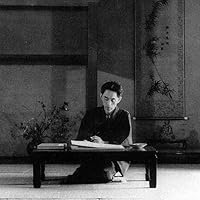
A spiritual travelogue through the birthplace of Zen. In the spring of 2006, Bill Porter traveled through the heart of China, from Beijing to Hong Kong, on a pilgrimage to sites associated with the first six patriarchs of Zen. Zen Baggage is an account of that journey. He weaves together historical background, interviews with Zen masters, and translations of the earliest known records of Zen, along with personal vignettes. Porter’s account captures the transformations taking place at religious centers in China but also the abiding legacy they have somehow managed to preserve. Porter brings wisdom and humor to every situation, whether visiting ancient caves containing the most complete collection of Buddhist texts ever uncovered, enduring a six-hour Buddhist ceremony, searching in vain for the ghost in his room, waking up the monk in charge of martial arts at Shaolin Temple, or meeting the abbess of China's first Zen nunnery. Porter’s previously published Road to Encounters with Chinese Hermits has become recommended reading at Zen centers and universities throughout America and even in China (in its Chinese translation), and Zen Baggage is sure to follow suit. “Porter takes the reader to places far off the tourist track and far from the economic and political frenzy of major cities, traveling on buses and sleeping rough in monasteries. He does it without pedantry or zeal and with some humor.” ― Library Journal
Bill Porter is an American author who translates under the pen-name Red Pine (Chinese: 赤松; pinyin: Chì Sōng). He is a translator and interpreter of Chinese texts, primarily Taoist and Buddhist, including poetry and Sūtras.
He also wrote books about Buddhist hermits(Road to Heaven) and his travels in China(Zen Baggage: A Pilgrimage to China; Yellow River Odyssey).
‘Zen Baggage’ may be the perfect title for this book by travel writer and translator Bill Porter (aka Red Pine). He brings his inquisitive and humorous perspective to the mountains, monasteries and temples of the Yellow and Yangtze river regions. Formerly a monk based in Taiwan, he has traveled in China since the 1980’s. This journey was undertaken in 2006. While Buddhism taught “the perfection of wisdom in emptiness, formlessness and wishlessness”, he suspects that words may have been necessary to transcend ignorance and enlighten the laity.
Beginning in Beijing, Porter leads a reading of early scriptures carried from India by Xuanzang in the 7th century. He ponders the development of language at the sites of Peking Man (500,000 BC) and the Yungle Bell (1421 AD), a Ming artifact with the Sutras cast on its circumference. Heading south, he visits caves where the Buddhist canon was carved inside (700-1100 AD). Near Datong, at Yungang Grottoes (450-525 AD) images of the Buddha replaced teachings to look within. On Mt. Wutaishan, Zen poet Cold Mountain is recalled from the Tang Dynasty.
Porter continues to Luoyang, and stays at the White Horse Temple, the first Buddhist temple in China. Hearing a gong struck outside the meditation hall, he notes: “The monastery was ordered around such sounds...a person could live out their life and never say a word. It was a land beyond language.” Near Zhengzhou the legend of Bodhidharma is told. He brought Zen to China from India in the 6th century. Fists of fury now perform kung fu shows for tourists at his former Shaolin Temple retreat. The master-at-arms tells visitors: “Zen doesn’t depend on words”.
Porter next visits the stupa of Zen’s second patriarch Huike, who cut off his arm to become a disciple of Bodhidharma. Huike’s writings were found in the Mogao caves at Dunhuang, 1300 miles away on the Silk Road: “Zen practitioners who rely on written or spoken words are like lanterns in the wind. They flicker and go out, unable to dispel the darkness”. The bus moves onwards to the southern mountains, shrines of the five remaining patriarchs, up the Yangtze and down the Pearl rivers. As with his other books, he includes photos taken on the way.
Porter shares many anecdotes, some more relevant than others. There are passages about his experiences with public transportation, two star hotels and massage parlors. It was interesting to read about his dinner fare, but less so about his toilet accommodations. More importantly, he covers unusual cultural and religious history in the book. This is material that is difficult to find elsewhere, on subjects such as the practical aspects of monks and monasteries in the past and present. It is deeper than a guidebook, and more entertaining than a textbook.
Zen Baggage is one of my favorite books of all time.
A Zen Buddhist travel memoir. Bill Porter, aka Red Pine, travels China and visits the temples associated with the Six Patriarchs of Zen. Interesting background information is provided on the patriarchs and their lives.
The abbots, temple managers, monks, nuns, and lay people Porter encounters throughout China are as interesting as the patriarchs themselves.
It took time for me to get through this book because I looked up more information on the people and places mentioned in it. I took copious notes and will expand on them as my research continues.
If you are interested in Zen or China, this book is sure to please.
This book is expertly written in a pleasing personal journal style that bring you along for the journey through modern China as our author-guide searches out the remaining Zen temples and monasteries of the country. Red Pine (Bill Porter)is one of the finest contemporary translators of classic and diverse Chinese literature. Only here he is a fellow traveler giving us intimate details and historical background without once sounding distant and academic. We share the travails of travel with him as well as the wonderful surprises both in nature and people. The writing is complemented by Porter's photos from his travels, and though somewhat smudgy, they authenticate the sense of being there. Porter is as likely to spend a paragraph on the taxi driver as he would on the temple's leader. It's a kind of Zen everyman approach that quietly instructs. Porter himself makes no attempt to instruct us, only shares what he finds and senses. Here's a sample of his style while visiting a Buddhist temple in northern China: "The second sit lasted seventy-five minutes, which was not so fine. The last fifteen minutes were agonizing, and I wondered how, since my legs were completely numb, they could be the source of so much pain. Once the evening meditation ended and feeling returned to my legs, I walked onto the road that led back to the hostel. The night was pitch black, but I decided not to use my flashlight. I simply followed the river of stars between the trees on either side of the road. There weren't that many, but the ones I could see were as big as fireflies." If you can slow down to take it in, it's a highly enjoyable read and journey that this book of Zen takes us on. If not, well then, you've missed it.
Bizarrely. It's a topic that I enjoyed reading about, and learned a fair amount, which is the only reason it gets three stars, at the same time, the author's writing style is monotone and dragging. Ironically, one of his biggest complaints as he travels about China is that the monks and abbots he meet just drone on and on about their topics. That pretty much describes his style as he just keeps flogging on. Every chapter follows the same formula - he seeks out a bus to get where he's going next, he describes getting to the bus station, getting on the bus, the bus ride, the arrival at his destination, negotiating for a ride to the next temple, pleading to meet the head guy at wherever he is, a litany of how much tea and coffee he drinks, getting tired of listening to whomever he's there to talk to, retiring to his room where he takes a bath, reads and writes in his journal, sleeps, usually poorly, and wakes up the next day to the next chapter and a repeat of the same.
This travel narrative is excellent and personal writing of the author's travels through China visiting the places significant to the first six patriarchs of Zen. The flashes of contemporary life in China as the extensive historical background was a brisk mixture that maintained my attention. I recommend this book, too, to all of those who want to know more about the nature of the man who is responsible for so many fine translations of Chinese literature and religious texts. If a reader is simply looking for a change of pace from the familiar travelogue or non-fiction, this book will also be a bracing wind from the mountain. Read this one.
In this travelogue-autobiography-history book-Zen treatise, BIll Porter goes on a two month pilgrimage to important sites in the history of Chan (Zen) in China and meets many interesting people, monks, nuns as well as laypeople. In some ways this book is similar to Red Pine (Bill Porter)'s Road to Heaven, oriented towards a portrayal of the world of Buddhist and Daoist hermits, but this volume is much more engaging and deeper. If you have any interest in China, Chinese culture, or Buddhism (and Daoism, for that matter), then you will probably enjoy gain a lot from this book.
Reading this for the book club, but I'm not sure if I'm going to be able to finish it, it's mind-numbingly boring so far Update: Gave up and decided I won't finish it. I thought the subject would be interesting, but the style is too rambling and unfocused for me.
I read the Chinese version, honestly I am curious about the English translation of ancient Chinese poems and Buddhism scriptures. Regardless, it’s an inspirational book of Zen and its history with a fun writing style, so easy to accept and digest ;)
Zen Baggage: A Pilgrimage to China by Bill Porter is a tedious travelogue told by a grumpy old man. However, as he carries his baggage of tea and books through the interior of China, Porter slowly reveals himself to be a man of Zen as I understand his understanding of Zen: a mind at work in the everyday world. Meditating makes Porter’s knees hurt, and he prefers being on the outside of the meditation hall. Although respecting the ceremonies and rituals practiced by the Zen Buddhist monks and nuns, he’d rather take a nap. In the everyday world, Porter grumbles about headaches, backaches, and allergies to dust as he travels by bus, train, taxi, motorcycle, mini-van, or tractor through frigid cold, tropical heat, or torrential rain. But before it all becomes too tiresome, he finds a delicious pumpkin cookie, a skillful masseuse, or an impressive PhD student who peels mangoes with a Uighur knife pulled from her boot. Porter enjoys wild mushrooms, hot baths, gooseberry wine, afternoon naps, Iron Goddess tea, and an occasional fun-sized Snickers—all providing much-needed breaks from his travels and his journal writing. On his pilgrimage to the ancient temples and grave sites of Zen patriarchs, Porter brings to light a mind at work in the everyday world, the everyday world of China, that is. Along roads that end in dusty wasteland or muddy ruts, this is one porter who carries his Zen baggage lightly. And who’s to say that Bodhidharma wasn’t just another grumpy old man from the West?
In Zen Baggage, Bill Porter (Also known as Red Pine when translating Chinese poetry and spiritual works) recounts his journey through China visiting locations important to the history (and present) of Chan, the Chinese roots of the more well known Japanese Zen. Beginning with Chan's first patriarch Bodhidharma, and ending with its sixth, Hui-Neng, Porter weaves his experiences travelling through modern China with historical details providing a narrative of interest to lovers of travel, eastern religions, and history.
I'm going to say Road to Heaven and Zen Baggage are required Buddhist reading. Then I'd read his translations of Cold Mountain and Stonehouse, and other poets. Then there are his translations of sutras. I've only read the Heart Sutra one, but I want to read his other translations. And I want to read his other travel books.
Another excellent book by Red Pine/Bill Porter, charting his travels through China in search of the Ancient Zen masters, as well as the rebirth of Zen in China. Highly recommended to anyone interested in the history of Chan/Zen or China.
I didn't know what to expect when I opened this book. What a delight. What a privilege. I've learned about modern and ancient Chinese culture. I've been treated to Mr. Porter's stories. And I've been privileged to be given some intimate insight into an interesting man.
The actual historical details are interesting and informative, but they are irreparably weighed down by an entirely uninteresting travel journal. Love Porter/Pine's work as a translator, but this was almost unreadable at points.
This book is expertly written in a pleasing personal journal style that bring you along for the journey through modern China as our author-guide searches out the remaining Zen temples and monasteries of the country. Red Pine (Bill Porter)is one of the finest contemporary translators of classic and diverse Chinese literature. Only here he is a fellow traveler giving us intimate details and historical background without once sounding distant and academic. We share the travails of travel with him as well as the wonderful surprises both in nature and people. The writing is complemented by Porter's photos from his travels, and though somewhat smudgy, they authenticate the sense of being there. Porter is as likely to spend a paragraph on the taxi driver as he would on the temple's leader. It's a kind of Zen everyman approach that quietly instructs. Porter himself makes no attempt to instruct us, only shares what he finds and senses. Here's a sample of his style while visiting a Buddhist temple in northern China: "The second sit lasted seventy-five minutes, which was not so fine. The last fifteen minutes were agonizing, and I wondered how, since my legs were completely numb, they could be the source of so much pain. Once the evening meditation ended and feeling returned to my legs, I walked onto the road that led back to the hostel. The night was pitch black, but I decided not to use my flashlight. I simply followed the river of stars between the trees on either side of the road. There weren't that many, but the ones I could see were as big as fireflies." If you can slow down to take it in, it's a highly enjoyable read and journey that this book of Zen takes us on. If not, well then, you've missed it.
I have a number of Bill Porter's translations. These include his collection of the poems of Han Shan (Cold Mountain) and his translation of The Platform Sutra. Porter's translations are clear and easy to understand. In his translation works, he seems to be able to convey the poetry and complexity of his subject at the same time.
Zen Baggage is an entirely different work as it is his account of his trip to China to visit sites of historic significance in the lives of the Zen Patriarchs of China. His account of his travels is told in a relaxed and clear style. He doesn't gloss over the difficulties and oddities of travel in and around China. Porter is able to use his visits to different sites to delve into the history of Zen Buddhism in China and does so in a lively, informative style. It is almost more of a conversation than a lecture in history. But his descriptions of and his interactions with the people he meets, especially the new Buddhist monks rebuilding the infrastructure of Buddhism in China, are the most remarkable part of the book. It is evident that Buddhism in the PRC is rebuilding itself into a lively and meaningful institution for the lives of Chinese people. At the same time, it has to adapt to the realities of the single-party Communist state. This is not a political book, but given the realities of the PRC, watching how individuals are able to manage and navigate those tensions is interesting and informative.
Overall, a very good book for someone interested in China and Buddhism.
Another fine book from Bill Porter, guide to things obscure(d) in China. This is his knowledgeable memoir of his adventurous pilgrimage to temples and stupas associated with the first six patriarchs of Zen in China. He explains ideas and attitudes, lineages and curious cultural tidbits along the way. The bonus is the epilogue wherein he tells his own tale. In Yunmen he met a doctoral student from Italy who was researching Empty Cloud. They travel together for a portion of the journey. In a perfect world, the book would have included transcripts of their conversations which were sure to have been interesting.
I found it fascinating to get a travelogue picture of the "real" China, from a clearly experienced traveler to that country. Notjust any travels, but to buddhist monasteries and temples, places connected to the development of buddhism in China. I loved hearing about the ruggedness of the travels. This author, in true zen style, includes all the details of daily life. Sometimes I don't care to know that taking a "dump" (his word) was the highlight of his morning, but I do like hearing about the chilly bus rides across icy mountain roads and the dust of northern interior China.
Go all the way to 10th century China carrying a cell phone, riding a bus, drinking tea, getting cold wet and tired...Go all the way! Travelling with Red Pine is so much fun and then he throws in his vast knowledge of Chinese Buddhism and literature, especially poetry. I hang on his footnotes. This book is the next best thing to travelling China with Red Pine. What an exceeding generous host to a world very far away and hard to reach. Only a few have pass through and fewer yet come back and share the tale.
the version of this book I read is chinese,so I really get pretty touched but suprised by the author who is a american that fond of zen . firstly,the clear skeleton of the book about zen is easier for readers to follow the author 's thought. secondly,when the author facing different opinions about zen in China,he will analyze the reasons behind the phenomenon in 3 ways ,regional、society and culture. thirdly ,in my opinion,he is a man who already get his faith in life from zen,and he just go on with it all the time by himself,that is the place I M really impressived
It has taken me four years to read this book from cover to cover. Something else always got in the way. I'm so glad I finally picked it back up again and read the whole thing.
What an engaging storyteller. Such an interesting book. I'll admit I lost my way a few times and lost track of whereabouts he was, but that didn't seem to matter. The author has led an extraordinary life full of characters and encounters which were compelling to read.
I have succeeded in buying very cheaply another of his books second hand which I look forward to reading.
This is an idiosyncratic book of the authors travel in China doing homage to and visiting Chinese Zen Patriarch's temples and monasteries. A very honest account of the the inside and outside journey with a bit of Zen and poetry thrown in. I give it 5 stars for its true humor, its honesty and contradictions and its insights into both Chinese Zen teaching and contemporary China. No doubt there is a a bit of historical discussion that did not interest me but the rest was enough.
Bill Porter went to China to visit sites important to early patriarchs of Zen. Lots of details about his preferred methods for travelling in China; how he transferred from one bus station to another, what he ate; where he got massages. Concise histories of what is known about the Zen patriarchs themselves. The most interesting part was the information about monasteries currently; how monastics survived the Cultural Revolution, etc.
A rather dry travelogue that will interest those that feel some affinity for Zen and its history. Bill Porter is one of the best (and certainly the most unassuming) translators of Chan writings of our times, and this book is essential reading for those interested gathering a glimpse of Chan as it is once again gaining popularity in China
A very interesting book. You get to see the world of Zen through the eyes of Red Pine. It's full of characters and places and artifacts that will surely excite you, with several touching and revelatory stories about the author and others intertwined. The end is especially moving. Check it out if you feel inclined!
I wish I could rate it more highly, as I respect and admire Porter (aka Red Pine) and feel a kinship with his passion and his interests and his travel. I don't find his translations as lyrical as some others, and wish for more elegance (and perhaps tighter editing) in some of his books. At the same time, it is an enjoyable book to read and Porter is a good traveling companion.
I just couldn't get into this book so I never finished it. The print was way to small and there were too many Chinese names and words to begin with that made the reading not flow for me. Just not interesting enough from the get go - so its a no go.
My husband bought this book because of the "travels in China" aspect and urged me to read it as we lived in Beijing for four years. I did not enjoy it as much as he did. I'm not interested in Zen and confess to skimming all those bits, but found the anecdotes on traveling around China interesting.