An Updated and Abridged Edition of Richard Baxter’s Classic Text Originally written in 1656 and endorsed by generations of leading pastors as an essential book on the work of ministry, this abridged version of The Reformed Pastor presents the best of Richard Baxter’s timeless advice in simple, modern language that’s more accessible to a new generation of church leaders. In inspiring communications to his fellow ministers, Baxter challenged them to pursue teaching and personal pastoral ministry with an exceptional degree of faithfulness. His words were grounded in the apostle Paul’s encouragement to the leaders in Ephesus to “take heed unto yourselves and all the flock.” Baxter’s advice remains relevant today as Christian leaders face both new and age-old challenges in ministry. With this updated, abridged version of The Reformed Pastor , editor Tim Cooper retains Baxter’s passionate message in a modern, simplified style that speaks clearly to today’s Christian leaders.
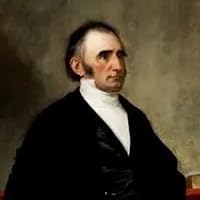
Richard Baxter (1615-1691) was an English Puritan church leader, poet, hymn-writer, theologian, and controversialist. Dean Stanley called him "the chief of English Protestant Schoolmen". After some false starts, he made his reputation by his ministry at Kidderminster, and at around the same time began a long and prolific career as theological writer. After the Restoration he refused preferment, while retaining a non-separatist presbyterian approach, and became one of the most influential leaders of the nonconformists, spending time in prison.
Librarian Note: There is more than one author by this name in the Goodreads database.
Okay, I know what you’re thinking: Ashton… you’re not a pastor! And you’d be correct to make such a statement. Yet somehow, even so, I gained a plethora of knowledge and insight into the role and function of the pastoral office and even found points of application in my own [non-pastoral] ministry.
This work is an exhortation on Acts 20:28: “Take heed unto yourselves and to all the flock, over which the Holy Spirit has made you overseers, to feed the church of God, which he has purchased with his own blood.”
While I recognize I didn’t read Richard Baxter’s original work, Tim Cooper’s updated and abridged version is very well done. Baxter’s original text is around 160,000 words; Cooper’s sits around 30,000. Despite this significant haircut, Cooper makes this work clearer and more accessible. He also provides a helpful summary at the beginning of each chapter (and review questions at the end) to aid in understanding and highlight the themes of each section. Even in this abridgment, though, I find Baxter’s words piercing and direct; honest and hopeful; true and almost timeless. (And occasionally still redundant.)
This is a book of practical wisdom—one with exhortations that are both convicting and encouraging to those who hold the office of overseer. This office is not one to be taken lightly, as Baxter says subtly on every page. For, “What is our time and strength for but to lay it out for God? What is a candle made for but to be burnt? Burnt and wasted we must be in the end. Is it not fitter that we should be spent in lighting the way for men to heaven and in working for God than in living for the flesh?” (121).
God has appointed ministers who devote themselves to the knowledge of His Word so that they would teach those under them. May those of us in Christ’s church long to be taught by Christ. And may the overseers of Christ’s church take heed unto themselves and their flock as they shepherd the precious souls of the children whom God loves.
While I’m sure this book would be of particular encouragement to those seeking pastoral ministry, I recommend this book to anyone.
Richard Baxter (1615-1691) was known as 'Scribbling Dick' because of his prodigious writings. He was born Rowton, Shropshire. When a teenager he was influenced by the works of William Perkins, Richard Sibbes and Edmund Bunny. In 1638 he became the master at the free grammar school in Dudley, where he was ordained by the bishop of Worcester, John Thornborough. The main part of his ministry took place in Kidderminster at St Mary and All Saint's Church (1647-1661). During the Civil War he left Kidderminster as a chaplain to the parliamentary army, but later returned to Kidderminster. In 1662 he married and retired to Middlesex after being part of the Great Ejection bought about by the Act of Uniformity.
He was a prolific writer and wrote over 140 books. It was during his first spell at Kidderminster that he wrote The Reformed Pastor in 1656. That is the book is still in print today is and merits a new abridged edition is a testimony to its impact and longevity. James I. Packer named it among one of the five books that have most influenced him. Packer described Baxter as “the most outstanding pastor, evangelist and writer on practical and devotional themes Puritanism has produced”.
This is not the first time this book has been abridged - the standard edition was edited and abridged by William Brown in 1829 and republished by The Banner of Truth Trust in 1974. The BoT edition still used archaic language. What Tim Cooper has done is to make this book much more readable and accessible. It is also much shorter, but still keeps the key message of the book.
Cooper is no stranger to Baxter. He is author of Fear and Polemic in Seventeenth Century England: Richard Baxter and Antinomianism (Aldershot: Ashgate Publishing, 2001), John Owen, Richard Baxter and the Formation of Nonconformity (Aldershot: Ashgate Publishing, 2016), and co-editor of Richard Baxter: Reliquiæ Baxterianæ: Or, Mr Richard Baxter's Narrative of the Most Memorable Passages of his Life and Times (Oxford: Oxford University Press, 2020). Thus, he is well equipped to abridge and edit this book.
Cooper has added a useful summary at the beginning of each chapter. A series of pertinent and challenging questions also conclude each chapter. This adds to the value of Baxter’s book.
What Baxter puts forward in this book is a call for church ministers to take pastoral work seriously. This for Baxter entails, not only teaching and preaching from the pulpit but also daily visitation. Visitation includes private instruction with the use of a catechism - it is one-to-one personal discipleship. He stresses the need for pastors to know themselves and to know their flock.
What Baxter is very good at is exploring the motives behind the nature of pastoral work. He is both an encourager and an exhorter. He deals extremely well with possible objections to the nature of this type of ministry and pulls no punches.
Baxter held to a view known as neo-nomianism, and there are traces of this that can be seen in his (over)emphasis on the need for faith and repentance and human autonomy; sometimes his exhortation comes close to legalism. This does not detract from the importance of this book - it should be required reading for all pastors.
Thanks to Crossway for a review copy of this book.
This is a book that I have always wanted to read, but heard much about how long and difficult it was to read. This edition of the book was absolutely perfect. It was incredibly focused and helpful. It was easy to follow along and seemed to have the meat of Baxter's thoughts. Each chapter begins with a helpful description of what is to come. One of my favorite parts of the book was a detailed outline at the end that really summarized the entire book and every point Baxter made. This book is simply a must read for any pastor. It is as relevant now as it was almost four hundred years ago. I hope that this edition will get every pastor who has never read it, like me, to pick it up and glean from it.
This was a very helpful book for me, and I think it would also be helpful for anyone who aspires to the office of eldership. I was personally challenged by Baxter's emphasis on actually having a relationship with everyone within your church (crazy idea, right??), as well as his pattern of personal visitations. Baxter rightfully takes his office very seriously and has strong words for any elder who does otherwise. It's probably not hard to find things that you disagree with Baxter on, but overall I would give this book a 5/5. I read this with a group of men from my church who all aspire to this office, and it was incredibly helpful to discuss the topics in the context of community. Highly recommend reading and discussing with others.
This is an incredibly high calling. Baxter takes the ministry seriously and calls other pastors to do the same. His tender heart comes out through the whole book though. This is a must-read for any pastor to be called higher.
The Reformed Pastor is a must read for both Pastors and Lay Elders and for that matter, anyone holding a formal or informal leadership position in our Lord’s church.
This book is daunting and convicting but so is pastoral ministry, especially when “taking heed to yourself first and then taking heed to love Christ’s flock next.” So much of what is called shepherding today is one-dimensional pulpit preaching with little or no painstaking pastoral care offered for the sheep.
Tim Cooper has done an excellent job of making this work “a more manageable read” for one wanting to be exhorted on how to be a godly and effective pastor.
Again, I like Cooper’s inclusion of both a subject and Bible index. Also included is a copy of the book outline and the Catechism that Baxter used when entering the homes of his congregation.
Again, I will read and reread this book again to be reminded of how difficult it really is to be called a pastor or lay elder and what is expected by our Lord in this role.
“Many men assume that the pastoral office consists only in preaching and administering the sacraments. From what has been said, we may see that it is another kind of thing—and so much more than they think.” (59)
Hundreds of years ago, Richard Baxter confronted His fellow English pastors for their failure to care for the flock. The Reformed Pastor is his appeal for them to take up the charge of personally caring for each member of their flocks, despite the innumerable challenges that such work faced. “Reformed” in “The Reformed Pastor” doesn’t mean “Calvinist”; it means spiritually reformed. This challenge, to take up the onerous task of caring for Christ's sheep and taking responsibility for their spiritual leadership, is fit for our time as it was for his. Tim Cooper has provided us with a new abridgment of Baxter’s classic, making it readily accessible for a new generation of pastor who need to hear this hard word. Cooper has modernised the language, cut out repeated content, and tried to streamline the argument without excising the challenge of Batter’s address. I believe he has succeeded at this; the book remains forceful and confronting. Cooper has also included questions for reflection after each chapter, specifically targeted for pastors.
Summary
The Reformed Pastor is Baxter's call for a return to personal pastoral care. It is in many ways an extended mediation on Acts 20:28, where Paul calls the Ephesian elders to watch themselves closely and their flocks. Drawing on Paul's own description of teaching them “house to house,” Baxter insists on the necessity of personal pastoral visitation and the use of a catechism in this private instruction. Chapter 1 calls pastors to watch themselves closely, to pay careful attention to their own life and godliness; how could we not when we are charged with such a serious task as shepherding Christ’s sheep? Chapters 2 and 3 then describe how we are to watch the flock closely (as per Acts 20:28). Chapters 4 and 5 lead the ministers in confessing sin and their failure to do these things. Chapters 6 through 8 then argue for personal visitation and care by displaying the need, the benefit, and the difficulties involved in such work. Chapter 9 considers several objections to pastoral visitation. The book then ends with personal direction and advice in doing this work. An appendix contains the catechism used by Baxter. Baxter rightly confronts us with the seriousness of the work, with the weighty task of pastoral ministry. He does not allow us to settle for a model of pastor as CEO, leadership coach, or preacher. No, pastors are shepherds, tasked with leading the sheep and personally responsible for each one entrusted to their care. This personal responsibility towards the flock requires personal care and attention. “The object of our pastoral care is all the flock, that is, the church and every member of it. We should know every person who belongs to our charge. For how can we take heed unto them if we do not know them? A careful shepherd looks after every individual sheep.” Baxter thinks that it will often be wise to have an assistant minister to help with the work, but the point is, the work must be done. Personal visitation involves testing individuals and families (in appropriate groups where necessary) on their learning of the catechism, but pastoral care doesn’t stop there. We must recognise the different state of our sheep and the help they need, assisting them in identifying and overcoming be setting sin and continuing in the faith. He breaks this duty into 10 parts (55-59): 1. Labour “to be acquainted with the state of all our people as fully as we can” 2. In simple words, “instruct the ignorant in the matters of salvation” 3. Give advice in cases of conscious: “A minister is not only to be about public preaching but also to be known as a counsellor for his people’s souls.” 4. “We must also have a special eye on families to see that they are well ordered and that the duties of each member are performed.” 5. “Another part of the work of our private oversight consists in a vigilant opposing of those who work to seduce weak Christians with false doctrine.” 6. “Another part of this oversight lies in the due encouragement of those who are humble, upright, obedient Christians.” 7. Also, “visiting the sick and helping them prepare either for a fruitful life or a happy death.” 8. Also “comforting the consciences of the troubled and in settling our people in a well-grounded peace.” 9. “Another part of this oversight is in reproving and admonishing those who live offensively or impenitently, and receiving the information of those who have admonished them more privately in vain.” 10. “The Final part of our oversight lies I the use of church discipline. This consists in more public reproof, in persuading the offender to appropriate expressions of repentance, in praying for them, in restoring the penitent, and in excluding and avoiding the impenitent (Matt. 18:15-17).”
Conclusion
The Reformed Pastor is brimming with insights for contemporary ministry, but I am not convinced that pastoral visitation was the only way to achieve the ends Paul calls for in Acts 20:28. It is important to observe that Paul taught the elders from house to house, not necessarily the whole flock. However, Baxter makes many biblical observations about pastoral ministry, and certainly visitation is one way to fulfill these duties. His practical advice throughout is helpful, so the book succeeds in both challenging us to take of the sheep calling of pastoral care in all its dimensions, not just preaching. Cooper's abridgment read well and didn't feel lacking. I commend this work; pastors, ministers, take up and read.
This was a gift attached with a note - with words of encouragement, to always be reforming or to use the Latin - Semper Reformanda.
This is one of the books that challenge those in leadership, i.e. elders, and pastors to be thinking about the ministry God has called them to or to cite scripture - to take heed unto themselves and to all the flock which God has made them overseers.
This short book was a reminder of the role and responsibilities that go along with being a pastor and an under-shepherd to the LORD'S flock.
What made this book stand out to me:
1) It is an abridged addition - In other words a truncated version of a much larger work making it easier to digest the material. The author cut to the chase and culled and compiled the pertinent material. 2) The introduction was well thought out and included a brief bio on Richard Baxter. 3) Each chapter ended with "Questions for Reflection" making it a useful tool for discipleship and personal reflection 4) There were two appendixes one included Richard Baxter's Catechism which was helpful. Baxter emphasized the importance of Catechizing new converts/members. He mentioned this throughout the work 5) The other appendix included a book outline. This is very useful. 6) There was also a general and scripture index
I can't really highlight one chapter above another as all are equally important for the preacher. I would say for sure that chapters 1 and 2 stand out and form the basis for everything else. Take heed unto ourselves and take unto all the flock.
While written in the 17th century the material is still relevant today. God is still God, and the sheep are God's sheep, the lost still need Jesus, and pastors have a higher calling to ministry to the Lord's heritage. In a world of religious pluralism, apostasy, and rank heresy the old truths are still truths that need to be preached and encouraged in the saints of God.
Richard Baxter is a reset switch of sorts helping preachers to realign with the disciplines of their calling as preachers.
One quote worth mentioning is pg. 65. " Reverence is that affection of the soul that proceeds from deep apprehensions of God and signifies a mind that is much conversant with him."
This would make a great gift for pastors/elders in your church.
Baxter sets a really high bar for pastoral ministry in this book. "What is a candle made for but to be burnt? Burnt and wasted we must be [as pastors]" (27). That's a very sobering statement, and it is unlike what is often written in pastoral ministry books today. Is the bar too high? I think the editor helps us read this book for all its worth when he cautions the reader to be inspired, but not burdened; even if we don't (or can't) match Baxter's standards, it may be that we raise our own in some measure with regard to "tending the flock" and that can only be good.
Baxter's main concern is to add "personal pastoral care and instruction" as a ministerial priority alongside public preaching. How else can you tend the flock? Baxter's other great concern is the pastor's tending to his own heart. He addressed this when calling out temptations English pastors, including himself, were prone to (slothfulness in study, spiritual pride, etc). The human heart hasn't changed over the centuries, so these temptations are those pastors everywhere still struggle with.
There are many other helpful pieces of advice Baxter offers: If you can't know all your people, you need another pastor at your church, or you need to plant another church (i.e. you must know all your people), "pastoral work must be carried on in a sense of our insufficiency and in a pious, believing dependence on Christ" (64). "When I let me heart grow cold, my preaching grows cold." (95)
The greatest challenge Baxter offers to the 21st century pastor, in my opinion, is to ensure your people know the gospel. He advocates catechizing every family by visiting every family. However a pastor may appropriate this method to their own context today, it is certainly valuable to consider and practice this in some way, shape or form. Jesus taught by public preaching, and he taught privately. We must do likewise.
This is the book many pastors say judges them simply with a look. Even with the new abridged version from Crossway, you can completely understand that sentiment! Baxter lays out a comprehensive idea of what a biblical pastor should be and how he should minister to his congregation. It was a large undertaking at the time he wrote it, and I would say that many so-called “pastors” today would not take this seriously. (Probably they would quote the objections raised in chapter nine.) This book may be convicting, but it also inspires me to take my work as a pastor far more seriously than I do now. Every pastor must read this book.
It’s been a few years since I read the unabridged version of The Reformed Pastor by Richard Baxter. I’d highly recommend this abridged version. It is far more concise and, I think, more effective. Couldn’t put it down and was filled with new (or old) spiritual insights on pastoring. How little we do what we ought! Read this book to be stirred from pastoral apathy which is always an underlying and often unrecognizable temptation. I plan on making this a yearly read.
A Puritan classic. Glad we have a well-abridged version of it now. A much needed encouragement for thorough pastoral work.
My only quibble is that at times he seems to present the means of grace in private as more efficient than those in public. For a helpful correction to that tendency among believers today, see the sermon 'Public Worship to be Preferred Before Private' by David Clarkson.
Really good. A must read for any pastor - especially young ones entering into ministry. The call to shepherd God’s flock is a high responsibility that should not be taken lightly. Bonus with this edition is that it includes an outline of the book in the back for quick reminders of content for future reference.
Helpfully abridged with thoughtful, provoking discussion questions at the end of each chapter. Some of the content has to be put into different denominational contexts as well as a different age and time than rural England in the 1600s. It’s still a worthwhile and challenging read that will inspire you to care for every member of your church and to teach and preach modeled after Paul in Acts 20.
Very insightful and convicting book about the need for godly and upright pastors to conduct personal ministry and instruction to all the families of the church
Read slowly through this book to digest it. This updated version of Baxter's charge to pastors now belongs in my selection of "books I should re-read every year". Quite convicting.
"The Reformed Pastor," written nearly 400 years ago, is one of the most celebrated and well-respected works on pastoral ministry in history. It is a field guide for pastors stepping into the ministry and seasoned pastors alike. The book is rooted in Acts 20:28 - "Take heed unto yourselves and all the lock, over which the Holy Spirit has made you overseers, to feed the church of God, which he has purchased with his own blood." In typical Puritan fashion, Baxter wrings this verse dry, slowly working through the implications hidden behind each of these words, helping the pastor meditate on who he is meant to be and what he is meant to do.
I appreciate Baxter's focus on the pastor setting a high bar for himself. Many times, pastoral ministry books can drift into the world of strategy and completely leave behind the importance of character. We get so preoccupied with doing something that we forget to be something. Baxter won't allow it. His call to "take heed" resounds loud and clear throughout the book. Our work is simply too important not to do so.
I read Richard Baxter's "The Reformed Pastor" a few years ago for the first time. Of course, it was full of wisdom and insight. There's a reason it's a classic! And yet, I do remember finishing the book and feeling that I hadn't quite grasped some of the work. It felt like a "chew the meat and spit out the bones" kind of exercise at times.
Naturally, I was glad to learn that Crossway was publishing an updated and abridged edition of this book. I was curious to see if I walked away from it this time having a sharper understanding of Baxter's overall message.
If you, like me, have read "The Reformed Pastor" before, you may feel like owning this edition is unnecessary. However, I would consider this my go-to copy of this book, as I feel it is a much better treatment of the work overall. Tim Cooper, a capable scholar with much expertise in Baxter's writings, has produced an abridgment that is less than 20% of the original, unabridged work! In addition, Cooper has labored to modernize the language at times, and improve on some of the confusing punctuation.
As you read this edition, you'll quickly notice the structure and outline behind the work (for those interested, a book outline is available in Appendix 2, pages 147-154). This makes for a much more clear and concise reading experience, allowing the reader to more carefully follow Baxter's line of thought throughout the project. The book also includes discussion questions to foster conversation in small group settings.
I'm very thankful to have a copy of this edition of this great pastoral guide.
*I was provided a copy of this book by Crossway in exchange for an honest review.
Note: This review will not be directed at the content of the book as written by Richard Baxter, but as to the quality of the abridgment. Two primary reasons are that this book contains roughly 1/5 of the word count of the original, and the original is nearly 370 years old. There are many reviews, critiques, and recommendations of the original, and certainly, there can be no truly critical engagement of such an abridgment.
Why would you buy another abridgment of Richard Baxter’s The Reformed Pastor? In volume 14 of The Practical Works of Richard Baxter, we find approximately 350-400 pages devoted to a copy of this book. The Banner of Truth version in the Puritan Paperback series shortens it to approximately 200 very dense and small print pages (not counting the introductions).
Tim Cooper has edited this version published by Crossway into approximately 100 pages (not counting the introduction). Most importantly, it is now in a modern, readable typeset! Having read parts of the original book in high-quality scans from the Internet Archive and the Banner of Truth version, I am most appreciative of this update.
Cooper provides a helpful introduction providing the background to the original text and explains his process of editing. Some of it involved removing long Latin quotes, material that comes across as repetitive, and modernized verb endings. Included at the beginning of each chapter is a summary and questions for reflection at the end. As I read, I certainly see the work of Richard Baxter coming through. Cooper excels in editing an abridgment which (1) lets the emphasis of the original shine through, and (2) makes the original significantly more accessible.
I would recommend this book to anyone who has desired to read Richard Baxter but found the idea to be daunting, for those considering ministry and what it may look like, and those who are in ministry and have not read The Reformed Pastor. This abridgment is an excellent addition making a classic text more readily available. I would love to see ministers gather together and go through this book. Baxter challenges the minister to live in a manner that glorifies God, provides encouragement and practical application, and warns of common pitfalls.
I received a complimentary digital copy of this book from the publisher through Netgalley for review purposes. Comments are my own.
So challenged by this book to be a better pastor and a better discipler of Christ's Beloved Bride.
Using Acts 20 as his text, Baxter hits home the eternal consequences of our work as pastors - keeping watch over ourselves and the sheep in how we instruct them toward repentance, faith, and holiness. It is a work we do for our own selves, as we will be judged more harshly than others for how we have tended the lambs of Christ. And it is a work we do for them, for though less harshly, they also will face the judgment seat of Christ.
The shepherds of our day need to hear a message like this, as we tend to be far too easy on ourselves or distracted with work or play that has no eternal significance.
Not sure how I feel about individually instructing people in a catechism, but after considering it more, I can see how that - or something very much like it - could be an effective way to disciple and shepherd the members of a church in the Way, doctrines and commandments of Christ. I tend to simply disciple people by going through books of the Bible, which can be very effective, but often people need something that hits on the general themes of Scripture while pointing to particular texts. I don't even think that Baxter's idea is impractical - at least for our church, because we have the (shall I call it?) benefit of being a very small church where this would be feasible.
3,5/5 The strength of the book is that it shows that a pastor has to do pastoral work - that is, to be in relationship with his flock, to feed the flock. An important admonition in our time. Also some further hints are still helpful today, e.g. to pay attention to one's own spiritual life.
Problematic, in my opinion, is that: - The pastors are burdened with an immense responsibility. There is hardly any talk of individual responsibility on the part of the individual Christians. - I doubt that it is God's will that the pastor "burns out like a candle".
In the end, I was also somewhat amazed. There was a great emphasis on taking responsibility for each individual person. But the "how?" is ultimately sobering. Visiting each family once a year and making it a point to learn the catechism by heart. I dare to doubt that these two elements have a transformative character, at least in our time. After all, the problem is not just a lack of knowledge, but a lack of implementation. I don't know, maybe I missed an essential point ;)
Yes, the book is worth recommending, but it did not meet my expectations.
I really enjoyed this abridgment and update of Baxter's famous work. Some would scoff at the idea of reading an abridgment but I am glad Tim Cooper did his best to convey the heart of Baxter's message. Baxter is a pain to read and at times he writes too much. He doesn't always succeed in his "desire to make things as plain as possible" like he instructs the readers to do in this book. Cooper also includes helpful discussion questions to begin thinking about ways to creatively implement some, but not all of Baxter's call for pastors to modern contexts. I will say be warned. Baxter has some wonky views regarding justification by faith. I did not see it come out in this work, but one needs to be aware before taking the foray into Baxter's work
The Reformed Pastor has been the standard in practical pastoral theology for hundreds of years. Sadly, the original book was quite large and contained many contextual matters no longer plaguing pastors. This book has been abridged by Tim Cooper. It retains all the salient matters of the original without any of the superfluous material.
Baxter encourages pastors to work on their own hearts and the hearts of their church members as the primary work of pastoral ministry. He encourages the use of a catechism which is included as an appendix. The catechism is to be used as a way to personally instruct each member. This abridged edition will see much use in the coming generations of pastors who rediscover Baxter’s The Reformed Pastor anew.
A great book that gets at the heart of pastoral ministry and exhorts pastors to go beyond mere pragmatism and surface-level discipleship and venture into truly taking heed unto all the flock (Acts 20:28). I venture to say that this should be a book that any aspiring, new, or budding pastor ought to read to truly understand the weighty task of ministry.
The only hesitancy I have in recommending this book is Baxter’s errant soteriology, which is not apparent in this text; however, it is in the unabridged version and his other works even more explicitly.
Nonetheless, a great book that gets to the heart of pastoral ministry.