

What do you think?

Last Words on Earth
In exile from his home country of Peru, Ricardo Funes embodies the ultimate starving artist. Fired from almost every job he's held―usually for paying more attention to literature than work―he sets himself up in a rundown shack where he works on writing stories to enter in regional contests across Spain, and foisting his judgements about literature on anyone who will listen as one of the last remaining members of the "negacionismo" poetry movement. Completely dedicated to an unwavering belief in his own art, Funes struggles in anonymity until he achieves unbridled success with The Aztec and becomes a legend... at least for a moment. Diagnosed with lung cancer a few years later, Funes will only be able to enjoy his newfound attention for a short time.
Told through the voices of Funes's best friend, his wife, and himself, Last Words on Earth looks at the price―and haphazard nature―of fame through the lens of a Bolaño-esque writer who persevered just long enough to be transformed out of obscurity into being a literary legend right at the end of his life.
Told through the voices of Funes's best friend, his wife, and himself, Last Words on Earth looks at the price―and haphazard nature―of fame through the lens of a Bolaño-esque writer who persevered just long enough to be transformed out of obscurity into being a literary legend right at the end of his life.
153 pages, Paperback
First published January 1, 2017
About the author
Javier Serena
7 books5 followersJavier Serena was born in Pamplona, Spain in 1982. He has published Las torres de El Carpio, La estación baldía, Last Words on Earth, and Atila (forthcoming from Open Letter). He has stayed at writers residences with the Fundación Antonio Gala (Córdoba, Spain) and Les Rècollets (Paris, France).
Ratings & Reviews
Friends & Following
Create a free account to discover what your friends think of this book!
Community Reviews
Displaying 1 - 25 of 25 reviews
![Profile Image for s.penkevich [hiatus-will return-miss you all].](https://i.gr-assets.com/images/S/compressed.photo.goodreads.com/users/1735525095i/6431467._UX200_CR0,11,200,200_.jpg)
November 5, 2021
‘We never stop reading, although every book comes to an end, just as we never stop living, although death is certain.’
--Roberto Bolaño
Roberto Bolaño (1953-2003) lived life like a novella, brief yet full of lasting power. That legacy lives on in Javier Serena’s Last Words of Earth which delivers a multi-faceted portrait of an expatriate writer, Ricardo Funes—a writer blatantly based on Bolaño—who achieves monumental success only as his life begins to be pulled like a rug from under him from illness. Bolaño fans are sure to appreciate this novella that furthers the self-mythologizing the great Chilean author bestowed upon readers, yet those unfamiliar with his works will not find the doors to enjoyment closed as the book successfully stands on its own feet. Told from various perspectives that nods to journalist Mónica Maristain's Bolaño: A Biography in Conversations, the first half rotating between his friend Fernandez Vallés and wife Guadalupe (loosely based on Carolina López) and the second half being Funes’ own reflections on life, Serena illuminates a nuanced impression of Funes that examines him from all sides from tragic and depressed to heroic and headstrong. With prose that mimics the great master himself and in beautiful translation by Katie Whittemore, Last Words on Earth is a moving examination of a writer who truly believes in art as a bastion against life and an avenue for immortality.
‘Ricardo was exceptional because he lived his life as if his sole objective was to relish everything he did, in order to remember it later...he loved telling stories so much that he seemed to put a greater or lesser value on every experience according to the shine it would add to his biography.’
This is a true treat for Bolaño fan, packed full of allusions to his works and a playful homage to his own biographical details. The book title itself is a play on the short story collection Last Evenings on Earth, the titular story appearing in a similar narrative when Funes vacations in Acapulco with his father in this book. Funes (possibly a reference to the character from the Jorge Luis Borges story Funes the Memorious) is very attached to his poet friend from his youth, Domingo Pasquiano with whom he was part of a rogue literary circle calling themselves the Negationists, a reference to the real-life friendship with Mario Santiago Papasquiaro. Papasquiaro might be better known to readers as Ulises Lima from Bolaño’s The Savage Detectives, which appears in this book as Trafico DF, a novel Funes writes to create a ‘mythologized adolescence’ of the Negationists and Paquiano as well as dramaticized exiles across Europe very much akin to the travels of Belano and Lima in Savage Detectives.
Even the scene where Vallés first meets Funes feels like an allusion to the story Dentist. So much of Funes biography mimics Bolaño, such as his time working as a night watchman for a park, his infidelities and a illness that takes him away from us all just as he begins to become famous (though this book chooses lung cancer instead of liver failure, fitting for the mythologizing as Bolaño preferred to be photographed always smoking to keep up an edgy bad-boy look despite his declining health). Unfortunately the book doesn’t put much emphasis on his poetry, which Bolaño preferred to be known for, though those interested can find it collected in The Unknown University.
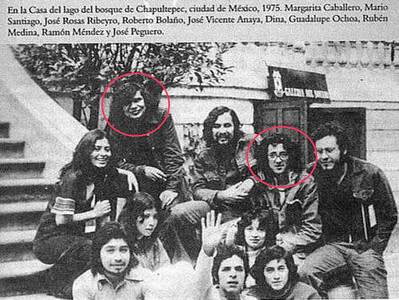
Papasquiaro (circled left) and Bolaño (circled right) with the Infrarealists, the basis for Pasquiano and Funes and their Negationist group.
What this book captures best is the self-mythologizing Bolaño created in his novels. ‘Ricardo had always liked keeping up a healthy sense of mystery,’ his wife says, and much of the book concerns the way he blended fact with fiction to create an idealized and heroic portrait of himself and his friends much the way Bolaño himself did through his self-stand-in characters of B or Belano. What is true and what is invented is beside the point with Funes and Bolaño, it is the belief in something beautiful that matters and they create a whole mythology so enticing you want to believe it is strictly biography ‘in order to justify his ambition to live an epic life.’
There is a penchant for the epic with Funes that really captures the spirit of his inspirational figure perfectly. So much so that even a reader unfamiliar with the real author will likely succumb to the magic and choose to believe in the folktale figure over the actual because it is the perfect expression of living poetry. Anaïs Nin wrote ‘we write to taste life twice, in the moment and in retrospect,’ and for Funes the dramatic life is lived so that it will be tasted all the more sweetly in the retrospect of his fiction, elevated and dripping with purpose.
‘I wanted to write books about characters who raised themselves up as heroes, like statues on horseback, sabers drawn and pointing in life’s true direction, the models I hoped would ultimately inspire my children.’
The tragedy of the folktale, though, is that it only shows the sides that inspire and never the full figure. Funes success comes late, and late enough to make it a romanticized literary death, but the reality of his life is that he spent much of it in deep depression over being refused access to the immortality he so wished for. ‘I tried to live an epic, frenetic life,’ he laments, ‘but my story went off-script and now there was nothing but blank chapter after blank chapter in which the only plot was an increasingly frayed nostalgia for a time so far in the past that it could have been a mirage.’ He is always either writing ‘as if I were locked in battle with some kind of monster only I could see’, or wandering in a deep fog of self-loathing and writers block. His stories fail to win prizes, editors reject his manuscripts, and he sees his sands of time running out without having left his mark. Yet he has Guadalupe, and if there is a hero of this novel it is her for her dedication and support in his darkest days. Unfortunately Guadalupe is written rather one-dimensionally with all her thoughts always on Funes, sort of rationalized by the fact that her segments are written to be her thoughts on him, but it would have been nice to get a bit more rounded impression of her.
‘It was a contradiction: he was disdainful of literature and spurned the hallowed figure of The Author, no matter how talented, and yet he never stopped writing, not even when he had more than enough money and prestige and less and less time to live.’
This book also captures the gleeful way Bolaño elevates literature as the most important conquest of life while simultaneously mocking it for not mattering. Funes is enigmatic, moody, ready to sacrifice all for authorhood yet hating his peers that do the same (aside from Pasquiano). Yet what he chose to use his immortality for was to also immortalize his friends through his books, knowing his success meant them lasting in his pages. ‘Pouring your soul into a book is gambling with your legacy,’ he says, ‘just like roulette.’ When fame comes, it is too late to matter much yet it isn’t the fame that seems to matter to him but knowing his words made it across the terrible seas of life to the shores of a welcoming reader. Which is something I find so beautiful about books, we can all share it yet feel it as individually powerful, and a voice long in the grave can still touch our hearts.
Last Words on Earth is a really fun and interesting portrait of a writer, but it also is a good reminder that the parts people show to the world are not the full picture. And that even the collected impressions of a person never add up to the total sum of that person. This book was a raucous feast of Bolaño fanboying but the overall takeaway is more centered on the musings of artistic life and the tolls it can take on ourselves and those around us. Serena has certainly understood the assignment here and uses his deep wealth of knowledge to create a novella that is less Bolaño fan-fiction and more continuing the spirit of Bolaño mythology that he enjoyed as well as a beautiful epic of a life’s pursuit of art. Life is short, beautiful and fleeting, and Funes burning each of Pasquiano’s poems after reading them is a well served metaphor for this. May all our short sparks in the darkness light up the room so beautifully the memory will live on brighter than the flame.
3.75/5
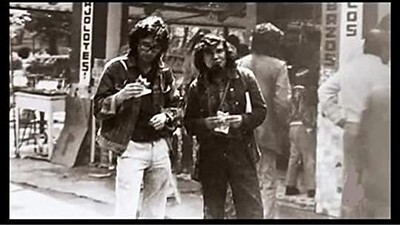
Bolaño with Papasquiaro.
‘Who doesn’t know what we all know from the moment we are born: that you will feel the premature hands of Death tighten around your neck much earlier than you imagine, that the days and years pass with increasing speed, as if instead of a parceling out of equal portions of time, each portion propelled the next, a whirling vortex gaining strength from inertia, so that the final stretch of your life becomes but a brief interval that ends in a flash of dust?’
--Roberto Bolaño
Roberto Bolaño (1953-2003) lived life like a novella, brief yet full of lasting power. That legacy lives on in Javier Serena’s Last Words of Earth which delivers a multi-faceted portrait of an expatriate writer, Ricardo Funes—a writer blatantly based on Bolaño—who achieves monumental success only as his life begins to be pulled like a rug from under him from illness. Bolaño fans are sure to appreciate this novella that furthers the self-mythologizing the great Chilean author bestowed upon readers, yet those unfamiliar with his works will not find the doors to enjoyment closed as the book successfully stands on its own feet. Told from various perspectives that nods to journalist Mónica Maristain's Bolaño: A Biography in Conversations, the first half rotating between his friend Fernandez Vallés and wife Guadalupe (loosely based on Carolina López) and the second half being Funes’ own reflections on life, Serena illuminates a nuanced impression of Funes that examines him from all sides from tragic and depressed to heroic and headstrong. With prose that mimics the great master himself and in beautiful translation by Katie Whittemore, Last Words on Earth is a moving examination of a writer who truly believes in art as a bastion against life and an avenue for immortality.
‘Ricardo was exceptional because he lived his life as if his sole objective was to relish everything he did, in order to remember it later...he loved telling stories so much that he seemed to put a greater or lesser value on every experience according to the shine it would add to his biography.’
This is a true treat for Bolaño fan, packed full of allusions to his works and a playful homage to his own biographical details. The book title itself is a play on the short story collection Last Evenings on Earth, the titular story appearing in a similar narrative when Funes vacations in Acapulco with his father in this book. Funes (possibly a reference to the character from the Jorge Luis Borges story Funes the Memorious) is very attached to his poet friend from his youth, Domingo Pasquiano with whom he was part of a rogue literary circle calling themselves the Negationists, a reference to the real-life friendship with Mario Santiago Papasquiaro. Papasquiaro might be better known to readers as Ulises Lima from Bolaño’s The Savage Detectives, which appears in this book as Trafico DF, a novel Funes writes to create a ‘mythologized adolescence’ of the Negationists and Paquiano as well as dramaticized exiles across Europe very much akin to the travels of Belano and Lima in Savage Detectives.
‘The reason I wrote Pasquiano as a warrior with feats worthy of being sung, a man who launched off down the most uncertain paths and spurned mere contemplation, was because he had always been capable of living firmly in the present...he was astonished by the rapid expansion of the map I used to plot the action and the scattered toy soldiers standing in for people from my past.’
Even the scene where Vallés first meets Funes feels like an allusion to the story Dentist. So much of Funes biography mimics Bolaño, such as his time working as a night watchman for a park, his infidelities and a illness that takes him away from us all just as he begins to become famous (though this book chooses lung cancer instead of liver failure, fitting for the mythologizing as Bolaño preferred to be photographed always smoking to keep up an edgy bad-boy look despite his declining health). Unfortunately the book doesn’t put much emphasis on his poetry, which Bolaño preferred to be known for, though those interested can find it collected in The Unknown University.
Papasquiaro (circled left) and Bolaño (circled right) with the Infrarealists, the basis for Pasquiano and Funes and their Negationist group.
What this book captures best is the self-mythologizing Bolaño created in his novels. ‘Ricardo had always liked keeping up a healthy sense of mystery,’ his wife says, and much of the book concerns the way he blended fact with fiction to create an idealized and heroic portrait of himself and his friends much the way Bolaño himself did through his self-stand-in characters of B or Belano. What is true and what is invented is beside the point with Funes and Bolaño, it is the belief in something beautiful that matters and they create a whole mythology so enticing you want to believe it is strictly biography ‘in order to justify his ambition to live an epic life.’
‘Don’t try to figure out what deserves an encyclopedia entry and what doesn’t...he talks about what he writes as if it had really happened, and he writes what actually happened as if it were made up: he stirs it all together until there’s not an uncontaminated ingredient in the pot.’
There is a penchant for the epic with Funes that really captures the spirit of his inspirational figure perfectly. So much so that even a reader unfamiliar with the real author will likely succumb to the magic and choose to believe in the folktale figure over the actual because it is the perfect expression of living poetry. Anaïs Nin wrote ‘we write to taste life twice, in the moment and in retrospect,’ and for Funes the dramatic life is lived so that it will be tasted all the more sweetly in the retrospect of his fiction, elevated and dripping with purpose.
‘I wanted to write books about characters who raised themselves up as heroes, like statues on horseback, sabers drawn and pointing in life’s true direction, the models I hoped would ultimately inspire my children.’
The tragedy of the folktale, though, is that it only shows the sides that inspire and never the full figure. Funes success comes late, and late enough to make it a romanticized literary death, but the reality of his life is that he spent much of it in deep depression over being refused access to the immortality he so wished for. ‘I tried to live an epic, frenetic life,’ he laments, ‘but my story went off-script and now there was nothing but blank chapter after blank chapter in which the only plot was an increasingly frayed nostalgia for a time so far in the past that it could have been a mirage.’ He is always either writing ‘as if I were locked in battle with some kind of monster only I could see’, or wandering in a deep fog of self-loathing and writers block. His stories fail to win prizes, editors reject his manuscripts, and he sees his sands of time running out without having left his mark. Yet he has Guadalupe, and if there is a hero of this novel it is her for her dedication and support in his darkest days. Unfortunately Guadalupe is written rather one-dimensionally with all her thoughts always on Funes, sort of rationalized by the fact that her segments are written to be her thoughts on him, but it would have been nice to get a bit more rounded impression of her.
‘It was a contradiction: he was disdainful of literature and spurned the hallowed figure of The Author, no matter how talented, and yet he never stopped writing, not even when he had more than enough money and prestige and less and less time to live.’
This book also captures the gleeful way Bolaño elevates literature as the most important conquest of life while simultaneously mocking it for not mattering. Funes is enigmatic, moody, ready to sacrifice all for authorhood yet hating his peers that do the same (aside from Pasquiano). Yet what he chose to use his immortality for was to also immortalize his friends through his books, knowing his success meant them lasting in his pages. ‘Pouring your soul into a book is gambling with your legacy,’ he says, ‘just like roulette.’ When fame comes, it is too late to matter much yet it isn’t the fame that seems to matter to him but knowing his words made it across the terrible seas of life to the shores of a welcoming reader. Which is something I find so beautiful about books, we can all share it yet feel it as individually powerful, and a voice long in the grave can still touch our hearts.
Last Words on Earth is a really fun and interesting portrait of a writer, but it also is a good reminder that the parts people show to the world are not the full picture. And that even the collected impressions of a person never add up to the total sum of that person. This book was a raucous feast of Bolaño fanboying but the overall takeaway is more centered on the musings of artistic life and the tolls it can take on ourselves and those around us. Serena has certainly understood the assignment here and uses his deep wealth of knowledge to create a novella that is less Bolaño fan-fiction and more continuing the spirit of Bolaño mythology that he enjoyed as well as a beautiful epic of a life’s pursuit of art. Life is short, beautiful and fleeting, and Funes burning each of Pasquiano’s poems after reading them is a well served metaphor for this. May all our short sparks in the darkness light up the room so beautifully the memory will live on brighter than the flame.
3.75/5
Bolaño with Papasquiaro.
‘Who doesn’t know what we all know from the moment we are born: that you will feel the premature hands of Death tighten around your neck much earlier than you imagine, that the days and years pass with increasing speed, as if instead of a parceling out of equal portions of time, each portion propelled the next, a whirling vortex gaining strength from inertia, so that the final stretch of your life becomes but a brief interval that ends in a flash of dust?’

January 23, 2022
A fictional biography of Roberto Bolano. This kind of biography is like two I’ve read by Colm Toibin: The Master about Henry James, and The Magician about Thomas Mann. However, in this book, emphasizing that it is fictional, the author does not use Bolano’s name and instead calls him Ricardo Funes, so I’ll also call him Funes in my review.
Some details of Funes’ life are deliberately different from Bolano’s. Before his youth in Mexico City, Bolano was born in Chile, but Funes in Peru. But many other details are exact: both Funes and Bolano worked as campground security guards and lived in a shack near the beach in Catalonia. Details about Funes' wife and kids, illness and early death are true to Bolano’s life. The sequence of Bolano’s publishing career is more or less correct but books are given different titles.
Bolano is one of my favorite authors. I have read three of his works including the one that rocketed him to fame, The Savage Detectives (called The Aztec in Funes’ context). Since his death at age 50 in 2003, Bolano has become adulated, especially in the Spanish-speaking world. I found an essay by a friend of Bolano’s in an online magazine, Guernica, in which Horacio Castellanos Moya says “I can tell you, though, that Bolaño would have found it amusing to know they would call him the James Dean, the Jim Morrison, or the Jack Kerouac of Latin American literature.”
I don’t want to give away a lot of detail in his story but I’ll mention a few things that fascinated me.
There are probably few writers who endured failure and rejection for so long yet still kept at it. Funes published stories in local papers in Spain in competitions for ‘best story’ and won a few measly cash prizes. This was his only income for almost 20 years. He was supported by his wife who had a clerical job.
Funes chain-smoked, banging away on his computer in isolation in a basement. (Shades of The Shining.) When success came with The Aztec, the world turned upside and he became the most sought-after literary speaker in Europe. He was wanted at every literary conference and by every university to give lectures. Publishers were desperate to get back everything of his they had rejected over the years. He had plenty of rejected stuff in drawers to dust off, so he became an incredibly prolific author in the last years of his life. As fate would have it, his breakthrough success coincided with his terminal medical diagnosis and he died at age 50.
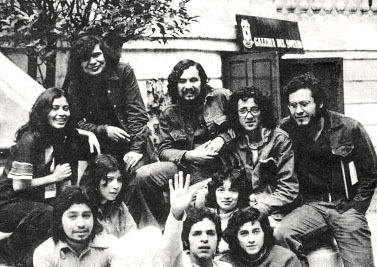
We admire those who are intensely passionate about literature. But then consider that we are told that with Funes “It’s like he has to argue until the other person is offended.” Now imagine a group of young people, men and women, bonding over poetry in the 1970s in Mexico City. (See photo.) The group they formed, called ‘negacionismo’ in the context of Funes (Bolano’s group was ‘Infrarrealismo’) published journals that no one besides themselves read. Wonderfully idealistic. But
Funes considered himself mainly a poet all his life but he knew he could not support a family on that, so he had to force himself to write short stories and novels. The poetry group lasted several years but they dropped out one by one, taking jobs in the real world. Funes considered this a betrayal. Only one friend remained who mailed Funes every month a ‘one-time only’ poem just for Funes who would read it and ceremoniously burn it.
Lastly, let’s have a round of applause, maybe even a standing ovation, for Funes’ wife of 20 years who stuck by him through it all. My wife would say “she married a project not a partner.” Without giving details, I would say that some – many – of Funes’ behaviors bordered on mental illness.
They had an open marriage, and we know the way the world works that the male of the species took more advantage of opportunities than the female. I think 95% of women would have left him. But she didn’t.
For years, he and she were the only two people in the world who had faith in his writing ability, and sometimes it was she more than he. Late in life they had two children and he was a good father: caring, and spending a lot of time with his son and daughter.
This fairly short book (150 pages) opens with a few chapters that are reminiscences by Funes’ wife and then by a good friend of his. In the last third of the book Funes speaks to us from beyond the grave and reveals a few of his secrets. This book is the middle of a trilogy about this fictitious writer. It is the only one of the three translated into English, probably because it is the most Bolano-like of the three.
Photos:
Top: The Mexico City gang of poets. Bolano is top, second from right. From guernica-wp.net
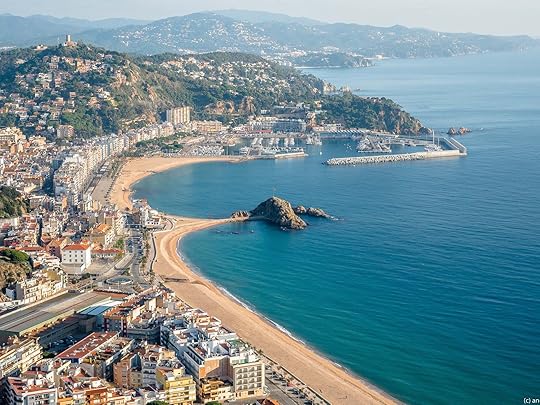
Coastal city of Blaines on the Catalan coast of Spain where Bolano lived. From lucasfox.com
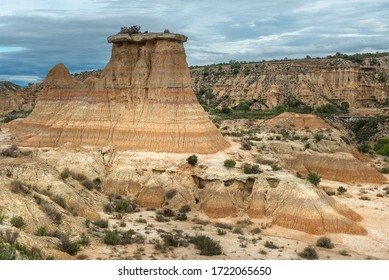
Landscape of Los Monegros in central Spain which features in the story. From shutterstock.com
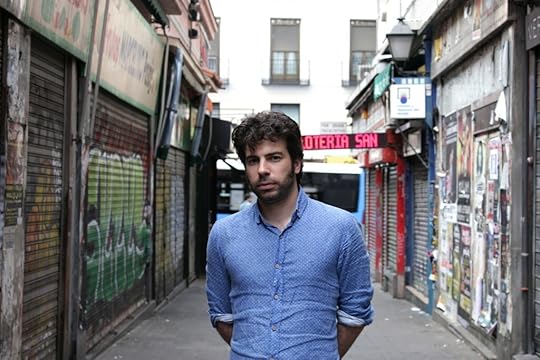
The author from patxiirurzun.com
[Edited, spoilers hidden 9/27/22, 11/18/23]
Some details of Funes’ life are deliberately different from Bolano’s. Before his youth in Mexico City, Bolano was born in Chile, but Funes in Peru. But many other details are exact: both Funes and Bolano worked as campground security guards and lived in a shack near the beach in Catalonia. Details about Funes' wife and kids, illness and early death are true to Bolano’s life. The sequence of Bolano’s publishing career is more or less correct but books are given different titles.
Bolano is one of my favorite authors. I have read three of his works including the one that rocketed him to fame, The Savage Detectives (called The Aztec in Funes’ context). Since his death at age 50 in 2003, Bolano has become adulated, especially in the Spanish-speaking world. I found an essay by a friend of Bolano’s in an online magazine, Guernica, in which Horacio Castellanos Moya says “I can tell you, though, that Bolaño would have found it amusing to know they would call him the James Dean, the Jim Morrison, or the Jack Kerouac of Latin American literature.”
I don’t want to give away a lot of detail in his story but I’ll mention a few things that fascinated me.
There are probably few writers who endured failure and rejection for so long yet still kept at it. Funes published stories in local papers in Spain in competitions for ‘best story’ and won a few measly cash prizes. This was his only income for almost 20 years. He was supported by his wife who had a clerical job.
Funes chain-smoked, banging away on his computer in isolation in a basement. (Shades of The Shining.) When success came with The Aztec, the world turned upside and he became the most sought-after literary speaker in Europe. He was wanted at every literary conference and by every university to give lectures. Publishers were desperate to get back everything of his they had rejected over the years. He had plenty of rejected stuff in drawers to dust off, so he became an incredibly prolific author in the last years of his life. As fate would have it, his breakthrough success coincided with his terminal medical diagnosis and he died at age 50.
We admire those who are intensely passionate about literature. But then consider that we are told that with Funes “It’s like he has to argue until the other person is offended.” Now imagine a group of young people, men and women, bonding over poetry in the 1970s in Mexico City. (See photo.) The group they formed, called ‘negacionismo’ in the context of Funes (Bolano’s group was ‘Infrarrealismo’) published journals that no one besides themselves read. Wonderfully idealistic. But
Funes considered himself mainly a poet all his life but he knew he could not support a family on that, so he had to force himself to write short stories and novels. The poetry group lasted several years but they dropped out one by one, taking jobs in the real world. Funes considered this a betrayal. Only one friend remained who mailed Funes every month a ‘one-time only’ poem just for Funes who would read it and ceremoniously burn it.
Lastly, let’s have a round of applause, maybe even a standing ovation, for Funes’ wife of 20 years who stuck by him through it all. My wife would say “she married a project not a partner.” Without giving details, I would say that some – many – of Funes’ behaviors bordered on mental illness.
They had an open marriage, and we know the way the world works that the male of the species took more advantage of opportunities than the female. I think 95% of women would have left him. But she didn’t.
For years, he and she were the only two people in the world who had faith in his writing ability, and sometimes it was she more than he. Late in life they had two children and he was a good father: caring, and spending a lot of time with his son and daughter.
This fairly short book (150 pages) opens with a few chapters that are reminiscences by Funes’ wife and then by a good friend of his. In the last third of the book Funes speaks to us from beyond the grave and reveals a few of his secrets. This book is the middle of a trilogy about this fictitious writer. It is the only one of the three translated into English, probably because it is the most Bolano-like of the three.
Photos:
Top: The Mexico City gang of poets. Bolano is top, second from right. From guernica-wp.net
Coastal city of Blaines on the Catalan coast of Spain where Bolano lived. From lucasfox.com
Landscape of Los Monegros in central Spain which features in the story. From shutterstock.com
The author from patxiirurzun.com
[Edited, spoilers hidden 9/27/22, 11/18/23]

December 8, 2025
I first came across Serena earlier this year with the release of ‘Attila’, though this is the first work I’ve had an opportunity to read. It highly recommend by friends, and it did not disappoint. This is an excellent book.
Essentially a portrait of Roberto Bolaño, the novel’s main character is Bolaño-inspired or ‘an idea of Bolaño’, but yet remains a work of fiction. There are questions as to how much is true and how much is fiction, but in the end these details matter less than portrait Serena has created. (Aaron Bady wrote a lengthy and eloquent review covering much of this aspect for LARB, if you’re interested. You can find it via google.)
For me, on a first read, far more affecting was the novel’s exploration of terminal illness and its ramifications. Most of you reading this post will be aware that Bolaño died young, and the vast majority of his oeuvre was written after his diagnosis in the years leading up to his death. The majority of which was then published posthumously. Serena’s portrait, with its fiction, fills in the gaps in this period, answering questions that account for this seemingly sudden about turn in the writer’s output and his almost overnight success.
I did not always warm to Serena’s protagonist, in fact there were certain aspects, particularly his treatment of his wife, that I really didn’t like. But that’s the point, Serena has painted us a fully formed character, with all his faults and difficulties.
It’s a beautiful and transcendent work that exams end of life, what we choose to do with that knowledge, and how it affects those closest to us. I don’t mind admitting that sections had me in floods of tears.
Serena’s prose is also perfect. He manages to achieve what many contemporary novels do not, in that it’s easily accessible, whilst deserving full literary merit. Much acknowledgment for this must also be given to Katie Whittemore, for her excellent translation.
Essentially a portrait of Roberto Bolaño, the novel’s main character is Bolaño-inspired or ‘an idea of Bolaño’, but yet remains a work of fiction. There are questions as to how much is true and how much is fiction, but in the end these details matter less than portrait Serena has created. (Aaron Bady wrote a lengthy and eloquent review covering much of this aspect for LARB, if you’re interested. You can find it via google.)
For me, on a first read, far more affecting was the novel’s exploration of terminal illness and its ramifications. Most of you reading this post will be aware that Bolaño died young, and the vast majority of his oeuvre was written after his diagnosis in the years leading up to his death. The majority of which was then published posthumously. Serena’s portrait, with its fiction, fills in the gaps in this period, answering questions that account for this seemingly sudden about turn in the writer’s output and his almost overnight success.
I did not always warm to Serena’s protagonist, in fact there were certain aspects, particularly his treatment of his wife, that I really didn’t like. But that’s the point, Serena has painted us a fully formed character, with all his faults and difficulties.
It’s a beautiful and transcendent work that exams end of life, what we choose to do with that knowledge, and how it affects those closest to us. I don’t mind admitting that sections had me in floods of tears.
Serena’s prose is also perfect. He manages to achieve what many contemporary novels do not, in that it’s easily accessible, whilst deserving full literary merit. Much acknowledgment for this must also be given to Katie Whittemore, for her excellent translation.

November 5, 2021
Last Words on Earth by Javier Serena
In the absence of new works written by Roberto Bolano we now have a new novel, The Last Word, whose main character is a fictionalized stand-in for the late author. Javier Serena has written a book about a writer, Ricardo Funes, whose life story follows similar paths.
The first two sections are narrated by Fernando Valles, a writer, professor and friend, and then Funes’ wife Guadalupe.
Starting out as a rebellious petty criminal and anti-establishment poet in Mexico City, Ricardo Funes, finds his way to Spain where he becomes an iterant peddler and, meeting a woman, steals her away with visions of adventure. Guadalupe is presented as a dutiful wife who supports Funes’ years of unpublished writing. He is depicted as a house husband, interested in WWII models, boating, swimming, and guiding their son in the ways of the world.
Hanging out at a local café with occasional forays to 2nd hand bookstores in Barcelona, Funes, keeps writing. When he is diagnosed with a terminal illness his writing takes on a fevered pitch and in 20 days of sleepless manic writing he produces a book called The Aztec which becomes an international bestseller. This is followed up with a 2nd novel, El Trafico.
“He worked as if touched by some mystical annunciation, though he was merely driven by his disease, conscious that he could no longer squander a single second of his life on another failed paragraph. Everything flowed, every possible meaning of every sentence blooming in the cracks of the page, as if he cut his arm with a knife and stories sprung from his veins with all the authenticity and truth of an ancient, secret stream, no longer willed to the surface by desire but erupting with force of necessity…”
“…he had somehow managed to elevate himself into brilliance and lucidity, he had done so by first peering into the darkest of depths, the abysses that so transfix those prone to suicide.”
Established now as a literary superstar he spends his last years attending lectures, book signings and prize events. He ponders his lost years comparing himself to others who made things with their hands, contributed to their communities, and questions the very essence of writing as a lifelong endeavor.
The last section is written in Funes’ own voice and in the last scene he and Fernando attend a literary conference. Here he becomes more philosophical and self-reflective still questioning whether he had lived his life as best he could.
“My lungs were as full of fluid as a ship about to sink.” Asked a simple question by a young attractive woman, “what would you tell someone who wanted to write?”
“Just one thing. Please don’t write. Not a single word.” These the last words he uttered in public, as he felt tired and doomed.
In the end this is a book that can be enjoyed by both fans of Bolano and those interested in the life of a writer. Serena has paid homage to whom he believed Bolano was: a real talent whose life events served as the impetus for the stories and books that followed.
In the absence of new works written by Roberto Bolano we now have a new novel, The Last Word, whose main character is a fictionalized stand-in for the late author. Javier Serena has written a book about a writer, Ricardo Funes, whose life story follows similar paths.
The first two sections are narrated by Fernando Valles, a writer, professor and friend, and then Funes’ wife Guadalupe.
Starting out as a rebellious petty criminal and anti-establishment poet in Mexico City, Ricardo Funes, finds his way to Spain where he becomes an iterant peddler and, meeting a woman, steals her away with visions of adventure. Guadalupe is presented as a dutiful wife who supports Funes’ years of unpublished writing. He is depicted as a house husband, interested in WWII models, boating, swimming, and guiding their son in the ways of the world.
Hanging out at a local café with occasional forays to 2nd hand bookstores in Barcelona, Funes, keeps writing. When he is diagnosed with a terminal illness his writing takes on a fevered pitch and in 20 days of sleepless manic writing he produces a book called The Aztec which becomes an international bestseller. This is followed up with a 2nd novel, El Trafico.
“He worked as if touched by some mystical annunciation, though he was merely driven by his disease, conscious that he could no longer squander a single second of his life on another failed paragraph. Everything flowed, every possible meaning of every sentence blooming in the cracks of the page, as if he cut his arm with a knife and stories sprung from his veins with all the authenticity and truth of an ancient, secret stream, no longer willed to the surface by desire but erupting with force of necessity…”
“…he had somehow managed to elevate himself into brilliance and lucidity, he had done so by first peering into the darkest of depths, the abysses that so transfix those prone to suicide.”
Established now as a literary superstar he spends his last years attending lectures, book signings and prize events. He ponders his lost years comparing himself to others who made things with their hands, contributed to their communities, and questions the very essence of writing as a lifelong endeavor.
The last section is written in Funes’ own voice and in the last scene he and Fernando attend a literary conference. Here he becomes more philosophical and self-reflective still questioning whether he had lived his life as best he could.
“My lungs were as full of fluid as a ship about to sink.” Asked a simple question by a young attractive woman, “what would you tell someone who wanted to write?”
“Just one thing. Please don’t write. Not a single word.” These the last words he uttered in public, as he felt tired and doomed.
In the end this is a book that can be enjoyed by both fans of Bolano and those interested in the life of a writer. Serena has paid homage to whom he believed Bolano was: a real talent whose life events served as the impetus for the stories and books that followed.

May 11, 2026
I think there’s no better homage to Bolaño than to make him a thinly disguised character in your book.

Read
April 26, 2023Últimas palabras en la Tierra (2017) by Spanish author Javier Serena was originally published in Spanish. This 2021 English translation by Katie Whittemore is published by Open Letter.
Last Words on Earth is the fictional account of the life of an acclaimed Peruvian writer Ricardo Funes living in exile in Spain. There are many professional reviews which have pointed out the similarities in biographical details between Ricardo Funes and Roberto Bolaño. The tweaking of small differences [RF was Peruvian vs RB Chilean, the movement RF founded was called Negacionismo vs RB's Infrarrealismo, RF's disease pulmonary vs RB hepatic] seem to be window dressing changes. The lifestory of Funes is told from three perspectives: Fernando Vallés his professor friend, Guadalupe his wife and Funes himself as a ghost.
Although I know of Bolaño, I have not read his works so am not reading this as a Bolaño devotee. Despite the parallels in biographies, I am approaching this as a fictional work separate from the real life author it is inspired from. Last Words on Earth is well-written, the life of a wandering author of the 'tortured artist' variety who achieves fame late in life.
Slight spoilers ahead:
The third part of narration by the ghost of Funes caused a slow simmering rage on my end to spark. Early on, Fernando Vallés his friend presents it as a lovable quirk that Funes loves watching pornos and analyzes them like cinematic works of art. We learn that the only time he had a regular job with an employer as a valet, he rage quit in spectacular fashion because of the indignity. Meanwhile, his ever patient loyal Guadalupe works at a civic hall for decades believing in his vision and talent. What is he doing during this time? With writer's block and good old garden variety midlife crisis, he is taking public transport across the country, having extramarital affairs, rowing without a care in the world and gallivanting around Europe with his much admired 'spontaneous' friend Domingo Pasquiano without telling his wife where he is or how long he is gone for. Guadalupe is either a saint or a doormat. With limited time left due to end stage pulmonary cancer, he spends the time soaking up all the invitations and acclaim attending writer conferences*, award ceremonies, interviews etc again away from the family. Through it all, he claims his children and family never suffered from his lack of attention. Who was holding the fort while he was holed up writing feverishly or soaking up the limelight or having bachelor-lifestyle adventures? Who went to work everyday to earn a paycheck, did the dishes, the laundry, put the children to sleep, fed them and took care of them when sick?
* At a certain writer's conference, a young female aspiring writer nervously asks Funes what advice he has for someone like her hoping to become an acclaimed author like him? His answer: don't write. Not only that, his professor friend Vallés who was sitting behind the young lady and was creepily smelling her hair remarks to Funes he should have used his stature to invite her to the bar they're at and bed her. They spend a disgusting amount of time sexualizing her body. These are both supposed giants of literature and it is horrifying to think they would be mentors preying upon young women. Actually, Le Consentement by Vanessa Springora comes to mind.
It is my opinion that the text does not challenge these corrosive harmful behaviour or ideas. All the three narratives are sympathetic to Funes's point of view. My heart really broke for Guadalupe when her husband was racing to get the latest copy of his work to the publisher instead of going to the hospital. It's supposed to show his dedication to writing but to me, it showed his priorities. I was further inflamed when Guadalupe presented her only book of unpublished poetry to him at this stage and he laughed and was rather patronizing. He did acknowledge that he was only able to achieve the success he did because of her. But the enormity of her sacrifice and devotion, in my opinion, is downplayed. Who doesn't want the freedom and privilege of doing whatever one pleases (as in his much admired friend Pasquino?) How much harder is it for female writers and artists to stake time and independence for themselves to create? How many works of talented genius did the world lose out on throughout history because of gender roles and sexism?
Last Words on Earth is the fictional account of the life of an acclaimed Peruvian writer Ricardo Funes living in exile in Spain. There are many professional reviews which have pointed out the similarities in biographical details between Ricardo Funes and Roberto Bolaño. The tweaking of small differences [RF was Peruvian vs RB Chilean, the movement RF founded was called Negacionismo vs RB's Infrarrealismo, RF's disease pulmonary vs RB hepatic] seem to be window dressing changes. The lifestory of Funes is told from three perspectives: Fernando Vallés his professor friend, Guadalupe his wife and Funes himself as a ghost.
Although I know of Bolaño, I have not read his works so am not reading this as a Bolaño devotee. Despite the parallels in biographies, I am approaching this as a fictional work separate from the real life author it is inspired from. Last Words on Earth is well-written, the life of a wandering author of the 'tortured artist' variety who achieves fame late in life.
Slight spoilers ahead:
The third part of narration by the ghost of Funes caused a slow simmering rage on my end to spark. Early on, Fernando Vallés his friend presents it as a lovable quirk that Funes loves watching pornos and analyzes them like cinematic works of art. We learn that the only time he had a regular job with an employer as a valet, he rage quit in spectacular fashion because of the indignity. Meanwhile, his ever patient loyal Guadalupe works at a civic hall for decades believing in his vision and talent. What is he doing during this time? With writer's block and good old garden variety midlife crisis, he is taking public transport across the country, having extramarital affairs, rowing without a care in the world and gallivanting around Europe with his much admired 'spontaneous' friend Domingo Pasquiano without telling his wife where he is or how long he is gone for. Guadalupe is either a saint or a doormat. With limited time left due to end stage pulmonary cancer, he spends the time soaking up all the invitations and acclaim attending writer conferences*, award ceremonies, interviews etc again away from the family. Through it all, he claims his children and family never suffered from his lack of attention. Who was holding the fort while he was holed up writing feverishly or soaking up the limelight or having bachelor-lifestyle adventures? Who went to work everyday to earn a paycheck, did the dishes, the laundry, put the children to sleep, fed them and took care of them when sick?
* At a certain writer's conference, a young female aspiring writer nervously asks Funes what advice he has for someone like her hoping to become an acclaimed author like him? His answer: don't write. Not only that, his professor friend Vallés who was sitting behind the young lady and was creepily smelling her hair remarks to Funes he should have used his stature to invite her to the bar they're at and bed her. They spend a disgusting amount of time sexualizing her body. These are both supposed giants of literature and it is horrifying to think they would be mentors preying upon young women. Actually, Le Consentement by Vanessa Springora comes to mind.
It is my opinion that the text does not challenge these corrosive harmful behaviour or ideas. All the three narratives are sympathetic to Funes's point of view. My heart really broke for Guadalupe when her husband was racing to get the latest copy of his work to the publisher instead of going to the hospital. It's supposed to show his dedication to writing but to me, it showed his priorities. I was further inflamed when Guadalupe presented her only book of unpublished poetry to him at this stage and he laughed and was rather patronizing. He did acknowledge that he was only able to achieve the success he did because of her. But the enormity of her sacrifice and devotion, in my opinion, is downplayed. Who doesn't want the freedom and privilege of doing whatever one pleases (as in his much admired friend Pasquino?) How much harder is it for female writers and artists to stake time and independence for themselves to create? How many works of talented genius did the world lose out on throughout history because of gender roles and sexism?

September 14, 2026
Hace unas semanas leí "Como una novela", de Daniel Pennac. Lo leí porque me dijeron que era una carta de amor a la literatura. Y sí. Pero cuando yo tenga que recomendar una carta de amor a la literatura, voy a recomendar este libro. Porque la literatura no es solo la belleza de la palabra. También es la frustración por la ausencia de la palabra y la nostalgia por la palabra y la muerte de la palabra y la resurrección de la palabra.
Conocí a Javier Serena hace algunos meses y este fue el único libro suyo que había para que me firmara, y que fuera este le dio un poco de risa y de vergüenza. Quisiera preguntarle por qué. Es un libro maravilloso y triste y melancólico que me hizo amar un poquito más la literatura. Y yo a eso vine.
Conocí a Javier Serena hace algunos meses y este fue el único libro suyo que había para que me firmara, y que fuera este le dio un poco de risa y de vergüenza. Quisiera preguntarle por qué. Es un libro maravilloso y triste y melancólico que me hizo amar un poquito más la literatura. Y yo a eso vine.

May 8, 2021
he worked as if touched by some mystical annunciation, though he was merely driven by his disease, conscious that he could no longer squander a single second of his life on another failed paragraph.javier serena's last words on earth (últimas palabras en la tierra) is a wistful, admirative novel inspired by the life of roberto bolaño. reimagined herein as peruvian poet and novelist ricardo funes ("they haven't wanted to use my real name, so worn already, like a relic, like a fossil"), serena considers the late chilean master as friend, husband, father, author. though similarities between the lives of funes and bolaño are abundant (negacionismo::infrarrealismo; tráfico df::the savage detectives; domingo pasquiano::mario santiago papasquiaro; lloret de mar::blanes; lung cancer::liver disease), it would be a mistaken reader who takes in this touching tale as simply a fictionalized biography.
if he was the personification of a hero, it was a hero of silence and perseverance; if he had somehow managed to elevate himself into brilliance and lucidity, he had done so by first peering into the darkest of depths, the abysses that so transfix those prone to suicide.as much an homage as a character study, last words on earth is told from three perspectives: friend and fellow writer (fernando vallés), wife (guadalupe mora), and the subject himself (a posthumous perspective). the former two, composing about two-thirds of the book, recount funes' devotion to literature, a longed-for life of adventure and ideals, and the incurable illness that would mark and inspire his final years. the novel's latter third consists of funes telling of his own work, his paternal relations and own subsequent fatherhood, and the happiness he was able to muster and maintain as his own mortality moved ever closer.
that idea—that he'd only had one chance on earth, that he'd found himself at a crossroads and taken his own strange way and erred in his direction—was a constant source of pain, the perpetual stab of an arrow in his side, never worse than during that final, desperate period in lloret when came to believe that all the words he'd written in the course of his life were so fragile that they would disappear with the next high tide.neither veneration nor canonization, last words on earth instead portrays funes as a human being foremost, a conflicted, afflicted, imperfect person fortunate enough to have been touched by grace, but luckier still to have found a small tribe of people who were constant, devoted enablers of the very best sort. funes, despite the fame that eventually came twinned with a concomitant terminal countdown, was wise enough to know the price he'd paid, finally offered success and a literary legacy whilst hit with the gut-punch of an unappealably harsh sentencing.
there would always be regrets, whole catastrophic years, and many other eternally lamentable mistakes, because even the fullest, happiest existence—one that inspires such admiration that a statue is put up after his death and every day dozens of students make the pilgrimage to profess their adoration with candles and flowers and wreaths, for example—even a life like that needs bandages to heal the wounds of the unrealized dreams that haunt us all.serena's novel, at times somber, at others exuberant, captures well the ambiguities, the inconsistencies, and the dualities of all lives, in a way that's simultaneously both a lauding and a lament. last words on earth slips behind the authorial façade, positing impermanence as the protagonist all must reckon with sooner or later. funes, inspired by one of the most mythologized writers of the last century (and likely at least the next six and a half still to come), is a sympathetic character, because serena imbues him with what may well be that most enduring (and even endearing) quality of all: zeal. encomium par excellence, last words on earth rewrites the equation entirely:
not
i believed my whole life could serve as a parable for a giant mistake: i had tried to live an epic, frenetic life but my story went off-script and now there was nothing but blank chapter after blank chapter in which the only plot was an increasingly frayed nostalgia for a time so far in the past that it could have been a mirage.
*translated beautifully from the spanish by katie whittemore (mesa, labari, coll, et al.)
December 15, 2025
Absolutely wonderful work by Serenas. The work’s meditative style was extremely alluring. And the different perspectives were done extremely well. Serenas clearly has a talent for accentuating different voices, for I could clearly notice a language and tonal shift as sections changed. Last Words on Earth was truly beautiful and alluring throughout the entire read.

July 8, 2021
Last Words on Earth by Javier Serena (translated beautifully by Katie Whittemore) is a short but powerful novel that, while tipping the hat to Bolano, uses his life as a frame within which to examine life, writing, and the areas where they meet.
Told from three distinct perspectives, the novel offers the reader, first, the view we usually get of such a figure. Told through the voice of a friend yet also through the lens of the literary world making a writer's life seem like an inevitable arc, even when that inevitability is long delayed. We see the fictional writer, Funes, as an almost heroic intellectual. This story is told with an eye toward what will come, namely fame and fortune.
When we hear from Funes' wife, Guadalupe, we get a better picture of the man rather than the writer. There is both love and frustration in her version, she believed in him but also often grew tired of the drudgery. We see a different perspective on his idealistic need to write, no less impressive but more human than heroic.
Finally we hear from the writer himself. He is far more human, and at times maybe a little less likable, than either of the other two versions. What we also see is that even our legends, our idealistic heroes, are more like the rest of us than we realize. The concerns are not always, or at least not always entirely, idealistic. There is a selfishness, the selfishness we all know from our own experiences. There is a doubting that we also are familiar with. And there is the need to make the most of a good thing when it finally happens. Again, something we recognize.
In addition to the personal story, the story of a man who is both legend and all too human, there is the question of what makes something, in this case works of literature, worthless one moment and invaluable the next. How much is subjective and how much is objective? And can we ever really answer that question?
I would recommend this to readers who enjoy reading about (in a roundabout way) famous writers and those readers who like character studies that offer different, not necessarily conflicting, viewpoints. I actually rated this a bit higher than I was initially going to because it did something I value in a book, it kept revisiting me in the days after I finished it. When a book stays with me I know that it was, for me, more than just a story to read, it is a collection of ideas to consider.
Reviewed from a copy made available by the publisher.
Told from three distinct perspectives, the novel offers the reader, first, the view we usually get of such a figure. Told through the voice of a friend yet also through the lens of the literary world making a writer's life seem like an inevitable arc, even when that inevitability is long delayed. We see the fictional writer, Funes, as an almost heroic intellectual. This story is told with an eye toward what will come, namely fame and fortune.
When we hear from Funes' wife, Guadalupe, we get a better picture of the man rather than the writer. There is both love and frustration in her version, she believed in him but also often grew tired of the drudgery. We see a different perspective on his idealistic need to write, no less impressive but more human than heroic.
Finally we hear from the writer himself. He is far more human, and at times maybe a little less likable, than either of the other two versions. What we also see is that even our legends, our idealistic heroes, are more like the rest of us than we realize. The concerns are not always, or at least not always entirely, idealistic. There is a selfishness, the selfishness we all know from our own experiences. There is a doubting that we also are familiar with. And there is the need to make the most of a good thing when it finally happens. Again, something we recognize.
In addition to the personal story, the story of a man who is both legend and all too human, there is the question of what makes something, in this case works of literature, worthless one moment and invaluable the next. How much is subjective and how much is objective? And can we ever really answer that question?
I would recommend this to readers who enjoy reading about (in a roundabout way) famous writers and those readers who like character studies that offer different, not necessarily conflicting, viewpoints. I actually rated this a bit higher than I was initially going to because it did something I value in a book, it kept revisiting me in the days after I finished it. When a book stays with me I know that it was, for me, more than just a story to read, it is a collection of ideas to consider.
Reviewed from a copy made available by the publisher.
April 19, 2022
The story of an author who is exiled from his native Peru and finds refuge in Spain and his writing and who loses his life to a disease shortly after his work finally gets acknowledges by his peers and the public.
He always believed himself to be a poet - despite writing novels as well, he was a poet. He helped create a minor poetic movement in Mexico and tried to keep it alive even when he moved to Catalonia, he refused to sell himself to the magazines and publishers and change how he was writing, even when he had to be supported by his wife. The story has two parts - the first is the almost linear story as told by another author in Spain and the poet's wife; the second one is seemingly told by the ghost of our main character. Both parts thread both through the present and the past - building an image of a creator who does not really care if people like him (or his work). Until they do - and then, when he finally embraces the world, when he finally gets the family he always wanted and the fame which always eluded him, Fate decides that it is time for the final curtain.
If that outline sounds familiar, replace Peru with Chile and it may get what you have at the back of your mind closer. If it still does not click, check a short biography of Roberto Bolaño (even Wikipedia will be enough to show you what you need). Javier Serena's poet is a thinly disguised version of the Chilean author - and once that clicks, you can see even more in this very short novel - things unsaid, things just hinted at suddenly have a real life connection and mean more. But even if you never connect the dots, even if you take the novel just as an invention of the author, it still works - because the shadow (and ghost) of Bolaño just add to a story that is already there, fully formed and independent.
Highly recommended.
He always believed himself to be a poet - despite writing novels as well, he was a poet. He helped create a minor poetic movement in Mexico and tried to keep it alive even when he moved to Catalonia, he refused to sell himself to the magazines and publishers and change how he was writing, even when he had to be supported by his wife. The story has two parts - the first is the almost linear story as told by another author in Spain and the poet's wife; the second one is seemingly told by the ghost of our main character. Both parts thread both through the present and the past - building an image of a creator who does not really care if people like him (or his work). Until they do - and then, when he finally embraces the world, when he finally gets the family he always wanted and the fame which always eluded him, Fate decides that it is time for the final curtain.
If that outline sounds familiar, replace Peru with Chile and it may get what you have at the back of your mind closer. If it still does not click, check a short biography of Roberto Bolaño (even Wikipedia will be enough to show you what you need). Javier Serena's poet is a thinly disguised version of the Chilean author - and once that clicks, you can see even more in this very short novel - things unsaid, things just hinted at suddenly have a real life connection and mean more. But even if you never connect the dots, even if you take the novel just as an invention of the author, it still works - because the shadow (and ghost) of Bolaño just add to a story that is already there, fully formed and independent.
Highly recommended.
September 25, 2026
*My second read*
💡I really enjoy reading about artistic characters, and here too we witness a narrator narrating his artistic friend on the verge of madness!!
A friend or intimate narrating the writer's collapse from just outside it, unable to save him. But unlike Attila, here we get three different perspectives: friend, wife, and the writer himself.
Funes, the central character, is a fictionalized stand-in for Roberto Bolaño. He achieves literary fame and recognition, but only right at the very end of his life, almost too late to enjoy it, dying just as the world finally turns toward him.
All those years spent buried in his writing, going from one publisher to another, hoping someone would recognize his work, it's so sad that, when recognition finally arrived, he had so little time left to enjoy it.
I don’t know much about Roberto Bolaño’s life!!
so I couldn’t always tell which parts were based on his actual experiences and which were fiction!!
Through his wife's narration, we see Funes more clearly, the rejections, the financial pressures, the daily consequences of his ambition, and his kinder side, his relationship with his kids.
Unlike Aliocha in Attila, Funes is an artist who feels deeply and cares about things beyond his work. Writing is central to his life, but it doesn't consume him completely, there is still room for love, family, and friendship.
Although I enjoyed Attila more!
overall, I absolutely fell in love with Serena's prose and writing.
💡I really enjoy reading about artistic characters, and here too we witness a narrator narrating his artistic friend on the verge of madness!!
A friend or intimate narrating the writer's collapse from just outside it, unable to save him. But unlike Attila, here we get three different perspectives: friend, wife, and the writer himself.
Funes, the central character, is a fictionalized stand-in for Roberto Bolaño. He achieves literary fame and recognition, but only right at the very end of his life, almost too late to enjoy it, dying just as the world finally turns toward him.
All those years spent buried in his writing, going from one publisher to another, hoping someone would recognize his work, it's so sad that, when recognition finally arrived, he had so little time left to enjoy it.
I don’t know much about Roberto Bolaño’s life!!
so I couldn’t always tell which parts were based on his actual experiences and which were fiction!!
Through his wife's narration, we see Funes more clearly, the rejections, the financial pressures, the daily consequences of his ambition, and his kinder side, his relationship with his kids.
Unlike Aliocha in Attila, Funes is an artist who feels deeply and cares about things beyond his work. Writing is central to his life, but it doesn't consume him completely, there is still room for love, family, and friendship.
Although I enjoyed Attila more!
overall, I absolutely fell in love with Serena's prose and writing.

September 26, 2025
Serena does a Bolaño on Bolaño, but kind of falls too much into the histrionics of a now legendary style while trying to dispel notions of legend to really carry it all the way. Minor transpositions of fact and fiction don’t quite land, their clumsiness glaring, but it is a sweetly sentimental and very readable book.
For those looking for what this tries to do but succeeds on its own terms and on the terms of homage , may I recommend instead El Misterio Nadal by (the alleged) Roberto Bolaño himself.
For those looking for what this tries to do but succeeds on its own terms and on the terms of homage , may I recommend instead El Misterio Nadal by (the alleged) Roberto Bolaño himself.

January 18, 2026
A must for all lovers of Roberto Bolaño. Serena at times seems to be guided by the mind and soul of his real-life, but here fictionalized, subject. I think Roberto Bolaño is a genius, a rare talent, and Serena covers his pages with that amazing life. Fascinating creation, filled with all the unbridled energy one would expect considering the life it dreams into being. Intense, covers the full range of the emotional register, but never feels gratuitous or theatrical. Authentic, heartbreaking, but never less than full throttle living, wherever it led. Essential.

November 28, 2021
A good, melancholy book. The descriptions of characters were excellent, really bringing them to life. However, the narrative style told the story of an author's life from three different perspectives and by the third telling of the author's life I was getting a little tired of the repetition. I think the accounts overlapped a little too much and the voice wasn't very different between the narrators. I'm not sure if that was due to the translation, or if the original was the same.

February 4, 2025
Enjoyable book to read if you're a Bolaño fan. I would love to read an interview with the author. A quick google tells me he's writing a trilogy and that this is the second book. The first book is about this authorwho sounds really interesting. I especially liked the dramatic similes used throughout the book - very Bolaño-esque.
February 8, 2026
[I have since upgraded this to a 4-star rating]
I wanted to give this a 4-star rating but that last chapter made everything feel so distant and unreachable. That chapter should have been a better culmination of this personal novel.
At its best, it's a portrait of a struggling artist whose time runs out before he can truly enjoy his family and newly found fame. At its worst, it is about an egotist.
I'd like to think there was much more best than worst in this read, but that last part just made me feel like I wasn't reading the same novel anymore.
I wanted to give this a 4-star rating but that last chapter made everything feel so distant and unreachable. That chapter should have been a better culmination of this personal novel.
At its best, it's a portrait of a struggling artist whose time runs out before he can truly enjoy his family and newly found fame. At its worst, it is about an egotist.
I'd like to think there was much more best than worst in this read, but that last part just made me feel like I wasn't reading the same novel anymore.
May 2, 2023
This book did it for me, been awhile since those feelings arose, the balance between living and creating and finding that ideal romantic lifestyle where you do not go against every value u have built for yourself.

October 12, 2025
If you're read everything by Bolaño, you're going to read this regardless of how good it is. Thankfully, it's pretty good and gets better as it goes. If you haven't read Bolaño, you should read him before you read this.

Read
July 29, 2026a little too fanfic for me
it took me two months to read the first half (I was never motivated to pick it up) and a morning to finish the second half. Do with that what you will.
So is naming him Funes a nod to Borges (and Bolaño's love for him?)
it took me two months to read the first half (I was never motivated to pick it up) and a morning to finish the second half. Do with that what you will.
So is naming him Funes a nod to Borges (and Bolaño's love for him?)

February 7, 2022
Javier Serena's Last Words on Earth is a moving fictionalized and philosophical tribute to a writer whose story I was not familiar.

March 30, 2023
Truly masterful. I'm excited to see what Serena does next.

January 2, 2025
Cool story pretty engaging i just was not invested lol
June 22, 2025
I was pretty bored because the writing was not very unpredictable
But i liked the end
But i liked the end
February 1, 2022
sorry that i suffer from the belief that all men are mediocre. but i simply wouldn’t have been interested in this man. he made me laugh though
Displaying 1 - 25 of 25 reviews