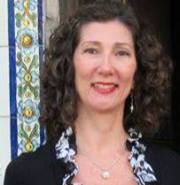
At age five, Marcia Meier was hit by a car, losing the left side of her face and eyelid. Over the next fifteen years she underwent twenty surgeries and spent days blinded by bandages, her hands tied to the sides of her hospital bed. Scarred both physically and emotionally, abused at school, blamed and rejected by her mother, Marcia survived and went on to create a successful life as a journalist, a wife and mother. But at midlife her controlled world began to fall apart, and Marcia began a journey into the darkness of her past, her true identity, her deepest beliefs - a spiritual and emotional exploration that resulted in the creation of Face.
Marcia Meier is an award-winning writer, developmental book editor and writing coach.
Her memoir, Face, was published by Saddle Road Press in January 2021.
Her anthology, Unmasked, Women Write About Sex and Intimacy After Fifty, co-edited with Kathleen Barry, was published in 2018. Her other books include Ireland, Place Out of Time (poetry and photography, Weeping Willow Books, 2017), Heart on a Fence, (poetry and photography, Weeping Willow Books, 2016), Navigating the Rough Waters of Today's Publishing World, Critical Advice for Writers from Industry Insiders (Quill Driver Books, 2010) and Santa Barbara, Paradise on the Pacific (Longstreet Press, 1996). She has freelanced or written for numerous publications, including the Los Angeles Times, The Writer magazine, Santa Barbara Magazine, Pacific Standard Magazine online and The Huffington Post.
Marcia worked for daily newspapers in the 1980s and '90s, finishing her journalism career as an editorial page editor for a mid-size daily.
She holds a bachelor's degree in journalism and an MFA in creative writing, and has taught for various institutions, including Cal Poly, San Luis Obispo, Westmont College, Brooks Institute and Santa Barbara City College Adult Education.
Marcia is a member of the Author's Guild and the Association of Writers and Writing Programs.
Marcia Meier’s memoir Face is much more than a trauma memoir although it is certainly that. She chronicles multiple traumas: a horrific accident in childhood that raked off the left side of her face, a painful series of surgeries, bullying and social ostracism in school as a result of being disfigured, the loss of her father, and the pain of growing up with an emotionally distant mother. However, unlike other trauma and recovery memoirs, Face uses is more than a testimony to survival. The narrative form works as a mirror, and through shards and fragments becomes a meditation on the nature of memory, the psychology of scarring and healing, and how spiritual beliefs can constrict or liberate. As the narrator’s physical face is reconstructed over the years, she develops deep understanding of how much of a person’s sense of self is shaped by appearance and offers us rare insights into who we are in relation to how we are perceived by others. This is a book that made me stop and think and will stay with me. [I received an advance copy of this book in exchange for an honest review.]
Marcia's story is everything memoir should be. It's straightforward, honest, heartbreaking and introspective. It's emotionally raw, but with the self-assured, textured voice of hindsight that lifts a memoir beyond the simple act of retelling what happened (car accident, hospitalizations, troubled relationships, loss of loved ones) and into the realm of fleshing out what it all amounts to. Marcia is dauntless in her descriptions of the surgeries, her fears, doubts and disappointments, with a beautiful command of language that, in some places, gave me chills. The structure is organized nonlinearly, which keeps things moving. It's almost collage-like, with snapshots that flash forward and others that flash back. For me, it moved deftly through time, touching upon the way we feel about ourselves, the way we feel about the people we love and whether they love us back the way we need them to. This memoir is heavy in subject but graceful in its prose. A truly admirable work.
“We told you never to cross the street without looking.” After you finish “Face, A Memoir” by Marcia Meier, you will pick up your pen and want to write your own memoir, I promise. Face will open your heart and help to face your own secrets—and you will not be afraid to face them. This magnificent, gorgeous and brutally honest story will embrace you in your storm and ask you,” Talk to me about your scars...How did you get them?” You must read this book. This memoir will show you how to face your own journey and make peace with yourself — with gratitude.
Most women in America are insecure about at least one aspect of their physical appearance. I am most insecure about a benign tumor on my lower back, although I am able to hide it with a loose shirt or fit-and-flare dress.
Marcia Meier had to grow up with half her face covered in scars, skin grafts, and even gaping holes.
After being run over at the age of five by a half-blind elderly man, Meier spent five weeks in a virtual cage in the hospital, often strapped down and blindfolded, so that her wounds and surgical incisions could heal. Parents weren’t allowed to stay overnight, so the child wailed on a daily basis as she watched or listened to her mother leave to go home.
Face details Meier’s life as a visibly disfigured child, being mocked and isolated by nuns and classmates alike at her Catholic elementary school. It continues with her emotional journey over the next sixty years of her life.
As you might imagine, Meier began to disassociate her inner self from her physical appearance. By grade school, she’d learned that her face repulsed others. And despite countless surgeries to restore the original shape and symmetry of her face, not one male in high school or college expressed romantic interest in Marcia. In fact, after meeting and becoming engaged to the first man to ask her out, a family friend revealed that no one ever expected to see her get married.
Twenty-four years later, after separating from her husband, she’s warned by her mother that she’ll never find another man to date. Understandably, it took Meier until she was in her fifties to begin embracing and valuing her entire self, scars and all.
Meier does a fantastic job detailing her physical and emotional struggles without ever coming across as self-pitying (far from it, in fact). Quite impressively, she began to unpack decades of repressed trauma, invalidated (yet completely valid) feelings, and emotional isolation in her fifties. After beginning to do so, she found herself in a new, loving relationship and started embracing her life more fully.
Face is an easy, interesting read and one I’d highly recommend to anyone who’s ever felt “less than.”
Story Circle Book Reviews thanks Katherine Itacy for this review.
Marcia Meier, a talented poet and journalist, was born into a family already beset by harrowing grief over two separate tragic deaths of infant brothers. In her powerful memoir, she asks “What is a face? Eyes. Nose. Mouth. Cheeks. Chin. Forehead. An invitation…or a warning. A reflection… or a misrepresentation. The still surface of a deep pool…or a raging creek. Does a face really say anything about a person? Does it say everything? If a face is destroyed, does the person change? If you create a new face, do you create a new life?” This memoir is a moving account of how her face was destroyed when she and her bicycle were dragged beneath a car when she was five years old. She writes so descriptively that the reader will know how it feels to awaken into the cold antiseptic world of a hospital, with both eyes bandaged, and to hear her mother’s voice in the darkness, say: “We told you never to cross the street without looking.” Assigning blame instead of offering words of comfort, to a child who had looked both ways before crossing. During the day, her mother sits, silently knitting beside the hospital crib but she leaves her alone at night, terrified and in near constant pain. Ove thirteen years, Dr. Kislov, a world-renowned plastic surgeon, painstakingly rebuilds and sculpts her face—performing countless surgeries, and grafts, removing skin from Marcia’s chest, stomach and thighs to repair her face. He frequently admonished her in his harsh Teutonic accent not to cry when he’s removing sutures and bandages. Like most of the adults around her, Dr. Kislov is focused mostly on her outward appearance, as if he’s forgotten there’s an intelligent, curious, playful, and occasionally, very frightened child inside. Ultimately, this is a triumphant story about so much more than her face; it’s an exploration of all the ways in which the writer managed to define her life on her own terms, and how she became the accomplished and successful woman she was always meant to be.
Face, a Memoir by Marcia Meier, is a beautiful & brave memoir about what it means to grow up with scars, literal and otherwise. After a terrible accident when she was five left her face badly scarred, Marcia learns to navigate the world bearing that physical burden. The result is an unflinching, honest portrayal of a young girl's struggle to become a woman while dealing with the traumatic after effects of the accident.
But alongside the struggle to deal with her physical scars is, perhaps, the deeper difficulty of learning to live with the scars left by years of blame she put on herself for causing the accident (though of course she didn't) and trying to reconcile her mother's indifference towards her as an adult. Had the young Marcia been a burden to her family? Had she been the one to bring all this trauma on herself? Had her mother resented her for so many years?
Using notes from her many surgeries as an organizational strategy, Meier recreates scenes both from her childhood and more recent years to tell her story--one of resilience and insight and deep courage. Beautifully written with grace and a writer's sharp eye for detail, Face: A Memoir is a deeply compelling read and satisfying in so many ways. I couldn't put it down once I started reading. I am thinking about it still. NOTE: I received an ARC of this book in exchange for an honest review.
Face: A Memoir, by Marcia Meier is an excellent deep dive examining her early history of surgeries after she was hit by a car, while riding her bicycle, and dragged a few hundred feet losing half her face. The accident and the surgeries resulted in complex trauma, or PTSD, that she buried for years. She had fifteen surgeries between the age of five to fifteen, from 1961 to 1976. She uses medical records to start most of the chapters, giving a visceral representation of the mechanics of such surgery. The surgeon, Dr. Kislov, was also a sculptor of statues. He said he would make her beautiful, but she writes, "I remember thinking at the time that being beautiful wasn't something I ever thought about. I just wanted to look normal. To him, though, it was the greatest gift he could offer."
She shows the emotions of a child, who although she had excellent medical care, was in need of emotional support. Her father provided what she misses from her mother. "My dad was the only one who made me feel like Marcia, not the scarred child, but the bright spirit I knew dwelled within." He died first. She shows empathy for her mother's loss two sons, one a miscarriage, and another who died young. Her mother lived with her for six years toward the end of her life after her father died. The complexity of family is vivid in her writing.
There is much grief in the book. She writes of two kinds of grief: "There is the jarring and sharp kind. The initial pain, the deep-breath, Oh-my-God-no! kind of grief." The example of this kind of grief is when she gets news her sister Molly died, "...coupled with disorientation and disbelief." And, "There is also a lingering grief, the kind that settles into longterm sadness, a sorrow and loss that remains in the heart. This is the grief I feel for my parents, and now, after time has passed, for Molly. This is the harder grief, I think. It re-emerges when you least expect it—on hearing a song, or catching the scent of your mother's favorite flower, or coming across a Facebook message your sister left two days before she died."
This memoir goes deep into the family, her mother was adopted, and the author's daughter was also adopted. She asks what memories are hers and what are from stories or pictures? She has to learn to love her body. When she married she learns her family thought she would never find a husband. A husband who turns non-responsive over time. "And when my husband stopped touching me, when he turned away from me in bed at night, it struck at my deepest fear. He was my mother walking down that long hospital corridor." After a protracted time she divorced him. She begins to know her body through yoga. This is a story of healing, of a woman finding herself, learning to say no.
Most women in America are insecure about at least one aspect of their physical appearance. I, myself, am most insecure about a benign tumor I have on my lower back, although I am able to hide it with a loose shirt or fit-and-flare dress.
Marcia Meier had to grow up with half her face covered in scars, skin grafts, and even gaping holes.
After being run over at the age of five by a half-blind elderly man, Ms. Meier spent five weeks in a virtual cage in the hospital, often strapped down and blindfolded so that her wounds and surgical incisions could heal. Parents weren’t allowed to stay overnight, so the five-year-old wailed on a daily basis as she watched or listened to her mother leave to go home.
Face details Meier’s life as a visibly disfigured child, being mocked and isolated by nuns and classmates alike at her Catholic elementary school. It continues with her emotional journey over the next sixty years of her life.
As you might imagine, Ms. Meier began to disassociate her inner self from her physical appearance. By grade school, she’d learned that her face repulsed others. And despite countless surgeries to restore the original shape and symmetry of her face, not one male in high school or college expressed romantic interest in Marcia. In fact, after meeting and becoming engaged to the first man to ask her out, a family friend revealed that no one ever expected to see her get married. Twenty-four years later, after separating from her husband, she’s warned by her mother that she’ll never find another man to date. Understandably, it took Ms. Meier until she was in her fifties to begin embracing and valuing her entire self, scars and all.
Meier does a fantastic job detailing her physical and emotional struggles without ever coming across as self-pitying (far from it, in fact). Quite impressively, she began to unpack decades of repressed trauma, invalidated (yet completely valid) feelings, and emotional isolation in her fifties. After beginning to do so, she found herself in a new, loving relationship and started embracing her life more fully.
Face is an easy, interesting read and one I’d highly recommend to anyone who’s ever felt “less than.”
FACE will take you back to a time when kids played outside and adults didn't worry. Much. Until catastrophe occurred, as it did for Marcia Meier. Imagine a day that begins with the exuberance of a new bicycle and the start of summer vacation, and ends with a team of surgeons and the struggle to survive life-threatening injuries. In her beautifully written memoir, Marcia eloquently recounts her experience of trauma and recovery, in an era that pre-dated any sort of medically or psychologically informed pediatric trauma care. If you have ever wondered why a hospital dedicated specifically to the care of children might be needed, Marcia's story will help you understand. If you have ever wondered how multiple traumas might affect the whole family, Marcia's story will help you understand. As someone who also lingered on the sidewalk after Sunday Mass at St. Joseph's, and did disciplinary time in that steamy cloak room, I rejoice in knowing that this sweet, kind, loving and devout girl has triumphed as a resilient woman and accomplished author. Her perspective on big existential questions involving awareness, choice, and the liberation of acceptance is truly inspiring. If you want to read a book worth reading, choose FACE.
Denise D. Davis, Ph.D. Associate Professor of the Practice of Psychology Vanderbilt University
From the cover with its greyed-out medical description of "severe lacerations and subdermal abrasions" and "primary concern was stanching blood loss and saving left eye" to the title and author's name set in letters the color of dried blood to the epigraphs straight from the medical charts, this book takes on the character of a horror movie. Only the horror is not made up. It is the story of the author's life.
Marcia Meier was five years old when the definitive event of her life happened to her. She and her cherry-red new bike were struck and then dragged under the carriage of a car driven by a negligent driver. From that day on, the author and her family fought to regain as much normalcy as possible.
The story that follows is, in turn, descriptive, meditative, and philosophical. What does the exterior appearance of self have to do with interior reality? And who are we when the face we present to the world is no longer the one we were born with?
The reader feels deep empathy for the author and will come away with a gift -- not only appreciation for our bodies that we often take for granted but also the recognition that identity, like beauty, is more than skin deep.
FACE is a gripping story of a five-year-old involved in a near-fatal car accident that disfigures her face. Twenty surgeries later and many more deep dives into the self, school cruelties, challenges and family relationships, it is a journey of healing told in the lyrical voice of a mature narrator. Each chapter begins with the staccato of precise notes from the medical record and contains her successful career as a journalist and writer, an adoptive mother; she faces dilemmas in her married life, challenges as a caretaker and loss. With rich descriptions of settings, characters, conflicts, and the excavation of the past, the author renders her memories in an open and vulnerable manner. She shares the emotional and physical hurdles of overcoming trauma and persistent exploration of existential questions. Her pen keeps a stronghold on the reader throughout. Face, A Memoir
In Face, using her poet’s eye, Marcia Meier deftly surveys the circumference of the effects of a devastating childhood accident, teasing apart the physical, emotional, psychological, and spiritual wages of trauma, assumptions, and misplaced blame. Meier revisits each angle of the accident and years of aftermath, sifting through receipts, surgeon’s notes, her own memories and the memories of others for a redemption we cannot help but feel deeply at each turn of self-discovery, self-reckoning, and tender witnessing. Face is ultimately a clear-eyed and haunting love letter to a child self, written by the fierce-hearted grown writer who has risked looking deeply into the crux of blame and serial abandonments to arrive at a sense of peace, a place where personal inner truth matters more than any outer set of facts.
if struggling against adversity and coming out on top means you are living, Marcia Meier has lived a multitude of wonderful lives. Her newest book, "Face, A Memoir", chronicles her struggles beginning when she was hit by a car at age five, a tragedy that resulted in innumerable and painful plastic surgeries which she endured for many years. "Face" chronicles her spiritual and emotional development through it all, as she faces her own physicalness during adolescent years with its angst to growth within her own family to her growth and amazing success as a beautiful and talented journalist and writer. "Face" gives us faith in the knowledge that we can survive anything and we can survive it well.
When a memoir -- "Face", by Marcia Meier -- is both harrowing and life-affirming, it will draw you into its story with a grip as fierce and strong as a hurricane. To literally lose your face, the image you project to the world that tells us who you are, and then have to rebuild both the physical face and the person it represents over a dozen years and countless painful, humiliating, and terrible operations, is an almost bottomless well of suffering, endurance, and ultimately, redemption. "Face" is a gut-wrenching and brave plumbing into a girl's heart and soul, and a triumph of guts and the human spirit.
This is a gripping story written by an amzing and very strong woman. Her descriptions of her childhood, both before and after the near-fatal auto accident that changed her life, are so vivid you feel you're right there with her as a sibling or schoolmate. The book alternates scenes from her childhood with scenes from her life as an adult trying to process all that's happened to her. That makes it very hard to put down. Five stars.
Face, A Memoir encourages the reader to face themselves by providing them a front row seat and witness to a wounded child’s lifelong transformation. I’m so happy I read this book. FACE is so inspirational, so emotionally rational, and so Honest that I felt immediate empathy for that little girl who took me by the hand and showed me her path out of the darkness.
I can hardly wait to see a newly published edition of Face, A Memoir on my bookshelf, radiating a young girl’s courage, determination, and ultimate happiness whenever I glance it’s way. Face, A Memoir is a keeper.
A deeply personal, vulnerable, and authentic memoir by Marcia Meier. Per prose is as lovely as her tale is painful and bittersweet. If you have struggled with a painful childhood, been the victim of bullying or emotional abuse you may find these words will help heal those wounds.
If someone in your life is struggling with a painful past this might give you insight to their journey.
I highly recommend this book.
Sally Franz Author of ThirdAge.com Blog and these books: "Monster Lies" "Scrambled Leggs" "The Baby Booners Guide To Menopause"
Dear Marcia, I have finished your beautifully written , haunting book,I felt deeply for that child and you made me feel that! It’s a moving read and I highly recommend it . Everyone will be able to relate to all the relationships in your book . We all have various types of relationships with our families and in the end we are left to wonder what formed them. You have done miracles with your life. Very inspiring book!
Beverlye Hyman Fead Author of Aging in High Heels I Can Do This Nana, What's Cancer
Marcia Meier's book, Face, is poignant and powerful story of one woman's journey after a tragic childhood accident changes her life forever. Her fierce determination and inner strength shine through on every page. Beautifully written and painfully honest, this book is a tribute to the strength and resilience of a woman who is committed to fighting for her own healing, both inside and out. An unforgettable must-read.
At first Marcia Meier’s book Face appears to be a story about a tragic and disfiguring accident, but you soon realize it’s a story of a young girl on a grueling journey of repair and self-discovery. The absorbing pages reveal how she struggles with pain, both physical and mental, eventually finding hope and courage and love for oneself.
Uplifting, inspiring, gut-wrenching. By allowing me into the deeply vulnerable spaces of her childhood trauma, Marcia Meier invites me to show up with empathy for my own Wounded Child. Face goes beyond the traditional memoir territory of survival and self-worth, to explore the very nature of self. A powerful story, beautifully written. I highly recommend it.
Like a locksmith, the author of FACE takes delicate and courageous measures to spring open the bolt of childhood trauma in order to integrate it into self understanding. She writes from vulnerable places and admits to insecurities and shortcomings in such ways that invite the reader to easily identify with her and want to drop everything just to join in her journey. This is a story of strength and growth, a story of learning how to accept oneself. Highly recommended!
A very revealing journey into a life altering traumatic event. As a writer, Marcia Meier, draws you into her most intimate feelings about herself. You are right there with her as she details her life following a devastating accident. A great book for anyone who has experienced trauma or who wants to understand what it’s like to experience trauma.
When Meier was five, she was hit by a car and dragged under, an accident that scraped off her left eyelid and cheek to the bone. Years of surgeries, isolation, abuse, and rejection followed. Meier made a life for herself – a good life – until her past, her face, insisted on being heard. She has written an honest, beautifully crafted memoir about her quest for peace.
The e book was alrighty it was sad to see what happens when you lose what strangers identify you with. It was heart wrenching to hear how she had to make a place for herself. Toward the end she kinda claims godhood, even choosing to forgive God, which to be honest kinda ruined my understanding of her struggles and her perspective. She could have done without it.
I knew Marsha in high school. We were friends so I thought. But I also was a Jesus freak. I don't think that I was overbearing But maybe I I was. I was very Zealous In my faith. I meant no harm. Only love.