Un personnage réel assassiné dans un roman. Une maîtresse sans nom qui disparaît sans laisser d'adresse. Une liaison piquante et secrète. Un meurtre privé de mobile et d'alibi. Un inspecteur incrédule, grand lecteur du romancier incriminé. Un dénouement saisissant. Tanizaki se met en scène avec beaucoup d'humour dans cet écrivain diabolique et paresseux, qui se trouve pris au piège de sa propre imposture. Et nous lecteurs retrouvons avec bonheur tous les secrets de fabrication des grandes œuvres de Tanizaki, des situations équivoques et perverses où la fiction rattrape le réel, avec ici une touche de comédie dans un roman noir qui est aussi une célébration rocambolesque des illusions de la littérature."
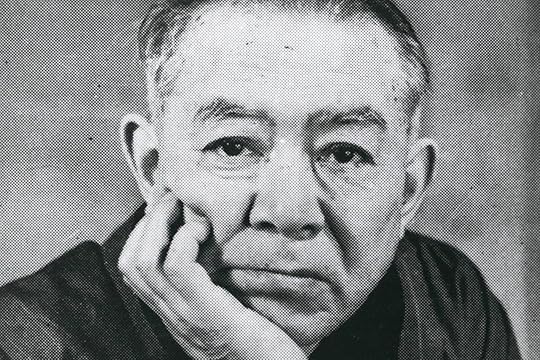
Jun'ichirō Tanizaki (谷崎 潤一郎) was a Japanese author, and one of the major writers of modern Japanese literature, perhaps the most popular Japanese novelist after Natsume Sōseki.
Some of his works present a rather shocking world of sexuality and destructive erotic obsessions; others, less sensational, subtly portray the dynamics of family life in the context of the rapid changes in 20th-century Japanese society.
Frequently his stories are narrated in the context of a search for cultural identity in which constructions of "the West" and "Japanese tradition" are juxtaposed. The results are complex, ironic, demure, and provocative.
We're in Tokyo in the late 1920s. It's the story of a serial fiction writer composing a story about another writer who is murdered. While writing the story, simply for convenience, he inserts the name of a writer who is an acquaintance of his but forgets to take that name out when the story is delivered.
So a real person’s distinctive name gets published as the murder victim. The first author starts to worry: supposed his acquaintance actually gets killed when and where and in the manner he described, wouldn’t the police think he was the murderer? Or suppose someone ‘who has it in for’ the author who wrote the story takes advantage of this confusion to kill the fictional victim because he knows the author will get blamed by the police? The fictional author comes to think of this hypothetical murderer as “The Shadow Man.”
The gods of course work against the author. So that I don't reveal too much plot, I'll just give you one example of how events unfold. He randomly picked an upcoming month and a day for the murder when there would be no moon so the man could be waylaid on a dark road he has to pass through every night. After the story comes out and he is concerned about this, he consults an Almanac to see if it happened that there would be no moon that night. Of course there will be no moon that night.
We know where this is going, so, of course the other writer gets killed when, where and how he ‘predicted.’
Our main character, to say the least, has a lot of issues. The story becomes a Raskolnikov-like deep dive into the complex inner workings of this man's mind. He’s probably a type of paranoid schizophrenic. He’s in his late 30s. He has no friends.
He lives paycheck to paycheck, although that’s not really an accurate statement because he doesn't receive a paycheck – it’s always an advance on a future story that he’s desperately writing at the last minute.
When the first story is published it causes only a minor scandal despite his use of the real name of a person who also wrote for the same magazine. The editor encourages him to write a sequel – a How I Murdered Him, Part 2. Of course this only gets the paranoid guy dug in deeper.
And I guess we could also call this book a murder mystery, because who was it who killed the other writer? Who was the Shadow Man?
It's a fascinating story. Maybe a little dragged out at times so I gave it a ‘4.’ This is the second book I have read by this author. The other was Naomi, about a very westernized Japanese woman.
We're treated to an interesting story by the translator in an Afterword. While he was writing this book, Tanizaki and Ryūnosuke Akutagawa got into a free-swinging debate that took place over several months in the Japanese literary journals. (The latter man is the author for whom Japan’s famous literary prize is named.) It's too complex to go into here but the debate was pretty much about the nature of fiction and the role of ‘I-novels,’ those where the author is a character in the work; plot-less novels (akin I think to psychological novels), and ‘story-within-a-story novels’ -- all of which, this book (In Black and White), is to some extent. As the battle raged on, the 35-year-old Akutagawa committed suicide (on Tanizaki’s birthday) and, as the translator puts it “…thereby effectively leaving him with the last word and ending the debate as victor.” Wow.
Junichiro Tanizaki (1886-1965) is one of my favorite authors. Here are links to my reviews of other books by him:
In 1928, Jun'ichirō Tanizaki began three novels: Some Prefer Nettles (Tade kuu mushi), Quicksand (Manji) and In Black and White (Kokubyaku). Only In Black and White was completed within the year. It was originally published as a serial novel in two newspapers and, while it has been included in collected works, it hasn’t been available in Japan or in the West as an individual volume until now. I had not heard of it until I saw this new translation into English by Phyllis I. Lyons was available from Columbia University Press via NetGalley.
At its core, it is a story within a story. The main character, a writer, pens a story about the upcoming murder of another local writer. The model for the murdered writer is murdered on the day the character in the story is murdered. Obsession ensues. His main character, Mizuno, is one of the most fascinating, entirely self-absorbed, completely self-destructive jerks a reader could encounter. I never tired of him. Some of the dithering reminded me of Some Prefer Nettles. Because it is Tanizaki, there is so much more than this. In Black and White isn’t the master work that Some Prefer Nettles is, but it is fascinating in its own right for Tanizaki fans, in the same way that The Mystery of Edwin Drood is fascinating for Dickens fans. (Don't misunderstand - In Black and White isn't incomplete; it is a less important novel than the ones for which Tanizaki is famed and which he touted during his lifetime.)
I recommend reading the Translator’s Afterword before reading the novel. In particulary, it provides background on a public argument underlying the book – one between Tanizaki and Akutagawa Ryunosuke over the then-career-making or -destroying Japanese literary establishment, and explains the satire that is In Black and White.
Feb 18, 2018 Update: Check out the NYTimes Book Review review, written by Min Jin Lee:
I've never read Tanizaki before so I've no idea about his legend status and why that is. All I know is that here he writes and hides and then writes some more and maybe lies as well; and then leaves me wondering what is really the truth, the one that is written, the one that is imagined, or the one that is hidden underneath all that and not really mentioned but comes out anyway.
I do know that there are two sides to what a person is, what a person does and what a person says, even if it is a personal narrative. So the actual difference between what is said and what is done creates two different people, two realities. Through Mizuno, Tanizaki explores this by what he does and what he writes, one creature is a liar, lazy, unfocused, the other is a planner, a doer and he is proud to show his real self. So the difference between the two sides of this person makes you doubt all, which is the truth? So in the world of Black or White we are left totally in the Grey.
an arc gently given by the publishers through Netgalley in return for a review.
Я люблю японську літературу, але з Танідзакі взагалі не був знайомий. Друзі подарували цю книгу нещодавно і повинен сказати, що знайомство вийшло дуже вдалим. "Чорне біле" сподобалось набагато більше ніж, наприклад проза сучасника (й друга) Танідзакі Рюноске Акутаґави. Досить тонкий психологічний роман про нігіліста письменника, де стирається грань між уявним і реальним, а головний герой падає в прірву власної нікчемності. Відчутним є вплив російської літератури (легко зчитується достоєвщина в деяких аспектах), також цитується толстой - так що якщо вас таке тригерить, можливо варто обійти "чорне біле" стороною.
A great 'unknown' Tanizaki novel that is fascinating to me as a writer. And of course, as a reader as well. The story is about a fictional writer who writes out a murder mystery based on a character that he knows, and of course, that person gets murdered in real life. This is really a novel of psychology and in a fashion, it reminds me of Patricia Highsmith. The narrative was originally printed out in a magazine serial, and it does have a pulp aesthetic due to that writing, but I love it. Also, Tanizaki is brilliant in writing about sexuality. If you are a fan of his more famous novels, for sure pick this edition up. The book also has a wonderful introduction, afterword by the translator. A remarkable read.
A strange book with a strange structure, if it weren't for the afterword I would have think much more negative about it.
It's a story within a story, of a writer (Mizuno) writing a story about a murderer plotting the perfect crime. It's a serialised story to be published in a magazine so he always writes a few pages and sends them off, no chance to change elements in the story. He realises that the name of the person he modelled the story's victim after has accidentally crept into the manuscript, and becomes paranoid that now someone is going to murder the 'model', which would cast a bad light on him.
It sounds like a metafictional detective story and some of it is, but a larger part of the novel is about Mizuno's paranoia, his money problems, his weaseling for money, his prostitute excursions, etc. pp. So if you're looking for a crime novel you're probably in the wrong place, it's much more psychological, much more concerned with what's happening within the writer than with what's happening with that murder.
I was willing to leave it at this and see it more as an experiment in metafictional writing, but the afterword explains and interprets the entire story in the light of Akutagawa and Tanizaki's public discussions (essays) around the role and the goals of the writer (a blog post about the debate) Apparently while that debate got slowly heated Akutagawa committed suicide, which Tanizaki took personal. The afterword interprets the story as Tanizaki coming to peace with his (supposed) role in Akutagawa's suicide, not something the average reader (me at least) would know before going into this book.
This is a very recent translation published just a few weeks ago. In the afterword the translator offers bafflement as to why this is such an unknown book, even in Japan. I can understand this cold reception a bit, reading this book is massively improved by knowing about the Akutagawa situation.
Це дивна зацікавленість, може навіть деяка зацикленість на літературі, позаяк я звернув увагу на книгу Дзюньïтiро Танiдзакi "Чорне біле"лише тому, що це роман про письменника, про його психологічний портрет та особливості роботи.
Таким чином я не мав жодних очікувань від книги, окрім хіба сподівання деякого знайомства з яскравими ознаками японської культури та побуту двадцятих років XX ст.
Не можу знати, чи є в цій історії автобіографічні вайби, маю підозру, що якщо і є, то вони мають іронічний характер, але авторові вдалося створити вкрай неприємного персонажа. В якість моменти здавалося, що цей огидний тип просто випробовує межі терпіння оточуючих — адже він дістає і працівників редакції видання, де друкуються його твори, і хазяїна помешкання, яке знімає, і покоївку, котра там працює, він бреше всім і про все, намахує на гроші навіть гейш, має проблеми з контролем, бездумно витрачаючи зароблені непростою письменницькою працею гроші на якісь безглузді і необов'язкові речі.
Сам я щоразу дуже переймаюся і засмучуюся, коли відчуваю, як життя мене піджимає до краю фінансової прірви, а цей пан письменник Мідзуно начебто взагалі не бентежиться своїм безгрошів'ям. Вдалося написати пару десятків сторінок продовження роману, вийшло обміняти плід творчої праці на якусь кількість грошей — чудово, тепер можна піти розважитися, поїсти від пуза, віддати себе в руки професіоналок зі сфери оплачуваного кохання, і в жодному разі не варто нічого заощаджувати — не можна дозволяти собі ані найменшої інакшої думки, окрім тих, які спонукають потратити залишок гонорару на яскраве барахло. Все до копієчки.
Вдача Мідзуно настільки егоїстична та аморальна, що це може навіть викликати захоплення. Читаючи я іноді й сам дивувався, чому і навіщо йому продовжують давати гроші? Невже письменницький талант людини може слугувати індульгенцією для будь-яких переступів?
Обманюй, махлюй, зривай дедлайни, ображай людей, №&и гусей — а тебе будуть продовжувати друкувати.
I've always hated Tanizaki. Until today, I had never even been able to complete one of his novels, finding them either boring or frivolous, pointless. Nevertheless, I decided to give this relatively obscure book a chance because it sounded interesting. I can't believe I totally LOVED it -- it's a paranoid masterpiece. That may say more about me than the novel, nevertheless I feel I need to take another look at his work.
"Подумати тільки: у своїх книжках він повбивав стільки людей, а тут пише, як уб'ють його самого!"
"Якщо боятися, що читачі впізнають у персонажі реальну людину, — думає собі герой роману, — то так взагалі нічого не напишеш". Мідзуно, цей автор детективів, — ще той нінґен шіккаку: до того довставлявся у свої твори на місці жертв реальних людей, що його кинула навіть дружина. От і лишається тепер говорити самому до себе, як якомусь психопату, тринькати грошики, тільки вони з'являються, і дописувати тексти для журналу в останній день дедлайну.
Та з останнім романом якось негарно вийшло. Так запекло вночі дописував останній розділ, що замість вигаданого прізвища вписав кілька разів справжнє. А текст уже пішов у друк. Біда! Ґвалт! Що як Коджіма побачить і прийде розбиратися? Або ще гірше: що як хтось прочитає цей роман, вб'є Коджіму, а провину повісить на автора? Ну це вже зовсім! Треба негайно щось зробити, щоб уникнути такої долі!
"Чорне біле" — це роман-гра, він страшенно кумедний і є очевидною пародією на сповідальну еґо-белетристику. Параною Мідзуно написано таким перебільшено розпачливим тоном, що ти не знаєш, чи реготати на всю хату, чи наполегливо радити йому записатися до психотерапевта.
Водночас тут є місце і на подумати. Де пролягає межа між вигадкою і реальністю? Чи є в творчості місце етиці? І чи справді описаний спосіб життя автора адекватний?
Перекладач Ігор Дубінський, як і інші читачі, вважає, що "Чорне біле" є неочевидним продовженням полеміки Танідзакі з Акутаґавою Рюноске. Що ж, зрештою, важливіше: сюжет чи естетика? Крім того, саме на день народження Танідзакі Акутаґава вчинив самогубство, чим неабияк шокував літературного опонента та всю Японію. А вже наступного року Танідзакі видав "Чорне біле". Прочитати про це детальніше можна в блозі Ігоря Дубінського.
Про переклад. Перекладено легко і харизматично. Система транскрипції зі старим підходом — "сі/дзі".
Цікавий факт. Назва роману 黒白 (kokubyaku) співзвучна зі словом 告白 (kokuhaku) — "зізнання".
Una novela diferente a lo que nos tiene acostumbrado el autor con un halo de misterio y paranoia maravilloso. Todo ello con su prosa característica y con matices sensuales y eróticos que es su su impronta personal en su obra. El final algo confuso y rápido pero me ha gustado mucho.
"Чорне біле" - модерністська японська повість, що прикидається нуарним романом, але, окрім звичного для цього жанру занурення в детективний сюжет, вона пропонує читачеві ще й розмірковування щодо природи митця та його впливу на реальність. Ба більше: детективна частина тут відсувається на другий план, поступаючись екзистенційним рефлексіям. Попри це, як на мене, "Чорне біле" суттєво відрізняється від іншого твору Дзюньїтіро Танідзакі - "На любов і смак", засвідчуючи художню різноплановість автора. Естетично повість ближча до "Спаленої карти" Кобо Абе, тож поціновувачам похмурих історій, оповитих ледь не містичною таємницею, цей твір точно має сподобатись.
3,5 stelle Sinceramente non so bene come valutare questo libro. Se dovessi valutarlo per lo stile di scrittura sarebbe un 5 stelle perché Tanizaki ha uno stile incredibile, che ti tiene incollato alle pagine. Se dovessi valutarlo per la trama però, le cose cambiano. Questo libro ha dei punti interessantissimi, come l'inizio, in cui l'opera sembra quasi un meta-romanzo, e punti decisamente meno interessanti, come i capitoli centrali in cui la storia si focalizza sulla relazione che Mizuno, il protagonista, intreccia con la cosiddetta bella Fräulein e che si distaccano completamente dal caso al centro del romanzo, anche se dovrebbero costituire l'alibi del protagonista. Insomma, questo romanzo ha degli alti, come l'inizio e la fine, e dei bassi, come la parte centrale; il che mi rende un po' difficile valutarlo. A questo si aggiunge il fatto che ci ho messo un po' a finirlo, perché nel mentre ho letto anche altro. Inoltre, secondo me questo è un altro tipico esempio di romanzo che ti viene presentato come giallo, noir, ma che alla fine ha poco a che vedere con il genere: sì, è vero, nella storia c'è un omicidio, ma il protagonista non si metterà mai attivamente ad indagare sul caso. A mio parere potrebbe tranquillamente essere classificato come un romanzo psicologico. Il fatto che mi sia stato presentato come un giallo ha creato in me un certo tipo di aspettative per la storia, che poi non sono state soddisfatte. L'opera non ha chissà che grande intreccio di trama, ma bisogna anche considerare il fatto che è stata realizzata a seguito del suicidio di Akutagawa (compiuto dallo scrittore lo stesso giorno del compleanno di Tanizaki), con cui Tanizaki aveva avuto il famoso dibattito sul romanzo, mai conclusosi proprio per via del suicidio di Akutagawa. Forse Tanizaki si è sentito in qualche modo toccato dal gesto di Akutagawa e ha deciso di provare a realizzare un'opera che fosse più vicina alle teorie dell'altro scrittore sull'importanza dello stile e dell'argomento piuttosto che dell'intreccio di trama complesso.
قصة مجنونة وجميلة في ذات الوقت ، فيها يتداخل الخيال مع الواقع بصورة ذكية متشابكة وبطريقة لعوب تمتع عقل القارئ، يحاول فيها الكاتب إبراز يابان الثلاثينات والعشرينات ، وضعها السياسي والاجتماعي والعسكري في وينهيها بموضوع التعذيب في السجون ، ويعري المؤسسة الأدبية التي تعنى بنتاج الكتاب،، مالها وما عليها ، إرهاصاتها وسياساتها، ويحاول كما اعتاد في معظم أعماله التعريج على الهوية الجنسية والرغبة الشهوانية عند الرجل باستخدام المرأة اللعوب والتي تستخدم الجسد كوسيلة إغراء وحياة، وهذه المرة اختار امراة ألمانية لكي ينقل لنا نظرة الشعب الياباني لعالم الغرب وعالم المرأة الغربية بالتحديد وافتتانه بها ، وكما في أعماله يحاول إسقاط تجربته الشخصية الفاشلة في الزواج والطلاق ، فهو ايضا في هذا العمل يختار شخصية الكاتب المطلّق الذي يعيش وحيدا بعد تجربة زواج فاشلة..
.. يا ترى هل كان الكاتب في هذا العمل هو نفسه القاتل، وان لم يكن هو فكيف شاءت الأقدار في تطابق قصة ادبية خيالية مع واقع حدث وجريمة قتل حقيقية وكأنها نبوءة صادقة ؟؟! إلى اي حد يصنع الكتاب عوالمهم المتخلية ويعيشون فيها وقد يلجأون اليها في وحدتهم واحاديث نفسهم ؟! والى اي حد قد ياخذ جنون العظمة بكاتب ما وسخريته من الواقع لكي يعيش عوالم في رأسه ويحاول بلورتها في واقع الحياة ؟!
* I would like to thank NetGalley and the publisher for the opportunity to read and review this book. *
Tanizaki's In Black and White has an Escher-like nature to its plot. Tanizaki is writing about a writer who is writing about a writer who wants to commit the perfect murder by killing a writer.
Mizuno is a feckless writer of "diabolism" who, in a last-minute rush, sends a murder story to a major magazine without proper proof-reading. He soon realises that he has mistakenly used the real name of the person that he modelled his victim, Cojima. He tries to get that fixed, but can't.
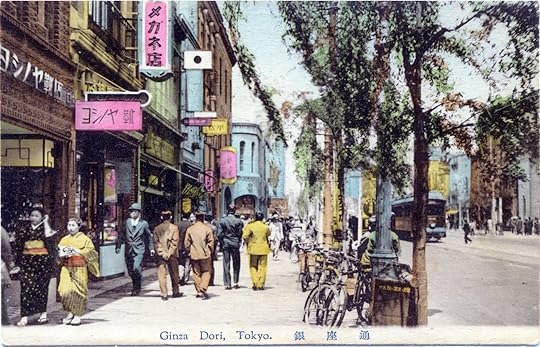
Mizuno soon envisages a situation where he is vulnerable; some third party could murder Cojima and the blame could fall upon him, as people could interpret his story as an account of his own intent. He panics and goes to great lengths to try and negate this possibility. This includes writing a second part of the story that describes this new scenario, shifting suspicion to a "shadow man". This is not easy though, as Mizuno is a slow and lazy writer and time is of the essence. A further distraction arises when he meets a gorgeous woman in the Ginza, and commences a professional relationship with her, which soaks up all of his money and time.
Tanizaki spins this complex plot effortlessly, and keeps the reader guessing all the way to the end. I found the "apology" after the ending very apt, but I suspect it might puzzle some readers. I think it is essential to read the translator's afterword, as this gives very significant background to the story (which was written in 1923) and helps explain a lot of what is going on in this baffling piece.
Min Jin Lee, who wrote Pachinko, one of my favorite novels of 2017, reviewed In Black and White in The New York Times Book Review (18 Feb. 2018), which is where I heard about it, and I'm glad I did. It's "a comic novel satirizing the Japanese confessional narrative" (Lee) and much more. It's about writers and writing, the function of storytelling, and it contains a fictional murder (as well as a metafictional murder) in the novel's novel-within-a novel. See, it's all there in black and white. Originally published in Japan in 1928, this is its first English translation.
Sinceramente non so ancora se il libro mi è piaciuto. È stata una lettura lunga, non per il numero di pagine, ma per il tempo che ci ho messo a leggere. Il libro ha avuto alti e bassi, punti molto interessanti per poi passare a monologhi da parte del protagonista che rallentavano il ritmo. Alla fine, finisce portando il lettore ad un unica domanda : ma sarà successo tutto realmente???
Para empezar, la sinopsis de la contraportada te spoilea la poca trama que tiene el libro, que para colmo se revela en el último tercio. Básicamente son las paranoias de un escritor, que además es una mierda de persona. Eso sí, se lee muy bien y no aburre ni resulta denso.
Y, bueno.
Yo tenía opiniones sobre varios aspectos de este libro, pero ahora mismo no sé qué quería decir porque el final me ha dejado picueta. No tiene nada que ver con el estilo del resto del libro, surge muy de repente, te deja una escena literalmente a medias... Y no sabes si todo lo que has leído ha ocurrido de verdad.
I like the idea of novels that blur fact and fiction, creating an unsettling sense of paranoia. I just never felt this while reading In Black and White. Frankly, it has been overlooked in favour of the author's other works for a reason. I'm sure the novel holds value for scholars examining that era of literature, and the development of Tanizaki's oeuvre, but as a casual reader, if I didn't know he had better novels out there, In Black and White was sufficiently dull to deter me from trying his other works.
Half nightmarish scenario of paranoid magical thinking, half satire of a particular genre of Japanese realistic fiction (the I novel). The plot is very cleverly constructed, and weirdly compelling, despite mostly taking place in the narrator's head.
Mizuno è uno scrittore dalla fama sinistra, sembra un poco Edogawa Ranpo, il quale però era davvero maestro di ambientazioni losche e di fantasie perverse, mentre Mizuno un poco ne scimmiotta lo stile e un altro poco sembra un personaggio di Natsume Sōseki, indolente, pigro e amante delle donne
un bel giorno gli salta in testa di mettersi a scrivere dell'assassinio di un tale che a lui sta antipatico, e commette la leggerezza di non correggere il lapsus mandando in stampa il manoscritto con il vero nome dello sfortunato, nel mentre che si lambicca il cervello per cavarsi dall'imbarazzo di aver messo nero su bianco non solo le sue fantasie, ma anche un modo plausibile affinchè queste si concretizzino, si imbatte in una donna moderna dal fare misterioso che finisce per seguire e nella cui rete rimane invischiato...
racconto nettamente diviso in due parti: la prima composta di oziose divagazioni sull'omicidio e sulla possibilità di farla franca una volta che si è deciso di commetterne uno, la seconda sembra la versione anni venti giapponese di un racconto di Bukowski col protagonista scrittore pagato a pagine, che spende tutto quel che guadagna andando a donne e facendosi abbagliare dalla cosiddetta "donna moderna" giapponese del secolo scorso, una nuova specie femminile che invece di servire l'uomo lascia che sia lui a servire lei...
I picked this up at random at the Ottawa Public Library. The opening was interesting enough so I kept reading. And even managed to finish reading it. I guess it's a satire, of sorts, but not particularly funny.
The premise of an author writing a book about a murder and then worrying his own story would lead to a murder and his getting arrested -- that appealed to me. But the story wanders around forever and finally gets to a fairly boring punchline. There are nice touches here and there. It's well written. But it feels like it doesn't add up to much.
This is one of those books where the translator gets a preface and an afterward, and spends multiple pages telling us how the book we are about to read (or just read) is a masterpiece. The irony is, the book itself has a kind of sycophantic assistant editor character who sucks up to the author (sort of). The translator takes on that role, accidentally. Maybe the translator's added texts just add to the satire? If so, the translator is unaware of it. He's dull and his analysis is dull and I skimmed it.
It's an interesting book, if somewhat dated, academic, flat, self absorbed, convoluted, and (according to the translator) a satire of outdated and obscure Japanese literary tropes.
This is a strangely compelling novel about writing a novel with a clever and intriguing premise. Mizuno is a novelist writing about a murder. He bases the murder victim on someone he knows and inadvertently uses the real name instead of the fictional one in his manuscript and only realises when it’s too late to get it back from the printers. He begins to panic. What if the real man in fact happens to be murdered? Would not suspicion fall on Mizuno himself? He becomes more and more paranoid and irrational and watching his mental disintegration is one of the many pleasures of this unusual book, a book in which reality and fiction becomes blurred and the truth more and more elusive. The novel was written in 1928 and has bizarrely been ignored ever since, even in the author’s native japan. This is the first translation into English and its appearance is to be welcomed. The translator’s afterword is pretty much essential and certainly very helpful – some background knowledge is needed to really appreciate this often enigmatic novel - but it’s certainly one worth reading.
An odd one , only recently translated into English and with me having no knowledge of Japanese I can only voice my suspicions that this may not be a very faithful translation at all. The story comes over like the bastard offspring of Kafka and Robbe Grillet. It feels very modern, unusual for so much of Tanizaki’s writing. The problem I have is that it was written almost contemporaneously with his Some Prefer Nettles, which presents as a very exact, meticulously phrased book, whereas this has clumsily worded sentences and no small amount of relatively modern idioms . As I say I’ve no idea whether this is a translation problem or not. The story of a novelist writing a story which uses real life models and the subsequent problems for the author takes a while to lift off and I must say it may help readers to go through the afterword at the end of the book first as it throws a fascinating light on the tale being told. Current suspicion is this is a four star book with a two star translation, but I could be way wide of the mark.
Кожного разу романи Дзюньїтіро Танідзакі — спосіб залізти в голову неоднозначній, внутрішньо ексцентричній і дещо схибленій людині, що не змусить чекати аби своїми розсудами здивувати, знітити, заворожити. Присутність жінки(і не аби-якої) і її вплив на історію в романі "Чорне Біле", як завжди, видатні і йдуть на рівні з іншими сюжетними лініями. Його головний герой, Мізуно, є одним із найзахопливіших, найбільш егоцентричних, зілковито саморуйнівних йолопів, яких тільки міг зустріти читач. Від нього не стомишся.
Сам по собі твір заволікає нетипічними думками, відвертими розсудами, романтизованими і гіперболізованими образами меркантильних, деспотичних жінок. Витончене письменництво, брутальна чистосердечність. 4/5
Повість специфічна, але мені було цікаво. Про автора детективів в Японії в 1920х роках. Цей автор морально дуже стрьомний тіп: не має друзів, витрачає гроші на алкоголь і гулянки, провалює терміни здачі робіт як і всі обіцянки. Але завзято пише детективні романи. І от в одному з романів він ретельно описує вигадане вбивство одного свого знайомого. І забуває навіть виправити ім'я жертви зі справжнього на вигадане. І починає параноїти з цього (після того, як рукопис зданий): А що як хтось зловісний візьме "план вбивства" з його книги і втілить його в життя? А першим підозрюваним в такому випадку стане сам автор...
201003: the man who wrote 'to the point of murder'... then in paranoia tries to extricate himself from how exactly close to real murder. imagining crime where there is no crime. imagining persecution. and only gets himself mired deeper and deeper. some literary self-reflection that probably works best if you know conventions of the Japanese I-novel, but it is comic, effective, cringeworthy. there are a few critical pieces at the end of this edition as well...
La parte più interessante del romanzo è certamente la seconda, verso il finale, laddove la trama apre un’atmosfera che, per certi aspetti, ricorda Orwell, nella contrapposizione tra “verità” e “convinzione”. Del resto, lo stesso finale aperto lascia spazio alla fantasia del lettore che, in tal modo, è libero di immaginare il proseguio del racconto anche se, di fatto, poco spazio è lasciato al lieto fine…
Romanzo psicologico, evocativo e che mi ha rapito completamente! Riesce a sondare a fondo l'animo del protagonista e a cambiare rapidamente registro con grande maestria da una scena all'altra. Una specie di giallo, appunto, psicologico, che ti trascina con veemenza tra i vicoletti delle periferie di Tokyo.