

What do you think?

Quirke #8
April in Spain
Book #3 from the series: St. John Strafford
A “masterful” Booker Prize–winning author pens this Award winner “featuring colorful characters and a mysterious crime” (Kirkus Reviews starred review). While on vacation in Spain, Irish pathologist Quirke sees a familiar woman. There’s just one problem: She was murdered years ago…
⭐“Crackles with the kinetic energy of an approaching thunderstorm” (Booklist starred review).
*NATIONAL BESTSELLER*
Don't disturb the dead…
On the idyllic coast of San Sebastian, Spain, Dublin pathologist Quirke is struggling to relax, despite the beaches, cafés and the company of his disarmingly lovely wife. When he glimpses a familiar face in the twilight at Las Acadas bar, it's hard at first to tell whether his imagination is just running away with him.
Because this young woman can't be April Latimer. She was murdered by her brother, years ago—the conclusion to an unspeakable scandal that shook one of Ireland's foremost political dynasties.
Unable to ignore his instincts, Quirke makes a call back home to Ireland and soon Detective St. John Strafford is dispatched to Spain. But he's not the only one en route. A relentless hit man is on the hunt for his latest prey, and the next victim might be Quirke himself.
Sumptuous, propulsive and utterly transporting, April in Spain is the work of a master writer at the top of his game.
Don't miss John Banville's next novel, The Lock-up!
Other riveting mysteries from John Banville:
▪ Snow
A “masterful” Booker Prize–winning author pens this Award winner “featuring colorful characters and a mysterious crime” (Kirkus Reviews starred review). While on vacation in Spain, Irish pathologist Quirke sees a familiar woman. There’s just one problem: She was murdered years ago…
⭐“Crackles with the kinetic energy of an approaching thunderstorm” (Booklist starred review).
*NATIONAL BESTSELLER*
Don't disturb the dead…
On the idyllic coast of San Sebastian, Spain, Dublin pathologist Quirke is struggling to relax, despite the beaches, cafés and the company of his disarmingly lovely wife. When he glimpses a familiar face in the twilight at Las Acadas bar, it's hard at first to tell whether his imagination is just running away with him.
Because this young woman can't be April Latimer. She was murdered by her brother, years ago—the conclusion to an unspeakable scandal that shook one of Ireland's foremost political dynasties.
Unable to ignore his instincts, Quirke makes a call back home to Ireland and soon Detective St. John Strafford is dispatched to Spain. But he's not the only one en route. A relentless hit man is on the hunt for his latest prey, and the next victim might be Quirke himself.
Sumptuous, propulsive and utterly transporting, April in Spain is the work of a master writer at the top of his game.
Don't miss John Banville's next novel, The Lock-up!
Other riveting mysteries from John Banville:
▪ Snow
304 pages, Kindle Edition
First published October 5, 2021
About the author
John Banville
150 books2,554 followersWilliam John Banville is an Irish novelist, short story writer, adapter of dramas and screenwriter. Though he has been described as "the heir to Proust, via Nabokov", Banville himself maintains that W.B. Yeats and Henry James are the two real influences on his work.
Banville has won the 1976 James Tait Black Memorial Prize, the 2003 International Nonino Prize, the 2005 Booker Prize, the 2011 Franz Kafka Prize, the 2013 Austrian State Prize for European Literature and the 2014 Prince of Asturias Award for Literature. He was elected a Fellow of the Royal Society of Literature in 2007. Italy made him a Cavaliere of the Ordine della Stella d'Italia (essentially a knighthood) in 2017. He is a former member of Aosdána, having voluntarily relinquished the financial stipend in 2001 to another, more impoverished, writer.
Banville was born and grew up in Wexford town in south-east Ireland. He published his first novel, Nightspawn, in 1971. A second, Birchwood, followed two years later. "The Revolutions Trilogy", published between 1976 and 1982, comprises three works, each named in reference to a renowned scientist: Doctor Copernicus, Kepler and The Newton Letter. His next work, Mefisto, had a mathematical theme. His 1989 novel The Book of Evidence, shortlisted for the Booker Prize and winner of that year's Guinness Peat Aviation award, heralded a second trilogy, three works which deal in common with the work of art. "The Frames Trilogy" is completed by Ghosts and Athena, both published during the 1990s. Banville's thirteenth novel, The Sea, won the Booker Prize in 2005. In addition, he publishes crime novels as Benjamin Black — most of these feature the character of Quirke, an Irish pathologist based in Dublin.
Banville is considered a contender for the Nobel Prize in Literature. He lives in Dublin.
Banville has won the 1976 James Tait Black Memorial Prize, the 2003 International Nonino Prize, the 2005 Booker Prize, the 2011 Franz Kafka Prize, the 2013 Austrian State Prize for European Literature and the 2014 Prince of Asturias Award for Literature. He was elected a Fellow of the Royal Society of Literature in 2007. Italy made him a Cavaliere of the Ordine della Stella d'Italia (essentially a knighthood) in 2017. He is a former member of Aosdána, having voluntarily relinquished the financial stipend in 2001 to another, more impoverished, writer.
Banville was born and grew up in Wexford town in south-east Ireland. He published his first novel, Nightspawn, in 1971. A second, Birchwood, followed two years later. "The Revolutions Trilogy", published between 1976 and 1982, comprises three works, each named in reference to a renowned scientist: Doctor Copernicus, Kepler and The Newton Letter. His next work, Mefisto, had a mathematical theme. His 1989 novel The Book of Evidence, shortlisted for the Booker Prize and winner of that year's Guinness Peat Aviation award, heralded a second trilogy, three works which deal in common with the work of art. "The Frames Trilogy" is completed by Ghosts and Athena, both published during the 1990s. Banville's thirteenth novel, The Sea, won the Booker Prize in 2005. In addition, he publishes crime novels as Benjamin Black — most of these feature the character of Quirke, an Irish pathologist based in Dublin.
Banville is considered a contender for the Nobel Prize in Literature. He lives in Dublin.
Ratings & Reviews
Friends & Following
Create a free account to discover what your friends think of this book!
Community Reviews
Displaying 1 - 30 of 1,074 reviews

August 15, 2021
John Banville writes his latest historical offering in the Dr Quirke, Irish State Pathologist series under his own name, featuring DI Strafford from Snow in a minor yet instrumental role. The curmudgeon and old soak that is Quirke is not a man for holidays, but he is a married man, dare one even say happily married, to the Austrian psychiatrist, Evelyn, and she is a force of nature in her own right. So there they are in Franco's Spain, at the beautiful Basque coastal town of San Sebastian, with Quirke who can't quite trust his happiness as he frets and wonders if Evelyn will leave him. Banville paints a complex and intimate picture of their marriage and love, but a serpent is about to enter their paradise when Quirke thinks he recognises a ghost from the past and an old Irish scandal, a friend of his daughter, Phoebe, April Latimer, dead at the hands of her brother, Oscar. Could it be April going under the name of Dr Angela Lawless?
Quirke, being an obstinate and stubborn fellow, can't let it go, something he will live to regret as he opens a can of worms that is slowly and inevitably going to spiral into tragedy. He goes as far as inviting Angela to a toe curlingly socially awkward dinner that he revels in, asking Phoebe to come over to see if it is April. Phoebe has been in a relationship with Paul Viertel, a cold fish of a boyfriend for a while, and she makes a fatal error when she takes it upon herself to let powerful political forces know about April resurfacing, forces that cannot let April live to air a family's dirty secrets. Phoebe travels to Spain, with an armed DI Strafford accompanying her, with an underlying certainty that April is alive. However, someone else is coming too, a hitman, Terry Tice, a dangerous man who has never failed to carry out any of his past assignments.
Banville expertly weaves a spellbinding mystery with his beautiful prose and stellar abilities when it comes to complex flawed characterisations and complicated relationships. He hits all the hot buttons when it comes to Ireland, the abuse and cruelty within the Catholic Church as illustrated by Tice's childhood as a orphan. There are the horrors of what can go on in powerful Irish families behind closed doors, as can be seen with what happened to Oscar and April, and corrupt politicians who believe they are untouchable. Then there is, of course, little chance of Irish storytelling being complete without a mention of terrorism and the IRA in this historical period. I found this to be a wonderfully engaging read, so well written and so riveting, and particularly liked the references to Pinkie from Graham Greene's Brighton Rock. I think this historical novel will appeal to a wide range of readers, including those who love mysteries and literary fiction. Highly recommended. Many thanks to the publisher for an ARC.
Quirke, being an obstinate and stubborn fellow, can't let it go, something he will live to regret as he opens a can of worms that is slowly and inevitably going to spiral into tragedy. He goes as far as inviting Angela to a toe curlingly socially awkward dinner that he revels in, asking Phoebe to come over to see if it is April. Phoebe has been in a relationship with Paul Viertel, a cold fish of a boyfriend for a while, and she makes a fatal error when she takes it upon herself to let powerful political forces know about April resurfacing, forces that cannot let April live to air a family's dirty secrets. Phoebe travels to Spain, with an armed DI Strafford accompanying her, with an underlying certainty that April is alive. However, someone else is coming too, a hitman, Terry Tice, a dangerous man who has never failed to carry out any of his past assignments.
Banville expertly weaves a spellbinding mystery with his beautiful prose and stellar abilities when it comes to complex flawed characterisations and complicated relationships. He hits all the hot buttons when it comes to Ireland, the abuse and cruelty within the Catholic Church as illustrated by Tice's childhood as a orphan. There are the horrors of what can go on in powerful Irish families behind closed doors, as can be seen with what happened to Oscar and April, and corrupt politicians who believe they are untouchable. Then there is, of course, little chance of Irish storytelling being complete without a mention of terrorism and the IRA in this historical period. I found this to be a wonderfully engaging read, so well written and so riveting, and particularly liked the references to Pinkie from Graham Greene's Brighton Rock. I think this historical novel will appeal to a wide range of readers, including those who love mysteries and literary fiction. Highly recommended. Many thanks to the publisher for an ARC.

December 10, 2021
The author starts the story with the proverbial loaded gun: we follow a hired killer who grew up in an orphanage. (There are a lot of orphans in the story.) This character enjoys killing and he refined his skills as a British soldier in Burma in World War II.

The next chapter shifts the scene from Dublin to San Sebastian in Basque country in Northern Spain. The story is set in the 1950s during the time of Franco’s dictatorship.
We're not supposed to like our main character, Quirke, an Irish pathologist. I certainly didn't. He's a malcontent and a moaner. “…petulance was his pastime” and “He was feeling sorry for himself, and thoroughly enjoying it.” We’re told he gets pleasure from other people’s distress and he sometimes creates that distress, as we see during a key dinner later in the novel.
Quirke’s wife is a psychiatrist. That probably helps her put up with him; that and the fact that she genuinely loves him. She must love him because she doesn't complain about all his moods, antics and heavy drinking. Quirke knows that he is way outclassed by her and he understands how lucky he is to have her. He frequently says a little prayer under his alcohol-laden breath: “Please don't leave me.”
They both have had hard times in the past. He was raised with abuse in the orphanage and was at one time an in-the-gutter alcoholic. He still drinks heavily but his wife keeps him somewhat under control. She's the one who has a lot to complain about, but never does. She had relatives killed in concentration camps during the war and she had a previous marriage where she lost a child. But they both keep these traumas to themselves because they never talk about the past.
I'll limit what I say about the plot to what we know from the blurbs. While vacationing with his wife in Spain, Quirke encounters a young woman doctor - the April of the title. He immediately knows this woman is a supposedly dead friend of his daughter back in Ireland. He calls his daughter to relate this and she sets the plot in motion by informing the woman’s uncle, who is a highly placed political official, and she tells the local Irish police chief.

Of course, these people back in Ireland know Quirke. They are dubious because they know his past history of severe alcoholism, so they aren’t eager to believe him. If this woman, who goes by a new name in Spain, really is the supposedly dead April from Ireland, she had a particularly harrowing childhood as a victim of child abuse and incest.
I got a kick out of the hired killer character. He has never previously read a book in his life and somehow picks up Brighton Rock by Graham Greene. That's the story of Pinkie, a gang leader and killer in the British resort town of the title. We get Banville's killer’s opinions of what is realistic or not in Greene's novel.
I liked the local color of the Spain setting as it had a realistic flavor in the characters’ remarks about language and cultural differences. “The carriage smelled strongly of garlic and sweat and something that she couldn't identify. It was simply, she supposed, the smell of Abroad.”
Here are a few passages I liked to illustrate the author’s writing style:
“Detective Inspector Stratford entered the room and closed the door gently behind him. His manner was abstracted, as if he had wandered in by accident and hadn’t quite realized yet where he was. Phoebe regarded him with candid interest. He was thin to the point of gauntness, with pale, bony wrists and peculiar, pale soft hair. His face was so narrow it seemed that if he turned sideways it would collapse into two dimensions and become a fine, straight line. He wore a three-piece tweed suit. The chain of a fob watch was looped across his concave midriff. He didn't look in the least like a policeman. He might have been a university don, or an unfrocked priest.”
“Phoebe thought she had never known anyone so lacking in affect. That would be the Protestant in him, she said to herself, and immediately felt guilty.”
“Christ almighty, but would that fellow never stop popping up in front of him, like one of those bottom-heavy toys that won't stay down no matter how hard they're knocked over?”
I read this book as a buddy read with Ebba Simone. I enjoyed discussing it with her and I appreciate her insights and comments.
This book is No. 8 in the Quirke series of crime novels. The earliest ones were published under Banville’s pen name, 'Benjamin Black.' The author is best known for his novel The Sea which won the 2005 Booker prize.
John Banville is a prolific author; by my count 36 novels and a couple of non-fiction books. Many are in series and some were written under pseudonyms. I still like his Booker Prize winner, The Sea, the best. Here are links to ones I have reviewed:
The Sea
The Untouchable
Mrs Osmond
The Blue Guitar
The Infinities
Snow (#2 in the St. John Strafford detective series)
Kepler: The Revolutions Trilogy (fictionalized biographies. The other two are Copernicus and Newton.)
Shroud (# 2 in The Cleave Trilogy. Cleave is a pathologist in 1950s Dublin)
Top photo, an old postcard of San Sebastian from cardcow.com
Modern San Sebastian from eater.com
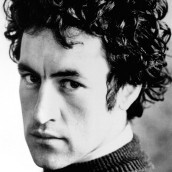
The author as a young man from godine.com

July 30, 2021
Exposed
It’s always a rewarding choice to read John Banville. His latest novel, April in Spain, is another absorbing and fascinating mystery that finds Irish pathologist, Dr Quirke, on holiday with his wife in sun-drenched and atmospheric Spain. He thinks he recognises a young Irish woman that was presumed dead. Quirke believes the young female doctor called Angela is, in fact, April Latimer, a friend of his daughter Phoebe’s. His association with the family is that April was apparently murdered by her brother, who then committed suicide while in Quirke’s company. Even though April’s uncle is a high-ranking government minister, the Latimer family is steeped in dark criminal activities.
Quirke is someone who cannot let things go and is determined to prove his intuition is correct. When he discusses this with Phoebe and invites her out to Spain to confirm his suspicions, he doesn’t realise the chain of events he is about to unleash and what secrets some people have tried so hard to hide. Perhaps Angela has good reason to deceive everyone and fade far out of sight. When Phoebe inquiries about April back in Dublin and reveals that she may be living in Spain, certain people are alerted, and the only satisfactory outcome is to ensure she dies - they need a killer.
In a parallel thread, the life of Terry Tice is unfolding to illustrate a psychopath with no compunction in killing anyone where death serves a purpose. His personality and background are deftly drawn, and the mental processes of a cold-blooded hitman are chillingly depicted. The two threads are destined to converge, and as they do, detective St John Strafford (from Snow) finds himself at the heart of the plot.
John Banville has a very understated writing style that cleverly captivates a reader while building fully formed characters. Our perception ranges from great empathy and a loving connection to chilling killers that can shock our norms. The characters are all compelling, but several frustrated me so much that if I’d gotten my hands on them, we wouldn’t have needed Tice. What frustrated me most was the decision from Quirke to open this pandora's box for such a small motivation. While he did question his decision to do so, he nevertheless pursued his impulse.
What is notable with this book is that it is listed as the eighth book in the Quirke series but also the follow-up to his previous novel, Snow. The Quirke series was written under Banville’s pen name, Benjamin Black, but this book is credited to John Banville. The follow-up to Snow is acknowledged because we encounter the return of detective St John Strafford, although not as the main character.
I read this book as a buddy read with my dear friend Ceecee, and as always, I loved discussing various aspects of the story with her. Ceecee’s review is wonderful, and I thank her for joining me on this journey. I would recommend this book, and I would like to thank Faber & Faber and NetGalley for providing me with a free ARC in return for an honest review.
It’s always a rewarding choice to read John Banville. His latest novel, April in Spain, is another absorbing and fascinating mystery that finds Irish pathologist, Dr Quirke, on holiday with his wife in sun-drenched and atmospheric Spain. He thinks he recognises a young Irish woman that was presumed dead. Quirke believes the young female doctor called Angela is, in fact, April Latimer, a friend of his daughter Phoebe’s. His association with the family is that April was apparently murdered by her brother, who then committed suicide while in Quirke’s company. Even though April’s uncle is a high-ranking government minister, the Latimer family is steeped in dark criminal activities.
Quirke is someone who cannot let things go and is determined to prove his intuition is correct. When he discusses this with Phoebe and invites her out to Spain to confirm his suspicions, he doesn’t realise the chain of events he is about to unleash and what secrets some people have tried so hard to hide. Perhaps Angela has good reason to deceive everyone and fade far out of sight. When Phoebe inquiries about April back in Dublin and reveals that she may be living in Spain, certain people are alerted, and the only satisfactory outcome is to ensure she dies - they need a killer.
In a parallel thread, the life of Terry Tice is unfolding to illustrate a psychopath with no compunction in killing anyone where death serves a purpose. His personality and background are deftly drawn, and the mental processes of a cold-blooded hitman are chillingly depicted. The two threads are destined to converge, and as they do, detective St John Strafford (from Snow) finds himself at the heart of the plot.
John Banville has a very understated writing style that cleverly captivates a reader while building fully formed characters. Our perception ranges from great empathy and a loving connection to chilling killers that can shock our norms. The characters are all compelling, but several frustrated me so much that if I’d gotten my hands on them, we wouldn’t have needed Tice. What frustrated me most was the decision from Quirke to open this pandora's box for such a small motivation. While he did question his decision to do so, he nevertheless pursued his impulse.
What is notable with this book is that it is listed as the eighth book in the Quirke series but also the follow-up to his previous novel, Snow. The Quirke series was written under Banville’s pen name, Benjamin Black, but this book is credited to John Banville. The follow-up to Snow is acknowledged because we encounter the return of detective St John Strafford, although not as the main character.
I read this book as a buddy read with my dear friend Ceecee, and as always, I loved discussing various aspects of the story with her. Ceecee’s review is wonderful, and I thank her for joining me on this journey. I would recommend this book, and I would like to thank Faber & Faber and NetGalley for providing me with a free ARC in return for an honest review.

July 17, 2021
Dublin pathologist Dr Quirke is uncomfortably on holiday in San Sebastián with his wife Evelyn when an incident shucking oysters necessitates a hospital visit. Whilst he’s convinced he sees April Latimer, a friend of his daughter Phoebe but that’s impossible isn’t it, because she’s dead, murdered by her own brother. Is it April in Spain??? Only time will tell ....
First of all, this is an excellent character driven slow burner mystery that takes us to the heart of Dublin politics with a high ranking family and then we have a puzzle in Spain. The quality of the writing is so good that the author pulls you effortlessly into the narrative and fully engages you. All the characters are well portrayed, they’re complex though by no means all likeable. John Banville is as skilled with his characterisation as an artist with a colour palette, with deft strokes he conveys the saturnine nature of Quirke, the wonderful calm wisdom of survivor Evelyn, the brutishness of Terry Tice who is the villain of the piece and the smug dismissive weasel nature of April’s Uncle William. I really like the contrast between several reflective characters such as Quirke and policeman Strafford with the violent intolerance of Tice; they are complete polar opposites. Equally deftly painted are the settings which spring to life before your eye especially Franco’s Spain. It’s extremely well written in the vivid brightness of clever, understated storytelling in which you feel you are present as an observer. There’s wry humour, some excruciating scenes when you wince in embarrassment and want to hide under the nearest table, there’s excellent dialogue and some incisive verbal sparring such as when Phoebe matches Latimer barb for barb. The ending is dramatic and you feel a real punch to the guts over it. The book ends a bit abruptly but does leave you wanting more ....
Overall, another good addition to the series and I look forward to seeing what’s in store for them next.
With thanks to NetGalley and especially to Faber and Faber for the much appreciated arc in return for an honest review.
A buddy read with Peter - thank you for reading it with me.
First of all, this is an excellent character driven slow burner mystery that takes us to the heart of Dublin politics with a high ranking family and then we have a puzzle in Spain. The quality of the writing is so good that the author pulls you effortlessly into the narrative and fully engages you. All the characters are well portrayed, they’re complex though by no means all likeable. John Banville is as skilled with his characterisation as an artist with a colour palette, with deft strokes he conveys the saturnine nature of Quirke, the wonderful calm wisdom of survivor Evelyn, the brutishness of Terry Tice who is the villain of the piece and the smug dismissive weasel nature of April’s Uncle William. I really like the contrast between several reflective characters such as Quirke and policeman Strafford with the violent intolerance of Tice; they are complete polar opposites. Equally deftly painted are the settings which spring to life before your eye especially Franco’s Spain. It’s extremely well written in the vivid brightness of clever, understated storytelling in which you feel you are present as an observer. There’s wry humour, some excruciating scenes when you wince in embarrassment and want to hide under the nearest table, there’s excellent dialogue and some incisive verbal sparring such as when Phoebe matches Latimer barb for barb. The ending is dramatic and you feel a real punch to the guts over it. The book ends a bit abruptly but does leave you wanting more ....
Overall, another good addition to the series and I look forward to seeing what’s in store for them next.
With thanks to NetGalley and especially to Faber and Faber for the much appreciated arc in return for an honest review.
A buddy read with Peter - thank you for reading it with me.

January 31, 2022
I just did something I rarely do: I read the same mystery twice in the same year. I did that because I had read it out of order, reading the eighth book in the series first, so I needed to reread it now, having finished the first seven. This is the eighth book in Benjamin Black's Dr. Quirke series AND the third book in John Banville's St. John Strafford mystery series, Black being a pseudonym for Banville.
My original review, now somewhat amended, since rereading: Since I had just read (in January 2022) and liked John Banville’s mystery, Snow, set in 1957, I almost immediately jumped into the third book in the series, April in Spain, also set in the late fifties, and found it almost equally well and elegantly constructed. I like the enigmatic detective St. John Strafford, but was initially confused because it is written in a different style and tone than Snow, and didn't seem to feature Strafford at all. The book opens with a focus on a ruthless contract killer, Terry Tice, then alternates with the story of Dublin pathologist Quirke, who is vacationing on the coast of San Sebastian, Spain, with his wife, Austrian psychologist Evelyn.
These two threads take their sweet time, a slow burn, no sense of a mystery unfolding, until Quirke sees a woman he knows was murdered four years ago in Ireland, the story of which was told in the third book in the series, Elegy for April. The woman, Angela, Quirke thinks may be April Latimer, a (former?) friend of his daughter Phoebe. He calls Phoebe, she talks to the Latimer family and the police, and soon after both Detective St. John Strafford and Phoebe travel to Spain, creating a third thread.
Compared to the first seven books featuring Quirke, the thread focusing on him and Evelyn reads almost like a light romantic comedy. (The typically morose) Quirke in love! Quirke married?! Quirke on vacation!
Another lighter aspect of this story is that Terry Tice, the contract killer, never having read a book before, gets bored and begins reading Brighton Rock by Graham Greene, featuring a ruthless contract killer named Pinky. It’s really fun when Terry analyzes Greene’s novel and Pinky’s character. No, a killer would never do that!
And then you realize that the structure of the novel owes a great deal to Brighton Rock and other slowly developing literary“entertainments” by Greene. Yep, this is an homage to Greene, as I observed that Snow is an homage to Agatha Christie. Others in the Black series are homages to Poe and I don't know who all else, but it's fun. You don’t have to know anything about Greene or Brighton Rock to appreciate this book, but I loved the Greene style of the novel, very different than Snow.
The book is wonderfully written, taking its time with the development of the plot, nothing happens, nothing happens, it’s all character development and then the three threads converge (or, collide very suddenly) in a rush to a rather dramatic conclusion.
I can say that the resolution of the (shocking) April Latimer story, concluding what was unresolved in Elegy for April (it ended as an unsolved murder, though they never found the body), is suddenly all dramatic action, a shooting, with two people dead, with its own shocking revelation. It was not until I had read the first seven Black books, though, that I felt it was actually shocking.
pS--This has little to do with this book, but I had read that Banville said Irish writers are primarily either Joyce fans or Beckett fans, and he is more of a Beckett fan, but his style is much closer ot Joyce's than Beckett's. More conventional than Beckett, and often there's in Banville and Black the fusion of poetry and prose he claims he is seeking in his writing, something clearly more Joycean. There's another small tribute to Joyce that happens in this and at least three other Black books, a reference to "dusty cretonne" that comes up as a detail in Joyce's short story, "Eveline." Coincidence? I think not! Also, Evelyn in this story may be a link to Joyce's Eveline. Eh, lit nerds?
My original review, now somewhat amended, since rereading: Since I had just read (in January 2022) and liked John Banville’s mystery, Snow, set in 1957, I almost immediately jumped into the third book in the series, April in Spain, also set in the late fifties, and found it almost equally well and elegantly constructed. I like the enigmatic detective St. John Strafford, but was initially confused because it is written in a different style and tone than Snow, and didn't seem to feature Strafford at all. The book opens with a focus on a ruthless contract killer, Terry Tice, then alternates with the story of Dublin pathologist Quirke, who is vacationing on the coast of San Sebastian, Spain, with his wife, Austrian psychologist Evelyn.
These two threads take their sweet time, a slow burn, no sense of a mystery unfolding, until Quirke sees a woman he knows was murdered four years ago in Ireland, the story of which was told in the third book in the series, Elegy for April. The woman, Angela, Quirke thinks may be April Latimer, a (former?) friend of his daughter Phoebe. He calls Phoebe, she talks to the Latimer family and the police, and soon after both Detective St. John Strafford and Phoebe travel to Spain, creating a third thread.
Compared to the first seven books featuring Quirke, the thread focusing on him and Evelyn reads almost like a light romantic comedy. (The typically morose) Quirke in love! Quirke married?! Quirke on vacation!
Another lighter aspect of this story is that Terry Tice, the contract killer, never having read a book before, gets bored and begins reading Brighton Rock by Graham Greene, featuring a ruthless contract killer named Pinky. It’s really fun when Terry analyzes Greene’s novel and Pinky’s character. No, a killer would never do that!
And then you realize that the structure of the novel owes a great deal to Brighton Rock and other slowly developing literary“entertainments” by Greene. Yep, this is an homage to Greene, as I observed that Snow is an homage to Agatha Christie. Others in the Black series are homages to Poe and I don't know who all else, but it's fun. You don’t have to know anything about Greene or Brighton Rock to appreciate this book, but I loved the Greene style of the novel, very different than Snow.
The book is wonderfully written, taking its time with the development of the plot, nothing happens, nothing happens, it’s all character development and then the three threads converge (or, collide very suddenly) in a rush to a rather dramatic conclusion.
I can say that the resolution of the (shocking) April Latimer story, concluding what was unresolved in Elegy for April (it ended as an unsolved murder, though they never found the body), is suddenly all dramatic action, a shooting, with two people dead, with its own shocking revelation. It was not until I had read the first seven Black books, though, that I felt it was actually shocking.
pS--This has little to do with this book, but I had read that Banville said Irish writers are primarily either Joyce fans or Beckett fans, and he is more of a Beckett fan, but his style is much closer ot Joyce's than Beckett's. More conventional than Beckett, and often there's in Banville and Black the fusion of poetry and prose he claims he is seeking in his writing, something clearly more Joycean. There's another small tribute to Joyce that happens in this and at least three other Black books, a reference to "dusty cretonne" that comes up as a detail in Joyce's short story, "Eveline." Coincidence? I think not! Also, Evelyn in this story may be a link to Joyce's Eveline. Eh, lit nerds?

September 2, 2021
NOW AVAILABLE!!
************************************
okay, i finished Snow and i have enough time to cram this one in before the demands of SPOOKTOBER begin, so crisis averted.
************************************
oops, i did it again. i won a gr giveaway without reading the fine print.
i have read john banville before, but not any of the SEVEN quirke books he wrote as benjamin black, nor the previous st. john strafford book, and i entered this giveaway not realizing that this book features BOTH of those characters and i'm probably going to be SO CONFUSED!
how has this happened to me TWICE?
A 'HOLY SHIT' UPDATE
according to my virtual shelves, i have never, in fact, read john banville. i thought i had, and i certainly have a stack of his books in my house, but i guess i never have? so THIS means i can read Snow as my self-imposed obligatory 2021 challenge to read one book each month by an author i have never read despite owning more than one of their books and THEN read this one and that's one crisis averted!
phew.
************************************
okay, i finished Snow and i have enough time to cram this one in before the demands of SPOOKTOBER begin, so crisis averted.
************************************
oops, i did it again. i won a gr giveaway without reading the fine print.
i have read john banville before, but not any of the SEVEN quirke books he wrote as benjamin black, nor the previous st. john strafford book, and i entered this giveaway not realizing that this book features BOTH of those characters and i'm probably going to be SO CONFUSED!
how has this happened to me TWICE?
A 'HOLY SHIT' UPDATE
according to my virtual shelves, i have never, in fact, read john banville. i thought i had, and i certainly have a stack of his books in my house, but i guess i never have? so THIS means i can read Snow as my self-imposed obligatory 2021 challenge to read one book each month by an author i have never read despite owning more than one of their books and THEN read this one and that's one crisis averted!
phew.

April 9, 2022
This amazing novel is the 2nd volume of the "St John Strafford" series, although he has only a minor part in this crime mystery of power and rule.
Storytelling is of a top-notch quality, dialogue between characters is very believable and lifelike, and the atmosphere and living circumstances in Dublin, Ireland and in Donostia, that's Basque for San Sebastián, in the 1950s are wonderfully described and pictured by the author.
It's a great Irish crime mystery, which is set in the month of April in the late 1950s, and in which Dr. Quirke, State Pathologist, and his second wife, Dr. Evelyn Blake, a Psychiatrist, are on holiday in Donostia, Basque for San Sebastián, when all of a sudden Dr. Quirke will see and recognize someone from the past.
At first in London living with and killing for a man called Percival Antrobus, Terry Tice is a professional killer for hire, and after having disposed of that same Percy Antrobus, Terry Tice flees to Dublin and anonymously looking for ammunition and killing work to earn his keep, before finally setting off to San Sebastián for an Irish government assignment to kill a certain individual.
In Dublin the Minister of Defence, William Latimer, an at heart very convinced and determined Irish Nationalist, and a man who's the Head of the Civil Service, Ned Gallagher, both of them will play also a very significant part in this great crime story.
It all starts off with a chance encounter when Dr. Quirke recognizes a young woman, who goes by the name of, Angela Lawless, but after some thoughts and considerations Dr. Quirke believes see must be the supposed dead young woman called, April Latimer, the niece of Bill Latimer, the Minister, and from then on everything will come into full action, especially when Dr. Quirke calls his daughter from his first marriage, Phoebe Griffin, to come over to San Sebastián and have a look at this young woman, and she will be accompanied by DI St John Strafford.
What is to follow is an intriguing and thrilling Irish crime mystery, where dirty politics, political power, self-preservation, family honour/tragedy go hand in hand, and that will come to a final showdown, first in a hotel in San Sebastián where some deaths will occur, and later on when all is known about this affair the Irish Government's Chief Whip is dealing with this internal problem, and thus finally making sure that certain heads need to roll in order to keep the peace in Ireland.
Highly recommended, for this is a marvellous continuation of this series, and that's why I like to call this book: "An Intriguing Irish Political Crime Mystery"!
Storytelling is of a top-notch quality, dialogue between characters is very believable and lifelike, and the atmosphere and living circumstances in Dublin, Ireland and in Donostia, that's Basque for San Sebastián, in the 1950s are wonderfully described and pictured by the author.
It's a great Irish crime mystery, which is set in the month of April in the late 1950s, and in which Dr. Quirke, State Pathologist, and his second wife, Dr. Evelyn Blake, a Psychiatrist, are on holiday in Donostia, Basque for San Sebastián, when all of a sudden Dr. Quirke will see and recognize someone from the past.
At first in London living with and killing for a man called Percival Antrobus, Terry Tice is a professional killer for hire, and after having disposed of that same Percy Antrobus, Terry Tice flees to Dublin and anonymously looking for ammunition and killing work to earn his keep, before finally setting off to San Sebastián for an Irish government assignment to kill a certain individual.
In Dublin the Minister of Defence, William Latimer, an at heart very convinced and determined Irish Nationalist, and a man who's the Head of the Civil Service, Ned Gallagher, both of them will play also a very significant part in this great crime story.
It all starts off with a chance encounter when Dr. Quirke recognizes a young woman, who goes by the name of, Angela Lawless, but after some thoughts and considerations Dr. Quirke believes see must be the supposed dead young woman called, April Latimer, the niece of Bill Latimer, the Minister, and from then on everything will come into full action, especially when Dr. Quirke calls his daughter from his first marriage, Phoebe Griffin, to come over to San Sebastián and have a look at this young woman, and she will be accompanied by DI St John Strafford.
What is to follow is an intriguing and thrilling Irish crime mystery, where dirty politics, political power, self-preservation, family honour/tragedy go hand in hand, and that will come to a final showdown, first in a hotel in San Sebastián where some deaths will occur, and later on when all is known about this affair the Irish Government's Chief Whip is dealing with this internal problem, and thus finally making sure that certain heads need to roll in order to keep the peace in Ireland.
Highly recommended, for this is a marvellous continuation of this series, and that's why I like to call this book: "An Intriguing Irish Political Crime Mystery"!

November 21, 2021
“Ahí está ella”. Things were “rushing together into a vast, silent collision, like an event in stellar space”.
Dublin pathologist Quirke is on vacation in Basque Spain with his brilliantly observant, oft-times acerbic, yet mild-mannered and soft-spoken wife, Evelyn. His drinking is an ever present concern and all who know him understand that alcoholism has always been one of his life issues. Of an evening in a quiet, dimly lit bar, Quirke is shocked to spot a familiar face. A close friend of his daughter, Phoebe, was supposed to have been murdered by her brother several years earlier and her body had never been found. Quirke is a stubborn man and his inquiring mind refuses to let the sighting drop. He reports to the Dublin police and asks his daughter to come to Spain to confirm that the women he saw was her long lost friend. But there are nefarious forces who intend to ensure that what was long dead and hidden remains dead and hidden. A sociopathic hit man has been sent to finish the job and it is possible that Quirke and his wife may get in the way of what needs be done.
Despite a positively glacial pace, the mood and the atmosphere in APRIL IN SPAIN are gripping, intense and utterly compelling. The events, such as they are, take place almost entirely in the minds of the various story narrators. So little actually happens that it would be impossible to characterize APRIL IN SPAIN as a psychological thriller so perhaps it might be more correct to call it a very cerebral, literary mystery and stop there. The writing is positively melt-in-your-mouth delicious and the characters are developed in loving, meticulous detail. No spoilers but an all too realistic conclusion will set your brain to boiling and, if you have any compassion and sense of justice, will make you intensely angry. But, it is what it is, and it works.
Definitely recommended for lovers of thrillers and noir mysteries.
Paul Weiss
Dublin pathologist Quirke is on vacation in Basque Spain with his brilliantly observant, oft-times acerbic, yet mild-mannered and soft-spoken wife, Evelyn. His drinking is an ever present concern and all who know him understand that alcoholism has always been one of his life issues. Of an evening in a quiet, dimly lit bar, Quirke is shocked to spot a familiar face. A close friend of his daughter, Phoebe, was supposed to have been murdered by her brother several years earlier and her body had never been found. Quirke is a stubborn man and his inquiring mind refuses to let the sighting drop. He reports to the Dublin police and asks his daughter to come to Spain to confirm that the women he saw was her long lost friend. But there are nefarious forces who intend to ensure that what was long dead and hidden remains dead and hidden. A sociopathic hit man has been sent to finish the job and it is possible that Quirke and his wife may get in the way of what needs be done.
Despite a positively glacial pace, the mood and the atmosphere in APRIL IN SPAIN are gripping, intense and utterly compelling. The events, such as they are, take place almost entirely in the minds of the various story narrators. So little actually happens that it would be impossible to characterize APRIL IN SPAIN as a psychological thriller so perhaps it might be more correct to call it a very cerebral, literary mystery and stop there. The writing is positively melt-in-your-mouth delicious and the characters are developed in loving, meticulous detail. No spoilers but an all too realistic conclusion will set your brain to boiling and, if you have any compassion and sense of justice, will make you intensely angry. But, it is what it is, and it works.
Definitely recommended for lovers of thrillers and noir mysteries.
Paul Weiss

October 6, 2021
John Banville's latest instalment in his Quirke series (previous books have been published under his pen name Benjamin Black), draws in a new recurring character, D.I. St. John Strafford, with whom readers will be familiar from Banville's 2020 release Snow.
The book is set in the late 1950s - early 1960s. After an opening chapter told from the perspective of an Irish hitman living in England, the tone turns rather languid and reflective with State Pathologist Quirke (also Irish) and his wife, Austrian-born psychiatrist Evelyn, on holiday at the northern Spanish beach resort of Donostia-San Sebastián.

"There was a café on a square in the Old Town that became their favourite haunt of an evening. They took to sitting outside there, under an old stone arcade, as the nights grew increasingly warm." (loc. 219, Banville's description fits Constitución Plaza)
Quirke is jolted from his preoccupations and ruminations when, after an accident involving an oyster and nail scissors, he meets a young Irish doctor, Angela Lawless, at the local hospital. Although his recollection is based on a single passing introduction several years ago, when he was characteristically drunk, he becomes convinced that Dr. Lawless is, in fact, April Latimer, a friend of his daughter Phoebe's, who went missing, believed murdered, four years earlier.
Following an excruciatingly awkward dinner during which Quirke tries to draw Angela-April out, the action moves to Dublin, where Quirke's daughter Phoebe is reeling from the news her father has just relayed via telephone. By contacting April's uncle, Irish Defence Minister William Latimer, she unwittingly sets off a series of events which will put April's - and her own - life in danger.
Using alternating perspectives, Banville creates a palpable sense of tension and foreshadowing as Phoebe sets off, accompanied by D.I. Strafford representing the Garda Siochána, to join her father and step-mother in Spain.
The cleverly-titled April in Spain is high quality literary mystery-suspense, featuring Banville's characteristically elegant prose, simple but exquisite use of descriptive language to evoke setting and deep character exploration. Despite not having yet read the earlier Quirke books - I now intend to - I found myself quickly immersed in his mid-20th-century world. His relationship with Evelyn is portrayed with sensitivity and a lightness of touch, and the picturesque setting is rendered lifelike through his lens. While Strafford plays only a supporting role in this book, his character taciturn but highly-perceptive as in Snow, his involvement is pivotal as the story unfolds towards its shocking conclusion. The ground is set for him to remain a recurring character in future Quirke outings.
I'd highly recommend April in Spain to readers who appreciate a literary style of mystery, with evocative prose and well-developed characters. While the plot is a slow-build, committed readers will be well rewarded.
My thanks to the author, John Banville (aka Benjamin Black), publisher Faber and Faber Ltd., NetGalley and NetGalleyUK for the opportunity to read and review this stimulating title.
The book is set in the late 1950s - early 1960s. After an opening chapter told from the perspective of an Irish hitman living in England, the tone turns rather languid and reflective with State Pathologist Quirke (also Irish) and his wife, Austrian-born psychiatrist Evelyn, on holiday at the northern Spanish beach resort of Donostia-San Sebastián.
"There was a café on a square in the Old Town that became their favourite haunt of an evening. They took to sitting outside there, under an old stone arcade, as the nights grew increasingly warm." (loc. 219, Banville's description fits Constitución Plaza)
Quirke is jolted from his preoccupations and ruminations when, after an accident involving an oyster and nail scissors, he meets a young Irish doctor, Angela Lawless, at the local hospital. Although his recollection is based on a single passing introduction several years ago, when he was characteristically drunk, he becomes convinced that Dr. Lawless is, in fact, April Latimer, a friend of his daughter Phoebe's, who went missing, believed murdered, four years earlier.
Following an excruciatingly awkward dinner during which Quirke tries to draw Angela-April out, the action moves to Dublin, where Quirke's daughter Phoebe is reeling from the news her father has just relayed via telephone. By contacting April's uncle, Irish Defence Minister William Latimer, she unwittingly sets off a series of events which will put April's - and her own - life in danger.
Using alternating perspectives, Banville creates a palpable sense of tension and foreshadowing as Phoebe sets off, accompanied by D.I. Strafford representing the Garda Siochána, to join her father and step-mother in Spain.
The cleverly-titled April in Spain is high quality literary mystery-suspense, featuring Banville's characteristically elegant prose, simple but exquisite use of descriptive language to evoke setting and deep character exploration. Despite not having yet read the earlier Quirke books - I now intend to - I found myself quickly immersed in his mid-20th-century world. His relationship with Evelyn is portrayed with sensitivity and a lightness of touch, and the picturesque setting is rendered lifelike through his lens. While Strafford plays only a supporting role in this book, his character taciturn but highly-perceptive as in Snow, his involvement is pivotal as the story unfolds towards its shocking conclusion. The ground is set for him to remain a recurring character in future Quirke outings.
I'd highly recommend April in Spain to readers who appreciate a literary style of mystery, with evocative prose and well-developed characters. While the plot is a slow-build, committed readers will be well rewarded.
My thanks to the author, John Banville (aka Benjamin Black), publisher Faber and Faber Ltd., NetGalley and NetGalleyUK for the opportunity to read and review this stimulating title.
January 20, 2022
Woof, this was not a good book. I've read Quirke books before and liked them. Banville has made a side hustle of writing these literary mysteries, and at their best, they can elevate the mystery genre with elegant writing and insightful characters. At their worst, like this limp novel, they land somewhere in between literary and mystery: the plot is so thin it's not there, and the "literary" stylings are nowhere near good enough to carry the weight of the entire book.
The flap copy tells us that Quirke sees a "familiar face" while on holiday in Spain, calls his precinct, and then both a detective and a hitman are dispatched from Ireland to deal with this woman who is "connected to the crime which nearly brought ruin to an Irish political dynasty."
That's not the premise, that's the entire book. Banville spends 150 pages with Quirke on holiday, as he eats seafood and listens to the waves, and then another 150 pages back in Ireland, as people wring their hands and try to decide what to do about Quirke's sighting. By the time anybody actually DOES anything, there are two quick scenes and the book is over. There's not enough drama here to float a 20-page short story, let alone a 350 page novel. What there is is a staggering amount of self-indulgent filler. It reads like these observations and little pointless dialogues were cut from another book because they weren't good enough. Oof, what a disappointment.
The flap copy tells us that Quirke sees a "familiar face" while on holiday in Spain, calls his precinct, and then both a detective and a hitman are dispatched from Ireland to deal with this woman who is "connected to the crime which nearly brought ruin to an Irish political dynasty."
That's not the premise, that's the entire book. Banville spends 150 pages with Quirke on holiday, as he eats seafood and listens to the waves, and then another 150 pages back in Ireland, as people wring their hands and try to decide what to do about Quirke's sighting. By the time anybody actually DOES anything, there are two quick scenes and the book is over. There's not enough drama here to float a 20-page short story, let alone a 350 page novel. What there is is a staggering amount of self-indulgent filler. It reads like these observations and little pointless dialogues were cut from another book because they weren't good enough. Oof, what a disappointment.

October 29, 2021
John Banville writes with an understated elegance.He assembles layered, elliptical sentences that present fragments of information and images.His style entices the reader to engage in his created world, experiencing a blend of characterization, setting and intrigue. “ April in Spain “ was my first encounter with this author and I was totally captivated.
Our protagonist,Dr Quirke, is on holiday in the Basque town of St.Sebastian.Quirke, whose name hints at his persnickety, contrarian nature, has not adapted well to an environment outside of Dublin in the late fifties.Nevertheless, he has been recently married to Evelyn, an Austrian psychiatrist, and must make an effort to endure his holiday with aplomb.His composure is shaken when his his hand, an oyster shell and a scissors come together, requiring a visit to the local hospital.While Quirke’s hand is being repaired, he encounters Angela Lawless, a doctor at the hospital.She resembles April Latimer, a friend of Quirke’s daughter Phoebe. April, a member of a powerful Irish political family, went missing four years earlier. Although her body has never been found, she is presumed to be dead.
Quirke cannot dismiss Angela’s uncanny resemblance to April and contacts his daughter Phoebe in Dublin. After a brief period of inquiry in Dublin,Phoebe is bound for Spain. However, her inquiries have aroused the interest of powerful political figures in Dublin, motivating them to retain the services of Terry Trice.When we first meet Terry, we are informed that,”Terry liked killing people.It was as simple as that….he was no psycho.”
The convergence of these characters draws us into a novel that is both suspenseful and filled with political intrigue.As the exposition unfolds, a backstory of buried secrets, guilt and repression slowly unfolds.One begins to wonder if the crimes committed by the Church and ruling political elite are less heinous than those committed by the psychopathic Terry Trice.
This novel is a well crafted fusion of character development, setting and escalating suspense. At the novel’s conclusion,I was deep in thought about the consequences when political and religious power intersect with the brooding passions of the human heart.4.5 stars.
Our protagonist,Dr Quirke, is on holiday in the Basque town of St.Sebastian.Quirke, whose name hints at his persnickety, contrarian nature, has not adapted well to an environment outside of Dublin in the late fifties.Nevertheless, he has been recently married to Evelyn, an Austrian psychiatrist, and must make an effort to endure his holiday with aplomb.His composure is shaken when his his hand, an oyster shell and a scissors come together, requiring a visit to the local hospital.While Quirke’s hand is being repaired, he encounters Angela Lawless, a doctor at the hospital.She resembles April Latimer, a friend of Quirke’s daughter Phoebe. April, a member of a powerful Irish political family, went missing four years earlier. Although her body has never been found, she is presumed to be dead.
Quirke cannot dismiss Angela’s uncanny resemblance to April and contacts his daughter Phoebe in Dublin. After a brief period of inquiry in Dublin,Phoebe is bound for Spain. However, her inquiries have aroused the interest of powerful political figures in Dublin, motivating them to retain the services of Terry Trice.When we first meet Terry, we are informed that,”Terry liked killing people.It was as simple as that….he was no psycho.”
The convergence of these characters draws us into a novel that is both suspenseful and filled with political intrigue.As the exposition unfolds, a backstory of buried secrets, guilt and repression slowly unfolds.One begins to wonder if the crimes committed by the Church and ruling political elite are less heinous than those committed by the psychopathic Terry Trice.
This novel is a well crafted fusion of character development, setting and escalating suspense. At the novel’s conclusion,I was deep in thought about the consequences when political and religious power intersect with the brooding passions of the human heart.4.5 stars.

July 15, 2021
Quirke, the Irish pathologist, and his wife Evelyn, a psychiatrist, are on holiday in Spain. As with Banville's novel Snow, this one is very atmospheric, only it's a sunny seaside vibe contrasting with Quirke's saturnine personality. This is dark, like his previous novels, but moves very slowly--the first third of the novel described the holiday in Spain. The pathologist, wonders if Angela, a young doctor in Spain, is really his daughter's friend April, who was reported murdered by her now deceased brother four years ago; he calls Phoebe to come to Spain to see what she thinks, The characters do things that seem baffling, like Quirke inviting an ER doctor, who is obviously not interested, out for dinner, and Phoebe going to a powerful politician with information that will prove lethal. Thanks to Netgalley and the publisher for the ARC.

December 3, 2021
My previous meeting with Mr. Banville was the unspeakably dull The Sea. I thought a crime thriller might force him to pick up the pace a bit, and indeed this story was much more interesting. Riveting, even.
Which is not to say that this one was action-packed; quite the opposite. I've never read a book quite like this one, in which normal life proceeds on its course, while life-changing (or life-ending) events really only take an instant. We're all familiar with this, though perhaps in less dramatic fashion: The instant you say something and immediately regret it; the moment before you slam on the brakes, too late; that instant in which your beloved pet passes from life to death. Banville's action sequences scarcely take longer to read than the events they are describing. It's an interesting approach.
What he does really well is instill a mounting dread. We can foresee how several characters are going to end up in the same place at the same time, but don't know exactly how things will turn out. Badly, we suspect. This makes for pretty thrilling reading.
The other perfect treat in this book is the description of a happy marriage, something too rarely seen in books of this type. How can you not love a guy who likes smacking his pudgy wife's butt because he enjoys watching it wobble?
Which is not to say that this one was action-packed; quite the opposite. I've never read a book quite like this one, in which normal life proceeds on its course, while life-changing (or life-ending) events really only take an instant. We're all familiar with this, though perhaps in less dramatic fashion: The instant you say something and immediately regret it; the moment before you slam on the brakes, too late; that instant in which your beloved pet passes from life to death. Banville's action sequences scarcely take longer to read than the events they are describing. It's an interesting approach.
What he does really well is instill a mounting dread. We can foresee how several characters are going to end up in the same place at the same time, but don't know exactly how things will turn out. Badly, we suspect. This makes for pretty thrilling reading.
The other perfect treat in this book is the description of a happy marriage, something too rarely seen in books of this type. How can you not love a guy who likes smacking his pudgy wife's butt because he enjoys watching it wobble?
July 15, 2021
A dragging, implausible plot with incongruous characters, this book could have been a 12-page short story. Very disappointing work from what I’ve been told is a celebrated author.

October 9, 2021
Whether you categorize this book as the second Strafford or the eighth Quirke, it is a Banville masterpiece exceeding all expectations for a crime book written by a human. Celestial? Possibly, as it definitely delivers the most perfect book I have read in recent memory. I want to read the book again as soon as possible to again appreciate the intricate plotting and brilliant characterizations that come together piece by piece as the reader anticipates resulting action with dread.
It would not be fair for me to describe the book and rob another of the satisfaction of discovery.
Should you read the other Quirke books first? Well...yes.
My favorite author!
It would not be fair for me to describe the book and rob another of the satisfaction of discovery.
Should you read the other Quirke books first? Well...yes.
My favorite author!

March 24, 2022
April in Spain. Ah, that has a lovely ring to it.
Even better, imagine yourself in the Hotel Londres y Inglaterra, overlooking Concha Bay in Donostia San Sebastián. The waves lap into the beach, the water glitters, and some birds float in the brilliant blue sky. Ah, what a beautiful place to set a crime thriller.
Hold on, let’s create more atmosphere. The time is possibly the 1950s. Franco is in power and the newly created tourism industry has brought in flocks of tourists from England, France, and Ireland. Imagine all those white skin folk burning in the sun. Even the police make sure the women do not reveal too much skin on the beach in those bulky one piece bathing suits. The men curl up their pant legs and wrap a scarf on their head so not to burn. Life is bliss.
Or is it? Everyone drinks and smokes too much. Even the doctors. Who abound in this book. Everyone seems to have a secret, or at least, a story to tell. The main characters all seem to have a connection, to each other and in some cases, despite each other. Kind of like a big unhappy family. Lots of secrets.
The book runs like a film noir movie. It should be black and white, dimly lit with the most shady of characters. Hmm, the bright light of Spain doesn’t quite work in black and white, but hey, it worked in Casablanca. Let’s go with it.
On my library book, there is a sticker that says “plot.” Plot? Shouldn’t every book have a plot sticker? Or is there something deeper here? Uncovering the plot? Guessing who does what next plot? What the hidden plot? Who are the good guys; who are the bad ones? Does the sun always shine in Spain in the spring time (I am tempted to sing a well known song, but I shan’t)?
Plot: Dr. Quirke, state pathologist is on vacation with his Austrian wife Evelyn when he comes across a mysterious Irish woman. He can’t seem to place her. Then by accident he comes across her again working in a hospital. She is a doctor but she tries to ignore him. Some memories are triggered in Quirke and he thinks he knows who she is. He makes a call to his daughter and she contacts others. The plot thickens. Add in a hoodlum, a classic Graham Greene novel, Brighton Rock, and the intrigue grows. I rest my case.
This is John Banville. His elegance in his literary language shines but it was the plot that shone here. A toast with a glass of Txakoli!
Even better, imagine yourself in the Hotel Londres y Inglaterra, overlooking Concha Bay in Donostia San Sebastián. The waves lap into the beach, the water glitters, and some birds float in the brilliant blue sky. Ah, what a beautiful place to set a crime thriller.
Hold on, let’s create more atmosphere. The time is possibly the 1950s. Franco is in power and the newly created tourism industry has brought in flocks of tourists from England, France, and Ireland. Imagine all those white skin folk burning in the sun. Even the police make sure the women do not reveal too much skin on the beach in those bulky one piece bathing suits. The men curl up their pant legs and wrap a scarf on their head so not to burn. Life is bliss.
Or is it? Everyone drinks and smokes too much. Even the doctors. Who abound in this book. Everyone seems to have a secret, or at least, a story to tell. The main characters all seem to have a connection, to each other and in some cases, despite each other. Kind of like a big unhappy family. Lots of secrets.
The book runs like a film noir movie. It should be black and white, dimly lit with the most shady of characters. Hmm, the bright light of Spain doesn’t quite work in black and white, but hey, it worked in Casablanca. Let’s go with it.
On my library book, there is a sticker that says “plot.” Plot? Shouldn’t every book have a plot sticker? Or is there something deeper here? Uncovering the plot? Guessing who does what next plot? What the hidden plot? Who are the good guys; who are the bad ones? Does the sun always shine in Spain in the spring time (I am tempted to sing a well known song, but I shan’t)?
Plot: Dr. Quirke, state pathologist is on vacation with his Austrian wife Evelyn when he comes across a mysterious Irish woman. He can’t seem to place her. Then by accident he comes across her again working in a hospital. She is a doctor but she tries to ignore him. Some memories are triggered in Quirke and he thinks he knows who she is. He makes a call to his daughter and she contacts others. The plot thickens. Add in a hoodlum, a classic Graham Greene novel, Brighton Rock, and the intrigue grows. I rest my case.
This is John Banville. His elegance in his literary language shines but it was the plot that shone here. A toast with a glass of Txakoli!

October 31, 2021
The Irish pathologist Quirke is on Holiday with his wife in Spain when he recognizes a friend of his daughter, Phoebe. But April is supposed to be dead, and the young woman is using a nom de guerre. Quirke is intrigued and asks Phoebe to join him in Spain to confirm the woman’s identity. Fortunately, the police department asks detective St. John Strafford to travel with Phoebe. It turns out that there is an assassin looking for April too.

April 4, 2022
Not sure why Banville decided to merge Strafford into a Quirke novel, number 8 even! Snow was all Strafford, yet he showed up in the last third of this book, seemingly with little to do. He then played a crucial role in the all-too-rushed ending. Will I read the next in the series? I think so! Even though the ending was rushed, it set up plenty to propel this reader into the next installment.
I discovered there is a tv series (made in 2014) of Quirke, based on some of the early books in this series. Starring Gabriel Byrne, it is well-done and has given me a good foundation from which to relate to this latter Quirke novel.
Why I'm reading this: I have not read the other seven Quirke novels, but enjoyed Snow, the first book in this series featuring D.I. Strafford. Plus, it's April!
I discovered there is a tv series (made in 2014) of Quirke, based on some of the early books in this series. Starring Gabriel Byrne, it is well-done and has given me a good foundation from which to relate to this latter Quirke novel.
Why I'm reading this: I have not read the other seven Quirke novels, but enjoyed Snow, the first book in this series featuring D.I. Strafford. Plus, it's April!

October 12, 2021
This is a full four and in parts at least a 4.5 star read. It is notable in one other regard. And that is it is probably the most enjoyable read in the last 6 months (many dozens) that I have read. Some of those were 5 stars but this is the one I returned to with relish.
Quirke and his wife had some of the most sublime and enjoyable conversations I have read. Absolutely adored the relationship too. Both have looked into and gone through the depths and somehow plummeted out into a full boat "now". One that contains full joy on top of it. Not all that usual or common by any take I've seen. And almost never by / with those who have walked the corridors of hell.
The language was excellent. I love the quirkiness of wordplay within clear, short, direct meaning speech. Hard to get now in any genre. Not with the people of manners nor by the people without them. Like "uncutting" your traces language. He is superior at it. I will be reading more John Banville.
I take it that this in the midst of a Strafford series? Regardless, the stand alone was clear and excellent.
The ending was apt to life. I know. And not only from living in Chicago either.
The 5 star placement locale was done to a 6 stars level. The Basque port of Spain gets short shrift to Barcelona and the Med. coast area. Always. But not here. Loved that too.
Oh, it makes me so happy to have such an author to look forward to. He is "of" and knows my own era and the language of prime core words before they were all redefined to anger and resentment cognitions. But the manner in which he uses those words is EXCELLENT.
Quirke and his wife had some of the most sublime and enjoyable conversations I have read. Absolutely adored the relationship too. Both have looked into and gone through the depths and somehow plummeted out into a full boat "now". One that contains full joy on top of it. Not all that usual or common by any take I've seen. And almost never by / with those who have walked the corridors of hell.
The language was excellent. I love the quirkiness of wordplay within clear, short, direct meaning speech. Hard to get now in any genre. Not with the people of manners nor by the people without them. Like "uncutting" your traces language. He is superior at it. I will be reading more John Banville.
I take it that this in the midst of a Strafford series? Regardless, the stand alone was clear and excellent.
The ending was apt to life. I know. And not only from living in Chicago either.
The 5 star placement locale was done to a 6 stars level. The Basque port of Spain gets short shrift to Barcelona and the Med. coast area. Always. But not here. Loved that too.
Oh, it makes me so happy to have such an author to look forward to. He is "of" and knows my own era and the language of prime core words before they were all redefined to anger and resentment cognitions. But the manner in which he uses those words is EXCELLENT.

December 14, 2021
In the 1950's, when spring was still spring, Quirke and his wife holiday in the Basque country at the seaside. This is the most accessible of the Quirke series, and I applaud John Banville for discarding the Benjamin Black masquerade because everyone knows who he is anyhow. What this means is that this highly literary thriller, with its hitman and family secrets and quirky main character (sorry, had to do that), levitates a cut above with beautifully written passages, dashes of humor and exquisite descriptors. ("Never to be lost, the memory of that moment already receding from him, with the big-bellied curtain and the sun in the window and, beyond, the indigo-blue sea stretching off to a blurred horizon.") This book also has the distinction of introducing the reader to Detective Inspector Strafford who promises to have his own series that has already begun with last year's Snow.

September 4, 2021
This was slow in the beginning, but once it got going, it was a well written, enjoyable read. Character development is strong, although may of them are flawed… atmospheric with Insight into some Irish history and culture
Set primarily in San Sebastián during the era of Franco, a good sense of time and place is created.
More literary fiction than thriller, this is the eighth in a series, but the first one I have read. It works well as a stand alone.
Set primarily in San Sebastián during the era of Franco, a good sense of time and place is created.
More literary fiction than thriller, this is the eighth in a series, but the first one I have read. It works well as a stand alone.

October 10, 2023
Страхотен Банвил, който докато дълбае психологическите дълбочини на героите си, между другото вкара и престъпление, което остана второстепенно. Инспектор Стафорд беше като сянка, която само наблюдава и оставя героите в пиесата сами да покажат пълния си потенциал.
Различна по структура мистерия, далеч от класическия жанр и точно това я прави толкова любопитна. Започва бавно и протяжно, но те хваща подсъзнателно, като те потапя атмосферично и емоционално в няколко преплетени съдби.
Различна по структура мистерия, далеч от класическия жанр и точно това я прави толкова любопитна. Започва бавно и протяжно, но те хваща подсъзнателно, като те потапя атмосферично и емоционално в няколко преплетени съдби.

June 6, 2022
Een diepgaande psychologische roman met meerdere lagen
Een zoveelste deel uit een misdaadserie als eerste lezen, is niet altijd even vanzelfsprekend. Dankzij de vaardige pen van de Ierse auteur John Banville vormt dit geen probleem met zijn laatste deel over Inspecteur Quirke, dat nog uitkwam in 2021, ‘April in Spanje’, en vertaald door Arie Storm. De auteur neemt tijd om zijn verhaal en personages te introduceren en hanteert een gedetailleerde schrijfstijl.
Banville is een geliefd schrijver die zowel literaire als misdaadromans in zijn al groot oeuvre heeft. Behalve dit en zijn voorlaatste deel 'Sneeuw’ schreef hij die laatste onder zijn pseudoniem Benjamin Black. Die twee kanten laat Banville de laatste jaren echter meer en meer samenvallen. In 2005 won hij de Booker Prize voor zijn roman ‘De zee’, een werk over jeugdherinneringen, dood en ouderdom, en tevens in 2011 de Franz-Kafka-prijs.
Dit boek verloopt trager dan je gewoon bent van een hedendaagse misdaadroman en is er ook geen typisch voorbeeld van. De serie speelt zich dan ook af eind de jaren 50 van de vorige eeuw en leent zich ook echt goed tot dit trage tempo. Het verhaal gaat over de vakantie van de mistroostige Quirke die hij met zijn Oostenrijks - joodse vrouw, Evelyn, doorbrengt in de Spaanse kustplaats San Sebastian.
Zowel Evelyn als Quirke hebben een getroebleerd leven achter de rug. Evelyn heeft familieleden verloren in de concentratiekampen tijdens de Tweede Wereldoorlog. Quirke is opgegroeid in een weeshuis en staat bekend om zijn alcoholisme en vrij pessimistische kijk op het leven. De Ierse geschiedenis speelt duidelijk mee in de achtergrond. En ‘generaal Franco’ is dan ook nog aan de macht in hun vakantieland.
Quirke en zijn Evelyn discussiëren veel samen, zij heeft altijd het laatste woord en probeert met zijn rusteloze karakter om te gaan. De liefde tussen hen is groot, ook al kennen ze elkaars verleden maar met mondjesmaat. In vakantie gaan naar Spanje was wel het laatste waar Quirke aan had gedacht, en ontspannen is niet echt een woord dat in zijn woordenboek staat.
Zijn onrust wordt nog groter als hij denkt dat hij in een plaatselijke bar April Latimer herkent, hoewel deze jonge Ierse enkele jaren terug door haar broer zou zijn vermoord. Daarom belt hij zijn dochter Phoebe die goed bevriend was met April. Phoebe weet op haar beurt niet goed wat ze moet doen met dit nieuws. Ze vertrekt zelf op vraag van haar vader naar Spanje samen met insp. Strafford om te zien of ze haar vroegere vriendin kan identificeren, maar ze zijn niet de enigen. Ook huurmoordernaar Terry Tice gaat op zoek naar de eerder dood gewaande April Latimer… Zijn verhaal komt trouwens van in het begin al aan bod in het boek.
Door de verschillende standpunten aan bod te laten komen en de verhaallijnen ingenieus in elkaar te weven, krijg je een knap ineengezette en diepgaande psychologische roman waarin meerdere lagen samenkomen. De doordachte en bijwijlen poëtische schrijfstijl van Banville doet dit misdaadverhaal duidelijk boven de middelmaat uitstijgen. Hij bouwt zijn plot traag op en de onverwachte ontknoping wordt pas duidelijk op de laatste pagina’s, die je tevens doet afvragen hoe een volgend deel met Quirke eruit zal zien. In ieder geval doet dit achtste maar eerst gelezen deel uitkijken naar meer leesvoer over inspecteur Quirke!
Recensie-exemplaar met dank aan Boekensite.gent
Een zoveelste deel uit een misdaadserie als eerste lezen, is niet altijd even vanzelfsprekend. Dankzij de vaardige pen van de Ierse auteur John Banville vormt dit geen probleem met zijn laatste deel over Inspecteur Quirke, dat nog uitkwam in 2021, ‘April in Spanje’, en vertaald door Arie Storm. De auteur neemt tijd om zijn verhaal en personages te introduceren en hanteert een gedetailleerde schrijfstijl.
Banville is een geliefd schrijver die zowel literaire als misdaadromans in zijn al groot oeuvre heeft. Behalve dit en zijn voorlaatste deel 'Sneeuw’ schreef hij die laatste onder zijn pseudoniem Benjamin Black. Die twee kanten laat Banville de laatste jaren echter meer en meer samenvallen. In 2005 won hij de Booker Prize voor zijn roman ‘De zee’, een werk over jeugdherinneringen, dood en ouderdom, en tevens in 2011 de Franz-Kafka-prijs.
Dit boek verloopt trager dan je gewoon bent van een hedendaagse misdaadroman en is er ook geen typisch voorbeeld van. De serie speelt zich dan ook af eind de jaren 50 van de vorige eeuw en leent zich ook echt goed tot dit trage tempo. Het verhaal gaat over de vakantie van de mistroostige Quirke die hij met zijn Oostenrijks - joodse vrouw, Evelyn, doorbrengt in de Spaanse kustplaats San Sebastian.
Zowel Evelyn als Quirke hebben een getroebleerd leven achter de rug. Evelyn heeft familieleden verloren in de concentratiekampen tijdens de Tweede Wereldoorlog. Quirke is opgegroeid in een weeshuis en staat bekend om zijn alcoholisme en vrij pessimistische kijk op het leven. De Ierse geschiedenis speelt duidelijk mee in de achtergrond. En ‘generaal Franco’ is dan ook nog aan de macht in hun vakantieland.
Quirke en zijn Evelyn discussiëren veel samen, zij heeft altijd het laatste woord en probeert met zijn rusteloze karakter om te gaan. De liefde tussen hen is groot, ook al kennen ze elkaars verleden maar met mondjesmaat. In vakantie gaan naar Spanje was wel het laatste waar Quirke aan had gedacht, en ontspannen is niet echt een woord dat in zijn woordenboek staat.
Zijn onrust wordt nog groter als hij denkt dat hij in een plaatselijke bar April Latimer herkent, hoewel deze jonge Ierse enkele jaren terug door haar broer zou zijn vermoord. Daarom belt hij zijn dochter Phoebe die goed bevriend was met April. Phoebe weet op haar beurt niet goed wat ze moet doen met dit nieuws. Ze vertrekt zelf op vraag van haar vader naar Spanje samen met insp. Strafford om te zien of ze haar vroegere vriendin kan identificeren, maar ze zijn niet de enigen. Ook huurmoordernaar Terry Tice gaat op zoek naar de eerder dood gewaande April Latimer… Zijn verhaal komt trouwens van in het begin al aan bod in het boek.
Door de verschillende standpunten aan bod te laten komen en de verhaallijnen ingenieus in elkaar te weven, krijg je een knap ineengezette en diepgaande psychologische roman waarin meerdere lagen samenkomen. De doordachte en bijwijlen poëtische schrijfstijl van Banville doet dit misdaadverhaal duidelijk boven de middelmaat uitstijgen. Hij bouwt zijn plot traag op en de onverwachte ontknoping wordt pas duidelijk op de laatste pagina’s, die je tevens doet afvragen hoe een volgend deel met Quirke eruit zal zien. In ieder geval doet dit achtste maar eerst gelezen deel uitkijken naar meer leesvoer over inspecteur Quirke!
Recensie-exemplaar met dank aan Boekensite.gent

July 26, 2021
My second meeting with St John Strafford though this time not as a main protagonist, still a welcome meeting.
This time round I met Quirke, I know this is his eight book but it's also the first time I met him.
This time round we have the sun instead of the snow I first met Strafford in. But like with snow, evil happens under the sun as well. As usual Banville draws one in, exploring the people and the society they create or are created by. Because I can't really say who comes first the person or society. Say we have a little tike who grows up in a bad situation and in turn becomes bad himself and does bad things which cause dents in the society and shapes it because of that badness. So who influenced who. Can we pull out? But then can we live outside society, what about connection? Isn't that what it is all about?
Will I be going back and exploring Quirke from the beginning, I think so yes, I like the quietness and at the same time the deepness of these books.
An ARC gently given by author/publisher via Netgalley.

July 3, 2021
Empece este libro con la promesa de encontrarme con el maestro de la novela negra y solo encontré decepción. Hay capítulos que rayan en lo insufrible. La historia no tiene pies ni cabeza y el autor le dedica capítulos enteros a personajes secundarios que, a mi parecer, carecen de relevancia en la historia, que al final tiene un desenlace sacado de la manga.
No desperdicies tu tiempo y si quieres novela negra de calidad ve a leer a Pierre Lemaitre.
No desperdicies tu tiempo y si quieres novela negra de calidad ve a leer a Pierre Lemaitre.

September 26, 2021
A very slow burner throughout the book.
Dr Quirke is on holiday in northern Spain with his wife when he comes across April a friend of his daughter, but this friend died and her body was never found though her brother admitted to killing her before he was in a car accident that killed him.
I found it unbelievable in places and could not gel with any of the characters.
Thanks to Netgalley with the ARC in exchange for my honest review.
Dr Quirke is on holiday in northern Spain with his wife when he comes across April a friend of his daughter, but this friend died and her body was never found though her brother admitted to killing her before he was in a car accident that killed him.
I found it unbelievable in places and could not gel with any of the characters.
Thanks to Netgalley with the ARC in exchange for my honest review.
March 18, 2022
A lot of beautiful writing setting up characters only to have the whole thing resolved in about 6 pages of quick forgettable action. It was like he got tired of writing and just decided to end it.

December 9, 2021
Elegant writing. Complex character descriptions. Slow plot resolution.

February 10, 2025
My 8th of Banville/Black's Quirke novels.

January 17, 2023
Having recently read Snow which introduced the police officer Detective Inspector St John Strafford I was keen to pick up on his story with April in Spain. A title, fans of Quirke the main character in some seven crime novels by Banville writing under the pen name of Benjamin Black, will also want to catch up with.
Here is a wide-reaching novel set across London and Dublin but focused upon San Sebastián in Northern Spain.
Quirke has gone there on vacation with his wife but struggles to settle into a holiday mindset. Matters take an intriguing turn when he thinks he recognises a friend of his daughter. This woman is working in a local hospital and going by another name. It can’t be the same person as he only saw her the once in Dublin and afterwards she was presumed dead in a notorious scandal.
The sighting plays on his mind to the point where he rings his daughter to share this strange event and possible discovery of April Latimer.
By this action Quirke sets in motion a series of events that will come home to haunt him.
I would seriously suggest you read a John Banville novel.
As an Irish voice he is informative and entertaining. His writing is clear, precise and full of wonderful language. The sense of place and the history of Ireland gives great insight that country, it’s struggles and it’s people. The author’s characters are real and quite self conscious giving them a three dimensional feel.
In this terrific book the stage is carefully prepared. The mystery deepens and the sense of danger intensifies. The action and tension is unrelenting in the second half of the book and you feel like you are helpless to prevent two trains crashing into each other.
I was riveted until the very end and then finally could let out a captured breath. This is a wonderful novel demonstrating perfectly a very talented author. To my shame although I own all the preceding Quirke books I had never begun any of them. Happily having found at last this authentic voice that holds a reader so well in a crime thriller I shall not leave them unread for much longer. But first I cannot wait until The Lock Up comes out in April 2023 to take up this story.
Here is a wide-reaching novel set across London and Dublin but focused upon San Sebastián in Northern Spain.
Quirke has gone there on vacation with his wife but struggles to settle into a holiday mindset. Matters take an intriguing turn when he thinks he recognises a friend of his daughter. This woman is working in a local hospital and going by another name. It can’t be the same person as he only saw her the once in Dublin and afterwards she was presumed dead in a notorious scandal.
The sighting plays on his mind to the point where he rings his daughter to share this strange event and possible discovery of April Latimer.
By this action Quirke sets in motion a series of events that will come home to haunt him.
I would seriously suggest you read a John Banville novel.
As an Irish voice he is informative and entertaining. His writing is clear, precise and full of wonderful language. The sense of place and the history of Ireland gives great insight that country, it’s struggles and it’s people. The author’s characters are real and quite self conscious giving them a three dimensional feel.
In this terrific book the stage is carefully prepared. The mystery deepens and the sense of danger intensifies. The action and tension is unrelenting in the second half of the book and you feel like you are helpless to prevent two trains crashing into each other.
I was riveted until the very end and then finally could let out a captured breath. This is a wonderful novel demonstrating perfectly a very talented author. To my shame although I own all the preceding Quirke books I had never begun any of them. Happily having found at last this authentic voice that holds a reader so well in a crime thriller I shall not leave them unread for much longer. But first I cannot wait until The Lock Up comes out in April 2023 to take up this story.
Displaying 1 - 30 of 1,074 reviews