

What do you think?

Awake
In a shuttered bedroom in ancient Italy, the sleepless Pliny the Elder lies in bed obsessively dictating new chapters of his Natural History to his slave Diocles. Fat, wheezing, imperious, and prone to nosebleeds, Pliny does not believe in spending his evenings in repose: No—to be awake is to be alive. There’s no time to waste if he is to classify every element of the natural world in a single work. By day Pliny the Elder carries out his many civic duties and gives the occasional disastrous public reading. But despite his astonishing ambition to catalog everything from precious metals to the moon, as well as a collection of exotic plants sourced from the farthest reaches of the world, Pliny the Elder still takes immense pleasure in the common rose. After he rushes to an erupting Mount Vesuvius and perishes in the ash, his nephew, Pliny the Younger, becomes custodian of his life’s work. But where Pliny the Elder saw starlight, Pliny the Younger only sees fireflies.
In masterfully honed prose, Voetmann brings the formidable Pliny the Elder (and his pompous nephew) to life. Awake is a comic delight about one of history’s great minds and the not-so-great human body it was housed in.
In masterfully honed prose, Voetmann brings the formidable Pliny the Elder (and his pompous nephew) to life. Awake is a comic delight about one of history’s great minds and the not-so-great human body it was housed in.
112 pages, Paperback
First published January 1, 2010
Ratings & Reviews
Friends & Following
Create a free account to discover what your friends think of this book!
Community Reviews
Displaying 1 - 30 of 77 reviews

September 21, 2021
Real Rating: 4.5* of five
I RECEIVED MY DRC FROM THE PUBLISHER VIA EDELWEISS+. THANK YOU.
The short version is:
Pliny the Elder, a titanic figure in Western culture for his unbelievably vast (and hubristic, if you ask me) effort to contain a description of all of Creation in one encyclopedic work, is here in his subligaculum. It's a wry, ironic character who addresses us. It's not, however, a recital (perish forbid! he did poorly at those) but a polyphony of perspectives on the topic "privilege."
***
I've said more here:
https://expendablemudge.blogspot.com/...
I RECEIVED MY DRC FROM THE PUBLISHER VIA EDELWEISS+. THANK YOU.
The short version is:
Pliny the Elder, a titanic figure in Western culture for his unbelievably vast (and hubristic, if you ask me) effort to contain a description of all of Creation in one encyclopedic work, is here in his subligaculum. It's a wry, ironic character who addresses us. It's not, however, a recital (perish forbid! he did poorly at those) but a polyphony of perspectives on the topic "privilege."
***
I've said more here:
https://expendablemudge.blogspot.com/...

Read
November 16, 2021Somewhere around the halfway point in this book, old, fat Pliny the Elder awakens and goes outside to urinate, preferring that method to using a bowl. While thus engaged, his nose starts to bleed, causing an admixture of fluids between his toes.
I struggled (not mightily though) to find the allegory in that but, sadly, it eluded me. Another reading failure.
This is the first book in a threatened trilogy by Danish author Voetmann about, I'm told, man's drive to understand and conquer nature. Elder Pliny is a good starting point, as he wrote (in his retirement) a thirty-seven volume work on Natural History. Choice excerpts are offered here, followed by riffs by Pliny, Pliny the Younger, and Pliny's slave.
This may be counterfactual history; I don't know. It seemed more like the author was trying to gross us out. The nosebleed pee is just a minor example. Like, you should always break a slave's leg before nailing him to a fig tree. Nothing is more depressing than to be filled with semen to the point of bursting, the author writes in one of his more profound moments. And there's plenty here for those with a thing for disembowelment, a phase I missed growing up.
In order to understand digestion, Pliny performed an experiment involving a pig, some porridge and a little sewing. Said the Younger: Not until now did I realize what the experiment was really about.
Another allegory missed? Probably. But I'll read the next installment. Weird.
I struggled (not mightily though) to find the allegory in that but, sadly, it eluded me. Another reading failure.
This is the first book in a threatened trilogy by Danish author Voetmann about, I'm told, man's drive to understand and conquer nature. Elder Pliny is a good starting point, as he wrote (in his retirement) a thirty-seven volume work on Natural History. Choice excerpts are offered here, followed by riffs by Pliny, Pliny the Younger, and Pliny's slave.
This may be counterfactual history; I don't know. It seemed more like the author was trying to gross us out. The nosebleed pee is just a minor example. Like, you should always break a slave's leg before nailing him to a fig tree. Nothing is more depressing than to be filled with semen to the point of bursting, the author writes in one of his more profound moments. And there's plenty here for those with a thing for disembowelment, a phase I missed growing up.
In order to understand digestion, Pliny performed an experiment involving a pig, some porridge and a little sewing. Said the Younger: Not until now did I realize what the experiment was really about.
Another allegory missed? Probably. But I'll read the next installment. Weird.

August 27, 2022
Quote, Naturalis Historia by Pliny the Elder
I simply wish to remind the reader that I am in a rush to describe the world in detail.
Plinius lies on his back and stares into the dark. He describes the universe, the ors, planets, sun, moon, earth, its lands, mountains, forests, marshes, seas, lakes, rivers, isles, deserts, peoples, monsters, man, animals on the ground, animals in the sea, birds, insects, anatomy, physiognomy, trees, winemaking, flowers, fruits, herbs, plant-based remedies, remedies made from animal and human bodies, sorcery, rocks, mining, metals, minerals, art, precious stones. If he had concluded the work with his chapters on art, it might have seemed to prove man's triumph over nature. But it's the book on precious stones that concludes the work. Plinius writes that no other citizen of Rome has described nature in all her aspects, and that he therefore hopes she will favour him.
Awake is translated from the Danish by Johanne Sorgenfri Ottosen from Harald Voetmann's 2011 original Vågen, the first of what the UK publisher, Lolli Editions, describes as an "erudite and grotesque trilogy about humankind's inhuman will to conquer nature."
This is the latest book from the highly recommended Republic of Consciousness Book of the Month club, which both supports the UK's finest literary prize and introduces readers to a wonderful variety of books from small UK & Irish presses, here, as mentioned, Lolli Editions, who specialise particularly in Danish literature:
Awake is based on the figure of Pliny the Elder (AD 23/24 – 79) and his nephew Pliny the Younger, the former known, inter alia for his encyclopedic Naturalis Historia.
The book mixes four main narrative strands - translated quotes from Naturalis Historia, additional (fictional) thoughts from Pliny the Elder and comments from Pliny the Younger (the Elder often adding comments to the encyclopedia entry, and the latter commenting, not always favourably, on his uncle's observations), as well as scenes of the Elder, towards the end of his life. dictating his thoughts to his slave, Diocles.
The appendix includes two of Pliny the Younger's letters, in Betty Radice's translations, one where he describes his uncle's dedication to his work, and the second in the AD79 eruption of Mount Vesuvius, the letter the only surviving eye-witness account of the eruption..
The author is quoted in Tank Magazine explaning his drive to write the novel:
The novel, just 118 well-spaced pages, is very effective at the chapter level, but is somewhat fragmentary and (not something I readily say) perhaps too brief to cohere fully. I found it hard to disagree with the view of The Complete Review that it is 'not quite notes-towards-a-novel thin, but still too pointedly slight (in presentation).'
Nevertheless, intriguing and worthwhile, and I look forward to the remaining two parts of the trilogy which focus on Tycho Brahe and the eleventh-century German mystic Othlo of St. Emmeram, both forthcoming from Lolli Editions.
3.5 stars
Resources:
A review from The Modern Novel blog;
A sample can be seen here
I simply wish to remind the reader that I am in a rush to describe the world in detail.
Plinius lies on his back and stares into the dark. He describes the universe, the ors, planets, sun, moon, earth, its lands, mountains, forests, marshes, seas, lakes, rivers, isles, deserts, peoples, monsters, man, animals on the ground, animals in the sea, birds, insects, anatomy, physiognomy, trees, winemaking, flowers, fruits, herbs, plant-based remedies, remedies made from animal and human bodies, sorcery, rocks, mining, metals, minerals, art, precious stones. If he had concluded the work with his chapters on art, it might have seemed to prove man's triumph over nature. But it's the book on precious stones that concludes the work. Plinius writes that no other citizen of Rome has described nature in all her aspects, and that he therefore hopes she will favour him.
Awake is translated from the Danish by Johanne Sorgenfri Ottosen from Harald Voetmann's 2011 original Vågen, the first of what the UK publisher, Lolli Editions, describes as an "erudite and grotesque trilogy about humankind's inhuman will to conquer nature."
This is the latest book from the highly recommended Republic of Consciousness Book of the Month club, which both supports the UK's finest literary prize and introduces readers to a wonderful variety of books from small UK & Irish presses, here, as mentioned, Lolli Editions, who specialise particularly in Danish literature:
Lolli Editions is an independent publisher based at Somerset House in London. We publish radical and formally innovative fiction that challenges existing ideas and breathes new life into the novel form. Our aim is to introduce to the Anglophone world some of the most exciting writers that speak to our shared culture in new and compelling ways, from Europe and beyond.
Awake is based on the figure of Pliny the Elder (AD 23/24 – 79) and his nephew Pliny the Younger, the former known, inter alia for his encyclopedic Naturalis Historia.
The book mixes four main narrative strands - translated quotes from Naturalis Historia, additional (fictional) thoughts from Pliny the Elder and comments from Pliny the Younger (the Elder often adding comments to the encyclopedia entry, and the latter commenting, not always favourably, on his uncle's observations), as well as scenes of the Elder, towards the end of his life. dictating his thoughts to his slave, Diocles.
The appendix includes two of Pliny the Younger's letters, in Betty Radice's translations, one where he describes his uncle's dedication to his work, and the second in the AD79 eruption of Mount Vesuvius, the letter the only surviving eye-witness account of the eruption..
The author is quoted in Tank Magazine explaning his drive to write the novel:
Awake began as a nightmare, the kind that lingers in the body for a while. The nightmare was not about Pliny the Elder, but the book turned out to be. He wrote an encyclopedia, Naturalis Historia, which was an effort to master nature through knowledge and the magic inherent in the naming of each of nature’s parts. His curiosity is well mixed with hate, self-pity, fear of the feminine and lust for power – in a sense characteristic of the Western history of ideas, although here taken to a rarely seen extreme. We talk about nature differently now, but a lot of us still live by Pliny’s manual. He would be proud of us and it seems fitting to let him speak again now that we have come so far with nature’s destruction.
The novel, just 118 well-spaced pages, is very effective at the chapter level, but is somewhat fragmentary and (not something I readily say) perhaps too brief to cohere fully. I found it hard to disagree with the view of The Complete Review that it is 'not quite notes-towards-a-novel thin, but still too pointedly slight (in presentation).'
Nevertheless, intriguing and worthwhile, and I look forward to the remaining two parts of the trilogy which focus on Tycho Brahe and the eleventh-century German mystic Othlo of St. Emmeram, both forthcoming from Lolli Editions.
3.5 stars
Resources:
A review from The Modern Novel blog;
A sample can be seen here
October 10, 2022
Grotesque Visions of Ancient Rome
Review of the Lolli Editions UK paperback (August 2022) being a reprint of the New Directions USA paperback Awake as translated by Johanne Sorgenfri Ottosen from the Danish language original Vågen (2010)
[1.5] Barely above the "Did Not Like" rating.
I didn't care for Awake. It is written in a style which consists of snippets from Pliny the Elder's (23-79) encyclopedic Naturalis Historia (77), followed by his fictional observations, then fictional commentary by his nephew Pliny the Younger (61-113) and a series of "scenes", usually observing the Elder dictating to his slave Diocles. An Appendix of two actual letters from the Younger translated from Latin to English concludes the book.
The fragmentary nature of this makes for certain descriptive scenes to leave the greatest impression. These are unfortunately of such a grotesque nature which are more repulsive than intriguing. A blow by blow description of the sacrifice of mother animals and their unborn young (which doesn't stop short of human slaves) was particularly disgusting, especially when presented as a 'theatrical' work. The fate of slaves who sought to escape their bondage was another of the same ilk. Perhaps it is all meant as commentary on the separation of a benign description of nature to the savagery of humankind. It was the latter which left the biggest impression on me.
I read Awake as the September 2022 selection from the Republic of Consciousness Book of the Month (BotM) club. Subscriptions to the BotM support the annual Republic of Consciousness Prize for small independent publishers.
Trivia and Links
Awake is the first book of a historical fiction trilogy by Danish author Harald Voetmann to be translated into English. It is followed by Alt under månen (Everything Under the Moon) (2014) which centres on the life of astronomer Tycho Brahe (1546-1601) and Syner og fristelser (Visions and Temptations) (2015) which centres on the life of the monk Othlo of St. Emmeram (1010-1072).
Review of the Lolli Editions UK paperback (August 2022) being a reprint of the New Directions USA paperback Awake as translated by Johanne Sorgenfri Ottosen from the Danish language original Vågen (2010)
It is his voice that haunts me, cataloguing every trivial detail of the world and fretting about them. The master's mapping of nature doesn't amount to anything, it only steeps the world in doubt and hesitation and tedious references to other authors' doubts and hesitations.- Pliny the Elder's scribe and slave Diocles gives his opinion about the "Naturalis Historia".
[1.5] Barely above the "Did Not Like" rating.
I didn't care for Awake. It is written in a style which consists of snippets from Pliny the Elder's (23-79) encyclopedic Naturalis Historia (77), followed by his fictional observations, then fictional commentary by his nephew Pliny the Younger (61-113) and a series of "scenes", usually observing the Elder dictating to his slave Diocles. An Appendix of two actual letters from the Younger translated from Latin to English concludes the book.
The fragmentary nature of this makes for certain descriptive scenes to leave the greatest impression. These are unfortunately of such a grotesque nature which are more repulsive than intriguing. A blow by blow description of the sacrifice of mother animals and their unborn young (which doesn't stop short of human slaves) was particularly disgusting, especially when presented as a 'theatrical' work. The fate of slaves who sought to escape their bondage was another of the same ilk. Perhaps it is all meant as commentary on the separation of a benign description of nature to the savagery of humankind. It was the latter which left the biggest impression on me.
I read Awake as the September 2022 selection from the Republic of Consciousness Book of the Month (BotM) club. Subscriptions to the BotM support the annual Republic of Consciousness Prize for small independent publishers.
Trivia and Links
Awake is the first book of a historical fiction trilogy by Danish author Harald Voetmann to be translated into English. It is followed by Alt under månen (Everything Under the Moon) (2014) which centres on the life of astronomer Tycho Brahe (1546-1601) and Syner og fristelser (Visions and Temptations) (2015) which centres on the life of the monk Othlo of St. Emmeram (1010-1072).

May 31, 2022
„Nos, amiről ezt az egész munkát írtam – a természet kölcsönösen taszító és vonzó erőiről, melyeket a görögök antipátiának és szimpátiának neveztek...”
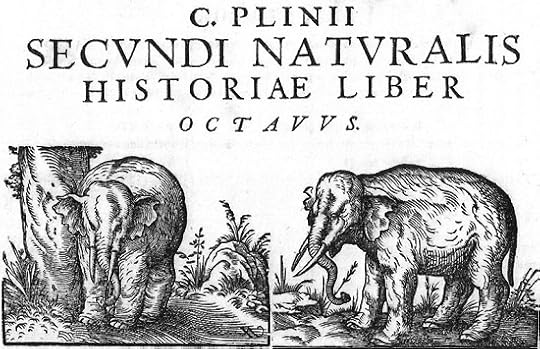
Mintha egy olyan Plinius lábjegyzetelné a Historia Naturalist, aki még nem aludta ki a tegnapi tömbházmestereket. (Vagy ez már maga az öregség?) Nyugtalanító mondatszövedék babonákkal, vérrel, spermával és bélsárral – no és persze az ókori Rómával, ereje teljében. Mert Róma, úgy fest, olyan civilizáció, amit csak az különböztet meg a barbároktól, hogy lakossága több latin szót tud. Van persze ellenpontozás: hozzászól Dioklész, a rabszolga (ő, mondjuk úgy, a rög hangja), valamint az új generáció, ifjabb Plinius, aki viszont mintha az új, „varázstalanított világ” képviselője lenne, egy olyan jövőjé, ami némiképp kevésbé brutális, de talán kevésbé izgalmas*. A végeredmény egy sűrű, pulzáló, kaotikus szöveg, ami az emberi elme ősrobbanásáig akar visszavinni minket – ahhoz a zűrzavaros pillanathoz, ahol a gondolat megszületik.
*A kevésbé izgalmas civilizációk unalmukban néha visszaálmodják magukat egy kegyetlenebb korba. Szerintem jobban tennék, ha inkább elmennének bázisugrani, vagy vadvízi kajakozni. De az se baj, ha egyszerűen elkezdenek Trónok harcát olvasni. Igen, talán akkor járunk mindannyian a legjobban.
Mintha egy olyan Plinius lábjegyzetelné a Historia Naturalist, aki még nem aludta ki a tegnapi tömbházmestereket. (Vagy ez már maga az öregség?) Nyugtalanító mondatszövedék babonákkal, vérrel, spermával és bélsárral – no és persze az ókori Rómával, ereje teljében. Mert Róma, úgy fest, olyan civilizáció, amit csak az különböztet meg a barbároktól, hogy lakossága több latin szót tud. Van persze ellenpontozás: hozzászól Dioklész, a rabszolga (ő, mondjuk úgy, a rög hangja), valamint az új generáció, ifjabb Plinius, aki viszont mintha az új, „varázstalanított világ” képviselője lenne, egy olyan jövőjé, ami némiképp kevésbé brutális, de talán kevésbé izgalmas*. A végeredmény egy sűrű, pulzáló, kaotikus szöveg, ami az emberi elme ősrobbanásáig akar visszavinni minket – ahhoz a zűrzavaros pillanathoz, ahol a gondolat megszületik.
*A kevésbé izgalmas civilizációk unalmukban néha visszaálmodják magukat egy kegyetlenebb korba. Szerintem jobban tennék, ha inkább elmennének bázisugrani, vagy vadvízi kajakozni. De az se baj, ha egyszerűen elkezdenek Trónok harcát olvasni. Igen, talán akkor járunk mindannyian a legjobban.
December 27, 2023
Capricious, you might call me. Because sometimes a Very Short Book sold to me at some expense will make me bad tempered, even if it has the gorgeous quality of So Late in the Day. It's maybe a question of managing expectations: previous outings with Claire Keegan had sent all hopes into orbit. Here, I went in with almost zero knowledge of what was really awaiting me.
And I was transfixed.
Yes, I knew there would be horrors. Of that, I had been warned. Disemboweling, crucifixion, predation, the blood, urine, vomit and faeces. Is my fascination such a morbid one? I would hope not: yes, I had to turn away, hold my breath, gasp and wait for calm to return. So what is the purpose of such horror? It is not mere titillation, surely. A small hint in the prologue, perhaps: The more chatter about trifles, the more violent the contrast.
Contrast.
A fragment of a nail or a bit of rope used for crucifixion, wrapped in wool and worn round the neck protects against the quartan fever, a big toe of a gladiator carried in a leather strap around the neck could ease arthritis, a lock of his hair might arrest the advance of baldness... As Venus rises it drizzles a fertilizing dew that grants not only the Earth but all living things the power to conceive... Humans live in fear of the wrath of gods and goddesses who will wreak disaster on them for perceived infractions...
And yet, Pliny the Elder can write:
The sun's rising and setting leave no doubt that our orb-shaped world rotates on an eternal circuit, and at inconceivable speed, completing each trip within twenty-four hours.
I certainly do not believe that life is so valuable it must be prolonged at all costs. You who are of the opposite opinion will die nonetheless, even if your life has been prolonged by perverse acts and abominations.
But what does the soul consist of? Which material? Where is its consciousness? How does it see, hear and feel? How does it employ the senses, and what does it have to offer without them? And where do they live, these many centuries of souls and shadows, and how many are they? It is all but the childish lies of idiot mortals who greedily desire to never die.
Fascinating, brilliant, gut-wrenching and moving.
A few things still need to be said about the world.
And I was transfixed.
Yes, I knew there would be horrors. Of that, I had been warned. Disemboweling, crucifixion, predation, the blood, urine, vomit and faeces. Is my fascination such a morbid one? I would hope not: yes, I had to turn away, hold my breath, gasp and wait for calm to return. So what is the purpose of such horror? It is not mere titillation, surely. A small hint in the prologue, perhaps: The more chatter about trifles, the more violent the contrast.
Contrast.
A fragment of a nail or a bit of rope used for crucifixion, wrapped in wool and worn round the neck protects against the quartan fever, a big toe of a gladiator carried in a leather strap around the neck could ease arthritis, a lock of his hair might arrest the advance of baldness... As Venus rises it drizzles a fertilizing dew that grants not only the Earth but all living things the power to conceive... Humans live in fear of the wrath of gods and goddesses who will wreak disaster on them for perceived infractions...
And yet, Pliny the Elder can write:
The sun's rising and setting leave no doubt that our orb-shaped world rotates on an eternal circuit, and at inconceivable speed, completing each trip within twenty-four hours.
I certainly do not believe that life is so valuable it must be prolonged at all costs. You who are of the opposite opinion will die nonetheless, even if your life has been prolonged by perverse acts and abominations.
But what does the soul consist of? Which material? Where is its consciousness? How does it see, hear and feel? How does it employ the senses, and what does it have to offer without them? And where do they live, these many centuries of souls and shadows, and how many are they? It is all but the childish lies of idiot mortals who greedily desire to never die.
Fascinating, brilliant, gut-wrenching and moving.
A few things still need to be said about the world.

Read
September 27, 2022102nd book of 2022.
I'm leaving this unrated because it's such a difficult thing to pin down. I picked Voetmann up for my flight to Copenhagen, being a contemporary Danish writer, and read bits and pieces of him throughout my stay and now back here in England, too. The title presumably comes from this quote from Naturalis Historia, 'I am adding hours to my life: for living only means to be awake.'
The book is a combination of quotes from the aforementioned text by Pliny the Elder and fictional scenes, monologues, etc., from the writer himself and Pliny the Younger. It's a fairly abstract book. Having some knowledge of ancient Rome would probably help, luckily I studied it for two years and have an interest in the era, and many of the names were familiar (though I never studied Pliny). Pliny the Elder famously died after rushing towards the erupting Mount Vesuvius and becoming ash. His life's work, working on the Naturalis Historia (an attempt to catalogue the whole world) was passed onto his nephew. The book is called a 'comic delight': I don't see that, though I did find many parts fascinating and somewhat playful. The scene that sticks with me the most is Pliny the Elder taking a woman to his bedroom, a woman with no orifices. The man who sells her for the evening to him tells him not to attempt to create any holes in her by cutting her. So, Pliny rubs his genitals all over her hole-less body, feeling more aroused than he has ever felt. Something about the unattainable.
I'm leaving this unrated because it's such a difficult thing to pin down. I picked Voetmann up for my flight to Copenhagen, being a contemporary Danish writer, and read bits and pieces of him throughout my stay and now back here in England, too. The title presumably comes from this quote from Naturalis Historia, 'I am adding hours to my life: for living only means to be awake.'
The book is a combination of quotes from the aforementioned text by Pliny the Elder and fictional scenes, monologues, etc., from the writer himself and Pliny the Younger. It's a fairly abstract book. Having some knowledge of ancient Rome would probably help, luckily I studied it for two years and have an interest in the era, and many of the names were familiar (though I never studied Pliny). Pliny the Elder famously died after rushing towards the erupting Mount Vesuvius and becoming ash. His life's work, working on the Naturalis Historia (an attempt to catalogue the whole world) was passed onto his nephew. The book is called a 'comic delight': I don't see that, though I did find many parts fascinating and somewhat playful. The scene that sticks with me the most is Pliny the Elder taking a woman to his bedroom, a woman with no orifices. The man who sells her for the evening to him tells him not to attempt to create any holes in her by cutting her. So, Pliny rubs his genitals all over her hole-less body, feeling more aroused than he has ever felt. Something about the unattainable.

October 23, 2022
I received this book as part of my subscription to The Republic of Consciousness Book Club, a wonderful service which provides me with a new small press book every month. This book was September’s book but it has taken me until mid-October to get around to reading it.
To be honest, this is probably a book I should read again. It is only a short novel but is probably best described as “diffuse”. It was only in the latter parts of the book that my brain started putting pieces together and making connections and I suspect I would have enjoyed the first parts of the book more if that had started sooner.
This is a book of fragments. There is no plot to speak of and there are very few characters. The fragments mix together the thoughts of Pliny the Elder, observations from his nephew Pliny the Younger, scenes involving Pliny the Elder dictating his thoughts to his slave, Diocles, and quotes from Naturalis Historia, Pliny the Elder’s scientific work “of dubious accuracy” (www.britannica.com). Sometimes, several fragments follow a kind of linked theme. Sometimes they don’t.
In the chapters that follow a kind of theme, and in some where that theme is a bit trickier to grasp, the book creates an excellent, often uncomfortable, atmosphere. But when you put the whole together I am not quite sure I could make it all work. This is likely more a failure in me as a reader than in the book, but then this review is about my experience of reading the book.
So I am left a bit undecided how I feel about the book overall. I thought a lot of the individual chapters were very good, but I’m not sure I thought the overall book added up to as much as the sum of its parts.
It’s the first part of a trilogy, so maybe my plan should be to revisit it when further parts become available. If they are all of this kind of length, the three parts together won’t add up to as much as the majority of single novels.
To be honest, this is probably a book I should read again. It is only a short novel but is probably best described as “diffuse”. It was only in the latter parts of the book that my brain started putting pieces together and making connections and I suspect I would have enjoyed the first parts of the book more if that had started sooner.
This is a book of fragments. There is no plot to speak of and there are very few characters. The fragments mix together the thoughts of Pliny the Elder, observations from his nephew Pliny the Younger, scenes involving Pliny the Elder dictating his thoughts to his slave, Diocles, and quotes from Naturalis Historia, Pliny the Elder’s scientific work “of dubious accuracy” (www.britannica.com). Sometimes, several fragments follow a kind of linked theme. Sometimes they don’t.
In the chapters that follow a kind of theme, and in some where that theme is a bit trickier to grasp, the book creates an excellent, often uncomfortable, atmosphere. But when you put the whole together I am not quite sure I could make it all work. This is likely more a failure in me as a reader than in the book, but then this review is about my experience of reading the book.
So I am left a bit undecided how I feel about the book overall. I thought a lot of the individual chapters were very good, but I’m not sure I thought the overall book added up to as much as the sum of its parts.
It’s the first part of a trilogy, so maybe my plan should be to revisit it when further parts become available. If they are all of this kind of length, the three parts together won’t add up to as much as the majority of single novels.

November 5, 2022
What a weird, strange book. Perfectly captures that feeling of the miscellany writer (miscellanist?), that ancient personality type who is interested in everything but seems to know nothing. There's some weird stuff in here, like his father who drinks the blood of dead gladiators to improve his health. Also even the format is just weird, with quote from Pliny then being commented on by the Elder and the Younger.
Don't think I've laughed at anything lately so hard as I laughed at the commentary on stars:
Don't think I've laughed at anything lately so hard as I laughed at the commentary on stars:

October 23, 2023
Pliny the Elder
I am lying on my stomach on a blanket outside the villa, baking under the sun. My sister's boy, little Gaius, is wobbling around me. He is making a speech he has prepared, in which he appeals to Lucretia not to take her own life after her rape by Tarquinius. I am lying here sweating, listening to a child tackle the elastics of guilt. It is partly comforting and partly alarming to hear him weigh the notion as deftly as any lawyer in the Forum. He is already indifferent. I can no longer feel the border between my body and the world, the hot blanket, the warm air. When I lie here, eyes closed, I feel borderless. The birds sing in me, the boy, with his hypocrite talk and theatrical gesticulation, walks in me. The tall plane tree, thronged by cicadas, snaps and hisses. I lie in the sun with my eyes closed, watching the illuminated insides of my lids. Warm red. In Germania, I saw a king sacrifice a bull to his gods. The bull's blood was collected in a silver basin on an altar of turf. When the basin was full, the king placed a thin wooden disc on the surface. A face had been cut into each side of the disc. One was angry and warlike, the other was laughing, tongue snaking from the open mouth. The disc, its laughing face up, trembled in the steaming blood. Then the king placed the bull's testicles on the disc, which sank under their weight and then popped back up, now with the angry war face on top. An omen, I believe. I feel like that laughing face now as it turned towards the bottom. [107–8]

February 24, 2022
good stuff, weird and gross. and short too

February 6, 2022
Boy howdy did this one come out of left field. This little novella was a new library purchase that I picked up out of curiosity.
"Awake" is a stream of conscious tale told in the alternating voices of Pliny the Elder, Pliny the Younger, and Diocles the slave. Quotes from Pliny the Elder's 'Natural History' are peppered throughout the work at appropriate places.
This novella explores the human need to understand nature and how that need to understand is a type of domination. I can say with all seriousness that while I was reading this I was questioning the limits of my own need to understand the world around me. Ive always thought my curiosity was a good thing. The question is, would I be able to recognize the point when it would be best to just leave the unknown be.
The 100ish pages in this book are full of themes and ideas that are worth exploring. Harald Voetman has translated Latin lit. He does not shy away from the darker aspects of Roman society. There are some very disturbing descriptions of death and corpses in this novel as well as plenty of discussion of bodily fluids of all sorts being used for remedies. There is nondesceiptive rape. None of this will be too outrageous if you are familiar with Roman history.
"Awake" is a stream of conscious tale told in the alternating voices of Pliny the Elder, Pliny the Younger, and Diocles the slave. Quotes from Pliny the Elder's 'Natural History' are peppered throughout the work at appropriate places.
This novella explores the human need to understand nature and how that need to understand is a type of domination. I can say with all seriousness that while I was reading this I was questioning the limits of my own need to understand the world around me. Ive always thought my curiosity was a good thing. The question is, would I be able to recognize the point when it would be best to just leave the unknown be.
The 100ish pages in this book are full of themes and ideas that are worth exploring. Harald Voetman has translated Latin lit. He does not shy away from the darker aspects of Roman society. There are some very disturbing descriptions of death and corpses in this novel as well as plenty of discussion of bodily fluids of all sorts being used for remedies. There is nondesceiptive rape. None of this will be too outrageous if you are familiar with Roman history.

December 8, 2025
Vacillating between a 2 and a 3. Well written, yes, mostly. Unpleasant? Yes, definitely. I didn't enjoy it, not in the least. Uncomfortable and, at times, revolting, which, let's be clear, doesn't mean it's bad. Maybe just not for me?

March 26, 2026
This short book chronicles the last days of Pliny the Elder, the prolific writer, historian, and naturalist who was perhaps best known for having died while attempting to rescue friends from Mount Vesuvius in the year 79.
This is an account by his nephew, Pliny the Younger, himself an author and magistrate, composed, something like a play, of nine scenes involving Pliny, his slave Diocles, and the nephew himself.
The differences from the world as we know it today, and even from the history we study are sharply conveyed; through the image of wax baby dolls fashioned by Pliny’s nurse to represent his dead siblings, to the strange and horrific description of Pliny’s paid sexual encounter as barely a teenager to a young woman without orifices, to, horrifically, the crucifixion of a runaway slave.
At an advance age Pliny (the Elder) is an unpleasant character to say the least, grossly overweight, struggling to breathe with frequent nosebleeds, and odorous to the point that most can spend little time with him. His world is vulgar and savage, women and children playthings for their masters, like their slaves; satisfying lust is treated like satisfying the appetite. Despite all this the deepest of serious meditations take place on medicine, anatomy, borders of the empire and suffering.
As a short book one is left wondering what one has read.. a novel, I don’t think so, rather a collection of observations, however unpleasant they maybe, that take us to places that we could not possibly have imagined.
This is an account by his nephew, Pliny the Younger, himself an author and magistrate, composed, something like a play, of nine scenes involving Pliny, his slave Diocles, and the nephew himself.
The differences from the world as we know it today, and even from the history we study are sharply conveyed; through the image of wax baby dolls fashioned by Pliny’s nurse to represent his dead siblings, to the strange and horrific description of Pliny’s paid sexual encounter as barely a teenager to a young woman without orifices, to, horrifically, the crucifixion of a runaway slave.
At an advance age Pliny (the Elder) is an unpleasant character to say the least, grossly overweight, struggling to breathe with frequent nosebleeds, and odorous to the point that most can spend little time with him. His world is vulgar and savage, women and children playthings for their masters, like their slaves; satisfying lust is treated like satisfying the appetite. Despite all this the deepest of serious meditations take place on medicine, anatomy, borders of the empire and suffering.
As a short book one is left wondering what one has read.. a novel, I don’t think so, rather a collection of observations, however unpleasant they maybe, that take us to places that we could not possibly have imagined.

December 19, 2022
Liked this

December 17, 2023
Fractured narrative and cynical misanthropy: two characteristics that are beloved of contemporary literary fiction. This entrant is set in Ancient Rome, which provides some differentiating appeal. In one scene Pliny the Elder muses about cases of spontaneous combustion brought about by feelings of shame, citing Appius Claudius’ defeated army. It’s a wonder this hasn’t happened to numerous of our literary writers, forced to belong to such a horrific species!
Misanthropy finds its expression in ‘Awake’ through the character of Pliny the Elder and his attempt to catalog the entire breadth of cruel Godless nature, out of which humanity’s miserable character arises. The existential answer: grimly embrace it.
Should be noted however that Voetmann provides some comic relief through the character of Pliny the Younger, who periodically punctures some of his uncle’s grandiosity. “Sheer folly” he deprecatingly remarks about one instance of his uncle’s writings. Otherwise this would be completely a grim outing.
Misanthropy finds its expression in ‘Awake’ through the character of Pliny the Elder and his attempt to catalog the entire breadth of cruel Godless nature, out of which humanity’s miserable character arises. The existential answer: grimly embrace it.
Nature created man solely so he could suffer, the only animal who cries, the only animal who knows death and understands the scope of its suffering. The only animal who understands that it is made to suffer for nature’s amusement. He who believes himself meant for bigger things is the unknowing victim of nature’s game, hardly better than an animal. My suggestion: we must learn to enjoy the cruel game, and so be it that it is at our own expense.
Should be noted however that Voetmann provides some comic relief through the character of Pliny the Younger, who periodically punctures some of his uncle’s grandiosity. “Sheer folly” he deprecatingly remarks about one instance of his uncle’s writings. Otherwise this would be completely a grim outing.
November 6, 2021
A strange, horny book that dives into the deepest questions about nature and history with a demented grin. Quotes from Pliny the Elder’s Natural Histories are presented along side fictional notes from Pliny, his nephew Pliny the Younger, and his slave Diocles. Each in turn dynamically alters the way in which the presented topics from Natural Histories are understood. A great book on how and why we keep history, and what that says about ourselves. It’s also just so damn funny.

August 30, 2026
The language isn't difficult, but the structure was bewildering. I realized only after I finished and started rereading some sections that I probably need to tackle the whole thing again. The story seemed to be composed of disconnected and somewhat incoherent vignettes. My favorites were when Pliny meets a man who's daughter has no orifices
"you may do with her as you wish, but you must let her skin breathe, and you mustn’t prick holes"and the punishment of Plinius' scribe-slave Diocles
"come on, lie still, I have to break your leg"Maybe I should try reading one of the other entries in the series (subjects: Tycho Brahe, Othlo of St Emmeram). Maybe not.
March 22, 2026
Šioje mažoje keistoje knygoje kalba Plinijaus Vyr. “Gamtos istorijos” ištraukos, jis pats, jo vergas ir Plinijus Jaun. Kas ten žino, kaip galvojo senovės romėnai? Haraldas drįsta įsivaizduoti: kartais skambiai, filosofiškai, tragiškai, kartais bjauriai ir labai nepatogiai. Su būtinais keisto humoro įskiepais.
Miegodamas negyveni, kaip kitaip aprašyt visą pasaulį?
Miegodamas negyveni, kaip kitaip aprašyt visą pasaulį?
April 27, 2026
Ændrede hele min hjernekemi

September 17, 2022
Yourcenar-stämningen gick mig inte förbi där på ett av Foyles bokbord vid Southbank. Hadrianus minnen är en av mina favoritromaner och här handlar det om Plinius den Äldres sista dagar.
Som alltid med antikens Rom kan jag inte få nog av det poetiska och det vackra, men blir äcklad och onödigt uppskrämd av det perversa och vidskepliga. Just den här skildringen har en stark närvaro med markörer som pelargångar, fikon, skuggiga marmorbänkar, villor med atrium och impluvium och det vi lärde oss på latinkurserna, skrivtavlor med stylus och - what have the Romans ever done for us - BRÖD och VIN.
Trots detta får jag nog vända mig annorstädes, eller tillbaka till Maggan*, för att finna mitt litterära tusculum.
* Marguerite Yourcenar.
Som alltid med antikens Rom kan jag inte få nog av det poetiska och det vackra, men blir äcklad och onödigt uppskrämd av det perversa och vidskepliga. Just den här skildringen har en stark närvaro med markörer som pelargångar, fikon, skuggiga marmorbänkar, villor med atrium och impluvium och det vi lärde oss på latinkurserna, skrivtavlor med stylus och - what have the Romans ever done for us - BRÖD och VIN.
Trots detta får jag nog vända mig annorstädes, eller tillbaka till Maggan*, för att finna mitt litterära tusculum.
* Marguerite Yourcenar.
March 4, 2020
Könnyedén erőszakos és szexuális, ami néhol viccesen hat, pont ahogy azt az ember egy római korba helyezett, magas rangú ember szemszögéből írt modern műtől várja.
Vannak benne érdekes gondolatmenetek az életről és a világról, amik egy korabeli ateista tudósember fejében hasonlóan fogalmazódhattak meg.
Az egyik legjobb jelenetnek viszont egy szolga a főszereplője, aki amolyan balszerencsés Houellebecqi figuraként küzd a vágyaival, és pórul jár. Nem tudom, hogy Voetmann az olvasó latin tudásának fejlesztése érdekében, vagy milyen más okból nem akarta dánul leírni azt, hogy "Visne me fellare. Maestus sum."
Most, hogy megnéztem Wikipedián, már tudom, hogy az ifjabb és idősebb Pliniusszal jelölt szakaszok nem ugyanannak az embernek két különböző életszakaszából vett szemelvények. :)
Megtévesztett, hogy ifjabb Plinius a nagybátyját emlegeti írásaiban. Így aztán nem is tudom, melyik eset épp kivel történt meg. De nem hiszem, hogy ennek bármi jelentősége volna. Nem változik az egész könyvön átívelő történet értelme, mert ilyen történet itt nincs. Illetve, csak: az élet.
Akinek tetszett, tudom még ajánlani: Sudden Death.
Vannak benne érdekes gondolatmenetek az életről és a világról, amik egy korabeli ateista tudósember fejében hasonlóan fogalmazódhattak meg.
Az egyik legjobb jelenetnek viszont egy szolga a főszereplője, aki amolyan balszerencsés Houellebecqi figuraként küzd a vágyaival, és pórul jár. Nem tudom, hogy Voetmann az olvasó latin tudásának fejlesztése érdekében, vagy milyen más okból nem akarta dánul leírni azt, hogy "Visne me fellare. Maestus sum."
Most, hogy megnéztem Wikipedián, már tudom, hogy az ifjabb és idősebb Pliniusszal jelölt szakaszok nem ugyanannak az embernek két különböző életszakaszából vett szemelvények. :)
Megtévesztett, hogy ifjabb Plinius a nagybátyját emlegeti írásaiban. Így aztán nem is tudom, melyik eset épp kivel történt meg. De nem hiszem, hogy ennek bármi jelentősége volna. Nem változik az egész könyvön átívelő történet értelme, mert ilyen történet itt nincs. Illetve, csak: az élet.
Akinek tetszett, tudom még ajánlani: Sudden Death.
August 27, 2022
So imagery and writing style is absolutely incredible throughout the book. Voetmann does a really good job making the voice consistent but still slightly varied between characters. It reminds me a lot of the second chapter of Master and Margherita if it were expanded up (just in vibes) and if it was super fragmentary. I know it is meant to be ironic for the most part and I did like the humor at parts. However, there was just too much talk of rape in a very light way that annoyed me slightly. I understand how it's accurate to the time (and it was fun to read given that I'm quite familiar with the time period it was written in) but it still felt like it was making light of the rape of slaves and children. Even though I love dark humor it was a little too indeterminate at points.
May 27, 2025
Kropsvæsker, kropsåbninger, kropsforseglinger - dødemasker, voldtægter, misdannelser. I bogen råder naturen, tilfældet og det obskøne og Plinius d Ældre bruger sine mange vågne timer på at beskrive og sætte i system - hans hoved stræber opad, men hans krop er tung og stræber nedad.
Jeg har her i foråret også læst Anne Carson og Christina Hesselholdt og på en eller anden måde er der et slægtskab mellem værkerne - de er alle en form for litterære polyfoniske kommentarværker (i dette tilfælde får vi kommentarer fra Plinius d Æ selv, men også fra nevøen Plinius d Yngre og slaven / broren Diokles)
Klar anbefaling herfra!
Jeg har her i foråret også læst Anne Carson og Christina Hesselholdt og på en eller anden måde er der et slægtskab mellem værkerne - de er alle en form for litterære polyfoniske kommentarværker (i dette tilfælde får vi kommentarer fra Plinius d Æ selv, men også fra nevøen Plinius d Yngre og slaven / broren Diokles)
Klar anbefaling herfra!

March 4, 2023
A weird experience. Don’t know how to feel.

November 23, 2023
I gave up on understanding anything
October 5, 2021
I had high hopes after hearing about this title. But it expects too much praise for coating the reader with blood, vomit, feces, and other bodily secretions. Despite some striking passages, the most beautiful were undoubtedly those quoted from Pliny himself—“classical” restraint is altogether missing from Voetmann’s work here. (For a writer who treats the calamities of history much more effectively with the help of such restraint, see Sebald.) This work is a notable entry in the Classics “update” now in vogue that aims to shock and disgust us with the (undeniable) obscenities and atrocities of the past while also shoring up our often facile moral convictions. But it falls far short of what seem to be its high aspirations (great literature—something beautiful and true), which can never be attained in this mode.

January 29, 2015
Beundringsværdigt værk. Ligger et sted mellem 3 og 4 stjerner for mig. Glæder mig til at læse mere af Voetmann.
Read
January 15, 2022i am partial to literary alternate histories and this odd little one did not disappoint. favorited
January 7, 2022
What a curious little book. It's about 100 pages, and portrays Pliny the Elder in the act of dictating his mammoth Natural History, which he intended to be a compendium of basically all knowledge of the universe. Snippets of actual text from the great work are followed by fictional commentary by Pliny himself, in a more confessional mode, or by his nephew Pliny the Younger, who often takes the piss out of his uncle, or by his very frustrated slave Diocles, the poor guy that's actually writing down 1+ million words of the proto-encyclopedia. No plot here, really - the short chapters flit from one topic to another; they're elusive and by turns philosophical or intensely earthy. This is an Ancient Rome that is perpetually splattered with blood, urine, and semen, where violence and trauma are omnipresent. It gets weird in a few places, but I mostly loved the contrast between the august work and the nasty physicality of its creation, the fat and wheezing but perversely energetic man dictating while supine on his bed to the overworked slave who can barely write the words down straight because his hand is killing him and he can't keep his mind of the sexual misadventures he might enjoy during his scant free time, his own chance to dominate someone else. I guess it's pretty dark, but the book is also suffused with that kind of hazy, slippery, thoughtful Invisible Cities vibe, which prevents it from just being a total gross-out. Pliny believes that the soul doesn't exist outside the body, before or after death, but that it does explain the unknowable chemical processes that make life possible. How do we reconcile our base, smelly bodies with the transcendent beauty of life?
Displaying 1 - 30 of 77 reviews