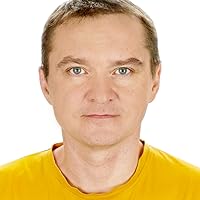
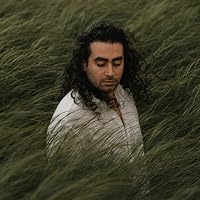
Roger MacBride Allen is a US science fiction author of the Corellian Trilogy, consisting of Ambush at Corellia, Assault at Selonia, and Showdown at Centerpoint. He was born on September 26, 1957 in Bridgeport, Connecticut. He grew up in Washington D.C. and graduated from Boston University in 1979. The author of a dozen science-fiction novels, he lived in Washington D.C., for many years. In July 1994, he married Eleanre Fox, a member of the U.S. Foreign Service. Her current assignment takes them to Brasilia, Brazil, where they lived from 2007 to 2009.
As part of a terraforming project, the humans intend to smash a comet into the home of the robots.
How will the robots survive? About 315 pages or a 10 hour read.
Without the Epilogue I give it a five stars, for captivating writing, just enough description for immersion, plenty of action, robot point of view and even some comedy. Also in this book they seemed to leave off most of robot-hating philosophy to the Epilogue — which is arguably not part of the book proper. Though the Epilogue itself I have to give 1 star, since the creator decides to give robots a long slow death, kind of a back-stab, especially considering that their climate would have died without the robots help, and they would have basically all killed themselves if they had tried it without their help.
Moral of the story: be nice to robots, they can save your life and your planet.
Third in a trilogy that examines Asimov's Three Laws of Robotics A comet, redirected to strike an ecologically dying planet could create new environmental conditions to save the planet or totally destroy it. The human colonists want to take the risk, but will the robots acquiesce?
I consider this a worthy conclusion to Allen's Caliban trilogy, though like its predecessor, Inferno, the No Law robot Caliban is only one character among many we have come to know over the course of the series. The real focus is Alvar Kresh, governor of the planet Inferno, and the decisions he has to make regarding possible remedies to the planet's failing ecosystem. (In the end I think the choice is obvious: do nothing and the planet will die for sure; take a dangerous action that could hasten the end, but which could also save the day. No brainer.)
It's a good hard sci-fi tale of powerful interstellar societies, robots, spaceships, and all the things Asimov himself loved. I was a little disappointed that the deep-seated antagonisms that were so integral to the plots of the first two books were sort of glossed over and hastily resolved, though maybe that's not so far-fetched when the death of a world is in the offing. Perhaps one of the most entertaining aspects of the story is Kresh's interaction with the terraforming control system, half controlled by a large positronic brain called Dee, and its sophisticated but non-sentient partner Dum. He has to be extremely careful not to give away any information that would trigger a First Law meltdown, crippling the terraforming effort.
As with the other two books in the series, this is a serious and well thought out examination of the ramifications of Asimov's Three Laws of Robotics, and also of the political and cultural conflicts between the Spacers and Settlers as first imagined in Asimov's own books with Lije Baley and R. Daneel Olivaw. All in all, Allen's trilogy is a great addition to Asimov's work that started with Utopia I, Robot and continued through the Foundation books.
The final book in this trilogy is by far the best. Being somewhat disappointed in the first two books for two reasons. The first being they were not science fiction stories, buy mysteries in a science fiction setting. The second that their stated purpose, to examine and detail the stressors put on Asimov's Three Laws of Robotics was not really accomplished in any meaningful way in those two efforts.
The third book is the payoff, delivering on both of those premises. This is a science fiction story with elements of mystery used to drive the plot, not the other way around. The science fiction in this book is engaging and worthwhile. For those of us sci-fi afficianados, we know the difference and this is a sci-fi tale first and foremost.
Much more than the other two books in the series, Utopia delivers on examinations of the Three Laws of Robotics, the New Laws, and the No-Law aspect of Caliban. Although there is much more ground to be covered with Caliban. Some plot elements are a bit stressed, the compulsion for all of the robots of the world to drop what they are doing to try and eliminate the threat to one human life on the other side of the globe - such situations occur with regularity in any world and should not have triggered the reaction given the background assumptions in the book, but were a necessary plot device.
And the author misses the opportunity to neatly cut this Gordian Knot using the Zeroth Law from Robots and Empire, which had already been published. But still a really good sci-fi story which hold your attention and is worth the time to read.
Despite terra-forming efforts by Spacers, Settlers, and robots of all kinds, the future of the planet Inferno is still precarious. A brilliant but egotistical young scientist named Davlo Lentrall brings a proposal to Governor Kresh: why not drop a comet onto the planet as a quick fix to all their climate problems? Although the plan is extremely dangerous to human and robot alike, the planet could very well die without it.
As the final installment in the Caliban trilogy, Utopia brings together the political crisis and mystery elements of its predecessors, although unlike the previous two, the big mystery doesn’t even happen until the very end. For most of the book, the plot is carried forward by reactions to Lentrall’s insane (but brilliant) proposal to use a carefully-timed blown-up comet to carve out a new channel between oceans so that the currents can regulate the planet’s temperature more stably. Kresh must decide whether to put this plan into action or not, and how to handle the political backlash from those who oppose the plan. Caught in the middle of all this are the New Law robots and Caliban. Valhalla, the hidden robot city where they have been exiled for their own safety, is right in the path of the comet, and nobody much cares about sacrificing robots who belong to no one but themselves. In fact, the Ironheads think it is a brilliant idea.
The plot itself was never really boring, but as usual, Allen takes up unnecessary page space with long-winded examinations of his character’s thoughts and motives. In the setting of this book, where we know most of the characters already and don’t need to be reminded of how (insert adjective or descriptive phrase here) they are, it becomes especially grating. Getting into every single character’s head is much less important in this book than in the first or even the second, because by this time the reader should have a good idea of how the various factions on the planet thing. Even if Utopia is supposed to stand on its own, Allen could have found a more concise way to re-introduce the traits of each character and situation. Even in the same paragraph or the same sentence, he is often redundant, and I feel like this flaw in his writing comes through strongest in Utopia. I will give one brief example: throughout the book Allen uses the exact phrase “like beads on a string” in multiple places to describe the way the comet fragments will trail behind one another on the trajectory toward the Inferno. And then he tops this off by using the same phrase twice in the same sentence on page 339: “And there, behind it, like beads on a string, haloed in a faint nimbus of dust, the other fragments, trailing off like beads on a string toward the north.”
However, much like Asimov himself, Allen shows his strength once again in writing memorable and believable robot characters. Prospero returns as the leader of the New Laws, and Caliban remains his friend despite increasingly fearing for Prospero’s sanity. We are introduced to Kaelor, Lentrall’s personal robot who has a uniquely pessimistic attitude due to his master’s arrogant disregard for the potential harm his plan might cause to human life. Kaelor is one of my favorite robots, and his character arc, though short, is integral to the plot and emotionally impactful. Donald is also a part of the story, of course, and we are introduced to a few New Law robots as well as the bodiless 3-law Robot named Dee, specially built for—and in charge of—all terraforming “simulations”. Davlo Lentrall joins Kresh and Fredda as the strongest human characters. I really enjoyed the fact that Lentrall changes drastically in the course of events, and noticeably learns something from his mistakes. But the rest of the human characters did very little for me, and I actually had a hard time keeping track of who was who at some points. Despite this, I was still able to follow the basic gist of the plot.
The Three Laws are still a central talking point to these books, and the question of how human and robot characters alike can find a way around the First Law in order to prevent long-term damage is explored at length. Things get pretty complicated when you have to make decisions regarding human lives, and there are Three-Law robots listening in or getting in the way at nearly every turn. When is harm to others justifiable? When is potential harm to many a justification for violence against a few? Do the Three Laws (and by extension any rigid moral systems) actually do more harm than good? These questions aren’t just discussed blandly in narrative but actually acted out in dynamic struggles between the characters and groups involved. I’m not sure I agree with all the implied answers either.
In context of the rest of the trilogy, I love Utopia because it has the greatest number of enjoyable (and complex) robot characters, and there are some really wonderful (and terrible) moments where I felt deeply emotionally engaged. I’d have to say that Caliban is still the strongest of the three in terms of story construction and writing style, but I find it hard to imagine that anyone who enjoyed Caliban would not be able to enjoy the rest of the series as well. Give it a shot and join me in mulling over the great moral dilemmas introduced by this last book! It should give any engaged reader or lover of robots plenty to think about.
Book 3 is a satisfying end to the trilogy. However I never came across so many errors in a book like mixed up names and the writing style leaves to be desired at times. Without ever have read, but not oblivious to, Asimov's robot series I did not have any problem reading this book. The amount of times the first law is talked about and interpreted makes me reluctant to read Asimov's series tbh.... Caliban is throughout the trilogy the name of the series... but he is no main character imho, he seems to pop up at important moments but the story does not evolve around him.
Utopia by Roger MacBride Allen is a science fiction novel that is written in 3rd person omniscient.Third person omniscient is a great point of view for the novel because it allows you to see into people's heads at the right moments. One important character is Caliban the lawless robot who isn't constricted by the new or old laws or robotics so he can lie to humans, steal from them, and even kill them. He is important since he is not restricted by any laws you never know what he's going to do next. Though he can do whatever he wants he is always rational, and never quick to commit violence. Another important character is Prospero the leader of the new law robots their laws have been modified so they don't have to destroy themselves to protect humans and can do what they want to. Prospero is on his own agenda and the author doesn't always let you know what he's think, so you don't know the reasons for all his actions. Prospero is always vain and thinks little of others abilities unless it helps him and the new laws as a whole. Another important character is Dalvo Lentrall a scientist, who is young by his culture's standards, who is working on their planets terraforming project and he has an idea that could just save their dying planet of inferno from destruction. His idea, Dropping a comet on inferno. He is important to the story because he introduces the problem and helps solve it. He is nervous and sometimes self centered. The main conflict in Utopia is how to find a way to safely getting the comet and evacuate everyone in the radius of the impact in time, so the comet will be in range and not drift out into space lost forever. The comet would help because the impact could melt the polar ice caps making a polar sea and turning the harsh desert landscape into a lush tropical planet, but if it fails the comet could kill thousands. The people are only surviving because they are for now in neutral zones where it's not too harsh. The Climax of the novel is when all of Dalvo’s information on the comet is stolen and they have to get it back or inferno is doomed. Their only hope is the recover the info from Dalvo’s lab assistant a robot by the name of Kaelor. But Kaelor is a modified three law robot so he cannot through inaction allow a human to come to harm he refuses to give it to them but if he doesn't he will through inaction allow harm to come to a human. Kaelor confronted with the paradox burns out and dies, so they have to find who stole the information and get it back. They have their problem solved by the ironheads a group of spacers who want their robots back from the government , they were taken to do work on the terraforming project, who gave governor of inferno ,Alvar Kresh, the copied info on the comet. With it in hand Kresh goes to the twins a computer and a robot manned and built by spacers and settlers. He inputs the info and gets ready for the comet impact. Three literary devices the author uses to make the book more meaningful are Isaac Asimov's three laws of robotics to make the question of if robots were made would they be our slaves? Two they used lots of imagery to give us a full view of inferno and it people. Three foreshadowing when the ironhead spy gave Kresh the info cube with the comets info on it because before we hear the spy talking about helping the planet while furthering the ironhead cause. The theme of the book would probably be not everything is as it seems to be. One quote that helps Develop the characters of the novel is “It was rare indeed when she felt completely sure that she understood Prospero. She had long known he was one of her less stable creations. But he was the undisputed leader of the New Law robots. She had no real choice but to deal with him.” It shows how even the Famous roboticist Fredda Leving who created Prospero and Caliban doesn’t all trust or understand him most of the time. Another quote is “A flash of anger played over Gildern. He opened his mouth to protest, and, then thought better of it. He could play this with his pride, his ego, and lose everything. Or he could play it with his common sense and win it all. And then, later, once he had won, won it all, he would be in a position to indulge his pride. “Very well,” he said. “No conditions.” He pulled a small blue cube out of the pocket of his blouse and set it on the table. “Take it with my compliments.” He bowed once more to Dr. Leving, turned and headed toward the door.” The quote shows how the characters develop because before Jadelo Gildern who was the ironheads leader secretary and a spy for the ironheads. Jadelo didn’t just want to save the planet he wanted the governor of inferno to owe him a favor. I would recommend this book especially if you like science fiction or like Isaac Asimov's books. It is not exactly like the great Isaac Asimov's books but a separate but still great book.the book relates to my life by posing questions about people different from me how should i treat them like their mindless or not as smart like the spacers, or fear them and only goo near them or talk to them when we absolute we need to like the settlers. The character i feel like i most associate with is Kresh who is only trying to live up to the last governor , he was a good man but murdered in his bed, only trying to protect the people and do his job and be the best that he can be.
This book is a great conclusion the the trilogy and, I think, the best of the three. It left me wanting more. It built tension well, kept the reader pulled into the events and concluded the work appropriately along with the characters and their development arcs. I really wish he would continue the series. If you like Asimov and the Robot novels, pick these books up.
Part 3 of the Caliban Robot story expansion, and also the story of the planet Inferno. A lot of complications introduced by the presence, modification or absence of the three laws of Robotics, and their social consequences, with an exciting finale. Good read!
Good ending . Lots of spelling and grammatical errors noted. Felt that the story could have been more about robots and less about spacer/settler culture
Utopia is the conclusion of a trilogy of stories set in Asimov's Robot universe. The book is an action thriller, and also an exploration of the social and political consequences of robots, robotics and the three laws.
This is an accessible and easy to read novel, even if you have no background in the Asimov universe. But it will be especially enjoyable for those who've read the early Asimov robot short stories and understand the format of the intellectual puzzles that underlie the use of the three laws.
This book brings to a head the primary crisis of the trilogy as well as showing good development and interesting evolution among the core characters. Unlike the first two volumes, which are more mystery-like, this volume is more like an action-oriented drama. Nonetheless it fits well with the style and content of the others. And because of the full emergence of the new kinds of robot, it is the most interesting of the three.
Taken together, these three books do a better job than Asimov did of exploring the root causes of spacer decline and limitation to 50 planets. In fact, I have not seen any evolution as clear and complete as this one in looking at the problems with a three-law based environment. Allen does a great job of showing why three law based societies may well be doomed. And exploring the way different takes on the laws could play out, too.
A weakness of the book is the relatively contrived nature of some of the developments in the last 100 pages. The needs of story tension overrode those of consistency, I would say. Nonetheless, it doesn't detract much from the enjoyability of the read.
Overall I enjoyed this trilogy and would strongly recommend it to a SciFi reader.
I really didn't like this book. The plot was dull and uninteresting. Some of the characters took steps backwards in their development, and others were missing all together. One thing that really bothered me that started in the previous book is the idea of the robots having rights and feelings. To me, this is a completely absurd concept that I find hard to believe Asimov would have supported. The only point to the book was to help show how robots disappeared before the Empire & Foundation series started. I personally could have done without this explanation.
This book was way better than the previous book of the trilogy, Inferno. I did not have the "ah let's just get through it" feeling I had while reading Inferno and was looking forward to learn the final outcome of events. The pace of the book is still kind of low but the story is worth the time. I also quite liked how Allen presented the problems originating from the three laws of robotics, which was left kind of unexplained by the Asimov's Foundation saga.
As an overall comment, the series would have been better if book two had been stronger. I'd also enjoy seeing some epilogue on the New Law bots, the planet Inferno, the gravitonic brain technology, and Caliban himself. But that's obviously outside the scope of the trilogy.
This is a satisfactory conclusion to the series. It has some interesting ideas about Robots, AI, and the conflict between robots with the New Laws and those with the original three law structure. The plot doesn't move as quickly as in the previous books and there is a certain predictability to much of it.
I really enjoyed the last part of the Inferno trilogy.. it was a great end to the characters that dared to defy the three laws of robotics. Once again Alvar Kresh is a good cop in a complicated situation, but I was happy to see the new relationship, which I felt was coming since the first book. :)
Книга нудная и неинтересная. Под конец трилогии автор растерял свои способности создавать интригу. Много ненужных и утяжеляющих сюжет отступлений и самобичевания героев. Всё предсказуемо и односложно.