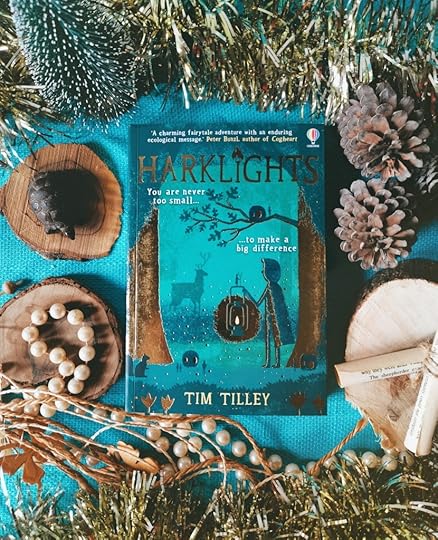
Wick has always lived in the dark and dreadful Harklights Match Factory and Orphanage, working tirelessly for greedy Old Ma Bogey. He only dreams of escaping, until one day a bird drops something impossible and magical at his feet - a tiny baby in an acorn cradle...
As midnight chimes, Wick is visited by the Hobs, miniature protectors of the forest. Grateful for the kindness shown to their stolen child, they offer Wick the chance of a lifetime - escape from Harklights and begin a new life with them in the wild...
Winner of the Joan Aiken Future Classics Prize, Harklights is a magical story celebrating family, friendship and the natural world, filled with a message of hope for our times.
*Disclaimer: I was kindly gifted a copy of this book by Penguin Random House SA and Usborne Publishers in exchange for an honest review.
"Stories are a way of remembering who we are, but also a way of finding out who we want to be."
Waterstones Childrens Book of the Month May 2021
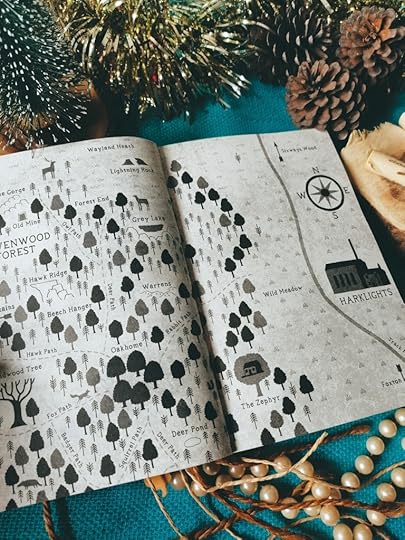
Harklights by Tim Tilley is a heartwarming Middle Grade read with an environmental message that goes straight to the readers' hearts. Accompanied by a map and beautiful illustrations, we meet Wick who is an orphan boy living and working at Harklights Match Factory and Orphanage. Surrounded by other orphans who longs to have a family but who only knows the strict Old Ma Bogey, Wick builds small matchstick buildings and fills them with his dreams.
One day Wick discovers a small acorn baby and this leads him to the Hobs, little people who lives in the forest. With the help of Papa Herne, Wick escapes Harklights and finds himself in the forest. Learning the ways of the Hobs, Wick finally feels that he belongs, he has a family. All of this is in danger when Wick finds out about the Monster that threatens the forest where the Hobs lives. Wick wants to protect the Hobs and their home from the Monster and decides that he will do whatever it takes to protect them.
"Families aren't just blood, they're where the heart takes root."
This magical adventure into the forest has a healthy dose of newfound family, friendship and belonging. We see Wick learning the responsibilities of a Forest Keeper and how important it is to protect the environment. This book is perfect for children 8 years and older, and even adults will appreciate the joy this story brings. I loved this book and enjoyed the Hobs and their qualities. Harklights is one of my favourite Middle Grade reads for the year 2021. I highly recommend getting this book for young children; not only will they enjoy it but they will remember the message and carry it with them.
What does this story include? ➾ Courage, bravery and determination ➾ Little people known as Hobs ➾ Tree Stags ➾ Wood Sprites
Captivating and delightful, Harklights is a joy of a story to read.
Wick is an orphan boy, who has spent his life (as far as he can remember), working at the Harklights match factory and orphanage. The opening chapter paints this as a dark and depressing place in which your mind is filled with the images of wretched Dickensian workhouses. To make it worse, it is run by a menacing character, who to me is reminiscent of the formidable ‘Child Catcher’, and to whom the children refer to as Old Ma Bogey.
The story seems somewhat steeped in darkness, cruelty and the grimness of an era we would rather forget, until we are intrigued by the miniature man that Old Ma Bogey keeps in a glass dome on her desk. With this there is a sudden spark of intrigue and magic that then continues to build with Wick’s discovery of a tiny acorn, which is in fact a beautifully made cradle with a tiny live baby inside! From this the story begins to lead us away from the darkness, and towards a tale of warmth and wonder, as Wick is faced with the opportunity of a lifetime – a way to escape from Harklights.
Although the idea of a new life feels Wick with hope, knowing this is a real chance of a family, he is torn with the dilemma of leaving everyone else behind. But with the realisation that magic is real, he knows that this is a moment he must seize. Leaving the lights of Harklight behind him, Wick discovers the miniature world of the Hobs: a civilisation of tiny people living in the forest, who protect it as well the animals and nature within it. But there is a deep secret that Papa Herne of the Hobs is keeping, and all the creatures of the woods are not as they seem. It is up to Wick to help the Hobs, the creatures of the forest, as well as his friends left behind.
This heart-warming and enchanting story was a pleasure to lose myself in, with charming illustrations that depict a world of imagination and wonder. The writing is cleverly crafted move the narrative beyond being just about fanciful miniature worlds and people, but more so about the underlying message of the importance of protection and conservation.
Many thanks to the publisher for sending us an advanced proof copy to review.
"Families aren't just blood, they're where the heart takes root."
Welcome back to another episode of my random library find, where I pick books with pretty covers even if I never heard about the author, the book, and I don't even bother reading the summary.
Yes, I picked up this book because the cover was pretty, and it was shiny and I like shiny things (Tamatoa might be one of my ancestors).
What I liked about this book:
1- An extremely strong premise that could make you feel the despair in the orphanage.
2- Educational, which is what children books are supposed to be.
What I didn’t like about this book:
1- Despite having a super strong start that captivated me to lock in and read the first 50 pages in one go (I can barely stay focused for that long), it got super slow and super boring afterwards.
2- Main character is a pussy.
3- World building sucks big times.
I think the target audience are 9 years old, meaning that I've got no right to judge. Not gonna lie, this is probably a great book for kids, but as an adult I got so bored, and skipped almost every page after 150 pages in, reading here and there to just to keep up with the plot. It just wasn't good enough for me.
2/5 stars
P.S. 2026 was shit so far. I don't want to read Poirot when I feel like crap inside and out.
A match factory which masquerades as an orphanage. A manikin which it emerges was once alive. A monster which in reality mayn’t be alive. Butterflies which aren’t insects. A boy who doubts he has what it takes to put things right. It’s all here in Harklights, a debut novel from the first ever winner of the Joan Aiken Future Classics Prize, set in a vaguely Victorian world with elements of fantasy and steampunk.
I’m not usually a fan of long narratives told in the present tense but here I think it works well: Wick’s first person tale gives both a sense of urgency and also uncertainty, just as youngsters’ accounts often are, and while the reader may guess at some of the things Wick puzzles over nothing is truly known until all is revealed.
While our focus is on the narrator’s hopes and fears, behind them all is a tale of despoilation, exploitation and cruelty fully relevant in our contemporary world which will resonate even with the most innocent young reader.
Harklights is the name of a match factory, the kind that supplied the product that Hans Christian Anderson’s little matchgirl sold. Run by the irredeemably wicked Miss Boggett, a witch-like figure known to the orphans as Old Ma Bogey, the prison-like building manufactures Everstrikes matches made from the trees surrounding it, steadily encroaching on Havenwood Forest and endangering the wildlife that inhabits it. When Wick first rescues a miniature baby and then dramatically escapes from Harklights he discovers the existence of hobs, little people who live in harmony with nature. The tensions that arise from leaving his friends behind, conquering his fears, overcoming the suspicions of certain hobs and learning the extent of Harklights’ destructive plans are what drives the story forward until the explosive climax.
The author has cleverly made use of familiar tropes to not only drive through an ecological message but to acknowledge the anxieties that youngsters often feel regarding family, friends, self-worth and potential. Miss Boggett breaks down each youngster’s sense of self by destroying their identies and names, subjecting them to terrible physical and psychological cruelty, denying them the food and creature comforts she herself enjoys. He underlines the notion that we should be stewards of nature, not its masters, but he also entertains, not least in the distinctive monochrome illustrations and map he himself has created for the publication. As he puts it himself, Wild Magic is waiting!
Speaking as an adult I’m not totally convinced of the story’s pacing and of the relationships Wick has not only built but will also build up; but then I’m not the target readership, for whom life may feel like a continuous present and relationships are often mysteries that continue to puzzle. Still, I’m not sure that I’ve entirely come to terms with those conundrums myself.
Pre par nedelja sam slušao izlaganje jednog našeg istaknutog profesora molekularne biologije u kome je govorio o savršenstvu funkcionisanja ekosistema u prirodi, o njegovoj složenoj organizaciji gde je svaki pojedinačni član važna karika i ima svoju ulogu. Naravno, čovek kao najinteligentnije ali biće sklono destruktivnom ponašanju često remeti te ekosisteme, nekad doduše iz nužde, a nekad iz zabave, dosade, ili jednostavno, eto tako, zbog svoje iskonske destruktivne prirode. Upravo glavna tema ove knjige je upoznavanje sa funkcionisanjem jednog šumskog ekosistema, ali i šta se dešava kada se on naruši uticajem nekog faktora od spolja (u ovom slučaju, upravo ljudskog faktora).
Vonk is een boek dat zich typeert door een flink moraaltje maar is vooral een spannend en zeer sfeervol geïllustreerd verhaal over Wiek die keihard moet werken om te overleven in het weeshuis Vonk en verlangt naar een huis zoals hij die kan bouwen met verdwaalde luciferstokjes. Op een dag vindt hij die, op een wel heel bijzondere (magische) plek. Vonk is een niet alleen een plek, maar ook een gevoel. 🌳
Mooie discussies over familie en de betekenis van een huis versus een thuis en daarom een passend tipje voor de aankomende Kinderboekenweek maar eigenlijk ook gewoon een tipje voor elke week.
"It's what we are - little folk. We're like humans, only we got more forest in our hearts."
This is a charming tale for children, which may just help to open their eyes to the wonders of the natural world (although you can't beat taking them out in it either).
Harklights is the tale of Wick, an orphan who lives and works in the harsh Harklights Match Factory. He has never known what it is like to have a home, or to be loved. His small world certainly doesn't have any hint of magic within it. Until one night, a bird drops a tiny acorn cradle into his possession. Wick is startled to find a tiny baby inside, but he takes care of it. Then, at night, he is visited by a small group of tiny people looking for the baby. They are Hobs - tiny people who live in the forest. As a thank you, they allow Wick to escape with them, to take refuge in the forest that they call home. But just as Wick thinks that he may have found a place to finally call home, he discovers that something may already be threatening its survival.
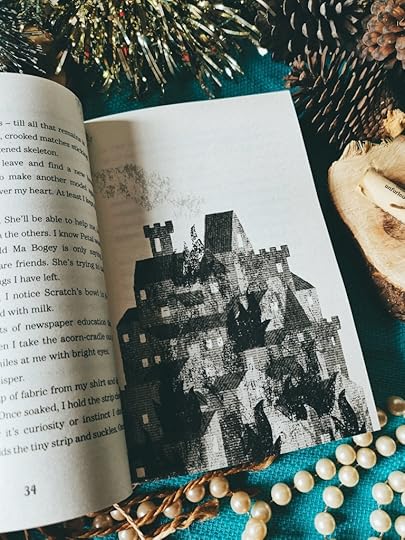
Illustrated throughout with simple black and white pictures, this is a lovely tale for children to ignite their wonder in the natural world. The two worlds that Wick experiences - the grim world of the orphanage, compared to the rich forest - are both brilliantly brought to life. When Wick first starts to explore his new environment, it is a joy to see him finding so much beauty around him. The Hobs teach him that he should respect the world, and what he finds in it. Reading this book made me realise even more just how lucky I am to live near a forest, in a town with plenty of fields and country lanes. One of the greatest gifts, as a child growing up, is to be able to experience the wonder of the natural world. If we connect with it, we want to protect it. This book also reminds us that, if we give it a chance nature can thrive: "Nature has ways to repair itself."
I really enjoyed this book- read it in about two days flat! It's a wonderful mix of nature, history and magic.
Wick is an orphan, living and working in the Harklights Match Factory. But after coming across a baby tucked away in an acorn shell, his life changes forever. He escapes the tyranny and back breaking work of Old Ma Bogey's factory, and begins a new life in the forest with the Hobs (small creatures who protect nature and the forest). But a monster is stalking the woods, and it's gobbling up the woodland and threatening their home. Can Wick help or is it too late?
This is a wonderful story- drawing on Victorian England, factories and deforestation but also sharing more modern messages of ecology. The spread of artworks throughout make this a unique and magical read. If you are teacher or librarian, this would be a great book to share with pupils, as it offers so many options for project work (or linking to existing topics and projects).
Very mediocre. The main character is selfish, dumb and a coward which makes him rather unlikable. The world building is subpar. The story is full of inconsistencies (Wick being so uneducated that he doesn’t know what fern is but 5min later he can identify half a dozen bird species? He sleeps beside the fire to keep warm so is that fire a regular human campfire size -making it absolutely gigantic and very dangerous for the hobs- or is it hob-size -in which case it would do nothing to keep Wick warm?). Wick has spent less than a week with the hobs yet chooses them over the orphans he grew up with. He is considered a hero by the hobs even though on his very first day with them he caused one of their kids to almost drown (which they turned into “he saved him from drowning!” Yes he did, after causing the accident). He plans to invade the orphanage to rescue his “friends” (whom he conveniently left behind when he escaped because he wanted his own freedom so badly) and his plan is to just… go there? And then everything goes completely wrong because no shit, that’s what happens when you show up without a plan. I’m just tired of middle grade authors not putting any effort into world building or character development or keeping a story consistent just because the targeted audience of kids might not notice. Those are all elements of a good book and if you have none of them, regardless of your audience the story is gonna suck.
wow. What a mighty message from so many delicately made moments in our amazing Children's Book of the month for May. I picked it up as the cover is a delight. Little did I know about the hidden illustrated gems inside.
We meet Wick who is about to introduce the newest orphan to the match packing bench. Trying to replace a toy that was taken on his arrival, Wick is punished. His punishment leaves him bereft but still he sees a small item that falls into the bare courtyard. Deciding to investigate Wick will discover there is magic in the small things & the tiniest action can make a difference. Follow Wick as he discovers there is a world of wonder beyond the orphanage walls, and finds somewhere to call home.
At the back is a glossary of Forest Homes and Five Ways we can help keep & appreciate nature. A very engaging adventure from illustrator & author Tim Tilley. I am so excited to get this into the hands of readers of all ages.
Can't wait to see where his imagination takes us next in Witchstorm out 2022.
Thank you Usborne for our gifted copy and finding such a treasure.
Harklights is a book about nature and its world. It is a book that will help the younger reader to build the care for nature. But it is not only about that, it is also about friendship and family, and about courage when you are standing with fear and feel small. Most importantly about love and relationship because hey Love always win, right? :)
Seriously, I did not expect to enjoy Harklights this much. The author really did a great job in building this story :) This is a little book of gem that will bring your mind and heart back to the nature, it makes you want to walk in the forest and hope to find some Hobs, for me some Norwegian Hobs maybe? :p This book made me smile.
I think a lot of people in different age would really enjoy this story :)
* ARC provided by the Publisher. THANK YOU SO MUCH!
Dit boek heeft een sterk en veelbelovend begin, waardoor ik in eerste instantie 4 sterren wilde geven. Mooie taal, krachtige zinnen die veel oproepen en je doen inleven. Het verhaal begint in een Dickensiaans weeshuis/luciferfabriek, waar de hoofdpersoon, Wick, probeert iets van menselijkheid en hoop vast te houden. Doordat hij een Hob (een klein magisch boswezentje) redt, weet hij te ontsnappen. Binnen de kortste keren wordt hij opgenomen in de hob-gemeenschap en een bijna volleerde bosbewaarder. Vanaf hier wordt het verhaal minder krachtig en een stuk voorspelbaarder. Het bos wordt bedreigd, uiteraard door de directrice van het weeshuis. Loeiende machines, miraculeuze reddingen en een eind goed, al goed. Het tweede deel maakt de belofte van het sterke begin dus helaas niet waar. Ik hoop dat de schrijver de kracht van het begin weer weet te gebruiken voor een volgend boek.
3,5⭐️ Een prima kinderboek over wezen die moeten werken onder enorm streng toezicht. Ik vond het heel mooi hoe de wezen allemaal verschillende verwerkings methods hadden. Sommige deden braaf wat er gevraagd werd en sommige gingen er tegenin. Ook de onderlinge banden waren heel wisselend.
De boodschap van dit boek vind ik erg belangrijk. Je moet goed denken om de natuur en je eigen steentje bijdragen. Dit is heel mooi verwerkt in het verhaal.
Ik vind wel dat er in het begin weinig verassends gebeurd. Daarna wordt het even spannend, maar dit is zo weer over. Er had meer uitgehaald kunnen worden.
De fantasie personages waren wel weer heel sterk en voegde echt wat toe. Ik denk dat dit voor kinderen heel erg motiverend zal werken. De verschillende kleuren bladzijdes helpen hier ook bij. De donkere dingen zijn geschreven op donkere bladzijdes. Ik vond dit een heel cool detail.
This is such a light and a fun read with a lot of important themes! I'm glad that the author is bringing out something that's important but in such a fun way! Filled with a lot of light twists and a social message, this book totally won my heart. It's magical and totally worth reading. I also loved the illustrations, they add to the storyline so well!
Beautiful story. Really teaches you to take care of wildlife. After all we do only live on 1 planet. Mild injury detail but not really triggering. Good book.
Not the unique fairytale adventure that I was hoping for, but it’s a positive story of belonging, hope and family, with a strong undertone about the value of protecting nature.
Thank you to the author and his publisher for allowing me to read a proof of this novel in advance of publication.
Harklights is a warm-hearted hug of a book, a story of love and family and the bonds forged between people (and Hobs!) which endure, through any trial. It is the story of Wick, an orphan who has grown up in the harsh surroundings of Harklights, an 'orphanage' where the children spend all day making and packing matches for the owner, Miss Boggatt (or Old Ma Bogey, as she is known). When Wick finds himself unexpectedly freed from Harklights, he must find his way in a strange and yet somehow comforting world, a world of nature and living things, so different from anything he has known. And when his new world comes under threat, he must fight to save it - and save those he loves from his time in Harklights - from certain destruction.
Charmingly written and imbued with a vital, heartfelt message, this is a story sure to settle in the heart of anyone who has ever stood and breathed in the beauty of a forest or marvelled at a spell-binding sunset. Like Wick, we readers can become Forest Keepers, ready to protect all that grows from danger and threat, no matter how big and seemingly overwhelming that danger may be.
Oliver twist meets the smurfs in this mesmerising ecological fairy-tale of friendship, family, and helping the environment. Wick the orphan resides in the terrible conditions of harklight orphanage. Overlooked by the draconian Old ma Bogey, he is confined to packing matchsticks in boxes tirelessly. However, when he stumbles on a miniature person encased in glass at Old Ma Bogey’s desk. Wick is imaginatively intrigued. Who are these miniature people outside Harklight orphanage? And do they hold the secret to changing his life?
Adventurous, classically themed, and informative. Harklights tells a warm story of evergreen proportions as Wick explores the world of Hobs in his pursuit of being a forest protector.
Although, I enjoyed the idea of the hobs being guardians of the animals and forest. I felt that there could have been more imaginative moments surrounding their daily lives. For example, all the hobs have magical abilities which helps them to keep the forest smoothly running. These are granted by the grand elder tree. However, Wick feels disappointed when he can’t get a magical ability as he is not a hob. However, In the finale Wick is able to use his inventiveness to defeat Ma Bogey and realises he didn’t need a magical ability.
Nox not liking Wick and humans could have been explained further. For example, Nox befriended Old Ma Bogey when she was a child. However, as she grew older, she betrayed them so Nox feels Wick would do the same.
I felt that the concept of the mysterious monster destroying the forest was very interesting. I really liked the chase scene between Wick and the machine and then when he is triumphant in destroying it. Wick’s standoff with Old Ma Bogey in the finale was very tense and nail-biting, especially when he gets shot! However, I found Bottletop destroying Old Ma Bogeys machine to be a little underwhelming, especially since he was being treated better than the other orphans and not filling matchboxes.
Also, we only see him in the finale, and it would have been great had Wick discussed this with him in the beginning. Outside of this, there wasn’t any real surprises or unexpected moments in the story. For example, it’s easy to predict Wick would return to harklights to free the orphans and Old Ma Bogey was somehow responsible for the disappearing Hobbs. It would have been great had Petal or Bottletop escaped with Wick into the forest to meet the Hobbs. Later on, Wick realises they had been working with Old Ma Bogey and ciphering information on their whereabouts.
Also, Wick’s interest in wanting to know his origins is woefully cut short with the documents being burnt. The orphans releasing the pixies and Hobb that Old Ma Bogy had stored didn’t explain how they got there. It would have been a good way to tie-in an origin story of Old Ma Bogey and why she kidnapped the creatures. For example, her father ran a successful circus that included captured pixies and hobbs as performers. During one performance, The Hobbs and fairies convince Old Ma Bogey to release them from their cage. After being released, they sprout trees beneath the circus causing it to be rise to the canopies, never to be used again.
Old ma bogey and her father end up penniless and she swears to get revenge by destroying their homes and enslaving them once again.
Overall, “Harklights” provides a feel-good story that would appeal to adults and children alike with relatable characters and meaningful moments. Fans of “the magic place” and classical children’s stories will enjoy this meaningful book. A great debut novel with bountiful illustrations for each important scene, illustrated by the author as well! Will be reading “Witchstorm” when it is later released.
This entire review has been hidden because of spoilers.
Unfortunately for Harklights, I read it at the end of a long selection of eco-adventures for young children and I was, perhaps, a little jaded with the genre. That doesn't change the fact that Harklights was the most disappointing by far. Like so many I've read (The Silver Arrow, The Lost Wild, The Wild Robot, to name a few), Harklights comes sumptuously packaged with golden trim. In some ways it's the refinement of this wave of admirable novels tackling environmental themes over the past decade. Yet there have always been books like this - way back to the Little Grey Men, through Watership Down and The Animals of Farthing Wood - so this new explosion is sometimes more stylistic than thematic. There's nothing wrong, in principle, with attractively presenting children's literature - whatever gets kids reading is fine by me. But the risk is style over substance. Harklights, despite being very competent and readable, doesn't really do anything new and comes across like a shadow of better books, both past and contemporary.
If you were to write a list of possible ingredients for a eco-adventure, Harklights would have most of them: a lonely child trapped in some kind of institution, a malicious adult dictator (in the timeless Roald Dahl mould), lots of characters seeing the natural world in a new way, small faerie-folk of some kind, animals to ride (preferably a stag), lots of other animals (including probably a fox), a human threat to the enviroment, a main character with a fated connection to the wild, a first person narrator with a cautious emotional outlook, stark and still black and white illustrations, a sparse and speedy narrative style with fast character development and at least one escape scene and one chase scene, a steampunk aesthetic like Bunzl's Cogheart and little people making a difference, as they have been doing so effectively since the days of Frodo. That list could describe The Last Wild as much as Harklights. At times it's a blatant copy of Tordoy's book. The tone is a little lighter and less adult, the violence a little less graphic, the threat a little more cartoony, but otherwise it's a very similar story. Harklights suffers from being a lite version of this better book, but it's not the only book it draws on. More than most, I found myself nostalgically remembering the movie, Fern Gully! Harklights draws on good source material but doesn't offer anything fresh.
That's a very harsh review because, apart from those overly familiar elements, Harklights is actually fun to read and will certainly find its audience. Wick is a spunky, likeable main character, even those some of the decisions and developments are too fast. The world of the little people isn't described well enough and it becomes hard to imagine and believe - compared to the meticulous setting of the Wild Robot and the way Brown describes the adaptation of the robot to the wild world, Tilley seems unconcerned with details and eager to rush on with the plot. The pace is not uncommon in children's literature - The Silver Arrow suffers from it, so does Cogheart, The Train to Impossible Places and Sarah Driver's Sea. I see the appeal, driving the plot forward to the big reveals, and I see the difficulty in balancing mature plot development with writing for this particular agew group. I think children's literature befits from reducing the speed of the plot, the number of characters and the amount of unnessecary flashy, action scenes. Wick is too heroic, too quickly, defeating impossible odds with barely a whimper from the massive, tree gnashing machines or the evil, shotgun wielding matron. It's a shame, because there are attractive elements to the book as well. But I heartily believe there are much better books out there doing roughly the same thing.
Toen ik startte in dit boek was ik optimistisch: er zat vaart in het verhaal, de weeskinderen hadden niet eens een bed om in te slapen, maar slechts een gekrijte omtrek op de grond als eigen slaapplek, zó straf hadden we het weeskinderen nog niet zien hebben in kinderboeken!
Een vleugje fantasie door een baby te laten verschijnen die zo klein was dat deze sliep in een notendop, ook daar ging ik graag in mee.
Maar vanaf Wieks ontsnapping uit het weeshuis raakte ik vrij snel geïrriteerd door het moralistische eco-gebabbel in dit boek. Lezen we hier een spannend boek of een aangekleed kinderprogramma van de Partij voor de Dieren (ik heb helemaal niets tegen die partij, maar je begrijpt wat ik bedoel)??
Enerzijds laat dit boek een volwassene met een geweer gericht schieten op kinderen en worden kinderen zonder uitleg of problemen gedood door hen in een 'Bodemloze' put te gooien. Dat zijn bovenbouwgebeurtenissen, die lees je niet voor in groep 5. Maar tegelijkertijd waren de personages vrij ééndimensionaal: goed-slecht, jong-oud, bang-dapper met simpele actie-reactie gedragingen die wèl passen bij kinderen van 9 jaar. Zo leert Wiek op een bepaald moment dat het gevreesde monster een machine is, maar blijft ernaar gerefereerd worden als ware het een levend wezen. Dat is een bewuste keuze van de auteur want zo blijft alles lekker in de 'natuurvibe' van dit boek hangen, maar mij ving je er niet mee.
Het taalgebruik gaat ook alle kanten op. Het boek is geschreven vanuit het ik-perspectief, we lezen door de bril van weesjongen Wiek. Maar daardoor past de literaire taal waarmee de schrijver omgevingen, ervaringen, gevoelens van Wiek wil omschrijven slecht. Wiek is een onderontwikkelde wees (want gedepriveerd van onderwijs, liefde, spel, contact met de buitenwereld) die in die ik-verteltrant woorden, zinnen, vergelijkingen gebruikt die totaal ongeloofwaardig zijn bij dit personage. De schrijver had beter voor een ander vertelperspectief gekozen.
Alle weeskinderen hebben namen van voorwerpen. Deze namen ontvingen ze van de in en in slechte eigenaresse van weeshuis/luciferfabriek Vonk. En ik snap het doel ervan: door kinderen de namen van objecten te geven wordt benadrukt dat deze juffrouw Bommer andere levende wezens louter als objecten ziet voor haar eigen gewin. Maar het leest niet fijn wanneer veel personages namen hebben als Bloemblad, Hangslot, Flessendop.
Uiteindelijk denk ik bij een kinderboek altijd: had ik het voorgelezen aan mijn kinderen of aan een klas die ik ooit had. En dan is het antwoord toch 'Nee'... 2,5 sterren en ik weet nog niet of ik het naar boven of beneden moet afronden. Ik laat het even open dus!