

What do you think?

Alonement
Being alone has a serious branding issue. We've only ever had negative language to talk about flying solo - but what about when time spent alone is restorative and joyful? What if it's something you crave? What if it's even just an hour you've carved out for yourself in the middle of a hectic week?
Enter: Alonement, Francesca Specter's empowering new word to express valuing your own company and dedicating quality time to yourself, whoever you are and whatever your relationship status.
Between shared homes, social plans and smartphone addictions, most of us don't know how to be alone - yet our life-long relationship with ourselves is the most important one we'll ever have. A reformed 'extreme extrovert' who struggled to spend even an hour on her own, Francesca made the resolution in January 2019 to improve her solitude skills. A year later, facing months of lockdown as a household-of-one, she valued those skills more than ever - and began sharing her wisdom with others on how to cherish time alone.
Packed with practical tips, insights from key experts and lessons from guests of the Alonement podcast - including Alain de Botton, Florence Given, Konnie Huq, Vick Hope and Camilla Thurlow - Francesca reveals how we can all thrive alone, whatever our circumstances, and harness the untapped power of some meaningful time with me, myself and I.
Enter: Alonement, Francesca Specter's empowering new word to express valuing your own company and dedicating quality time to yourself, whoever you are and whatever your relationship status.
Between shared homes, social plans and smartphone addictions, most of us don't know how to be alone - yet our life-long relationship with ourselves is the most important one we'll ever have. A reformed 'extreme extrovert' who struggled to spend even an hour on her own, Francesca made the resolution in January 2019 to improve her solitude skills. A year later, facing months of lockdown as a household-of-one, she valued those skills more than ever - and began sharing her wisdom with others on how to cherish time alone.
Packed with practical tips, insights from key experts and lessons from guests of the Alonement podcast - including Alain de Botton, Florence Given, Konnie Huq, Vick Hope and Camilla Thurlow - Francesca reveals how we can all thrive alone, whatever our circumstances, and harness the untapped power of some meaningful time with me, myself and I.
306 pages, Hardcover
Published March 1, 2021
Ratings & Reviews
Friends & Following
Create a free account to discover what your friends think of this book!
Community Reviews
Displaying 1 - 30 of 72 reviews

January 3, 2022
As someone who lived alone in a pandemic and still does, and is single, I thought I could identify with the author. That didn't really prove to be the case. Think the book was so focussed on being for everyone it missed the point of loneliness. As someone who's lived alone for 6 years, going to restaurants, theatre etc alone is all second nature to me. As is time for myself. I have it in abundance. How to break the loneliness cycle is lacking here.

May 25, 2022
Very well written, a ringing bell for all society obsessed with instant gratification apps and the need for constant validation from others. Alonement teaches you how to focus on yourself, be your own best-friend and most importantly (as Francesca puts it) get to know the person you will spend the rest of your life with: You.

May 5, 2021
Loved the concept of 'alonement' and it's something I'm going to really try and introduce into my life.
I felt there were a few things missing that I'd love to see Francesca exploring more in future...
The biggest element that I felt was missing was women's safety. The book touched briefly upon the gendered elements of alonement but didn't go into very much depth. I think a lot of women would actually feel really unsafe alone/ without a phone in some settings and I wish this had been explored a bit more - perhaps with a few safety tips?!
I would have also really liked to see Francesca exploring the 'paid work' element of alonement too. Lots of the examples of alonement activities were actually very commodified activities (i.e. making a podcast or writing a book) and I would have really liked this element to be unpacked a little bit more. If your alonement is based around writing a book to sell is that really something you're doing purely for yourself?
CLEARLY this book really got me thinking and I'll definitely be listening to the podcast going forward!!
I felt there were a few things missing that I'd love to see Francesca exploring more in future...
The biggest element that I felt was missing was women's safety. The book touched briefly upon the gendered elements of alonement but didn't go into very much depth. I think a lot of women would actually feel really unsafe alone/ without a phone in some settings and I wish this had been explored a bit more - perhaps with a few safety tips?!
I would have also really liked to see Francesca exploring the 'paid work' element of alonement too. Lots of the examples of alonement activities were actually very commodified activities (i.e. making a podcast or writing a book) and I would have really liked this element to be unpacked a little bit more. If your alonement is based around writing a book to sell is that really something you're doing purely for yourself?
CLEARLY this book really got me thinking and I'll definitely be listening to the podcast going forward!!

February 20, 2021
I was given an advanced copy of this to review, but the review is my own.
I loved this book. As someone who has been in a relationship for her whole adult life, something we have both come to learn is the importance of spending time alone, or Alonement. This book talks about spending time alone in a positive way; how you can apply it to all area of your life, and how it can truly be a valuable tool.
I really enjoyed this book, it was brilliantly written with so many interesting ideas.
I loved this book. As someone who has been in a relationship for her whole adult life, something we have both come to learn is the importance of spending time alone, or Alonement. This book talks about spending time alone in a positive way; how you can apply it to all area of your life, and how it can truly be a valuable tool.
I really enjoyed this book, it was brilliantly written with so many interesting ideas.

February 2, 2024
Four stars would be generous for a not particularly original or well-written book, but then, it has made a big impact on me. Specter does exactly what she sets out to do and makes being alone sound positively wonderful, and after a slightly gloomy January, I needed to hear someone say that. I went to the cinema alone last night on the basis of my reading - I've done this before, but not for a while, and Specter's kind advice made it simple. So, thank you 'Alonement' for helping me to re-appreciate my independent status and to take control of my film-going destiny.
My reservations? Specter is a lot younger than me, and she also speaks from what sounds like a place of affluence. I don't think alonement would be quite so possible if a) the reader had zero spare income to spend on a meal out or takeaway (mentioned so often it sounds like a taken for granted - she orders in *poached eggs and sourdough* at one point - surely no one really does that?), or b) the reader experiences any kind of obstacle to going out, such as a disability. She does acknowledge the impact that having children has on the possibilities for being alone, but again, these vary hugely according to social networks, including availability of a partner. So, although I've found the book helpful (and I acknowledge my own privilege here), I've kept my star count at three.
My reservations? Specter is a lot younger than me, and she also speaks from what sounds like a place of affluence. I don't think alonement would be quite so possible if a) the reader had zero spare income to spend on a meal out or takeaway (mentioned so often it sounds like a taken for granted - she orders in *poached eggs and sourdough* at one point - surely no one really does that?), or b) the reader experiences any kind of obstacle to going out, such as a disability. She does acknowledge the impact that having children has on the possibilities for being alone, but again, these vary hugely according to social networks, including availability of a partner. So, although I've found the book helpful (and I acknowledge my own privilege here), I've kept my star count at three.

May 10, 2021
There’s a red line on my screen under “alonement” because my computer does not recognize it as a word. That’s because Specter made it up. Now it’s a book, a podcast, and apparently a movement. The idea behind this book is that people don’t know how to be alone anymore. We’re afraid of solo time without our screens to distract us. She cites a study in which people were asked to choose between 15 minutes alone with their thoughts and an electric shock. Most chose the shock. This is a primer on how to make time to be alone and get comfortable with it, whether you’re at home during a pandemic or going to a concert on your own. As someone who has more than enough alone time, I didn’t find it helpful for myself, but she does offer a lot of good advice for people who cram every minute with activity and need to take some “me” time. The book is well researched and interesting. My only real quibble is that Specter and her interviewees are all young. Wait until they’re 30 years older and ask how they feel about alonement.

April 19, 2021
This book is brilliant. At 34, long-term single, and living at a physical distance from the majority of my close friends, I started teaching myself some of these concepts a few years ago, but this still benefitted me. It proved that it’s a worthwhile practice, underpinned my existing knowledge, and encouraged me to push myself further. This will be helpful to those of any experience level, and I highly recommend it to anyone looking to get to know themselves and become more comfortable when alone.
July 14, 2026
alonement is quality time spent alone; to value and respect the time you spend with yourself - loved this reminder of how valuable it is to know yourself well!!!

April 8, 2021
Absolute brilliant read!!!
Alonement: quality time spent alone, often for short lengths of time. It is to value and respect the time you spend with yourself.
‘You can’t be what you can’t see, and you can’t practise what you can’t define.’
‘The gift of being able to read your own mind means you can acknowledge how you feel and therefore you can make yourself feel better.’
‘When we avoid time alone, we fail to discover & capitalise on our superpowers.’
I did that. It’s pretty fucking awesome.
I walked away from situations that were bad for me. I said goodbye and good riddance to people that made my heart hurt. yeh...I did that. I got me ✌🏽
Being alone = an invaluable time for self-discovery.
Your relationship with yourself is the only one guaranteed to be lifelong.
Everyone should read this book.x
Alonement: quality time spent alone, often for short lengths of time. It is to value and respect the time you spend with yourself.
‘You can’t be what you can’t see, and you can’t practise what you can’t define.’
‘The gift of being able to read your own mind means you can acknowledge how you feel and therefore you can make yourself feel better.’
‘When we avoid time alone, we fail to discover & capitalise on our superpowers.’
I did that. It’s pretty fucking awesome.
I walked away from situations that were bad for me. I said goodbye and good riddance to people that made my heart hurt. yeh...I did that. I got me ✌🏽
Being alone = an invaluable time for self-discovery.
Your relationship with yourself is the only one guaranteed to be lifelong.
Everyone should read this book.x

Read
February 27, 2023"Alonement" is a term coined by the author which essentially refers to the positive state of being alone; of spending quality alone time that is valuable and fundamental to our well-being and sense of self. Incorporating personal anecdotes and research, it explores the benefits of being alone and the reason why many people find it so difficult to be alone. It also provides practical advice and guidance on how to do things alone and debunks many of the stereotypes of being alone, functioning as a how-to guide for people looking to develop themselves and build on their "alonement".
This book is targeted more at younger audiences and those that are not very used to spending time alone. As a self-proclaimed extrovert that spent much of her early life doing everything she could to be avoid being alone, the author discovered the benefits of "alonement" in adulthood. Her experiences are very centred on being afraid and insecure to be alone, and how she grew out of this mindset after the break-up of a long-term relationship. As a result, some of what the author discusses is common sense to those of us who, like myself, are more introverted and value alone time as a fundamental part of our lives. Personally, I still found parts of it valuable to read despite this.
Specter advocates that the only person we will be with from birth until death is ourselves, therefore we should invest wisely into the relationship we have with ourselves. This includes practicing self-care, going out publicly alone, cultivating our hobbies and passions alone, travelling alone and making regular time to be by ourselves with purpose. She argues that doing this is not only beneficial for us but for our relationships with others too. There's plenty of great research featured here which supports her points and despite having never read any other books on this topic, I'd be interested to explore the works cited here for more insight, especially because I feel like some of them may resonate with me and be more to my tastes than this book was.
It is worth noting that the book does come from a very privileged perspective and a lot of what the author discusses as being fundamental for developing "alonement" is dependent on having money e.g. travel, living alone, visiting spas etc. A lot of what's discussed also might seem next to impossible for anybody that has dependents, demanding jobs, an illness or disability etc. And this feeds into a wider issue regarding the exclusionary tone of the book; despite the author saying the book is for "everyone", I expect that a lot of people would not vibe with this book as it reads as though it was written for people that are in the same demographic as the author e.g. millennials.
This gripe aside, I did find the book to be motivational and inspirational in embracing and investing in "alonement". It's an empowering book that made me feel that I am enough by myself and it has encouraged me to do more things alone rather than relying on other people to accompany me. I think the concept of "alonement" is interesting and it's important to have more conversations around the value of being alone and developing independence.
This book is targeted more at younger audiences and those that are not very used to spending time alone. As a self-proclaimed extrovert that spent much of her early life doing everything she could to be avoid being alone, the author discovered the benefits of "alonement" in adulthood. Her experiences are very centred on being afraid and insecure to be alone, and how she grew out of this mindset after the break-up of a long-term relationship. As a result, some of what the author discusses is common sense to those of us who, like myself, are more introverted and value alone time as a fundamental part of our lives. Personally, I still found parts of it valuable to read despite this.
Specter advocates that the only person we will be with from birth until death is ourselves, therefore we should invest wisely into the relationship we have with ourselves. This includes practicing self-care, going out publicly alone, cultivating our hobbies and passions alone, travelling alone and making regular time to be by ourselves with purpose. She argues that doing this is not only beneficial for us but for our relationships with others too. There's plenty of great research featured here which supports her points and despite having never read any other books on this topic, I'd be interested to explore the works cited here for more insight, especially because I feel like some of them may resonate with me and be more to my tastes than this book was.
It is worth noting that the book does come from a very privileged perspective and a lot of what the author discusses as being fundamental for developing "alonement" is dependent on having money e.g. travel, living alone, visiting spas etc. A lot of what's discussed also might seem next to impossible for anybody that has dependents, demanding jobs, an illness or disability etc. And this feeds into a wider issue regarding the exclusionary tone of the book; despite the author saying the book is for "everyone", I expect that a lot of people would not vibe with this book as it reads as though it was written for people that are in the same demographic as the author e.g. millennials.
This gripe aside, I did find the book to be motivational and inspirational in embracing and investing in "alonement". It's an empowering book that made me feel that I am enough by myself and it has encouraged me to do more things alone rather than relying on other people to accompany me. I think the concept of "alonement" is interesting and it's important to have more conversations around the value of being alone and developing independence.

July 20, 2022
Life affirming, reassuring, inspiring, the list goes on. As someone who has spent the majority of their life in one relationship or another but really craves time alone and finding that happy medium, this book really is for everyone. I’ve learnt things about myself and others through reading this book that I would never have even considered. The most important relationship you’ll ever have is with yourself and it’s about time we started learning that and celebrating it like we celebrate socialising and having a ‘other half’.

November 24, 2021
Reading this book was a journey in the corridors of being alone and owning. It makes really good points sometimes, however I didn't find it that particularly interesting or mindblowing. Overall this book gave me some good ideas about how to spend some quality time with myself.
February 9, 2022
Not groundbreaking philosophically but reinforced some helpful points in making valuing time to yourself.

January 2, 2024
A few nuggets of wisdom sprinkled in a mound of plain dirt.

January 17, 2024
If you’re an introvert, you don’t need this book. But it’s good. But you don’t need it if you already like being alone sometimes.
August 6, 2025
dnf (71/191)
Cool concept plauged by meandering writing.
This could've been a youtube short
Cool concept plauged by meandering writing.
This could've been a youtube short

August 9, 2022
3.5 stars out of 5.
-
One of the best self-help books I have ever read simply because of how much I resonated with almost-everything written in this book. I never realized how much alone time is important for the development of self as well as interpersonal relationships.
Almost anybody would benefit from reading this book.
-
One of the best self-help books I have ever read simply because of how much I resonated with almost-everything written in this book. I never realized how much alone time is important for the development of self as well as interpersonal relationships.
Almost anybody would benefit from reading this book.

December 24, 2024
This is an insightful outlook on how valuable alone time can be to our relationships with ourselves and others. As someone who has been romantically alone for most of my life, I am happy to say that this book has given me a new view on being alone and its opportunities for self-improvement.
I look forward to incorporating it’s advice into my life and my relationships to get to know myself better, what works for me, and who works for me, all to become the best version of myself.
I look forward to incorporating it’s advice into my life and my relationships to get to know myself better, what works for me, and who works for me, all to become the best version of myself.

July 6, 2025
This book might have actually changed my life. Every 20 something year old should be required to read this.

May 12, 2023
I really enjoyed savouring this book, dipping in and out of it for a good year or so!
I completely agree with it all, and loved the concept. Particularly important now that it's so easy to feel you're missing out with social media! I only drop a star as I feel that it could have been slightly shorter, as some things were a little repeated. But overall, loved.
I completely agree with it all, and loved the concept. Particularly important now that it's so easy to feel you're missing out with social media! I only drop a star as I feel that it could have been slightly shorter, as some things were a little repeated. But overall, loved.
October 12, 2024
The book starts out in the introduction with a bold statement that this book is for everyone, I have to strongly disagree. I could see this being a very helpful read if I was in my 20s and just starting out on a journey of unpacking normative scripts around relationships. As a Queer, ND, Polyamorous person the insights in this book feel entry level, and two dimensional.
It's jarringly apolitical, it doesn't in any tangible way examine coupledom and chosen solitude through the lenses of Capitalism, Ableism, and Patriarchy. Instead we get a well meaning, op-ed style montage of the perks of choosing alone time. It's frustrating in it's lack of depth, while the premise of the book was intriguing, and I agree with what she is saying, I was disappointed in how flaccid and repetitive it was.
This isn't a bad book, the ideas in it are interesting and a valuable social commentary, I just wish it had gone a lot further in its examination of social scripts, and how they interconnect to create systems of coupledom that are hard to break out of.
While this book is not 'for everyone ' as the author states, it is a good entry level reader to detox from 'other half' ways of being in the world. Just please read more books after this one.
It's jarringly apolitical, it doesn't in any tangible way examine coupledom and chosen solitude through the lenses of Capitalism, Ableism, and Patriarchy. Instead we get a well meaning, op-ed style montage of the perks of choosing alone time. It's frustrating in it's lack of depth, while the premise of the book was intriguing, and I agree with what she is saying, I was disappointed in how flaccid and repetitive it was.
This isn't a bad book, the ideas in it are interesting and a valuable social commentary, I just wish it had gone a lot further in its examination of social scripts, and how they interconnect to create systems of coupledom that are hard to break out of.
While this book is not 'for everyone ' as the author states, it is a good entry level reader to detox from 'other half' ways of being in the world. Just please read more books after this one.
July 25, 2021
I was really impressed with the amount of research that Francesca Specter carried out for this book. She interviewed a wide range of interesting authors, social commentators, researchers, professionals and celebrities for her podcast ‘Alonement’ and summarises key conversations eloquently to substantiate her claims and opinions on the topic. This means that you don’t feel you are reading ‘pop psychology’, rather an account of a much deeper dive into the benefits of spending time alone. This is particularly impressive for such a young writer.
My favourite chapter was no. 9 - I found that Specter had really gotten into the swing of things and her voice suddenly became very mature, as if reflecting the lessons that she had learned on her own ‘Alonement’ journey. This is a very honest book which doesn’t shy away from grappling with some seriously existential debates!
I would love to see a wider range of individuals and couples interviewed on this issue to broaden the contributions on the Alonement debate, perhaps as a sequel or update to the book as this social trend further evolves.
My favourite chapter was no. 9 - I found that Specter had really gotten into the swing of things and her voice suddenly became very mature, as if reflecting the lessons that she had learned on her own ‘Alonement’ journey. This is a very honest book which doesn’t shy away from grappling with some seriously existential debates!
I would love to see a wider range of individuals and couples interviewed on this issue to broaden the contributions on the Alonement debate, perhaps as a sequel or update to the book as this social trend further evolves.

December 6, 2021
My new years resolution is going to be not to waste too much breath on things I didn't enjoy, so this one is going to go out with a bang!
This seemed promising in the first few chapters, going through the importance of having personal hobbies and touching briefly on why fear of being alone comes down to intrusive, self-critical thoughts. However, for someone who has poor mental health, or if loneliness is taking over their life, the overall approach was superficial. You know you can 'read' or 'journal', but how easy are those things to do in actuality? This isn't to say those things don't matter. They are life enhancing. But I was looking for help about changing one's mindset. Something I can't overlook is bringing up women being murdered or sexually assaulted, then advising that we 'embrace alonement' anyway. I felt this undermined those women and should have been discussed a little more sensitively.
This seemed promising in the first few chapters, going through the importance of having personal hobbies and touching briefly on why fear of being alone comes down to intrusive, self-critical thoughts. However, for someone who has poor mental health, or if loneliness is taking over their life, the overall approach was superficial. You know you can 'read' or 'journal', but how easy are those things to do in actuality? This isn't to say those things don't matter. They are life enhancing. But I was looking for help about changing one's mindset. Something I can't overlook is bringing up women being murdered or sexually assaulted, then advising that we 'embrace alonement' anyway. I felt this undermined those women and should have been discussed a little more sensitively.

November 29, 2022
Specter takes a very important idea- that alone time is important and frames it in a way where you understand why you sometimes need space. She also catches the right drift- being alone, if chosen by the the person is a rather mind opening habit. Being forced to be alone isn't healthy. She explains how to utilize self time quite well- I seriously resonated with a lot of the views. The big issue in this book is repetition - there is one big idea, and it seems to help in every domain. There's some lack of nuance wrt how you should manage socializing in a new place or managing alone-time in a social env. Furthermore, the last 30% is a major drag, I felt like the core idea dried off - it was mostly just filler. Good read nonetheless, would recommend.
May 8, 2022
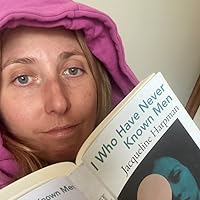
I picked this book up randomly at the library thinking it was going to be a book about being single and alone. Instead it is about carving out alone time for yourself regardless of your relationship status.
Some really good principles in here about doing things on your own and trying to be present in what you’re doing. I thought I was pretty good at spending time on my own but tried to not scroll through my phone while watching tv which was especially challenging.
Some good little tips in here that I will try to practice going forward. A really good self discovery book about finding the value in yourself, your constant companion
Some really good principles in here about doing things on your own and trying to be present in what you’re doing. I thought I was pretty good at spending time on my own but tried to not scroll through my phone while watching tv which was especially challenging.
Some good little tips in here that I will try to practice going forward. A really good self discovery book about finding the value in yourself, your constant companion

January 31, 2022
3.5 - I feel like the information in this book wasn't new or groundbreaking for me, but it was definitely a pleasant read and got me inspired to be better at spending time on my own.
February 4, 2022
Ideas are pretty good. Learning what alonement means is the most important thing I get from reading the book yet the book is a bit repetitive towards the end.

May 6, 2025
considering i finished this book in one day i’d say i’m pretty good at alonement now😎
in all seriousness, i’ve been spending so much time at home without much going on and it’s been excruciating. i’ve always struggled with being alone (bpd baddie here) solitude is so antithetical to my intrinsic nature. forcing myself to enjoy alone time feels like forcing a cat to take a bath. and whilst my friends have been busy this week, i realized i needed to get it together.
beyond that, i think ive been so hurt and devalued by men that the absence of one is more peaceful than the presence of one, but i still had a deep desire to escape the emptiness i was feeling during my alone time. that’s why i wanted to really figure out how to enjoy being alone.
this book actually helped me reframe things quite a bit, especially the concept of “only me-ism” which defines my alone time. i put way more effort into my time with my friends; i get ready, clean my house, put on makeup and a cute outfit, and usually mark out time for them in my schedule. but when im by myself basically none of those things are maintained, so that was a good first step in getting myself to value my own time and company.
while a lot of the ideas here aren’t groundbreaking (the latter chapters were less helpful to me personally), it provided a good framework to help me work on my independence and find happiness in solitude for someone who needed guidance & to be pushed in that direction. def one of the better self-help books that i’ve read 👍🏾
in all seriousness, i’ve been spending so much time at home without much going on and it’s been excruciating. i’ve always struggled with being alone (bpd baddie here) solitude is so antithetical to my intrinsic nature. forcing myself to enjoy alone time feels like forcing a cat to take a bath. and whilst my friends have been busy this week, i realized i needed to get it together.
beyond that, i think ive been so hurt and devalued by men that the absence of one is more peaceful than the presence of one, but i still had a deep desire to escape the emptiness i was feeling during my alone time. that’s why i wanted to really figure out how to enjoy being alone.
this book actually helped me reframe things quite a bit, especially the concept of “only me-ism” which defines my alone time. i put way more effort into my time with my friends; i get ready, clean my house, put on makeup and a cute outfit, and usually mark out time for them in my schedule. but when im by myself basically none of those things are maintained, so that was a good first step in getting myself to value my own time and company.
while a lot of the ideas here aren’t groundbreaking (the latter chapters were less helpful to me personally), it provided a good framework to help me work on my independence and find happiness in solitude for someone who needed guidance & to be pushed in that direction. def one of the better self-help books that i’ve read 👍🏾

May 22, 2022
Loved this book. As a single female it made me realise how much I’ve run away from being alone with my own thoughts and feelings, despite being single for 12 years. Back in 2016, I started holidaying on my own and doing stuff on my own as I realised I was missing out whilst waiting for other people. I’ve never once felt unsafe or lonely doing these things: concerts, gym, classes, cinema, walking, new hobbies, open water swimming, eating out… the list goes on. It’s made me realise I need alone time, or Alonement. It’s also made me understand that health relationships provide this - and that I want someone who complements me as I’m whole already. I’ll definitely be switching off my phone more and enjoying more digital detox time - loved the stuff about how we use social media and our phones as a crutch. We also compare our insides with everyone else’s outsides via social media which also means time spent alone with ourselves is important.

September 22, 2024
This book showed the importance of spending time alone and cherishing your alone time.
I enjoyed how Francesca was able to take us along her journey of self discovery while sharing tips on how we can fully maximise the time we spend all by ourselves.
One thing that stood out to me the most was when she suggested that we all have 'things' that should occupy our alone time. These things are hobbies that we always love to do but claim we have no time to do them either because we are scrolling on our phone or being distracted. This book has inspired me to carve out time to do the things I love alone.
She also talks in early chapters about how we escape our own thoughts through mindless scrolling and binge watching. She shares how activities like journaling helps our introspection of self and also helps us cultivate an inner friend rather than an inner critic.
All in all, I enjoyed this book and will definitely be reading it again.
I enjoyed how Francesca was able to take us along her journey of self discovery while sharing tips on how we can fully maximise the time we spend all by ourselves.
One thing that stood out to me the most was when she suggested that we all have 'things' that should occupy our alone time. These things are hobbies that we always love to do but claim we have no time to do them either because we are scrolling on our phone or being distracted. This book has inspired me to carve out time to do the things I love alone.
She also talks in early chapters about how we escape our own thoughts through mindless scrolling and binge watching. She shares how activities like journaling helps our introspection of self and also helps us cultivate an inner friend rather than an inner critic.
All in all, I enjoyed this book and will definitely be reading it again.
Displaying 1 - 30 of 72 reviews