Jump to ratings and reviews
Rate this book

Watergate: A New History

Rate this book
From Garrett​ Graff, comes the first definitive narrative history of Watergate, exploring the full scope of the scandal through the politicians, investigators, journalists, and informants who made it the most influential political event of the modern era.

In the early hours of June 17, 1972, a security guard named Frank Wills enters six words into the log book of the Watergate office complex that will change the course of history: 1:47 AM Found tape on doors; call police.

The subsequent arrests of five men seeking to bug and burgle the Democratic National Committee offices—three of them Cuban exiles, two of them former intelligence operatives—quickly unravels a web of scandal that ultimately ends a presidency and forever alters views of moral authority and leadership. Watergate, as the event is called, becomes a shorthand for corruption, deceit, and unanswered questions.

Now, award-winning journalist and bestselling author Garrett M. Graff explores the full scope of this unprecedented moment from start to finish, in the first comprehensive, single-volume account in decades.

The story begins in 1971, with the publication of thousands of military and government documents known as the Pentagon Papers, which reveal dishonesty about the decades-long American presence in Vietnam and spark public outrage. Furious that the leak might expose his administration’s own duplicity during a crucial reelection season, President Richard M. Nixon gathers his closest advisors and gives them implicit instructions: Win by any means necessary.

Within a few months, an unsteady line of political dominoes are positioned, from the creation of a series of covert operations code-named GEMSTONE to campaign-trail dirty tricks, possible hostage situations, and questionable fundraising efforts—much of it caught on the White House’s own taping system. One by one they fall, until the thwarted June burglary attracts the attention of intrepid journalists, congressional investigators, and embattled intelligence officers, one of whom will spend decades concealing his identity behind the alias “Deep Throat.” As each faction slowly begins to uncover the truth, a conspiracy deeper and more corrupt than anyone thought possible emerges, and the nation is thrown into a state of crisis as its government—and its leader—unravels.

Using newly public documents, transcripts, and revelations, Graff recounts every twist with remarkable detail and page-turning drama, bringing readers into the backrooms of Washington, chaotic daily newsrooms, crowded Senate hearings, and even the Oval Office itself during one of the darkest chapters in American history.

Grippingly told and meticulously researched, Watergate is the defining account of the moment that has haunted our nation’s past—and still holds the power to shape its present and future.

832 pages, Hardcover

First published February 15, 2022

1022 people are currently reading
7533 people want to read

About the author

Garrett M. Graff

19 books816 followers
Garrett M. Graff, a distinguished magazine journalist and historian, has spent more than a dozen years covering politics, technology, and national security. He’s written for publications from WIRED to Bloomberg BusinessWeek to the New York Times, and served as the editor of two of Washington’s most prestigious magazines, Washingtonian and POLITICO Magazine, which he helped lead to its first National Magazine Award, the industry’s highest honor.

Graff is the author of multiple books, including "The First Campaign: Globalization, the Web, and the Race for the White House," which examined the role of technology in the 2008 presidential race, and "The Threat Matrix: The FBI At War," which traces the history of the FBI’s counterterrorism efforts. His next book, "Raven Rock," about the government’s Cold War Doomsday plans, will be published in May 2017, and he's currently on an oral history of September 11th, based on his POLITICO Magazine article, "We're The Only Plane in the Sky."

His online career began with his time as Governor Howard Dean’s first webmaster, and in 2005, he was the first blogger accredited to cover a White House press briefing. Today, he serves as the executive director of the Aspen Institute’s cybersecurity and technology program.

Ratings & Reviews

What do you think?
Rate this book

Friends & Following

Create a free account to discover what your friends think of this book!

Community Reviews

5 stars
1,746 (58%)
4 stars
1,008 (33%)
3 stars
207 (6%)
2 stars
30 (<1%)
1 star
12 (<1%)
Displaying 1 - 30 of 514 reviews
Profile Image for Matt.
1,052 reviews31.1k followers
April 3, 2022
“At its simplest, Watergate is the story of two separate criminal conspiracies: the Nixon world’s ‘dirty tricks’ that led to the burglary on June 17, 1972, and then the subsequent wider cover-up. The first conspiracy was deliberate, a sloppy and shambolic but nonetheless developed plant to subvert the 1972 election; the second was reactive, almost instinctive – it seems to have happened simply because no one said no. The popular-history version we now tell about Watergate… represents just a sliver of the full story... The drama encompassed in those two conspiracies is in fact much darker than the rosy Technicolor version produced by Robert Redford – there’s the alcoholism of Martha Mitchell and Nixon’s own spiral of destruction during the Yom Kippur War, as well as criminality of an unprecedented and sad breadth – and also tells a more human story, one filled not with giants, villains, and heroes, but with flawed everyday people worried about their families, their careers, and their legacies…”
- Garrett M. Graff, Watergate: A New History

Over the years, I’ve picked up enough scraps about Watergate to form at least a basic understanding. Long ago, I finished the famous (and self-serving) All the President’s Men, by Bob Woodward and Carl Bernstein, and watched the classic movie that followed. Having read biographies about Richard Nixon and Henry Kissinger, I’ve filled in some of the gaps left by Woodward, Bernstein, and Robert Redford. Still, I’ve always wanted to know the full story, start to finish. I desired a single, comprehensive volume that weaves all these strange threads into a single cloth.

The trouble, however, is that there is so much written about Watergate it’s hard to know where to turn. Aside from all the primary documentary evidence, and the voluminous – and transcribed – Nixon tapes, it seems that just about every participant wrote their own account, which invariably contradicts every other version. Even books written by uninvolved authors tend to be polemical or pushing a theory. Since it was hard to find the right title, and since I didn’t really care that much, I was content to wait for something better to come along.

That something better has arrived with Garrett Graff’s Watergate. This is what I needed to answer all my questions regarding two-bit crooks, FBI leakers, and the tipping point of the erosion of America’s institutions. When I reached the last page, I was entirely satisfied that I needed to spend no more time on this ugly sidelight of U.S. political history.

***

The foremost thing that struck me about Watergate is its structure and style of presentation. Graff is not a flashy writer, but he knows a thing about organization. This seems like a minor matter, but it’s not. This is a tangled web of a tale, made all the more difficult since most of the characters are pathological liars.

Graff approaches this seedy sprawl methodically. For example, in the prologue, he begins with the Nixon Administration’s reaction to the release of the Pentagon Papers. Nominally, this did not involve Nixon at all, but rather the handling of Vietnam by John F. Kennedy and Lyndon B. Johnson. Yet, as Graff moves forward, he shows that Nixon did, indeed, have things to hide. Specifically, in a chapter on the Chennault Affair, he describes how Nixon attempted to subvert Johnson’s Vietnam peace talks in order to goose his chances against Hubert Humphrey in the 1968 election. In short, the allegation – believed by many, including Johnson, at the time – is that Nixon literally committed treason to get to the White House (a charge that has received new support in recent years).

From there, in chapter after chapter, block by block, Graff constructs a readable, coherent, and well-paced narrative. Watergate is 679-pages long, not including endnotes, and is just packed with detail. I swear this book feels heavier than others. But because Graff has marshaled this material so well, the length is never a burden.

***

This is an extremely info-dense book. As Graff admits, Watergate is not based on fresh interviews, which is just fine. The central figures of Watergate are now either dead or in their late seventies and eighties. The survivors have spent a lifetime dissembling, blame shifting, and revising their actions, so – in my opinion – it’s not that important to have them repeat what they’ve already said.

Instead, Graff has assembled a huge mass of printed material – trial transcripts, tape transcripts, journal entries, diaries, memoirs, and secondary sources – and laid it out as best he could, corroborating and cross checking. Watergate is an evidence-dependent historical event, and Graff does a really good job of telling you when testimony conflicts, and when there are alternative descriptions of what happened. Often, he does this by using footnotes at the bottom of the page. While I appreciated not having to flip to the back of the book, this sometimes broke my flow. Still, I’m of the opinion that more facts are better than less.

***

The striking thing about Watergate is the smallness of the conspirators. These were little men, narrowminded, incompetent, and grasping. They were poseurs, wannabes, intellectually-limited strivers, and often borderline delusional. G. Gordon Liddy, for instance, seems to have lived his life in an alternate universe where he was a highly-trained ninja assassin. With the exception of Nixon, whose concern with his legacy led to the tapes that would be his downfall, the conspirators were imbued with very little vision. They were concerned with short term gain, whether that was power or money or both. None asked themselves, before starting, how they would explain their actions to their kids, much less to their country and to posterity.

Dealing with severe space limitations, Graff does a decent job sorting through these personalities. A character list would have helped – I had to make my own – but the criminals and con artists who parade through these pages are sharply etched.

The most interesting, of course, is Nixon himself, a confounding blend of greatness and meanness, who might have found himself a happier place in history had he far more goodness. There is no need – or room – to list his deficits here, but his manifest negatives do not keep him from being utterly fascinating. I find it impossible to imagine myself as president; on my best days, I can’t envision exhibiting a fraction of the fortitude of Lincoln, the ingenuity of FDR, or the wealth-aided cool of JFK. But when I read about Nixon drunk in the White House, alone in a room, muttering to himself about his enemies, real or imagined, I can empathize, if not actually visualize myself doing the exact same thing. His pettiness gives him an odd, relatable humanity.

***

From the vantage of fifty years, there is something almost quaint about Watergate. This is not to downplay its seriousness, only to note that things have gotten much worse. Nixon’s tricks were dirty, but he never tried – or at least, never had the ability – to gaslight the country into thinking that George McGovern was not an American. And while Nixon created a constitutional crisis, nobody stormed the U.S. Capitol and tried to overturn an election. It just doesn’t feel quite so existential as what we’re experiencing now. If Nixon were president today, he wouldn’t resign. He wouldn’t even apologize. He’d just wait for the next news cycle, trusting that his party would stick with him, no matter what.

The Watergate mess was obviously not this country’s first scandal, political or otherwise. It was also not the first time a president had been involved in something questionable, immoral, or illegal. Clearly, though, Watergate previewed things to come, from the way technology could expose a lie, to the evolution of the media from merely reporting on politicians to directly challenging them. The unbroken and dingy line connecting Watergate and the present is disheartening, to say the least, and it is probably going to get a whole lot worse before we can start hoping for it to get even a little better.
Profile Image for Paul Bryant.
2,408 reviews12.6k followers
June 20, 2022
This is the 8th book I will add to my Watergate shelf and the last, because this book is DEFINITIVE, you can forget all the others.

It's loooooong. Because Watergate was a sprawling giant squid with tentacles that reached everywhere and loved squirting black ink all around to confuse its pursuers.

For instance it took a while for some investigators to figure out where Ehrlichman ended and Haldeman began.

The nature of Watergate was not stable. One lawyer said "Some days were more Buster Keaton than Al Capone."

You heard of the White House Tapes where Nixon says "A million dollars? We could get that. I know where we could get a million dollars." - well when they finally prised the tapes from Nixon's clamlike fingers

archvists would later estimate it took about one hundred hours to transcribe just a single hour of conversation

This was because Nixon and his cronies did not e-nun-ci-ate their words. Poor transcribers. Did he just say (expletive deleted) or (deleted expletive)?

I have reviewed several Watergate books before and rattled on at length about why it is so interesting and blah blah blah so I will not do so again. I am done with Watergate. After this great history, everyone can be.

Profile Image for Tom.
199 reviews59 followers
February 24, 2022
Garrett M. Graff has written the most reader-friendly account of the Watergate scandal that I've yet read, navigating the byzantine story of Richard M. Nixon's richly-deserved fall from grace in a clear, accessible way. If Watergate: A New History isn't the classic that Nightmare: The Underside of the Nixon Years (my personal favourite Nixon book) or All the President's Men were, it does a solid job of presenting Watergate as the most politically consequential scandal of a Presidency that -- outside of its still-overhyped foreign policy achievements -- essentially functioned as one big criminal enterprise. This quote sums it up nicely:

After the Chennault Affair, the Huston Plan, the Kissinger wiretaps, and the illegal bombing of Cambodia, the Pentagon Papers and the Ellsberg burglary, ITT and the Dita Beard memo, the Vesco donation, the milk price fixing, the Watergate burglary and cover-up, the campaign "rat-fucking," and Spiro Agnew's bribery case, there was still more?

Indeed there was much more to Nixon's rap sheet, a checkerboard of corruption and malfeasance going way back (see Roger Morris' excellent Richard Milhous Nixon: The Rise of an American Politician ). Watergate: A New History is the latest indictment of Nixon that makes for essential reading, even if it's not the "complete" history I'd have preferred. More coverage of the post-Presidency years of Nixon and his collaborators would have been appreciated, but considering the book's already impressive page count, maybe I'm being greedy. In any case, it's well worth reading, with a story that sadly retains relevance in the present day. In some ways, American political corruption has gotten worse -- particularly on the Republican end -- and it's hard to imagine Nixon would have been forced out in post-2016 election America. I'll end with another quote, from senator Lowell Weicker:

"Republicans do not cover up. Republicans do not go ahead and threaten. Republicans do not go ahead and commit illegal acts. And, God knows, Republicans don't view their fellow Americans as enemies to be harassed."

Perish the thought.
Profile Image for Chris D..
104 reviews30 followers
June 13, 2024
Watergate unfolded when I was very young, but my father was enthralled watching the hearings and following the drama of the Nixon administration. I always wanted to know more of the story and Garrett Graff delivers with a wonderful book that spells out all what was told to the nation at the time and what has been discovered since 1972-1974.

The characters are many and at times hard to keep track of who was truly guilty, who was naive, and who was kind of sad, like Martha Mitchell. For a nonfiction book this was truly a page turner which kept the reader entertained from beginning to end. A truly five-star book for me that brings the era of the 1960's and 1970's alive to the person of today with a particularly poignant resonance.
Profile Image for Anthony.
375 reviews153 followers
September 19, 2025
Ultimate Scandal

Before I turned to Watergate: A New History, I had absolutely no knowledge of the infamous scandal other than it brought down President Richard M. Nixon. I of course had heard of it, but didn’t know what it truly was in any meaningful way. As someone who has been reading a lot of American history I felt that I had to turn to this book to fill in that black hole. I’m pleased to say that I have been able to bridge this gap and I enjoyed my journey along the way. It has been said that rather than just rehashing well-known details, author Garrett M. Graff has provided a fresh perspective by weaving together an intricate, almost cinematic narrative of the events leading up to and following the break-in at the Democratic National Committee headquarters. As such, it has become a new authority on this complex subject.

In Watergate: A New History there is breadth and detail. Graff does not merely focus on the break-in itself or Nixon’s downfall; he paints a broader picture of the era, covering the culture of paranoia (massively built up in previous years by J. Edgar Hoover’s FBI), the mechanics of the cover-up, and the key players; from Nixon and his inner circle to the burglars and journalists who exposed the scandal. The book benefits from Graff’s skill as a storyteller, making even the most detailed accounts of meetings, memos, and secret recordings feel vivid and compelling.

As well as his flowing prose, Graff also excels at organising the chaos of Watergate. The scandal involved a dizzying number of figures and moving parts, but this book carefully structures the timeline, providing clarity without sacrificing depth. His use of newly available sources adds fresh insight, reinforcing how deeply corruption and abuse of power had permeated the Nixon administration.

I mentioned above that Watergate: A New History is full of detail, but this can get too much at times, especially for readers like me, who are less familiar with Watergate. The sheer number of characters and subplots may make it challenging to keep track of everything. Additionally, while Graff presents the events thoroughly, he doesn’t necessarily offer radically new interpretations; his strength lies in synthesis rather than groundbreaking revelations. Let me be clear you are not going to get your head around this topic in one read through alone. I will need to revisit it at some point as I still feel I have missed a lot.

Importantly, Graff acknowledges that there are still some unknowns about Watergate and suggests that perhaps we will never know as many involved have long since deceased. For example, Nixon’s true involvement, did he order the break in? Did he even know about it before it happened? The tapes only really explain he was involved in the cover up. The full scope of CIA and FBI involvement is under question and whether the FBI has held back information in its investigation. What was the true purpose of the break in and if not Nixon then who ordered it? Was it to damage the Democrats or to gather political intelligence? What was said on the infamous 18 and half minute gap on the tapes that has been erased? Finally, are there other unknown Watergates we don’t know about? One would suggest this is very likely.

For me Watergate: A New History is well written, engaging and offers a high standard of historical investigation. As such if you are interested in this period or fascinated by power and scandal this book must surely be a must read for you. Graff successfully reintroduces Watergate to a new generation like me, making it feel as urgent and consequential as it must have done in the 1970s. His book stands as one of the most definitive modern accounts of the scandal, providing both a gripping narrative and a meticulous historical record.
Profile Image for Christopher Saunders.
1,048 reviews958 followers
December 9, 2025
Garrett M. Graff's Watergate: A New History fittingly arrives just before the 50th anniversary of the Watergate break-in. The scandal which forced Richard Nixon's resignation and shattered many Americans' trust in government forever has been invoked countless times in recent years, as a president as bad (or worse) as Nixon faced impeachment and sundry secondary scandals. Yet there hasn't been a general history of Watergate published in almost 30 years: since Stanley Kutler and Fred Emery's books, tapes have been released (after arduous court battles initiated by Kutler), documents declassified, more memoirs published; specialist works have delved into darker corners of the scandal, like the Chennault Affair or the murky roles of the CIA and FBI; several documentaries and podcasts have presented easily-digested summaries of Watergate that often focus on the eccentric (Martha Mitchell, John's alcoholic wife and would-be whistleblower, has received more attention in the past five years than she has since her lifetime). Prior to Graff, though, no one had compiled all of this updated research into a single tome: if nothing else, then, his book has immense value.

Graff's book (a hefty 679 pages of text) is certainly the most comprehensive account, besting even Kutler's The Wars of Watergate and J. Anthony Lukas's classic Nightmare: The Underside of the Nixon Years. The book recapitulates the familiar story of the "White House Horrors": Nixon's paranoid personality, fear of antiwar demonstrators, left-wing activists and the press, the "Berlin Wall" of Bob Haldeman and John Ehrlichman, the spying and dirty tricks against Democrats and the campaign of the Plumbers against Daniel Ellsberg and other leakers. But Graff also folds in more esoteric subject matter, often relegated to the margins: Nixon's shady dealings with corporate crooks like Robert Vesco and ITT, mini-scandals in themselves; the Radford-Moorer Affair, where Nixon discovered that military brass were spying on him and leaking documents to hostile reporters; and, of course, the Chennault Affair, the still-murky but extremely damning attempts by Nixon to "monkey wrench" Lyndon Johnson's Vietnam peace negotiations before the 1968 election. Graff's exegesis of this alone is worth reading the book for. While Ken Hughes and others have covered this in specialist works, Graff places it in context, compellingly arguing that fear of its exposure drove Nixon to escalate his illegal actions, especially after the Pentagon Papers proved that no government secrets were secure.

Graff's lucid and detailed narrative dovetails with fine portraits of its major players. The Watergate cast is dizzyingly large, and it's to Graff's credit that he makes all the familiar creeps (and CREEPS) feel new again. There's brutish John Ehrlichman and Nixon's self-proclaimed "pluperfect son of a bitch" Bob Haldeman; the megalomaniacal Henry Kissinger, stoking Nixon's worst instincts while painting him as a madman to the press; the "cobra" Chuck Colson, Nixon's go-to hatchet man and John Mitchell, his fatally loyal Attorney General; Donald Segretti, the dirty trickster whose "ratfucking" elevated trolling the libs into an art form; the venal John Dean, spineless Jeb Magruder and unhinged rat-eater Gordon Liddy. Some of these characters remain familiar while others have become historical footnotes; I suspect this will be the first time many readers will encounter Bud Krogh, Maurice Stans or Jack Caulfield, all with a part in this sordid drama. The Nixon Administration is less a rogue's gallery than an Arkham Asylum full of crooks, courtiers and conmen. Presiding over them all, of course, is Nixon himself: as tormented, paranoid and hateful a figure in Graff's telling as he has ever been.

As the scandal unfolds, Graff is careful to balance perspectives and subplots. We're witness to the sordid goings-on within the White House, with Graff carefully balancing the tapes with the oft-contradictory (when not dishonest) recollections of participants. Graff also discusses the media's halting, sporadic coverage of the scandal, from Bob Woodward and Carl Bernstein's dogged (though flawed) reporting to scoops from other reporters and the general indifference of publishers. One anecdote I hadn't encountered before has a New York Times reporter accidentally learning of Nixon's taping system a year before it became public knowledge, only for his editors to brush him off! There are glimpses within the "War of the FBI Succession," as J. Edgar Hoover's heirs battle for supremacy (Mark Felt, of course, becoming Bob Woodward's Deep Throat) and the CIA's consternation about former agents working for the Plumbers. Publicly, there's the Ervin Committee's melodramatic hearings, the careful case building of the special prosecutors and the court battles over tapes and documents centered around John Sirica, who almost singlehandedly kept the case alive through late 1972 through dubious but effective means.

Graff's fine-grain detail and propulsive narrative make the book eminently readable, and he does revise some common portraits of key players. Woodward and Bernstein are shown as self-aggrandizing amateurs whose sloppiness nearly undercuts their own cause; Nixon's Acting FBI Director, L. Patrick Gray, comes off strangely sympathetic as he's buffeted between a White House that abuses his loyalty and disloyal underlings like Felt; Alexander Haig, often depicted as the "Shadow President" during Nixon's downfall, seems more like an opportunist trying to please everyone both in and outside the White House. And the large scope doesn't prevent Graff from detailed renderings of set pieces and anecdotes. Watergate buffs and newbies will both shudder at Liddy's berserk presentation of Operation GEMSTONE, calling for the kidnapping and blackmail of Democratic officials, to John Mitchell and others, or his plot to murder journalist Jack Anderson.

In particular, I found Graff's account of the Saturday Night Massacre, Nixon's showdown with Special Prosecutor Archibald Cox, more thorough and convincing than any other before. The author sympathizes with Elliot Richardson, Nixon's beleaguered Attorney General, caught as so many were between loyalty to the President and realization that he was a crook. He also convincingly portrays Cox less as a partisan overreacher (something even anti-Nixon writers often assert) than a principled man who carried out an impossible task as best he could, until Nixon (himself inflamed, and distracted by the Yom Kippur War) backed him into a corner. Graff even has a kind word for Robert Bork, who carried out the firing of Cox but made clear that he wouldn't abolish the Special Prosecutor's office or accept appointment as Attorney General. But Graff's detailed, dramatic rendering of the "massacre," with its presidential defiance of law, FBI agents sealing off investigative files and the frantic efforts of Cox's staff to stop them, reinforces that this event was the tipping point of Watergate: the moment when all the fears about a coup d'etat seemed possible.

For all that, Graff's book has its minor failings which prevent me from labeling it "definitive." As much as he manages to fit into the story he can't fit everything, and some of the omissions are odd: his reconstruction of the House impeachment hearings makes no mention of Barbara Jordan, and there's no discussion of Nixon's tearful goodbye to Henry Kissinger. Graff seems curiously agnostic (if not fully accepting) towards some of the wilder theories about Watergate and the break-in itself. He asserts that Alexander Butterfield, who oversaw Nixon's taping system, might have been a CIA asset based almost entirely on the hunch of Bob Haldeman. He mentions the discredited "call girl" theory of the break-in (which fingers the CIA and/or John Dean as the culprits) multiple times and devotes a chapter to hashing out related ideas of similar veracity. Graff admits, though, that tantalizing though they might be, these alternate explanations can't be proven: nor do they matter very much, in the end.

Because Watergate: A New History ultimately reinforces what we know: at the center of the conspiracy was Nixon himself, ensnared in his own labyrinth of resentment, plotting and corruption. A "third-rate burglary" might have been the inciting incident, but it was only part of a long nexus of misdeeds dating back even before Nixon took office. Modern readers who wonder why Watergate was such a big deal, especially compared to 21st Century scandals, will no longer ask that question after reading Graff. And for that, if nothing else, this is an invaluable book.
Profile Image for Brian.
344 reviews105 followers
July 2, 2022
If you’re going to read one book about Watergate, this should be the one. Woodward and Bernstein’s book, All the President’s Men, deserves its standing as a classic and is also well worth reading, but it looks at the scandal through the narrow lens of the authors’ reporting for the Washington Post. It was, moreover, published in June 1974, before Richard Nixon’s resignation in August, as the story was still in progress. This book by Garrett Graff benefits from the perspective of being written some 50 years after the events it describes. It also has a much broader scope, covering numerous crimes and misdeeds of Nixon and his allies in addition to the break-in at the Watergate complex.

“Watergate,” says Graff, “represents much more than an individual moment, decision, event, or target. It has so many parts that there is no single motive or story to tell, no single thread that makes all the pieces come together—even the break-in that triggered the whole public unraveling seems possibly to have been committed by burglars with two or even three distinct and separate motives. ‘Watergate’ was less an event than a way of life for the Nixon administration—a mindset that evolved into a multiyear, multifaceted corruption and erosion of ethics within the office of the president.”

It is impossible for me to do justice to this excellent book in a short review. Graff’s research is meticulous and his command of the many details of the story is impressive. The book is massive: the text in my edition, exclusive of acknowledgments, notes, and index, runs to 679 pages. Yet the story flows smoothly, as Graff deftly weaves its strands together to form a very coherent narrative.

A few random details that stood out for me:

G. Gordon Liddy was enamored with being a tough guy and came up with a whole collection of dirty tricks, many of them illegal. At one point, he was prepared to assassinate columnist Jack Anderson. As he said in a 1980 Playboy interview, “‘I know it violates the sensibilities of the innocent and tender-minded, but in the real world, you sometimes have to employ extreme and extra-legal methods to preserve the very system whose laws you’re violating.’”

John Dean (despite his current anti-Trump efforts) comes across as amoral and blinded by ambition. “As [Special Prosecutor Archibald] Cox said one day, ‘If everything else goes down the drain, the one thing I can cling to is Dean’s venality.’

Although Alexander Haig is commonly perceived as a masterful manipulator who held the White House together in the final months of Nixon’s presidency, Graff suggests that Haig wanted to be liked by everyone and was in far over his head.

The Watergate prosecutors nicknamed Nixon “Le Grand Fromage” and referred to him as “GF” in order to avoid speaking his name.

When the Ervin Committee began investigating Watergate in the Senate, Nixon’s top aides decided to push the message that the committee was “a partisan sham.”

Does that last item sound familiar? Like me, most readers will, I think, find numerous instances in which the actions of Nixon and his team are echoed in today’s Republican politics. Indeed, as Graff notes, “Richard Nixon, first in victory and then in defeat, remade the nation’s politics for a half century. The electoral playbook he and John Mitchell developed in ’68 and ’72 has become the bible for decades of Republican wins ….”

The story of Watergate is a tragedy on many levels, not least because Nixon was consumed by his own demons. His legacy could have been so different. “Richard Nixon was one of the most consequential political figures of the twentieth century. Judged on paper and résumé alone, Nixon should stand among the giants who occupied the White House through the American Century.” But instead, he became the most reviled of American presidents, at least until he was eclipsed by our most recent former president.

I highly recommend this book to anyone interested in American history and politics.
Profile Image for Matt.
4,812 reviews13.1k followers
June 14, 2022
As the fiftieth anniversary of the Watergate break-in approaches, I thought it a wonderful ides to turn to this new book by Garrett M. Graff to see a new exploration of this moment in history. Graff presents a comprehensive history, not only of the break-in, showing how events on that June night led to the downfall of one American president and soured the country towards politicians, at least more than was already in place. Graff’s detailed analysis will capture the attention of the reader throughout and provide something worthwhile to explore as the country looks back on a half-century of healing and renewed distrust in those holding power.

While many are aware of the Watergate break-in, at least in passing, Graff explores the lead-up to thinks and how Richard M. Nixon was in the middle of it all. A man who was as insecure with his hold on the American people as any other politician, Nixon sought to secure his hold on the presidency and the White House through enduring the downfall of those around him, particularly Democrats and anyone seeking to expose his dealings with others. While many of those around Nixon were smart and able-bodied men, the degree of sycophancy is baffling, both as the plot to enter the Democratic National Headquarters was hatched and the plan came to fruition. Nixon was in the middle of it, though he appeared to layer himself with a number of others willing to take at least some of the blame.

Graff looks at the break-in and other criminal acts that took place, then follows the thread of the discussion around how Nixon tried to downplay things in the public eye, choosing the wash his hands of those who were caught, as was the plan all along. As a number of journalists got their hands on information, the pressure rose, but Nixon kept deferring to the acts of others and how he had no idea what was going on. The smoking gun, or tape recorder, emerged with a number of recorded conversations Nixon had, incriminating him throughout the process and making it clear that he tried to use executive power to be above the law. Nixon skirted justice as best he could, but there was no way to ignore the disaster that was coming.

Graff’s excellent analysis of the political aspect of things is second to none. Congress, though wanting to slowly ensure things were actually as they seemed, acted and began investigations, something that soon garnered bipartisan and bicameral support, showing that Nixon’s actions could not be ignored by those within his own party. The wheels were in motion to bring the president to his knees, not in an act of political power grabbing, but to show the country that no man or woman is above the law. Exploring the congressional actions, Graff allows the reader to have a wonderfully detailed look inside the proceedings and how many players sought to shape American’s future in their own way. The outcome, everyone knows, but how things ramped up and what led to the Nixon’s resignation are all within the pages of this book. A stunning account of a man who surely showed POTUS 45 how lying and cheating could be done. Too bad no one caught the most recent former POTUS with his hand in the cookie jar enough to share the sycophantic blinders from their eyes.

Gathering all the background material and synthesising it into a single book is surely one of the great things about this tome. Garrett M. Graff does a formidable job of this, keeping the reader on the the edge of their seats, while also educated on the nuances of this major political happening. Thorough discussion throughout keeps the narrative fresh and highly alluring, with something new to learn with every page turn. Chapters pace the story of Watergate well, inserting great place holders for the reader who is only able to digest a small portion of the goings-on in one sitting. An easy to comprehend examination of events allows the reader to feel a part of the action, while also permitting a front row seat to everything catastrophic as it transpired. I will be sure to find and read more of Graff’s work, as I could not put this one down!

Kudos, Mr. Graff, for a great walk down the annals of American history. I cannot wait to see and read whatever else you have published.

Love/hate the review? An ever-growing collection of others appears at:
http://pecheyponderings.wordpress.com/
Profile Image for Krista Rausch.
39 reviews5 followers
January 22, 2022
It is to our collective detriment that William Shakespeare had not lived long enough to pen the Tragedy of Richard Nixon. Nixon is no Hamlet, to be sure, but a story where a paranoid, power-hungry leader is imbued with the spirit of both Macbeth and Lady Macbeth? Where literally 10 different people could be a stand-in for Falstaff? Where the president and Henry Kissinger engage in a delicate tete-a-tete like two star-crossed lovers doomed to fail? Sign me — and every 12th grade English teacher across the country — up.

Still, even without a literary makeover, the narrative that was Richard Nixon’s presidency — not to mention his decades of public life before and ignominy after – is one of our great modern tales. There have been many fine books written about Nixon, Watergate and “All” of his “Men,” but Garrett Graff’s Watergate: A New History is poised to become the definitive book about his rise to the White House and incredible fall from it. For Graff, Watergate is not merely the scandal that started with a bungled DNC office burglary, but the culture of an Administration with no precedent in American history, and he expertly weaves together decades of research into a Dickensian epic spanning from the Chennault Affair to the spy games of the inscrutable Howard Hunt and G. Gordon Liddy to the tireless work of prosecutors and the Saturday Night Massacre and, finally, to those batshit crazy tapes.

Of course, even with great material, a comprehensive history of any subject could be an unbearable slog without the right guide, but Graff’s steady hands make Watergate: A New History a page-turner. When you crack the spine on this book, you already know how the story ends, but the ride is so [expletive deleted] exhilarating.

Thanks to Net Galley and Simon & Schuster for the advanced reader copy in exchange for an honest review.
Profile Image for Colleen Browne.
409 reviews128 followers
August 27, 2024
The day that Nixon resigned is imprinted in my mind nearly as clearly as the morning when I awoke to hear that RFK had been assassinated or when my first grade class had been informed that JFK had been shot. I was in Wise River, Montana in a bar when it was announced. It seemed on that day that the long national nightmare had ended. At the time, I read All the Presidents Men, followed by The Final Days and Theodore H. Whites' book, Breach of Faith. I have read some books since but they don't come to mind. I think I was tired of hearing about it and wanted to move on although I do remember Ford announcing the pardon of Nixon. I opposed it then and I oppose it now. I believe that history has shown that if Nixon had been held accountable, subsequent presidents would have been held accountable- beginning with Reagan for the Iran-Contra Affair.

In a meticulously researched and written book, Graff has given readers a thorough and highly readable account of the Watergate scandal. Previous material that I have read did not include information on all of the subcategories of the scandal that added together made Nixon the most corrupt president up to that time. Moreover, I have always regretted that in the articles of impeachment a charge about the illegal bombing of Cambodia was not included although it was discussed. Also excluded was the income tax evasion for which he was guilty. The author gives a play by play narrative taken from both primary and secondary sources as it played out. It would appear that Nixon's paranoia and lack of trust of his "enemies" formed how he ran the White House from the time he assumed office in 1969. From his knowledge of the burglary and wire tapping at the Watergate Hotel to his lies and his role in the coverup that led to his downfall, he was guilty.

Before then, there was the burglary of Daniel Ellsberg (leaker of the Pentagon Papers) to the plan to break into the Brookings Institution to find evidence that JFK had ordered the assassination of President Diem of South Vietnam. The burglars never followed through on this, largely because of the insane plan worked out by Chuck Colson was seen to be too expensive. In any case, the tapes of the Kennedy White House later made clear that he had not done this. There was so much corruption and so many plots within Nixon's White House that it would take pages and I have no inclination to do it.

In addition to the myriad of other crimes, was the use of the FBI and CIA to carry them out. Moreover, Nixon never was repentant for his crimes and for the hell he put the country through to cover them up. In giving his final speech, in his memoirs, and in the interviews he did with David Frost (who was not up to the job) he ignored Watergate as best he could instead focusing on the wonderful things he had done for his country. In the intervening years, I have heard many people argue that Nixon's only crime was in getting caught.

I highly recommend this book both as a source in 20th Century history classes, for those who doubt the criminality of what he did and for anyone wanting to read a thorough and objective account of the Nixon White House.

Profile Image for Betsy.
1,123 reviews144 followers
July 18, 2022
It's been 50 years since Watergate. I was a young woman that summer, and had only voted for president once. It started slow, but when it picked up speed, it was mesmerizing. Frankly, I detested Richard Nixon, but I couldn't believe he would be so stupid as to get himself in such trouble. Day after day there was seemed to be something new to focus on. And the names! Crooks and heroes. It definitely was an exciting time to be alive.

This book reprises those years that I remember so well. It is more an overview, but does detail some things which were once vague, such as 'Deep Throat', Mark Felt. Talk about seeking revenge for not getting the position of FBI Director! It reminds the reader of J. Edgar Hoover who could hold a grudge for a lifetime.

Of course, Nixon himself was renowned for his grudges, and he was in a position (along with vituperative underlings) to do something about it. And what they did!! I don't need to detail all the 'dirty tricks', the illegal break-in, the abysmal cover-up; they are well-known and should be.

Sadly though, what we in our innocence thought would be a lesson for this country, has now proven itself to be repeating itself. A president has once again abused his power. Once again we are facing a crisis. Will we make it through this time? What will it take to open the eyes of America to what we are doing to ourselves? Where's Archibald Cox when you really need him?
Profile Image for Doubledf99.99.
205 reviews95 followers
June 27, 2022
Excellent telling of the Watergate story, from the Pentagon Papers, the break ins, the lies, stonewalling from the executive branch to the fine work by the prosecutors, the hearings to the final days. It refreshed my mind pretty well and filled in some blanks that I had missed. Great Read.
Profile Image for 3 no 7.
751 reviews24 followers
April 25, 2022
Watergate – what does it all mean?

“Watergate: A New History” takes an in-depth look at an event that changed politics. Today, most people know about “Watergate” from films and television. What people “think” happened is sometimes very far different from what actually did happen. Even those who remember events from fifty years ago do not have clear, concise, or accurate recollections. “Watergate: A New History” revisits those familiar events and evaluates, condenses, and reorganizes them while maintaining the historical legacy as well as the bizarreness that “Watergate” has come to represent.

“Power” is Washington’s main marketable product, and this is a story about power—the hunger for it, the drive to protect it, the challenges to it, those who have it and those who are driven to have more. It is also a story full of contradictions, inadvertent mistakes, and deliberate deception. Those familiar details are just a sliver of the full story. After all, nearly every major player ended up being charged with lying, perjury, or obstruction of justice.

The book also reminds readers of the “forgotten” positive accomplishments of Richard Nixon. He was the first president to visit Peking, the first to stand in Moscow. He signed Title IX, the Clean Air Act, the Occupational Safety and Health Act, and created the Environmental Protection Agency. The list goes on, and yet the one word, “Watergate,” has come to define his presidency.

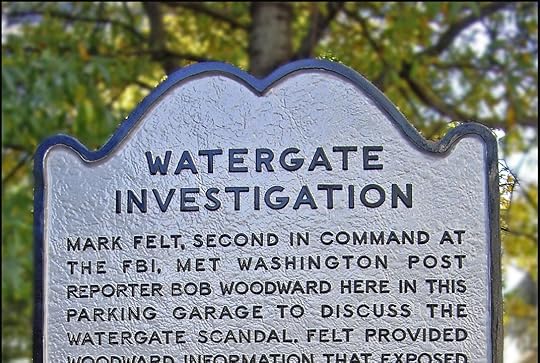
“Watergate” is the scandal that defines all other scandals. It inspired a generation of investigative journalists who became not just observers of events but also participants with subjective voices. Now, fifty years later, what does it all mean? “Watergate: A New History” attempts to answer that question. It reminds us of one of the most famous “unknown names in American history: William Mark Felt, Sr., of Twin Falls, Idaho, son of a carpenter, who was “Deep Throat.” It also reveals the origin of another “famous” moniker. When the grandmother of David Young, a member of Nixon’s special investigation team, asked what he did in the White House, he replied that he helped the president stop some leaks. She replied, proudly, “Oh, you’re a plumber!” And the rest is history.

I received a review copy of “Watergate: A New History” from Garrett M. Graff and Simon & Schuster Publishing. “Watergate: A New History” is now available in print, on Kindle, and as an audiobook from independent bookstores, online booksellers, retail stores, public libraries and anywhere books are sold.
Profile Image for Joy D.
3,128 reviews329 followers
June 5, 2025
Published in 2022, Watergate: A New History provides a comprehensive analysis of the one of the most significant political scandals in American history, which led to President Richard Nixon's resignation. It is structured chronologically and begins well before the break-in at the Democratic National Committee headquarters. Graff draws on previously unreleased materials, including newly declassified documents, interviews, and recently released tape recordings.

The writing style is detailed and accessible. It simplifies the complex web of events, motivations, and consequences. The book gives significant attention to the media's role in uncovering and publicizing the Watergate scandal, beyond the well-known contributions of Bob Woodward and Carl Bernstein. The author excels at historical contextualization. He situates the scandal within broader historical events, such as the Cold War, Vietnam War, and the cultural divisions of the late 1960s and early 1970s. Graff has synthesized a massive amount of information into a coherent throughline.

Themes include abuse of power, institutional resilience, and the role of the media. The book highlights how various American institutions, such as journalism, the judicial system, and Congress, eventually worked to check presidential abuses of power. This theme serves as a reminder of the importance of maintaining our institutional integrity (especially checks and balances), a theme that is certainly relevant to today. In an era of renewed concerns about executive power, Graff's thoughtful examination of Watergate provides both historical understanding and civic education. Highly recommended.
Profile Image for Dan.
1,249 reviews52 followers
August 14, 2024
An amazing read! One of the best history books I've read in a very long time.

While the title did not inspire me, this is now the definitive book on Watergate. Yes it was the cover up that felled Nixon and that made for an exciting read. Yes Nixon projects his criminality in an eerily similar manner to Trump. Yes we learn about Mark Felt aka deep throat. We learn about the sad endings to George and Martha Mitchell. We learn about the investigation into the Pentagon Papers which were the catalyst to Watergate.

But if you want to learn first hand why leaders should never call their opponents enemies or label the press as enemies, which Nixon did daily in private, this is an especially enlightening read. Minions will do anything to get an edge especially with so many yes men hanging around. It was all so sad and unnecessary. Nixon won in a landslide. Nixon was such a broken individual. He told his aides during the last week in office that he could press a button and kill millions of people. Earlier in the Watergate saga Nixon also said maybe I should shoot myself. And then laughed it off. He was acting so bizarrely that the pentagon was told to call the Joint Chiefs of Staff and the Secretary of Defense if they received any directive from Nixon to launch nuclear weapons.

Woodward and Bernstein got the title right. Watergate is all about the President's men. But this is is a more comprehensive book with few mysteries remaining today. Because of the tapes and Nixon's journals we know so much about his state of mind and this makes the story very human and a great character study.

Strong recommendation!

5 stars
Profile Image for John McDonald.
609 reviews23 followers
December 2, 2025
The next time Garrett Graff gets to work on a book, he should consider hiring a first-class, ruthless editor with a reputation for telling authors that they use too many unnecessary words; that the author's presentations sink because of the morass of unneeded information and expressions the reader is forced to pull himself out of; and who reminds the author that he should have respect for his reader's curiosity about the subject matter by providing the reader with the opportunity to understand the significance of what the author asks him to read. Above all, he should remind the author--here Graff--that he should, at all times remain humble and concise and that almost no one, except maybe Winston Churchill (only because he was a wartime prime minister), historians like Jonathan Dimbleby or David Stahel, or novelists with the renown and experience of Trollope, Eliot, and Dickens are entitled to write 800-page books.

I gave this book about 150 pages before ditching it because the information simply was not necessary to an understanding of the Watergate phenomenon and its originator, Richard Nixon. In addition to endnotes, which always are helpful to understanding an historian's research, the author, on about half the pages, distracted the reader with footnotes. This can only be because of the author's ego, his burning desire to inform us that he had such important further information that it couldn't be consigned to an endnote and required the reader's immediate intention. The author should know that historians and others quit using footnotes (except in law review articles and research papers by mathematicians and physicists) because they distract the reader from following the theme established by the author. These incessant footnotes were maddening, soiled the page, distracted the reading, and frankly, confused or made ambiguous what the author was trying to say. It is a rookie form of hubris in my opinion for an author--indeed someone who purports to be presenting the historic perspective--to engage in such distraction. A few footnotes are fine, but sometimes there were 3 to a page.

Part of the problem I had with this book is that I experienced the actual Watergate events in Washington, D.C. between 1972 and 1974, and the aftermath. I arrived in Washington, D.C., driving from Indiana University in Bloomington, to begin a job as a lawyer working for the US Information Agency at 2 a.m. on the Sunday morning on the day following the Watergate break-in. Before heading to my lodgings at Catholic University where my girlfriend had an apartment overlooking the sports field, I stopped at a Washington Post newspaper box, and there, below the fold, on the right-hand side, was a small story about a break-in at the Watergate offices of the Democratic National Committee. I rented an apartment in Kalorama Circle across the street from a building that had a Post newspaper box to which the bulldog edition of the Post would be delivered at midnight every day. I was so intrigued by Watergate that I would pick up a copy of the bulldog edition before I went to sleep just to read about what was happening because some new came to light, it seemed, every day, and the information about the investigation was riveting. The Post and the Washington Star both did outstanding jobs reporting the story, but the Post committed itself to the story early with money, personnel, and its influence.

During my time there, though, I also came close to the story in other ways. My fiance knew Evan Davis, one of the lawyer-investigators (quoted often in this book) and I can remember having pizza with him at Lorenzo's around the corner from where I worked. For a brief time, before he was indicted, I also worked for Gordon Strachan at the USIA General Counsel's Office or GCO, who was only a year older than my 25-year old self. Gordon was actually a very nice guy, but we hardly ever saw him once his involvement became public because of the Post's investigation. It was Strachan who confessed in a Congressional hearing on the subject of Watergate that he would never advise a young lawyer to work in a political campaign, which I interpreted at the time to mean he would never work in a political campaign for men like Nixon, Haldeman, and Ehrlichman.

I remember the night Archie Cox refused to do Nixon's bidding and was fired. My friend and lawyer Jon Newman were travelling on a Friday night from DC to Boston and crossing the Delaware River on the Delaware Memorial Bridge when the music program on WIBG in Philly was interrupted with news of the firing. From that point until we reached Boston early on Saturday morning, that is all my friend and I discussed. I remember the day that my wife, who was then just a friend, were walking from our office at 20th an M Street and had arrived at the South Portico of the White House (in those days, there were no obstructions to walkers behind the WH) and noticed a series of limousines entering the WH drive. One carried Tip O'Neill. My wife had been the White House TV correspondent for WTIC in Hartford and still had her press credentials. At my urging, she entered the WH press room and was admitted to the press conference where Nixon resigned.

Sadly, Graff's account of Watergate loses the excitement of Nixon's crimes and the consequent investigations. Watergate held the attention of almost everybody, almost every day. Imagine how most people felt having Trump as President. Every day, some outrage is committed or discovered. That was Nixon and Watergate and Nixon's henchmen. Graff does not capture that in this ponderous volume largely, I believe, because Graff, who is a fine reporter, does not seem to know understand the importance of singling out independent events, focusing hard on them, and then editing every single extraneous word. This mostly has to do with ego. Give the reader a chance to feel the emotion. Write to that. Edit ruthlessly. Then, go away and let the reader enjoy and learn from your work.
Profile Image for Brandon.
1,009 reviews249 followers
April 4, 2022
Following the attack on the Capitol building in January of 2021, Donald Trump suffered impeachment for a second time in his lone presidential term. Shortly after, a committee was established to look into his role – as well as that of others – in inciting his supporters to storm Washington hoping to overturn a lawfully decided election.

This is only one of the many scandals that Trump weathered during his four years in office. Yet, he held on until the very end when he was thankfully voted out by the American people. Reasonably, he could (or should) have resigned on a handful of occasions. So why didn’t he? Is the era of politicians resigning a thing of the past? Trump has gone on record in vaguely saying he “learned a lot” from former US President Richard Nixon. What was he alluding to? Was it policy? Or did he see Nixon’s 1974 resignation as “weakness”?

Author Garrett M. Graff travels back in time to take all that has been reported, uncovered and known about the Nixon administration’s Watergate scandal to repackage it into something of a complete history. While I had a basic understanding of the break in and the Democratic Party office inside the Watergate Hotel, what I was not aware of is just how many scandals Nixon had endured up to that point.

The incompetent nature of the Watergate operation was likely due to a politician who felt like he could basically get away with murder. And who could blame him? The twenty-four hour news cycle didn’t exist then, so each scandal that tore its way through Nixon’s orbit was not front-and-centre all hours of the day. Without distraction, Nixon was able to achieve unprecedented popularity leading to him sweeping the 1972 federal election. So what happened?

Garrett M. Graff notes that Nixon was incomprehensibly paranoid. He didn’t trust anyone – even members of his inner circle. He kept meticulous records of every phone call, in-person discussion and correspondence that went through the Oval Office; something that he felt would only protect him, but ultimately became his downfall when the existence of audio recordings became known. Suddenly it became less about prosecuting those who committed the break-in and more about what did Nixon know? And when did he know it?

To give you an idea of how comprehensive Graff’s research is, just under half of the book’s massive page count is reserved for its bibliography. I’ll leave it to those who are true Watergate scholars to judge the author’s success in presenting all the key factors and players, but I cannot imagine needing further understanding of what occurred before, on, and after June 17, 1972.

Should Nixon have resigned? Could he have weathered this storm? It’s unlikely. While the country was certainly divided during Nixon’s time in power (protests were as frequent in the late 60s/early 70s as they were at the height of Trump’s presidency in 2020), politicians seemed to have more of a moral conscience then rather than now (for the most part). As the scandal persisted into 1974, Nixon was facing a legitimate threat of impeachment in both the house and the senate and rather than hurt the office of the presidency, Nixon resigned in an effort to save face. The political divide in America today is likely fractured beyond repair with politicians blindly voting along party lines – something that saved Trump on two separate occasions from impeachment.

Garrett M. Graff’s Watergate is an important book that takes the reader back to a moment in time where the seeds of the modern Republican party were planted. While Reagan would eventually harvest those crops, it was Trump who would come up with a particular form of bullshit to fertilize a higher, more plentiful yield.
Profile Image for Rama Rao.
836 reviews144 followers
July 7, 2022
Crisis in Nixon Administration

Numerous books have been written on the Watergate scandal, and the book “All the President’s Men” by Bob Woodward and Carl Bernstein, is one of the key works in the literature. Since then, several books were written with the new information from different sources, mainly from declassified material from FBI and CIA Archives. This book by Garret Graff shed new light on a topic that we know. Drawing on the CIA’s recently declassified history of Watergate and previously unpublished documents, the author reassesses the role of Watergate burglars and the men behind the break-in, and how they implicated the CIA and the White House in two break-ins targeting Daniel Ellsberg’s psychiatrist office, and the Watergate offices of the Democratic National Committee, ultimately leading to Nixon’s downfall. In this book, Watergate burglar James McCord’s letter to his Judge Sirica is described in detail and how it implicated others in Nixon Administration in the break-in. Nixon was directly involved in the entire operation using his staff at the White House, members of his cabinet, the CIA, FBI, IRS, DOJ, and the members of the Committee to Re-elect the President (CREEP). A key Nixon goal was to limit the Watergate investigation to the break-in alone, making it appear to be the dirty tricks of the burglars. Nixon did not want any enemy testifying against him or his closest allies. The book describes every campaign-trail dirty tricks, possible hostage situations, and questionable fundraising efforts. The book also gives the personal side of President Nixon who appears as a highly antisemitic goof masquerading as the President. His demeanor is wicked and his attitude towards political dissidents is that of Mafia boss. This is an exhaustive volume of 832 pages which makes an interesting read for anyone interested in American History, Nixon Administration, and the Watergate scandal.
214 reviews17 followers
January 1, 2022
Graff does it again. I have thoroughly enjoyed his past works, especially his book on 9/11. He has a gift of making inaccessible history more accessible. In this case, he takes a very complicated web of people and events and manages to turn it into a gripping narrative. The strength of the book is in its coverage but density. He looks at Nixon but also devotes space to Felt and the plumbers. His treatment of the events cover a wide span, not just the break in itself but frames the context well.

Much of what has been written about Watergate has been so esoteric that there hasn't been a good readable history for this important story (other than All the President's Men, which, it could be argued, serves as a primary source more than a historical narrative).

This is a great entry point for people who want to learn more about this history in-depth, more than the erroneous belief that "Nixon ordered a break in and covered it up" line.

The best histories that become popular are well-written thrillers, and this reads as one (but, this should come to no surprise- Graff is an exceptional writer).
Profile Image for Emma.
238 reviews90 followers
Read
August 1, 2022
Nixon did the opposite of "fuck it, let's stand by the boys." And that was his downfall.

Also, how is Kissinger 1. still alive 2. still invited places of import. I'm a prison abolitionist and at the very LEAST, he should be sitting on a stool, looking at a corner for the rest of his days and never ever invited to be on the board of anything or given any awards.
Profile Image for Nancy.
1,272 reviews53 followers
September 30, 2024
Watergate A New History by Garrett M. Graff by Garrett M. Graff Garrett M. Graff


Bad news: The book is very long...and I'm afraid if you're not a "history buff" you may give up after 50%. But there is a reason it is a reading challenge....Graff's excellent research! Sometimes a book appears interesting but you are not sure if you'll finish it. There is an EXCELLENT audio version of this book. Please, don't give up...it is worth your reading time.

Good news: Once the book enters the "investigation" period by the Washington Post (Woodward and Bernstein) it picks up steam! Names of the Watergate 'plumbers', Nixon aides and politicians of the early 1970s are till fresh in many baby boomer's minds.

Good news: The book does NOT re-investigate Watergate but adds many, many informative footnotes that bring this political tragedy up-to-date with what we know now.

Personal: I was fascinated in the insights G. Graff gives the reader about Nixon's character and state of mind while his political world is crashing down around him. Nixon would vanish to his "private" office, sip his scotch on the rocks and sometimes Al Haig ....was running the govenrment b/c Nixon was inebriated, intoxicated with alcohol...wasted.
#ExcellentRead.....if you like history...or not!

NOTES:

September 18, 2024 – page 39
4.69% Just finished chapter 3 The Chennault Affair. I knew Nixon was a devious, shifty politician but never knew about this! Graff's book Watergate: A New History...is NOT just a rehash of history but reveals new info!

September 19, 2024 – page 70
8.41% I thought a book about Watergate would be somewhat boring but still interesting to read about. Well, I stand corrected...this book is a page tuner! Nixon wanted to bruglarize Brooking b/c they had a report in their safe that could expose some "secrets" about Nixon. FBi was not good enough so Nixon hired ex-CIA E. Howard Hunt. N: " I want to crack down on every goddamn leak"...I know how to play this game".

September 20, 2024 – page 150
18.03% "I'm not a crook." Who said that? While reading this book at times I gasp at what Nixon was prepared to do: secret taping conversations, even Kissinger did not know about it, keeping tapes about Daniel Ellsburg in WH safe so Nixon could claim "executive privilage" and keep them away from grand jury. Funny, feesl like Nixon was just as bad as Trump...but without the graft of selling bibles, sneakers and coffee mugs!

September 23, 2024 – page 170
20.43% Nixon compiled "enemies lists" like other people would make a grocery list!

Fun fact:
An admiral at the Pentagon was spying on Nixon by getting his hands on files in Kissinger's office!
Profile Image for John.
1,338 reviews27 followers
March 22, 2023
This is an excellent book! It takes the incredibly convoluted Watergate story and makes it easy to follow. Some of the information in the book didn't come out until 2018 to 2021 so it is right up to date. Lot of characters to follow and a very complex story but Graff's writing makes things extremely easy keep straight. It also corrects minor discrepancies from previous books. If you are at all interested in Watergate and the Nixon years this is a must.
Profile Image for lew:).
350 reviews29 followers
January 1, 2025
3 stars (audiobook)


While this was a very informative and well-researched, well-written book, it was SO long. The book just seemed to drag and have a little too much detail for my liking.

Would recommend if you know absolutely nothing about the Watergate scandal and want to be well informed! Otherwise, meh. Might be too much for you like it was for me lol.
Profile Image for Amy.
342 reviews54 followers
September 7, 2022
Reading about Watergate seems almost quaint now. Sure, Nixon obstructed justice, destroyed evidence, committed perjury and attempted to cover up a burglary while he was president. But do you know what he never did?

Nixon never incited a mob to attack the U.S. Capitol in an attempt to overthrow an election and illegally seize power.

Note this observation as Nixon was resigning and leaving office on August 9, 1973: "On Capitol Hill, Tip O'Neill marveled at how straightforward such a monumental political event turned out to be -- in the end, the first resignation of an American president, driven from office by scandal, crime and corruption, has occurred with the same pomp and circumstance as any other presidential transition. 'The whole world was watching, and other nations couldn't help but be impressed,' the majority leader proudly realized. 'Our transition was orderly and by the book.'”

A stark comparison to the events of Jan. 6, 2021.
Profile Image for Ted Hunt.
341 reviews9 followers
July 20, 2022
The Watergate scandal dominated the news during my senior year in high school and my freshman year in college (1972-74), and there was a time when a big proportion of my reading consisted of Watergate analysis. But it's been decades since I read a Watergate book, and this latest history was a great book with which to get back into the middle of that colossal series of events. The author, who was once an aide to Vermont's Patrick Leahy (first elected to Congress the year Nixon resigned), had at his disposal piles of material that was not available when others were first writing about the scandal. I would say that this is the book with which one who has an interest in this event should begin. It tells the story very thoroughly, making the case (which I have always made with my students) that the cover-ups began long before the 1972 break-in at the Watergate hotel. I have always pointed to the deceit involving the illegal bombing of Cambodia during the Vietnam War, a contention that Graff's book validates. The book recounts details familiar to those with just a cursory knowledge of the Watergate affair, but also brings forward new details and information that is quite revelatory. For instance, Nixon's obsession with the release of the Pentagon Papers, which dealt with events before he became president, becomes very understandable if, as the book contends, he believed that Ellsberg's leaks would reveal that Nixon had secretly arranged for the government of South Vietnam to delay the start of peace negotiations in the fall of 1968, as he feared that a positive development of this nature could swing the presidential election to Humphrey. I really appreciated the large number of footnotes that added details or, more importantly, offered different interpretations and versions of the events that he was describing. And Graff's bottom line about the motivation for the June, 1972, break-in? He says that he still doesn't know and now that just about all of the major actors are dead (good ol' Roger Stone is still around), we will probably never find out. My only beef with the book is that there were a few places where the year of an event was simply wrong (usually by only a year, but come on). I would categorize these mistakes more as "typo's" and I would put the responsibility on the book's editors. Shouldn't individuals who edit history books know their history? In any event, that is a small quibble about a great new study of a series of events in American history that, unfortunately is once again echoing in American news stories.
Profile Image for Kate Penner.
29 reviews6 followers
March 11, 2024
I loved this book. What a gift of a story. I know it sounds ridiculous to say I feel changed from having read it, but I feel changed from having read it.
The fundamental questions of presidential power that are so important today, the psychology of someone mired in their own emotional dysregulation to such a degree that they cannot view their own actions as wrongdoing, the wildly vast cast of people who came together and wouldn’t let this go or bury it, and the political landscape that is both a close relative of our own yet somehow able to function & hold people accountable in such an incredibly different way.

Obsessed.
Richard, who hurt you?
Profile Image for Brian Pate.
425 reviews30 followers
August 17, 2023
A thorough overview of Nixon's "dirty tricks" that culminated in his resignation. Fascinating from start to finish!
Profile Image for Lauren.
35 reviews
July 13, 2025
Highly recommend this book to anyone who wants to get a comprehensive view of Watergate. Graff weaves together a complete narrative of the months and events leading up to the break in and everything that followed. Even though it’s long it’s very readable and entertaining.
Displaying 1 - 30 of 514 reviews

Join the discussion

Can't find what you're looking for?

Get help and learn more about the design.