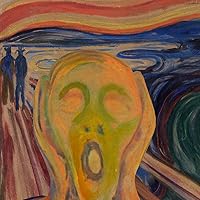
In a world of turmoil, art matters more than ever. Art can bring about political action, even social revolution. Art reminds us of the things that really matter. It lifts our eyes to eternity and show us the importance of the here and now.
With illustration from contemporary art and reference to theatre and film, this book shows the importance of art for all, not just the professionals. Creativity helps humans to flourish and reflects the character of a creative God.
This is a book to return to time and again for inspiration and encouragement. Illustrated by author Alastair Gordon, Why Art Matters encourages us to embrace creativity at home, church, in play and professionally in the creative arts and industries.
I didn’t think I would enjoy this book as much as I did. This is a lovely exploration of how art has been important for humanity and for the advancement of the gospel throughout history. I also loved how this book helped shine light on God’s artistic and beautiful nature. This book is not a “gospel” book but this book is certainly one which can be given to an artistic friend to give a new perspective on the artistic world. Main take aways include learning that art is a natural expression of all humanity, art provides a helpful escape for everyone who experiences hard times and art is used all throughout the Bible to convey the truth of God.
As someone who really enjoys art in all its forms, I really enjoyed this book. I thought about so much while reading it and had some great conversations which I think is a great sign. To me this book affirms the goodness of art and glorifies God as the great Artist who has created us to create. It points to how art is a gift from God which helps us, gives us hope, points us to the New Creation and makes us human. In a time where I feel I can become a consumer by default, I loved hearing how I was created to create!
I am a firm believer that art has always mattered. It can say something for us that we cannot articulate. It holds the heart language of all people, a chance to express our thoughts and ideas in freedom.
We create because we are created- we seek to reach liminal spaces and find the kingdom there. To wipe the dust off the windows of heaven so others might find beauty in truth. (A beautiful visual Gordon gives here.)
This is a calling card- an open and honest heart of an artist who knows why it matters. Why it should matter to the church as a whole- and how we can step into that. Would recommend to everyone, especially those seeking to bring the kingdom to earth.
I chose Why Art Matters as part of the 10ofthose Reading Challenge, without expecting it to become one of the books I would enjoy so much. What a wonderful surprise this was!
One of the things I appreciated most was the book's understanding of creativity as something that belongs to all human beings, not just professional artists. Because we are made in the image of the Creator, creativity is woven into what it means to be human. Gordon broadens our understanding of what creativity can look like: painting and music, certainly, but also gardening, cooking, writing, designing, making things well, caring for creation, or even making up stories with your children.
That particularly challenged me because I have never really considered myself “creative” in the way people usually mean it. I'm not paid to create art, nor do I have the sort of artistic skills that immediately come to mind when we use the word. But as I read this book, I realised that perhaps I am quite creative—I just express it in areas that aren't always labelled as creativity. I loved that shift in perspective.
Perhaps that is also why this book resonated with me so deeply. I have come to realise how much I value beauty—not simply as something decorative, but as something that helps me notice, delight in, and appreciate God's goodness. Gordon's insistence that beauty matters, that God Himself called creation pleasing to the eye, and that Christians should care about making things beautiful really spoke to me. I hadn't necessarily connected my appreciation of beauty with creativity before, but this book helped me see how naturally the two can belong together.
The reminder that God described creation as pleasing to the eye before speaking about its usefulness was especially meaningful. We live in a world where usefulness can easily become the measure of everything, and I appreciated being reminded that beauty matters too. Christians should not be afraid of making things beautiful or of taking delight in good design and craftsmanship. Simply making something well can reflect something of the character of God.
The discussion of Bezalel was another highlight for me. The first person in Scripture specifically described as being filled with the Spirit for a particular task was a craftsman and designer. I loved what that says about God's view of creative work. There is something wonderfully affirming about seeing design, craftsmanship, and making things well treated as meaningful work before God.
I particularly loved the way the book connects beauty with goodness rather than reducing beauty to appearance. True beauty points beyond itself. It can remind us of what has been lost, help us articulate what we cannot quite put into words, express grief or joy, and ultimately point towards redemption and the future God is making.
The idea that art can remind us of the past, express the present, and point towards the future was another thought I want to hold on to. Art can preserve things that might otherwise disappear from our collective memory, and it can help us see and feel things that words alone sometimes struggle to communicate.
There were so many other little ideas I loved along the way—the importance of rest in creative work, the reminder that we are designed to work from a place of rest rather than rest from work, and the thought that our calling may sometimes be to repair, tend, nurture, or clear the ground rather than produce something spectacular ourselves.
And I absolutely loved Gordon's discussion of the Father's house and the possibility that Jesus' words point towards the Temple and ultimately the new creation. That was one of those moments where I wanted to stop and think about it for much longer.
Overall, there was so much goodness in this book. It made me think differently about creativity, beauty, work, rest, worship, and even the ordinary things I make and do. More than anything, I think it has made me pay more attention—to beauty, to craftsmanship, to creativity, and to the ways God's image is reflected in human making.
I am so glad this was one of the books I happened to choose for the reading challenge. What a joy it has been to discover.
My only regret is that I don't own a paper copy, because this is definitely one I would love to have on my shelf and return to.
É claramente um livro relevante para o contexto em que vivemos nos dias que correm, mas não pude deixar de sentir que os argumentos do autor eram muito repititivos – e mesmo o próprio discurso, em rigor.