

What do you think?

Fake Invisible Catastrophes and Threats of Doom
Here is Dr. Patrick Moore's description of his unique thesis as presented in Fake Invisible Catastrophes and Threats of Doom."It dawned on me one day that most of the scare stories in the media today are based on things that are invisible, like CO2 and radiation, or very remote, like polar bears and coral reefs. Thus, the average person cannot observe and verify the truth of these claims for themselves. They must rely on activists, the media, politicians, and scientists - all of whom have a huge financial and/or political interest in the subject - to tell them the truth. This is my effort, after 50 years as a scientist and environmental activist, to expose the misinformation and outright lies used to scare us and our children about the future of the Earth. Direct observation is the very basis of science. Without verified observation it is not possible to know the truth. That is the sharp focus of this book."The book contains 98 color photographs, illustrations, and charts. A key target audience is parents who do not approve of the "progressive" school curriculum and its alarmism about the future of civilization and the natural world. Dr. Moore hopes these parents will read his book and pass it on to their high-school and older children to give them an alternative to the bleak future predicted by the merchants of doom. Many other audiences will also find the book informative and convincing. In 11 chapters the reader is clearly shown that citizens are being misinformed by so many environmental doomsday prophesies, ones they cannot verify for themselves. We are told that nuclear energy is very dangerous when the numbers prove it is one of the safest technologies. We are told polar bears will go extinct soon when their population has been growing steadily for nearly 50 years. We are told that there is something harmful in genetically modified food crops when it is invisible, has no name and no chemical formula. We are told severe forest fires are caused by climate change when they are actually caused by poor management of fuel load (dead wood) in the forest. We are told that all the coral reefs will die by 2100 when in fact the most diverse coral reefs are found in the warmest oceans in the world. And of course, we are told that invisible CO2 from using fossil fuels, accounting for more than 80 percent of our energy supply, will make the Earth too hot for life. All of these scare stories, and many more, are simply not true. And this book will convince you, your family, and your colleagues of that. There is no substitute for the truth. Dr. Patrick Moore was one of the co-founders of Greenpeace and sailed on the first Greenpeace campaign against US H-bomb tests in Alaska. Upon receiving his PhD in ecology, he spent 15 years in the top committee of Greenpeace and led many of its environmental campaigns. Greenpeace began as a group of volunteers with noble intentions. Over the years it became very successful with campaigns to save the whales, stop the mass slaughter of baby seals, prevent toxic dumping into the air, water and earth, and many more. Greenpeace found itself in the early 1980s with more than $100 million coming in annually and close to 1,000 people on the payroll. It had become a business and fundraising moved to the top of the priority list. New campaigns were more about using sensationalism, misinformation and fear to attract donations. Dr. Moore said good-bye in 1986 as Greenpeace was turning into a racket peddling junk science. Since then he has strived to be a sensible environmentalist, basing his beliefs on sound science and logical thinking. This book is the culmination of 50 years of learning during Dr. Moore's multi-faceted quest for the truth about environmental issues (an historical account of Dr. Moore's 15 years with Greenpeace and his analysis of environmental subjects are in his previous book, "Confessions of a Greenpeace Dropout - The Making of a Sensible Environmentalist, also on Amazon).
208 pages, Paperback
First published January 14, 2021
About the author
Patrick Moore
1 book57 followersDr. Patrick Moore is a lifelong independent scientist and environmentalist. He was a co-founder of Greenpeace in 1971, a director for 15 years, and a leader of many campaigns, including ending nuclear weapons testing, saving the whales, and ending toxic dumping. In the mid-1980s he became disenchanted with the positions his fellow Greenpeace directors were adopting, using misinformation, sensation, and fear for fundraising, instead of using valid science. He struck out on his own, determined to be a sensible environmentalist, basing policies on sound science, and balancing environmental, social, and economic priorities. He is a humanitarian environmentalist who believes people are not the enemy of the environment but rather an integral part of living creation, with a responsibility for both ourselves and all of nature.
Ratings & Reviews
Friends & Following
Create a free account to discover what your friends think of this book!
Community Reviews
Displaying 1 - 30 of 130 reviews
July 15, 2021
Poor Reasoning and Intellectual Dishonesty
There seems to be some misleading sleight of hand occurring throughout the text in which, in refuting a particular aspect of a claim, he refutes the whole thing altogether. Frequently, Moore cites the conditions of the Earth over the past several billion years as evidence that the predictions or observations of scientists today in response to climate change are overblown. While it may be true, based on his claims, that global warming is no threat to life in general, his claims do not refute the claim that global warming is a threat to life as we know it. For example, in discussing Polar bears he asserts that Polar bears only exist because of climate change; that is, because we are currently in an Ice Age. This has nothing to do with concerns about loss of habitat for Polar bears today - just because they haven’t always existed and had a habitat does not mean the premature loss of their (sub?)species is any less of a concern. He goes on to note that polar bear populations have risen, claiming that this “may be due to reduction in summer sea ice, not because of it” despite also noting widespread ban or restriction of hunting the bears which preceded their rise in population.
Similar claims are made in regards to corals and coral bleaching due to ocean acidification and temperature rises, as Moore points to the great biodiversity of coral reefs existing mostly in the warmest parts of the oceans. This assertion does not refute the claim that warming of the seas will negatively affect corals. An important thing to understand is that all living things have a set of conditions within which they can survive (a niche). A rise in global sea temperatures, perhaps, will not drive coral reefs extinct, but could dramatically change the distribution of these corals. In already warm areas, a sustained increase above the range of habitability of these plants still results in loss of coral reefs and biodiversity unless there is some effective way to transplant these species into now ideally warmer waters in other parts of the world. Further, the short term recovery of the Great Barrier Reef after mass bleaching in 2016 is consistent with other bleaching events internationally which have resulted from temporary increases in ocean temperatures (Baker, Glynn, & Riegl 2008), and so does not refute concerns about long-term temperature changes. Perhaps his conclusion to this would simply be that it doesn’t matter, that every species has an endpoint, but that is not the point he makes in his book. Similar issues of reason are found throughout the book as Moore falsely believes one claim to negate the other when the two are, in fact, independent.
This issue of false equivalence is often based on or bolstered by a further issue - that the sources referenced do not always support the claim which the author attributes to them. This is outlined clearly by Holman (2021), who upon contacting both Moore and some of the researches referenced found that he had misrepresented the conclusions of their findings in order to support or discount claims on which they did not report. Further, some of Moore’s claims about references are false, as a large part of his argument in Chapter 2 about bleaching in the Great Barrier Reef hinges on the allegation that articles citing a 93% of corals affected by bleaching have no factual basis upon which to make this claim. This is false, as [this] ARC Centre for Excellence of Coral Reef Studies press release from 2016 demonstrates a clear, and not particularly hard to find origin for the 93% statistic. This could, certainly, be a simple mistake. It is, however, a misleading one for readers of the book that do not desire or have the time to fact check some of his claims.
Moore also continually downplays the significance of the social impacts of environmental changes. Sea levels rising? Just move inland. Got money? Build some dykes. Nevermind that ‘just move inland’ is a much taller order on the scale of a nation like Bangladesh than for the average fishing village in Roman Britain. Inevitably, he will dismiss concerns about such events as climate refugee crises as the result of alarmism or false computer modelling. Though once again, dismissing the significance of social concerns presents a misleading sense of environmentalist arguments. For instance, Moore discusses the benefits of waste combustion as an effective way to deal with non-recyclable materials and reduce landfill. Certainly, this is an option to consider, but he misrepresents arguments against such plants as the result of some sort of fear of combustion in general or mild concerns about combustion of recyclable materials. In doing so, he neglects public concerns about the safety of combustion of non-organic materials which often characterise opposition to waste-to-energy power plants (Sun, Ouyang & Meng 2019, pp. 2473-2474).
Despite his clear contrarian nature, Moore bizarrely does not take umbrage with GMOs, instead standing with the scientific community he has criticised throughout the book to illustrate the safety and potential benefits of utilising genetically modified crops. In general, Moore is introducing arguments that I have never heard before, which I appreciate (poor skepticism is better than no skepticism.) As far as I can tell, some of his broader points are worth consideration and further research (both at the level of the personal and the academic), and I genuinely would like to learn more about his theory that increased atmospheric CO2 does not lead to increased temperatures, and could be beneficial to biomass. As such, I do think this book could be worth a read if you approach it, as with anything, a critical eye. Sir David Attenborough is not right about everything, but neither is Patrick Moore, and so it is disheartening to see so many people clearly interested in environmental science take his word for gospel without interrogating either his arguments or attempting to truly understand those of his opposition.
References:
ARC Centre for Excellence of Coral Reef Studies 2016, 'Only 7% of the Great Barrier Reef has avoided coral bleaching', Coralcoe.org.au, viewed 15 July 2021, https://www.coralcoe.org.au/media-rel....
Baker, AC, Glynn, PW, & Riegl, B 2008, 'Climate change and coral reef bleaching: An ecological assessment of long-term impacts, recovery trends and future outlook' Estuarine, Coastal and Shelf Science, vol. 80, no. 4, pp. 435–471, doi: 10.1016/j.ecss.2008.09.003.
Holman, S 2021, 'Fact Checking Patrick Moore, Climate Skeptic', The Tyee, viewed 15 July 2021, https://thetyee.ca/Analysis/2021/06/0....
Sun, C, Ouyang, X, & Meng, X 2019, 'Public acceptance towards waste-to-energy power plants: a new quantified assessment based on “willingness to pay”' Journal of Environmental Planning and Management, vol. 62, no. 14, pp. 2459–2477, doi: 10.1080/09640568.2018.1560930.
There seems to be some misleading sleight of hand occurring throughout the text in which, in refuting a particular aspect of a claim, he refutes the whole thing altogether. Frequently, Moore cites the conditions of the Earth over the past several billion years as evidence that the predictions or observations of scientists today in response to climate change are overblown. While it may be true, based on his claims, that global warming is no threat to life in general, his claims do not refute the claim that global warming is a threat to life as we know it. For example, in discussing Polar bears he asserts that Polar bears only exist because of climate change; that is, because we are currently in an Ice Age. This has nothing to do with concerns about loss of habitat for Polar bears today - just because they haven’t always existed and had a habitat does not mean the premature loss of their (sub?)species is any less of a concern. He goes on to note that polar bear populations have risen, claiming that this “may be due to reduction in summer sea ice, not because of it” despite also noting widespread ban or restriction of hunting the bears which preceded their rise in population.
Similar claims are made in regards to corals and coral bleaching due to ocean acidification and temperature rises, as Moore points to the great biodiversity of coral reefs existing mostly in the warmest parts of the oceans. This assertion does not refute the claim that warming of the seas will negatively affect corals. An important thing to understand is that all living things have a set of conditions within which they can survive (a niche). A rise in global sea temperatures, perhaps, will not drive coral reefs extinct, but could dramatically change the distribution of these corals. In already warm areas, a sustained increase above the range of habitability of these plants still results in loss of coral reefs and biodiversity unless there is some effective way to transplant these species into now ideally warmer waters in other parts of the world. Further, the short term recovery of the Great Barrier Reef after mass bleaching in 2016 is consistent with other bleaching events internationally which have resulted from temporary increases in ocean temperatures (Baker, Glynn, & Riegl 2008), and so does not refute concerns about long-term temperature changes. Perhaps his conclusion to this would simply be that it doesn’t matter, that every species has an endpoint, but that is not the point he makes in his book. Similar issues of reason are found throughout the book as Moore falsely believes one claim to negate the other when the two are, in fact, independent.
This issue of false equivalence is often based on or bolstered by a further issue - that the sources referenced do not always support the claim which the author attributes to them. This is outlined clearly by Holman (2021), who upon contacting both Moore and some of the researches referenced found that he had misrepresented the conclusions of their findings in order to support or discount claims on which they did not report. Further, some of Moore’s claims about references are false, as a large part of his argument in Chapter 2 about bleaching in the Great Barrier Reef hinges on the allegation that articles citing a 93% of corals affected by bleaching have no factual basis upon which to make this claim. This is false, as [this] ARC Centre for Excellence of Coral Reef Studies press release from 2016 demonstrates a clear, and not particularly hard to find origin for the 93% statistic. This could, certainly, be a simple mistake. It is, however, a misleading one for readers of the book that do not desire or have the time to fact check some of his claims.
Moore also continually downplays the significance of the social impacts of environmental changes. Sea levels rising? Just move inland. Got money? Build some dykes. Nevermind that ‘just move inland’ is a much taller order on the scale of a nation like Bangladesh than for the average fishing village in Roman Britain. Inevitably, he will dismiss concerns about such events as climate refugee crises as the result of alarmism or false computer modelling. Though once again, dismissing the significance of social concerns presents a misleading sense of environmentalist arguments. For instance, Moore discusses the benefits of waste combustion as an effective way to deal with non-recyclable materials and reduce landfill. Certainly, this is an option to consider, but he misrepresents arguments against such plants as the result of some sort of fear of combustion in general or mild concerns about combustion of recyclable materials. In doing so, he neglects public concerns about the safety of combustion of non-organic materials which often characterise opposition to waste-to-energy power plants (Sun, Ouyang & Meng 2019, pp. 2473-2474).
Despite his clear contrarian nature, Moore bizarrely does not take umbrage with GMOs, instead standing with the scientific community he has criticised throughout the book to illustrate the safety and potential benefits of utilising genetically modified crops. In general, Moore is introducing arguments that I have never heard before, which I appreciate (poor skepticism is better than no skepticism.) As far as I can tell, some of his broader points are worth consideration and further research (both at the level of the personal and the academic), and I genuinely would like to learn more about his theory that increased atmospheric CO2 does not lead to increased temperatures, and could be beneficial to biomass. As such, I do think this book could be worth a read if you approach it, as with anything, a critical eye. Sir David Attenborough is not right about everything, but neither is Patrick Moore, and so it is disheartening to see so many people clearly interested in environmental science take his word for gospel without interrogating either his arguments or attempting to truly understand those of his opposition.
References:
ARC Centre for Excellence of Coral Reef Studies 2016, 'Only 7% of the Great Barrier Reef has avoided coral bleaching', Coralcoe.org.au, viewed 15 July 2021, https://www.coralcoe.org.au/media-rel....
Baker, AC, Glynn, PW, & Riegl, B 2008, 'Climate change and coral reef bleaching: An ecological assessment of long-term impacts, recovery trends and future outlook' Estuarine, Coastal and Shelf Science, vol. 80, no. 4, pp. 435–471, doi: 10.1016/j.ecss.2008.09.003.
Holman, S 2021, 'Fact Checking Patrick Moore, Climate Skeptic', The Tyee, viewed 15 July 2021, https://thetyee.ca/Analysis/2021/06/0....
Sun, C, Ouyang, X, & Meng, X 2019, 'Public acceptance towards waste-to-energy power plants: a new quantified assessment based on “willingness to pay”' Journal of Environmental Planning and Management, vol. 62, no. 14, pp. 2459–2477, doi: 10.1080/09640568.2018.1560930.

March 11, 2021
Written by Patrick Moore, an ex-Greenpeace founder and scientist who left that organization because it valued activism and money above science.
If you believe any of the following chapter titles is true, this book may be an eye-opener for you.
Chapters:
1. Africa's Oldest Baobab Trees are Dying
2. The Great Barrier Reef is Dead or Dying and All Coral Reefs Will Die in this Century
3. Climate of Fear and Guilt
4. Polar Bears are Threatened with Extinction because of Climate Change
5. One Million Species Face Extinction Due to Climate Change — Soon
6. The Great Pacific Garbage Patch is Full of Plastic and is Twice the Size of Texas
7. Genetically Modified Foods Contain Something Harmful. What is it?
8. Fear of Invisible Radiation from Nuclear Energy
9. Forest Fires: Of Course They are Caused by Climate Change (Not Trees?)
10. Ocean Acidification — A Complete Fabrication
11. Mass Walrus Death from CO2 — Another Fake Catastrophe from Sir David Attenborough
If you believe any of the following chapter titles is true, this book may be an eye-opener for you.
Chapters:
1. Africa's Oldest Baobab Trees are Dying
2. The Great Barrier Reef is Dead or Dying and All Coral Reefs Will Die in this Century
3. Climate of Fear and Guilt
4. Polar Bears are Threatened with Extinction because of Climate Change
5. One Million Species Face Extinction Due to Climate Change — Soon
6. The Great Pacific Garbage Patch is Full of Plastic and is Twice the Size of Texas
7. Genetically Modified Foods Contain Something Harmful. What is it?
8. Fear of Invisible Radiation from Nuclear Energy
9. Forest Fires: Of Course They are Caused by Climate Change (Not Trees?)
10. Ocean Acidification — A Complete Fabrication
11. Mass Walrus Death from CO2 — Another Fake Catastrophe from Sir David Attenborough
June 26, 2021
I didn’t know what to expect when I picked this up. So many of his arguments seem rooted in science but go against everything that the media (and most people) take for granted as the truth.
This book definitely made me rethink some of my views and re-evaluate what I consider “common knowledge”.
Interesting read regardless of where your beliefs lie.
This book definitely made me rethink some of my views and re-evaluate what I consider “common knowledge”.
Interesting read regardless of where your beliefs lie.

November 17, 2021
The book is very well researched. Moore very convincingly shows the biases and cherry-picking and goal-post-moving of the professional doomsday prophets.
Whereupon he rather spoils the impression by cherry-picking his facts as well.
Whereupon he rather spoils the impression by cherry-picking his facts as well.

January 21, 2021
The book did not disappoint. Great antidote to mass media fuelled hysteria.
I might not agree with his stance on GMO or biomass burning, nevertheless he has some good points there.
This book shows how important it is not to blindly believe the experts. There is a limit to how specialised you can get, before you literally become a tool, a hammer looking for a nail.
Like Upton Sinclair said: "It is difficult to get a man to understand something when his salary depends upon his not understanding it."
The fact is the only reason I am writing this and you are reading it is because we are consuming huge amount of energy, more than Sun can provide at the moment.
Everyone wants to live in harmony with nature until they have a nasty fracture, then suddenly civilisation with ambulances, trained specialists, disposable clean plastics, 24/7/365 on hospitals with MRIs and all other infrastructure doesn't look so bad.
We can't live without nature and we can't live without technology. We need to find a path to a future where 10 billion people (Hans Rosling explained it beautifully) can live sustainably, enjoy nature and marvels of civilisation.
This book is a step forward on this path.
I might not agree with his stance on GMO or biomass burning, nevertheless he has some good points there.
This book shows how important it is not to blindly believe the experts. There is a limit to how specialised you can get, before you literally become a tool, a hammer looking for a nail.
Like Upton Sinclair said: "It is difficult to get a man to understand something when his salary depends upon his not understanding it."
The fact is the only reason I am writing this and you are reading it is because we are consuming huge amount of energy, more than Sun can provide at the moment.
Everyone wants to live in harmony with nature until they have a nasty fracture, then suddenly civilisation with ambulances, trained specialists, disposable clean plastics, 24/7/365 on hospitals with MRIs and all other infrastructure doesn't look so bad.
We can't live without nature and we can't live without technology. We need to find a path to a future where 10 billion people (Hans Rosling explained it beautifully) can live sustainably, enjoy nature and marvels of civilisation.
This book is a step forward on this path.

August 24, 2022
"Awhile back it dawned on me that the great majority of scare stories about the present and future state of the planet, and humanity as a whole, are based on subjects that are either invisible, like CO2 and radiation, or extremely remote, like polar bears and coral reefs. Thus, the vast majority of people have no way of observing and verifying for themselves the truth of these claims predicting these alleged catastrophes and devastating threats.
Instead, they must rely on the activists, the media, the politicians, and the scientists – all of whom have a very large financial and/or political stake in the subject – to tell them the truth. This welcomes the opportunity to simply invent narratives such as the claim that “CO2 emissions from burning fossil fuels are causing a climate emergency.”
With such an attention-grabbing title, I wasn't sure what to expect from this one going in... I am happy to report that it far exceeded any expectations that I had of it. There is some incredibly persuasive and interesting writing presented here.
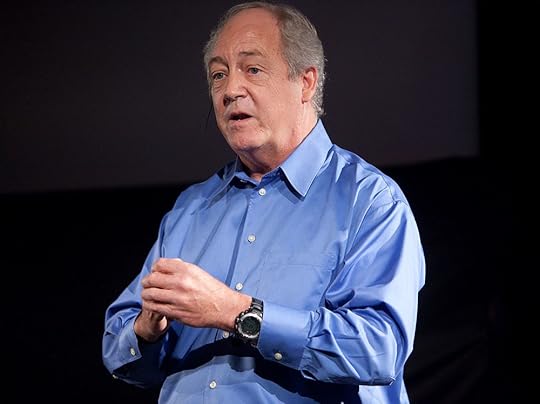
Author Patrick Albert Moore was one of the co-founders of Greenpeace and sailed on the first Greenpeace campaign against US H-bomb tests in Alaska. Upon receiving his PhD in ecology, he spent 15 years in the top committee of Greenpeace and led many of its environmental campaigns.
Patrick Moore:
Moore opens the book with a decent intro. He talks about the emerging field of ecology. He tells the reader about his departure from Greenpeace:
Moore has a good writing style; I found the book to be both engaging and interesting.
He includes many diagrams, pics, and illustrations; a nice touch. The writing here (and his assertions) are also heavily notated, as they should be.
And I'll note right up front that this one is sure to draw the ire of many climate alarmists, and others who have been drawn into the climate emergency camp. I'm admittedly generally a fan of contrarian thinkers, and don't have a dog in this fight either way... However, there has been a definitive ideological push for climate alarmism recently, and I am generally very skeptical of any science when it becomes ideological.
So, I seek out qualified contrarians for a different perspective. I like to see where an author will take a book, and weigh the force of the arguments and evidence provided therein, before coming to any conclusions.
Further to this point; I felt that Moore did a great job fielding the material presented here.
Sadly, contrary to what most people assume about science; the realm of scientific inquiry is not the objective and unbiased bastion of truth it should be. Instead, the history of science has long been the domain of entrenched dogmas. This is generally the rule, and not the exception. As Max Planck once said: "Science advances one funeral at a time..." Moore writes on scientific consensuses:
There's some great writing here. In the book, he covers 11 of these "emergencies." Most have the underlying central theme of climate change. I'll list them below, and then provide a short excerpt with each. I've covered the quotes with a spoiler, for the sake of brevity and clarity:
Africa’s Oldest Baobab Trees are Dying
The Great Barrier Reef is Dead or Dying and All Coral Reefs Will Die in this Century
Climate of Fear and Guilt
Polar Bears are Threatened with Extinction Because of Climate Change
One Million Species Face Extinction Due to Climate Change – Soon
The Great Pacific Garbage Patch is Full of Plastic and is Twice the Size of Texas
Genetically Modified Foods Contain Something Harmful. What is it?
Fear of Invisible Radiation from Nuclear Energy
Forest Fires: Of Course They are Caused by Climate Change (Not Trees?)
Ocean Acidification – A Complete Fabrication
Mass Walrus Death from CO2 – Another Fake Catastrophe from Sir David Attenborough
*********************
As previously mentioned; I enjoyed Fake Invisible Catastrophes and Threats of Doom. The subject of the impact of manmade climate change has become an extremely polarized one lately. There is clearly an element of alarmism in this movement that has been increasing in intensity, since at least the mid-70s.
This book provides a great counterbalance to much of this alarmism. I would definitely recommend it to anyone interested.
5 stars.
Instead, they must rely on the activists, the media, the politicians, and the scientists – all of whom have a very large financial and/or political stake in the subject – to tell them the truth. This welcomes the opportunity to simply invent narratives such as the claim that “CO2 emissions from burning fossil fuels are causing a climate emergency.”
With such an attention-grabbing title, I wasn't sure what to expect from this one going in... I am happy to report that it far exceeded any expectations that I had of it. There is some incredibly persuasive and interesting writing presented here.
Author Patrick Albert Moore was one of the co-founders of Greenpeace and sailed on the first Greenpeace campaign against US H-bomb tests in Alaska. Upon receiving his PhD in ecology, he spent 15 years in the top committee of Greenpeace and led many of its environmental campaigns.
Patrick Moore:
Moore opens the book with a decent intro. He talks about the emerging field of ecology. He tells the reader about his departure from Greenpeace:
"In the mid 1980s, I finally decided to leave Greenpeace due to their transition from what was sensible environmentalism, to a platform of anti-human and anti-science campaigns that were more concerned with fundraising and scaring people with misinformation than with improving the environment...
...It was bittersweet parting ways with Greenpeace, the organization that I had helped build, shape, and guide for 15 years. Unfortunately, Greenpeace had gone from an altruistic group of volunteers with a noble vision, to a business with an ever-expanding budget, a matching payroll to meet, and was now rapidly transforming into a racket peddling junk science..."
Moore has a good writing style; I found the book to be both engaging and interesting.
He includes many diagrams, pics, and illustrations; a nice touch. The writing here (and his assertions) are also heavily notated, as they should be.
And I'll note right up front that this one is sure to draw the ire of many climate alarmists, and others who have been drawn into the climate emergency camp. I'm admittedly generally a fan of contrarian thinkers, and don't have a dog in this fight either way... However, there has been a definitive ideological push for climate alarmism recently, and I am generally very skeptical of any science when it becomes ideological.
So, I seek out qualified contrarians for a different perspective. I like to see where an author will take a book, and weigh the force of the arguments and evidence provided therein, before coming to any conclusions.
Further to this point; I felt that Moore did a great job fielding the material presented here.
Sadly, contrary to what most people assume about science; the realm of scientific inquiry is not the objective and unbiased bastion of truth it should be. Instead, the history of science has long been the domain of entrenched dogmas. This is generally the rule, and not the exception. As Max Planck once said: "Science advances one funeral at a time..." Moore writes on scientific consensuses:
"All through history brilliant scientists have been opposed by false consensuses. Galileo (astronomy), Mendel (genetics), Darwin (evolution), and Einstein (physics) each faced massive opposition to their discoveries. When Einstein, as a young patent clerk with no academic position published his Theory of Relativity, he was countered by a book titled 100 Authors Against Einstein. Einstein’s response to this, as he explained to a journalist, was: “If I were wrong, then one (author) would have been enough.”
There's some great writing here. In the book, he covers 11 of these "emergencies." Most have the underlying central theme of climate change. I'll list them below, and then provide a short excerpt with each. I've covered the quotes with a spoiler, for the sake of brevity and clarity:
Africa’s Oldest Baobab Trees are Dying
The Great Barrier Reef is Dead or Dying and All Coral Reefs Will Die in this Century
Climate of Fear and Guilt
Polar Bears are Threatened with Extinction Because of Climate Change
One Million Species Face Extinction Due to Climate Change – Soon
The Great Pacific Garbage Patch is Full of Plastic and is Twice the Size of Texas
Genetically Modified Foods Contain Something Harmful. What is it?
Fear of Invisible Radiation from Nuclear Energy
Forest Fires: Of Course They are Caused by Climate Change (Not Trees?)
Ocean Acidification – A Complete Fabrication
Mass Walrus Death from CO2 – Another Fake Catastrophe from Sir David Attenborough
*********************
As previously mentioned; I enjoyed Fake Invisible Catastrophes and Threats of Doom. The subject of the impact of manmade climate change has become an extremely polarized one lately. There is clearly an element of alarmism in this movement that has been increasing in intensity, since at least the mid-70s.
This book provides a great counterbalance to much of this alarmism. I would definitely recommend it to anyone interested.
5 stars.

May 25, 2021
Fake Invisible Catastrophes and Threats of Doom
©2021 Patrick Moore
A short BOOK REPORT by Ron Housley
It turns out that there are many credentialed Ph.D. level scientists weighing in on different aspects of today’s climate debate. On one side of the divide are the recipients of limitless government grants handed out for the purpose of proving mankind’s contribution to what is being called a climate catastrophe. On the other side is an ever-increasing number of scientists frustrated that their considered objections are systematically censored, shut down and met with threats — as each year hundreds of millions of government dollars are at stake.
Patrick Moore is one of the voices questioning not only the popular positions promulgated by the throngs of grant recipients, but also examining the basic premises of the various arguments to which many of us have heard only what is known today as consensus opinions.
I wish that Moore had chosen a more scholastic-sounding title for his treatise, rather than that one that carries the tone of an unserious challenge. Not only are Patrick Moore’s challenges serious, but they spring from a sound scientific background. (In his previous book, “Confessions of a Greenpeace Dropout,” another semi-unserious sounding title, he established both his motivational sincerity and his scientific bona fides.)
The reason the title cites “fake invisible” is that the majority of catastrophe-related events supposedly caused by climate changes are not really happening as advertised, and they are “invisible” to investigation ---- either too far away and difficult to actually see for ourselves (coral reefs; polar bears; oceanic garbage patches; suicidal walruses; ancient African baobab trees; mass extinctions), or literally invisible (carbon dioxide; water vapor; methane; ocean acidification; temperatures; greenhouse gas effect).
TEMPERATURES VS. CO2 LEVELS
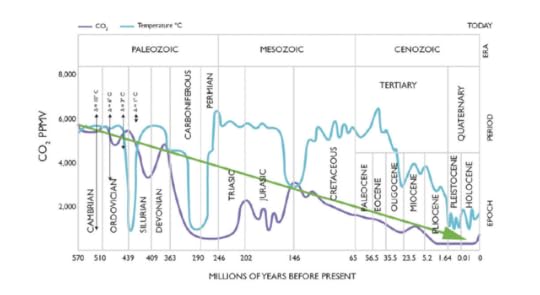
Back in the early 1990s I read geologic data showing temperatures and CO2 levels across earth’s long history, across millions of years. In every case, temperature increases ALWAYS preceded CO2 increases, not the other way around — contradicting one of the popular conceptions that increases in CO2 levels somehow cause temperature changes.
If there was any causality here, it had to be the other way around. Not until Moore’s present book did I find an intelligible explanation to set the matter to rest: historical changes in earth’s elliptical orbit combined with changes in the earth’s tilt (obliquity) create increases in solar radiation reaching the planet, resulting in oceanic warming; when the oceans warm, they give off CO2 to the atmosphere --- and presto, radiational warming causes a rise in atmospheric CO2.
This relationship is clearly spelled out in the recognized geology textbooks; but it’s apparently on the journalistic black list, not to be discussed, since it flies in the face of today’s climate activism. I still do not understand why this dynamic is not part of the ongoing climate debate.
Today’s politicization of the science has made it difficult to conduct a conversation in polite company. It has devolved into a shouting match between the “deniers” and the “catastrophists.” And never the twain shall meet, so it seems. I’m guessing that few on the catastrophist side will ever read Patrick Moore’s book; but so far it looks like anti-catastrophist side will not bring into the conversation any of the powerful information presented in Moore’s book. At this point the spoils go to the side that shouts the loudest. Reason has been forsaken.
INTERGLACIAL WARMING PERIOD
Patrick Moore reminds us that we are currently in an interglacial warming period, a period during which there have been significant prior warmings, each followed by an increase of atmospheric CO2. — all before the advent of man-made CO2. At the very least, important data like this should not be dismissed out of hand, in favor of embracing climate computer modeling which so far has not one time accurately predicted the future climate.
Today’s computer modeling does not end with temperature and CO2 predictions. The polar bear story is another instance where we find problematic computer modeling at work predicting catastrophe. It turned out that the highly publicized decimation of polar bear populations did not materialize in reality: the models included the premise that the bears needed summer ice to hunt for food, but ignored the winter ice that provided all the hunting opportunities their survival required. The polar bear populations exploded in spite of scientific computer model predictions of their impending extinction. Moore explains how the scientists who pointed out the reality of expanding polar bear populations have been shunned as “deniers,” discredited and forced out of academia.
DAVID ATTENBOROUGH AND HIS WALRUSES
Moore ends his short volume with an accounting of how Sir David Attenborough, the famous BBC broadcaster, showed us legions of Walruses suicidally jumping off the cliff into the sea — supposedly because “climate change” had robbed the Walrus of ice flows that they could have been on instead of being up on the cliff. Attenborough never did reveal that the Walruses were being actively hunted by hungry polar bears, and the walrus had no other options. I think that Moore was trying to make the point that the “catastrophist” side of the climate controversy is occasionally dishonest.
* * * * * * * * * * * * *
I wish that Patrick Moore’s book had been a more formal presentation on how we should sort out the scientific findings, and on how to rationally assess conflicting representations of the truth — a problem that plagues today’s climate debate. His presentation lays out more fundamentals than most of us are accustomed to finding in a popular book, but I wish it had been more of a serious treatise digging a little further into how each side should treat the evidence at its disposal. It is not acceptable to dismiss an expert we don’t like without proper cause. We all need better guidance on how to process claims when the experts don’t agree.
©2021 Patrick Moore
A short BOOK REPORT by Ron Housley
It turns out that there are many credentialed Ph.D. level scientists weighing in on different aspects of today’s climate debate. On one side of the divide are the recipients of limitless government grants handed out for the purpose of proving mankind’s contribution to what is being called a climate catastrophe. On the other side is an ever-increasing number of scientists frustrated that their considered objections are systematically censored, shut down and met with threats — as each year hundreds of millions of government dollars are at stake.
Patrick Moore is one of the voices questioning not only the popular positions promulgated by the throngs of grant recipients, but also examining the basic premises of the various arguments to which many of us have heard only what is known today as consensus opinions.
I wish that Moore had chosen a more scholastic-sounding title for his treatise, rather than that one that carries the tone of an unserious challenge. Not only are Patrick Moore’s challenges serious, but they spring from a sound scientific background. (In his previous book, “Confessions of a Greenpeace Dropout,” another semi-unserious sounding title, he established both his motivational sincerity and his scientific bona fides.)
The reason the title cites “fake invisible” is that the majority of catastrophe-related events supposedly caused by climate changes are not really happening as advertised, and they are “invisible” to investigation ---- either too far away and difficult to actually see for ourselves (coral reefs; polar bears; oceanic garbage patches; suicidal walruses; ancient African baobab trees; mass extinctions), or literally invisible (carbon dioxide; water vapor; methane; ocean acidification; temperatures; greenhouse gas effect).
TEMPERATURES VS. CO2 LEVELS
Back in the early 1990s I read geologic data showing temperatures and CO2 levels across earth’s long history, across millions of years. In every case, temperature increases ALWAYS preceded CO2 increases, not the other way around — contradicting one of the popular conceptions that increases in CO2 levels somehow cause temperature changes.
If there was any causality here, it had to be the other way around. Not until Moore’s present book did I find an intelligible explanation to set the matter to rest: historical changes in earth’s elliptical orbit combined with changes in the earth’s tilt (obliquity) create increases in solar radiation reaching the planet, resulting in oceanic warming; when the oceans warm, they give off CO2 to the atmosphere --- and presto, radiational warming causes a rise in atmospheric CO2.
This relationship is clearly spelled out in the recognized geology textbooks; but it’s apparently on the journalistic black list, not to be discussed, since it flies in the face of today’s climate activism. I still do not understand why this dynamic is not part of the ongoing climate debate.
Today’s politicization of the science has made it difficult to conduct a conversation in polite company. It has devolved into a shouting match between the “deniers” and the “catastrophists.” And never the twain shall meet, so it seems. I’m guessing that few on the catastrophist side will ever read Patrick Moore’s book; but so far it looks like anti-catastrophist side will not bring into the conversation any of the powerful information presented in Moore’s book. At this point the spoils go to the side that shouts the loudest. Reason has been forsaken.
INTERGLACIAL WARMING PERIOD
Patrick Moore reminds us that we are currently in an interglacial warming period, a period during which there have been significant prior warmings, each followed by an increase of atmospheric CO2. — all before the advent of man-made CO2. At the very least, important data like this should not be dismissed out of hand, in favor of embracing climate computer modeling which so far has not one time accurately predicted the future climate.
Today’s computer modeling does not end with temperature and CO2 predictions. The polar bear story is another instance where we find problematic computer modeling at work predicting catastrophe. It turned out that the highly publicized decimation of polar bear populations did not materialize in reality: the models included the premise that the bears needed summer ice to hunt for food, but ignored the winter ice that provided all the hunting opportunities their survival required. The polar bear populations exploded in spite of scientific computer model predictions of their impending extinction. Moore explains how the scientists who pointed out the reality of expanding polar bear populations have been shunned as “deniers,” discredited and forced out of academia.
DAVID ATTENBOROUGH AND HIS WALRUSES
Moore ends his short volume with an accounting of how Sir David Attenborough, the famous BBC broadcaster, showed us legions of Walruses suicidally jumping off the cliff into the sea — supposedly because “climate change” had robbed the Walrus of ice flows that they could have been on instead of being up on the cliff. Attenborough never did reveal that the Walruses were being actively hunted by hungry polar bears, and the walrus had no other options. I think that Moore was trying to make the point that the “catastrophist” side of the climate controversy is occasionally dishonest.
* * * * * * * * * * * * *
I wish that Patrick Moore’s book had been a more formal presentation on how we should sort out the scientific findings, and on how to rationally assess conflicting representations of the truth — a problem that plagues today’s climate debate. His presentation lays out more fundamentals than most of us are accustomed to finding in a popular book, but I wish it had been more of a serious treatise digging a little further into how each side should treat the evidence at its disposal. It is not acceptable to dismiss an expert we don’t like without proper cause. We all need better guidance on how to process claims when the experts don’t agree.

March 12, 2021
I have witnessed a college student scream at his mother, "YOU ARE A SCIENCE DENIER", when she expressed skepticism towards global warming/polar bear extinction/ the dangers of Golden Rice and environmentalist solutions to these issues which tend to put at risk the human progress we’ve made to date such as:
1. halving extreme poverty
2. improving global life expectancies, and
3. immeasurably improving people’s lives compared to those of their grandparents.
The young man is victim of mass media fueled hysteria and Mom needs facts at hand to counteract the pabulum he spouts. Patrick Moore provides the antidote in Fake Invisible Catastrophes and Threats of Doom.
A Greenpeace founder and scientist, Moore left that organization because it valued activism and money above science and truth. One of the first things he states is that, "It is the duty of scientists to be skeptical of all new claims, especially when they are predictions of catastrophes that have not yet occurred."
Moore continues, "In most religions we are asked to 'believe' even though we have not directly observed the alleged higher power or beings. However in science, direct and tangible observation is fundamental."
He makes sure to always give his sources so you can check the facts for yourself, because the big problem is that the alarming doomsday predictions are always about things you can't just go and look at: bears at the North pole, coral under the sea, or invisible gas in the atmosphere.
Moore covers a lot of ground - ranging from the technical details of climate to claims made about the effects of climate change, such as the impacts on polar bears, coral reefs, species extinction, trees and forests, etc. Other chapters consider claims made that are not directly related to carbon dioxide such as genetic modification, chemicals in the environment, plastics and radiation.
This book is a great review/update of your grade school and junior high science classes (at least if you are a Boomer). It's written clearly without a bunch of jargon and the info is conveyed with wit and humor. This is a highly informative and enjoyable read.
1. halving extreme poverty
2. improving global life expectancies, and
3. immeasurably improving people’s lives compared to those of their grandparents.
The young man is victim of mass media fueled hysteria and Mom needs facts at hand to counteract the pabulum he spouts. Patrick Moore provides the antidote in Fake Invisible Catastrophes and Threats of Doom.
A Greenpeace founder and scientist, Moore left that organization because it valued activism and money above science and truth. One of the first things he states is that, "It is the duty of scientists to be skeptical of all new claims, especially when they are predictions of catastrophes that have not yet occurred."
Moore continues, "In most religions we are asked to 'believe' even though we have not directly observed the alleged higher power or beings. However in science, direct and tangible observation is fundamental."
He makes sure to always give his sources so you can check the facts for yourself, because the big problem is that the alarming doomsday predictions are always about things you can't just go and look at: bears at the North pole, coral under the sea, or invisible gas in the atmosphere.
Moore covers a lot of ground - ranging from the technical details of climate to claims made about the effects of climate change, such as the impacts on polar bears, coral reefs, species extinction, trees and forests, etc. Other chapters consider claims made that are not directly related to carbon dioxide such as genetic modification, chemicals in the environment, plastics and radiation.
This book is a great review/update of your grade school and junior high science classes (at least if you are a Boomer). It's written clearly without a bunch of jargon and the info is conveyed with wit and humor. This is a highly informative and enjoyable read.

March 28, 2021
Data rich
Lots of great data that I can use for critical analysis. It has given me food for thought. And I look forward to finding out more.
Lots of great data that I can use for critical analysis. It has given me food for thought. And I look forward to finding out more.
March 14, 2021
A factual study
Finally, an honest, fact-filled review of the catastrophes that are about beset mankind. The author looks at each calamity and demolishes them with science. We certainly need to be better stewards of our planet, but it is refreshing to know that the world will not end tomorrow. Well worth reading!
Finally, an honest, fact-filled review of the catastrophes that are about beset mankind. The author looks at each calamity and demolishes them with science. We certainly need to be better stewards of our planet, but it is refreshing to know that the world will not end tomorrow. Well worth reading!

March 30, 2021
I was rather fascinated by the author's mix of facts, humor, and dedication to sharing his knowledge in regards to climate change. I applaud him for using facts for the most part to share and explain the realities of what is currently happening in the world. The fact that he references so much and gave explanations throughout says a lot about the way he intended for the information to come across. It has a great balance of teaching and critique. It’s a fantastic starting point if you’re seeking information about climate change. I may not agree with everything the author shared or particular endorsements, but there is a lot of good, solid knowledge being shared. It’s something that has me making notes and intending to research various ways to improve many things we already do to help.
March 22, 2021
Refreshing truth about climate change
What we need are more scientists and authors giving us the facts rather than propaganda. Moore does this well covering all of the major areas of climate fear mongering plus a few more that are less popularized. I had to deduct 1 star for his frequent mentioning of evolution as the explanation for all life. That's one area where he refuses (like so many) to interpret the data correctly.
What we need are more scientists and authors giving us the facts rather than propaganda. Moore does this well covering all of the major areas of climate fear mongering plus a few more that are less popularized. I had to deduct 1 star for his frequent mentioning of evolution as the explanation for all life. That's one area where he refuses (like so many) to interpret the data correctly.
February 27, 2021
Essential Climate Warming Reading
This is a tour de force, climate, biology, chemistry, physics, energy, all researched fully referenced. Exposes the dishonesty, fabrication, the inevitable misdirection of policy and resources caused by climate alarmists. Written and researched by a world renown environmentalist Dr Patrick Moore a founder of Greenpeace
This is a tour de force, climate, biology, chemistry, physics, energy, all researched fully referenced. Exposes the dishonesty, fabrication, the inevitable misdirection of policy and resources caused by climate alarmists. Written and researched by a world renown environmentalist Dr Patrick Moore a founder of Greenpeace

September 6, 2021
Some good points made throughout, particularly on nuclear energy and GMO’s, however, the book is 80% driven to stating CO2 is god, global warming doesn’t exist and fossil fuels do better for the planet than bad.
Whilst Moore argues these points through scientific fact, he also vehemently targets Greenpeace, Attenborough, et. Al throughout and let’s his anger and annoyance with them become clear. He claims he wanted to let science do the talking, which it did for a good part, but his snide barbs against “doom-sayer, extremists” makes you feel he’s become an extremist for the other side.
Whilst the global warming and sea change chapters make some valid points on past data and future predictions, he fails to address other important issues such as social, economical and ethical issues. He argues for a dog-eat-dog world in which, if we are the proponent for killing a species, that’s just life, but fails to acknowledge that we have the ability to prevent these occurrences. Whilst he may not want to do anything to make positive changes (and he uses science to argue this well), sometimes it’s not a case of science speaking, rather whether these changes align with our morals. Whilst Moore may be happy in a capitalist, ego-driven society that’s emptied the oceans and burned down the lands, I’m not so sure the rest of the “tree-huggers” would be.
Worth a read for anyone interested in the environment and the future of our planet, primarily because it’s always good to hear from the other side of the coin and what arguments it’s using. Unfortunately, I feel these kind of books aren’t usually read by people trying to expand their knowledge and understand both sides of a story, but instead by Trumpist, climate change-deniers who see a couple of pretty graphs and tables and use this source as their single basis to keep fracking the fuck out of the planet.
Whilst Moore argues these points through scientific fact, he also vehemently targets Greenpeace, Attenborough, et. Al throughout and let’s his anger and annoyance with them become clear. He claims he wanted to let science do the talking, which it did for a good part, but his snide barbs against “doom-sayer, extremists” makes you feel he’s become an extremist for the other side.
Whilst the global warming and sea change chapters make some valid points on past data and future predictions, he fails to address other important issues such as social, economical and ethical issues. He argues for a dog-eat-dog world in which, if we are the proponent for killing a species, that’s just life, but fails to acknowledge that we have the ability to prevent these occurrences. Whilst he may not want to do anything to make positive changes (and he uses science to argue this well), sometimes it’s not a case of science speaking, rather whether these changes align with our morals. Whilst Moore may be happy in a capitalist, ego-driven society that’s emptied the oceans and burned down the lands, I’m not so sure the rest of the “tree-huggers” would be.
Worth a read for anyone interested in the environment and the future of our planet, primarily because it’s always good to hear from the other side of the coin and what arguments it’s using. Unfortunately, I feel these kind of books aren’t usually read by people trying to expand their knowledge and understand both sides of a story, but instead by Trumpist, climate change-deniers who see a couple of pretty graphs and tables and use this source as their single basis to keep fracking the fuck out of the planet.

November 14, 2021
Dr Patrick Moore:
“It dawned on me one day that most of the scare stories in the media today are based on things that are either invisible, like CO2 and radiation, or very remote, like polar bears and coral reefs. Thus, the average person cannot observe and verify the truths of these claims for themselves. They must rely on activists, the media, politicians, and scientists - all of whom have a huge financial and/or political interest in the subject - to tell them the truth. This is my effort, after 50 years as a scientist and environmental activist, to expose the misinformation and outright lies used to scare us and our children about the future of the Earth. Direct observation is the very basis of science. Without verified observation it is not possible to know the truth. That is the sharp focus of this book.”
Well done.
“It dawned on me one day that most of the scare stories in the media today are based on things that are either invisible, like CO2 and radiation, or very remote, like polar bears and coral reefs. Thus, the average person cannot observe and verify the truths of these claims for themselves. They must rely on activists, the media, politicians, and scientists - all of whom have a huge financial and/or political interest in the subject - to tell them the truth. This is my effort, after 50 years as a scientist and environmental activist, to expose the misinformation and outright lies used to scare us and our children about the future of the Earth. Direct observation is the very basis of science. Without verified observation it is not possible to know the truth. That is the sharp focus of this book.”
Well done.
November 14, 2021
lines his pocket from big oil, big mining etc.
if you look at the instittutions this man has worked as a 'consultant' for and subsequently on the boards of you will see that these "for profit" places help folks keep the oil industry going, they help the big logging companies getaway with chopping down old growth forests. they sell aboriginies that the mining going on on their lands really wont cause any problems, big pharm isnt hurting us by putting pesticides on our crops we eat..... In short folks this guy lines his pockets selling people like us on what big business wants you to hear and believe. or swallow.
You can believe him or you can look at the company he keeps and gets paid by.
if you look at the instittutions this man has worked as a 'consultant' for and subsequently on the boards of you will see that these "for profit" places help folks keep the oil industry going, they help the big logging companies getaway with chopping down old growth forests. they sell aboriginies that the mining going on on their lands really wont cause any problems, big pharm isnt hurting us by putting pesticides on our crops we eat..... In short folks this guy lines his pockets selling people like us on what big business wants you to hear and believe. or swallow.
You can believe him or you can look at the company he keeps and gets paid by.

May 21, 2023
Patrick Mooren vuonna 2021 julkaistu kirja Fake invisible catastrofes and threads of doom on hyödyllistä luettavaa, jos on halua kyseenalaistaa valtavirtamedian narratiiveja ilmastonmuutoksesta muutamiin muihin ”hirvittäviin” ekokatastrofeihin.
Tekijä on tullut tunnetuksi Greenpeacen yhtenä perustajajäsenenä ja monitieteisenä asiantuntijana ja pitkän linjan luontoaktivistina. Greenpeacesta hän lähti menemään, kun se alkoi toteuttaa uusliberaaleja vihreän siirtymän tavoitteita poliittisessa ohjauksessa.
Kirja on jäsennelty siten, että yhteentoista lukuun on Mooren väittämän mukaan niputettu tekaistuja (niin sanottuja) uhkia, joita on tavattu mediassa liioitella mielin määrin. Osansa saa mm. ilmastonmuutos, koralliriuttojen tuhoutuminen, jääkarhujen tuho, lajien sukupuuttoon kuoleminen, Teksasin kokoinen jätepyörre Tyynessämeressä (jollaista ei näe satelliittikuvissa), geenimanipuloitu ruoka, ydinvoima, metsäpalot, valtamerten happamoituminen ja lopuksi vielä Sir David Attenboroughin täydellinen lyttääminen.
Mediassa esitetään jos jonkinnäköistä dokumenttia ja uutisklippiä luontokadosta ja ilmastonmuutoksesta ja merenpintojen kohoamisesta, ja iso osa pelkopornosta perustuu tunteisiin vetoavaan vahvaan liioitteluun ja erilaisiin tietokonelaskelmiin ja mallinnuksiin, jotta poliittisessa ohjauksessa olevat ilmastopaneelit (ICPP) ja vastaavat tahot vimmatulla propagandalla yrittävät ajaa fossiiliset polttoaineet pannaan argumenttiensa turvin.
Moore tekeekin pilkkaa ilmastoalarmisteista, kun sepitetään syitä äärilämpötilojen yleistymiseen. Voi olla siis liian kuuma tai kylmä, sataa normaalia enemmän lunta tai vähemmän. Myös tulvat, metsäpalot, merenpinnan nousu ja jäätiköiden sulaminen kelpaavat tuhon ilmentymiksi. Inhimillisellä tasolla myös mielenterveysongelmat, sydänsairaudet ja flunssat voivat aiheutua muka ihan samasta syystä. ICPP:n ja ilmastokulttiin kuuluvien perusoletus on, että ihmisen aiheuttamat hiilidioksidipäästöt aiheuttavat ilmaston lämpenemistä, vaikka tieteelliset näytöt ovat Mooresta olemattomia.
Moore erottaakin alarmistien tuhon profetiat todellisesta tieteestä ja väitetystä yksimielisyydestä tiedeyhteisössä sekä niin sanotusta hiilidioksikuormasta ja sen vaikutuksista. Tavallista on, että erilaisissa historiallisissa esityksissä seurataan ilmakehän hiilidioksidin määrän lisääntymistä jostain 1800-luvun puolivälin paikkeilta, jolloin oltiin tasolla 0,28% eli alle nykyisen tason 0,415 prosenttisosuudesta ilmakehässä. Täytyy kuitenkin muistaa, että tarkasteltu ajanjakso on kovin lyhyt periodi maapallon historiassa, ja todellisuudessa ollaankin paljon alle huippujen eli 6%:n määrästä. Oikeastaan viimeiset 150 miljoona vuotta hiilidioksidipitoisuus ilmakehässä on ollut laskusuunnassa, ja Moore osoittaa tilastojen perusteella, ettei maapallon historiassa voida osoittaa CO2-päästöjen lisänneen ilmaston lämpötilaa. Elämme tällä hetkellä vielä Pleistoseenijääkautta, vaikka ilmastoalarmistit haluavat saada meidät uskomaan, että se on jo päättynyt ja eletään lopun aikoja maapallon pelastamiseksi sekoittamalla fiktiota faktoihin.
Kirjoittajan näkemyksen mukaan ilmakehän hiilidioksidipäästöjä voisi lisätä moninkertaisesti, sillä onhan siitä kasvien kasvun suhteen kiistattomasti hyötyä. Moore esittääkin, että nykytasolta voisi ihan hyvin nostaa prosentin tuntumaan ja vähän ylikin, sillä hyödyttäähän se koko ihmiskuntaa, ja suuren populaation ruokkiminen onnistuu, kun satomäärät nousevat. Muutoinkin fossiilisten polttoaineiden demonisoiminen on Mooresta kummallista, kun dieselautolla ajelu palauttaa vain takaisin ilmakehään hiilidioksidia, josta se alun perin tulikin.
Ylipäätään ylimitoitetut hiilidioksidipäästöjen hillitseminen kuluttajakäyttäytymiseen vaikuttamalla on otettu vahvasti poliittiseen ohjaukseen eri puolilla maailmaa, ja CO2 nähdään ikään kuin jonkinlaisena ympäristösaasteena, jota mustamaalataan monenkirjavissa virherpesukampanjoissa, eikä vesihöyrystä puhuta mitään. Moore tietääkin, että sen osuus kasvihuoneilmiössä voi olla jopa 90%. Perusnarratiiviinhan tuntuu virheellisesti kuuluvan, että hiilidioksidin määrä ilmakehässä määrittää ilmaston lämpötilaa. Tavallisen vegaaninkaan ei ehkä tule ajateltua, että hänen lihasta luopuminen ei ilmastoon vaikuta mitenkään, eikä hän varmaan ole tietoinen, että valtamerten hiilidioksidivaranto on yli 50-kertainen verrattuna ilmakehään.
Tuskin kukaan on voinut välttyä propagandauutisilta, joissa luontokatoa ja arktisten alueiden ikonisten eläinten eli jääkarhujen ahdinkoa ei olisi revitelty. Muokatut kuvat kesäaikaan yksittäisellä jäälautalla seilaavasta arktisesta nallekarhusta saavat luontoihmisen tunteet pintaan, ja saastuttava bensa-auto vaihdetaan vähintään hybridiin ellei täyssähköön. Todellisuus on kuitenkin toisenlainen, ja jääkarhujen määrä on monikertaistunut sitten vuoden 1973, kun eläimet suojeltiin, ja niistä onkin tullut varsinainen vitsaus monissa osissa Kanadaa. Yleensä suurelta yleisöltä puuttuu kokonaan taito tarkastella asioita myös historiallisesta perspektiivistä, kun jääkarhut ovat selviytyneet jo satojatuhansia vuosia, vaikka välissä on ollut paljon lämpimämpiä ajanjaksoja kuin nykyään.
Viime vuosina on rummutettu myös luontokadon hillitsemistä ilmastotoimin ja luonnon ennallistamista ja on vedottu ihmisten aiheuttamiin sukupuuttoihin, ja mukamas miljoona eliötä olisi kuolemassa sukupuuttoon. Tässäkin kauhukuvia on maalailemassa YK:n ilmastopaneelin kaltainen elin eli Hallitustenvälinen luonnon monimuotoisuus- ja ekosysteemipalvelupaneeli (IPBES). Maailmassahan on luokiteltu tähän mennessä noin 1,74 eliölajia, mutta IPBES:n määrittelyjen mukaan lajeja olisikin olemassa 8,7 miljoonaa, ja suurin osa lajikadosta kohdistuisi juuri tuohon osaan, jota ei ole luokiteltu mitenkään ja joka on olemassa vielä vain IPBES:n raporteissa. Jos kuitenkin tarkastellaan lähihistoriaa, viimeisen sadan vuoden aikana lajien sukupuutto on vähentynyt yli 80 prosenttia. Muutoinkin kirjassa esitetyt väitteet voivat saada pohtimaan historiallisten faktojen ja pitkän ajan tutkimusten ja seurantatulosten ohittamista poliittisten päämäärien ja erilaisten tarkoitushakuisten tietokonesimulaatioiden tieltä, jotta propaganda ja mielenhallintaoperaatiot osuvat maaliinsa.
Tekijä on tullut tunnetuksi Greenpeacen yhtenä perustajajäsenenä ja monitieteisenä asiantuntijana ja pitkän linjan luontoaktivistina. Greenpeacesta hän lähti menemään, kun se alkoi toteuttaa uusliberaaleja vihreän siirtymän tavoitteita poliittisessa ohjauksessa.
Kirja on jäsennelty siten, että yhteentoista lukuun on Mooren väittämän mukaan niputettu tekaistuja (niin sanottuja) uhkia, joita on tavattu mediassa liioitella mielin määrin. Osansa saa mm. ilmastonmuutos, koralliriuttojen tuhoutuminen, jääkarhujen tuho, lajien sukupuuttoon kuoleminen, Teksasin kokoinen jätepyörre Tyynessämeressä (jollaista ei näe satelliittikuvissa), geenimanipuloitu ruoka, ydinvoima, metsäpalot, valtamerten happamoituminen ja lopuksi vielä Sir David Attenboroughin täydellinen lyttääminen.
Mediassa esitetään jos jonkinnäköistä dokumenttia ja uutisklippiä luontokadosta ja ilmastonmuutoksesta ja merenpintojen kohoamisesta, ja iso osa pelkopornosta perustuu tunteisiin vetoavaan vahvaan liioitteluun ja erilaisiin tietokonelaskelmiin ja mallinnuksiin, jotta poliittisessa ohjauksessa olevat ilmastopaneelit (ICPP) ja vastaavat tahot vimmatulla propagandalla yrittävät ajaa fossiiliset polttoaineet pannaan argumenttiensa turvin.
Moore tekeekin pilkkaa ilmastoalarmisteista, kun sepitetään syitä äärilämpötilojen yleistymiseen. Voi olla siis liian kuuma tai kylmä, sataa normaalia enemmän lunta tai vähemmän. Myös tulvat, metsäpalot, merenpinnan nousu ja jäätiköiden sulaminen kelpaavat tuhon ilmentymiksi. Inhimillisellä tasolla myös mielenterveysongelmat, sydänsairaudet ja flunssat voivat aiheutua muka ihan samasta syystä. ICPP:n ja ilmastokulttiin kuuluvien perusoletus on, että ihmisen aiheuttamat hiilidioksidipäästöt aiheuttavat ilmaston lämpenemistä, vaikka tieteelliset näytöt ovat Mooresta olemattomia.
Moore erottaakin alarmistien tuhon profetiat todellisesta tieteestä ja väitetystä yksimielisyydestä tiedeyhteisössä sekä niin sanotusta hiilidioksikuormasta ja sen vaikutuksista. Tavallista on, että erilaisissa historiallisissa esityksissä seurataan ilmakehän hiilidioksidin määrän lisääntymistä jostain 1800-luvun puolivälin paikkeilta, jolloin oltiin tasolla 0,28% eli alle nykyisen tason 0,415 prosenttisosuudesta ilmakehässä. Täytyy kuitenkin muistaa, että tarkasteltu ajanjakso on kovin lyhyt periodi maapallon historiassa, ja todellisuudessa ollaankin paljon alle huippujen eli 6%:n määrästä. Oikeastaan viimeiset 150 miljoona vuotta hiilidioksidipitoisuus ilmakehässä on ollut laskusuunnassa, ja Moore osoittaa tilastojen perusteella, ettei maapallon historiassa voida osoittaa CO2-päästöjen lisänneen ilmaston lämpötilaa. Elämme tällä hetkellä vielä Pleistoseenijääkautta, vaikka ilmastoalarmistit haluavat saada meidät uskomaan, että se on jo päättynyt ja eletään lopun aikoja maapallon pelastamiseksi sekoittamalla fiktiota faktoihin.
Kirjoittajan näkemyksen mukaan ilmakehän hiilidioksidipäästöjä voisi lisätä moninkertaisesti, sillä onhan siitä kasvien kasvun suhteen kiistattomasti hyötyä. Moore esittääkin, että nykytasolta voisi ihan hyvin nostaa prosentin tuntumaan ja vähän ylikin, sillä hyödyttäähän se koko ihmiskuntaa, ja suuren populaation ruokkiminen onnistuu, kun satomäärät nousevat. Muutoinkin fossiilisten polttoaineiden demonisoiminen on Mooresta kummallista, kun dieselautolla ajelu palauttaa vain takaisin ilmakehään hiilidioksidia, josta se alun perin tulikin.
Ylipäätään ylimitoitetut hiilidioksidipäästöjen hillitseminen kuluttajakäyttäytymiseen vaikuttamalla on otettu vahvasti poliittiseen ohjaukseen eri puolilla maailmaa, ja CO2 nähdään ikään kuin jonkinlaisena ympäristösaasteena, jota mustamaalataan monenkirjavissa virherpesukampanjoissa, eikä vesihöyrystä puhuta mitään. Moore tietääkin, että sen osuus kasvihuoneilmiössä voi olla jopa 90%. Perusnarratiiviinhan tuntuu virheellisesti kuuluvan, että hiilidioksidin määrä ilmakehässä määrittää ilmaston lämpötilaa. Tavallisen vegaaninkaan ei ehkä tule ajateltua, että hänen lihasta luopuminen ei ilmastoon vaikuta mitenkään, eikä hän varmaan ole tietoinen, että valtamerten hiilidioksidivaranto on yli 50-kertainen verrattuna ilmakehään.
Tuskin kukaan on voinut välttyä propagandauutisilta, joissa luontokatoa ja arktisten alueiden ikonisten eläinten eli jääkarhujen ahdinkoa ei olisi revitelty. Muokatut kuvat kesäaikaan yksittäisellä jäälautalla seilaavasta arktisesta nallekarhusta saavat luontoihmisen tunteet pintaan, ja saastuttava bensa-auto vaihdetaan vähintään hybridiin ellei täyssähköön. Todellisuus on kuitenkin toisenlainen, ja jääkarhujen määrä on monikertaistunut sitten vuoden 1973, kun eläimet suojeltiin, ja niistä onkin tullut varsinainen vitsaus monissa osissa Kanadaa. Yleensä suurelta yleisöltä puuttuu kokonaan taito tarkastella asioita myös historiallisesta perspektiivistä, kun jääkarhut ovat selviytyneet jo satojatuhansia vuosia, vaikka välissä on ollut paljon lämpimämpiä ajanjaksoja kuin nykyään.
Viime vuosina on rummutettu myös luontokadon hillitsemistä ilmastotoimin ja luonnon ennallistamista ja on vedottu ihmisten aiheuttamiin sukupuuttoihin, ja mukamas miljoona eliötä olisi kuolemassa sukupuuttoon. Tässäkin kauhukuvia on maalailemassa YK:n ilmastopaneelin kaltainen elin eli Hallitustenvälinen luonnon monimuotoisuus- ja ekosysteemipalvelupaneeli (IPBES). Maailmassahan on luokiteltu tähän mennessä noin 1,74 eliölajia, mutta IPBES:n määrittelyjen mukaan lajeja olisikin olemassa 8,7 miljoonaa, ja suurin osa lajikadosta kohdistuisi juuri tuohon osaan, jota ei ole luokiteltu mitenkään ja joka on olemassa vielä vain IPBES:n raporteissa. Jos kuitenkin tarkastellaan lähihistoriaa, viimeisen sadan vuoden aikana lajien sukupuutto on vähentynyt yli 80 prosenttia. Muutoinkin kirjassa esitetyt väitteet voivat saada pohtimaan historiallisten faktojen ja pitkän ajan tutkimusten ja seurantatulosten ohittamista poliittisten päämäärien ja erilaisten tarkoitushakuisten tietokonesimulaatioiden tieltä, jotta propaganda ja mielenhallintaoperaatiot osuvat maaliinsa.

April 15, 2024
This is another great book everyone should read. It is an easy read and is well-referenced in end-notes after each chapter. The author is well known in both the environmental movement as a leader of the early Greenpeace organization And later as an outspoken opponent of the new updated goals that Greenpeace adopted. Patrick tells his readers what those differences Are and most importantly tell us Why he disagrees based on Science. In clear language he explains many misunderstanding which have recently been sold to the public as evidence of mankind's misuse of the planet and its resources. And even more hopeful, he tells his readers what we should do to continue to lead happy human lives on a healthy planet changing nothing to respond to fake invisible catastrophes and threats of doom.
I recommend everyone read this book and echo its sentiments and rational.
I recommend everyone read this book and echo its sentiments and rational.
January 1, 2024
As a marine biology major in college and an avid reader / researcher of information I found this book amazing. Dr.Moore presents a copious amount of information & facts that bust the Al gore myths of climate change. Must read for all that seek the truth.

January 25, 2023
This book, by a co-founder of Greenpeace, Patrick Moore, sets out to debunk or at least bring down the level of hysteria around discussions about the environment, especially the potentially catastrophic effects of global warming resulting in climate change. I must admit that I have always been one of those people who "religiously" subscribed to the pro-environmentalist trend. Meaning, fossil fuel is bad, we must switch to renewable energy, and so forth. In general, I am still opposed of course to polluting energy sources and industry, and still think these sources of air and water pollution must be either eliminated or adapt cleaner practices. And since the adoption of rules regarding industrial sources of air and water pollution, a great deal of progress has been made. There is nothing wrong with continuing to address these issues - making rivers and lakes cleaner, making air less polluted in the cities and so forth. However, as the author explains using plain language, the catastrophic results of air and water pollution - global warming for example, as well as the potential destruction of shellfish due to ocean acidification caused by increasing levels of CO2 - are hyped by the science and environmental community in order to scare people into making donations and/or obtain ongoing government grants. In fact, as he says "Early shellfish, such as clams, arose more than 500 million years ago, when atmospheric CO2 was 10 to 15 times higher than it is today." Also, "...if atmospheric carbon dioxide is doubled, the dissolved CO2 in the ocean will only rise by 10 percent." Finally, he states that "There is no solid evidence that ocean acidification is the dire threat to marine species that many researchers have claimed." All of Mr. Moore's rebuttals to the hype surrounding climate change are footnoted and referenced.
He shows that as opposed to what is said by many in the scientific community, increasing levels of CO2 might actually help the environment rather than hurt it by spurring increased greening of Earth - a process that is already underway - since CO2 is not only a basic building block of life on a cellular level it is also needed for photosynthesis upon which all life depends. As the author says "...higher levels of carbon dioxide will not only increase productivity in plants, both terrestrial and aquatic, but will also boost productivity of one - of the most important - of the calcifying species in the oceans [coccolithophores]."
Much of the discussion in the book is about CO2 and why increasing CO2 will likely not lead to global warming and the various catastrophic effects that are predicted (such as sea level rise etc). As far as increasing CO2 levels, he says that "There is direct evidence that trees and plants are taking up a large percentage of human CO2 emissions as their levels increase."
He also discussed topics such as genetically modified organisms - GMO foods - and shows that not only are they not dangerous, the adoption of GMO Vitamin A fortified rice (Golden Rice) would save thousands of children worldwide from blindness and death in countries where the primary food is rice, since rice lacks this essential vitamin that prevents blindness.
He points out how articles sometimes use ambiguous language to suggest things that are not true, such as that old baobab trees are dying, implying that this is due to some sort of climate emergency, while the truth is baobab trees are widespread in Africa and India, they are not threatened, and old baobab trees eventually do die. The same deceptive language is used in articles about the death of coral organisms that comprise reefs, such as the Great Barrier Reef. The author shows that reefs worldwide are not threatened at all by climate change and that if anything, reefs increase in warmer waters - such as those in the tropics, where corals are abundant. Here's a quote from the section on reefs: "...if modern corals evolved and survived for 225 million years when the climate was considerably warmer than it is today, why are we told that a small amount of warming threatens their very existence? ....the answer is: for academic status and money." In fact, "...the warmest waters in the world have the highest species diversity for every taxonomic class of marine life..." And "It is interesting to note that this is also the case for terrestrial species; ...more species diversity in the hottest tropical rain-forest than there is in the Arctic or Antarctica."
The author debunks the deceptive scare-mongering around the fate of the polar bears as the climate warms. In fact, "....polar bears have experienced a dramatic increase in their population in recent decades all around the Arctic."
He shows that the Great Pacific Garbage Patch is non-existent - invisible on photographs taken from space; also that whatever plastic particles there may be in the ocean are used by oceanic birds to process food, the same way that land-based birds use pebbles to process food in their gullets (or gizzards) since birds do not have teeth. As far as plastic is concerned, he explains that even wood is a form of plastic - chemically speaking. Plastic debris in the ocean can provide homes - similar to reefs - for marine life: "As with driftwood, drifting plastic is a floating reef that provides a home to many marine species. In fact, plastic offers much more variety in terms of shapes such as bottles and containers, so it offers a wider range of habitats than driftwood..." He continues: "Plastic is no more toxic than driftwood, which is not toxic at all. Yet website after website claims that plastic "leaches toxics" and "chemicals" into the oceans. This is untrue. There is a good reason why we package and wrap much of our food in plastic containers and plastic wrap. It is because the plastic protects it from contamination and spoilage, and because the plastic is sterile and does not contain anything toxic." As the author explains: "One of the most important benefits of plastic in the sea is that, like driftwood, it provides a habitat for many of the species such as barnacles that attach themselves to floating objects... Other species lay their eggs on driftwood and floating plastic. This in turn provides food for fish and birds. There is no doubt that the benefit of additional food provided by floating plastic far outweighs the rather rare occurrence of damage or death from being tangled in plastic." He does however say that the fishing industry must be educated on not discarding fishing gear such as nets and floats at sea - since this gear seems to comprise most of the plastic debris in the oceans. Still, according to the author "...the multi-faceted benefits of plastic far outweigh the negatives."
Another section of the book addresses the false fear that climate change is driving wildfires. In fact, that is not the case. Unwise development such as housing constructed too close to forests, as well as lack of forest management, are to blame. "There are too many people living in or adjacent to forested lands that present a fire risk to ignore the true cause - high fuel load and lack of forest management."
I'm not in a position to disagree with his writings since I'm not a scientist or researcher, but I would say the book at least was reassuring - perhaps makes the future seem less nightmarish. Perhaps a needed dose of reality cutting through the tsunami of climate hysteria. At least another viewpoint which is rarely if ever heard.
I'm not sure this one book will turn me into a global warming skeptic, but I do think, as a layperson, there is merit in what he says, especially in his trenchant commentary on the tendency of the academic community to adopt group-think positions out of fear of standing out and then possibly being ostracized, losing funding etc. A trend that is popular is picked up and out of fear of being canceled, the vast majority of academics and scientists will then run with it - even if evidence should lead to more nuanced, less dire conclusions. Here is what he says about the consensus on climate change: "It is a logical fallacy to use the assertion that most people agree with something as if that, in itself, proves something is true. "Consensus" is actually not a valid scientific term. It is a social and political term having to do with agreement on policies such as regulations, codes of conduct, procedures for making a decision, etc." And as for those who oppose or resist consensuses, they are not always "crackpots" - quite the contrary: "throughout] ...history brilliant scientists have been opposed by false consensuses. Galileo (astronomy), Mendel (genetics, Darwin (evolution), and Einstein (physics) each faced massive opposition to their discoveries. When Einstein, as a young patent clerk with no academic position published his "Theory of Relativity," he was countered by a book titled "100 Authors Against Einstein." Einstein's response to this...was "If I were wrong, then one (author) would have been enough."
As the author concludes: "People are not dying by the tens of thousands from climate change. Species are not going extinct by the tens of thousands either. And genetically modified food has not been known to cause a single illness, never mind thousands of deaths."
I would recommend this book to anyone who wants to read another point of view about the environment, a book that is well-researched by an author with decades of experience and knowledge in the environmental field.
Here are the quotes:
"The most recent glacial advance was just the most recent of as many as 45 such advances during the Pleistocene Ice Age, which the Earth has been in for 2.6 million years."
"The changes that have occurred to the Earth's climate over the past 300 years since the depth of the Little Ice Age in about 1700 are in no way unusual or unique in history. During the past 3,000 years, ... a blink in geological time, there has been a succession of warm periods and cool periods. There is no record of species extinction due to climatic change during these periods. And during the longer time periods such as from 500 million years ago, the biodiversity of life has increased dramatically despite five major extinction events. Nothing that is happening today comes even close to the changes that have occurred though life's long history."
"Near the top of the list [of the biggest threats to society and the environment] is the widespread adoption of "renewable energy" - in particular wind and solar - devices which have nothing renewable in their machinery. These two unreliable technologies have caused the price of electricity to double, and more in some countries."
"Wind and solar energy production continue to disappoint. Neither solar nor wind oxygenation are available even 50 percent of the time."
"The osmoregulators are best illustrated by the three examples of freshwater fish, saltwater fish, and fish that are able to live in both freshwater and saltwater."
"Fish such as salmon and eels that spend part of their lives in fresh water and part in saltwater are able to transform their bodily functions as they move from one environment to the other, an astonishing feat."
He shows that as opposed to what is said by many in the scientific community, increasing levels of CO2 might actually help the environment rather than hurt it by spurring increased greening of Earth - a process that is already underway - since CO2 is not only a basic building block of life on a cellular level it is also needed for photosynthesis upon which all life depends. As the author says "...higher levels of carbon dioxide will not only increase productivity in plants, both terrestrial and aquatic, but will also boost productivity of one - of the most important - of the calcifying species in the oceans [coccolithophores]."
Much of the discussion in the book is about CO2 and why increasing CO2 will likely not lead to global warming and the various catastrophic effects that are predicted (such as sea level rise etc). As far as increasing CO2 levels, he says that "There is direct evidence that trees and plants are taking up a large percentage of human CO2 emissions as their levels increase."
He also discussed topics such as genetically modified organisms - GMO foods - and shows that not only are they not dangerous, the adoption of GMO Vitamin A fortified rice (Golden Rice) would save thousands of children worldwide from blindness and death in countries where the primary food is rice, since rice lacks this essential vitamin that prevents blindness.
He points out how articles sometimes use ambiguous language to suggest things that are not true, such as that old baobab trees are dying, implying that this is due to some sort of climate emergency, while the truth is baobab trees are widespread in Africa and India, they are not threatened, and old baobab trees eventually do die. The same deceptive language is used in articles about the death of coral organisms that comprise reefs, such as the Great Barrier Reef. The author shows that reefs worldwide are not threatened at all by climate change and that if anything, reefs increase in warmer waters - such as those in the tropics, where corals are abundant. Here's a quote from the section on reefs: "...if modern corals evolved and survived for 225 million years when the climate was considerably warmer than it is today, why are we told that a small amount of warming threatens their very existence? ....the answer is: for academic status and money." In fact, "...the warmest waters in the world have the highest species diversity for every taxonomic class of marine life..." And "It is interesting to note that this is also the case for terrestrial species; ...more species diversity in the hottest tropical rain-forest than there is in the Arctic or Antarctica."
The author debunks the deceptive scare-mongering around the fate of the polar bears as the climate warms. In fact, "....polar bears have experienced a dramatic increase in their population in recent decades all around the Arctic."
He shows that the Great Pacific Garbage Patch is non-existent - invisible on photographs taken from space; also that whatever plastic particles there may be in the ocean are used by oceanic birds to process food, the same way that land-based birds use pebbles to process food in their gullets (or gizzards) since birds do not have teeth. As far as plastic is concerned, he explains that even wood is a form of plastic - chemically speaking. Plastic debris in the ocean can provide homes - similar to reefs - for marine life: "As with driftwood, drifting plastic is a floating reef that provides a home to many marine species. In fact, plastic offers much more variety in terms of shapes such as bottles and containers, so it offers a wider range of habitats than driftwood..." He continues: "Plastic is no more toxic than driftwood, which is not toxic at all. Yet website after website claims that plastic "leaches toxics" and "chemicals" into the oceans. This is untrue. There is a good reason why we package and wrap much of our food in plastic containers and plastic wrap. It is because the plastic protects it from contamination and spoilage, and because the plastic is sterile and does not contain anything toxic." As the author explains: "One of the most important benefits of plastic in the sea is that, like driftwood, it provides a habitat for many of the species such as barnacles that attach themselves to floating objects... Other species lay their eggs on driftwood and floating plastic. This in turn provides food for fish and birds. There is no doubt that the benefit of additional food provided by floating plastic far outweighs the rather rare occurrence of damage or death from being tangled in plastic." He does however say that the fishing industry must be educated on not discarding fishing gear such as nets and floats at sea - since this gear seems to comprise most of the plastic debris in the oceans. Still, according to the author "...the multi-faceted benefits of plastic far outweigh the negatives."
Another section of the book addresses the false fear that climate change is driving wildfires. In fact, that is not the case. Unwise development such as housing constructed too close to forests, as well as lack of forest management, are to blame. "There are too many people living in or adjacent to forested lands that present a fire risk to ignore the true cause - high fuel load and lack of forest management."
I'm not in a position to disagree with his writings since I'm not a scientist or researcher, but I would say the book at least was reassuring - perhaps makes the future seem less nightmarish. Perhaps a needed dose of reality cutting through the tsunami of climate hysteria. At least another viewpoint which is rarely if ever heard.
I'm not sure this one book will turn me into a global warming skeptic, but I do think, as a layperson, there is merit in what he says, especially in his trenchant commentary on the tendency of the academic community to adopt group-think positions out of fear of standing out and then possibly being ostracized, losing funding etc. A trend that is popular is picked up and out of fear of being canceled, the vast majority of academics and scientists will then run with it - even if evidence should lead to more nuanced, less dire conclusions. Here is what he says about the consensus on climate change: "It is a logical fallacy to use the assertion that most people agree with something as if that, in itself, proves something is true. "Consensus" is actually not a valid scientific term. It is a social and political term having to do with agreement on policies such as regulations, codes of conduct, procedures for making a decision, etc." And as for those who oppose or resist consensuses, they are not always "crackpots" - quite the contrary: "throughout] ...history brilliant scientists have been opposed by false consensuses. Galileo (astronomy), Mendel (genetics, Darwin (evolution), and Einstein (physics) each faced massive opposition to their discoveries. When Einstein, as a young patent clerk with no academic position published his "Theory of Relativity," he was countered by a book titled "100 Authors Against Einstein." Einstein's response to this...was "If I were wrong, then one (author) would have been enough."
As the author concludes: "People are not dying by the tens of thousands from climate change. Species are not going extinct by the tens of thousands either. And genetically modified food has not been known to cause a single illness, never mind thousands of deaths."
I would recommend this book to anyone who wants to read another point of view about the environment, a book that is well-researched by an author with decades of experience and knowledge in the environmental field.
Here are the quotes:
"The most recent glacial advance was just the most recent of as many as 45 such advances during the Pleistocene Ice Age, which the Earth has been in for 2.6 million years."
"The changes that have occurred to the Earth's climate over the past 300 years since the depth of the Little Ice Age in about 1700 are in no way unusual or unique in history. During the past 3,000 years, ... a blink in geological time, there has been a succession of warm periods and cool periods. There is no record of species extinction due to climatic change during these periods. And during the longer time periods such as from 500 million years ago, the biodiversity of life has increased dramatically despite five major extinction events. Nothing that is happening today comes even close to the changes that have occurred though life's long history."
"Near the top of the list [of the biggest threats to society and the environment] is the widespread adoption of "renewable energy" - in particular wind and solar - devices which have nothing renewable in their machinery. These two unreliable technologies have caused the price of electricity to double, and more in some countries."
"Wind and solar energy production continue to disappoint. Neither solar nor wind oxygenation are available even 50 percent of the time."
"The osmoregulators are best illustrated by the three examples of freshwater fish, saltwater fish, and fish that are able to live in both freshwater and saltwater."
"Fish such as salmon and eels that spend part of their lives in fresh water and part in saltwater are able to transform their bodily functions as they move from one environment to the other, an astonishing feat."

November 10, 2022
A very insightful book illuminating claims made by climate scientists and then raising questions about the science and truthfulness of those scientists and the institutions.
Afterwards I read some of the issues that these scientists had with Moore and his selection process. Some of his claims are brought into question.
Afterwards I read some of the issues that these scientists had with Moore and his selection process. Some of his claims are brought into question.

October 21, 2023
Facts instead of emotions
The author backs up his conclusions with facts and statistics. Why can't the scientists who make climate claims show us facts and stats instead of just using words and pictures (faked?) to trigger emotional responses? Follow the science is a buzzword that's used to trigger emotions and get people to do what you want. If following the science were true then we'd be able to see the facts and stats and judge for ourselves.
The author backs up his conclusions with facts and statistics. Why can't the scientists who make climate claims show us facts and stats instead of just using words and pictures (faked?) to trigger emotional responses? Follow the science is a buzzword that's used to trigger emotions and get people to do what you want. If following the science were true then we'd be able to see the facts and stats and judge for ourselves.

December 31, 2023
• Good source of details about the BIG LIE, AKA Climate Change, attack on the middle class
• Specific claims are examined and scientifically refuted to convince anyone with the faculties to have situational awareness that a great evil is being used to destroy civilization.
• The facts, the logic, and the reasoning will convince any person who is not yet brain dead that the elites are running a scam based on superstition in the name of science.
• My one complaint about this well researched book is that the author ignores the conspiracy of power mongers in favour of monetary greed as the prime motivation for the monstrous evil perpetrated by the elites.
• This last point relegates the value of this book to just interesting talking points that will not change any hearts of the useful idiot crowd.
• Three out of five stars for readability and old-fashioned common sense.
• Specific claims are examined and scientifically refuted to convince anyone with the faculties to have situational awareness that a great evil is being used to destroy civilization.
• The facts, the logic, and the reasoning will convince any person who is not yet brain dead that the elites are running a scam based on superstition in the name of science.
• My one complaint about this well researched book is that the author ignores the conspiracy of power mongers in favour of monetary greed as the prime motivation for the monstrous evil perpetrated by the elites.
• This last point relegates the value of this book to just interesting talking points that will not change any hearts of the useful idiot crowd.
• Three out of five stars for readability and old-fashioned common sense.
February 12, 2021
An eye opener.
I have always been curious about the claims made over climate change. We live on a planet that heats and cools ,surrounded by other planets who did the same before their death. Attenborough I have thought of as good however there are plenty of occasions where things are said I know not to be true, I've put it down to accidents or editing but that said I've never trusted anyone who could not get involved when an animal is hurt and just state "this,is nature" . The book has many facts ,stories we were told and remembering them and seeing now that indeed they were bunkum, reminds me to be more careful in future about what I'm told. Worth a share,good book,an eye opener.
I have always been curious about the claims made over climate change. We live on a planet that heats and cools ,surrounded by other planets who did the same before their death. Attenborough I have thought of as good however there are plenty of occasions where things are said I know not to be true, I've put it down to accidents or editing but that said I've never trusted anyone who could not get involved when an animal is hurt and just state "this,is nature" . The book has many facts ,stories we were told and remembering them and seeing now that indeed they were bunkum, reminds me to be more careful in future about what I'm told. Worth a share,good book,an eye opener.

February 12, 2021
Patrick Moore makes sure to always give his sources so you can check the facts for yourself. Because the problem, according to him, is that the alarming news are always about things you can't just go and look at: bears at the North pole, corals under the sea, invisible gas in the atmosphere. Sometimes by mistake or oversight, sometimes by exaggerating, sometimes with outright lies, today's environmentalists create doomsday scenarios to get money from governments and from you.
Full book review on my blog: https://nouw.com/cwidmann/you-will-pe...
Full book review on my blog: https://nouw.com/cwidmann/you-will-pe...

September 26, 2022
Loved it. In short my takeaway is - beware of red-faced screaming "experts" declaring impending doom. Take a deep breath and put mankind's exaggerated sense of self importance into perspective. Everything that has happened on and to this planet (and will happen) is not necessarily due to human activity. More often than not we can safely conclude that everything is going to be OKAY.
January 13, 2023
I wouldn't call myself a climate change sceptic. I wouldn't even have said that I was sceptical of the theory of anthropogenic climate change. Nevertheless, something attracted me to reading this book, and I'd be lying if I didn't admit that it has raised my degree of scepticism. I suppose I have to acknowledge that the desire to read the book in itself is probably evidence of some latent scepticism that pre-dates its reading, but I certainly didn't have any specific reasons to doubt the conventional wisdom on climate change.
Perhaps what attracted me to this book was my discomfort with the alarmism and almost religious fervour that I seem to detect in some of those making the arguments for policies to prevent climate change. I'm often left feeling that some in the climate change camp are trying to convert rather than persuade; I certainly don't observe the type of dispassionate rational discourse that I would want to treat this important subject.
Some of this book by Moore is on very niche and seemingly less significant topics; it at least zooms in to very specific detail about very specific ecosystems rather than issues on a global scale. The criteria for the selection of his chapter subject matter weren't entirely clear. Still, I can't argue that he seems to do quite a good job of undermining the ideas he is going after. The most important are probably those of carbon being the "temperature knob" for the climate, the acidification of the oceans, and plastic pollution in the ocean. I won't try to summarise his arguments here, but he does seem to offer salient data-backed reasons to doubt the predominant thinking on these topics.
Much of Moore's argument, particularly around the question of carbon and global temperatures, is an exposition of the data that is not readily shared. For instance, he highlights that statements about the rapidly climbing temperature are often based on a comparison to a particularly cold period in history. He points out something similar about the amount of carbon in the atmosphere. One can't argue with his suggestion that the historical context is often obfuscated by climate alarmists.
Unfortunately, I found Moore himself guilty of similar (if not exactly the same) omissions. For example, in his discussion of the garbage patch in the Pacific Ocean, he makes a case for the fact that it does not exist, because there is not a visible collection of plastic debris to be found in the area where it is reported. However, he acknowledges, at several points in the chapter, plastic's tendency to break down. He even casually mentions the purported hormonal impacts of microplastics on organisms that consume them, but then he completely fails to address this part of the argument. He basically tells us that there isn't a large amount of plastic trash in the Pacific ocean (at least not a visible one) and leaves it at that. I know from other things that I have read and watched that the Pacific garbage patch is indeed a misnomer; it's not a collection of visible plastic debree, but rather a wide expanse of water polluted with large concentrations of microplastics. Moore seems to sidestep this. I also highly doubt that Moore is completely unaware of the idea that plastic leaches hormone-mimicking compounds into the water. Why doesn't he tackle these parts of the plastic discuss head on? I have to belief it's intentional omission.
The conspicuous omissions in the chapters whose subject matter I had some familiarity with made me wonder about the omissions in the chapters presenting topics that were very new to me. What is Moore ignoring when it comes to carbon and the Earth's temperature, one wonders? I don't know the answer, but I suspect there is probably something there. That doubt relegates this book to the category of a compelling polemic rather than a balanced exploration of the scientific realities, at least for me.
Moore's style seems to lend support to my worry that he is not making any attempt to be balanced. He often comes across as biting, mocking, and even bitter towards the people who promote views contrary to his own about climate change. One can't help but wonder what makes him so embittered, why he is so angry. He obviously has a relationship with parts of this community; it is clearly a negative one.
I'm left with a sense that some of what Moore has to say is worth paying attention to, but also a sense that he's intentionally avoiding some parts of the story. If your aim is to find a balanced view of climate change, this probably isn't the book to read, though if you're looking for something to read that challenges the dominant paradigm, this may be a worthwhile read.
Perhaps what attracted me to this book was my discomfort with the alarmism and almost religious fervour that I seem to detect in some of those making the arguments for policies to prevent climate change. I'm often left feeling that some in the climate change camp are trying to convert rather than persuade; I certainly don't observe the type of dispassionate rational discourse that I would want to treat this important subject.
Some of this book by Moore is on very niche and seemingly less significant topics; it at least zooms in to very specific detail about very specific ecosystems rather than issues on a global scale. The criteria for the selection of his chapter subject matter weren't entirely clear. Still, I can't argue that he seems to do quite a good job of undermining the ideas he is going after. The most important are probably those of carbon being the "temperature knob" for the climate, the acidification of the oceans, and plastic pollution in the ocean. I won't try to summarise his arguments here, but he does seem to offer salient data-backed reasons to doubt the predominant thinking on these topics.
Much of Moore's argument, particularly around the question of carbon and global temperatures, is an exposition of the data that is not readily shared. For instance, he highlights that statements about the rapidly climbing temperature are often based on a comparison to a particularly cold period in history. He points out something similar about the amount of carbon in the atmosphere. One can't argue with his suggestion that the historical context is often obfuscated by climate alarmists.
Unfortunately, I found Moore himself guilty of similar (if not exactly the same) omissions. For example, in his discussion of the garbage patch in the Pacific Ocean, he makes a case for the fact that it does not exist, because there is not a visible collection of plastic debris to be found in the area where it is reported. However, he acknowledges, at several points in the chapter, plastic's tendency to break down. He even casually mentions the purported hormonal impacts of microplastics on organisms that consume them, but then he completely fails to address this part of the argument. He basically tells us that there isn't a large amount of plastic trash in the Pacific ocean (at least not a visible one) and leaves it at that. I know from other things that I have read and watched that the Pacific garbage patch is indeed a misnomer; it's not a collection of visible plastic debree, but rather a wide expanse of water polluted with large concentrations of microplastics. Moore seems to sidestep this. I also highly doubt that Moore is completely unaware of the idea that plastic leaches hormone-mimicking compounds into the water. Why doesn't he tackle these parts of the plastic discuss head on? I have to belief it's intentional omission.
The conspicuous omissions in the chapters whose subject matter I had some familiarity with made me wonder about the omissions in the chapters presenting topics that were very new to me. What is Moore ignoring when it comes to carbon and the Earth's temperature, one wonders? I don't know the answer, but I suspect there is probably something there. That doubt relegates this book to the category of a compelling polemic rather than a balanced exploration of the scientific realities, at least for me.
Moore's style seems to lend support to my worry that he is not making any attempt to be balanced. He often comes across as biting, mocking, and even bitter towards the people who promote views contrary to his own about climate change. One can't help but wonder what makes him so embittered, why he is so angry. He obviously has a relationship with parts of this community; it is clearly a negative one.
I'm left with a sense that some of what Moore has to say is worth paying attention to, but also a sense that he's intentionally avoiding some parts of the story. If your aim is to find a balanced view of climate change, this probably isn't the book to read, though if you're looking for something to read that challenges the dominant paradigm, this may be a worthwhile read.
July 24, 2021
This is the second book I’ve read by Patrick Moore, one of the founders of Greenpeace (the first was Confessions of a Greenpeace Dropout—The Making of a Sensible Environmentalist). He has a PhD in Ecology. He left Greenpeace in the mid-1980s to transition to what he calls sensible environmentalism. He writes the biggest threat to civilization today is the push to “phase out all fossil fuel consumption in thirty years.” He diagnoses the organization he founded: “Unfortunately, Greenpeace had gone from an altruistic group of volunteers with a noble vision, to a business with an ever-expanding budget, a matching payroll to meet, and was now rapidly transforming into a racket peddling junk science.”
Here’s how he explains the book: “The central thesis of this book: the great majority of scare stories are based on subjects that are either invisible, like CO2 and radiation, or extremely remote, like polar bears and coral reefs. Thus, most people have no way of determining the truth of these claims of alleged catastrophes and doomsday threats. Instead, they must rely on the activists, the media, the politicians, and the scientists—all of whom have a very large financial and/or political stake in the subject—to tell them the truth. This welcomes the opportunity to simply invent narratives such as the claim that “CO2 emissions from burning fossil fuels are causing a climate emergency.” It’s impossible to debate a lot of these folks since they will engage in ad hominin attacks and you will be dismissed as a “denier” or in the pockets of big oil (as if they are not in the pocket of big government). If you believe that science is the process of discovery, and that scientific approach requires skepticism, this book will not disappoint. Moore catalogues many environmental hoaxes that you may or may not have heard of, such as: Africa’s oldest Baobab trees are dying; The Great Barrier Reef id dying [due to climate change, of course]; polar bears are threatened because of climate change; one million species face extinction due to climate change; the Great Pacific Garbage Patch the size of Texas; GMO foods; radiation from nuclear energy; forest fires caused by climate change; ocean acidification; mass walrus deaths. He refutes every one of these hoaxes with evidence, logic and science.
The biggest chapter is on climate change, where Moore provides much evidence that Co2 is not the cause of warmer temperatures (correlation is not causation), and computer models are not scientific evidence (he wants to end public funding of computer-model predictions and pandemics alike, which I think is sensible. Let the private sector do it). Science doesn’t settle any more than it says things. Science is a process, not an oracle. Consensus is a political term, not a valid scientific term. Michael Crichton: “If it’s consensus, it isn’t science. If it’s science, it isn’t consensus.” Moore explains plainly that Co2 is the source of the carbon for all carbon-based life, which represents all life on Earth. Why do plants grow better when you talk to them? Because we exhale Co2, 40,000 parts per million (ppm) in our breath, about 100 times more than there is in the air. The level of Co2 in the atmosphere has been declining slowly and steadily for 150 million years. There’s a graph that shows a 570-million year record of Co2 and global temperatures and it has declined by more than 95%, to the level of 280 ppm. Further, there are periods of tens of millions of years where there’s no correlation between Co2 and temperature. Have you ever seen any of this evidence, anywhere? Yet the alarmists tend to focus on the past 170 years, as if that’s the entire body of evidence that is relevant. If we switched to nuclear energy, which Moore advocates, we’d still need to produce Co2, and cement production will come to the rescue. Even the UN’s IPCC panel wrote in May 2018: “The climate system is a coupled non-linear chaotic system, and therefore the long-term prediction of future climate states is not possible.” Yet we still listen to those who are making predictions 10-50 years out, based on computer models, all the while calling it science.
I highly recommend this book, no matter where you stand on the debate. I try to read both sides, and I have to say, I find the skeptics to have the more compelling arguments.
Notable
The definition of sustainable development is relatively straightforward; it is defined as “an effort to find the appropriate balance among environmental, social, and economic priorities,” however, not necessarily in that order.
Here’s how he explains the book: “The central thesis of this book: the great majority of scare stories are based on subjects that are either invisible, like CO2 and radiation, or extremely remote, like polar bears and coral reefs. Thus, most people have no way of determining the truth of these claims of alleged catastrophes and doomsday threats. Instead, they must rely on the activists, the media, the politicians, and the scientists—all of whom have a very large financial and/or political stake in the subject—to tell them the truth. This welcomes the opportunity to simply invent narratives such as the claim that “CO2 emissions from burning fossil fuels are causing a climate emergency.” It’s impossible to debate a lot of these folks since they will engage in ad hominin attacks and you will be dismissed as a “denier” or in the pockets of big oil (as if they are not in the pocket of big government). If you believe that science is the process of discovery, and that scientific approach requires skepticism, this book will not disappoint. Moore catalogues many environmental hoaxes that you may or may not have heard of, such as: Africa’s oldest Baobab trees are dying; The Great Barrier Reef id dying [due to climate change, of course]; polar bears are threatened because of climate change; one million species face extinction due to climate change; the Great Pacific Garbage Patch the size of Texas; GMO foods; radiation from nuclear energy; forest fires caused by climate change; ocean acidification; mass walrus deaths. He refutes every one of these hoaxes with evidence, logic and science.
The biggest chapter is on climate change, where Moore provides much evidence that Co2 is not the cause of warmer temperatures (correlation is not causation), and computer models are not scientific evidence (he wants to end public funding of computer-model predictions and pandemics alike, which I think is sensible. Let the private sector do it). Science doesn’t settle any more than it says things. Science is a process, not an oracle. Consensus is a political term, not a valid scientific term. Michael Crichton: “If it’s consensus, it isn’t science. If it’s science, it isn’t consensus.” Moore explains plainly that Co2 is the source of the carbon for all carbon-based life, which represents all life on Earth. Why do plants grow better when you talk to them? Because we exhale Co2, 40,000 parts per million (ppm) in our breath, about 100 times more than there is in the air. The level of Co2 in the atmosphere has been declining slowly and steadily for 150 million years. There’s a graph that shows a 570-million year record of Co2 and global temperatures and it has declined by more than 95%, to the level of 280 ppm. Further, there are periods of tens of millions of years where there’s no correlation between Co2 and temperature. Have you ever seen any of this evidence, anywhere? Yet the alarmists tend to focus on the past 170 years, as if that’s the entire body of evidence that is relevant. If we switched to nuclear energy, which Moore advocates, we’d still need to produce Co2, and cement production will come to the rescue. Even the UN’s IPCC panel wrote in May 2018: “The climate system is a coupled non-linear chaotic system, and therefore the long-term prediction of future climate states is not possible.” Yet we still listen to those who are making predictions 10-50 years out, based on computer models, all the while calling it science.
I highly recommend this book, no matter where you stand on the debate. I try to read both sides, and I have to say, I find the skeptics to have the more compelling arguments.
Notable
The definition of sustainable development is relatively straightforward; it is defined as “an effort to find the appropriate balance among environmental, social, and economic priorities,” however, not necessarily in that order.

November 27, 2021
Ever find yourself somewhat losing your mind, spiralling downward with the endless cascade of modern catastrophes and tragedies awaiting us all in the near future? It seems that’s a trend on the rise. More and more media outlets are relying on outrageous headlines meant to shock and I still fear, preying upon those areas of our brains closer related to lizards than our nearest chimp relatives. Hell, there’s even popular documentaries eschewing the truth about this phenomenon. The algorithms have taken over, ethical journalism is dying, and political lobbying is forcing the hand of scientists the world over.
With a rash of recent mayhem occurring due to ‘unprecedented’ weather phenomena, and my mental stability being rocked amidst it all (let’s not forget the pandemic and all its weight), I had this book recommended to me. A refreshing and scientific look to bring any catastophist back down to earth.
Boy, is it ever effective at that.
Taking aim at everything from the climate crisis, mass species extinction, the Pacific garbage patch, polar bears, nuclear energy and more, this is that other side of the debate we as the public never hear. And after going through this I can’t understand why. Or maybe I can.
Much of the material within is not what the news media peddles. It’s not what many audiences likely even want to hear. But it’s necessary to see light being shed from a counter argument’s point of view.
I needed to read this. I really think many more out there should too.
My only criticism of this work is that I wish it took a bit more of a serious secondary goal to its primary. While it does a tremendous job of its main focus - quelling the hysteria abundant around each of its chapter’s catastrophe spotlights - it falls short in discussing some of the nuances inherent to its biggest topics.
For instance, regarding climate change, it does a wonderful job in highlighting a counter argument to the greenhouse gas angle of global warming. This is all well and good; exceptionally posited with credible science to boot. But even if this phenomenon we’re living through isn’t a human-triggered calamity, then what about the devastation so many population centres in the higher latitudes will still inevitably face?
And how about the polar bears? Sure, maybe a devastation of their species isn’t imminent due to melting arctic ice, but what about habitat loss due to human encroachment? Could that be another factor worth mentioning or considering?
Sure, these criticisms of mine were never meant to be incorporated. They’re outside of the scope of this work. Patrick Moore does an absolutely marvellous job at all he’s set out to do here. But I’m still left wishing for a bit more.
Nevertheless, this is exactly the sort of book I needed to invest myself in at exactly the right time. I’m going to be sharing this with others in the hope of sparking some conversation around it. I hope many others out there do too.
With a rash of recent mayhem occurring due to ‘unprecedented’ weather phenomena, and my mental stability being rocked amidst it all (let’s not forget the pandemic and all its weight), I had this book recommended to me. A refreshing and scientific look to bring any catastophist back down to earth.
Boy, is it ever effective at that.
Taking aim at everything from the climate crisis, mass species extinction, the Pacific garbage patch, polar bears, nuclear energy and more, this is that other side of the debate we as the public never hear. And after going through this I can’t understand why. Or maybe I can.
Much of the material within is not what the news media peddles. It’s not what many audiences likely even want to hear. But it’s necessary to see light being shed from a counter argument’s point of view.
I needed to read this. I really think many more out there should too.
My only criticism of this work is that I wish it took a bit more of a serious secondary goal to its primary. While it does a tremendous job of its main focus - quelling the hysteria abundant around each of its chapter’s catastrophe spotlights - it falls short in discussing some of the nuances inherent to its biggest topics.
For instance, regarding climate change, it does a wonderful job in highlighting a counter argument to the greenhouse gas angle of global warming. This is all well and good; exceptionally posited with credible science to boot. But even if this phenomenon we’re living through isn’t a human-triggered calamity, then what about the devastation so many population centres in the higher latitudes will still inevitably face?
And how about the polar bears? Sure, maybe a devastation of their species isn’t imminent due to melting arctic ice, but what about habitat loss due to human encroachment? Could that be another factor worth mentioning or considering?
Sure, these criticisms of mine were never meant to be incorporated. They’re outside of the scope of this work. Patrick Moore does an absolutely marvellous job at all he’s set out to do here. But I’m still left wishing for a bit more.
Nevertheless, this is exactly the sort of book I needed to invest myself in at exactly the right time. I’m going to be sharing this with others in the hope of sparking some conversation around it. I hope many others out there do too.
September 30, 2025
I have been a follower of climate change rhetoric and doomsday predictions since 1984. During that year I listened to a particular talk back radio program in Australia, and the host was criticising a $20m grant (a lot of money at that time) to the CSIRO to study the alarming claims made by them about the growing hole in the ozone. The claims included global warming, rising oceans and the outrageous claim that the Gold Coast would be under water by the year 2000. The radio host asked that if these catastrophic claims did not come true, would the CSIRO have to pay back the taxpayers money. Not likely. It was the first example I had seen of alarmist claims for research funding, and a challenge to those claims that had no actual science behind them.
I made a mental note to check, and in the year 2000 the Gold Coast beaches were growing in width by about a metre per year, no one was even talking about the hole in the ozone, because global warming was the new alarmist claim, that has morphed into the alarmist climate change mantra. Every time the outrageous claims have been made over the last 40 years, there has been scientific funding behind it. They were getting smarter though, the claims about when disaster would peak was always in 100 years when we would not be around to see if they came true.
If you want the truth, follow the money.
So to this book, just as I was despairing that I was alone in my scepticism I hear of this book and having read it, along with many of the scientific references given to support every opinion in it, I am again fully convinced, like the hole in the ozone layer, we will not be talking about this nonsense in 40 years.
Patrick gives all of his evidence for what is essentially his opinion, I did not agree fully with all of it but it is the most thought out opinion I have seen in all my reading for the past 40 years.
The real tragedy in all of this alarmism is the money being thrown at it and those getting rich from the whole scam are doing real damage to the poorer peoples of the world.
I think the alarmism peaked when Greta Thunberg scared all the children of the world, and many adults it seems, but for a person who claims we ruined her life, she is living just fine in her fossil fuelled world with the money she made from her alarmism.
I do believe the tide is turning on this issue, the lies will be identified and the world will be just fine.
While I would love to say everyone should read this book, a quick peek at some of the other reviews shows that there is no point for those who cannot allow themselves to admit a contrary thought into their current model of the world as it seems to threaten their very existence. Social media algorithms are a powerful thing.
To those who can remain open minded, a great read, a strong opinion, and some compelling science to back it up.
I made a mental note to check, and in the year 2000 the Gold Coast beaches were growing in width by about a metre per year, no one was even talking about the hole in the ozone, because global warming was the new alarmist claim, that has morphed into the alarmist climate change mantra. Every time the outrageous claims have been made over the last 40 years, there has been scientific funding behind it. They were getting smarter though, the claims about when disaster would peak was always in 100 years when we would not be around to see if they came true.
If you want the truth, follow the money.
So to this book, just as I was despairing that I was alone in my scepticism I hear of this book and having read it, along with many of the scientific references given to support every opinion in it, I am again fully convinced, like the hole in the ozone layer, we will not be talking about this nonsense in 40 years.
Patrick gives all of his evidence for what is essentially his opinion, I did not agree fully with all of it but it is the most thought out opinion I have seen in all my reading for the past 40 years.
The real tragedy in all of this alarmism is the money being thrown at it and those getting rich from the whole scam are doing real damage to the poorer peoples of the world.
I think the alarmism peaked when Greta Thunberg scared all the children of the world, and many adults it seems, but for a person who claims we ruined her life, she is living just fine in her fossil fuelled world with the money she made from her alarmism.
I do believe the tide is turning on this issue, the lies will be identified and the world will be just fine.
While I would love to say everyone should read this book, a quick peek at some of the other reviews shows that there is no point for those who cannot allow themselves to admit a contrary thought into their current model of the world as it seems to threaten their very existence. Social media algorithms are a powerful thing.
To those who can remain open minded, a great read, a strong opinion, and some compelling science to back it up.
Displaying 1 - 30 of 130 reviews